
Reviewed · COOKING CLASSES
Essaouira: Traditional Family Style Moroccan Cooking Class
Good food opens doors. This four-hour Essaouira experience takes you from a local market to a Moroccan family home, where you help choose ingredients, prepare a three-course meal, and finish with tea. I like the market-to-table format and the warm time spent with hosts Hussein and Khadija. The main consideration is value: at $72 per person, this costs more than a simple cooking lesson, and one participant felt the comparable 60-euro price was high.
I also like that the class feels personal rather than polished for mass tourism. You eat the food you helped make, talk about Moroccan life, and learn inside a real home. Still, you should know that the four-hour schedule may include plenty of conversation, preparation, and watching, not nonstop hands-on cooking.
In This Review
- Key points at a glance
- From Pharmacie Bouhaira to the market
- Choosing a Moroccan three-course menu
- Inside Hussein and Khadija’s family home
- Learning tagine and Moroccan cooking methods
- Sitting down to the meal you made
- Moroccan tea and the final conversation
- Timing, access, and practical details
- Who should book this Essaouira cooking class?
- Should you book it?
- FAQ
- Where does the cooking class meet?
- How long does the experience last?
- What language is the class offered in?
- Is the cooking class vegetarian friendly?
- What is included in the price?
- Can I cancel for a refund?
Key points at a glance
- The class begins at Pharmacie Bouhaira at 6PM: Arrive 15 minutes early, then expect a walk through a local neighborhood market before heading to the family home.
- You help choose the menu: Hussein asks about your preferences, then you shop for fresh ingredients for a full three-course meal.
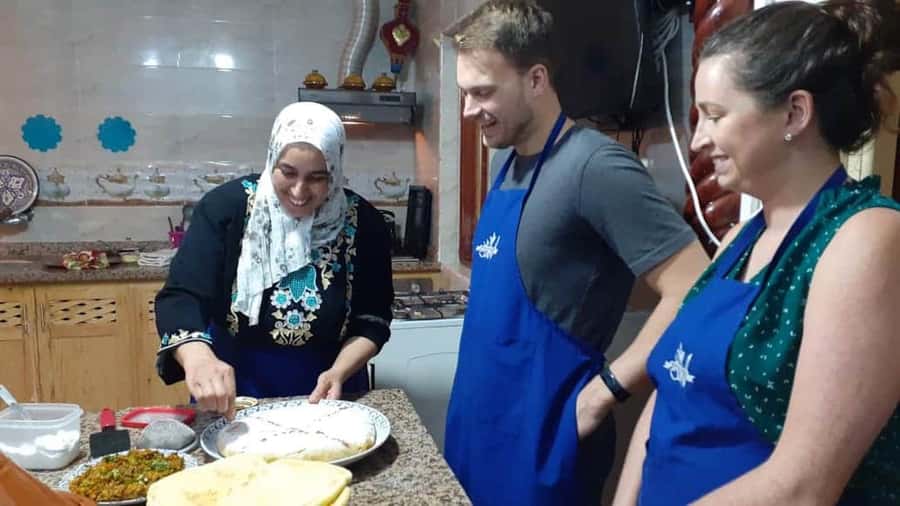
- Khadija leads the cooking: Her kitchen is the center of the class, with Moroccan techniques and family recipes explained in English.
- Tagine is a likely highlight: Several participants especially enjoyed making tagine, and one bought a tagine pot to use at home.
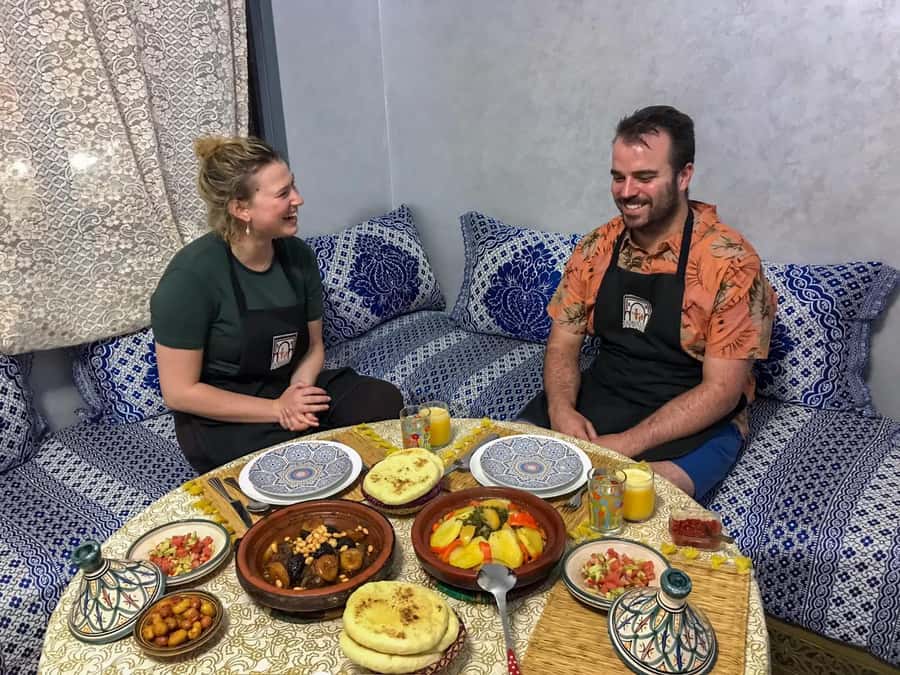
- The meal is generous and social: You eat the dishes you prepare, with Moroccan hospitality, conversation, and traditional tea afterward.
- Vegetarian guests are welcome: The activity is specifically described as vegetarian friendly.
From Pharmacie Bouhaira to the market
The evening starts at Pharmacie Bouhaira, with departure scheduled for 6PM. You should arrive 15 minutes early. This is not a class where you simply appear at a kitchen and receive a ready-made demonstration. The market visit is part of the lesson.
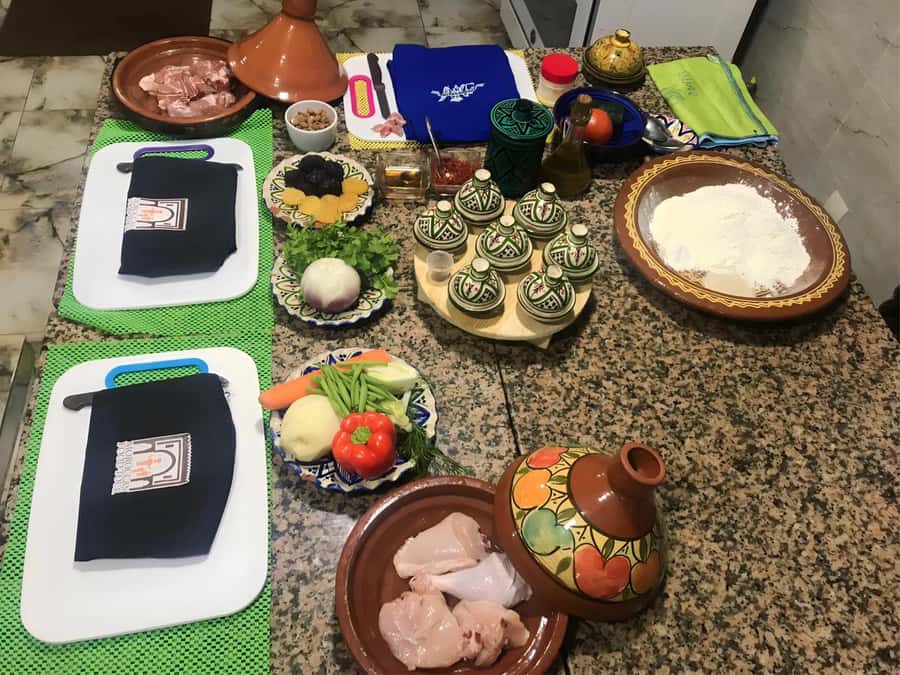
Your host takes you through a local neighborhood market and helps you select the ingredients for the meal. The important point is that the menu is not presented as a fixed script. Hussein asks about your preferences and recommends what to cook, then you shop together.
That small choice makes the experience more useful. You see the ingredients before they are chopped, cooked, or hidden inside a tagine. You also get a little context about Moroccan food customs and the role of the market in everyday life.
The market portion is likely to appeal most to you if you enjoy seeing how a meal begins. It is less suited to anyone who wants a quick cooking demonstration with no walking or shopping. The class description does not give a fixed menu, so you should expect the food to depend on the group’s preferences and the host’s recommendations.
One practical detail matters here: the activity begins in the evening. The meeting time is 6PM, and the full experience lasts four hours, so you will finish around 10PM if everything runs on schedule. Plan your dinner around the class rather than treating it as a pre-dinner snack.
More Cooking Classes in Essaouira
- Essaouira: HOW TO BE A REAL MOROCCAN CHEF
★ 4.9 · 154 reviews - l’Atelier – Moroccan Cooking Workshop in Essaouira
★ 5.0 · 110 reviews - How To Be A Real Moroccan Chef
★ 5.0 · 101 reviews
Choosing a Moroccan three-course menu
The experience includes a full three-course menu, with appetizers, a main course, and dessert. You help decide what to prepare, then buy the ingredients for the workshop. That gives the class a pleasant sense of purpose: each item in the market becomes part of the meal waiting at the end.
The exact dishes are not listed in advance. This is useful if you want to talk with the host and make choices based on your tastes, but it gives you less certainty than a class advertising a set menu. If you have food restrictions or strong preferences, raise them early when the menu is discussed.
The class is vegetarian friendly. That does not mean every group receives a vegetarian menu by default, so make your preference clear at the start. The host can then guide the shopping and cooking choices.
One dish that has made a particularly strong impression is tagine. Charlotte’s family, including children aged 9 and 11, enjoyed making and eating it. Don bought a tagine after the class and took it home to New Hampshire, which tells you how practical the lesson can feel when the cooking method clicks.
You should not expect a formal culinary school curriculum. This is home cooking, shaped by the people preparing the meal and the ingredients selected that evening. That is part of the appeal. You are learning how Moroccan food is made in a family setting, not training for a restaurant kitchen.
Inside Hussein and Khadija’s family home
After shopping, Hussein brings you to the family house, where Khadija prepares and explains the cooking. The setting is central to the experience. You are welcomed into a home, offered Moroccan tea and cakes, and given time to talk before or during the meal preparation.
Hussein and Khadija are repeatedly described as kind, welcoming, and generous with their time. Their hospitality is not just a greeting at the door. The evening includes conversations about Moroccan culture and family life, and the atmosphere can feel more like being invited to dinner than attending a commercial class.
That personal element is the best reason to book. You can learn a recipe from a printed card anywhere, but the home setting gives you contact with the people behind the food. James particularly enjoyed talking with the hosts about their lives and Moroccan culture, as well as playing music together.
English is the stated teaching language. That makes the class practical for English-speaking visitors who want explanations as they cook. The supplied information does not list other teaching languages, so you should plan on English being the main language used.
The home setting also means the pace may be relaxed. Helene enjoyed the evening but felt she did not do much cooking during the three and a half hours she spent there. Khadija prepared some of the work while the group talked, watched, and helped where appropriate. If your top priority is constant knife work and stove time, this is worth considering.
For me, that is not automatically a flaw. Moroccan home cooking often involves preparation that is shared unevenly, especially when a host is feeding several people. You gain social time and a generous meal, but you may not personally handle every stage of every dish.
Learning tagine and Moroccan cooking methods
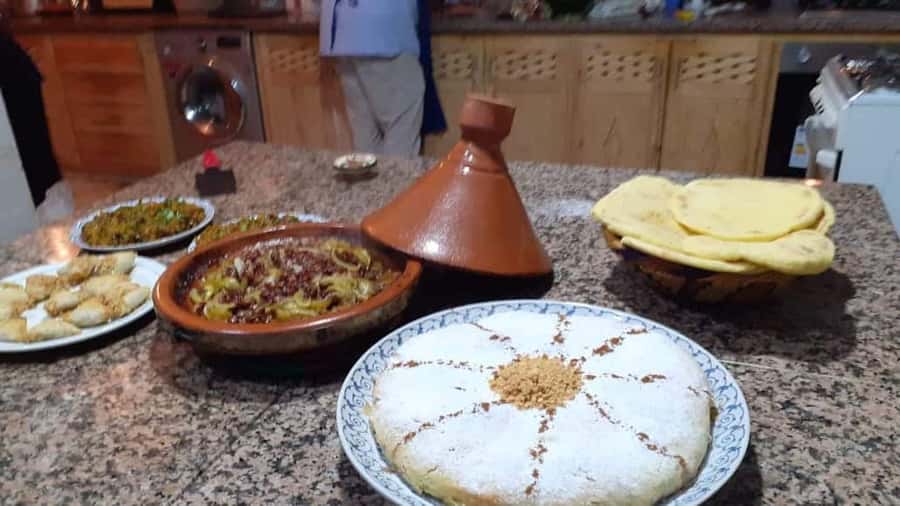
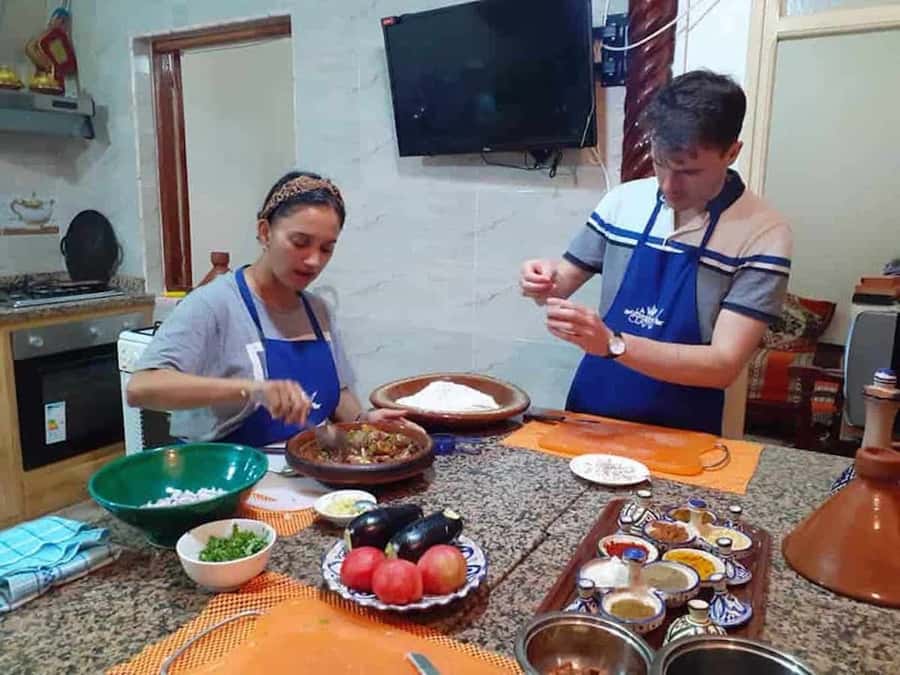
The cooking lesson focuses on Moroccan techniques rather than simply placing a meal in front of you. You join the cooking team in the kitchen, learn how the dishes are prepared, and help create the menu you will later eat.
Tagine is the clearest example from the experience. A tagine is both a cooking vessel and a style of slow-prepared Moroccan dish. Here, you have the chance to learn the process in the home where the meal is being made, rather than only tasting the finished food in a restaurant.
The available information does not promise a particular recipe, cooking station, or amount of individual instruction. Your hands-on time may vary depending on the menu and the size of the group. You might chop, mix, season, assemble, or watch parts of the process while Khadija handles other steps.
That makes this class a good choice for curious cooks, couples, families, and food-focused visitors who want a shared evening. It may disappoint serious hobby cooks who expect a detailed professional lesson with every technique assigned to them.
The tradeoff is clear: authentic home atmosphere over strict classroom structure. I see that as a fair exchange if your goal is to understand Moroccan food through people, conversation, and a meal. It is less compelling if you only want to take home a precise set of culinary skills.
More Essaouira Day Trips:
- From Marrakech: Essaouira & Atlantic Coast Full-Day Trip
★ 4.4 · 1,100 reviews - Essaouira: Surf Lessons
★ 4.9 · 412 reviews - Essaouira Sand Dunes: Half Day Quad Bike Tour
★ 5.0 · 313 reviews - Essaouira Activities: Discover Essaouira by Quad
★ 5.0 · 274 reviews
Sitting down to the meal you made
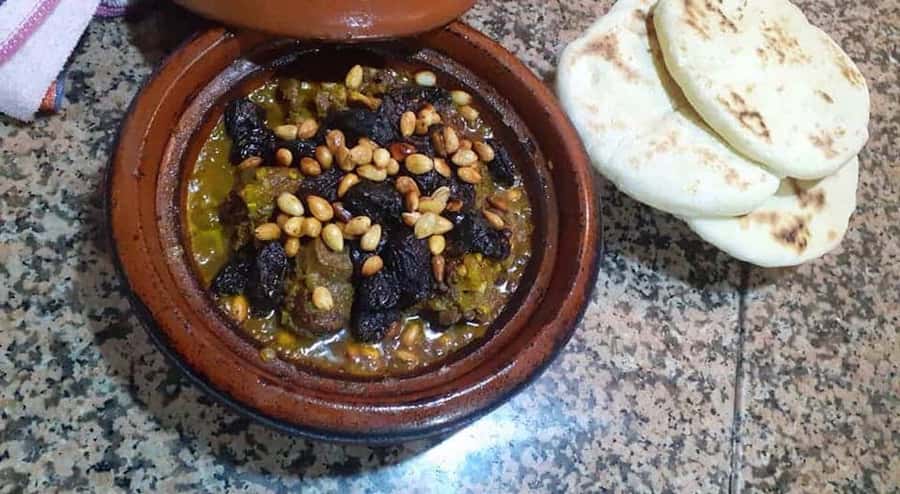
The reward comes after the cooking. You sit down to the complete menu, from appetizer through dessert, and eat what the group prepared together. The food is served as part of the family’s hospitality, not as a quick tasting at the end of a lesson.
The meal has received especially strong praise. The food has been called the best eaten during a Morocco trip, and one family described the tagine as the best food of their visit. Dianne also found the portions generous enough that the group could not finish everything.
That generosity matters when judging the $72 price. You are paying for four hours, ingredient shopping, instruction, a three-course dinner, tea, and time with a local family. It is not cheap when compared with ordering a meal at a restaurant, but it includes a personal activity and a cultural exchange that a restaurant cannot provide.
At the same time, the price will not feel equally worthwhile to everyone. Marc found the experience enjoyable but considered 60 euros per person overpriced. His comment points to the central value question: if you mainly want dinner, you can spend less elsewhere. If you want the cooking, market visit, and family welcome, the calculation looks better.
The class also suits families. Charlotte’s children, aged 9 and 11, enjoyed both cooking and eating. The information does not state a minimum age or provide a special children’s program, so parents should judge based on their children’s comfort with a four-hour evening activity.
Moroccan tea and the final conversation
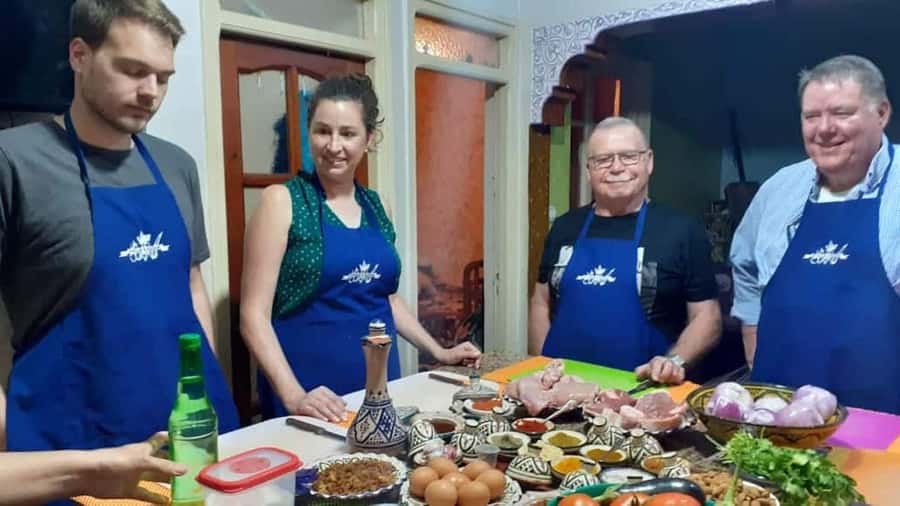
The evening closes with traditional Moroccan tea. Tea is not an afterthought here. It gives you time to slow down after the meal and continue talking with the family.
The tea also fits the rhythm of the experience. You begin by selecting ingredients, move into preparation and cooking, then end around a table with food and conversation. The final cup gives the evening a social finish instead of an abrupt end when the dessert is cleared.
You may also receive recipes or photographs afterward. Helene said the hosts took pictures and promised to share the recipe. That is useful if you want to recreate the meal at home, though the supplied details do not guarantee that every participant receives the same follow-up materials.
The strongest personal connection comes from this unhurried time. Julia enjoyed the conversation and the chance to learn about Moroccan life, while Sophie appreciated how carefully the family explained things and shared their story. The class works best when you are willing to talk, listen, and enjoy the evening at a local pace.
Timing, access, and practical details
The experience lasts four hours and starts at 6PM from Pharmacie Bouhaira. Arrive 15 minutes early. The class is listed as wheelchair accessible, which is important to confirm when making plans if you use a wheelchair, since the activity includes both a market visit and time in a private home.
English is the listed language. Moroccan tea and the complete three-course menu are included in the price. Alcohol and drugs are not allowed.
You can cancel up to 24 hours before the activity for a full refund. The reserve-now, pay-later option lets you hold a place without paying immediately, which is handy when your Essaouira plans are still shifting.
The meeting point is given as Pharmacie Bouhaira rather than a hotel pickup location. If you are staying elsewhere in town, allow enough time to reach it. One participant walked from a central riad in about 20 minutes, so the point may be reachable on foot depending on where you stay.
The activity provider is MoroccanFoodTour. The class information does not specify group size or transportation beyond the walk from the meeting point through the market to the home. You should not assume a private class or hotel transfer unless your booking confirmation says so.
Who should book this Essaouira cooking class?
I would choose this experience if you want food and human contact in equal measure. It is particularly well suited to:
- Couples looking for a relaxed evening activity
- Families with children who enjoy cooking and trying new food
- Visitors who want to learn about Moroccan home life
- Vegetarian diners
- People who prefer a meal with a story behind it
- Anyone interested in tagine and traditional Moroccan recipes
You may want to skip it if you dislike group conversation, do not want to eat a flexible menu, or expect to cook every dish from beginning to end. The activity is social and home-based, not a tightly timed professional kitchen lesson.
The $72 price is reasonable if you value the market visit, three-course dinner, instruction, tea, and family welcome as one package. It is harder to justify if you judge it only by the amount of food or hands-on cooking. The class’s best moments come from the hosts and the setting, so your enjoyment will depend partly on how much you want that personal exchange.
Should you book it?
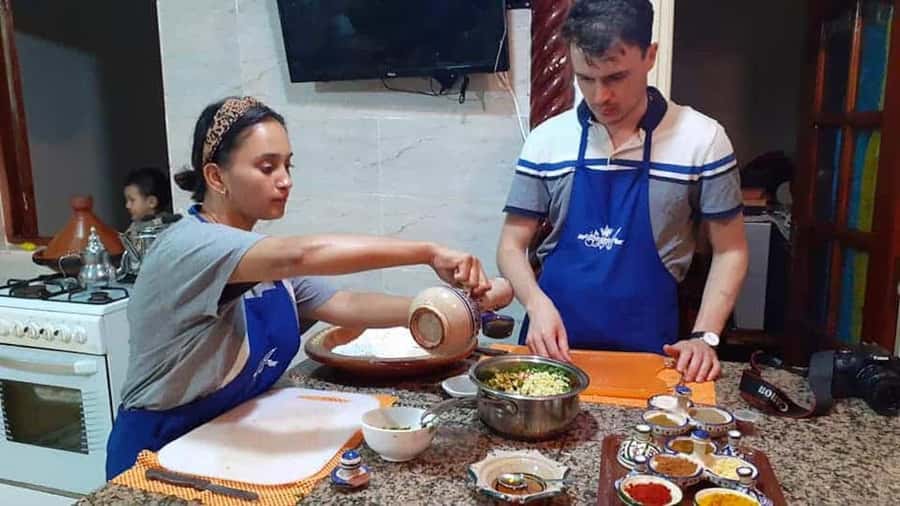
Yes, if you want one of your Essaouira evenings to feel personal and food-centered. Hussein and Khadija’s home, the market shopping, the tagine lesson, and the final tea create a memorable chain from ingredients to dinner.
Book it with realistic expectations. You may not spend all four hours actively cooking, and the menu is decided with the host rather than announced in advance. But if you are happy to share a kitchen, talk about Moroccan life, and eat a generous meal made with local guidance, this is a strong choice for the price.
FAQ
Where does the cooking class meet?
The meeting point is Pharmacie Bouhaira. Departure is at 6PM, and you should arrive 15 minutes before the activity begins.
How long does the experience last?
The cooking class lasts four hours.
What language is the class offered in?
The instructor language is English.
Is the cooking class vegetarian friendly?
Yes. The activity is described as vegetarian friendly.
What is included in the price?
The price includes traditional Moroccan tea and a full three-course menu.
Can I cancel for a refund?
Yes. You can cancel up to 24 hours in advance for a full refund. You can also reserve now and pay later.
More Cooking Classes
- Traditional Moroccan Cooking Class
★ 5.0 · 81 reviews - Traditional Moroccan and Berber cooking classes
★ 5.0 · 40 reviews - Marrakech: Moroccan Cooking Class with Pickup
★ 4.6 · 1,862 reviews - Marrakech: Traditional Moroccan Cooking Class & Market Visit
★ 4.8 · 1,861 reviews
More Workshops
- Kitesurfing Lessons in Essaouira Beach
★ 5.0 · 206 reviews - Surf Lesson in Essaouira
★ 5.0 · 179 reviews - Group Kitesurfing lesson with a Local in Essaouira Morocco
★ 5.0 · 175 reviews - Surf Lesson with local surfer in Essaouira Morocco
★ 5.0 · 166 reviews
Just added around Essaouira
- The Sunday Market in Had Draa & Local Food Tasting.★ 5.0 · 33 reviews
- Horse riding on the beach of Essaouira 2 hours★ 5.0 · 34 reviews
- Essaouira 1 hour discovery ride on the back of a camel★ 5.0 · 37 reviews
- Explore Essaouira’s Secrets: A Guided Tour with a Local!★ 4.7 · 37 reviews
- 2 hours horse ride beach and dunes in Essaouira Morocco★ 4.5 · 38 reviews
- Private Kitesurf Lesson in Essaouira Morocco★ 5.0 · 38 reviews
- Individual kitesurfing lessons in Essaouira★ 5.0 · 38 reviews
- Essaouira: Area Highlights Guided E-Bike Tour★ 4.9 · 39 reviews
Cooking Classes, compared.
Traditional Moroccan Cooking Class & Market Visit
Read our review →
Moroccan Dishes Cooking Class with a Local Chef
Read our review →
Moroccan Cooking Class & Marrakech Market Visit with Chef Khmisa
Read our review →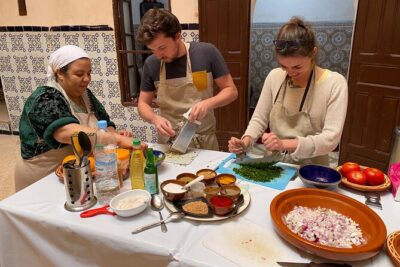
Half-Day Cooking Class with Local Chef Laila in Marrakech
Read our review →
Browse the lists this tour appears in