
Reviewed · COOKING CLASSES
Half-Day Cooking Class with Local Chef Laila in Marrakech
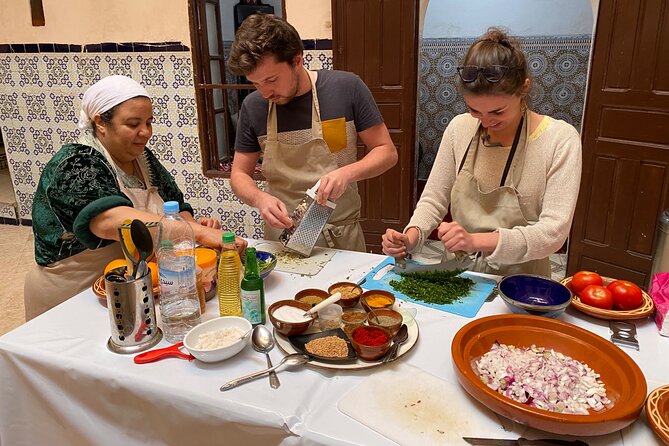
Moroccan cooking begins long before the stove. This four-and-a-half-hour class with Chef Laila and her family combines a market visit, spice lessons, tea-making, and hands-on preparation of a three-course meal. I like the warm family setting, and I like that the menu can be adjusted for vegetarian, vegan, and allergy needs. One point to watch: the market visit does not always take place, so the experience may begin directly at the cooking location.
The class costs $34.76 per person, which is strong value if you want both a meal and a cultural activity. You do not need cooking skills, but you should arrive hungry. The group can reach 20 people, and some of the cooking may involve preparation and chopping rather than constant work at the stove.
In This Review
- Key points to know before booking
- Starting near Riad Zitoun el Jdid
- The market visit and choosing fresh ingredients
- Moroccan tea comes before the main cooking
- Preparing a Moroccan three-course meal
- Why the family setting matters
- Sitting down to eat what you made
- What you actually learn
- Price, timing, and group size
- Who will enjoy Chef Laila’s class most
- Booking details and cancellation terms
- Should you book this Marrakech cooking class?
- FAQ
- How long is the cooking class?
- How much does the class cost?
- Where does the class start?
- Where does the experience end?
- Is a market visit included?
- What meal will I prepare?
- Can the menu accommodate allergies or vegetarian diets?
- Do I need cooking experience?
- Can I cancel for a full refund?
Key points to know before booking
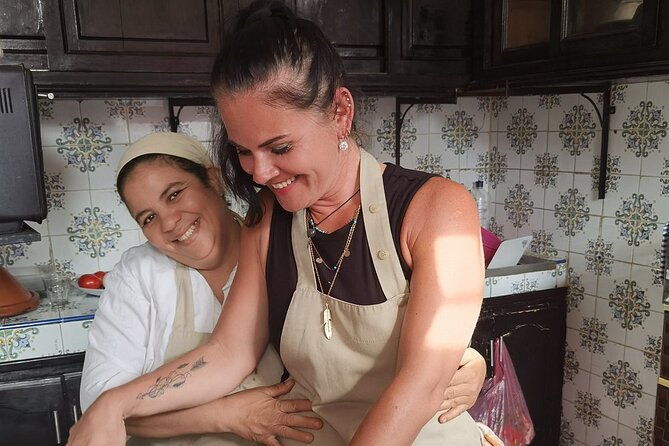
- Chef Laila’s family leads the class together: Laila may teach the session, but her son Hamza, her daughter, or other family members may also guide the cooking.
- The food is the main event: You prepare salads or another appetizer, a Moroccan main course, and dessert, then sit down to eat everything together.
- Ras el hanout gets special attention: This classic Moroccan spice blend forms part of the main-course lesson and helps explain the flavor behind many local dishes.
- Tea-making is part of the welcome: At the cooking venue, you learn how Moroccan tea is prepared before the main cooking begins.
- The class suits mixed dietary groups: Vegetarian, vegan, and allergy-related needs can be discussed before the menu is chosen.
- The market stop may vary: It is part of the planned experience, but at least one session went straight to the kitchen instead.
Starting near Riad Zitoun el Jdid
The experience begins at 3 Rue Riad Zitoun el Jdid, Marrakesh 40000. This is a useful location in the old city area, and the meeting point is near public transportation. The activity ends back at the same point, which makes the timing easier to manage if you have evening plans or a later dinner reservation.
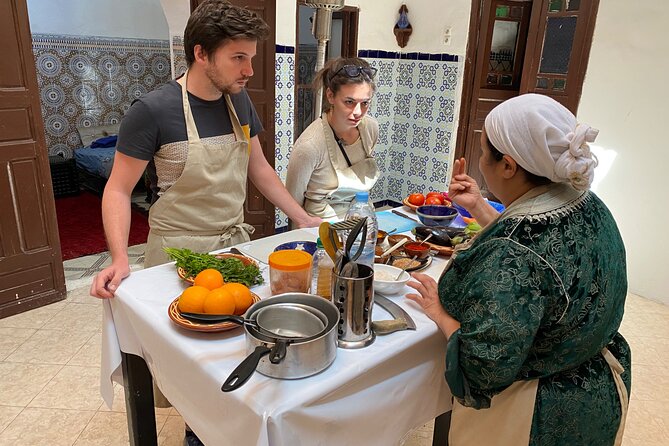
At the start, Laila or a family member checks for food allergies. The group then discusses a suitable menu. This is a small but important detail. Moroccan cooking often uses nuts, wheat, dairy, and meat, so having the menu adjusted at the beginning is much better than trying to solve a problem once the food is already being prepared.
The wording about meeting at the nearest point suggests you should read your booking instructions carefully. The confirmed starting point is the address above, but an exact pickup service is not included in the details provided. Plan to make your own way there unless your confirmation says otherwise.
More Cooking Classes in Marrakech
- Marrakech: Moroccan Cooking Class with Pickup
★ 4.6 · 1,862 reviews - Marrakech: Traditional Moroccan Cooking Class & Market Visit
★ 4.8 · 1,861 reviews - Marrakesh: Moroccan Dishes Cooking Class with a Local Chef
★ 5.0 · 1,615 reviews
The market visit and choosing fresh ingredients
The planned first stage is a visit to a local market. This gives you a useful introduction to the ingredients before you begin cooking. Instead of seeing spices only as items in a recipe, you can learn how to judge fresh produce and hear why certain herbs and seasonings are used in Moroccan food.
The class specifically focuses on herbs, spices, and fresh produce. One ingredient highlighted during the cooking is ras el hanout, a fragrant Moroccan spice blend used in the main course. This is the kind of lesson that can stay with you after the class because it helps you understand how Moroccan dishes get their character.
There is a practical qualification here. The market stop did not happen during every reported session. If shopping at the market is the part that most interests you, ask about it when you arrive or contact the provider before booking. You should think of the market visit as a planned feature, not an absolute guarantee.
Even without the market walk, the ingredient lesson still has value. The hosts explain how to choose produce and how to use Moroccan spices, so the food education does not depend entirely on walking through the stalls.
Moroccan tea comes before the main cooking
After the market stage, the group goes to the cooking location. The class includes a lesson on preparing Moroccan tea, an essential part of the country’s hospitality. This gives the session a pleasant rhythm: first learn about ingredients, then pause for tea, then begin the meal.
The tea lesson is also a good way to ease into the class. You are not expected to start with a complicated dish the moment you arrive. Instead, you get an introduction to a familiar Moroccan custom before tackling the main recipes.
The supplied details refer to having breakfast at the location, while the main tour description describes a lunch or dinner depending on the start time. The safest expectation is that the class includes tea and a substantial cooked meal, not a separate breakfast service. Morning sessions lead into lunch, while afternoon sessions lead into dinner.
Preparing a Moroccan three-course meal
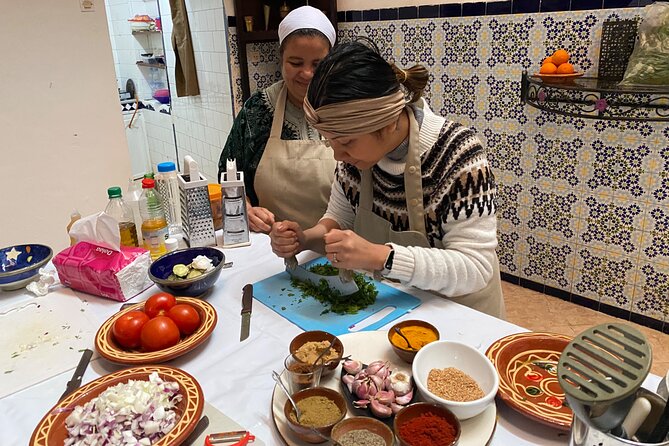
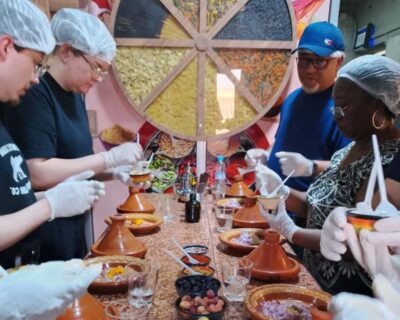
The cooking begins with the main course, using Moroccan spices including ras el hanout. The exact menu can be selected to suit the group, and the food prepared in different sessions has included chicken tagine, vegetarian tagine, salads, and dessert.
That flexibility matters. You may not receive one fixed menu every time, but you can have some say in what the group makes. This works especially well for families or friends with different diets. It also means you should not book expecting one specific dish unless it has been confirmed in advance.
The appetizer may be a selection of Moroccan salads. These are useful dishes for a class because they show how herbs, vegetables, seasonings, and dressings work together. The main course then gives you a chance to see how Moroccan spices are used in a slower, fuller preparation.
Dessert comes later in the cooking sequence. The supplied details do not name one fixed dessert, so you should treat the sweet course as part of the three-course meal rather than expect a particular recipe.
The experience is hands-on, but the amount of individual cooking can vary. One account described a large-group format with plenty of chopping and preparation, but not a great deal of time doing the cooking alone. That is a fair expectation for a class that may hold up to 20 people.
You will be involved, but this is not a private chef lesson where you control every pan. The tradeoff is that you get a social setting and plenty of support. Laila, Hamza, and other family members can demonstrate the steps, answer questions, and keep the group moving.
A few more Marrakech trips worth weighing up
- Moroccan Cooking Class & Marrakech Market Visit with Chef Khmisa
★ 5.0 · 1,504 reviews - Marrakech: Pottery Workshop with Moroccan Tea
★ 4.8 · 756 reviews - Marrakech: Moroccan Cooking Class with a Local Family
★ 4.9 · 668 reviews - Marrakech: Moroccan Cuisine Cooking Class in Local Home
★ 4.8 · 508 reviews
Why the family setting matters
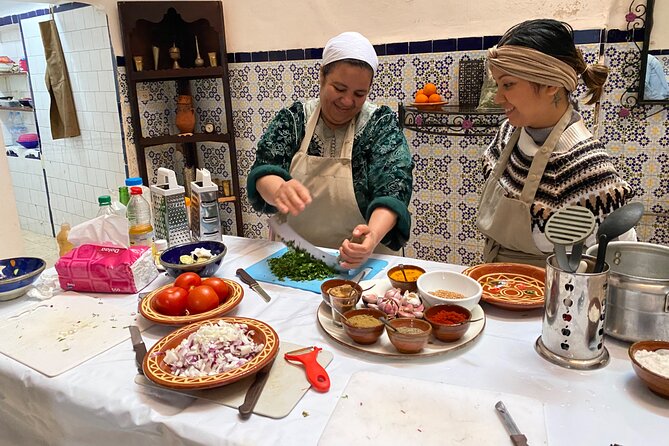
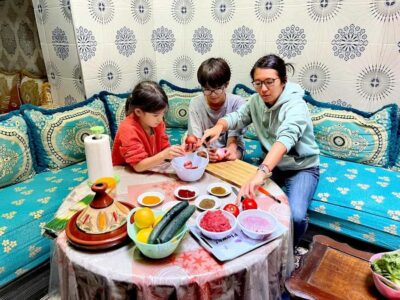
The most praised part of the experience is the welcome from Laila and her family. The class is not presented as a detached demonstration. Family members help with the cooking, explain the food, and join the social meal afterward.
Laila is described as warm, funny, and good at making people feel included. Hamza has also led sessions when Laila was unavailable, explaining ingredients and processes in English and French. This gives you some reassurance that the class can continue in a friendly and organized way if the named chef is not teaching that day.
You may also meet Laila’s daughter or other members of the family. Their involvement creates a more personal atmosphere than a standard cooking studio. One particularly appealing detail is the sense of family cooperation, with different people helping prepare the meal and clean up.
That family atmosphere will suit you if you enjoy conversation and a relaxed social activity. If you want a quiet, highly structured lesson with one instructor speaking to a small private group, the maximum group size of 20 may feel less personal.
Sitting down to eat what you made
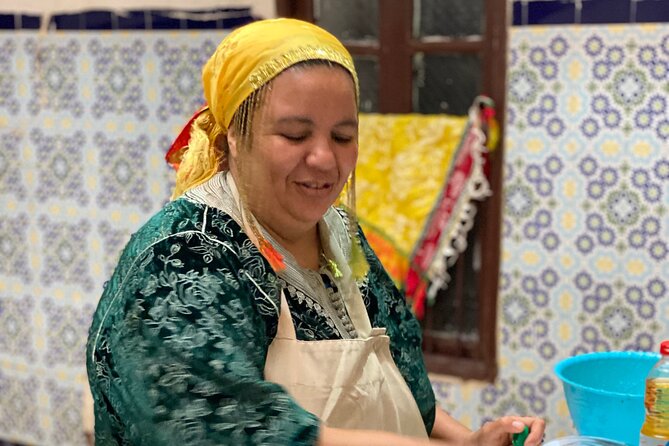
The final meal is the reward for the work. After preparing the dishes, the group sits down to enjoy the food together at the cooking venue. This is not just a quick tasting. You should expect a generous meal and arrive with a healthy appetite.
The food receives especially strong praise, with several sessions described as better than restaurant meals eaten elsewhere in Marrakech. That is not a promise that every dish will match your personal taste, but it does point to one of the experience’s best qualities: you are eating food prepared with the same care used to teach it.
The shared table also gives the class a social finish. You can talk with the family and other participants, compare the dishes, and ask final questions about the recipes. For solo visitors, this may be one of the easiest ways to meet people during a Marrakech stay.
The meal can be substantial. One family described being surprised by the amount of food served, so do not plan a large meal immediately afterward. For afternoon sessions, the cooking class functions as dinner. For morning sessions, it works as lunch.
What you actually learn
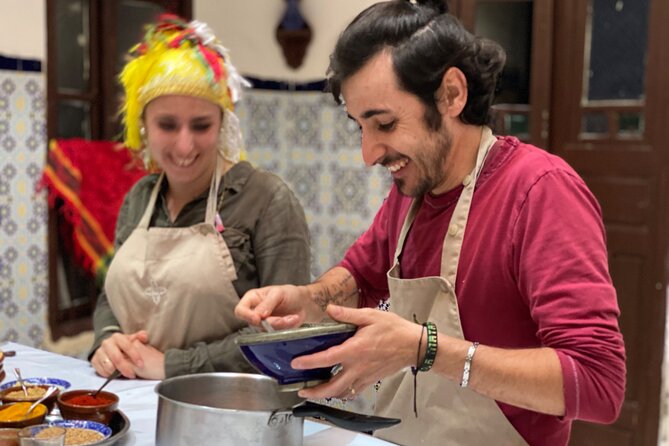
This is more than a meal with a short cooking demonstration. You learn how to identify the quality of produce, how Moroccan herbs and spices are used, and how to prepare traditional dishes. You also receive practical cooking tips that can help you recreate the food at home.
The lesson is designed for beginners. No cooking skills are required, and the family members leading the class explain the ingredients and steps as you go. Hamza has taught in both English and French, though the exact language support for your session should be confirmed if that matters to you.
The class is best understood as a shared practical lesson rather than formal culinary training. You will not necessarily master every technique in one afternoon. Instead, you get a working introduction to Moroccan flavors, a chance to handle the ingredients, and recipes you can try again in your own kitchen.
The ability to choose a suitable menu is another useful feature. Families and mixed groups do not all have the same preferences, and the class can be adapted for vegetarians, vegans, and allergies. Tell the host about your needs as early as possible.
Price, timing, and group size
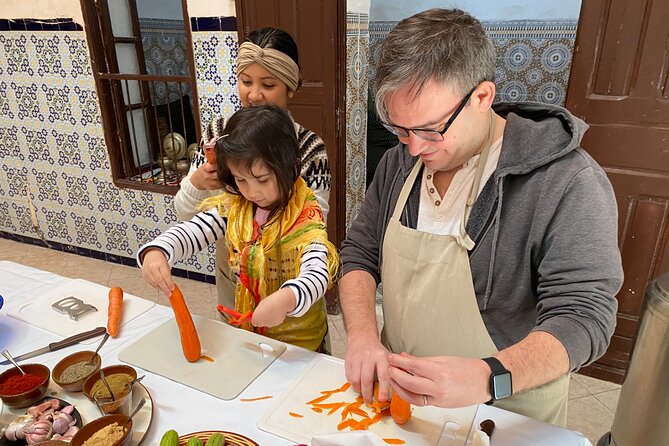
At $34.76 per person, the class offers good value for a four-and-a-half-hour activity that includes instruction, ingredients, tea-making, and a full three-course meal. Compared with paying separately for a restaurant dinner and a cooking lesson, the price is attractive.
The value is strongest if you care about the social side of the experience. You are not paying only for recipes. You are also spending time with a local family, learning about Moroccan food customs, and sharing a meal at the end.
The group can contain up to 20 people. That is large enough to create an upbeat atmosphere, but it can limit how much time you spend cooking independently. If you prefer more personal instruction, ask how many people are booked for your date.
You can choose a morning class that leads into lunch or an afternoon class that leads into dinner. Pick the time that fits your plans and appetite. Since the activity lasts about four and a half hours, avoid scheduling a rushed transfer or another fixed appointment immediately afterward.
The class is often booked about 16 days ahead on average. That does not mean you must reserve exactly that early, but it is a sensible guide if you want a particular date or time.
Who will enjoy Chef Laila’s class most
I would recommend this experience to first-time visitors who want a friendly introduction to Moroccan food. It is also a good choice for families, couples, solo participants, and groups of friends who enjoy learning through food rather than sitting through a formal lecture.
You will get the most from it if you like conversation, shared meals, and a little kitchen work. The family atmosphere is central to the appeal, and the class works best when you are willing to laugh, ask questions, and take part.
Vegetarians and vegans should find the menu discussion helpful, as should anyone managing allergies. Still, explain your needs before the cooking starts and make sure the proposed menu is suitable.
This may not be ideal if your main goal is a guaranteed market tour. Since that portion may not occur, contact the provider before booking if the market is essential. It may also disappoint serious home cooks who want advanced technique training or a private lesson.
The activity has a 4.9 rating from 953 ratings and a 98 percent recommendation rate. Those figures suggest a very dependable experience, while the individual details still point to the practical limits: group size, variable menu, and the possibility that Laila herself may not lead every session.
Booking details and cancellation terms
You receive confirmation at the time of booking, and the experience uses a mobile ticket. The meeting point is near public transportation, and the tour returns to the same location.
You can cancel for a full refund up to 24 hours before the local start time. Cancellations made within 24 hours are not refunded, and late changes are not accepted. The activity requires good weather, so if poor weather causes cancellation, you are offered another date or a full refund.
Should you book this Marrakech cooking class?
Book it if you want a warm, affordable food experience with a local family and a generous meal at the end. The best reasons to choose it are the friendly teaching style, the chance to learn about ras el hanout and Moroccan spices, and the flexibility for vegetarian, vegan, and allergy-friendly menus.
Go in with realistic expectations. You may spend more time chopping and preparing than cooking at the stove, the group may be fairly large, and the market visit is not certain. If those points are acceptable, Chef Laila’s class is a strong way to spend half a day in Marrakech, especially for anyone who wants to take home more than photographs and a full stomach.
FAQ
How long is the cooking class?
The experience lasts approximately 4 hours and 30 minutes.
How much does the class cost?
The listed price is $34.76 per person.
Where does the class start?
It starts at 3 Rue Riad Zitoun el Jdid, Marrakesh 40000, Morocco.
Where does the experience end?
The activity ends back at the meeting point.
Is a market visit included?
A local market visit is part of the planned experience, where you learn about fresh produce, herbs, and spices. However, the market visit may not take place during every session.
What meal will I prepare?
You prepare a Moroccan three-course meal consisting of an appetizer, a main course, and dessert. Dishes can include salads, chicken tagine, vegetarian tagine, and other Moroccan specialties.
Can the menu accommodate allergies or vegetarian diets?
Yes. Food allergies are checked at the start, and the menu can be adapted for vegetarian and vegan participants.
Do I need cooking experience?
No. The class is suitable for people without cooking skills.
Can I cancel for a full refund?
Yes. You must cancel at least 24 hours before the experience start time for a full refund. Cancellations within 24 hours are not refunded.
More Half-Day
- Marrakech: Half-Day Desert Quad Tour with Camel Ride
★ 4.5 · 2,398 reviews - Marrakech: Half-Day Camel Ride in Palm Grove
★ 4.6 · 1,257 reviews - Marrakech: Private Guided Half-Day City Tour
★ 5.0 · 1,249 reviews - From Marrakech: Premium Agafay Desert Half-Day Quad Biking
★ 4.9 · 570 reviews
More Cooking Classes
- Marrakech: Moroccan Cooking Workshop at La Maison Arabe
★ 5.0 · 446 reviews - Marrakesh cooking class with chef Hassan – Local dishes
★ 5.0 · 425 reviews - Marrakech: Tajine Cooking Class in a Traditional Riad
★ 4.8 · 424 reviews - Moroccan Cooking Workshop in Marrakech
★ 5.0 · 407 reviews
Just added around Marrakech
- Marrakech: Medina Souks, Hidden Markets and Shopping Tour★ 4.8 · 33 reviews
- Agafay desert sunset camel ride Tour from Marrakech★ 5.0 · 33 reviews
- Guided walking tour in Marrakech★ 4.5 · 33 reviews
- Sunset Camel Ride Marrakech with Transfers★ 5.0 · 33 reviews
- 2 Days Desert Agafay and Atlas Mountains Trek From Marrakech★ 3.8 · 33 reviews
- Atlas mountains, Ourika valley, berber villages trip & Guide★ 5.0 · 33 reviews
- Magical Dinner show and Quad bike In Agafay Desert Marrakech★ 4.5 · 33 reviews
- Marrakech: Ouzoud Waterfalls Trip, Guide & Boat + Lunch★ 4.7 · 33 reviews
Cooking Classes, compared.
Traditional Moroccan Cooking Class & Market Visit
Read our review →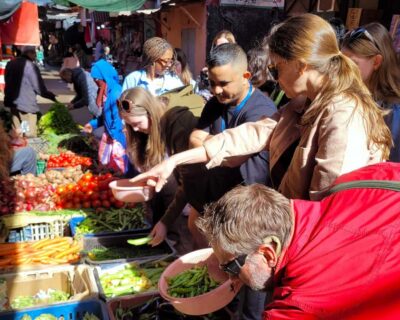
Moroccan Dishes Cooking Class with a Local Chef
Read our review →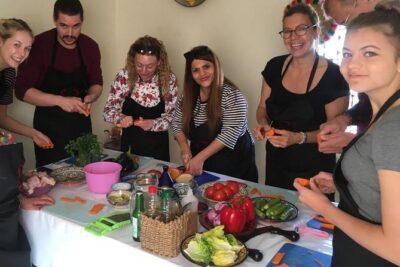
Moroccan Cooking Class & Marrakech Market Visit with Chef Khmisa
Read our review →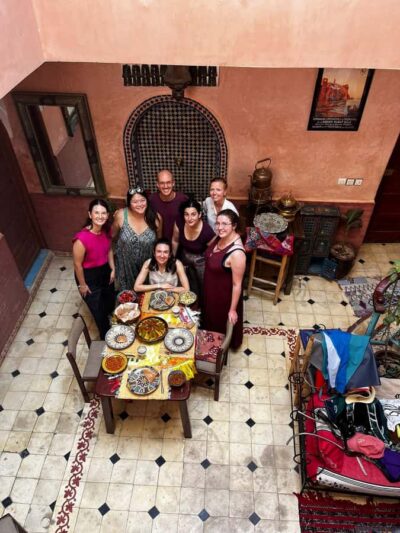
Marrakesh cooking class with chef Hassan – Local dishes
Read our review →Browse the lists this tour appears in