
Reviewed · SHOPPING TOURS
Marrakech: Traditional Moroccan Cooking Class & Market Visit
Moroccan cooking starts at the market. This experience pairs a short souk visit with a hands-on class at Khmisa Workshops, where local cooks teach you to prepare several classic dishes in a family-style riad. I like the fresh-market shopping because you see the ingredients before they reach the table, and I like the warm, practical teaching from Kawtar, Khmisa, and their cooking team. The main consideration is that the class takes place in a shared group, and the riad is not suitable for wheelchair users.
You begin with Moroccan mint tea, not simply by dropping mint into hot water, but by learning the traditional pouring and preparation ritual. Then you cook as a team, usually making three to six dishes, with starters, a main course, and a milk pastilla dessert. The meal is generous and the recipes are emailed afterward, though hotel pickup and drop-off are not included and the meeting point near a mosque may need a little extra clarification.
In This Review
- Key points to know before booking
- Starting in Marrakech’s local food market
- Entering Khmisa’s traditional riad kitchen
- Learning the Moroccan mint tea ritual
- Preparing salads, tagines, and Moroccan pastry
- Why the food feels like good value
- Cooking with local women and learning through translation
- What the shared meal is really like
- Timing, comfort, and practical limits
- Who will enjoy this class most
- Should you book Khmisa Workshops?
- FAQ
- Where does the cooking class take place?
- Is the market visit included?
- What food will I learn to prepare?
- Is lunch or dinner included?
- Will I learn how to make Moroccan mint tea?
- Are recipes provided after the class?
- What languages are available?
- Is hotel pickup included?
- Can vegetarians take part?
- Is the class suitable for wheelchair users?
- How large is the group?
- Can I cancel for a full refund?
Key points to know before booking
- The market visit comes first: You help select fresh vegetables, chicken, spices, and other ingredients in a local souk away from the most tourist-focused areas.
- The class is genuinely hands-on: You chop, season, stir, and add ingredients to tagines rather than simply watching a chef work.
- Mint tea gets proper attention: You learn the Moroccan tea ritual, including the preparation and serving steps.
- The food is plentiful: A typical session can include four starters, vegetable and chicken tagines, and a dessert.
- The setting feels domestic: Cooking takes place in an intimate traditional riad connected with Khmisa’s family.
- You leave with usable recipes: The dishes are designed to be made at home, and homemade spices may be available to purchase.
Starting in Marrakech’s local food market
The experience begins with a discussion of food allergies and dietary restrictions. This is an important first step, since the menu may include meat, chicken, dairy, and several prepared dishes. Tell the team clearly what you can and cannot eat before the market visit begins.
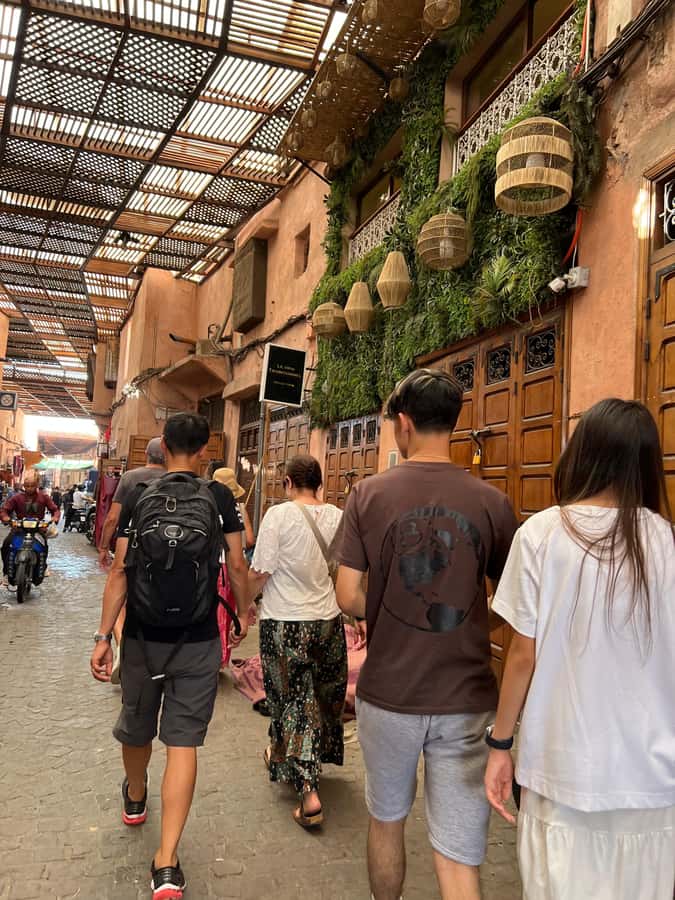
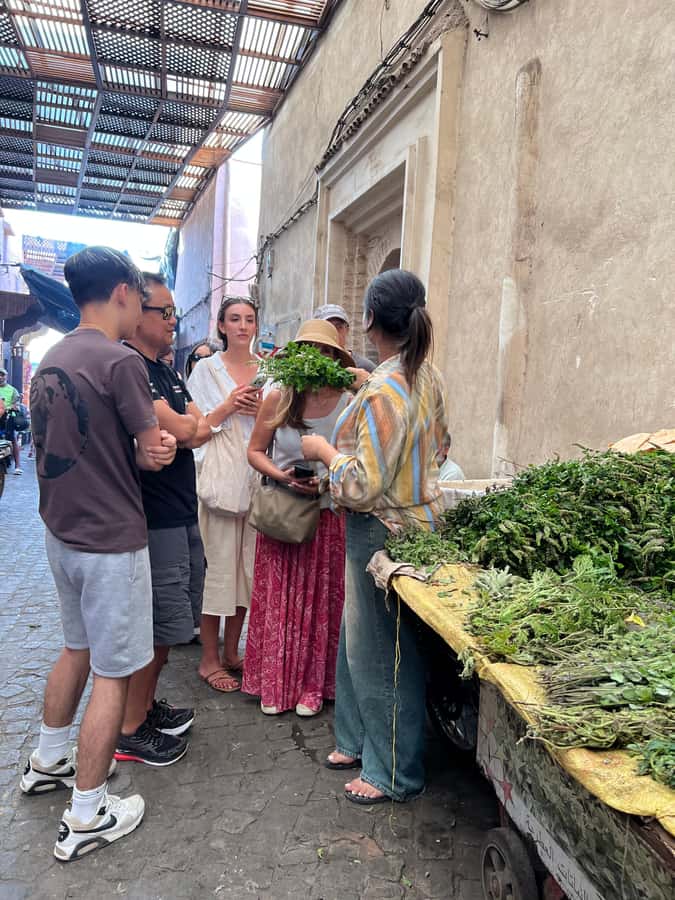
The market walk is short, but it gives the class a useful sense of place. Rather than receiving a basket of preselected ingredients, you join the group in choosing fresh produce from the stalls. You may help select vegetables, chicken, spices, and other groceries needed for the meal.
I like this part because it connects the final dishes with ordinary Moroccan shopping. You see the raw materials, hear how the cooks judge what to buy, and get a closer look at the food culture of Marrakech. It also helps explain why Moroccan cooking can taste so full even when the ingredient list looks fairly simple.
There is a practical point to remember: the meeting place can be hard to pinpoint if the directions only identify a large mosque. One useful tip is to confirm that you are meeting at the front entrance rather than simply at the mosque itself.
Wear comfortable shoes. The walk is short, but Medina streets can be uneven, and you may spend time standing while looking at produce and spices. A hair tie is also useful for the cooking session.
More Cooking Classes in Marrakech
- Marrakech: Moroccan Cooking Class with Pickup
★ 4.6 · 1,862 reviews - Marrakesh: Moroccan Dishes Cooking Class with a Local Chef
★ 5.0 · 1,615 reviews - Moroccan Cooking Class & Marrakech Market Visit with Chef Khmisa
★ 5.0 · 1,504 reviews
Entering Khmisa’s traditional riad kitchen
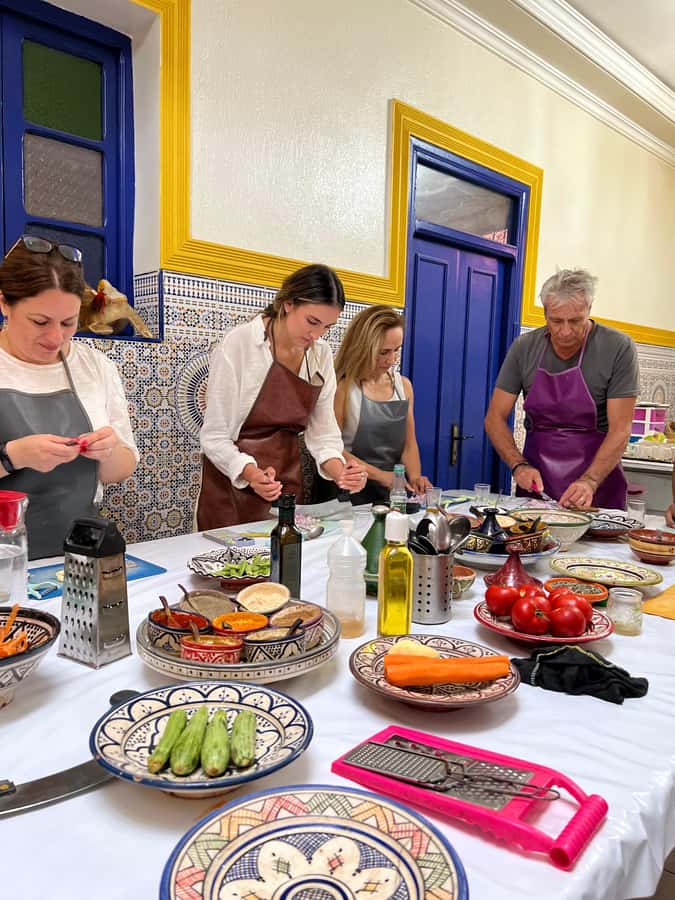
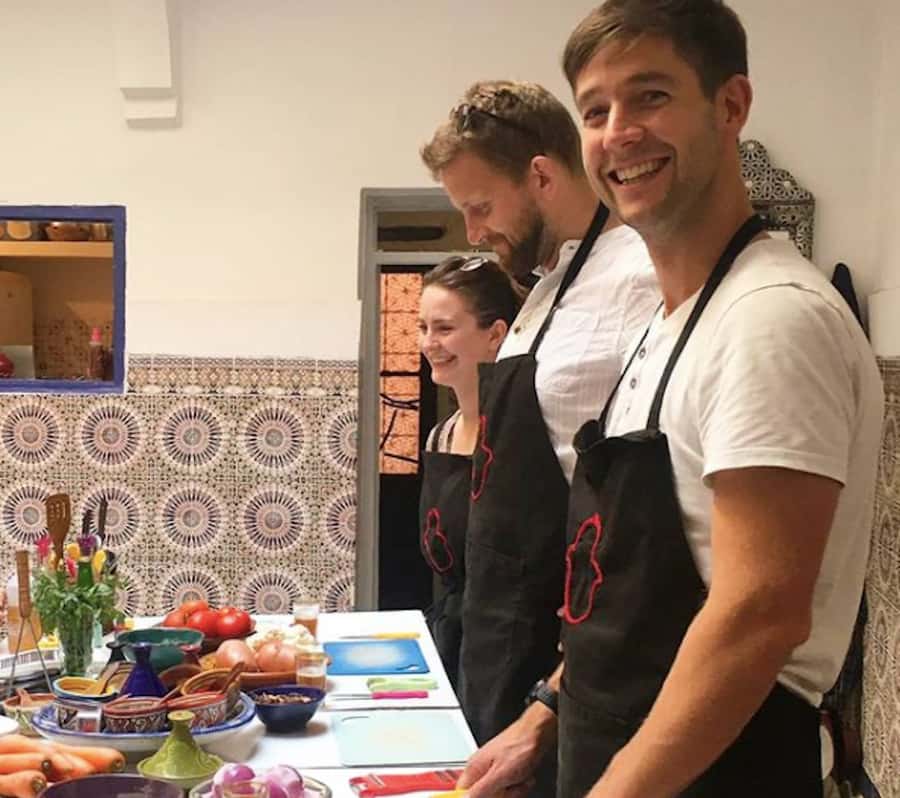
After the market, you walk to Khmisa’s workshop, an intimate riad in the heart of the Medina. The setting is part of the appeal. You are not in a standard classroom with rows of workstations. You cook around a table and share the preparation with the rest of the group.
The hosts are local Moroccan women with experience in cooking, pastry, hotels, restaurants, and catering. Kawtar often guides the group, while Khmisa and other family members help with the cooking. Several sessions also include a translator or multilingual assistant, with English, French, and Arabic available.
The atmosphere is warm and informal. The teaching style is patient, playful, and encouraging, which matters when a group has different cooking abilities. One of the strongest features is that everyone gets a job. You might chop vegetables, add spices, prepare a salad, or help build a tagine.
Group size is listed as up to 12 people, though some sessions are smaller. A group of six, for example, allows more room for questions and more direct participation. A full group can feel livelier, but you may need to share tasks and wait your turn.
Private sessions are available on demand. If you want a quieter class, have complex dietary needs, or are marking a special occasion, it is worth asking about that option before booking.
Learning the Moroccan mint tea ritual
Tea comes before the cooking. The host demonstrates how Moroccan mint tea is prepared and served, then guides you through the process.
This is more than a quick welcome drink. The ritual includes the order of ingredients, the use of fresh mint, the addition of sugar, and the high pour used when serving. The class helps correct the common assumption that Moroccan tea is simply mint steeped in boiled water.
This opening lesson is a smart choice. Tea is woven into daily Moroccan hospitality, so learning how it is made gives you something cultural to take home, even if you never prepare every dish again. It also sets a relaxed pace before the chopping and cooking begin.
The tea is included in the price, along with all food ingredients and the meal. If you enjoy the flavor, you may be able to buy some of the spices used during the session, including homemade blends prepared by Khmisa.
Preparing salads, tagines, and Moroccan pastry
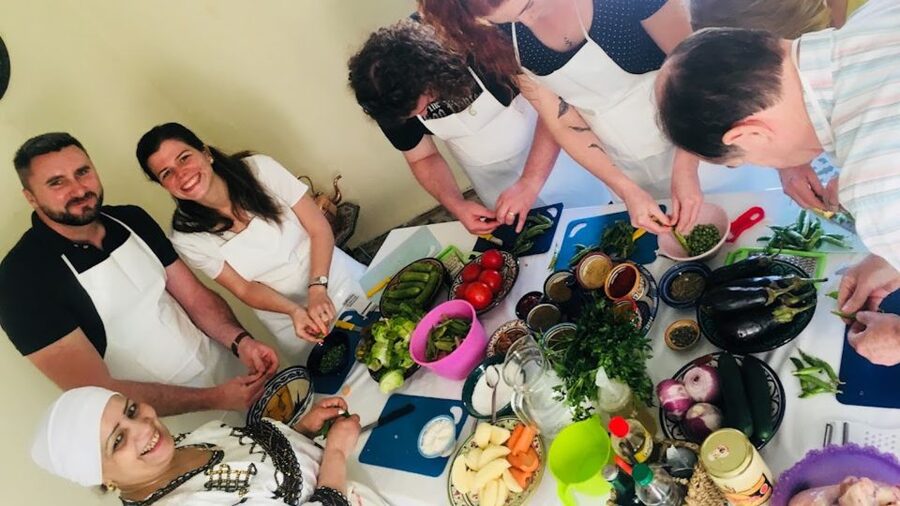
The exact menu can change, but the session usually includes three to six traditional dishes. The format commonly includes several starters, a main course, and dessert.
Past classes have included four Moroccan salads or starters, a vegetable tagine, a chicken tagine, and milk pastilla. The class may also feature a lemon chicken tagine, one of the dishes that receives especially warm praise for its flavor and its usefulness at home.
The preparation is organized as teamwork. The chef explains what to do, then lets participants carry out the steps. You are not expected to know Moroccan cooking in advance. The cooks explain how spices are combined and how the ingredients are prepared before the group moves on.
Tagine cooking is especially rewarding because the method is easy to understand but depends on good judgment. You learn how vegetables, chicken, preserved flavors, and Moroccan spices come together slowly in one dish. The chef may adjust quantities as you work, showing the difference between following a recipe and cooking by feel.
That can be helpful, but it also means the class is not a perfectly measured baking lesson. If you want exact quantities for every ingredient, take notes as you go and use the electronic recipes afterward. The recipes are sent by email or WhatsApp, so you have a reference when you try the food at home.
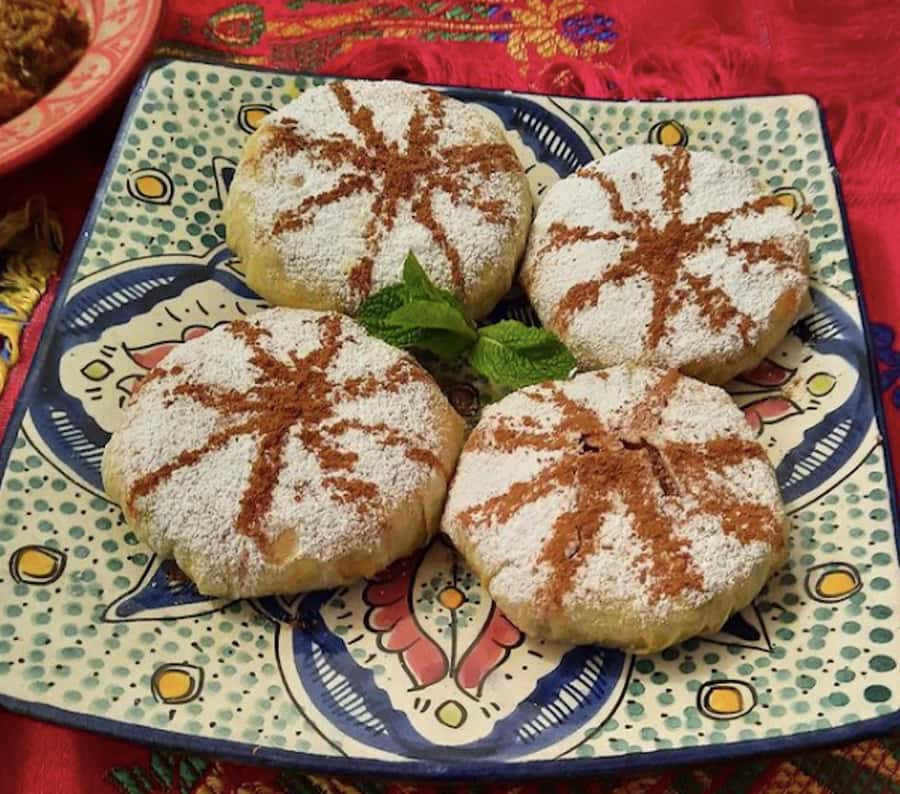
Dessert is part of the meal rather than an afterthought. Milk pastilla gives you a chance to see a sweeter side of Moroccan pastry, and the group prepares and eats it after the savory dishes.
A few more Marrakech trips worth weighing up
- Half-Day Cooking Class with Local Chef Laila in Marrakech
★ 5.0 · 952 reviews - Marrakech: Pottery Workshop with Moroccan Tea
★ 4.8 · 756 reviews - Marrakech: Moroccan Cooking Class with a Local Family
★ 4.9 · 668 reviews - Marrakech: Moroccan Cuisine Cooking Class in Local Home
★ 4.8 · 508 reviews
Why the food feels like good value
The price is $40 per person. For that amount, you receive the market visit, instruction from local cooks, all ingredients, Moroccan tea, a full lunch or dinner, and electronic recipes.
The value comes from the complete sequence. A restaurant meal would give you the finished food, but not the shopping, preparation, spice lesson, or chance to ask how the dish is made. A cooking class without a meal would leave out the best part. Here, the market and dinner are built into the same experience.
The portions are reported to be generous. A menu of several starters, two tagines, and dessert can be very filling, especially when shared around a table. If you have plans for a large dinner soon afterward, schedule this as your main meal rather than a small snack.
Food quality is one of the strongest reasons to book. The hosts use fresh market ingredients, and the cooking is done during the session rather than prepared long before you arrive. The chicken tagine and potatoes receive particular praise, while the vegetarian selection is broad enough to satisfy people who do not eat meat.
The $40 price also includes a cultural welcome that feels more personal than a standard demonstration. You are invited into a family-linked cooking space and encouraged to participate, not simply sit at the edge and take photographs.
Cooking with local women and learning through translation
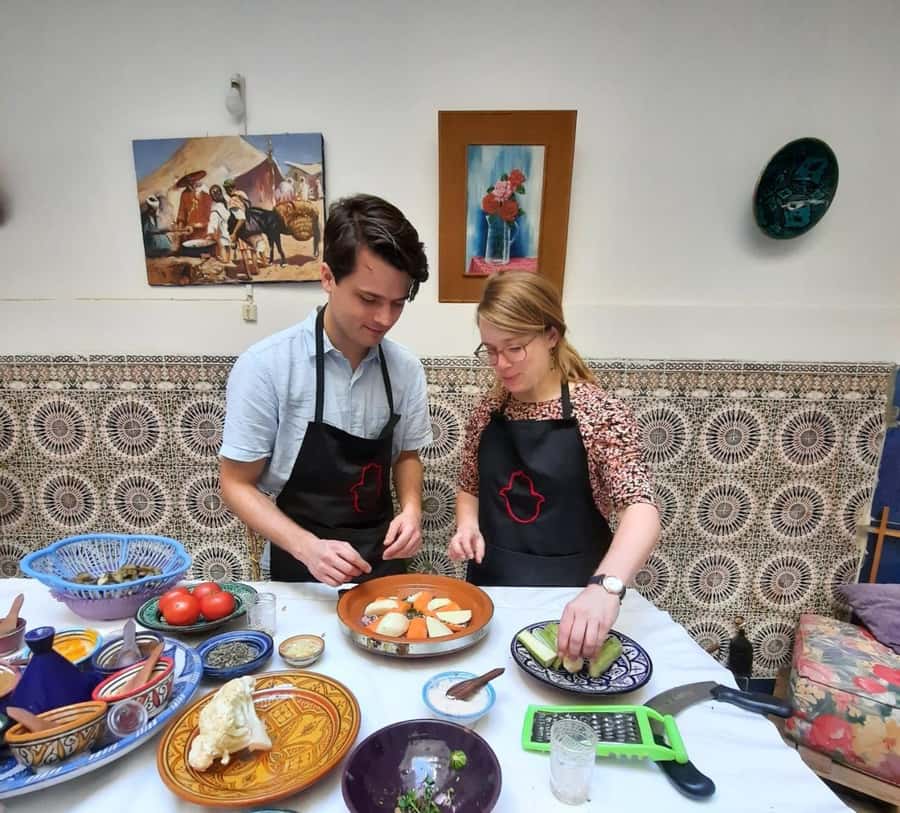
The class is led by Moroccan women who bring both professional experience and family cooking traditions. That combination gives the session a useful balance. You get practical instruction, but the setting still feels like a home kitchen rather than a hotel training room.
Language should not be a major barrier. English, French, and Arabic are supported, and translation may be provided when the chef is speaking another language. The teaching is also visual and hands-on, so you can follow the chopping, seasoning, and shaping even when a phrase needs repeating.
I would still encourage you to ask questions as you go. If you are unsure about a spice, cooking time, or ingredient substitution, ask before the group moves to the next step. This is especially useful if you want to recreate the dishes in Australia, Europe, North America, or elsewhere with different local products.
The instructors make a point of including children and younger cooks. An eight-year-old has taken part successfully, and teenagers have also enjoyed the session. Families should remember that some steps involve knives, hot cookware, and standing, so children need to stay close to the adults supervising them.
What the shared meal is really like
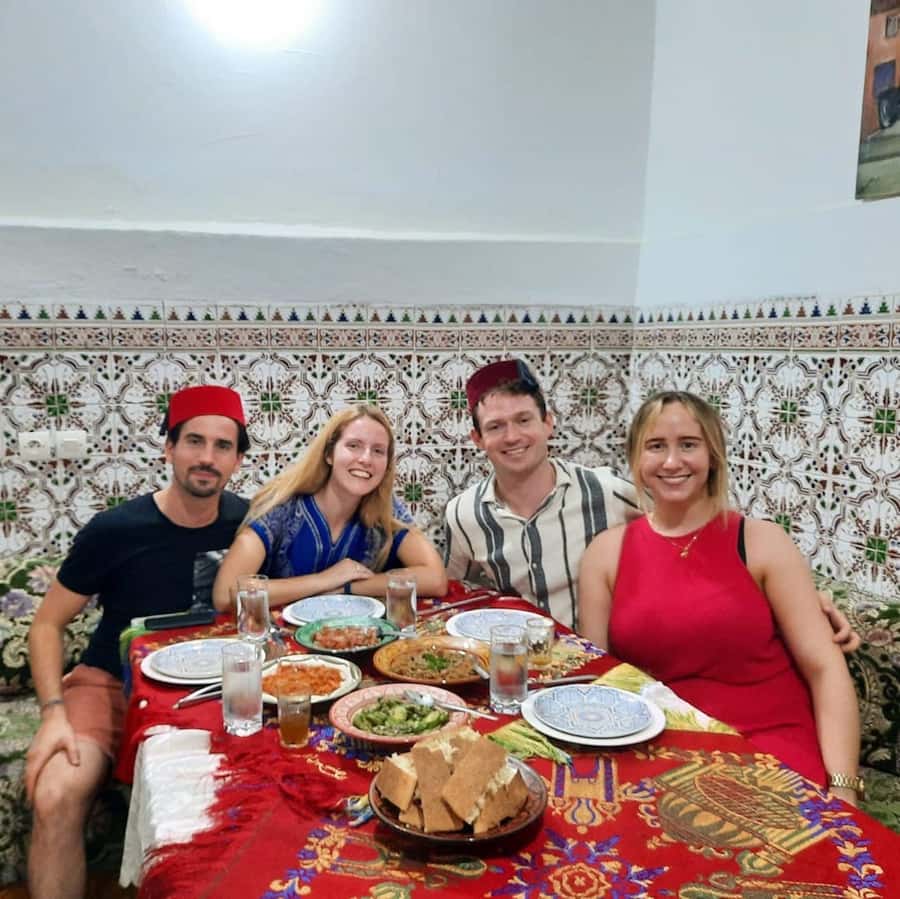
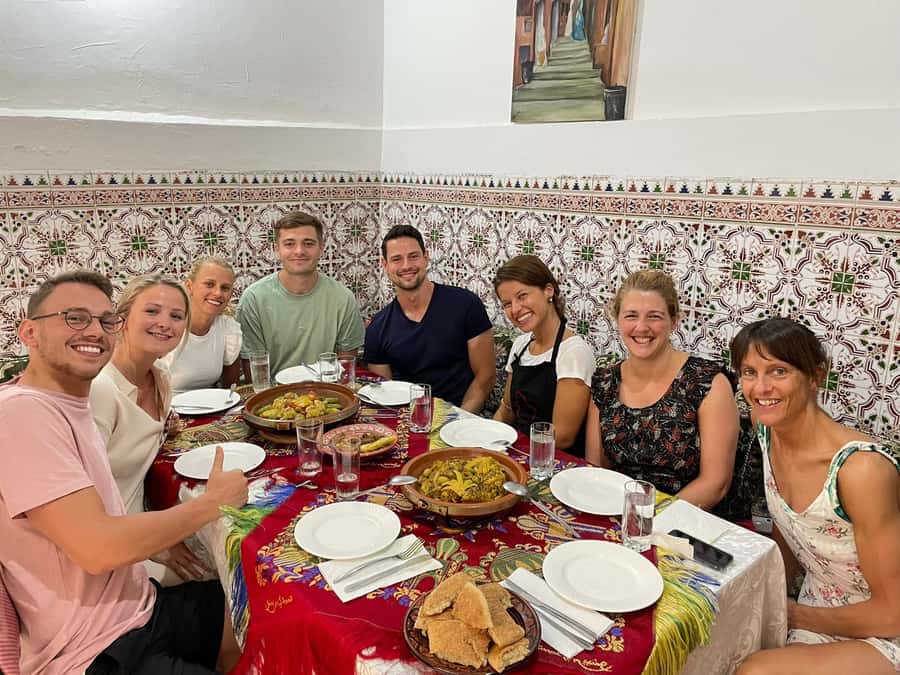
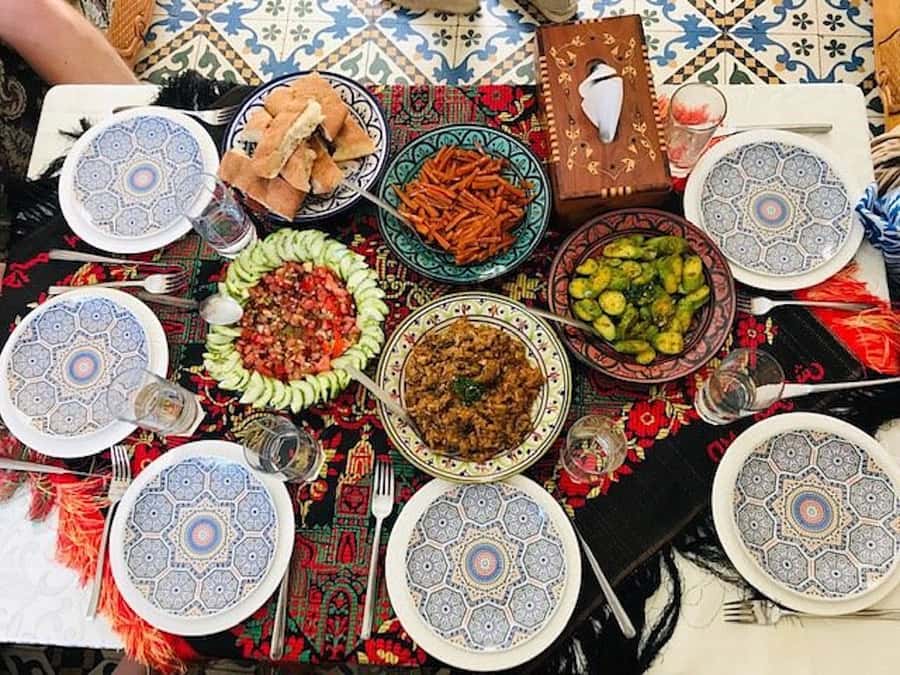
Once the cooking is finished, everyone sits down to eat what the group has prepared. This is the payoff, but it is also a social part of the class. You share dishes with people from different countries, compare favorites, and see how the ingredients changed during cooking.
The food is served as a communal meal, so this suits you if you enjoy meeting new people. It may be less appealing if you want a private, quiet dinner or if you prefer to control every stage of the cooking yourself.
The hosts keep the mood light, and humor is part of the teaching. That helps make the session comfortable for beginners. At the same time, the class is not just entertainment. You are involved from shopping through dessert, and the cooks explain the role of spices and preparation methods along the way.
Vegetarians should feel reasonably well served, since previous menus have included a vegetable tagine and several vegetable starters. Still, food restrictions should be discussed before shopping, not after the food is already prepared.
Smoking, alcohol, drugs, and pets are not allowed. These rules fit the family-style cooking environment and help keep the riad suitable for food preparation.
Timing, comfort, and practical limits
The class can last around two and a half hours, based on a typical session. That is enough time for the market, tea demonstration, cooking, and meal without turning the activity into an all-day commitment.
Start times can change. One session moved from 10 a.m. to 11 a.m., with notice given the night before. Keep an eye on any update and avoid booking a tight connection or timed attraction immediately afterward.
Hotel pickup and drop-off are not included. You need to reach the meeting point in Marrakech yourself, then follow the group through the Medina to the workshop. If you are staying outside the central Medina, allow extra time to arrive.
The venue is not suitable for wheelchair users. The market walk, Medina route, and traditional riad layout may make movement difficult for anyone with limited mobility. Comfortable shoes are recommended for all participants.
Cancellation is allowed up to 24 hours before the activity for a full refund, and you can reserve while paying later. Those terms are useful if your Marrakech schedule is still shifting, though you should still check the current booking details before confirming.
Who will enjoy this class most
I would recommend this for food lovers who want more than a restaurant meal. It is also a strong pick for first-time visitors who want a friendly introduction to Moroccan ingredients, tea, spices, and home-style dishes in one activity.
Families can do well here, particularly with older children and teenagers who like practical tasks. Couples and solo visitors should also find it easy to join in, since the shared table creates natural conversation.
Vegetarians have good reasons to consider it, because the menu can include multiple meat-free starters and a vegetable tagine. People with allergies should contact the team before the class so the menu can be discussed in advance.
This is less suited to you if you dislike group activities, cannot stand or walk comfortably through the Medina, or want a strictly private lesson. It may also frustrate cooks who expect every amount to be measured exactly during the demonstration.
Should you book Khmisa Workshops?
I think this is a very good use of $40 in Marrakech. The best parts are the market shopping, the generous meal, the local women leading the class, and the recipes you can actually attempt at home.
Book it if you want a hands-on cultural activity with plenty of food and an easy social atmosphere. Choose a smaller group if possible, confirm the meeting point at the mosque entrance, wear comfortable shoes, and mention dietary needs before the market visit.
Skip it only if you need wheelchair access, hotel transport, or a private and highly formal cooking lesson. For everyone else, the combination of tea ritual, souk shopping, tagines, salads, pastry, and shared dinner makes this one of the more useful food experiences in Marrakech.
FAQ
Where does the cooking class take place?
The class takes place at Khmisa Workshops, an intimate traditional riad in the heart of Marrakech’s Medina.
Is the market visit included?
Yes. A short visit to a local food market is included, and you help shop for the fresh ingredients used in the class.
What food will I learn to prepare?
The menu can include three to six Moroccan dishes, including starters, a main course, and milk pastilla for dessert. Previous menus have included vegetable and chicken tagines, Moroccan salads, and lemon chicken tagine.
Is lunch or dinner included?
Yes. The meal you prepare is included and is served after the cooking session.
Will I learn how to make Moroccan mint tea?
Yes. The hosts demonstrate the traditional Moroccan mint tea ritual and explain the preparation and serving process.
Are recipes provided after the class?
Yes. Electronic recipes are sent afterward by email or WhatsApp.
What languages are available?
The experience is offered in English, French, and Arabic.
Is hotel pickup included?
No. Hotel pickup and drop-off are not included, so you must reach the meeting point yourself.
Can vegetarians take part?
Yes. Previous menus have included several vegetarian starters and a vegetable tagine. Discuss dietary restrictions and allergies with the team before the market visit.
Is the class suitable for wheelchair users?
No. The experience is not suitable for wheelchair users.
How large is the group?
The group is listed as up to 12 people, though the number can vary. Smaller groups have also taken part.
Can I cancel for a full refund?
Yes. You can cancel up to 24 hours in advance for a full refund.
More Market Visits
- Marrakech: Moroccan Cooking Class with Market Visit and Meal
★ 4.9 · 347 reviews - Evening Marrakech: Gastronomic and Market Tour Inside the Medina
★ 4.5 · 283 reviews - Moroccan Cooking Class with Market Visit and Meal
★ 5.0 · 196 reviews - Essaouira: Sqala du Port, Medina Ramparts & Fish Market Tour
★ 4.7 · 212 reviews
More Cooking Classes
- Marrakech: Moroccan Cooking Workshop at La Maison Arabe
★ 5.0 · 446 reviews - Marrakesh cooking class with chef Hassan – Local dishes
★ 5.0 · 425 reviews - Marrakech: Tajine Cooking Class in a Traditional Riad
★ 4.8 · 424 reviews - Moroccan Cooking Workshop in Marrakech
★ 5.0 · 407 reviews
Just added around Marrakech
- Marrakech: Medina Souks, Hidden Markets and Shopping Tour★ 4.8 · 33 reviews
- Agafay desert sunset camel ride Tour from Marrakech★ 5.0 · 33 reviews
- Guided walking tour in Marrakech★ 4.5 · 33 reviews
- Sunset Camel Ride Marrakech with Transfers★ 5.0 · 33 reviews
- 2 Days Desert Agafay and Atlas Mountains Trek From Marrakech★ 3.8 · 33 reviews
- Magical Dinner show and Quad bike In Agafay Desert Marrakech★ 4.5 · 33 reviews
- Atlas mountains, Ourika valley, berber villages trip & Guide★ 5.0 · 33 reviews
- Marrakech: Ouzoud Waterfalls Trip, Guide & Boat + Lunch★ 4.7 · 33 reviews
Shopping Tours, compared.
Moroccan Cooking Class & Marrakech Market Visit with Chef Khmisa
Read our review →
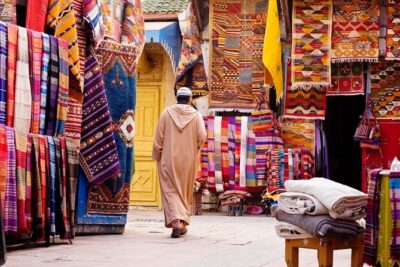
Shopping in the Souks of Marrakech Private Tour
Read our review →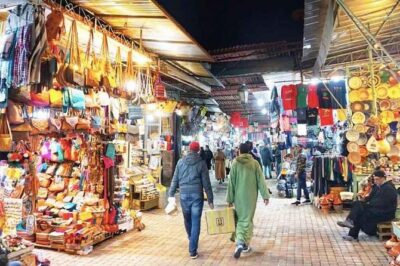
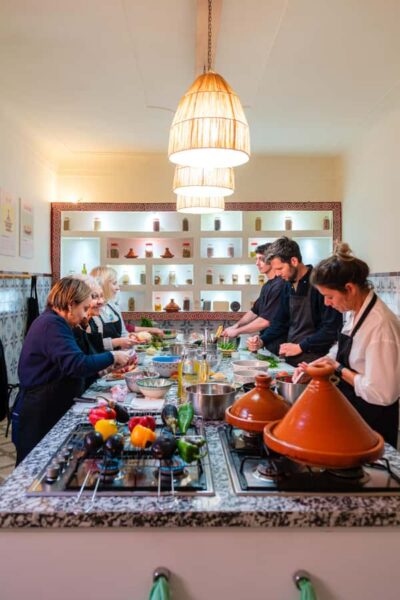
Moroccan Cooking Class with Market Visit and Meal
Read our review →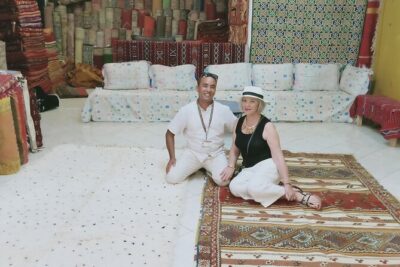

Evening Marrakech: Gastronomic and Market Tour Inside the Medina
Read our review →
Sqala du Port, Medina Ramparts & Fish Market Tour
Read our review →Browse the lists this tour appears in