
Reviewed · COOKING CLASSES
Marrakech: Moroccan Cooking Workshop at La Maison Arabe
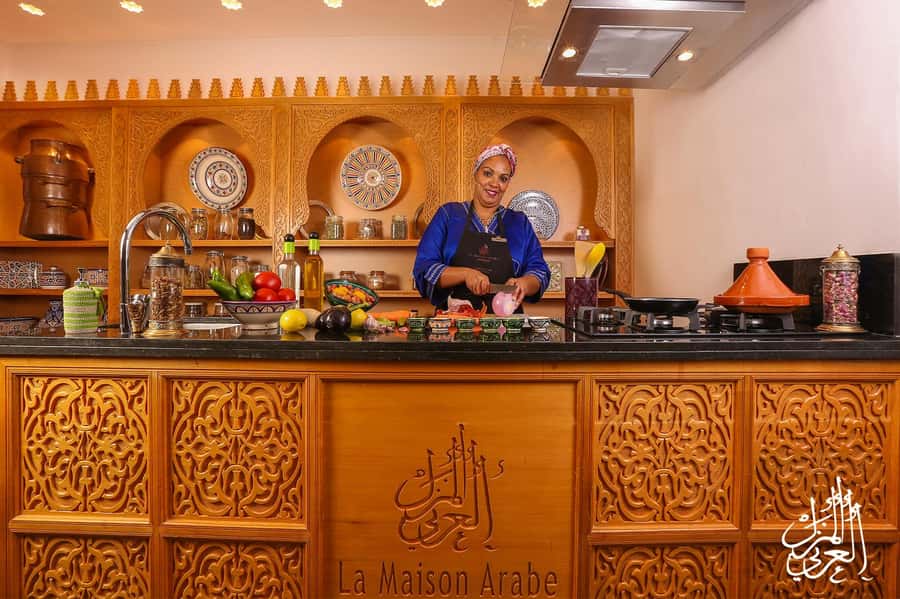
Moroccan food is best learned with your hands. This cooking workshop at La Maison Arabe gives you a practical introduction to local cuisine, from chopping and seasoning to shaping bread and preparing a tagine. You work at your own station with fresh ingredients, then sit down to eat what you made.
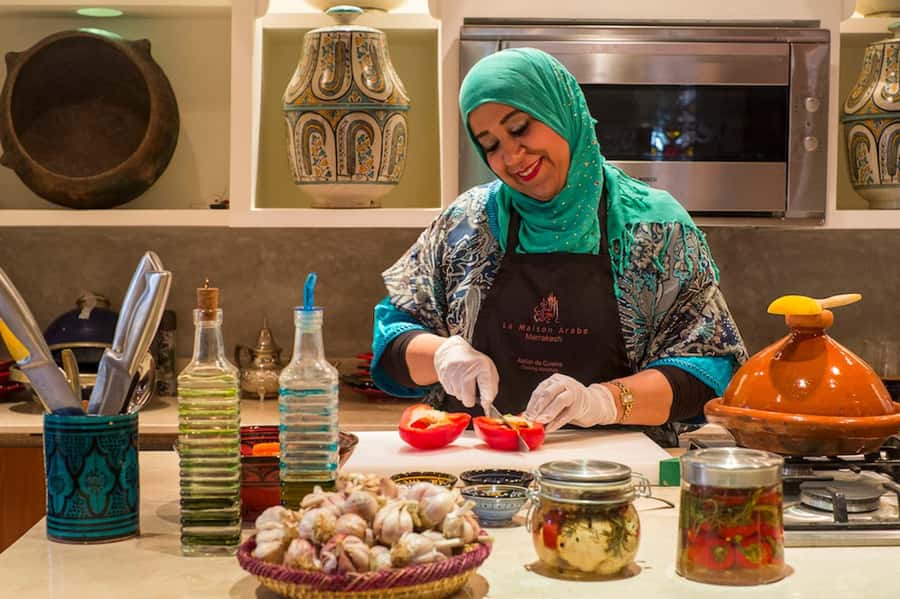
I especially like the small-group feel and the clean, modern kitchen. You are not simply watching a chef cook from across the room. You take part in the preparation, with a dada, a traditional Moroccan cook, offering instruction while a translator explains the details in Arabic, English, or French. I also like the tea ceremony and the chance to ask about Moroccan customs over a glass of mint tea.
The main consideration is the price. At $35 per person, it costs more than some Marrakech cooking classes, but the individual workstations, polished setting, food included, and friendly teaching make the extra cost easier to justify. The one-hour option is useful if you are short on time, though the three-hour version gives you a much fuller meal and a better look at Moroccan food culture.
In This Review
- Key points at a glance
- Arriving at La Maison Arabe in Marrakech
- The one-hour express class and its tagine focus
- What happens during the three-hour workshop
- Learning from a dada instead of watching a demonstration
- Eating the meal you prepared
- Clean facilities and thoughtful extras
- Who should choose this Marrakech cooking class
- Is $35 good value?
- Practical booking advice before you go
- Should you book the La Maison Arabe cooking workshop?
- FAQ
- Where does the cooking workshop meet?
- How long does the class last?
- What languages are available?
- What food is included?
- What should I bring?
- Can children or wheelchair users join?
Key points at a glance
- Two class lengths: Choose a one-hour express session for a quick tagine lesson, or a three-hour workshop covering starters, a main course, dessert, tea, and bread.
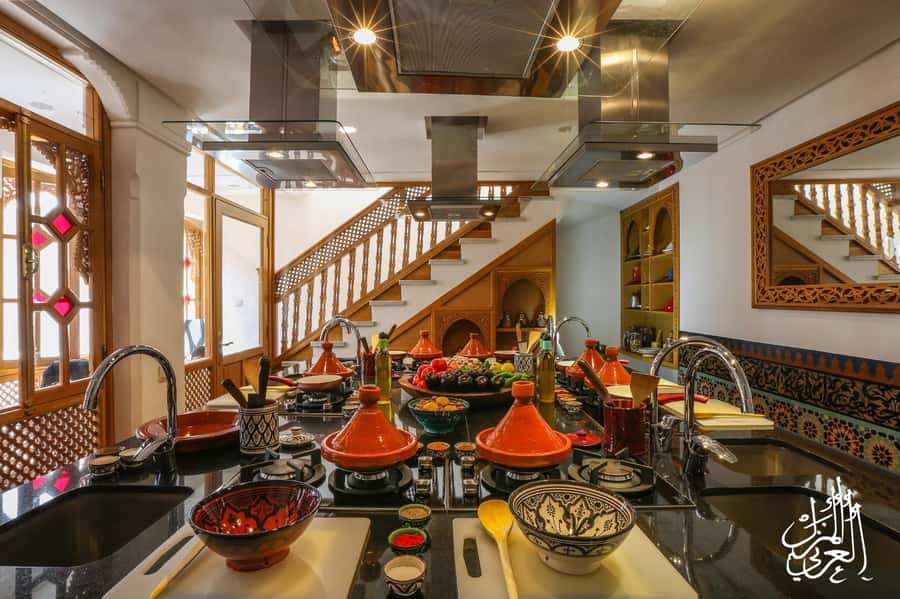
- Your own cooking station: You prepare the food yourself with fresh local ingredients and modern equipment.
- Traditional instruction: A dada leads the practical work, with live translation in Arabic, English, or French.
- More than a recipe: The longer class includes a tea ceremony, flatbread demonstration, and background on Moroccan food and customs.
- You eat what you cook: The meal is served after the preparation, so the class ends with a proper shared lunch.
- A useful keepsake: Several participants received a small tagine or another gift at the end, along with a recipe to take home.
Arriving at La Maison Arabe in Marrakech
The meeting point is the front desk of La Maison Arabe, near the medina. That makes this a handy activity to pair with a morning of exploring the souks or a visit to the nearby historic center. You do not need to arrange transport to a distant cooking school, and transportation to or from attractions is not included, so plan your route before the start time.
The workshop may take place near the Riad-Hotel La Maison Arabe or in the property’s secret gardens. The setting is part of the appeal. You get a break from the noise and tight lanes of the medina, then move into a purpose-built cooking space with individual stations and modern equipment.
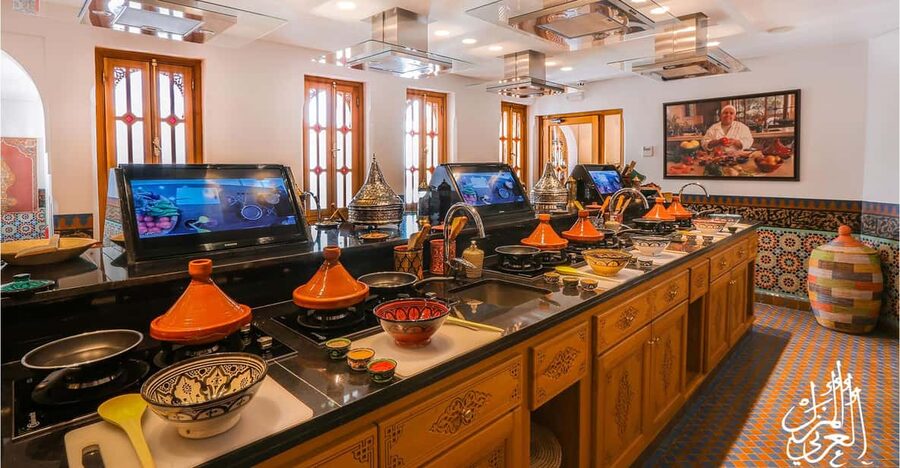
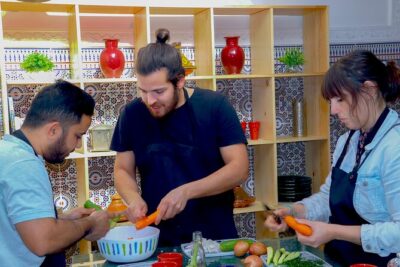
That setup matters. A cooking class can become frustrating when several people crowd around one cutting board or wait for a single stove. Here, you have room to handle the ingredients yourself. The clean, organized kitchen was one of the most praised parts of the experience, and it gives the class a calm, professional rhythm.
Wear comfortable clothes and bring water. Drinks are not included, and outside drinks are not allowed, so do not arrive expecting to bring your own refreshments into the workshop.
More Cooking Classes in Marrakech
- Marrakech: Moroccan Cooking Class with Pickup
★ 4.6 · 1,862 reviews - Marrakech: Traditional Moroccan Cooking Class & Market Visit
★ 4.8 · 1,861 reviews - Marrakesh: Moroccan Dishes Cooking Class with a Local Chef
★ 5.0 · 1,615 reviews
The one-hour express class and its tagine focus
The express class is the better choice if you want a short, hands-on activity rather than a full culinary afternoon. The class moves quickly into preparation, with the cook explaining the ingredients, seasoning, and basic method as you work.
Chicken tagine is a common focus of the shorter session. You prepare the dish at your own station, follow the instructions, and then eat it afterward. The process is approachable for a home cook, and the recipes are presented in a way that does not require professional kitchen skills.
I like this format for a first taste of Moroccan cooking. You learn the central idea behind tagine, how the flavors build, and how the cooking vessel helps create a tender, fragrant dish. You also avoid committing half a day to a class when your Marrakech schedule is already full.
The trade-off is clear: one hour gives you a single main dish and less time for cultural background. You should choose it if your priority is making and eating tagine. If you want starters, dessert, tea, and bread as part of the meal, book the longer option.
The food itself is a strong reason to take the class. Several people found their homemade chicken tagine among the best they ate in Marrakech, which says something about the value of preparing it carefully rather than simply ordering it at a restaurant. You also get the satisfaction of seeing the dish come together under your own knife and spoon.
What happens during the three-hour workshop
The three-hour version is not three straight hours of chopping. It is a paced session that combines cooking, demonstrations, explanations, and a sit-down meal. That makes it feel more like a cultural activity than a basic recipe lesson.
You may prepare two appetizers, a tagine or couscous main course, and dessert. The exact dishes can vary, but the longer format is designed to show more of the Moroccan table. You learn how separate plates work together, rather than leaving with only one recipe.
The workshop also includes handmade flatbread. You watch a demonstration and get a better sense of how bread fits into Moroccan meals. The bread is not just an extra side dish. It is part of the way food is served and eaten, and it helps you understand the everyday side of the cuisine.
A tea ceremony adds another layer. You learn about the Moroccan tea ritual, including the careful serving style, while hearing more about food, hospitality, and local customs. The tea portion gives you a welcome pause between cooking tasks and creates time for questions.
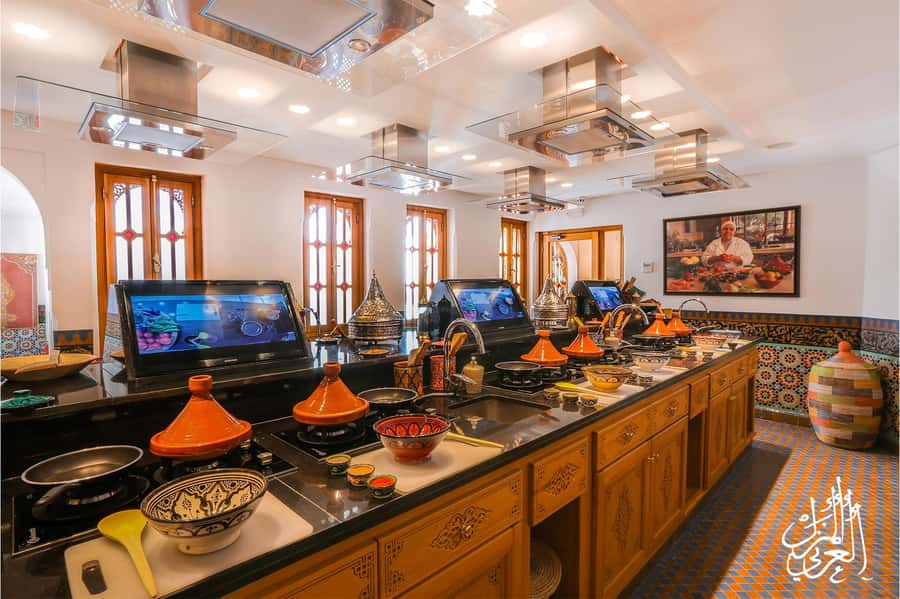
The pace seems to suit mixed groups. You might be cooking with a couple, a family, colleagues, or someone visiting alone. The instructors use live translation to include different language groups, and the teaching is supported by screens in at least some sessions. That visual help is useful when you are trying to follow a recipe while also handling ingredients.
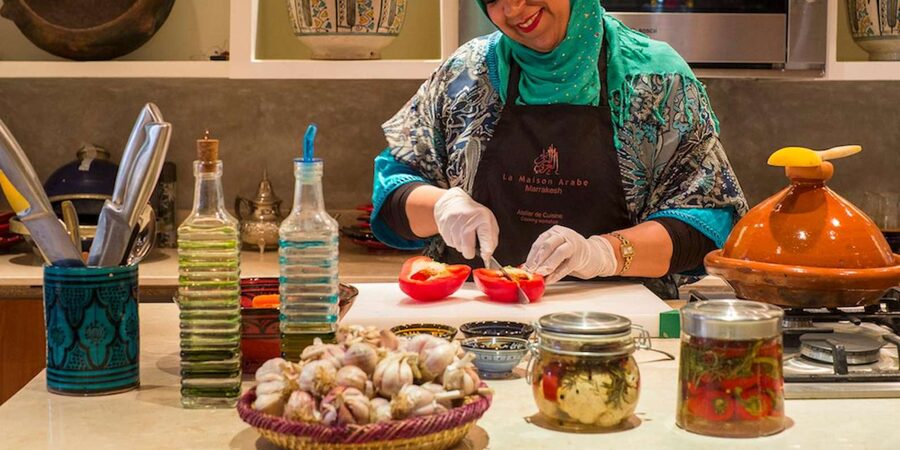
You do not have to be an experienced cook. The instructions are designed for ordinary home cooks, and the staff guide you through each stage. The cooks named in the feedback include Hayat, Wafa, Sanaa, Fatiha, Rokaya, Sana, Hasna, and Habiba. Different sessions may have different staff, but the repeated praise for their warmth, patience, and clear explanations is consistent.
Learning from a dada instead of watching a demonstration
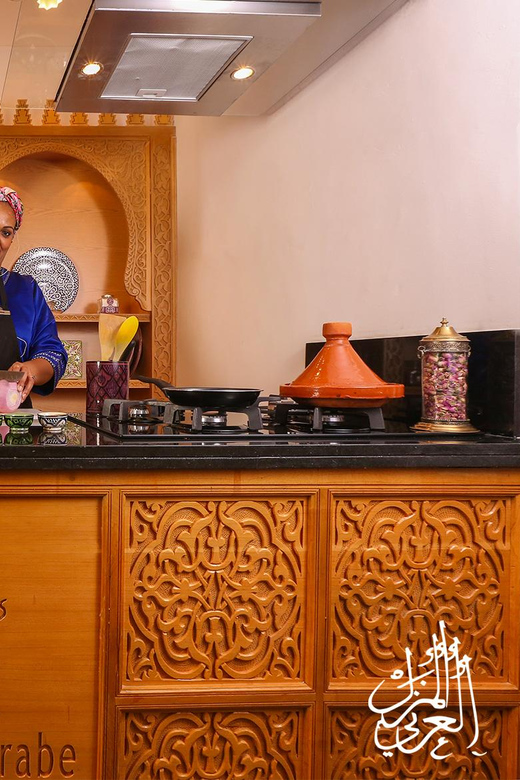
A dada is a traditional Moroccan cook, and that role gives the class a link to home-style cooking rather than only restaurant technique. The instructor does not just recite measurements. You hear practical tips about preparation, spices, and the small choices that affect the finished dish.
The translation helps keep the class accessible. Arabic, English, and French are listed as available languages, and the staff translate explanations for mixed groups. This is especially helpful when the cook is speaking French or Arabic and you want to understand not only what to do, but why you are doing it.
The teaching also reaches beyond food. You can ask questions about Moroccan culture as the tea is served, and the longer class may include the history of Moroccan cuisine, spices, and tea. I value this context because it turns a recipe into something you can remember and use.
Do not expect a formal culinary qualification or advanced chef training. This is a friendly introduction to Moroccan food, not a professional course. The appeal is the combination of practical instruction, local insight, and a meal you can enjoy immediately.
A few more Marrakech trips worth weighing up
- Moroccan Cooking Class & Marrakech Market Visit with Chef Khmisa
★ 5.0 · 1,504 reviews - Half-Day Cooking Class with Local Chef Laila in Marrakech
★ 5.0 · 952 reviews - Marrakech: Pottery Workshop with Moroccan Tea
★ 4.8 · 756 reviews - Marrakech: Moroccan Cooking Class with a Local Family
★ 4.9 · 668 reviews
Eating the meal you prepared
The final meal is an important part of the experience. After the chopping, stirring, and demonstrations, you sit down and eat the dishes you helped prepare. That simple ending gives the class a clear reward and lets you compare your result with the instructor’s guidance.
The longer session can include appetizers, the main course, dessert, bread, and tea. The express session focuses more tightly on the main dish, but you still taste the food you made. In some sessions, the meal is enjoyed in the hotel restaurant or on a rooftop, adding a more relaxed finish.
You are not rushed out as soon as the cooking ends. One participant described lingering to chat with the group after the meal, and that social element is part of the charm. Cooking creates an easy reason to talk, even if you arrived without knowing anyone else.
Vegetarian needs were handled well in at least one group, but the supplied information does not spell out every available menu. If you have dietary restrictions, ask when booking rather than assuming the menu can be changed.
Clean facilities and thoughtful extras
The facility is a major reason the $35 price can make sense. You get a modern workshop, clean work areas, good organization, and your own place to prepare the food. People who have taken cooking classes elsewhere may recognize the difference immediately.
The equipment is described as state-of-the-art, but the class remains focused on traditional dishes. That is a useful mix. You learn old recipes and methods without having to wrestle with a cramped or poorly supplied kitchen.
A small gift at the end is another pleasant touch. Several sessions included a miniature tagine or a similar keepsake, and some people also received a recipe. The gift is not the reason to book, but it gives you something tangible to take home and may encourage you to try the dish again.
The recipes are not presented as impossibly complicated. One participant was surprised by how quickly and easily the chicken tagine came together, then planned to make it at home. That is a good test of a cooking class: you should leave with a dish you can remember, not just a pleasant afternoon you cannot repeat.
Who should choose this Marrakech cooking class
I would recommend the workshop to several types of visitors:
- You want a hands-on activity that breaks up sightseeing.
- You enjoy Moroccan food and want to understand how it is made.
- You are looking for a social activity for friends, couples, family, or colleagues.
- You prefer a clean, organized setting over a rougher market-style lesson.
- You want a recipe and practical techniques you can use at home.
- You have only an hour and want a focused tagine experience.
The class is not suitable for children under 12 or wheelchair users, according to the activity information. The one-hour session works for a tight itinerary, while the three-hour class is better for anyone who wants the full meal and cultural background.
A 12-year-old did enjoy one session with an older family member, but the formal age rule says children under 12 cannot take part. Keep that restriction in mind when planning a family day.
Is $35 good value?
At $35 per person, this is not the cheapest food lesson in Marrakech. You can find simpler cooking activities at lower prices, particularly those held in less formal spaces.
The value comes from what is included. You get the instruction, ingredients, food tasting, lunch, afternoon tea, live commentary, and entertainment. The modern kitchen, individual station, translation, multi-course meal in the longer format, and possible gift all add to the overall package.
I would choose the express class when time matters most. I would pay for the three-hour version if you want to make several dishes, learn about tea and bread, and sit down to a fuller meal. The longer option also gives you more time to ask questions and enjoy the social side of the experience.
This is a good example of paying for organization. The class is easier to follow because the ingredients and equipment are ready, the staff are present, and the meal is part of the plan. You are buying a smooth introduction to Moroccan cooking, not only a recipe.
Practical booking advice before you go
You can cancel up to 24 hours before the activity for a full refund, and the reserve-now, pay-later option keeps your plans flexible. Starting times vary, so check availability for your chosen date rather than assuming the workshop runs at one fixed hour.
The meeting point is the La Maison Arabe front desk. Give yourself enough time to reach it, especially if you are coming through the medina on foot. If you are staying elsewhere, transportation is your responsibility.
Bring water and wear clothes you can cook in comfortably. Since drinks are not included and outside drinks are not allowed, plan to enjoy the tea provided during the session instead.
Should you book the La Maison Arabe cooking workshop?
Yes, if you want more than a restaurant meal and would like to take a piece of Moroccan cooking home with you. The class combines useful instruction, a polished kitchen, local cooks, tea culture, and a meal you prepare yourself.
Choose the one-hour express option for a quick and tasty introduction centered on tagine. Choose three hours if you want the best value from the experience, with appetizers, dessert, bread, tea, and more cultural explanation.
I would skip it only if you dislike group activities, need wheelchair access, are traveling with a child under 12, or want a very informal class at the lowest possible price. For most food lovers, the clean facilities, kind staff, and hands-on format make this a strong Marrakech activity.
FAQ
Where does the cooking workshop meet?
The meeting point is the front desk of La Maison Arabe. The workshop is near the Riad-Hotel La Maison Arabe or in the property’s secret gardens.
How long does the class last?
You can choose between a one-hour express cooking class and a three-hour cooking workshop. Starting times depend on availability.
What languages are available?
Instruction and live translation are available in Arabic, English, and French.
What food is included?
The activity includes food tasting and lunch. The three-hour format can include starters, tagine or couscous, dessert, handmade flatbread, and tea. The express class focuses on a traditional dish, often chicken tagine.
What should I bring?
Bring water and wear comfortable clothes. Drinks are not included, and outside drinks are not allowed.
Can children or wheelchair users join?
The activity is not suitable for children under 12 or wheelchair users.
More Cooking Classes
- Marrakech: Moroccan Cuisine Cooking Class in Local Home
★ 4.8 · 508 reviews - Marrakesh cooking class with chef Hassan – Local dishes
★ 5.0 · 425 reviews - Marrakech: Tajine Cooking Class in a Traditional Riad
★ 4.8 · 424 reviews - Moroccan Cooking Workshop in Marrakech
★ 5.0 · 407 reviews
Just added around Marrakech
- Marrakech: Medina Souks, Hidden Markets and Shopping Tour★ 4.8 · 33 reviews
- Agafay desert sunset camel ride Tour from Marrakech★ 5.0 · 33 reviews
- Guided walking tour in Marrakech★ 4.5 · 33 reviews
- Sunset Camel Ride Marrakech with Transfers★ 5.0 · 33 reviews
- 2 Days Desert Agafay and Atlas Mountains Trek From Marrakech★ 3.8 · 33 reviews
- Atlas mountains, Ourika valley, berber villages trip & Guide★ 5.0 · 33 reviews
- Magical Dinner show and Quad bike In Agafay Desert Marrakech★ 4.5 · 33 reviews
- Marrakech: Ouzoud Waterfalls Trip, Guide & Boat + Lunch★ 4.7 · 33 reviews
Cooking Classes, compared.
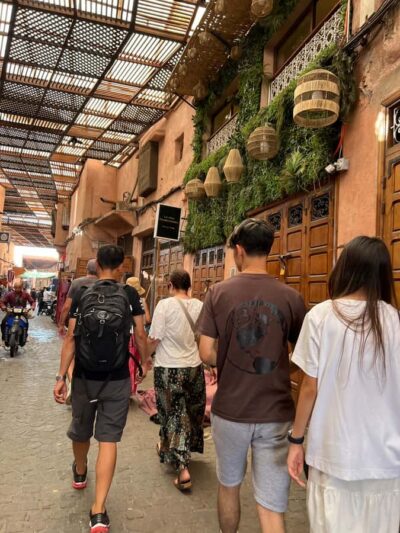
Traditional Moroccan Cooking Class & Market Visit
Read our review →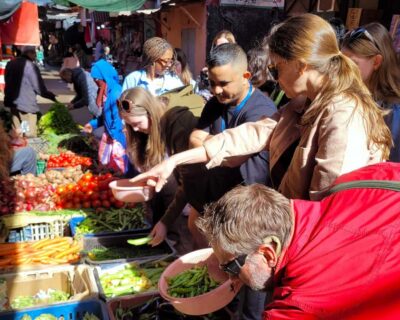
Moroccan Dishes Cooking Class with a Local Chef
Read our review →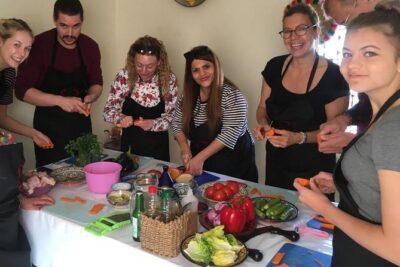
Moroccan Cooking Class & Marrakech Market Visit with Chef Khmisa
Read our review →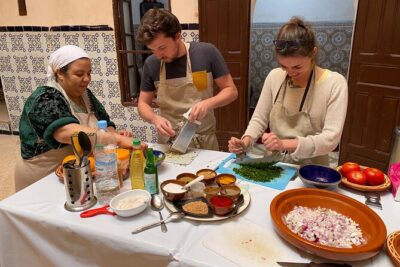
Half-Day Cooking Class with Local Chef Laila in Marrakech
Read our review →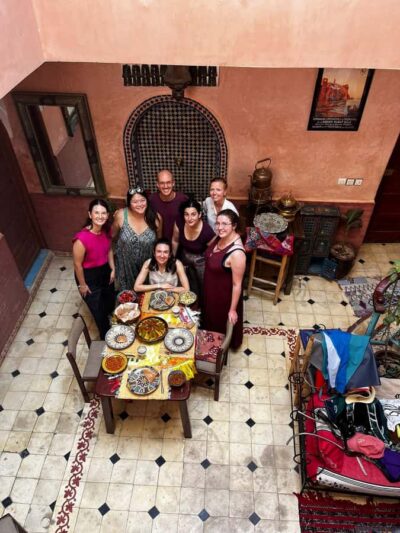
Marrakesh cooking class with chef Hassan – Local dishes
Read our review →Browse the lists this tour appears in