
Reviewed · COOKING CLASSES
Moroccan Cooking Workshop in Marrakech
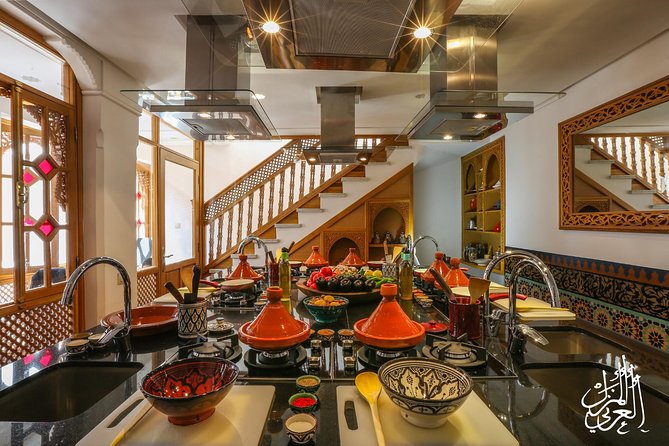
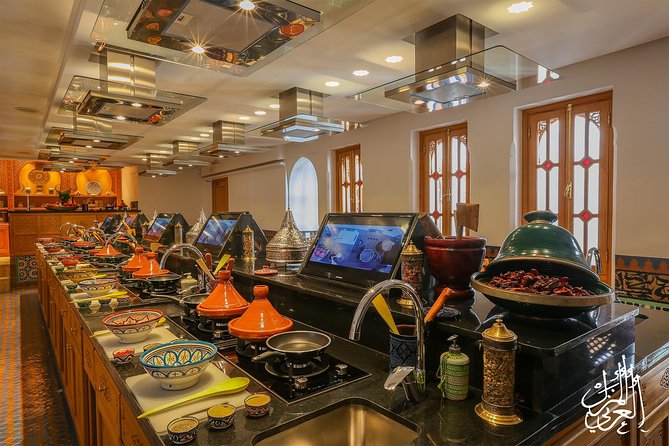
Moroccan food is better when you make it. This short class at La Maison Arabe gives you more than a meal in Marrakech: you prepare traditional dishes with fresh local ingredients, learn from a Moroccan cook, and sit down to taste the results. I especially like the individual workstations, which give you room to cook without elbowing through a crowded demonstration. I also like the tea ceremony and spice guidance, since they connect the recipes to everyday Moroccan customs.
The main drawback is the clock. The advertised class lasts about one hour, so the session is tightly planned and may feel quick if you want a long, relaxed cooking lesson. You can choose a longer option, but the short class works best when you want a useful food experience without giving up half a day of sightseeing.
In This Review
- Key points at a glance
- Arriving at La Maison Arabe in the Medina
- Moroccan tea begins the lesson
- Making bread before the main cooking
- Cooking tagine with local spices
- A meal you helped prepare
- One hour or a longer cooking session?
- What makes the workshop good value at $34.76?
- Who should book this Marrakech cooking class?
- Booking, language, and cancellation details
- FAQ
- How long does the Moroccan cooking workshop last?
- Where does the cooking class begin and end?
- Is lunch included?
- Are drinks included?
- Can children join the cooking class?
- What is the cancellation policy?
- Should you book it?
Key points at a glance
- Start with Moroccan tea: The workshop opens with a tea ceremony, giving you a practical look at an important local custom.
- Cook at your own station: La Maison Arabe provides individual workspaces, a welcome feature for solo visitors and couples.
- Learn from a Dada: A traditional Moroccan cook leads the food preparation, with help from a French and/or English interpreter.
- Make more than one course: Depending on the session, you may prepare a starter, main dish, and side, while the dessert is prepared for you.
- Taste what you cook: The class ends with a shared meal, and Moroccan wine may be available as an optional extra.
- Allow time for the setting: The workshop begins at Hotel La Maison Arabe, a beautiful place to arrive early for tea, coffee, or a cold drink.
Arriving at La Maison Arabe in the Medina
The meeting point is Hotel La Maison Arabe, at 1 Derb Assehbi in Marrakech. This is not a coach tour with hotel pickup, so you need to make your own way there and return from the same meeting point when the class ends.
That arrangement keeps the price low. At $34.76 per person, the workshop offers a meal, instruction, food preparation, tea, and a cultural introduction in one package. You are paying for an organized activity rather than simply buying lunch, but the value depends on how much you want to learn. If you only want to eat Moroccan food, a restaurant will be simpler. If you want to recreate tagine at home, this class makes better use of your money.
You might want to arrive early. The hotel is described as beautiful, and a few extra minutes for coffee, tea, or a cold drink can make the start less rushed. Since transport is not included, plan your route carefully and allow time to find the address in the Medina.
The class is promoted as a small experience, with a maximum of two participants in the additional information. One account describes a class of 14 people, so group size may vary by session or booking arrangement. If privacy is important to you, confirm the size before booking. The individual workstations still offer some personal space, even when more people are present.
More Cooking Classes in Marrakech
- Marrakech: Moroccan Cooking Class with Pickup
★ 4.6 · 1,862 reviews - Marrakech: Traditional Moroccan Cooking Class & Market Visit
★ 4.8 · 1,861 reviews - Marrakesh: Moroccan Dishes Cooking Class with a Local Chef
★ 5.0 · 1,615 reviews
Moroccan tea begins the lesson
The first formal part of the workshop is a Moroccan tea ceremony. This is a smart opening because tea is not just a drink here. It gives the class a cultural starting point before you begin chopping, mixing, and cooking.
You will also receive afternoon tea as part of the experience. The ceremony is useful for first-time visitors because it shows the care and ritual connected with serving mint tea. One-hour classes need to move quickly, but the tea gives you a calm introduction before the kitchen work begins.
The class includes an interpreter in French and/or English. A multilingual guide may operate the session, so the exact language mix can vary. For English speakers, the interpreter is especially helpful when instructions involve spice quantities, cooking order, or traditional terms.
This part is also a good chance to ask questions. The strongest teaching moments seem to come from small details, such as why certain spices are paired, how Moroccan tea is prepared, and how food customs fit into daily life. You will get more from the workshop if you treat it as a lesson in food culture, not just a quick recipe demonstration.
Making bread before the main cooking
The next stage covers the making of Moroccan bread. The session includes a demonstration, so you can watch the technique before moving on to the rest of the meal.
Bread is a useful choice for a short class because it gives you a direct connection to the basic Moroccan table. It also breaks up the lesson. Instead of focusing only on a tagine, you see how a simple staple fits into the meal.
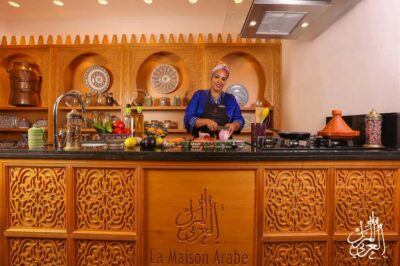
The class is led by a Dada, a traditional Moroccan cook. That matters. You are not only following a generic international recipe adapted for tourists. You are being shown dishes and methods rooted in Moroccan home cooking, with local ingredients and familiar kitchen customs.
The exact bread preparation is not specified, so you should not expect a full bakery lesson. Think of it as a focused demonstration within a wider meal. If bread is your main interest, the longer class may give you more time to practice.
Cooking tagine with local spices
The main hands-on part is the cooking lesson with the Dada. You work with fresh local ingredients and follow instructions at your own workstation. The dishes can vary, but tagine is a recurring highlight. One session included chicken tagine, and the finished dish received especially strong praise for flavor.
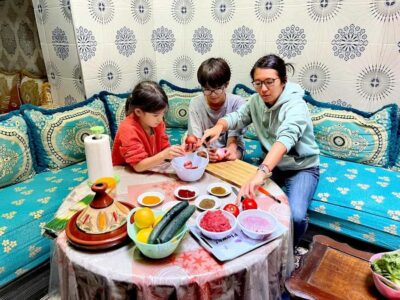
The personal station is one of the best practical features. You can see each step clearly and adjust parts of the dish to your taste. One solo visitor particularly appreciated being able to add plenty of garlic. That small detail shows the value of preparing your own food rather than watching someone else do it.
Expect the lesson to cover Moroccan spices and their role in the food. The spice instruction is one of the most useful parts for anyone planning to cook at home. Instead of simply handing you a finished plate, the class explains how the seasoning shapes the dish.
The instructors are present to help when a step becomes confusing. Reports of patient teachers and kind kitchen staff come up repeatedly, with names including Mohammad, Wafa, Fatiha, and Dada Habiba. Hasna is also described as an interpreter and assistant who helps with the cultural explanations and general organization. Staff can vary, but the teaching team appears to be central to the experience.
Do not expect a slow, professional-chef training course in the one-hour format. The pace is brisk. You will learn the method and take part in the preparation, but you may not spend long practicing every knife cut or cooking stage. That is the tradeoff for fitting the workshop into a morning or afternoon in Marrakech.
A few more Marrakech trips worth weighing up
- Moroccan Cooking Class & Marrakech Market Visit with Chef Khmisa
★ 5.0 · 1,504 reviews - Half-Day Cooking Class with Local Chef Laila in Marrakech
★ 5.0 · 952 reviews - Marrakech: Pottery Workshop with Moroccan Tea
★ 4.8 · 756 reviews - Marrakech: Moroccan Cooking Class with a Local Family
★ 4.9 · 668 reviews
A meal you helped prepare
The tasting at the end is where the class pays off. You sit down and eat the food you prepared, rather than leaving with only notes and a recipe. Food tasting and lunch are included, so the activity can function as a light meal, depending on the dishes and the size of your appetite.
The menu is not fixed in the information provided. The accounts describe tagine, along with a starter and side dish in some sessions. The dessert may be prepared by the staff rather than by participants. That setup makes sense in a one-hour class, since dessert often needs time that the short session does not have.
The final meal also gives you a chance to compare the cooking process with the result. You may discover that the tagine tastes different from the Moroccan dishes you have ordered in restaurants, simply because you controlled the seasoning and preparation.
Moroccan wine can be added as an option. Drinks are otherwise not included, so budget separately if you want wine or another beverage. The listed inclusions also refer to afternoon tea, lunch, food tasting, live commentary, and live entertainment, although the cooking, tea, and meal are the clearest parts of the described schedule.
One hour or a longer cooking session?
The one-hour class is best for a packed Marrakech itinerary. It gives you a taste of Moroccan cooking and culture without demanding an entire afternoon. It also suits anyone with a same-day flight or another fixed appointment. One couple chose the one-hour version for precisely that reason and still found it worthwhile.
The short format is also a good match for solo visitors. You have your own workstation, and the class does not require you to arrive with a large group. Couples, parent-and-teen pairs, and friends can also enjoy it. Children under 12 are not permitted for security reasons, but a 14-year-old took part successfully with a parent.
Choose the longer option if cooking is one of your main reasons for visiting Marrakech. A three-hour lesson should give you more breathing room for preparation, questions, and the meal, though the exact menu and schedule are not stated. One participant enjoyed the one-hour course so much that they booked the three-hour lesson a few days later.
The class is not ideal if you want a highly detailed pastry course, a market visit, or transport around the city. None of those are part of the stated program. Its strength is focus: tea, bread, Moroccan cooking, and eating the finished food.
What makes the workshop good value at $34.76?
The price is reasonable for Marrakech because it combines several costs in one booking. You receive instruction, ingredients, a tasting, lunch, tea, and access to a professional kitchen setting. You also leave with techniques you can use again, which gives the activity more lasting value than a standard restaurant meal.
The individual station adds value for beginners. You are not merely watching a demonstration from the back of a room. You take part in the preparation and can ask for help when needed.
There are a few limits. Drinks are not included, except for the afternoon tea specified in the program. Transport is also excluded. The class lasts about one hour, so the amount of teaching is naturally limited. You should book it for the hands-on element and the cultural setting, not because it is the cheapest way to get fed.
A recipe book may be available to buy separately. One participant considered it a must, especially for anyone hoping to make the dishes at home. Since the included materials are not fully specified, ask at the class about recipes if you want a reliable way to repeat the meal.
Who should book this Marrakech cooking class?
I would recommend it most strongly to:
- First-time visitors who want a practical introduction to Moroccan food
- Solo visitors who value a personal workstation
- Couples looking for a shared activity beyond sightseeing
- Families with children aged 12 or older
- Home cooks interested in tagine, spices, bread, and mint tea
- Visitors with only an hour to spare
- Anyone who prefers a cultural activity that ends with lunch
It is less suitable for children under 12, since they are not permitted for security reasons. It may also disappoint serious cooks who want extended practice or a full market-to-table day.
The workshop works particularly well in the middle of a Marrakech visit. By then, you may have tasted tagine in restaurants and seen spices in the souks. The class helps connect those impressions to actual cooking methods. Afterward, you can recognize more of what is on your plate and perhaps recreate it at home.
Booking, language, and cancellation details
Confirmation arrives within 48 hours, subject to availability. The experience is booked an average of 21 days ahead, so I would not leave it until the last day if your schedule is tight.
Free cancellation is available up to 24 hours before the local start time. Cancel less than 24 hours ahead, or make changes inside that window, and you will not receive a refund.
The workshop is near public transportation, but no ride to or from the attraction is provided. It ends back at La Maison Arabe, so plan your next stop from there.
FAQ
How long does the Moroccan cooking workshop last?
The advertised short workshop lasts approximately one hour. Longer class options are available, including a three-hour lesson.
Where does the cooking class begin and end?
It begins at Hotel La Maison Arabe, 1 Derb Assehbi, Marrakech 40000, Morocco. The activity ends back at the same meeting point.
Is lunch included?
Yes. Lunch and food tasting are listed as included. The exact dishes can vary, but tagine, a starter, and a side dish are described in the class experience.
Are drinks included?
Afternoon tea is included. Other drinks are not included, although Moroccan wine may be available as an optional addition.
Can children join the cooking class?
Children under 12 are not permitted for security reasons. A 14-year-old has taken part with a parent.
What is the cancellation policy?
You can cancel for a full refund up to 24 hours before the experience start time. Cancellations or changes made less than 24 hours ahead are not refunded or accepted.
Should you book it?
Yes, if you want a compact, hands-on introduction to Moroccan food. The combination of tea ceremony, bread demonstration, personal workstation, local ingredients, helpful instruction, and a meal you prepare yourself gives the $34.76 price real value.
Book the one-hour class when your Marrakech schedule is full. Choose the longer option when cooking is a main interest and you want time to ask questions and work at a slower pace. Arrive early, confirm the session language and group size if those details matter to you, and save room for the tagine you are about to make.
More Cooking Classes
- Marrakech: Moroccan Cuisine Cooking Class in Local Home
★ 4.8 · 508 reviews - Marrakech: Moroccan Cooking Workshop at La Maison Arabe
★ 5.0 · 446 reviews - Marrakesh cooking class with chef Hassan – Local dishes
★ 5.0 · 425 reviews - Marrakech: Tajine Cooking Class in a Traditional Riad
★ 4.8 · 424 reviews
Just added around Marrakech
- Marrakech: Medina Souks, Hidden Markets and Shopping Tour★ 4.8 · 33 reviews
- Guided walking tour in Marrakech★ 4.5 · 33 reviews
- Sunset Camel Ride Marrakech with Transfers★ 5.0 · 33 reviews
- Agafay desert sunset camel ride Tour from Marrakech★ 5.0 · 33 reviews
- 2 Days Desert Agafay and Atlas Mountains Trek From Marrakech★ 3.8 · 33 reviews
- Atlas mountains, Ourika valley, berber villages trip & Guide★ 5.0 · 33 reviews
- Magical Dinner show and Quad bike In Agafay Desert Marrakech★ 4.5 · 33 reviews
- Camel Ride at the Palm Groves in Marrakech★ 5.0 · 33 reviews
Cooking Classes, compared.
Traditional Moroccan Cooking Class & Market Visit
Read our review →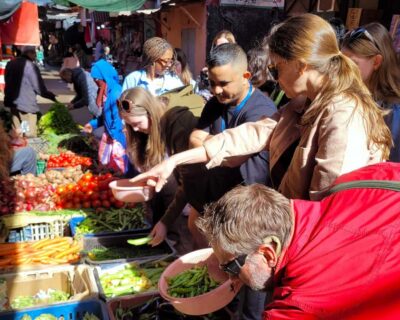
Moroccan Dishes Cooking Class with a Local Chef
Read our review →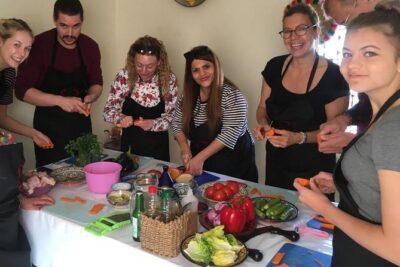
Moroccan Cooking Class & Marrakech Market Visit with Chef Khmisa
Read our review →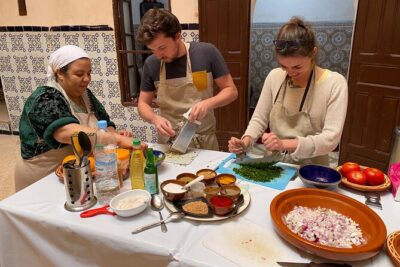
Half-Day Cooking Class with Local Chef Laila in Marrakech
Read our review →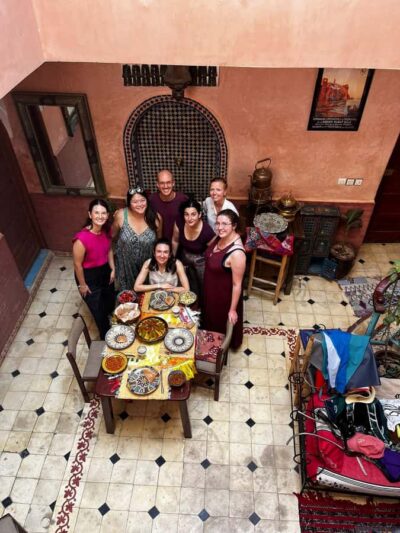
Browse the lists this tour appears in