
Reviewed · BERBER VILLAGE TOURS
Traditional Moroccan and Berber cooking classes
Food opens the door to Morocco. This three-hour cooking class in Essaouira gives you more than a meal: you help prepare traditional dishes, learn how spices work, and eat around a Moroccan table in a private home setting. I especially like the use of fresh local produce and the chance to cook rather than simply watch. I also like the warm, personal teaching style of Khadija, who speaks French, English, Arabic, and Berber. The main point to consider is that private transportation is not included, so you must make your own way to 21 Av. Princesse Lalla Amina.
At $58.31 per person, this is a fair price for a private class that includes food, tea or coffee, bottled water, small Moroccan cakes, and recipe cards. The format suits couples, families, and small groups who want a relaxed cultural activity. It may be less appealing if you want a large professional kitchen, a market visit, or a full-day food tour.
In This Review
- Key points at a glance
- A Moroccan welcome over mint tea
- Choosing your Moroccan menu
- The spice lesson that makes the food click
- From chopping board to simmering tagine
- Moroccan salads with real character
- The shared table is part of the lesson
- What the $58.31 price really buys
- Who will enjoy this class most
- Timing, meeting point, and practical planning
- The strongest reasons to book
- Should you book the Essaouira cooking class?
- FAQ
- Where does the cooking class begin?
- Where does the activity end?
- How long does the cooking class last?
- What dishes might I prepare?
- Are drinks and snacks included?
- Can I cancel for a full refund?
Key points at a glance
- Khadija teaches in four languages: French, English, Arabic, and Berber, making the class accessible to a wide range of visitors.
- You cook the meal from start to finish: Expect hands-on work with cutting, seasoning, and recipe-specific cooking methods.
- The menu can include Moroccan classics: Possible dishes include tagine, couscous, pastilla, Moroccan salads, and home-made desserts.
- The setting is private and personal: Only your group takes part, and the class ends with a shared meal at the same location.
- Spices get proper attention: You learn about ras el hanout, cumin, saffron, cinnamon, preserved lemon, and olives.
- The activity is easy to plan: It lasts about three hours, offers mobile ticketing, and allows free cancellation up to 24 hours before the start.
A Moroccan welcome over mint tea
The class begins at 21 Av. Princesse Lalla Amina in Essaouira. You arrive at a Moroccan home setting, where the opening moments focus on hospitality rather than rushing straight to the chopping board.
The first taste is usually Moroccan cakes with mint tea or spiced coffee. This is not just filler while the kitchen gets ready. You also learn how Moroccan mint tea is prepared, an everyday ritual that carries plenty of social meaning. The tea itself sets the pace for the class: slow down, talk, and pay attention to the small details.
Khadija is the host and cooking teacher. Her ability to speak French, English, Arabic, and Berber is useful for more than translation. It lets her explain food in a personal, flexible way, especially when you have questions about ingredients, family cooking, or the role a dish plays in Moroccan life.
The atmosphere is intended to feel welcoming and domestic. One especially appealing detail is the shared meal around a carefully prepared Moroccan table. This is not a quick plate handed over at the end. You take part in preparing the food, then sit down together to enjoy what the group has made.
The home setting also means the class is private. Only your group participates, which gives you more room to ask questions and work at a comfortable pace. The trade-off is that the format may feel less polished than a large cooking school with several stations and formal demonstrations. If you prefer personal contact, that is likely a good bargain.
More Cooking Classes in Essaouira
- Essaouira: HOW TO BE A REAL MOROCCAN CHEF
★ 4.9 · 154 reviews - l’Atelier – Moroccan Cooking Workshop in Essaouira
★ 5.0 · 110 reviews - How To Be A Real Moroccan Chef
★ 5.0 · 101 reviews
Choosing your Moroccan menu
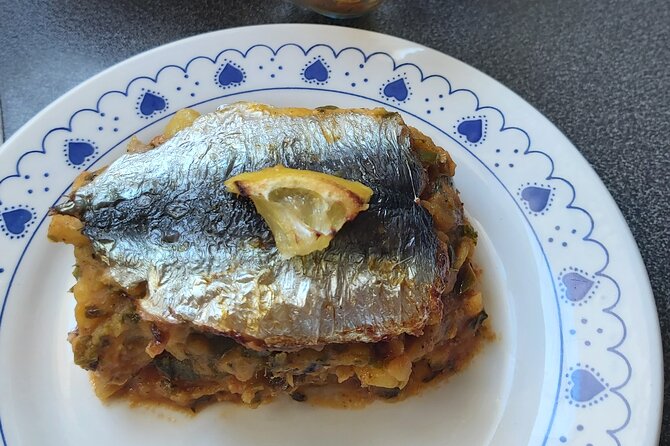
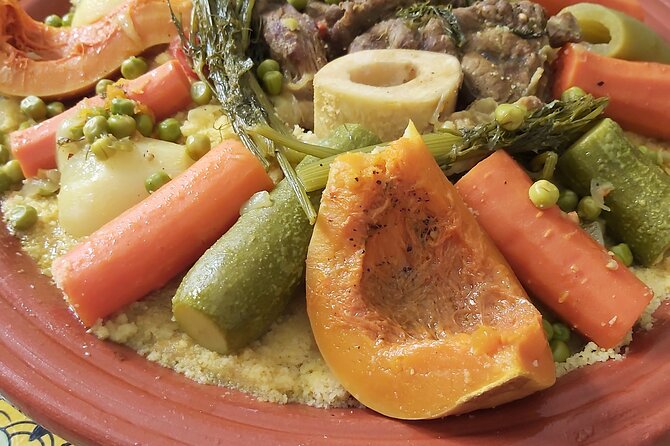
The precise menu depends on the chosen class option, but the possible dishes cover many of the best-known parts of Moroccan cooking. You may prepare a tagine, couscous, pastilla, Moroccan salads, or a dessert made in the home.
That flexibility is useful because not every visitor wants the same thing. Tagine offers an introduction to slow cooking and careful seasoning. Couscous teaches a different method, with grains that are steamed rather than simply boiled. Pastilla brings another set of skills, with thin pastry and a crisp finish.
You should not expect to prepare every dish listed in one three-hour session. The menu is presented at the beginning, and the class follows the selected recipes. This keeps the activity manageable and gives you enough time to take part in the important steps.
If you have food preferences, share them when booking or as early as possible. The host has shown flexibility with food wishes, but the supplied information does not promise that every dietary requirement can be met. A clear conversation in advance is the sensible approach.
The spice lesson that makes the food click
Moroccan food is often reduced to a vague idea of being heavily spiced. This class gives you a better explanation. The point is not simply to add more seasoning, but to understand what each ingredient contributes.
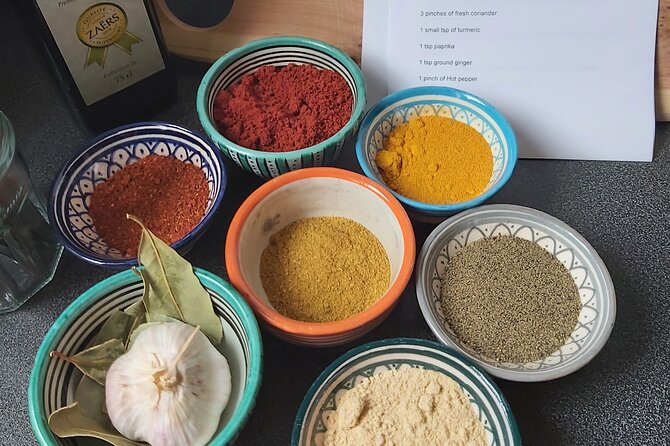
You are introduced to ras el hanout, cumin, saffron, cinnamon, preserved lemon, and olives. These ingredients do very different jobs. Cumin can bring earthiness, cinnamon adds warmth, saffron contributes fragrance and color, and preserved lemon gives a sharp salty note that fresh lemon cannot quite match.
Ras el hanout is especially interesting because it is a spice blend rather than a single fixed ingredient. Learning how such blends are used helps you understand why two Moroccan kitchens can prepare similar dishes with noticeably different flavors.
The presentation is practical. You see the condiments, hear how they are used, and then apply them while preparing the meal. That link between explanation and action is important. You are more likely to remember why a spice matters when you have handled it and tasted the finished food.
From chopping board to simmering tagine
The hands-on part covers the whole preparation process. You cut ingredients, season them, and help assemble the main dish. This is a better fit for people who want to learn a few useful techniques than for anyone hoping to sit back and watch a chef do everything.
For tagine, the key idea is slow cooking. Ingredients are seasoned and allowed to cook gently so their flavors develop together. The class shows how the dish is built, rather than treating the tagine as a mysterious restaurant specialty.
Couscous brings a different lesson. The grains are steamed, and that method affects their texture. If couscous is on your menu, you learn the technique behind the fluffy result rather than relying on a packet and boiling water.
Pastilla is the most pastry-focused option. Its appeal comes from the contrast between a crisp outer layer and a seasoned filling. It is also the kind of dish where careful handling matters, so it may require more attention than a simple salad.
The exact pace will depend on your group and the recipe selected. A private class gives the teacher some freedom to adapt explanations, but three hours is still a limited window. You should expect a focused introduction to Moroccan cooking, not a professional chef qualification.
More Berber Village Tours:
- Berber villages : Atlas Mountains Day Hike from Marrakech
★ 5.0 · 14,007 reviews - Marrakech: Balloon Flight, Berber Breakfast & Certificate
★ 4.8 · 8,164 reviews - Marrakech: Majorelle Garden, YSL, and Berber Museum Entry
★ 4.6 · 5,168 reviews - Marrakech: Hot Air Balloon Flight with Berber Breakfast
★ 4.5 · 3,832 reviews
Moroccan salads with real character
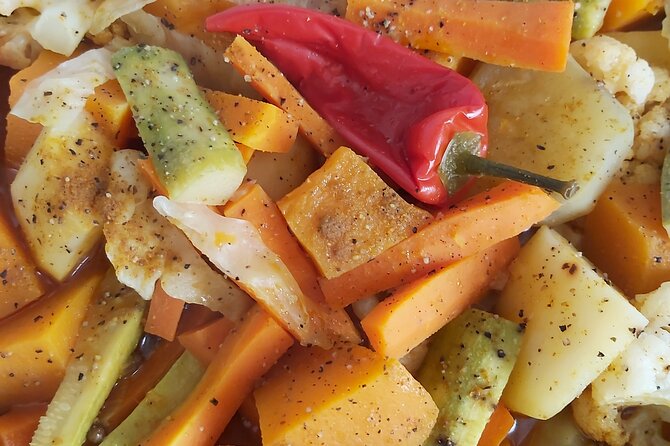
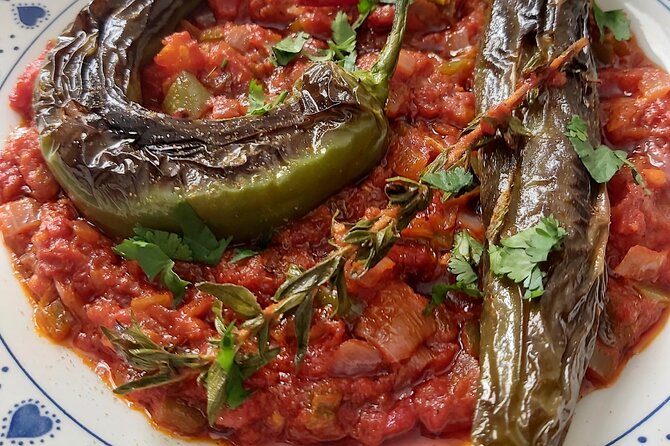
The salads are not an afterthought. They provide a useful lesson in how vegetables are seasoned and cooked in Moroccan homes.
Possible dishes include carrot salad with chermoula, aubergine zaalouk, and taktouka. These recipes show different approaches to texture and flavor. Carrots can be brightened with herbs and seasoning, aubergine can be cooked into a soft, smoky mixture, and taktouka brings peppers and tomatoes into a warm salad style.
This part of the class is particularly helpful if you want recipes you can repeat at home. A tagine can require a longer cooking time and special cookware, while Moroccan salads are often more adaptable to an ordinary kitchen.
The salad course also balances the main dish. Moroccan cooking is not only about large, slow-cooked plates. Fresh herbs, cooked vegetables, acidity, and spice all play a role. Preparing several small dishes helps you see how a Moroccan meal is put together.
The shared table is part of the lesson
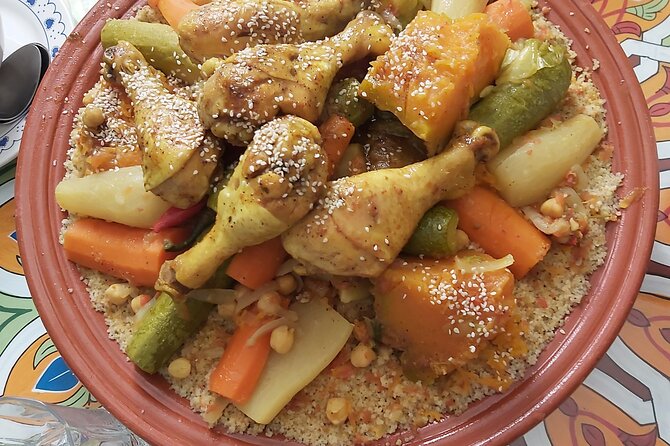
Once the cooking is complete, you sit down to eat the meal prepared by the group. This shared table is one of the strongest parts of the activity because it gives the class a natural finish.
You taste the results while the techniques are still fresh in your mind. If the tagine needs more seasoning, or the salad has a sharper flavor than you expected, you can connect that taste to the steps you just followed.
The meal also gives you time to talk with Khadija and your group. The setting is private, and the class is built around sharing and respect. That makes it a good choice for people who want cultural contact without the pressure of a large organized group.
The food is paired with the included drinks and small Moroccan cakes. Bottled water is also provided. A home-made dessert may be part of the chosen menu, but the included information does not specify one fixed dessert for every session, so do not assume the same sweets will appear each time.
What the $58.31 price really buys
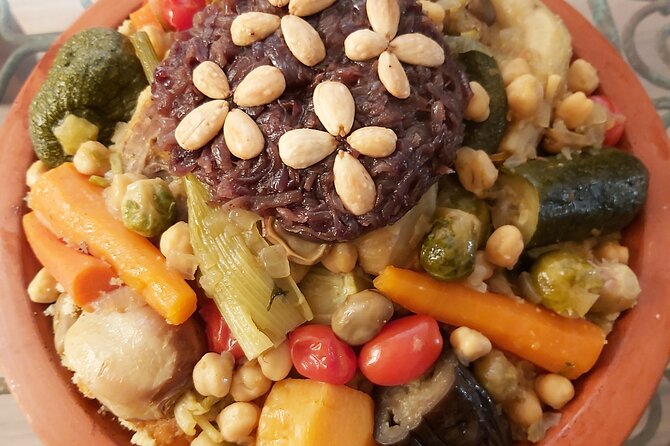
At $58.31 per person, the price is not simply paying for lunch. You are paying for instruction, ingredients, a private setting, food preparation, and time at the table afterward.
The value is strongest for a small group that intends to participate fully. If you split the cost among several people, the private format becomes more attractive. You are not just purchasing a restaurant meal, and you leave with recipe cards that can help you repeat the dishes later.
Fresh, mainly local produce is another positive. The host makes a point of choosing quality ingredients and reducing the distance food travels. That does not turn the class into a farm visit, since there is no market tour or producer visit included, but it does shape the meal you cook.
The cost may feel high if you compare it with a simple lunch in Essaouira. It is better compared with other private cultural activities, especially since tea, coffee, cakes, water, and the prepared meal are included. Private transportation is the main extra cost to plan for.
Who will enjoy this class most
I would recommend this activity to several kinds of visitors:
- Couples looking for a calm shared activity in Essaouira
- Families who want children or teens to take part in preparing food
- Small groups who prefer a private class to a crowded workshop
- First-time visitors who want context for Moroccan dishes
- Home cooks interested in tagine, couscous, salads, or spice blends
- People who value conversation and a personal host
It is also a strong choice for anyone who has already eaten Moroccan food and wants to understand how it is made. The class connects the ingredients, methods, and finished meal in a clear way.
You may want something else if you need a strictly specialized course, such as vegetarian, vegan, pastry, or advanced culinary training. The available details do not promise a fixed menu for those needs. Ask before booking rather than hoping the menu can be changed on the day.
Likewise, this is not the right pick if your main goal is sightseeing. The activity takes place at one meeting point and ends there. You will not visit Essaouira’s major sights during the three-hour session.
Timing, meeting point, and practical planning
The class lasts about three hours, so it fits neatly into a day in Essaouira. You can schedule it around sightseeing, though the precise start time should be confirmed when you book.
The meeting point is 21 Av. Princesse Lalla Amina, Essaouira 44000, Morocco. The class ends back there. Since private transportation is not included, plan your route before the start time and allow a little margin for finding the address.
A mobile ticket makes entry simple. Confirmation is provided at booking, and the activity is near public transportation. Service animals are allowed.
The class requires good weather, and it also requires a minimum number of participants. If poor weather or low numbers cause cancellation, you are offered another date or a full refund. Otherwise, you can cancel without charge up to 24 hours before the start time. Changes or cancellations inside that window are not accepted for a refund.
The activity is booked, on average, 13 days ahead. That is a useful planning signal, especially if you are visiting Essaouira for only a short stay. Booking early gives you a better chance of fitting the class into your schedule.
The strongest reasons to book
The best feature is the combination of practical cooking and genuine hospitality. You are not only shown how Moroccan food looks. You work with the ingredients, learn the role of the spices, and eat the finished dishes in the same personal setting.
Khadija’s language skills are another strength. Communication can make or break a cooking class, and having French, English, Arabic, and Berber available should help the explanations feel more natural for many people.
The private format also deserves emphasis. Only your group participates, so you can ask questions without competing with a room full of strangers. It is easier to admit that you have never folded pastry properly or that you are unsure how to season a tagine.
The strongest praise centers on the welcome, the clear explanations, the quality of the meal, and the warm atmosphere. Those are the areas where this class earns its price.
Should you book the Essaouira cooking class?
Book it if you want to spend three hours learning by doing, eating a Moroccan meal, and sharing time with a welcoming local host. The price is reasonable for a private class with food, drinks, recipe cards, and a full meal included.
I would be more cautious if you want a fixed menu, a market outing, private transport, or advanced culinary instruction. Those features are not part of the stated program.
For most visitors, the decision is simple: if food is one of your reasons for coming to Morocco, this class gives you a useful and enjoyable way to understand it. Arrive ready to chop, season, taste, and ask questions. That is where the value lies.
FAQ
Where does the cooking class begin?
The class begins at 21 Av. Princesse Lalla Amina, Essaouira 44000, Morocco.
Where does the activity end?
The class ends back at the meeting point.
How long does the cooking class last?
The experience lasts approximately three hours.
What dishes might I prepare?
Possible recipes include tagine, couscous, pastilla, Moroccan salads, and home-made desserts. The exact selection depends on the chosen menu.
Are drinks and snacks included?
Yes. The class includes mint tea or spiced coffee, bottled water, and small Moroccan cakes.
Can I cancel for a full refund?
Yes, if you cancel at least 24 hours before the experience start time. Cancellations or changes made less than 24 hours before the start are not refunded or accepted.
More Cooking Classes
- Traditional Moroccan Cooking Class
★ 5.0 · 81 reviews - Essaouira: Traditional Family Style Moroccan Cooking Class
★ 5.0 · 58 reviews - Marrakech: Moroccan Cooking Class with Pickup
★ 4.6 · 1,862 reviews - Marrakech: Traditional Moroccan Cooking Class & Market Visit
★ 4.8 · 1,861 reviews
More Workshops
- Essaouira: Surf Lessons
★ 4.9 · 412 reviews - Kitesurfing Lessons in Essaouira Beach
★ 5.0 · 206 reviews - Surf Lesson in Essaouira
★ 5.0 · 179 reviews - Group Kitesurfing lesson with a Local in Essaouira Morocco
★ 5.0 · 175 reviews
Just added around Essaouira
- The Sunday Market in Had Draa & Local Food Tasting.★ 5.0 · 33 reviews
- Horse riding on the beach of Essaouira 2 hours★ 5.0 · 34 reviews
- Essaouira 1 hour discovery ride on the back of a camel★ 5.0 · 37 reviews
- Explore Essaouira’s Secrets: A Guided Tour with a Local!★ 4.7 · 37 reviews
- 2 hours horse ride beach and dunes in Essaouira Morocco★ 4.5 · 38 reviews
- Private Kitesurf Lesson in Essaouira Morocco★ 5.0 · 38 reviews
- Individual kitesurfing lessons in Essaouira★ 5.0 · 38 reviews
- Essaouira: Area Highlights Guided E-Bike Tour★ 4.9 · 39 reviews
Berber Village Tours, compared.

Berber villages : Atlas Mountains Day Hike from Marrakech
Read our review →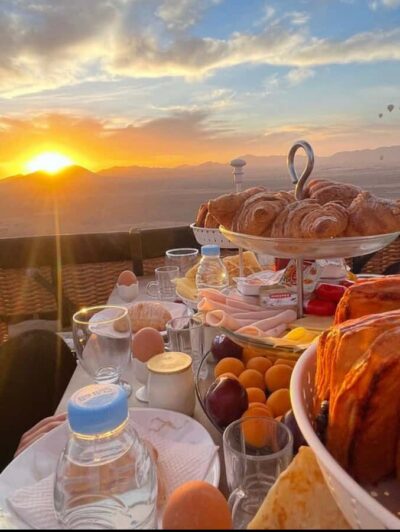
Balloon Flight, Berber Breakfast & Certificate
Read our review →
Majorelle Garden, YSL, and Berber Museum Entry
Read our review →
Hot Air Balloon Flight with Berber Breakfast
Read our review →
Atlas Mountains, Berber Villages and Three Valleys all inclusive
Read our review →
Atlas Mountains Hot Air Balloon Ride from Marrakech with Berber Breakfast and Desert Camel Experience
Read our review →
Atlas Mountains, Berber Villages, Agafay & Camel Ride
Read our review →
Balloon Flight, Berber Breakfast, and Camel Ride
Read our review →Browse the lists this tour appears in