
Reviewed · COOKING CLASSES
Rabat: Cooking Class in a Family Home
Come hungry, leave with recipes. This four-hour Rabat cooking class combines a local market visit with hands-on food preparation in a Moroccan family home, giving you a close look at daily cooking customs rather than a polished restaurant performance. I especially like choosing ingredients with the host and learning in a real kitchen. The chance to prepare and eat a full three-course meal is another strong point. The one thing to consider is that transportation is not included, so you must reach the meeting point at the Hopital Moulay Youssef tramway station yourself.
The class is run by MoroccanFoodTour and is limited to eight people. That small size should make it easier to ask questions, take notes, and get involved at the stove. French and English are offered, and the warm family setting appears to be just as important as the food itself. If you want a quick, restaurant-style demonstration, this may feel too involved. If you want conversation, cooking, and a meal made in a home, it is a fine fit.
In This Review
- Key points to know before booking
- Meeting at Hopital Moulay Youssef
- Shopping for ingredients in a Rabat market
- Cooking inside a historic family house
- Three courses, Moroccan style
- Moroccan tea to finish the afternoon
- What the $72 price delivers
- Language, pace, and group size
- Who should book this Rabat experience?
- Final verdict: a meal with a family story
- FAQ
- Where does the cooking class meet?
- How long does the experience last?
- What languages are available?
- Is transportation included?
- What food is included?
- Can friends join only for the meal?
Key points to know before booking
- The market comes first: You help choose and buy fresh ingredients in a local neighborhood market before cooking.
- The menu is flexible: Your host asks about your preferences, then helps decide what to prepare.
- The setting is a family home: Cooking takes place in a historic Moroccan family house, not a commercial school.
- The food changes: Past menus have included couscous, chicken tagine, aubergine, peppers, fruit salad, and Moroccan pastries.
- The class is hands-on: You prepare a three-course meal, eat what you make, and finish with Moroccan tea.
- The group stays small: A maximum of eight participants creates a more personal class, though the exact kitchen setup may vary.
Meeting at Hopital Moulay Youssef
Your day begins at the Hopital Moulay Youssef tramway station in Rabat. This is the fixed meeting point, and transportation to the market and family home is not included, so plan your route before the start time.
That detail matters more than it may seem. A cooking class can feel rushed if you arrive late, especially when the first part involves shopping. I would allow extra time to find the station and meet the host or greeter. The activity is offered in French and English, so you should be able to discuss food preferences and cooking questions in one of those languages.
A host or greeter meets you there and leads the group onward. Past participants have described being collected by a member of the family, including the cook’s daughter-in-law, before heading to a nearby market. That family connection sets the tone early. You are not simply being shown from one commercial stop to another. You are being brought into a household’s normal food world.
The class lasts four hours. That gives enough time for shopping, preparation, eating, and tea, but it is still a half-day activity rather than an all-day food tour. I would avoid scheduling another fixed appointment immediately afterward. Moroccan cooking often rewards patience, and you will want time for conversation around the table.
A few more Rabat trips worth weighing up
- Join Best Moroccan Cooking Class with Chef Khadija ( Over 35 years Experience )
★ 5.0 · 56 reviews - Rabat Family Cooking Class
★ 5.0 · 43 reviews - Rabat: Authentic Moroccan Cooking Class with Expert Chefs
★ 5.0 · 17 reviews
Shopping for ingredients in a Rabat market
The market visit is the part that gives the class its sense of place. Instead of arriving at a kitchen with bowls of measured ingredients, you walk through a local produce market and help select what will be used later.
Your host explains ingredients, customs, and local food habits as you shop. You can also discuss your preferences at this stage. The menu is not presented as a rigid mystery. You help decide what to cook, and the host recommends dishes that suit the group and the available ingredients.
That approach has real value. Moroccan recipes often depend on the quality and balance of simple items, and shopping shows you what the cook is looking for before a pot ever reaches the stove. It also helps you understand that a dish is not just a fixed list of instructions. The cook makes choices based on what is fresh and what the family likes to eat.
The shopping can also produce memorable surprises. One past menu included a Moroccan millefeuille with pastry made from an extremely thin dough of flour, water, and salt. The dough was bought at the market, where it was made in front of the group, then cut, fried, and layered with homemade pastry cream flavored with orange blossom and saffron. That is exactly the sort of detail you would miss by taking a standard cooking lesson with ingredients already waiting.
You should keep an open mind about the final menu. A three-course meal might include a traditional Friday-style couscous, chicken tagine, seasoned aubergine and peppers, or fruit salad with freshly pressed orange juice. The experience is more useful if you are interested in the food chosen for the group, not only in preparing one specific dish.
Cooking inside a historic family house
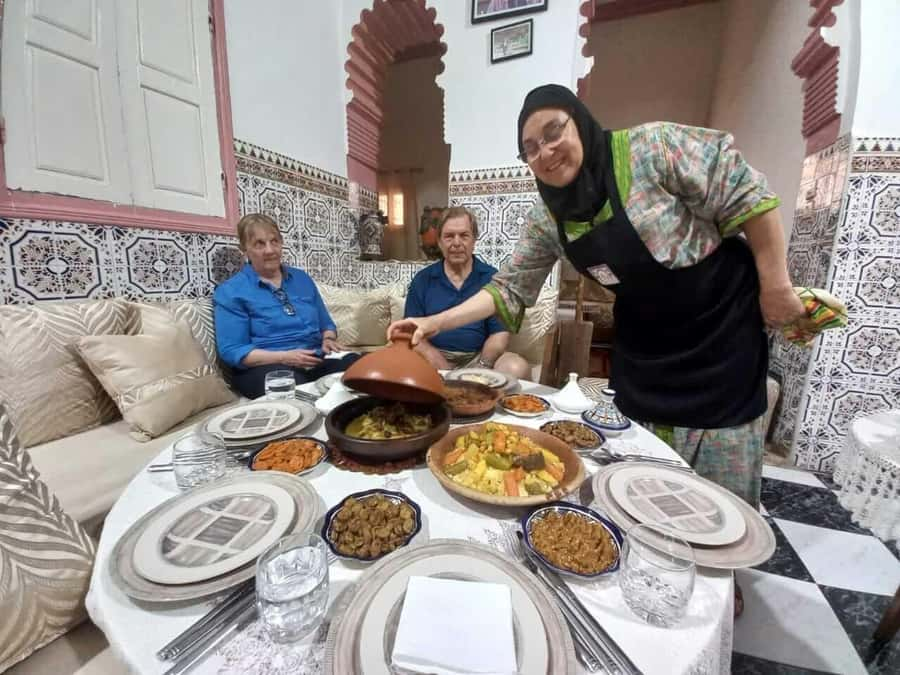
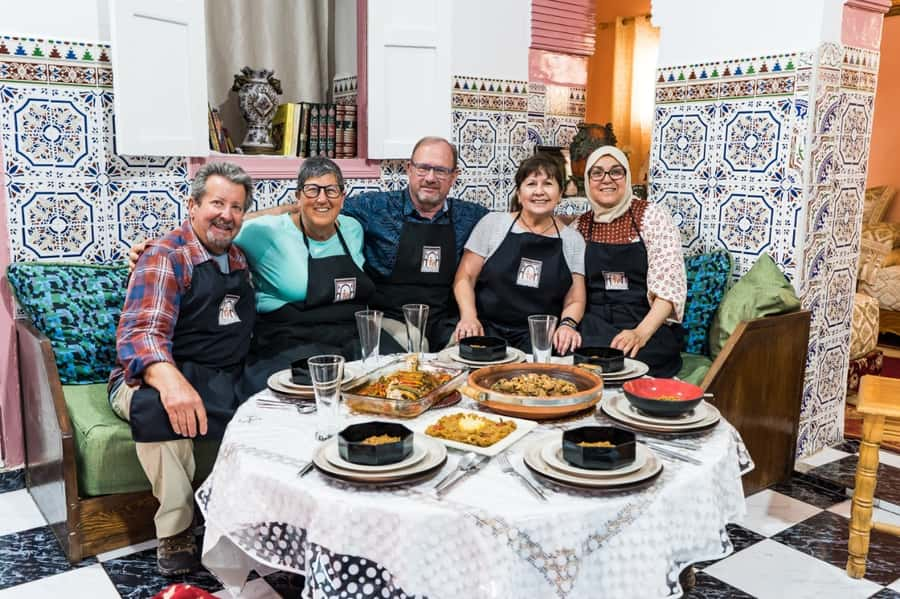
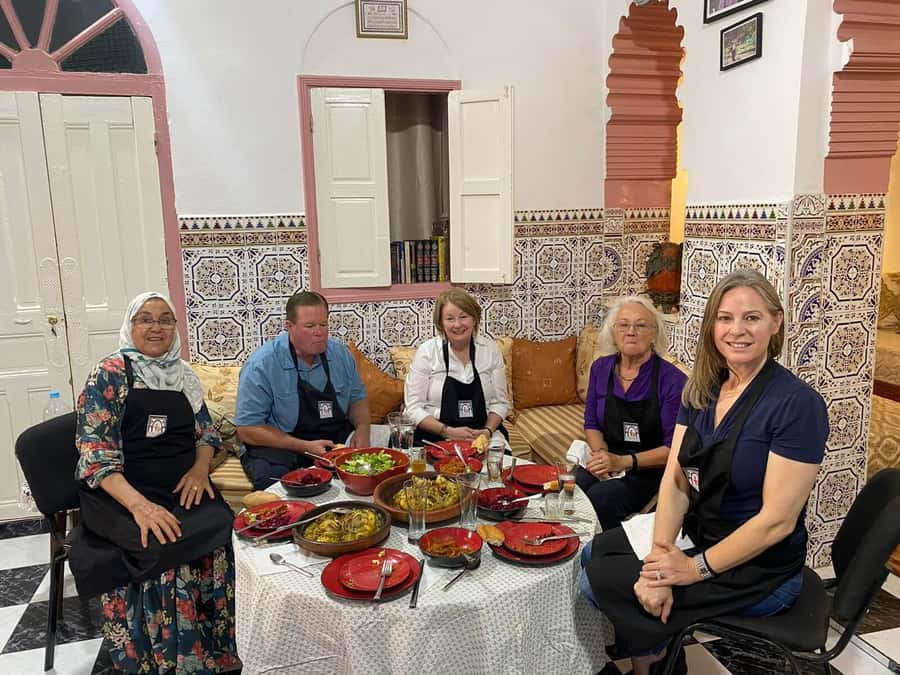
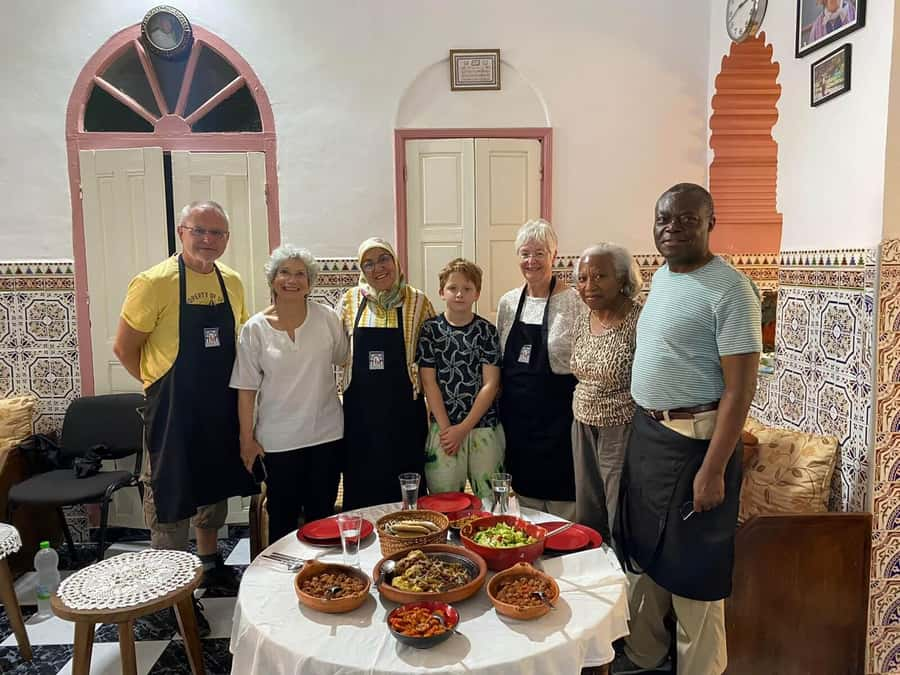
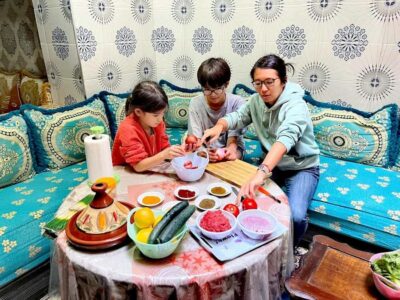
After shopping, you continue to the family home. The setting is one of the main reasons to choose this class. You are cooking in the chef’s own kitchen, surrounded by family hospitality, rather than standing in a formal teaching room designed for tourists.
The cook is described as a professional chef, and one account identifies Imane and her mother-in-law as the hosts. The mother-in-law is also described as a former chef for ambassadors, which adds a serious level of experience to the cooking. At the same time, the mood is friendly and informal. One group learned from a little of this and a little of that, the kind of practical judgment that rarely appears in a printed recipe.
That combination is useful. You get instruction, but you also see how Moroccan cooking works in real life. The host can show you when a mixture looks right, how much seasoning feels suitable, and how to adjust a dish without treating the recipe as a laboratory formula.
The class is described as lively and interactive. You join the cooking rather than only watching. Depending on the menu, you may help prepare vegetables, season a tagine, work with couscous, or make components for a dessert. You can photograph the process and write down the recipes, which is important if you hope to repeat the dishes at home.
The family-home format does have a practical tradeoff. A private kitchen may not offer the polished layout or individual workstations of a cooking school. With up to eight people, your exact role may depend on the group and menu. Still, the smaller size should give you a better chance to participate than a large demonstration class.
Three courses, Moroccan style
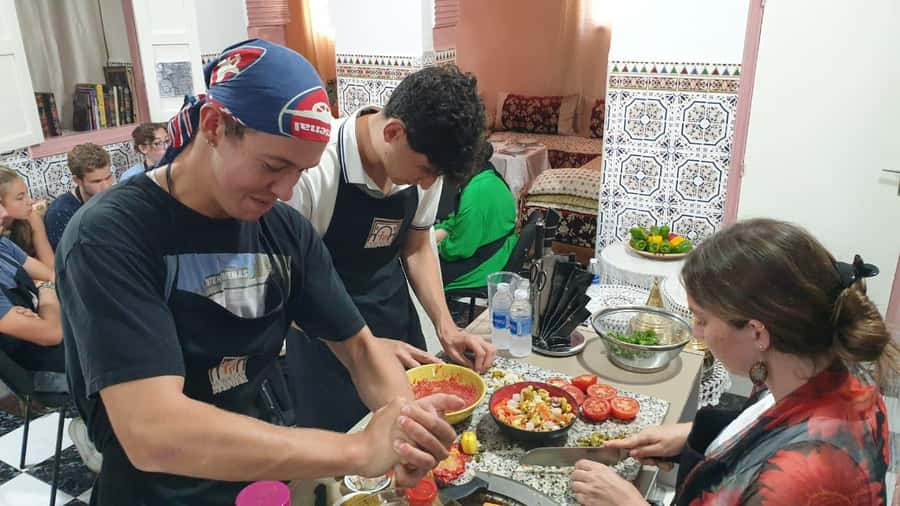
The meal is designed as a full three-course menu. You do not simply sample one finished dish before leaving. You prepare the food, sit down to eat it, and share the results with the host.
Past menus show how much variety is possible. A group that requested a traditional Moroccan couscous prepared it in the style associated with Friday family meals. Another menu began with peeled and finely chopped aubergine and peppers, seasoned with several spices and served with bread. The main course was chicken tagine, followed by fruit salad and fresh orange juice.
The class can therefore work for different tastes. If you want classic Moroccan staples, couscous and tagine are likely choices to discuss. If you prefer vegetables or a lighter finish, the host can ask about your preferences before shopping. The published details do not promise a particular menu, so you should not book expecting one exact dish unless you confirm it in advance.
What I like most here is the connection between making and eating. You see the ingredients at the market, handle them in the kitchen, and then taste the finished meal at the family table. That gives the food a story. Even a familiar tagine becomes more memorable when you have helped season and prepare it.
The meal is also a social part of the experience. The small group brings together people from different places, and the hosts encourage conversation about Moroccan customs. One family meal included the hosts and a young granddaughter, which gives you a sense of how personal the visit can feel. The activity is not only about taking food photos. It is about sitting down together.
More Cooking Classes:
- Marrakech: Moroccan Cooking Class with Pickup
★ 4.6 · 1,862 reviews - Marrakech: Traditional Moroccan Cooking Class & Market Visit
★ 4.8 · 1,861 reviews - Marrakesh: Moroccan Dishes Cooking Class with a Local Chef
★ 5.0 · 1,615 reviews - Moroccan Cooking Class & Marrakech Market Visit with Chef Khmisa
★ 5.0 · 1,504 reviews
Moroccan tea to finish the afternoon
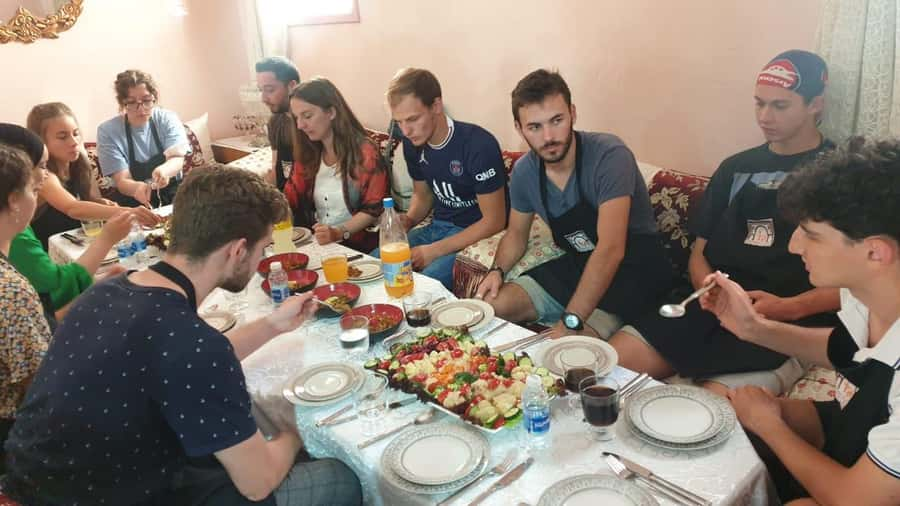
Tea closes the class, along with coffee or bottled water during the activity. Moroccan tea is more than a final drink here. It gives everyone time to slow down after the cooking and continue talking about the meal, family life, and local customs.
The included drinks are simple, but they are welcome during a four-hour class. You are not expected to arrange a separate beverage stop or pay extra for the basic refreshments. The tea also provides a proper ending to the home visit, rather than sending you out the door as soon as dessert is cleared.
Friends who did not take part in the cooking can join the meal for an additional €15. This is useful if someone in your party wants the family dining experience but not the full kitchen session. The information provided does not say how many extra people can join, so ask the provider before making plans around a larger group.
What the $72 price delivers
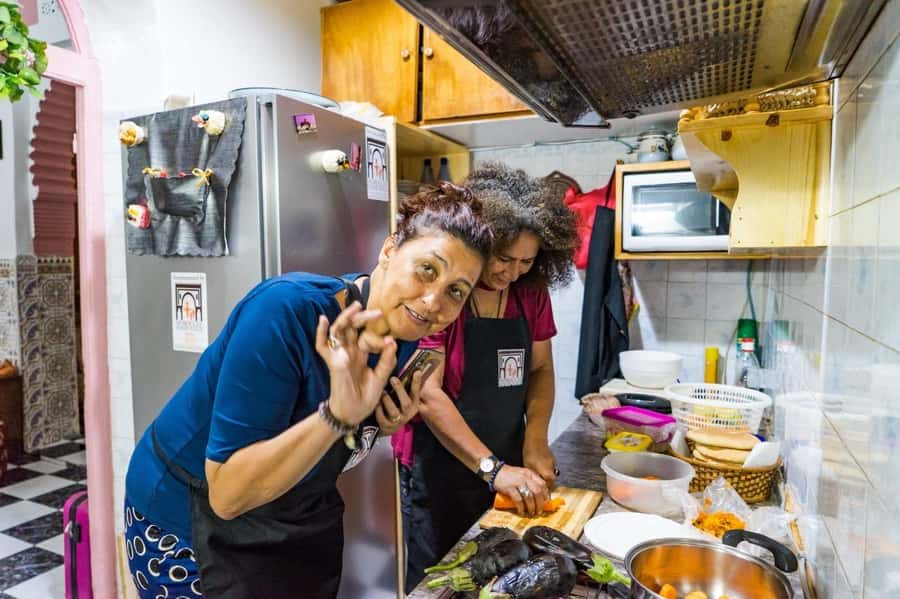
At $72 per person, this is not the cheapest way to eat in Rabat. You could certainly find a Moroccan meal for less. The value comes from what is bundled into the four hours: a market visit, ingredient selection, cooking instruction, a three-course meal, drinks, cultural conversation, and access to a private family setting.
I would judge the price by comparing it with a guided food tour plus a meal, rather than with the cost of lunch alone. You are paying for time and participation, not just plates of food. The recipes and cooking methods also give the experience a lasting benefit if you take notes and recreate the dishes later.
The value is strongest for people who enjoy learning by doing. It is less compelling if you only want a quick tasting or if you are mainly looking for a formal culinary qualification. The class promises a personal encounter and practical cooking, not a professional kitchen certificate.
The small group helps support the price. With a maximum of eight participants, the host can ask about your preferences and offer more individual help. Still, the final level of hands-on time can depend on the number of people and the dishes being made, so I would keep expectations realistic.
Language, pace, and group size
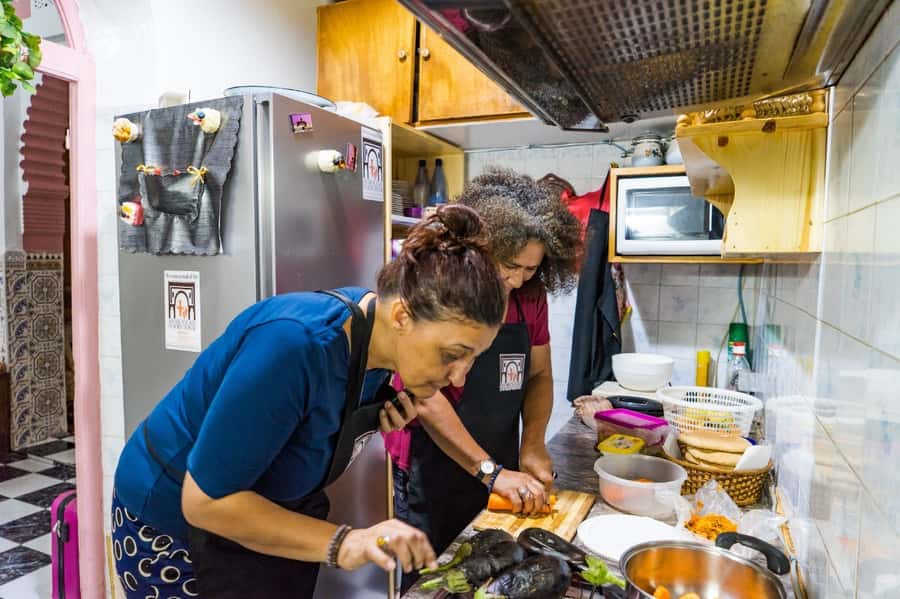
The host or greeter speaks French and English. That covers many international visitors, but you should choose the language in which you are most comfortable discussing ingredients and instructions.
A maximum of eight people is a sensible size for a family kitchen. It keeps the activity more personal and makes conversation easier. It also means you may work as part of a small team rather than preparing every component alone.
The pace should suit most people who can manage a relaxed four-hour food activity. The day includes walking through the market, cooking, eating, and tea, so it is not a sit-down lesson from start to finish. Wear something comfortable and arrive ready to take part, though the supplied information does not specify clothing requirements or kitchen facilities.
The cooking may feel less exact than a western recipe class. A seasoned home cook may use instinct and visual cues, adding a little more spice or adjusting a mixture by feel. That is part of the lesson, but it can frustrate you if you want every quantity measured precisely. The useful solution is to write down the recipes and ask questions while the dish is being prepared.
Who should book this Rabat experience?
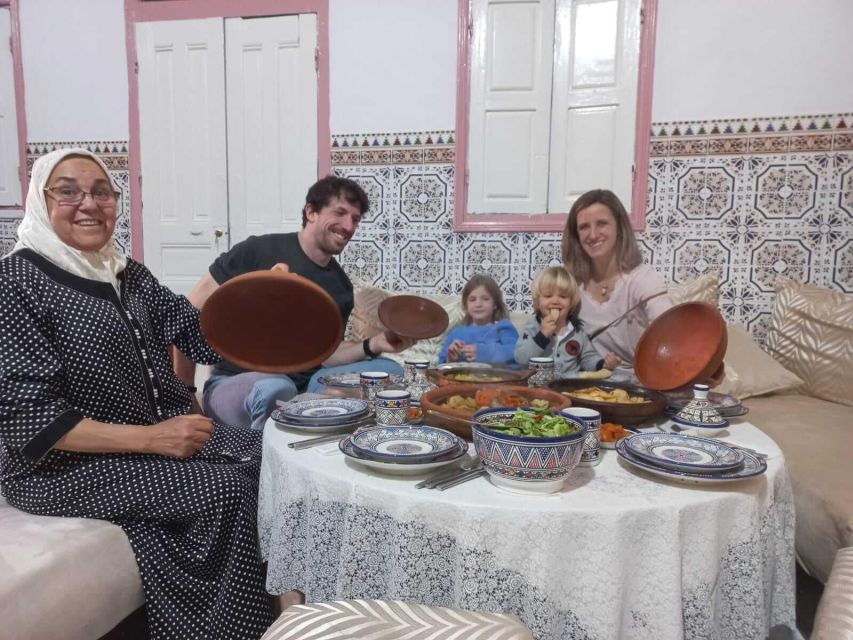
I would recommend this class to couples, solo visitors, and small groups who want food tied to family life. It suits anyone who enjoys markets, conversation, and a meal that takes time to prepare.
It is also a good choice for repeat visitors to Morocco who have already eaten tagine and couscous in restaurants but want to understand how they are made. Families and friends may appreciate the option of adding companions to the meal for €15, subject to confirming the arrangement.
You may want to choose another activity if you have mobility concerns that make market walking or a private home setting difficult, since no accessibility information is provided. You should also think twice if you need a fully fixed menu, a precise start-to-finish schedule, or private transportation.
The strongest reason to book is the host family. The combination of Imane, her mother-in-law, and a former ambassador’s chef brings both warmth and serious cooking skill. The welcome, conversation, and chance to learn local customs receive especially strong praise, and those personal touches are difficult to reproduce in a restaurant.
Final verdict: a meal with a family story
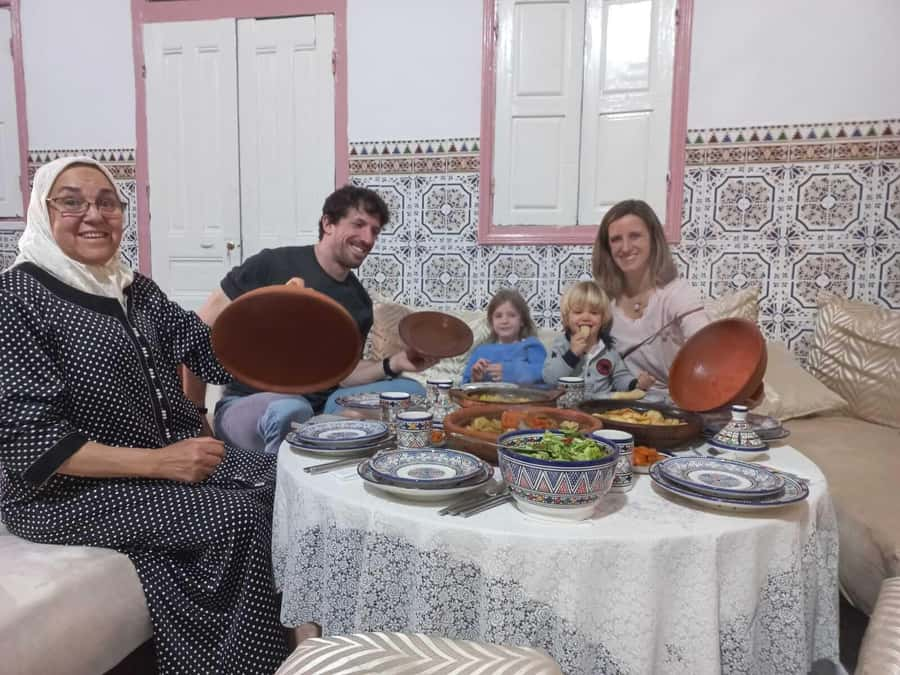
I would book this experience if I wanted to understand Moroccan food beyond the menu. The market makes the ingredients feel familiar, the family kitchen gives the cooking a human scale, and the shared three-course meal rewards your effort.
The main cautions are clear: transportation is not included, the menu can change, and a home kitchen may be less structured than a culinary school. At $72, you are paying for a four-hour cultural and cooking experience rather than simply lunch.
Choose it when you value personal contact, practical recipes, and a relaxed meal with Moroccan tea at the end. Skip it only if you prefer a fast food tour or need a tightly controlled cooking format. For most food-focused visitors to Rabat, this offers a generous look at how Moroccan hospitality and home cooking fit together.
FAQ
Where does the cooking class meet?
The meeting point is the Hopital Moulay Youssef tramway station in Rabat.
How long does the experience last?
The cooking class and market visit last four hours.
What languages are available?
The host or greeter offers the experience in French and English.
Is transportation included?
No. Transportation is not included, so you must reach the meeting point yourself.
What food is included?
You prepare and eat a three-course menu. Drinks include tea or coffee and bottled water. The exact dishes depend on the group’s preferences and the menu selected with the host.
Can friends join only for the meal?
Yes. Friends can join the meal after the cooking class for an additional €15 per person.
Just added around Rabat
- Rabat: Authentic Moroccan Cooking Class with Expert Chefs★ 5.0 · 17 reviews
- Private Boat Tour of the Bouregreg River, a Traditional Boat★ 4.5 · 19 reviews
- Rabat Food and Cultural Full Day Tour★ 5.0 · 19 reviews
- full Day trip from Rabat to chefchaouen blue city★ 4.5 · 22 reviews
- Rabat old Medina ,Hassan Tower and Kasbah Oudaya Walking tour★ 5.0 · 25 reviews
- Rabat: Private Half-Day City Tour★ 4.1 · 26 reviews
- Private Transfer From Rabat Airport to Rabat City★ 5.0 · 28 reviews
- Rabat: Private Guided City Walking Tour★ 4.8 · 30 reviews
Cooking Classes, compared.
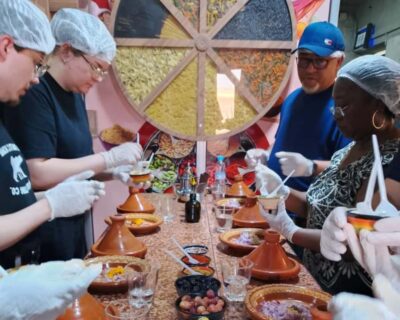
Traditional Moroccan Cooking Class & Market Visit
Read our review →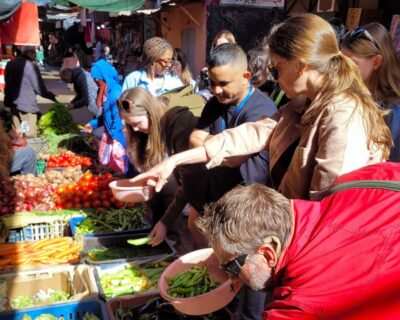
Moroccan Dishes Cooking Class with a Local Chef
Read our review →
Moroccan Cooking Class & Marrakech Market Visit with Chef Khmisa
Read our review →
Half-Day Cooking Class with Local Chef Laila in Marrakech
Read our review →
Browse the lists this tour appears in