
Reviewed · COOKING CLASSES
Casablanca : Traditional Moroccan Cooking Class with Locals
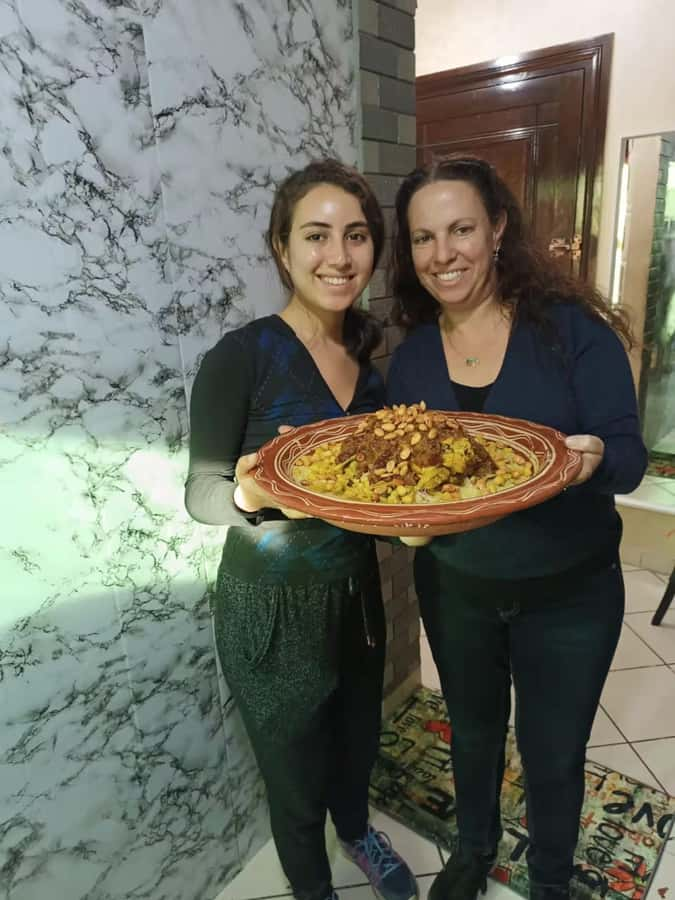
Moroccan food tells family stories. This four-hour class brings you into Inas’s home in Casablanca, where you cook traditional dishes with recipes and methods passed down through her grandmother and mother. It is less like a formal kitchen lesson and more like being welcomed into an everyday Moroccan family setting.
I like the small-group format, limited to 10 people, because it leaves room for questions and conversation. I also like the shared meal at the end, when the food you helped prepare becomes the center of a relaxed family gathering. The main thing to consider is that this takes place in a private home, not a purpose-built cooking school, so anyone expecting a polished studio kitchen may need to adjust expectations.
In This Review
- Key points to know before booking
- Arriving at Résidence El Fath in Casablanca
- Meeting Inas and settling into the family kitchen
- Preparing tagine with family techniques
- Couscous, pastilla, and Moroccan salads
- Learning the customs behind the food
- Sitting down for the shared Moroccan meal
- What the $60 price really covers
- Who will enjoy this class most
- Practical details for a smoother visit
- Should you book the Casablanca cooking class?
- FAQ
- Where does the cooking class take place?
- How long does the experience last?
- How much does the class cost?
- What dishes might I prepare?
- Is the meal included?
- Is transportation included?
- What languages are available?
- How many people can join?
- Can I cancel if my plans change?
Key points to know before booking
- Cook in Inas’s family home: The setting is a local residence at Résidence El Fath, rather than a restaurant or cooking studio.
- Learn more than recipes: Inas explains Moroccan customs, family traditions, and the stories behind the food.
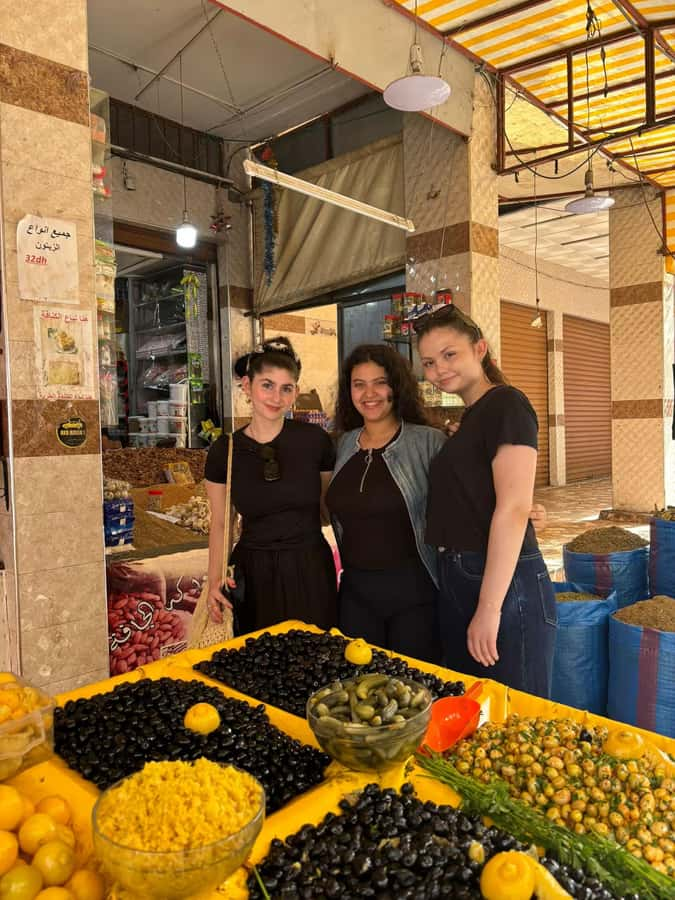
- Prepare classic dishes: The class can include tagine, couscous, pastilla, and Moroccan salads.
- Eat what you make: A shared meal with the family follows the hands-on cooking session.
- Small group, three languages: Up to 10 people can join, with instruction in Arabic, French, or English.
- Four hours for $60: The price covers the class, ingredients, cultural experience, and meal, but not transportation.
Arriving at Résidence El Fath in Casablanca
The meeting point is Résidence El Fath on Abdellah Ibrahim Street, at BIM Attacharok. Transportation to and from the home is not included, so you will need to arrange your own way there and back.
That detail matters in Casablanca. A home-based experience can feel more personal than a class designed for large groups, but it also means you should check the meeting instructions carefully before setting out. Keep the exact residence name and street handy, especially if you are using a taxi or ride service.
The location is described as part of a traditional local community. That gives the class a useful sense of place before the cooking even starts. You are not simply visiting a commercial venue built for tourists. You are entering the kind of family setting where Moroccan food is prepared, taught, and shared at home.
One practical note: Inas has provided indoor protected parking for at least one participant arriving by car. That may be useful if you are driving, though parking should still be confirmed when you arrange your visit.
A few more Casablanca trips worth weighing up
- Old local Market visit+Moroccan cooking class with a local family
★ 5.0 · 84 reviews - Private Casablanca Market Tour and Cooking Class with Chamsi
★ 5.0 · 33 reviews - Private Market Tour & Cooking Class in Casablanca with Transfers
★ 5.0 · 20 reviews
Meeting Inas and settling into the family kitchen
The welcome is a major part of this experience. Inas hosts the class with her family and teaches methods learned from her grandmother and mother, both of whom had more than 40 years of experience with Moroccan cuisine.
That family link gives the lesson a clear purpose. You are not just following a printed recipe. You are hearing about techniques passed from one generation to the next, including the little choices that often make home cooking taste different from restaurant food.
The atmosphere is meant to be friendly and relaxed. That suits this kind of class. Moroccan cooking often involves preparation, waiting, seasoning, and sharing rather than rushing from one step to the next. Inas’s patient teaching style is especially helpful if you have little experience with the dishes.
The language mix also makes the activity approachable. Instruction is available in Arabic, French, and English. Since the group can include people from several countries, the class also offers a natural chance to meet others while working at the same table.
Preparing tagine with family techniques
Tagine is one of the likely centerpieces of the class. This is both a famous Moroccan dish and a good way to learn how Moroccan cooking builds flavor through careful preparation.
You may prepare a tagine with preserved lemon, a combination specifically highlighted by one participant. That version brings together savory seasoning and the sharp, distinctive flavor of preserved citrus. The exact menu can vary, so you should not assume every dish listed will appear in one session.
The important lesson is not only what goes into the pot. Inas teaches the traditional methods and small practical tips that have been handed down through her family. Those details can include the order of preparation, the way ingredients are combined, and the patience needed to let the dish develop.
I like this format because you leave with something more useful than a quick demonstration. You take part in the preparation and can ask questions as you go. One participant specifically left feeling confident and motivated to try the recipes at home, which is a good sign for anyone who wants cooking skills rather than a meal served by someone else.
Couscous, pastilla, and Moroccan salads
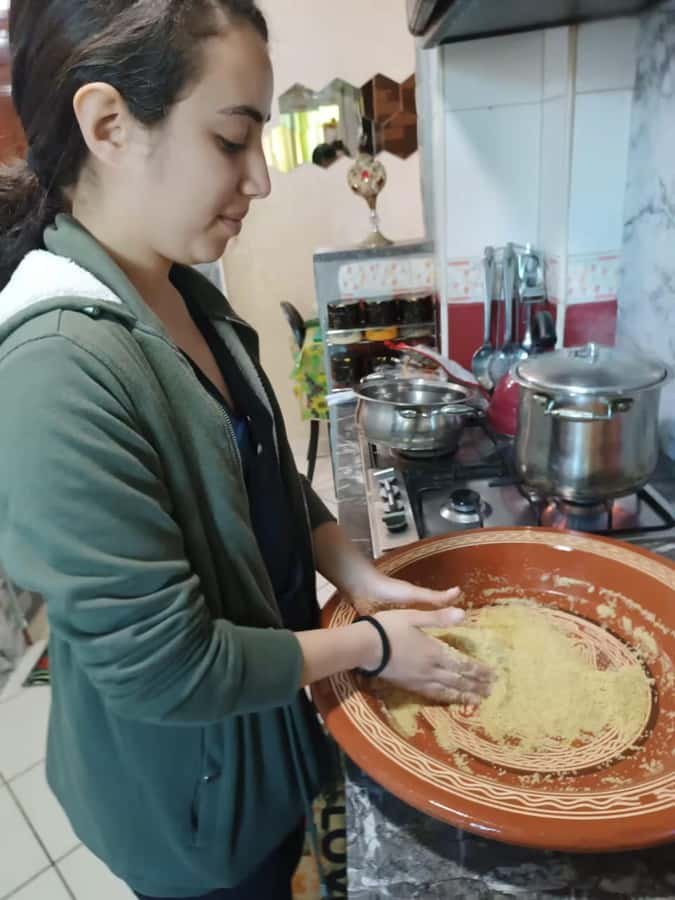
Couscous is another possible dish. A vegetable couscous with preserved lemon tagine was prepared in one session, giving the class a chance to cover both a tagine and a staple grain dish in the same afternoon.
Couscous is especially valuable in a lesson because it connects food with family custom. The class includes conversation about Moroccan culture and rituals, so the dish becomes part of a wider look at how food is prepared and shared in daily life.
Pastilla may also be included. This well-known Moroccan dish is more involved than a simple salad or one-pot meal, and its preparation can show you another side of the country’s cooking traditions. Again, the menu is not presented as fixed, so it is wise to ask what you will prepare when booking.
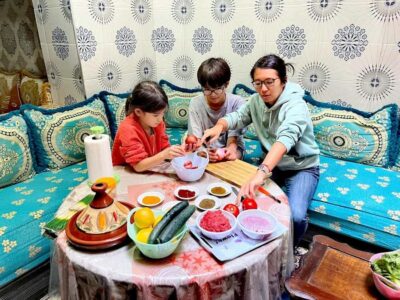
Moroccan salads round out the possible menu. They add contrast to the richer main dishes and show how fresh local ingredients can be combined with seasoning and simple preparation. The class uses fresh ingredients throughout, which helps you understand the role of produce in the final meal.
Because the class lasts four hours, there is enough time for cooking, conversation, and eating without treating the kitchen work as a race. You should expect a hands-on session rather than a quick recipe demonstration.
More Cooking Classes:
- Market Tour & Moroccan Cooking Class in Casablanca with Transfers
★ 5.0 · 18 reviews - Marrakech: Moroccan Cooking Class with Pickup
★ 4.6 · 1,862 reviews - Marrakech: Traditional Moroccan Cooking Class & Market Visit
★ 4.8 · 1,861 reviews - Marrakesh: Moroccan Dishes Cooking Class with a Local Chef
★ 5.0 · 1,615 reviews
Learning the customs behind the food
The best reason to book this class is the cultural setting. Inas shares stories, customs, and family knowledge while you cook, so the lesson gives you a window into Moroccan life that a restaurant meal cannot provide on its own.
Food is a practical way to learn about a place. You can ask about ingredients, preparation habits, and the role of certain dishes while your hands are busy. That makes the cultural information easier to remember than a standard talk given from a distance.
The class also has a personal quality. Inas welcomes people into her home, and the family takes part in the experience. Several participants described feeling treated like friends rather than customers. That warmth is repeatedly praised, and it appears to be the clearest strength of the activity.
Still, you should be comfortable with a social experience. This is not ideal if you want to cook alone, move at your own pace, or avoid conversation. The shared stories and family contact are the point, so reserve it when you are ready to participate.
Sitting down for the shared Moroccan meal
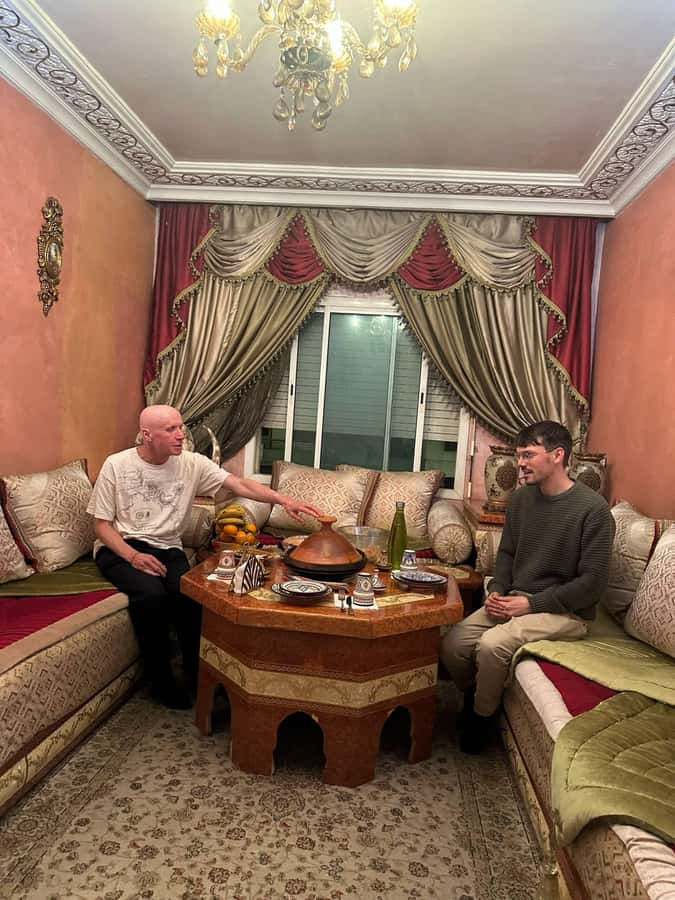
After the cooking session, you sit with the family and eat the dishes prepared during the class. This final meal gives the afternoon a satisfying shape: you learn, prepare, and then share the result.
I like this part because it turns the class into a social occasion rather than a practical workshop that ends when the last ingredient is chopped. It also lets you taste the food in the setting where it belongs, surrounded by the people who taught you how to make it.
The meal may include tagine, couscous, pastilla, salads, or another combination of Moroccan dishes selected for the session. The supplied details do not promise one exact menu for every date, so you should confirm your expected dishes if that is important to you.
Dietary requests may be accommodated. Inas has been described as willing to adjust for dietary needs, but you should tell the provider about your requirements ahead of time. Do not wait until you arrive.
What the $60 price really covers
At $60 per person, this is not simply a four-hour cooking lesson. The fee includes hands-on instruction, fresh ingredients, cultural conversation, traditional methods, and the meal you share with the family.
That makes the price reasonable for visitors who value personal contact and a home setting. A restaurant meal might cost less, but it would not give you the same chance to prepare the food, ask questions, or learn family techniques. A formal cooking school might offer more equipment or a fixed professional kitchen, but it may not provide the same sense of entering local daily life.
The value depends on what you want. If you mainly want to eat Moroccan food, you can find cheaper meals. If you want to leave with recipes, cooking confidence, and a personal connection, the four-hour format offers more.
The small group also helps justify the cost. With a maximum of 10 participants, the class is limited enough for direct instruction without promising a private lesson. It is a good middle ground for solo visitors, couples, friends, and small family groups.
Who will enjoy this class most
I would recommend this activity to anyone who likes food and wants to understand the people behind it. It suits first-time visitors to Casablanca who want an experience beyond the city’s main sights, as well as returning visitors looking for a more personal afternoon.
It is particularly good for:
- People who want to learn traditional Moroccan cooking methods
- Couples and friends who enjoy relaxed, social activities
- Families interested in food and cultural customs
- Home cooks who want recipes they can try later
- Visitors who value a local family setting over a commercial venue
- Anyone comfortable asking questions and sharing a meal
It may be less suitable if you dislike group activities or prefer a fixed menu and a professional teaching kitchen. The experience is built around hospitality, conversation, and family contact, not culinary-school formality.
The four-hour length is another factor. It takes a substantial part of your day, but that time allows the food and conversation to develop. If you only have a short stop in Casablanca, check the starting time carefully before committing.
Practical details for a smoother visit
The activity offers free cancellation up to 24 hours before the start time, with a full refund. You can also reserve and pay later, which helps if your Casablanca plans are still changing.
The class is available in Arabic, French, and English. When arranging your visit, confirm the language you prefer and share any dietary requests in advance.
You should also clarify the meeting instructions before the day of the class. The home is at Résidence El Fath on Abdellah Ibrahim Street near BIM Attacharok, and transport is not part of the price.
Plan to give yourself enough time to reach the residence. A relaxed arrival will put you in the right mood for an afternoon built around cooking and conversation rather than rushing through a city transfer.
Should you book the Casablanca cooking class?
Yes, if you want a warm, personal introduction to Moroccan food and family customs. The strongest part is not any single recipe. It is the chance to cook with Inas, learn methods passed through her family, and share the finished meal in her home.
The $60 price is fair for four hours of instruction, ingredients, cultural exchange, and food. Book it especially if you want to return home able to make tagine or couscous with more confidence.
Think twice only if you need a polished commercial kitchen, a guaranteed menu, or an activity with no social element. For everyone else, this is one of the more personal ways to spend an afternoon in Casablanca.
FAQ
Where does the cooking class take place?
The class takes place in a local family home at Résidence El Fath on Abdellah Ibrahim Street, at BIM Attacharok in Casablanca.
How long does the experience last?
The cooking class lasts four hours.
How much does the class cost?
The listed price is $60 per person.
What dishes might I prepare?
The class can include tagine, couscous, pastilla, and Moroccan salads. The exact combination may vary.
Is the meal included?
Yes. After cooking, you share a meal with the local family using the food prepared during the session.
Is transportation included?
No. Transportation to and from the meeting point is not included.
What languages are available?
Instruction is available in Arabic, French, and English.
How many people can join?
The class is a small-group activity limited to 10 participants.
Can I cancel if my plans change?
Yes. You can cancel up to 24 hours in advance for a full refund. You can also reserve now and pay later.
Just added around Casablanca
- Private Half-Day Guided Tour of Casablanca★ 4.0 · 17 reviews
- Private 10 days Tour From Casablanca Via Desert★ 5.0 · 17 reviews
- Casablanca day trip from the cruise ship passenger.★ 4.2 · 17 reviews
- Morocco 8-Night Tour: Chefchaouen, Desert & Hot Air Balloon★ 5.0 · 18 reviews
- Private 11 Day Tour From Casablanca Imperial Cities Sahara Desert★ 5.0 · 18 reviews
- Private Casablanca Layover Tour with Round-Trip Airport Transfer★ 4.5 · 18 reviews
- Big Morocco Tour 15 Days From Casablanca★ 5.0 · 18 reviews
- Casablanca Airport Transfer from hotel in Casablanca★ 5.0 · 18 reviews
Cooking Classes, compared.
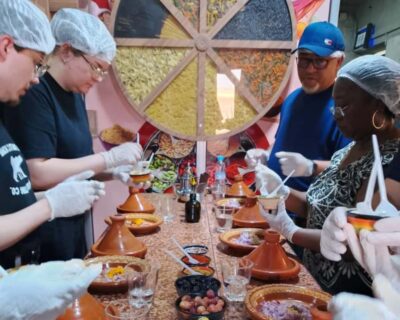
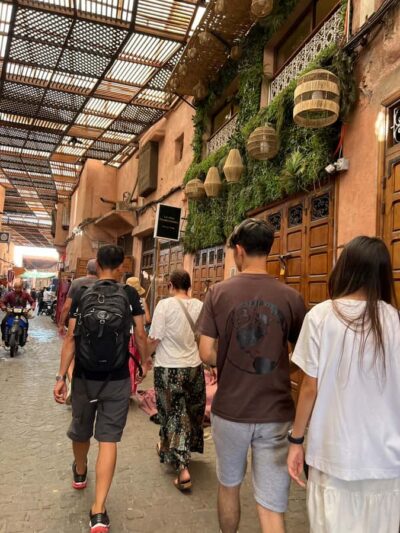
Traditional Moroccan Cooking Class & Market Visit
Read our review →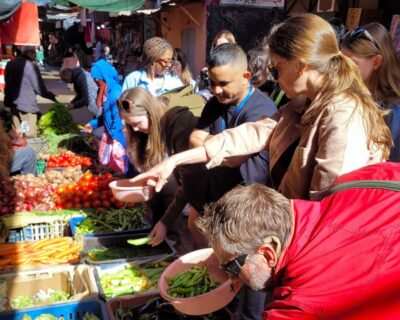
Moroccan Dishes Cooking Class with a Local Chef
Read our review →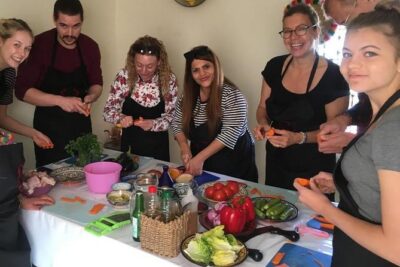
Moroccan Cooking Class & Marrakech Market Visit with Chef Khmisa
Read our review →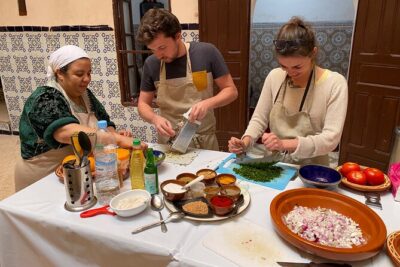
Half-Day Cooking Class with Local Chef Laila in Marrakech
Read our review →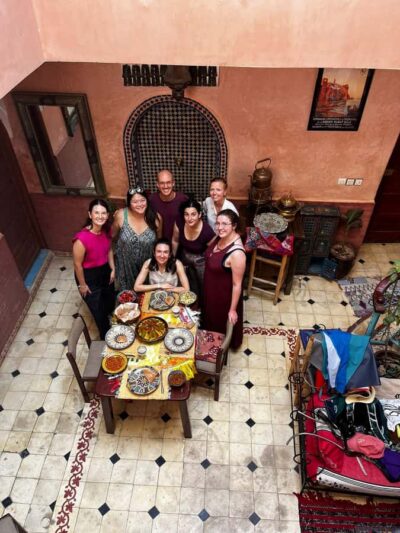
Browse the lists this tour appears in