
Reviewed · CASABLANCA TOURS
Private 10 days Tour From Casablanca Via Desert
Morocco gives you a lot in ten days. This private tour links Casablanca, Rabat, Chefchaouen, Fes, the Sahara, Ait Ben Haddou, and Marrakech without asking you to arrange separate drivers, hotels, and guides. I like the private transportation, which gives your group more control than a large coach tour, and I like the overnight desert camp with a camel ride. The main consideration is the pace: several days involve long drives, and lunch, many dinners, and several major entrance fees cost extra.
You also get local guides in Fes and Marrakech, where a guide can make confusing old-city lanes far easier to understand. The route includes striking contrasts, from Casablanca’s modern mosque and Rabat’s royal monuments to cedar forests, kasbah villages, mountain passes, and Sahara dunes. At $1,858.33 per person, the price is substantial, but it covers private transport, nine nights of accommodation, breakfast, the camp, camel rides, and guided sightseeing.
In This Review
- Key Points To Know Before You Book
- What $1,858.33 Buys You
- Casablanca and Rabat: Two Very Different First Impressions
- Volubilis and Meknes Before Fes
- Fes: Craft, Scholarship, and Medina Lanes
- Across the Middle Atlas To Merzouga
- Merzouga: Music, Markets, Pizza, and Camels
- Todra Gorge and the Road Through the Southeast
- Ait Ben Haddou and the High Atlas Pass
- Marrakech: Mosques, Palaces, and a Famous Garden
- Driving, Hotels, Meals, and Pace
- Who Should Book This Morocco Tour?
- Final Verdict: A Strong Route With a Fast Rhythm
- FAQ
- How long does the Morocco tour last?
- Is this a private tour?
- Is pickup available?
- What destinations are included?
- Is accommodation included?
- Is the camel ride included?
- Which meals are included?
- Are attraction entrance fees included?
- Can the tour be canceled for a full refund?
Key Points To Know Before You Book
- One private route covers Morocco’s major highlights: Casablanca, Rabat, Chefchaouen, Volubilis, Meknes, Fes, Merzouga, the Dades area, Ait Ben Haddou, and Marrakech.
- The Sahara night is the trip’s centerpiece: You ride a camel to a superior camp and have time for sunset photos among the high dunes.
- Fes and Marrakech include local guides: This is especially useful for monuments, old-city lanes, craft workshops, and palace interiors.
- Driving days are part of the deal: The route crosses the Middle Atlas, the High Atlas, and the southeast, so you should be comfortable spending many hours on the road.
- Important costs are extra: Hassan II Mosque, Bahia Palace, Jardin Majorelle, Volubilis, lunches, drinks, and several dinners are not included.
- The schedule can be customized: The operator says the route and standards can be adjusted if you communicate your preferences in advance.
What $1,858.33 Buys You
This is not a budget bus circuit, but it covers a great deal. You receive private transportation for the full route, eight nights in comfortable hotels, one night in a superior camp in Merzouga, camel rides, a desert exploration day, breakfast, and local historical and art guides in Fes and Marrakech.
The accommodation matters because this route crosses much of Morocco. You are not simply paying for sightseeing. You are also paying for one company to coordinate transfers, hotels, guides, and the desert section, which can be difficult to arrange independently.
The package includes ten breakfasts and three dinners, according to the supplied details. Other dinners are your responsibility in Rabat, Chefchaouen, Fes, and Marrakech. Lunches and drinks are also excluded, so budget for daily meals beyond breakfast.
The listed optional admission fees add up to about $42 if you visit Hassan II Mosque, Bahia Palace, Jardin Majorelle, and Volubilis. The exact fee for each attraction can change, but these are useful figures for planning. The price offers better value for a pair, family, or small private group that wants a driver and organized hotels rather than a large shared coach.
A few more Casablanca trips worth weighing up
- From Marrakech: Casablanca Tour with Hassan II Mosque Visit
★ 4.7 · 4,756 reviews - Casablanca: Hassan II Mosque Premium Tour with Entry Ticket
★ 4.5 · 2,971 reviews - Casablanca City Tour with Hassan II mosque ticket
★ 5.0 · 2,480 reviews
Casablanca and Rabat: Two Very Different First Impressions
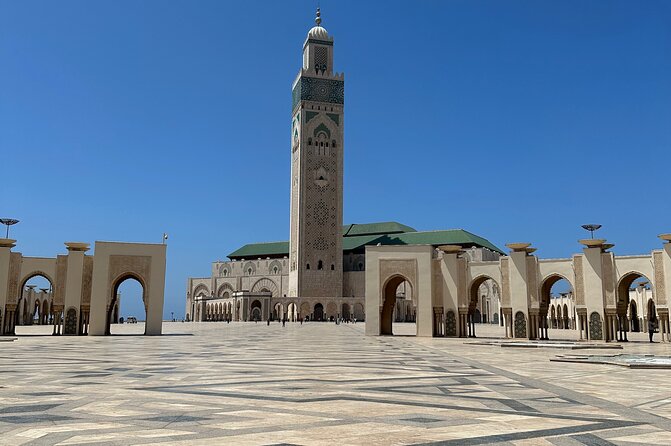
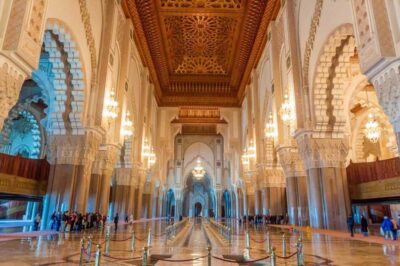
The opening sightseeing combines Casablanca’s Hassan II Mosque with Rabat’s Kasbah des Oudaias. Hassan II Mosque is the major Casablanca stop. The visit takes about three hours, and the ticket does not come with the package. A guide from the mosque accompanies visitors who arrive at the same time, so this is not a fully private guided visit inside the building.
That arrangement is worth understanding. You have private transport to the sight, but the mosque visit itself may include other people who have booked the same time slot. The mosque is an important architectural visit, so I would confirm the admission price and visiting time before departure.
Rabat’s Kasbah des Oudaias provides a different mood. You walk through small lanes and along the old walls while learning about the area’s past. Admission is free, and the visit is scheduled for about three hours.
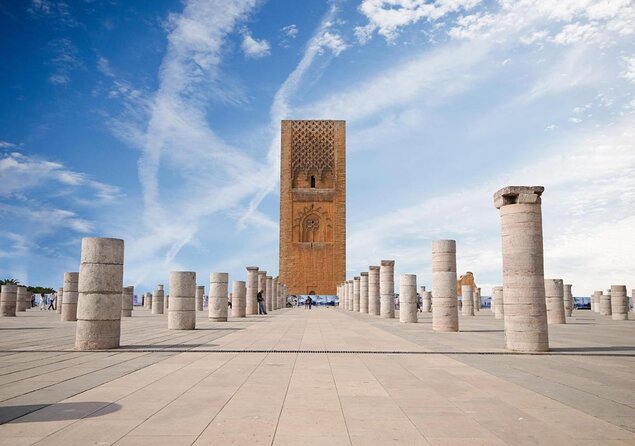
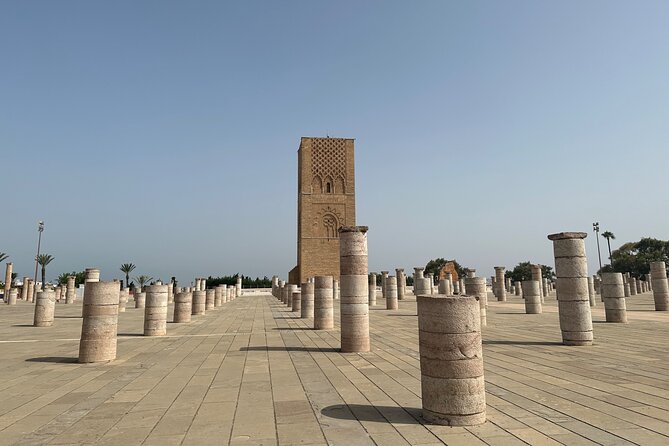
The next day includes Hassan Tower and the Mausoleum of Mohammed V. Hassan Tower is mainly a short photo and explanation stop, listed at about two minutes, while the mausoleum receives about two hours. The pairing makes sense: both sites belong to Rabat’s central historic district and help explain the city’s role as Morocco’s capital.
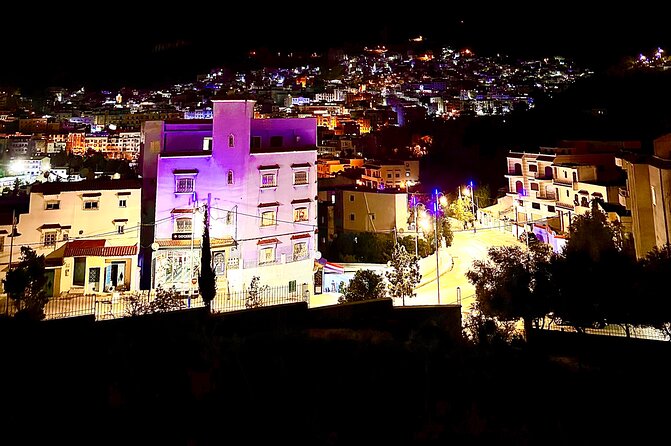
The route then continues to Chefchaouen. Here, you explore the medina, its blue-toned lanes, and Utta el-Hammam square for about two hours. This is a short introduction rather than a full day in town. I like the inclusion because Chefchaouen offers a strong visual change after Casablanca and Rabat, but you should not expect unlimited free time for wandering or shopping.
One practical point deserves attention. The first day lists both Hassan II Mosque and the Kasbah des Oudaias, which is in Rabat, while the second day begins with Rabat’s Hassan Tower and mausoleum. Ask the operator how the overnight locations and driving order are arranged. The route may be perfectly workable, but the published sequence is not completely clear.
Volubilis and Meknes Before Fes
Volubilis is one of the most valuable cultural stops on the route. A guide leads you around the archaeological site for about two hours, but the conservation fee is optional and listed at $7. You can expect Roman remains and surviving architectural details, with the guide explaining the site’s past rather than leaving you to guess at scattered stones.
Meknes follows with a drive through the imperial city and stops at Bab Mansour and Lahdim Square. The scheduled visit lasts about three hours, with time for photographs and an introduction to the city. Admission is free for the listed stops.
This day links two places that are easy to miss when people rush between the blue streets of Chefchaouen and Fes. Volubilis gives you ancient Roman Morocco, while Meknes shows a later imperial tradition. The drawback is that this is another moving day, so the quality of the experience depends on how much time your group wants to spend at each stop.
Fes: Craft, Scholarship, and Medina Lanes
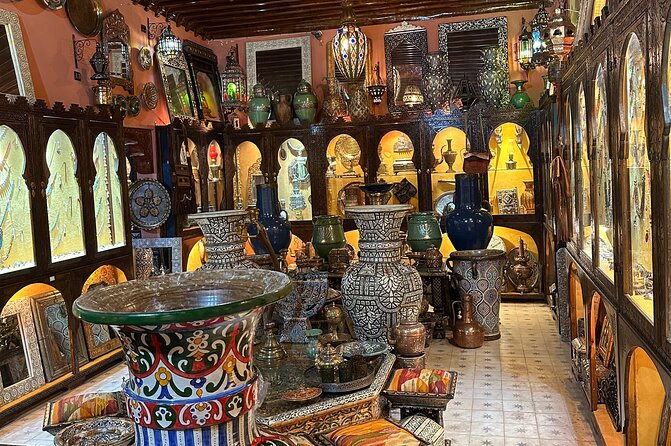
Fes receives a full sightseeing day, and that is welcome. After breakfast at your riad, the guide takes you into the old city, described here as Morocco’s spiritual city. The visit includes the Mosque and University of al-Qarawiyyin, the Al-Attarine Madrasa, the tanneries, and pottery workshops.
The Al-Attarine Madrasa is the clearest formal monument visit. You spend about an hour inside this fourteenth-century school while the guide explains its design and place among Morocco’s traditional religious schools. The admission fee is included.
The Mosque and University of al-Qarawiyyin is scheduled for about an hour. The supplied information says you visit the university, but you should ask in advance which areas are open to your group. Access rules at religious buildings can be specific, and the tour description does not promise entry into every part.
The Fes tanneries are viewed from one of the terraces. You can watch workers handle leather and learn how products such as bags, shoes, and jackets are made. The stop takes about two hours and gives you a direct look at a long-established craft, though the terrace setting also means you are seeing the work from above rather than taking part.
At the pottery workshops, you see artisans produce tables, fountains, and other decorative pieces. This is another two-hour stop. I find craft visits most useful when you treat them as working spaces, not simply shopping stops. If you do not want to buy anything, say so politely and enjoy the demonstration.
Fes is one of the days where a local guide earns the fee. The old city’s lanes can be difficult to follow, and the guide provides the context that turns a walk into a story about education, leatherwork, ceramics, and religious architecture.
A completely different sort of day out of Casablanca:
- Casablanca: City Tour with Hassan II Mosque Entry Ticket
★ 4.6 · 1,137 reviews - Private Tour of Casablanca with Hassan II Mosque Entry Ticket
★ 5.0 · 1,102 reviews - Marrakech Day Trip with Camel Ride from Casablanca
★ 5.0 · 740 reviews - Casablanca: Hassan II Mosque & City Highlights Tour
★ 4.5 · 573 reviews
Across the Middle Atlas To Merzouga
Day five shifts from city visits to a long drive toward Merzouga. The first stop is Ifrane, known here as the Switzerland of Morocco because of its European-style appearance. You have about an hour and a half to look around.
Next comes the cedar forest near Azrou. The stop lasts about two hours and offers a chance to see monkeys in their natural habitat if they are present. The wording is important: sightings are possible, not guaranteed. This is a short nature break during a major road day, not a formal wildlife tour.
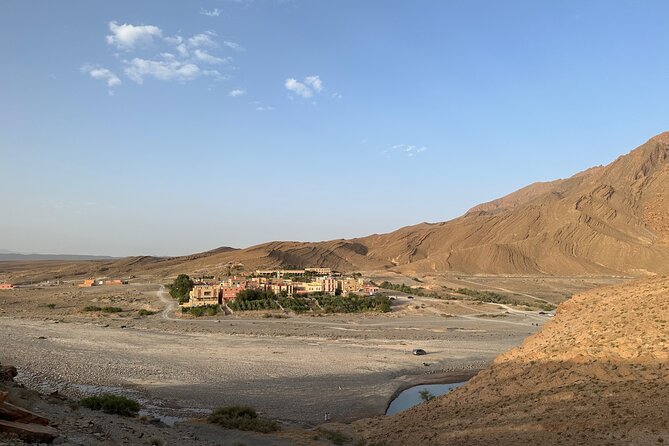
The final listed stop is the Ziz Canyon parking area, where you look over a large palm oasis. The view gives you a sense of how water supports settlement and cultivation in the southeast. The stop lasts about ninety minutes and breaks up the long drive before Merzouga.
I would prepare for this section with comfortable clothing, water, and patience. The tour uses private transport, which is a major benefit on a route like this, but private does not mean short. The distance between northern Morocco and the Sahara is real.
Merzouga: Music, Markets, Pizza, and Camels
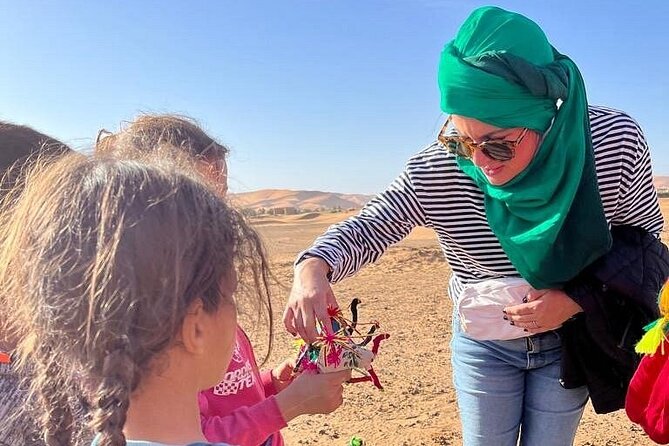
The desert exploration day begins with Khamlia, a village known for its Black Moroccan population and spiritual music. You listen to music and share tea, with about two hours set aside for the visit. This is one of the route’s more personal cultural stops, since it connects music, community, and hospitality rather than focusing only on scenery.
Rissani follows for about ninety minutes. The town is associated with the Alaouite dynasty and has a souk, craftsmanship, and ksour in and around the city. The visit gives you a look at a Saharan town with a strong trading tradition.
Before the camel ride, you have the chance to try traditional Berber pizza at a local restaurant. The meal is not listed as included, so confirm the cost and any dietary arrangements with the operator.
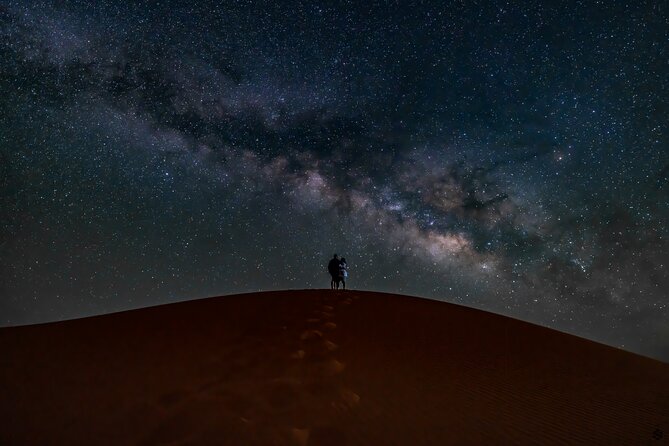
Then comes the signature moment: a camel for each person, with a guide leading the group toward the desert camp. The ride is listed at about two hours, and you can stop for photographs along the way. The camp is a superior camp, and one night there is included.
This is the emotional center of the trip, but it is not effortless. Camel riding can be uncomfortable, especially for anyone with back, hip, or knee concerns. Ask about alternatives if you are unsure. Also remember that desert conditions can be very different from city conditions, so ask what bedding, showers, and evening facilities the camp provides. The description confirms an equipped camp, but does not list each facility.
Todra Gorge and the Road Through the Southeast
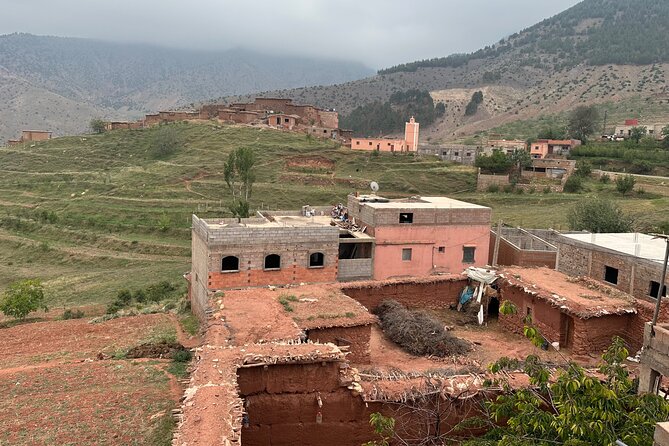
After the Sahara, the route follows old caravan paths toward the Dades area and Marrakech. The Todra River and gorge receive about three hours. You can expect canyon walls, river scenery, and viewpoints suitable for photographs.
Tinghir follows with about two and a half hours. The panoramic view includes cultivated areas, trees, and old kasbah houses. The stop helps connect the natural setting with the way people have built and farmed in the southeast.
This day is another long transition, but it has a clear purpose. You are not simply crossing empty miles. The tour shows how rivers, oases, kasbahs, and caravan routes shaped settlement. The description does not specify the overnight hotel location for this night, so confirm where you sleep after the gorge and before continuing to Marrakech.
Ait Ben Haddou and the High Atlas Pass
Ait Ben Haddou receives three hours, which is enough time to appreciate its earthen architecture rather than treating it as a quick roadside photograph. The fortified village is associated with films including Lawrence of Arabia, Jesus of Nazareth, and The Gladiator, but its real value is architectural.
The visit also explains construction methods and the materials used in southern Morocco. That context is useful because the buildings are not simply picturesque. Their form reflects the climate, local resources, and defensive traditions of the area.
The route then crosses the Tizi n’Tichka Pass at about 2,260 meters through the High Atlas. The drive is listed at three hours and includes wide mountain views. This is a scenic road section, but winding mountain travel can be tiring. If you are prone to motion sickness, plan ahead.
The tour also mentions Kasbah Taourirt on this approach, though it is not given a separate stop duration or admission detail. Ask whether you will enter or simply pass by.
Marrakech: Mosques, Palaces, and a Famous Garden
Marrakech receives its main guided sightseeing on day nine. The Koutoubia Mosque is viewed from outside because entry is not permitted. The guide explains its importance and gives you about ninety minutes around the building.
Bahia Palace provides an interior visit with a guide for about ninety minutes. The entrance fee is not included and is listed at $7. The palace is a good counterpoint to the mosque because it shows decorative design and courtly spaces rather than religious architecture.
Jardin Majorelle takes about two hours. The garden began in 1923 through the work of French artist Jacques Majorelle, later restored by Yves Saint-Laurent and Pierre Bergé. The site includes the Berber Museum, while the Yves Saint Laurent Museum opened nearby in 2017. The garden admission is not included and is listed at $15.
I would confirm ticket arrangements for both Bahia Palace and Jardin Majorelle. These are popular stops, and the package does not say that timed entry is included. The final day is an airport transfer after breakfast, based on your flight time, so do not plan major sightseeing that morning.
Driving, Hotels, Meals, and Pace
The private format is the strongest practical feature. Only your group participates, and the operator says the route can be customized to meet your standards. You can communicate preferences about hotels, timing, and the overall style of the trip before booking.
The route still covers a large part of Morocco in ten days. You will see a lot, but you will not have long free periods in every city. Chefchaouen receives about two hours, and several sightseeing days also include major transfers.
Eight nights are in comfortable hotels, with one night in the Merzouga camp. Specific hotel names are not provided, so ask for the proposed properties before paying if room style or location matters to you.
Breakfast is included, along with three dinners. Dinner in Rabat, Chefchaouen, Fes, and Marrakech is excluded, as are lunches and drinks. This setup gives you some freedom, but you should not mistake the package for a full meal plan.
Confirmation is received at booking. The tour runs daily during the stated operating period, pickup is offered, and the activity ends back at the meeting point, with airport transport on the final day. Most people can participate, and service animals are allowed. Cancellation is free up to three full days before the start time; later cancellations and changes are not accepted.
Who Should Book This Morocco Tour?
I would choose this tour if you want Morocco’s major sights without renting a car or piecing together trains, taxis, desert transfers, and hotels yourself. It suits couples, families, and small groups who value a private vehicle and the ability to request changes.
It is less suitable if you want slow travel, long stays in each city, or a low final cost after meals and admissions. It also demands comfort with long drives and a tightly packed route.
The most praised feature is the overall adventure, particularly the private alternative to a crowded coach trip. The desert camp, camel ride, and range of scenery give the trip its strongest appeal. The Fes and Marrakech guides add value where independent visits can be confusing.
Final Verdict: A Strong Route With a Fast Rhythm
Book this tour if your main goal is to see a broad slice of Morocco in ten days with private transport, organized lodging, and a memorable Sahara night. The route combines major cities, craft traditions, Roman ruins, kasbahs, mountains, and dunes better than a simple city break can.
Before you commit, ask for the exact hotel list, clarify the Casablanca and Rabat order, confirm the camp facilities, and calculate your meal and admission budget. If you accept the fast pace, this is a practical and exciting way to cover Morocco’s classic route without driving yourself.
FAQ
How long does the Morocco tour last?
The tour lasts approximately ten days, beginning in Casablanca and ending with transport to the airport on day ten according to your flight time.
Is this a private tour?
Yes. The activity is private, and only your group participates.
Is pickup available?
Yes. Pickup is offered, and the tour begins in Casablanca.
What destinations are included?
The route includes Casablanca, Rabat, Chefchaouen, Volubilis, Meknes, Fes, Ifrane, Azrou, the Ziz Canyon area, Khamlia, Rissani, Merzouga, the Todra Gorge area, Tinghir, Ait Ben Haddou, the High Atlas, and Marrakech.
Is accommodation included?
Yes. The package includes eight nights in comfortable hotels and one night in a superior desert camp in Merzouga.
Is the camel ride included?
Yes. A camel ride is included, with one camel for each person.
Which meals are included?
Breakfast is listed as included for ten mornings, along with three dinners. Lunches, drinks, and dinners in Rabat, Chefchaouen, Fes, and Marrakech are not included.
Are attraction entrance fees included?
Some are included and some are not. The Hassan II Mosque, Bahia Palace, Jardin Majorelle, and Volubilis are listed with separate fees or optional admission charges.
Can the tour be canceled for a full refund?
Yes, if you cancel at least three full days before the experience start time. Cancellations and changes made less than three full days in advance are not accepted for a refund.
Just added around Casablanca
- Private Half-Day Guided Tour of Casablanca★ 4.0 · 17 reviews
- Casablanca day trip from the cruise ship passenger.★ 4.2 · 17 reviews
- Morocco 8-Night Tour: Chefchaouen, Desert & Hot Air Balloon★ 5.0 · 18 reviews
- Private 11 Day Tour From Casablanca Imperial Cities Sahara Desert★ 5.0 · 18 reviews
- Private Casablanca Layover Tour with Round-Trip Airport Transfer★ 4.5 · 18 reviews
- Big Morocco Tour 15 Days From Casablanca★ 5.0 · 18 reviews
- Casablanca Airport Transfer from hotel in Casablanca★ 5.0 · 18 reviews
- Private Transfer from Casablanca to Marrakech★ 5.0 · 18 reviews
Casablanca Tours, compared.
Hassan II Mosque Premium Tour with Entry Ticket
Read our review →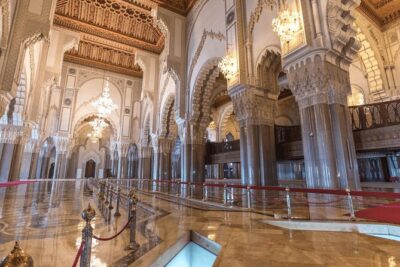
Casablanca City Tour with Hassan II mosque ticket
Read our review →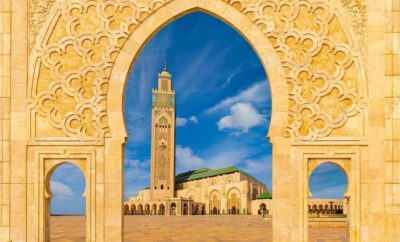
Private Tour of Casablanca with Hassan II Mosque Entry Ticket
Read our review →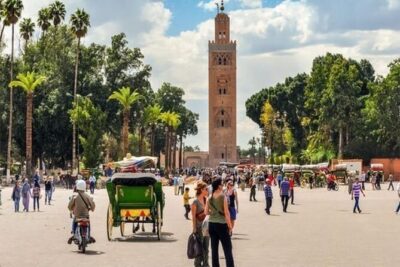
Marrakech Day Trip with Camel Ride from Casablanca
Read our review →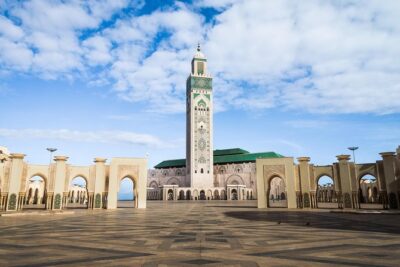
Browse the lists this tour appears in