
Reviewed · BERBER VILLAGE TOURS
Berber Cooking Class at a Farm in the Countryside & shopping at a rural Souk.
The best meals often start at the market. This seven-hour outing takes you 35 kilometers south of Essaouira into the Haha region, home to Morocco’s Indigenous Berber people. I like the way the day combines a rural souk with hands-on cooking, and I like that the food is prepared in an authentic Berber kitchen rather than a polished restaurant classroom.
The chance to roast barley, grind it in a stone mill, bake bread in a clay oven, and steam couscous in a traditional pot gives the class real substance. The main drawback is the long day and rural setting, which may feel slow if you want a quick cooking demonstration or a short trip close to Essaouira.
In This Review
- Key points at a glance
- Why this day feels different from a standard cooking class
- From Essaouira to the Haha region
- Shopping for lunch at the rural souk
- Working inside an authentic Berber kitchen
- Bread, couscous, and the clay oven
- Preparing the goat and vegetable tagine
- A countryside lunch with fresh herb tea
- The optional argan oil cooperative
- Group size, guide quality, and the human side
- Is $98.76 a fair price?
- Who should book this experience?
- Should you book the Berber farm cooking class?
- FAQ
- Where does the cooking class take place?
- What time does the experience start?
- Where is the meeting point?
- Where does the activity end?
- How long does the experience last?
- What food will I prepare?
- Is the argan oil cooperative visit included?
- Can I cancel for a full refund?
Key points at a glance
- A rural souk comes first: Shop for vegetables, fruit, meat, eggs, honey, and other ingredients before cooking.
- Cooking takes place on an ecological farm: The traditional Berber kitchen uses a fire, stone mill, clay oven, and clay couscous pot.
- You prepare a full Moroccan meal: The menu includes flat bread, couscous, and a vegetable and goat meat tagine.
- Lunch is part of the experience: Depending on the weather, you eat outdoors in the peaceful countryside.
- Argan oil is an optional stop: Learn how this local oil is produced and sample products made with it.
- Small groups keep it personal: The maximum group size is eight, and the activity has a 4.8 rating with 94 percent recommending it.
Why this day feels different from a standard cooking class
Many cooking classes begin with premeasured ingredients laid out on a spotless counter. This one begins in a local market, where the ingredients are bought as part of the day. That change matters. You see the daily food economy of the Haha region before learning how those foods become lunch.
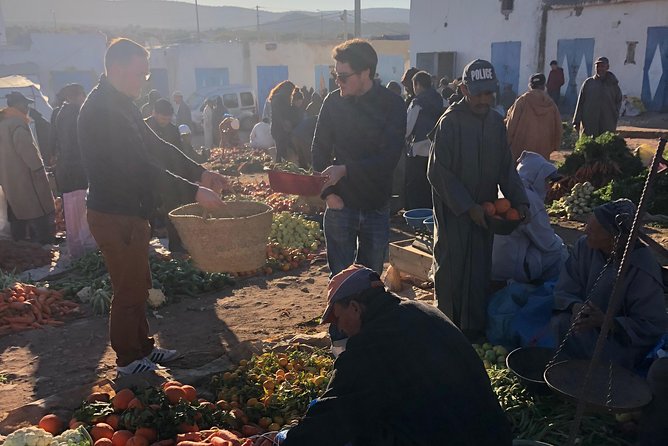
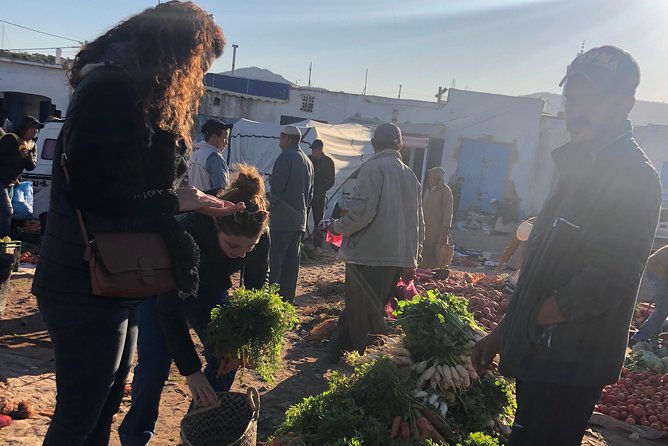
The rural souk offers freshly harvested fruit and vegetables, along with meat, eggs, honey, and other household staples. I like this part because it gives you a clearer sense of how people shop outside the main tourist centers. It is not only a stop for atmosphere. The market supplies the ingredients for the meal.
You should expect a working souk, not a staged cultural display. That can mean a less polished setting and a more active sensory experience. If you enjoy seeing ordinary local life, this is a major strength. If you prefer quiet shops and clearly labeled products, the souk may feel hectic or unfamiliar.
The day takes place in the Haha hills, where many Berber families cultivate crops and keep goats and sheep. The setting adds context to the meal. Goat meat, barley, olive oil, garden herbs, and seasonal produce are not random choices on a menu. They connect directly with the surrounding countryside.
More Cooking Classes in Essaouira
- Essaouira: HOW TO BE A REAL MOROCCAN CHEF
★ 4.9 · 154 reviews - l’Atelier – Moroccan Cooking Workshop in Essaouira
★ 5.0 · 110 reviews - How To Be A Real Moroccan Chef
★ 5.0 · 101 reviews
From Essaouira to the Haha region
The meeting point is Labo Abdelkrim Khatabi d’Analyses Médicales at 287 Rue Oued El Makhazine in Essaouira. The listed start time is 9:00 a.m., and the activity returns to this same point at the end of the day. The full experience lasts about seven hours.
Because the farm is 35 kilometers south of Essaouira, much of the day involves driving through the countryside. The route passes through the Argan zone, and you might see the famous goats that climb into argan trees. That sight is not guaranteed, but the route gives you a chance to see an important part of southern Morocco beyond the city.
The medical laboratory meeting point is practical but not especially charming, so give yourself enough time to locate it. A mobile ticket is accepted, and confirmation is sent within 48 hours of booking, subject to availability. Since this is a small-group activity capped at eight people, booking ahead makes sense. The average booking lead time is 55 days.
Shopping for lunch at the rural souk
The market stop is one of the strongest parts of the itinerary because it turns shopping into part of the lesson. You see the foods before they reach the kitchen and help gather what will be used later.
You can expect to find:
- Fresh fruit and vegetables
- Meat, including the goat used for the tagine
- Eggs
- Honey
- Other basic food supplies
- Ingredients used for the bread, couscous, and tagine
The exact produce will depend on what is available that day. That uncertainty is part of the point. This is a rural market, so the experience is tied to local supply rather than a fixed cooking-school menu.
I would pay close attention to the ingredients used in the tagine. The meal combines vegetables and goat meat with Moroccan spices and olive oil produced from trees on the farm. Seeing those ingredients in the market, then working with them later, gives the class a useful beginning-to-end structure.
You will not get the same level of personal shopping time as you would on a private market tour, particularly if the group reaches the eight-person limit. Still, the stop adds much more value than simply arriving at the farm to cook with ingredients already chosen for you.
Working inside an authentic Berber kitchen
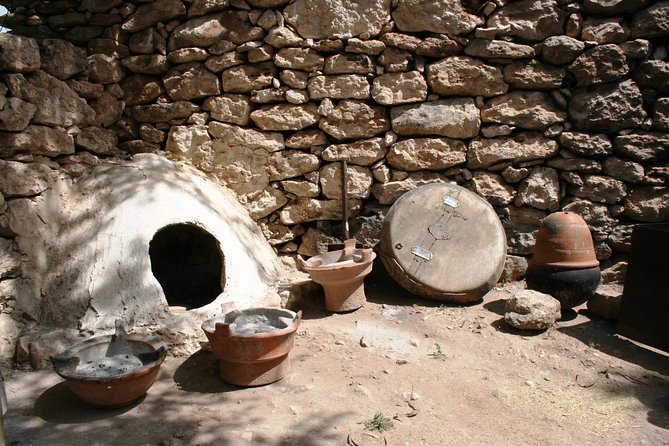
The class takes place on an ecological farm centered on an authentic Berber kitchen. Traditional tools are central to the experience, and the instructors show you how food was prepared before modern kitchen equipment became common.
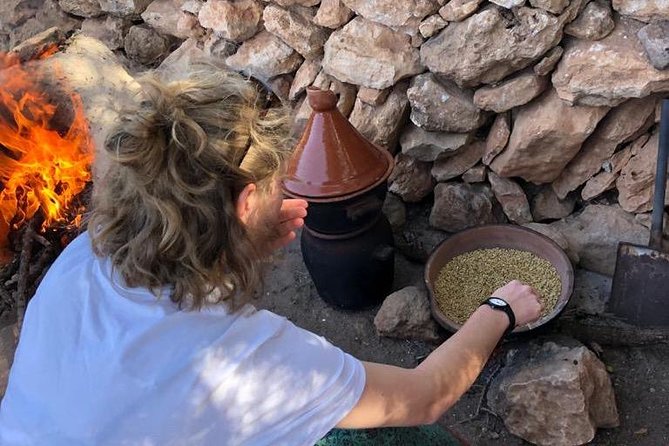
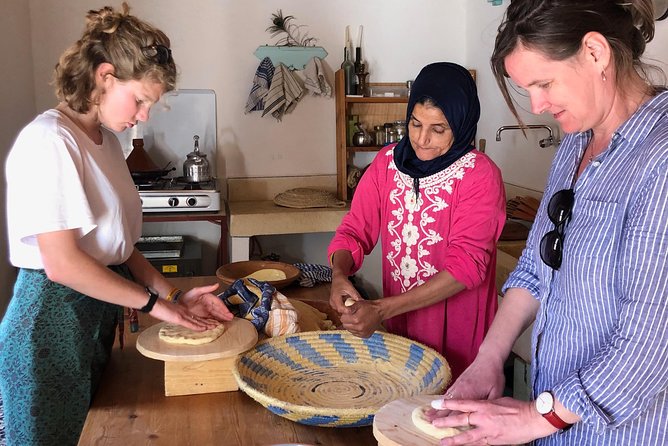
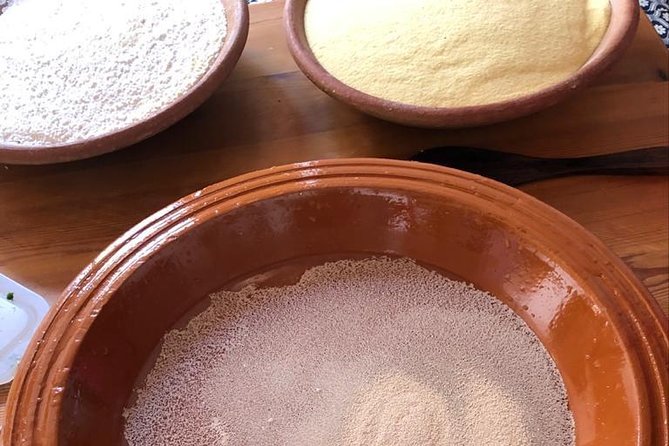
Khadija and Khadija lead the cooking demonstration and practical work. The two local women show you how to roast barley grains over a fire, then grind them in a stone mill. The resulting flour and semolina form the basis for the flat bread and couscous.
This is the kind of detail that makes the class worth the price. You are not only learning that couscous is a Moroccan staple. You are seeing how grain is transformed by hand, using equipment with a direct connection to local food traditions.
The stone mill and open fire may also make the class more physical than a conventional kitchen lesson. The pace is likely to be hands-on and unhurried. If you want a quick demonstration followed by a large meal, this may feel too slow. If you want to understand the work behind the food, it is exactly the right sort of setting.
The farm kitchen also gives the lesson a strong sense of place. You are learning in the countryside where olive trees, goats, sheep, crops, and household food production are part of the regional way of life.
More Medina and Souk Walks:
- Essaouira: Sqala du Port, Medina Ramparts & Fish Market Tour
★ 4.7 · 212 reviews - Essaouira: Sqala du Port, Citadel, Fish Market & Medina Tour
★ 4.6 · 73 reviews - Essaouira Day Trip from Marrakech _ medina, old port
★ 4.8 · 66 reviews - Marrakech: Bahia Palace, Saadian Tombs, Souk and Medina Tour
★ 4.7 · 4,974 reviews
Bread, couscous, and the clay oven
Bread is prepared from the barley flour and semolina produced during the class. You help bake the flat bread in a clay oven, an important contrast to using an electric oven at home.
Couscous is steamed in a traditional clay pot. This step shows that couscous is not simply boiled like pasta. It is prepared through steaming, and the traditional equipment helps you see how the grain is handled.
I like that both dishes are included. Bread gives you a direct task and an immediate result, while couscous shows a slower preparation method. Together they make the class more than a demonstration of tagine.
The class may be less comfortable than an indoor cooking studio. Fire, clay equipment, and rural conditions can mean heat, smoke, or uneven working surfaces. Those are reasonable tradeoffs for a class built around traditional methods, but you should choose this outing for the setting and process, not for modern kitchen comfort.
Preparing the goat and vegetable tagine
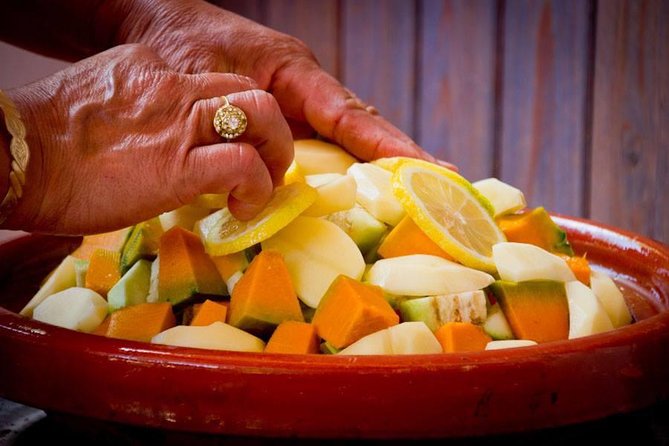
The main dish is a traditional tagine made with vegetables and goat meat. Moroccan spices and olive oil bring it together, with the oil coming from olive trees grown on the farm.
Goat meat is a meaningful local choice. The Haha region is associated with herding goats and sheep, so the dish reflects the food culture of the area rather than simply offering the most familiar tourist option. If you enjoy trying regional dishes, this will be one of the day’s most distinctive elements.
The tagine also gives you a practical look at how Moroccan cooking builds flavor from simple ingredients. The class includes spices, vegetables, meat, and oil, but the setting and cooking method are just as important as the ingredient list.
The available information does not specify substitutions or alternative menus. If you do not eat goat meat, or if you have strict dietary needs, ask about options before booking. Most people can participate, but no special dietary arrangement is promised.
A countryside lunch with fresh herb tea
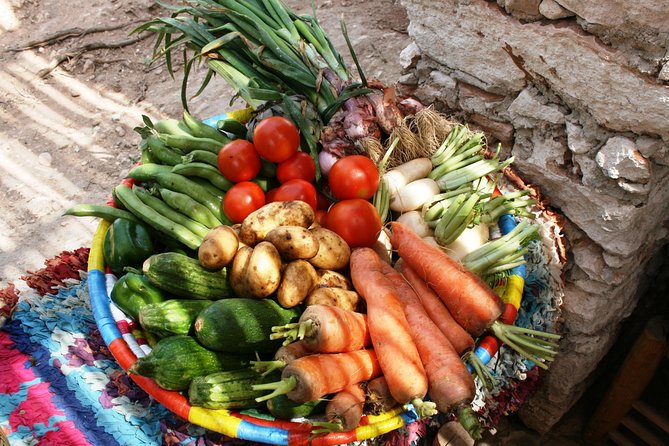
Depending on the weather, lunch is served outdoors. This is one of the nicest parts of the experience because you eat the food where much of its character comes from: a quiet farm setting surrounded by nature.
The meal includes the dishes prepared during the class, followed by tea infused with fresh herbs from the garden. The tea provides a gentle finish after a morning of market shopping and cooking.
Outdoor dining depends on conditions, so do not treat it as guaranteed. In poor weather, the meal may need to be served elsewhere on the farm. The weather requirement also affects the tour itself. If conditions force cancellation, you are offered another date or a full refund.
The countryside setting may be especially appealing after time in Essaouira’s medina and streets. It gives the day a slower rhythm and helps you see how food, farming, and hospitality connect outside the city.
The optional argan oil cooperative
The route passes through the Argan zone, and you have the option to visit an argan oil cooperative. This stop explains how argan oil is produced, a product unique to this area.
The cooperative also offers tastings of products made with the oil. That makes the stop more useful than a simple photo break. You can learn about production and sample some of the finished goods.
Because the visit is optional, the time spent there may depend on the group and the day’s schedule. If you are mainly interested in cooking, you may prefer to focus on the farm class. If you want a broader picture of local products, the cooperative adds a worthwhile regional connection.
The argan stop is also a good reason to keep expectations realistic. The day includes several parts: the souk, the drive, the farm preparation, lunch, and possibly the cooperative. It is best viewed as a full countryside outing with cooking at its center, not as a four-hour kitchen class with a short market visit.
Group size, guide quality, and the human side
The maximum group size is eight people. That is small enough to keep the class more personal than a large bus excursion, though the amount of hands-on time can still vary depending on the group.
A German-language guide named Nicole helped one couple enjoy a full day of market shopping and cooking over an open fire. Her presence is especially useful if you prefer a German-speaking guide. The experience description does not promise a particular guide or language for every departure, so confirm that point if it matters to you.
The two women named Khadija are the local hosts for the cooking portion. Their role is important because they are not simply explaining a recipe from a script. They demonstrate regional methods using the tools and ingredients associated with the farm.
The strongest praise for the experience centers on the complete day: the local market, new impressions, open-fire cooking, and the friendly feeling of spending time with people in their own setting. That combination gives the tour a warmer quality than a class designed only to teach recipes.
Is $98.76 a fair price?
At $98.76 per person, this is not the cheapest way to eat Moroccan food. You could order a tagine in Essaouira for much less. But the price covers more than lunch.
You are paying for a roughly seven-hour outing, transport between Essaouira and the countryside, a market visit, the cooking instruction, the farm setting, the meal, and the chance to add an argan cooperative stop. The small group limit also matters. With no more than eight people, the experience should feel less crowded than a large organized excursion.
I consider the price reasonable if you value local contact, traditional food preparation, and a full day outside the city. It is less attractive if your main goal is simply to learn one tagine recipe or eat an inexpensive meal.
The value also depends on how much you enjoy process. Roasting barley, grinding grain, baking bread, and steaming couscous take time. You are paying for that time and for access to a rural setting, not just for the final plate.
Who should book this experience?
I would recommend this outing to you if you:
- Want to see rural life south of Essaouira
- Enjoy cooking classes that use traditional tools
- Like visiting food markets before preparing a meal
- Are interested in Berber culture and local agriculture
- Want to try goat tagine and freshly prepared couscous
- Prefer small groups over large organized tours
- Have about seven hours available for a countryside day
I would think twice if you want a short, highly polished class in a modern kitchen. The rural setting, open fire, clay oven, and traditional equipment are the attraction, but they also mean less comfort and less control than a city cooking school.
The experience is suitable for most people, and service animals are allowed. The activity requires good weather and a minimum number of participants. If the minimum is not met, you are offered another date or experience, or a full refund.
Should you book the Berber farm cooking class?
Book it if you want your Moroccan meal to begin with the people, market, grain, fire, and farm behind it. The best parts are the rural souk, the traditional Berber kitchen, the work with barley and couscous, and the meal served in the countryside.
Skip it if you only want a quick recipe lesson near Essaouira or if goat meat and rustic cooking conditions do not appeal to you. For the right kind of visitor, though, this is a thoughtful and unusually grounded day trip. The 4.8 rating, 94 percent recommendation rate, and small group size support its reputation, but the real reason to choose it is simple: you get to see how a regional meal is bought, prepared, and shared from start to finish.
FAQ
Where does the cooking class take place?
The class takes place on an ecological farm in the Haha region, about 35 kilometers south of Essaouira.
What time does the experience start?
The listed start time is 9:00 a.m.
Where is the meeting point?
The meeting point is Labo Abdelkrim Khatabi d’Analyses Médicales, 287 Rue Oued El Makhazine, Essaouira 44000, Morocco.
Where does the activity end?
The activity ends back at the original meeting point in Essaouira.
How long does the experience last?
The experience lasts approximately seven hours.
What food will I prepare?
You will prepare traditional flat bread, couscous, and a tagine made with vegetables, goat meat, Moroccan spices, and olive oil.
Is the argan oil cooperative visit included?
You have the option to visit an argan oil cooperative while driving through the Argan zone. The visit includes information about production and tastings of products made with argan oil.
Can I cancel for a full refund?
Yes. You can cancel at least 24 hours before the local start time for a full refund. Cancellations or changes made less than 24 hours before the start time are not refunded or accepted.
More Workshops
- Essaouira: Surf Lessons
★ 4.9 · 412 reviews - Kitesurfing Lessons in Essaouira Beach
★ 5.0 · 206 reviews - Surf Lesson in Essaouira
★ 5.0 · 179 reviews - Group Kitesurfing lesson with a Local in Essaouira Morocco
★ 5.0 · 175 reviews
More Berber Village Tours
- Traditional Moroccan and Berber cooking classes
★ 5.0 · 40 reviews - Berber villages : Atlas Mountains Day Hike from Marrakech
★ 5.0 · 14,007 reviews - Marrakech: Balloon Flight, Berber Breakfast & Certificate
★ 4.8 · 8,164 reviews - Marrakech: Majorelle Garden, YSL, and Berber Museum Entry
★ 4.6 · 5,168 reviews
Just added around Essaouira
- Essaouira: Private Transfer from or to Essaouira Airport★ 5.0 · 17 reviews
- Essaouira: 1/2 Day Camel ride with meal.★ 5.0 · 19 reviews
- Essaouira: 1 Hour Dromedary + 2 Hours Quad★ 5.0 · 19 reviews
- 3 Hours Quad Trip in Essaouira discover the Cave and the biggest Dunes★ 5.0 · 19 reviews
- From Essaouira: 1-Hour Horse Ride with sunset★ 4.6 · 19 reviews
- Essaouira: Moroccan pastry workshop★ 5.0 · 19 reviews
- Essaouira: 3-Hour Camel Tour★ 5.0 · 20 reviews
- Essaouira: 2-hour kitesurfing lesson (all levels)★ 5.0 · 20 reviews
Berber Village Tours, compared.

Berber villages : Atlas Mountains Day Hike from Marrakech
Read our review →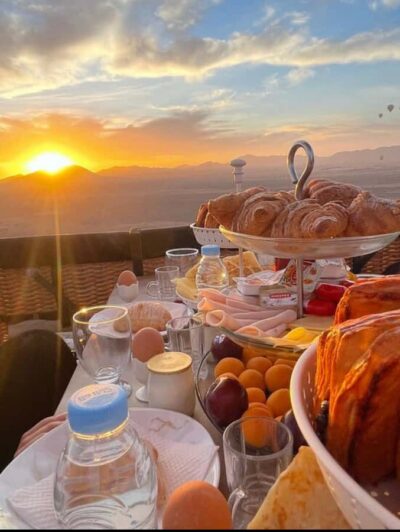
Balloon Flight, Berber Breakfast & Certificate
Read our review →
Majorelle Garden, YSL, and Berber Museum Entry
Read our review →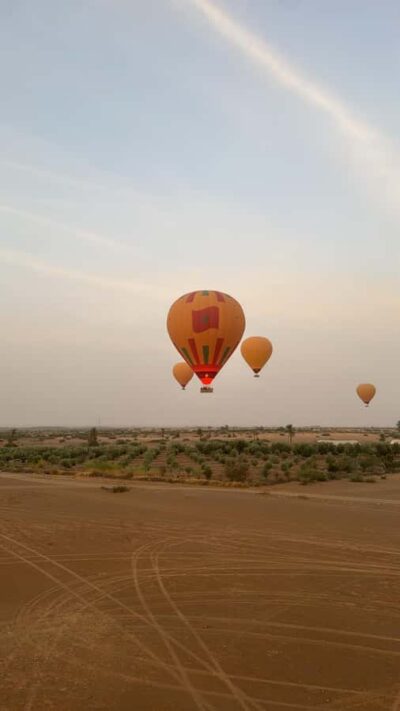
Hot Air Balloon Flight with Berber Breakfast
Read our review →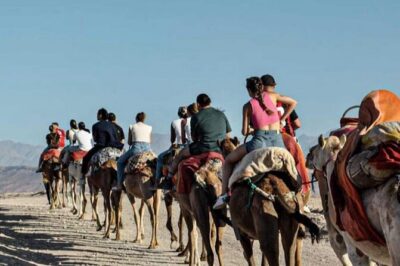
Atlas Mountains, Berber Villages and Three Valleys all inclusive
Read our review →
Atlas Mountains Hot Air Balloon Ride from Marrakech with Berber Breakfast and Desert Camel Experience
Read our review →
Atlas Mountains, Berber Villages, Agafay & Camel Ride
Read our review →
Balloon Flight, Berber Breakfast, and Camel Ride
Read our review →Browse the lists this tour appears in