
Reviewed · DINING EXPERIENCES
Moroccan Food Tasting Tour and Dinner
Come hungry, leave full of stories. This three-hour Marrakech food tour turns an evening in the medina into a long, generous meal, with stops for olives, soups, pancakes, pastries, spices, and a sit-down Moroccan dinner. I like the local-market focus, and I like that Hassan and the other guides explain what you are eating instead of simply handing you a plate. The main drawback is the price: at $174.47 per person, it is a serious spend for a three-hour activity.
I also like the timing. Starting at 6 p.m. lets you see Jemaa el-Fnaa shift into its evening food-and-entertainment mode, then continue through the souks as the city cools. You should know that this is not an easy stroll on smooth pavement. There are stairs, narrow lanes, and plenty of walking, so people with mobility concerns may find it difficult.
In This Review
- Quick facts worth knowing
- Starting at Jemaa el-Fnaa at 6 p.m.
- Olives, food shops, and the Medina’s narrow lanes
- The spice shop, argan oil, and Moroccan tea
- Evening food stalls at Jemaa el-Fnaa
- Pastries and olives in Souk Semmarine
- The final Moroccan dinner
- What the guides add to the evening
- Is $174.47 a fair price?
- Who should book this food tour?
- Booking timing and cancellation advice
- Final verdict: book it for the food education
- FAQ
- How long is the Moroccan Food Tasting Tour and Dinner?
- Where does the tour start and finish?
- What food is included?
- Is this a private tour?
- Is the tour accessible to people with limited mobility?
- Can I cancel for a full refund?
Quick facts worth knowing
- More than a quick snack walk: The food builds from small tastings to a full Moroccan dinner with salad, tanjia or tajine, dessert, tea, and sparkling water.
- A food tour inside Marrakech’s medina: You visit Jemaa el-Fnaa, the Medina of Marrakesh, and Souk Semmarine rather than eating in one restaurant all evening.
- A strong guide-led experience: Hassan is named as the guide, while Ali, Mohammed, Souf, and Hussain have also led highly praised versions of the tour.
- A useful first-night activity: The stops help you learn what to order and where to look during the rest of your time in Marrakech.
- A private booking for your group: Only your group participates, and group discounts are available.
- Plan around a large appetite: The tasting count can reach more than ten foods before the final meal, so eat lightly beforehand.
Starting at Jemaa el-Fnaa at 6 p.m.
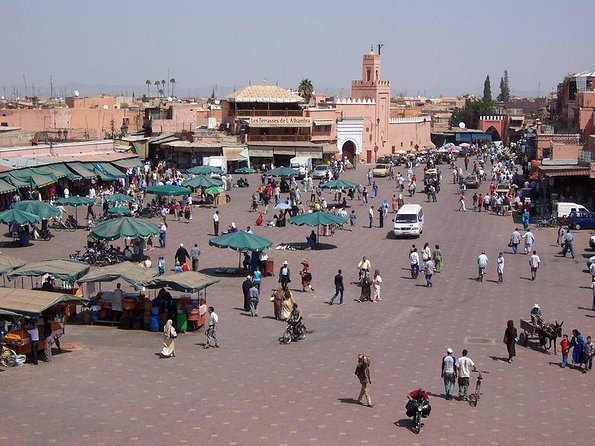
The meeting point is Hôtel Restaurant Café de France on Rue des Banques, beside Jemaa el-Fnaa. This is a practical central location, close to public transportation and easy to recognize in the main square. The tour starts at 6 p.m., a smart hour for Marrakech because the heat of the day is easing and the square is preparing for its evening life.
Jemaa el-Fnaa is not just a place to grab dinner. For centuries, it served as a meeting place for caravans, and today it remains Marrakech’s great public stage. As evening arrives, food stalls open and performers appear, including acrobats, storytellers, magicians, dancers, and Gnawa musicians.
Your guide spends about 50 minutes here. That gives you time to take in the scene without rushing straight to a plate. I would keep your belongings close and stay aware of where the guide is going. A famous square can be exciting, but it is also crowded and visually distracting.
The advantage of beginning here is context. You see the city’s most famous public space before moving into smaller food stops. The disadvantage is that this opening section may feel more like orientation than eating, especially if you arrive expecting an immediate dinner.
More Food Tours:
- From Marrakech: Merzouga 3-Day Desert Safari with Food
★ 4.7 · 12,232 reviews - Marrakech: Street Food Tour by Night
★ 4.8 · 2,838 reviews - 3-Day Tour to Merzouga Erg Chebbi with Food & Camel Trek
★ 5.0 · 1,770 reviews
Olives, food shops, and the Medina’s narrow lanes
The tour then moves through the Medina of Marrakesh for about an hour. This is where the experience becomes more useful than a standard restaurant meal. You visit local food shops, explore less obvious sights, and see the colorful olive souk.
Olives are a major part of Moroccan eating, and the stop gives you a chance to notice how much variety can fit into one market. You may taste olives marinated with olive oil and spices, along with dried fruits, nuts, or other small foods. The exact sequence can vary, but the design is clear: you sample as you walk, with the guide explaining what makes each product different.
The souks are organized around specialties. Some lanes focus on spices, while others sell ingredients used in Moroccan kitchens. This is valuable if you plan to cook Moroccan food at home or simply want to recognize the ingredients you see in restaurants.
I especially like this part for first-time visitors. A guide can point out foods you might pass without understanding, and can help explain how local families shop. You are not only eating. You are learning how food fits into daily life.
The practical catch is the setting. The Medina has narrow alleys, uneven surfaces, and stairs. One version of the tour was described as having lots of stairs, so this is not a good fit if you need a fully accessible route. Wear shoes that can handle rough pavement, and avoid arriving overly dressed for a formal dinner.
The spice shop, argan oil, and Moroccan tea
After the market walk, the group spends about 30 minutes at an authentic spice store. This stop focuses on the ingredients behind Moroccan cooking, including fresh spices selected by local shoppers.
You taste edible argan oil, amlou, and Moroccan mint tea. Amlou is a thick Moroccan spread made with ingredients such as almonds, argan oil, and honey, though the exact preparation is not specified here. It is useful to taste it in Morocco because its flavor and texture can be hard to judge from a market jar.
The argan oil tasting also deserves attention. Not every bottle labeled argan oil is meant for eating, so having a guide distinguish culinary use from other products is practical. The point of this stop is not simply to buy something. It is to understand the ingredients before you see them again in sauces, salads, spreads, and pastries.
This is also one of the more educational moments of the tour. Hassan is described as an excellent English speaker who explains food clearly and answers questions. Other guides, including Ali, Mohammed, Souf, and Hussain, have also been praised for being friendly, informative, and attentive.
Because the tour is private for your group, you have more room to ask questions than you would on a large group walk. That matters at a spice shop, where you may want to ask about flavor, use, storage, or how to choose a good product.
Evening food stalls at Jemaa el-Fnaa
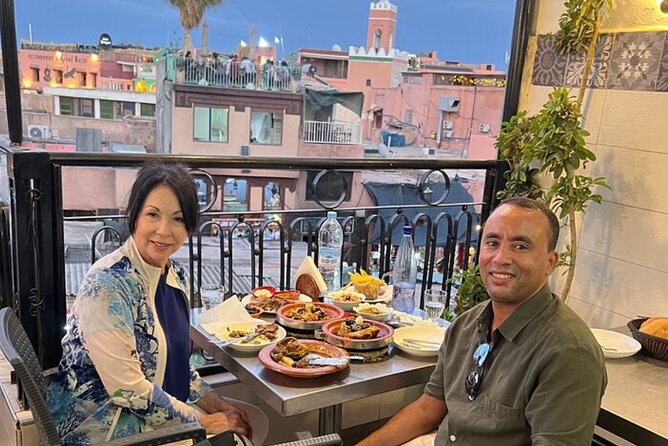
The route returns to Jemaa el-Fnaa for about 20 minutes to sample evening food stalls used by local families. This is the street-food portion of the tour, and it gives you a chance to try foods in small portions before committing to a full plate.
Possible tastings include Moroccan soups with dates and chebbakia, a sweet sesame pastry often served during Ramadan, and barbouch, or snails, seasoned with spices. You may also sample cactus, meats, pancakes, olives, nuts, and dried fruits, based on the foods included in different versions of the experience.
The variety is the real attraction. Moroccan food is not just tajine, and this tour makes that clear. You move from salty olives to sweet pastries, from soup to pancakes, and from small snacks to more filling meat dishes.
Moroccan pancakes can be served with honey and cheese, or with onion and spices. That contrast is a good example of how one basic food can appear in very different forms. If you have dietary restrictions, ask the guide before tasting rather than assuming every stop is suitable.
The food stalls are part of the fun, but they are also the least controlled part of the evening. You are eating in an active public square, not a quiet dining room. The tour’s value comes from having a local guide choose the stops and explain what you are trying.
A few more Marrakech trips worth weighing up
- Authentic Moroccan Food Tour in Marrakech with Dinner
★ 5.0 · 1,423 reviews - From Marrakech: Zagora 2-Day Desert Safari with Food & Camp
★ 4.5 · 1,137 reviews - Marrakech: Jemma El Fnaa Food Tour with Dinner
★ 4.7 · 394 reviews - Marrakech: Authentic Moroccan Food Walking Tour & Dinner
★ 4.8 · 261 reviews
Pastries and olives in Souk Semmarine
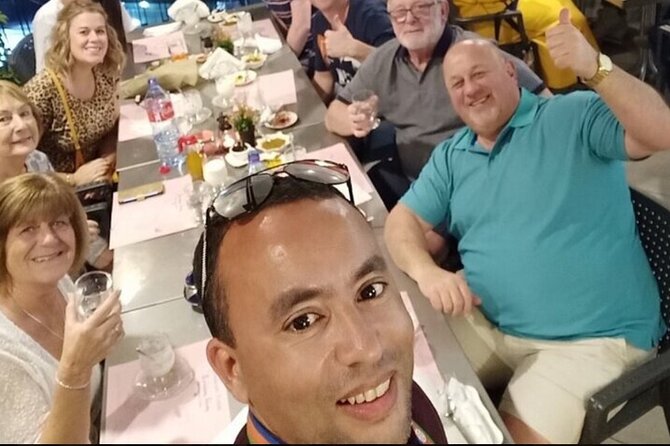
The final market stop lasts about 20 minutes in Souk Semmarine. Here, the focus turns to Moroccan pastries and more olives in traditional market shops.
Moroccan pastries often combine nuts, honey, sesame, spices, and thin layers of dough. The included sampling may feature Moroccan pastries and macaroons, along with dried fruits and other sweet bites. This is a good moment to slow down, compare textures, and decide what you might want to buy later.
I would not treat this as a shopping tour, but you may see foods worth taking home. Since the route includes a spice store and pastry shops, you can ask the guide where to return if you want a larger purchase on another day.
The timing is short, and that is probably sensible. By this point, you have already eaten several samples. A longer pastry stop could be enjoyable, but it could also leave you too full for dinner.
The final Moroccan dinner
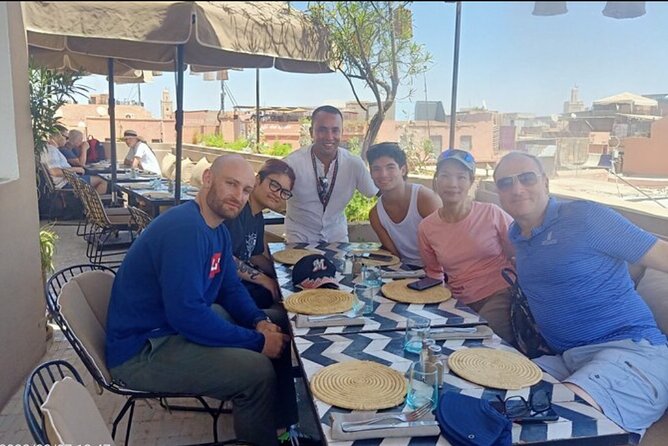
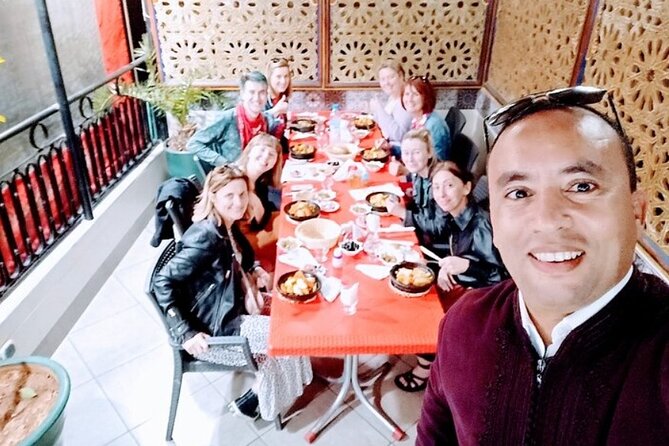
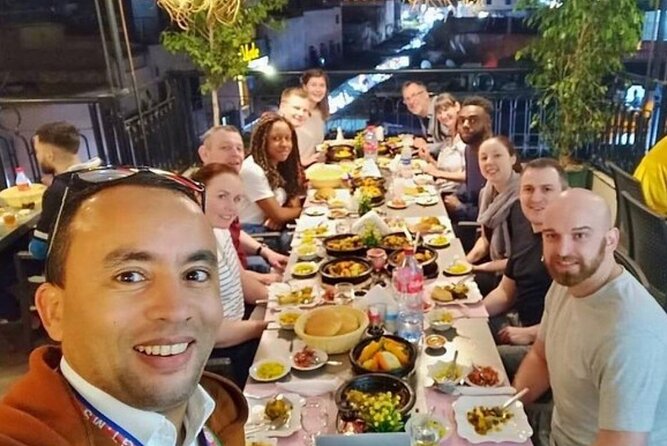
The experience ends with a full dinner, described as Moroccan salad, tanjia or tajine, dessert, Moroccan tea, coffee, and sparkling water. The included tastings also feature chicken and almond pastilla, soups, pancakes, pastries, and other small foods, so dinner is not a replacement for the tasting route. It is the final course in a long evening of eating.
Tanjia and tajine are not the same dish. A tajine refers to a slow-cooked Moroccan preparation commonly served from the distinctive cooking vessel, while Marrakech is especially associated with tanjia, a slow-cooked meat dish traditionally prepared in a clay jar. The booking information allows for tanjia or tajine, so you should not assume which one will appear.
Pastilla of chicken and almonds brings a different style to the table, combining savory filling with sweet spices and pastry. It is one of the more substantial samples and helps show why Moroccan food can move between sweet and savory without a hard dividing line.
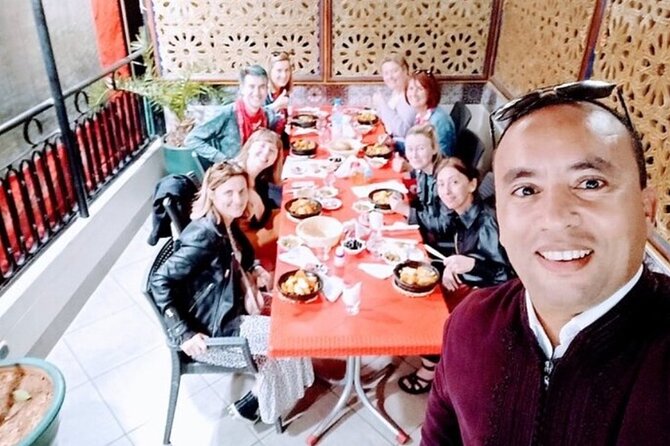
The final meal may be served on a terrace, according to one description of the experience. That makes a pleasant change after the tight lanes and food stalls, though the exact dining setting can vary. The dinner is where you can sit, talk, and ask follow-up questions about the foods you have tried.
One practical warning: do not eat a large lunch or early dinner before this tour. The route can include sixteen tastings, followed by a four-course-style meal. Arriving with a genuinely empty stomach is not a joke here.
What the guides add to the evening
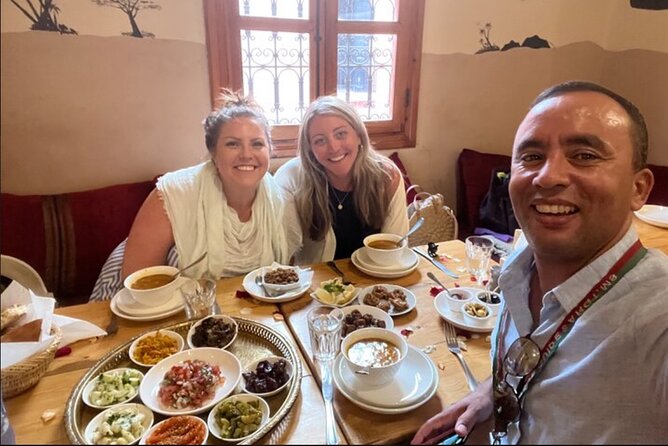
The guide is the difference between a food crawl and a useful introduction to Marrakech cuisine. Hassan receives especially strong praise for explaining the food, speaking excellent English, being transparent, and adapting the route to what the group wants to see.
Ali is also described as friendly and informative, while Mohammed is praised for explaining local foods, souks, and market areas. Souf is noted for combining food with cultural information, and Hussain for finding good pastry, olive, and nut vendors even in sweltering heat.
The range of guide names suggests that the person leading your tour may not always be Hassan. The experience description identifies Hassan, but the operating team has used several guides. That is not necessarily a problem, though you should avoid booking solely because you expect one specific person unless the provider confirms it.
The most useful guide behavior is not memorizing food names. It is explaining why a dish matters, showing you where locals shop, and making it comfortable to ask questions. That personal connection is repeatedly praised and is the main reason this costs more than simply ordering dinner in the square.
Is $174.47 a fair price?
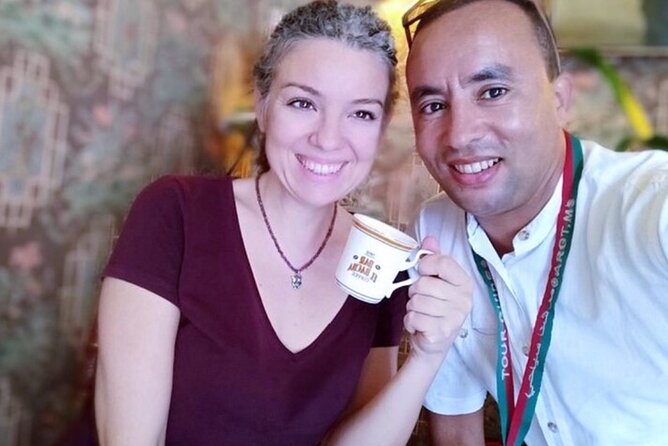
At $174.47 per person, this is expensive for three hours in Marrakech. You can certainly eat more cheaply on your own, especially if you are comfortable choosing food stalls and restaurants without help.
The price makes more sense if you value several things at once: a private experience for your group, a guide for the Medina, a long list of tastings, a full dinner, and cultural explanation throughout the evening. You are paying for access, organization, and the confidence to try foods you might otherwise skip.
The included food is generous. You are not paying for one appetizer and a main course. The route can include olives, soups, dates, chebbakia, snails, pancakes, pastilla, meats, cactus, dried fruits, pastries, tea, and a full meal. Exact tastings can vary, but the quantity is clearly a central feature.
Group discounts could improve the value for a larger party. Since only your group participates, the experience may also suit families or friends who prefer not to share a food walk with strangers.
I would not book this purely to save money. I would book it if you want your first evening in Marrakech organized around food and would rather have a local guide make the choices.
Who should book this food tour?
This suits you best if you want to:
- Try many Moroccan foods in one evening
- Learn how the Medina’s food shops and souks work
- Ask a local guide about ingredients and cooking
- Start your Marrakech visit with a cultural introduction
- Enjoy both street food and a seated dinner
- Share a private booking with family or friends
It is less suitable if you want a short, light tasting. It is also a poor match for anyone who dislikes narrow lanes, uneven ground, stairs, or large meals.
Vegetarian, allergy, and religious dietary needs are not explained in the supplied details. If any food is off-limits, contact the provider before booking and tell the guide at the start. Do not rely on guessing at market stalls.
The meeting point is central, and the activity ends back there. That makes it easier to continue your evening in the Medina, though the tour itself ends at the same central meeting location rather than providing transport elsewhere.
Booking timing and cancellation advice
The experience is often booked about 40 days ahead, so reserve early if your Marrakech dates are fixed. Confirmation is received at booking, and mobile tickets are supported.
You can cancel for a full refund up to 24 hours before the 6 p.m. start time. Changes or cancellations inside that 24-hour window are not accepted for a refund. The activity requires good weather, and if poor weather causes cancellation, you are offered another date or a full refund.
Final verdict: book it for the food education
I would recommend this tour to anyone who wants a broad, guided introduction to Marrakech food rather than a bargain dinner. The best parts are the variety, the local market route, and the guides’ willingness to explain what is in front of you.
Book it near the beginning of your stay, when the souks still feel confusing and you want help finding your bearings. Skip it if $174.47 feels too high for a meal, or if a three-hour walk with many tastings sounds tiring. For everyone else, come hungry, wear sensible shoes, and leave room for the tanjia or tajine at the end.
FAQ
How long is the Moroccan Food Tasting Tour and Dinner?
The experience lasts approximately three hours and begins at 6 p.m.
Where does the tour start and finish?
It starts at Hôtel Restaurant Café de France on Rue des Banques beside Jemaa el-Fnaa in Marrakech. It ends back at the meeting point.
What food is included?
Included foods can include Moroccan salad, tanjia or tajine, dessert, chicken and almond pastilla, Moroccan pastries, macaroons, soups, dates, chebbakia, barbouch, Moroccan pancakes, marinated olives, dried fruits, argan oil, amlou, Moroccan mint tea, coffee, and sparkling water.
Is this a private tour?
Yes. Only your group participates in the activity. Group discounts are also available.
Is the tour accessible to people with limited mobility?
The route includes Medina lanes and may include many stairs. The available information says it is not easily accessible, so people with mobility concerns should check with the provider before booking.
Can I cancel for a full refund?
Yes. You can cancel at least 24 hours before the experience starts for a full refund. Cancellations or changes made less than 24 hours before the start time are not accepted for a refund.
More Dinner Experiences
- Marrakech: Agafay Desert Quad, Camel Ride & Dinner Show
★ 4.7 · 10,209 reviews - Marrakech: Agafay Desert Retreat, Tent, Dinner, Show & Pool
★ 4.8 · 5,616 reviews - Marrakech: Agafay Desert Dinner Show with Quad Bike & Camel
★ 4.9 · 5,058 reviews - Agafay Desert Package, Quad Bike, Camel Ride and Dinner Show
★ 5.0 · 4,244 reviews
More Dining Experiences
- Marrakech: Agafay Desert Sunset, Camel Ride, and Dinner Show
★ 4.6 · 35,119 reviews - Marrakech: Agafay Desert Quad & Camel Rides with Dinner Show
★ 4.8 · 27,382 reviews - Marrakech: Agafay Desert Quad Biking Tour with Dinner-Show
★ 4.8 · 16,569 reviews - Marrakech: Agafay Desert Quad & Camel Rides with Dinner Show
★ 4.9 · 10,771 reviews
Just added around Marrakech
- Marrakech: Medina Souks, Hidden Markets and Shopping Tour★ 4.8 · 33 reviews
- Sunset Camel Ride Marrakech with Transfers★ 5.0 · 33 reviews
- Guided walking tour in Marrakech★ 4.5 · 33 reviews
- Agafay desert sunset camel ride Tour from Marrakech★ 5.0 · 33 reviews
- 2 Days Desert Agafay and Atlas Mountains Trek From Marrakech★ 3.8 · 33 reviews
- Atlas mountains, Ourika valley, berber villages trip & Guide★ 5.0 · 33 reviews
- Magical Dinner show and Quad bike In Agafay Desert Marrakech★ 4.5 · 33 reviews
- Camel Ride at the Palm Groves in Marrakech★ 5.0 · 33 reviews
Dining Experiences, compared.
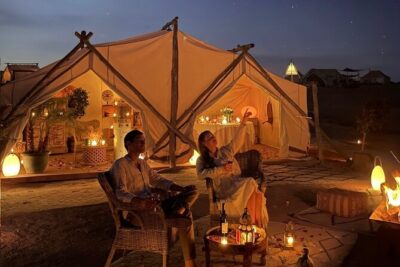
Agafay Desert Sunset, Camel Ride, and Dinner Show
Read our review →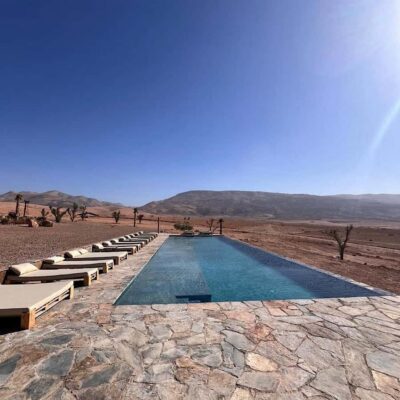
Agafay Desert Quad & Camel Rides with Dinner Show
Read our review →
Agafay Desert Quad Biking Tour with Dinner-Show
Read our review →Agafay Desert Quad & Camel Rides with Dinner Show
Read our review →
Agafay Desert Quad, Camel Ride & Dinner Show
Read our review →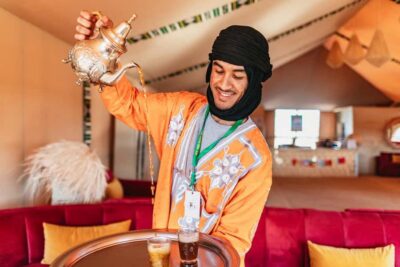
Agafay Desert Retreat, Tent, Dinner, Show & Pool
Read our review →
Agafay Desert Dinner Show with Quad Bike & Camel
Read our review →
Agafay Desert Package, Quad Bike, Camel Ride and Dinner Show
Read our review →Browse the lists this tour appears in