
Reviewed · DINING EXPERIENCES
Marrakech: Jemma El Fnaa Food Tour with Dinner
Marrakech tastes best after sunset. This 210-minute walking tour turns Jemaa el Fnaa, the souks, spice market, Mellah, and nearby food stalls into one edible introduction to the city. I like the mix of local snacks and cultural context, and I also like the practical help a guide gives you in crowded lanes where finding the right bakery or food stall alone can be tough. The main drawback is that the route involves plenty of walking, crowds, and adventurous dishes, and it cannot cater to gluten intolerance.
You pay $46 per person, with a guide, three tastings, and a Moroccan dinner included. That is good value if you arrive hungry and want more than a restaurant meal. The experience has earned a 4.7 rating from 394 reviews, with repeated praise for guides such as Omar, Atika, Ayoub, Youssef, Brahim, and Mustafa. If possible, book this early in your stay so you can use the guide’s advice for the rest of your time in Marrakech.
In This Review
- Key points at a glance
- Why this Jemaa el Fnaa food tour works
- Starting near the square and entering the souks
- The spice market and the flavors of Morocco
- Mellah, breads, and the less familiar bites
- Tangia, harira, and the main meal
- What the guides add to the evening
- Price, timing, and practical value
- Who should book this Marrakech food tour?
- Should you book it?
- FAQ
- How long does the Marrakech food tour last?
- Where does the tour start?
- What food is included?
- Is dinner served in Jemaa el Fnaa?
- Can vegetarians and vegans join?
- Is the tour suitable for children?
- What should I wear?
Key points at a glance
- Food beyond tagine: Expect samples that may include olives, nuts, pastries, doughnuts, harira soup, tangia, spiced drinks, and other Moroccan specialties.
- A guide through the Medina: The route uses narrow souk lanes and local shops that are easy to miss or pass by without help.
- Dinner in Jemaa el Fnaa: The evening ends with Moroccan food at Chez Lamine Hadj Mustapha or a similar local restaurant setting in the square.
- Spice market insight: Cumin, saffron, ginger, pepper, and turmeric provide a useful introduction to the flavors of Moroccan cooking.
- A generous meal plan: Several past itineraries included enough food that you should skip lunch or eat very lightly beforehand.
- Flexible format: You can join a group of up to 12 or choose a private option, with English guiding throughout.
Why this Jemaa el Fnaa food tour works
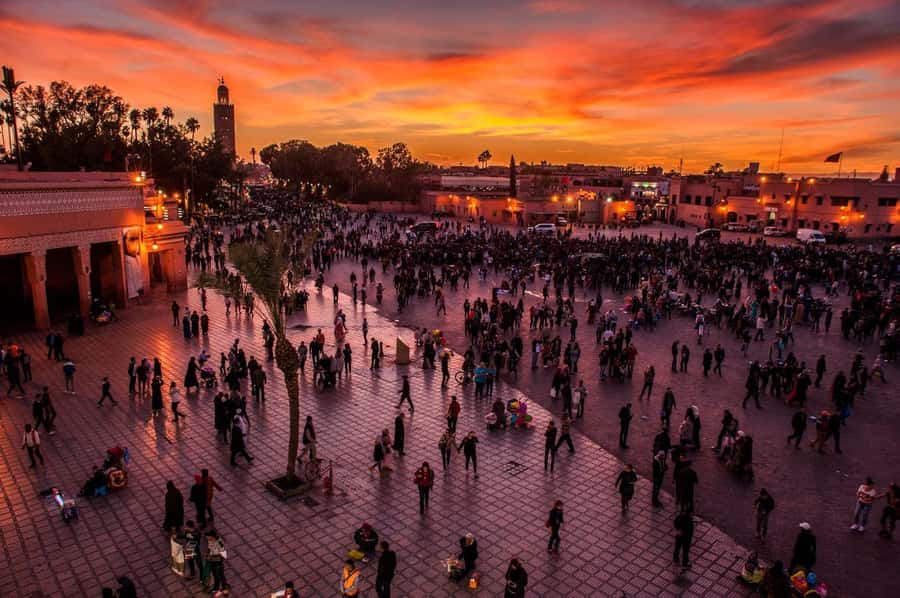
Jemaa el Fnaa is not just a square with food stalls. It is the social heart of the Medina, a place shaped by centuries of trade, bargaining, eating, and public life. At night, the square takes on a different mood as food sellers set up, people gather, and the surrounding lanes fill with movement.
The tour uses that setting well. You begin near Jemaa el Fnaa, then move into the smaller streets that spread from it. Instead of sitting down immediately for a plate of tagine, you build an understanding of Moroccan food one bite at a time.
I like that approach. Moroccan cuisine is often reduced to tagine, couscous, and mint tea, but the food culture is much broader. Bread, olives, preserved foods, nuts, sweets, offal, soups, and spice blends all have a place in daily life. A good guide explains not only what you are eating, but also why it matters.
The route is also useful for first-time visitors. Several people found the guide helpful when navigating crowded souks and avoiding aggressive bargaining. You still need to pay attention, but having someone lead you through the Medina makes the first evening less confusing.
More Food Tours:
- From Marrakech: Merzouga 3-Day Desert Safari with Food
★ 4.7 · 12,232 reviews - Marrakech: Street Food Tour by Night
★ 4.8 · 2,838 reviews - 3-Day Tour to Merzouga Erg Chebbi with Food & Camel Trek
★ 5.0 · 1,770 reviews
Starting near the square and entering the souks
The meeting point may vary according to the option you book, with 11 Derb Zaari listed as a starting location. Check your confirmation carefully, since a precise meeting point matters in the Medina. The square is large, crowded, and full of cafés, stalls, performers, and people moving in several directions.
One guide, Youssef, was easy to find near Café de France even in a crowded section of Jemaa el Fnaa. That is a useful model for what you want at the start: a clear landmark and a guide who can locate you rather than leaving you to wander around looking for the group.
Once everyone is together, the walk heads through narrow streets and local shops. This is where the experience gains much of its value. You might pass small food businesses serving residents, rather than places designed only for sightseeing groups.
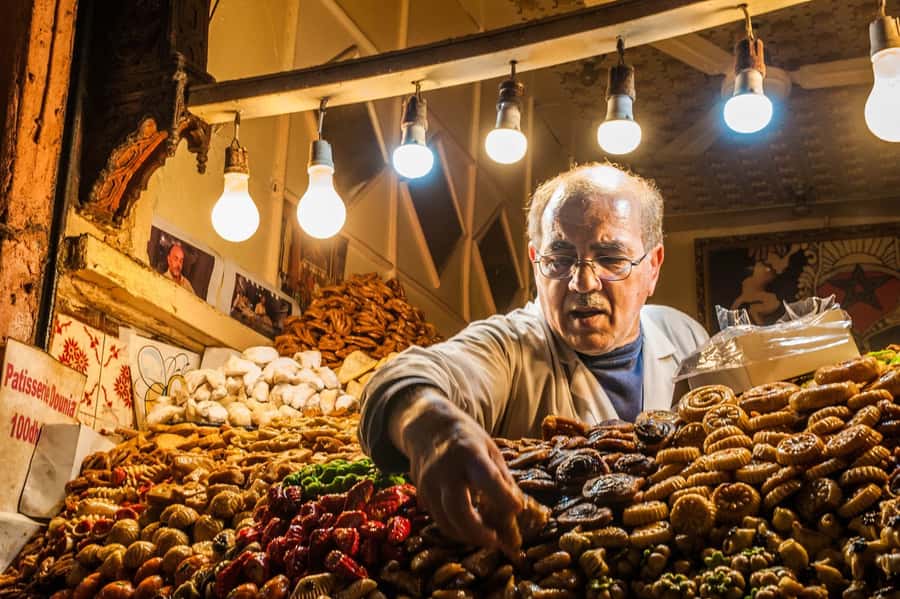
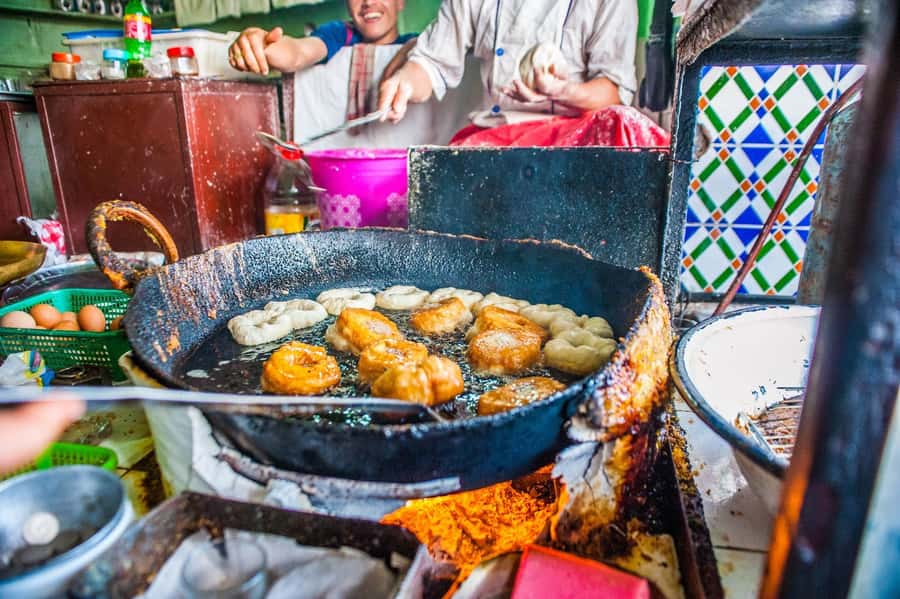
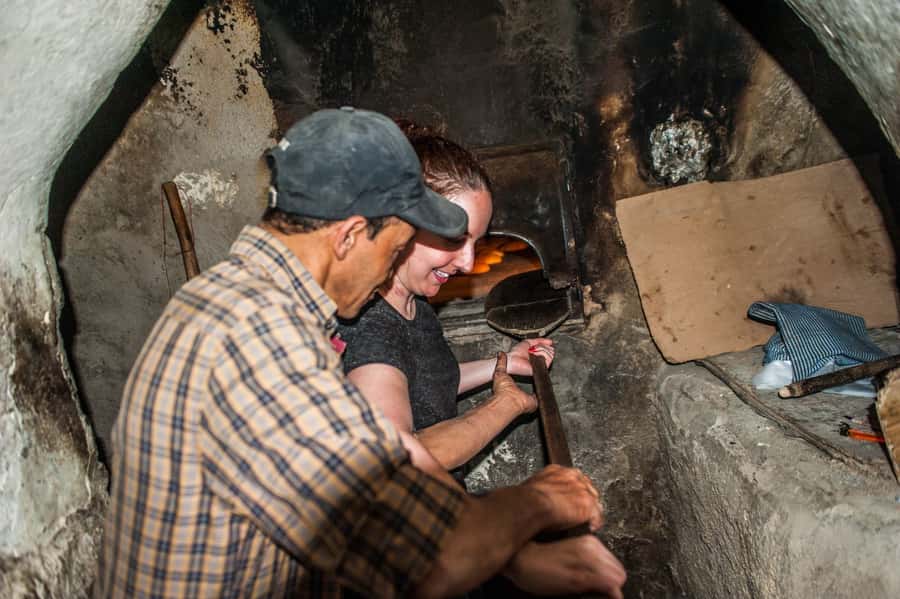
The exact tasting sequence can change, but the food examples are unusually broad. Past tours have included olives in several styles, dried fruits, nuts, pastries, Moroccan sweets, and Jewish doughnuts from a tucked-away shop. Some groups also tried bread from a communal oven, where local families and restaurants use long-standing baking traditions.
You should not expect a formal tasting counter with neat portions and printed menus. This is a walking food tour in a working Medina. You may stand in a small shop, share samples, and listen while the guide explains the ingredients and customs connected to them.
That informal setup is part of the appeal, but it also means the experience can feel less polished than a restaurant-based food tour. If you prefer quiet tables, exact timing, and familiar dishes, this may feel hectic. If you want to see how food fits into ordinary life, the rough edges are useful.
The spice market and the flavors of Morocco
The spice market is one of the clearest teaching stops. You will encounter the aromas of cumin, saffron, ginger, pepper, and turmeric, with colorful displays that make the ingredients easy to recognize.
I find this section especially helpful because it gives you a basic flavor map before dinner. Cumin brings an earthy note, ginger adds warmth, turmeric provides color and gentle spice, and pepper adds bite. The guide can explain how these ingredients appear in Moroccan cooking, rather than leaving you to guess from a market display.
Do not treat the spice market only as a shopping stop. The better use of this part of the walk is to ask questions. You can learn what locals cook with regularly, how spices are combined, and which products are mainly sold to visitors.
The tour also gives you a chance to see ingredients before they appear in prepared dishes. That connection matters. A bowl of soup or plate of tangia becomes easier to understand when you have already seen the herbs, spices, olives, and preserved foods used around the Medina.
Mellah, breads, and the less familiar bites
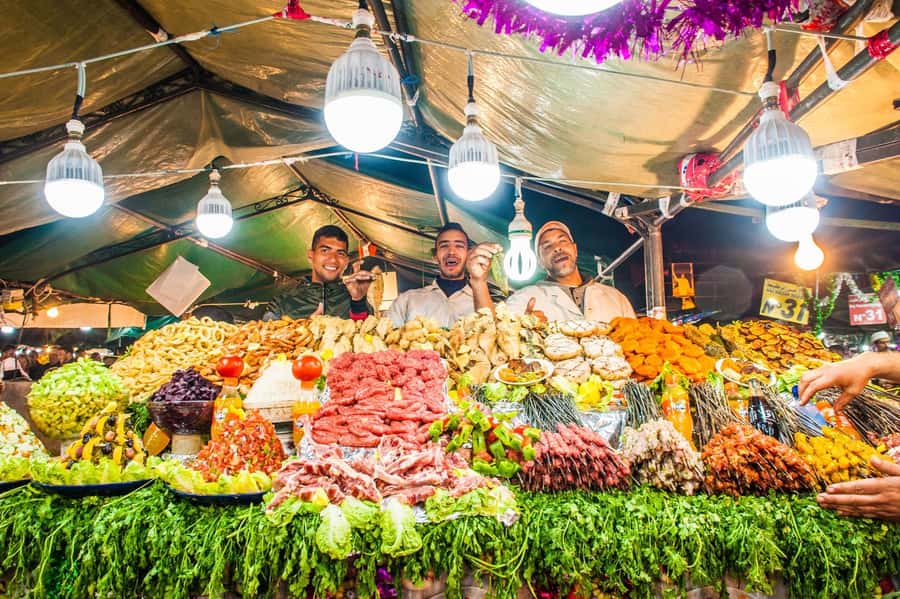
The route includes Riad Zitoun Jdid and the Mellah, the old Jewish quarter. The tour data does not promise a full architectural visit, so think of these areas as part of the food walk rather than separate sightseeing stops.
The Mellah adds useful context to Marrakech’s mixed cultural history and food traditions. One reported route began with Jewish doughnuts in a place the group would not have found alone. That kind of stop shows why a guide matters: the most interesting food is not always displayed on a large sign.
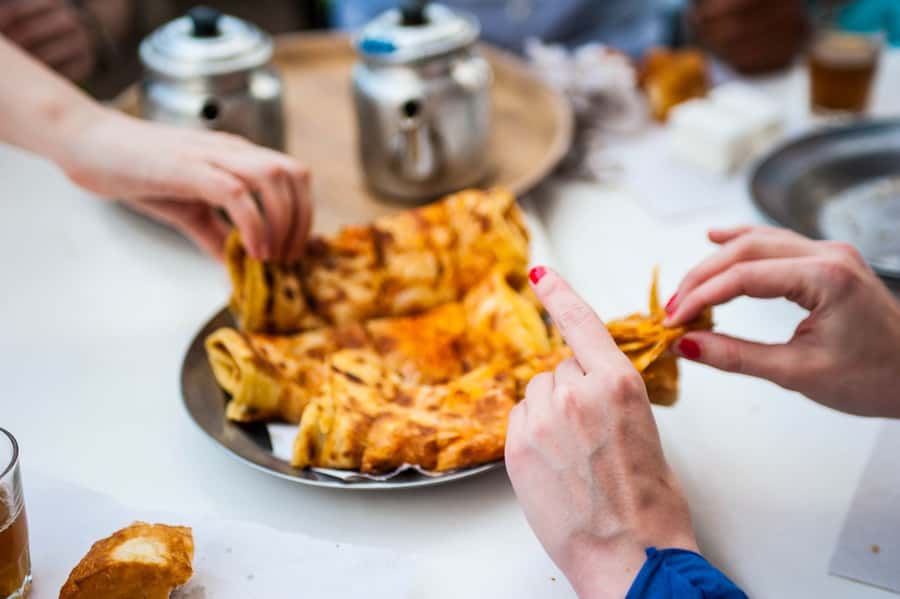
Bread is another important part of the route. You may learn about traditional breads and see how communal ovens serve local households. Bread in Morocco is not merely a side item. It can accompany almost every meal and is closely tied to the rhythm of neighborhood life.
The more daring part of the tour may include cow hoof, sheep’s head, snails, or other foods that are unfamiliar to many visitors. The wording of the experience suggests you may try these, not that every group will receive every item. The food depends on what is available and on the route that evening.
You are never required to pretend that every dish is your favorite. Try what feels reasonable, ask what it is, and tell the guide about allergies or dietary limits. The tour can accommodate vegetarian and vegan diets, but not gluten intolerance. Anyone with a serious food allergy should communicate clearly before eating.
A few more Marrakech trips worth weighing up
- Authentic Moroccan Food Tour in Marrakech with Dinner
★ 5.0 · 1,423 reviews - From Marrakech: Zagora 2-Day Desert Safari with Food & Camp
★ 4.5 · 1,137 reviews - Marrakech: Authentic Moroccan Food Walking Tour & Dinner
★ 4.8 · 261 reviews - The Original Marrakech Street Food Tour
★ 5.0 · 248 reviews
Tangia, harira, and the main meal
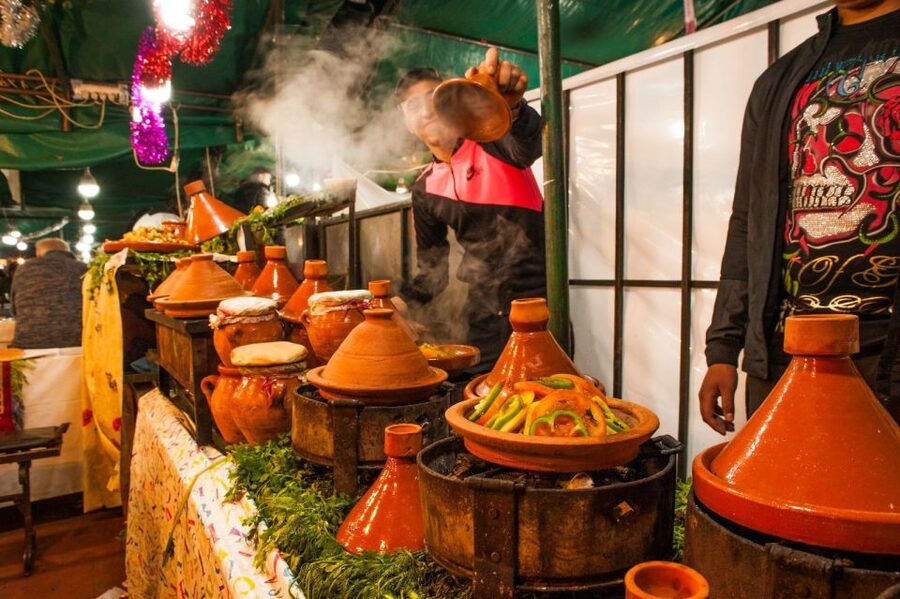
After seeing the raw ingredients and tasting small snacks, the walk moves toward a more substantial meal. One featured stop is Chez Lamine Hadj Mustapha Jemaa El Fna, where dinner is listed.
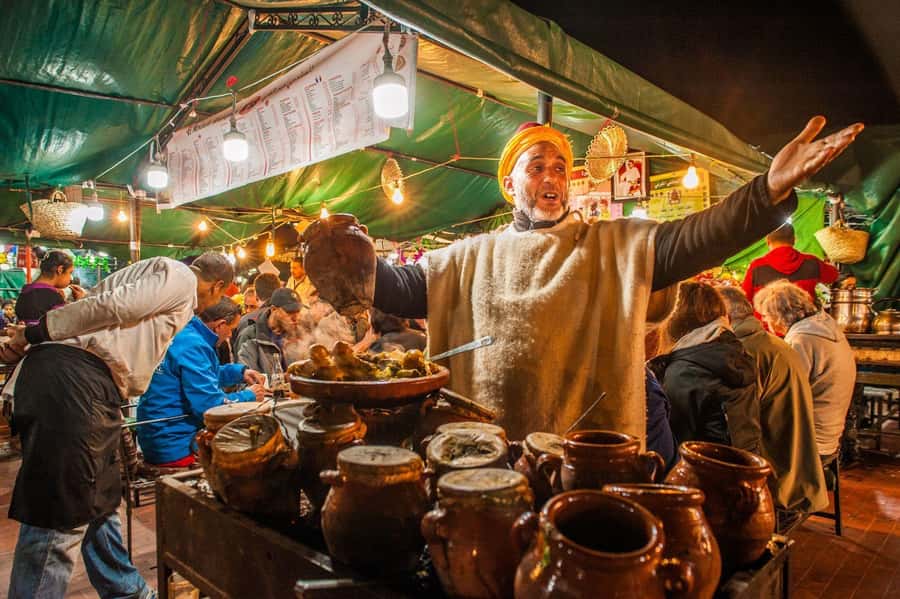
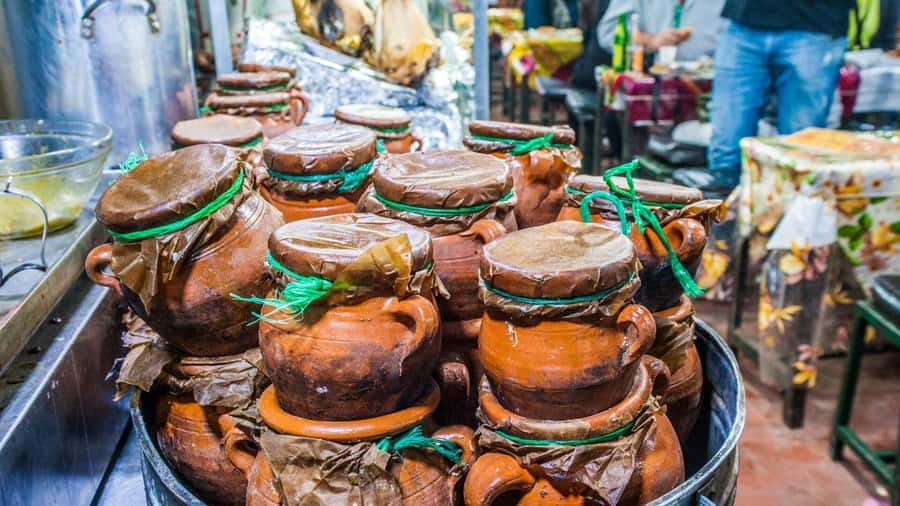
Tangia is a highlight for many people. This Marrakech specialty is traditionally cooked slowly in a clay vessel, with some preparations placed in the embers or furnace of a communal oven. It is a useful example of how Moroccan cooking can be built around time, heat, and shared neighborhood facilities.
The reported food selections have also included harira, a Moroccan soup made with legumes and spices, plus bread, side dishes, and sweets. Some groups finished with tagine, while others described tangia as the main savory dish. The exact menu can vary, so do not book expecting one fixed plate.
This is a dinner in or near Jemaa el Fnaa, not a private dining room away from the action. You will eat close to the square at its busiest, with the noise and movement that make the setting memorable. Some descriptions also refer to snakes and monkeys in the surrounding square.
That atmosphere is exciting, but it is not calm. You may prefer it for one evening rather than every night of your trip. Be careful around animals, and follow the guide’s advice. One guide, Omar, specifically warned his group to avoid the monkeys, a small but practical example of the help a local escort can provide.
The food quantity appears to be generous. People repeatedly advise arriving hungry, and one group described doughnuts, mint tea, soup, nuts, olives, pastries, tangia, tagine, and spiced tea. The advertised package lists three tastings and dinner, but the actual evening may include many small samples along the way.
For that reason, skip lunch or keep it light. You will enjoy the final meal more if you have room left.
What the guides add to the evening
The guides receive the strongest praise, and that is important for this kind of experience. The route is not difficult because of distance alone. It is difficult because the Medina can be confusing, crowded, and full of tempting food stalls that are not easy to judge at a glance.
Omar was repeatedly praised for humor, warmth, practical advice, and his ability to show places that people would not have found alone. Atika was praised for answering questions and explaining small details about Marrakech. Ayoub helped one group move through the Medina and offered advice about bargaining.
Other named guides, including Youssef, Brahim, Ibrahim, Mustafa, Anicta, Najib, and Ayoub, were praised for explaining both food and Moroccan customs. The strongest pattern is not a particular dish. It is the sense that the guide turns a series of snacks into a story about the city.
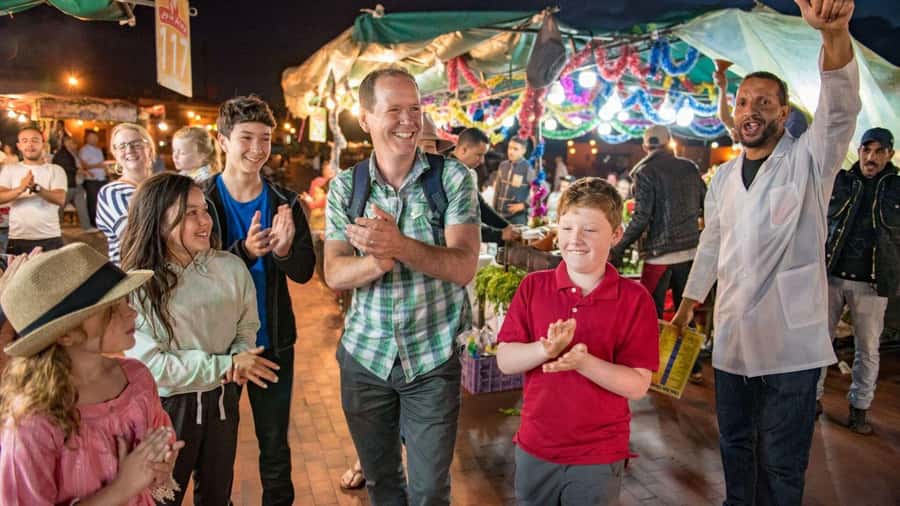
That personal attention matters most in a small group. The maximum group size is 12, and a private group is available. A smaller party makes it easier to ask questions, keep together in the souks, and tell the guide about dietary needs.
The experience is in English. Guide quality can vary from person to person, as it does on any guided walk, but the consistently strong response to the guides is one of the reasons the price feels fair.
Price, timing, and practical value
At $46 per person, the tour is not the cheapest way to eat in Marrakech. You could buy individual snacks for less, especially if you are confident bargaining and comfortable choosing food stalls on your own.
The value comes from combining food, guiding, navigation, and dinner in one three-and-a-half-hour evening. You are paying for access to small local businesses, explanations of ingredients and traditions, and the confidence to try dishes you might otherwise pass by.
It is also a useful first-night activity. You get your bearings around Jemaa el Fnaa, learn how the souks connect, see where locals buy or prepare food, and receive tips about bargaining and moving through crowds. Several people found the tour helped them feel safer and more comfortable in Marrakech.
The walking portion requires sensible clothing and shoes. Wear long trousers or a long skirt and a shirt that covers your shoulders and arms. Morocco is relatively liberal in some ways, but the culture remains conservative by many visitors’ standards. Dressing respectfully can help you enter religious or family spaces without causing offense.
Bring a light jumper for the evening. The square can feel warm while you walk, then cooler after dark. A small amount of water is sensible, though the tour itself focuses on food and does not list extra drinks as an inclusion.
Free cancellation is available up to 24 hours before the start, and you can reserve now and pay later. These terms are useful if your Marrakech plans are still shifting, but the main decision is food and pace. This is a long tasting session on foot, not a short stop for one dinner.
Who should book this Marrakech food tour?
I would choose this tour if you want an introduction to Moroccan food without having to research every stall yourself. It suits solo visitors, couples, families, and anyone arriving in Marrakech for the first time.
It is also a good match for curious eaters. The menu can move well beyond familiar dishes, with offal, snails, unusual drinks, sweets, soup, and slow-cooked meat appearing on some evenings. You can ask questions and sample selectively, but you should come with an open mind.
Families can join, and infants aged 0 to 5 are free. The operator asks you to notify them if you have a child under 12, which is sensible given the late timing, walking, crowds, and unfamiliar foods.
Vegetarians and vegans can be accommodated. People with gluten intolerance should choose another experience, since this tour cannot cater to that requirement.
I would hesitate if you dislike crowds, need a quiet dinner, or have a strict diet that makes shared tastings difficult. I would also think twice if you have just eaten a large meal. The food appears plentiful, and arriving full would waste much of the experience.
Should you book it?
Book this tour if you want a practical first look at Marrakech through food, especially if the souks feel intimidating. The combination of spice stalls, communal bread ovens, small snack stops, and dinner in Jemaa el Fnaa gives you a fuller picture than a standard restaurant meal.
The best reason to book is the guide. A strong guide can explain the food, keep you together in the crowds, point out places you would miss, and help you try something unfamiliar without feeling foolish. The repeated praise for Omar, Atika, Ayoub, Youssef, Brahim, and others suggests that personal guiding is the heart of the experience.
At $46, it is good value for a generous evening of food and orientation. Just dress modestly, skip lunch, expect noise and walking, and leave room for the possibility of sheep’s head, cow hoof, or a dish you cannot identify at first glance.
FAQ
How long does the Marrakech food tour last?
The tour lasts 210 minutes, or about three and a half hours.
Where does the tour start?
There are two listed starting options at 11 Derb Zaari. The exact meeting point may vary based on the option you book, so check your booking details.
What food is included?
The package includes three tastings and a Moroccan dinner at a local restaurant. Food experienced on different evenings has included olives, nuts, dried fruits, pastries, doughnuts, bread, harira soup, tangia, tagine, sweets, and spiced drinks.
Is dinner served in Jemaa el Fnaa?
Yes. The itinerary includes dinner at Chez Lamine Hadj Mustapha Jemaa El Fna, in the Jemaa el Fnaa area.
Can vegetarians and vegans join?
Yes. The tour can cater to vegetarian and vegan diets. It cannot cater to gluten intolerance.
Is the tour suitable for children?
Yes. It is described as child-friendly, and infants aged 0 to 5 are free. You should notify the operator if you have a child under 12.
What should I wear?
Wear long sleeves and long trousers or a long skirt, with shoulders, cleavage, and knees covered. Bring a jumper in case it gets cool after dark.
More Dinner Experiences
- Marrakech: Agafay Desert Quad, Camel Ride & Dinner Show
★ 4.7 · 10,209 reviews - Marrakech: Agafay Desert Retreat, Tent, Dinner, Show & Pool
★ 4.8 · 5,616 reviews - Marrakech: Agafay Desert Dinner Show with Quad Bike & Camel
★ 4.9 · 5,058 reviews - Agafay Desert Package, Quad Bike, Camel Ride and Dinner Show
★ 5.0 · 4,244 reviews
More Dining Experiences
- Marrakech: Agafay Desert Sunset, Camel Ride, and Dinner Show
★ 4.6 · 35,119 reviews - Marrakech: Agafay Desert Quad & Camel Rides with Dinner Show
★ 4.8 · 27,382 reviews - Marrakech: Agafay Desert Quad Biking Tour with Dinner-Show
★ 4.8 · 16,569 reviews - Marrakech: Agafay Desert Quad & Camel Rides with Dinner Show
★ 4.9 · 10,771 reviews
Just added around Marrakech
- Marrakech: Medina Souks, Hidden Markets and Shopping Tour★ 4.8 · 33 reviews
- Guided walking tour in Marrakech★ 4.5 · 33 reviews
- Sunset Camel Ride Marrakech with Transfers★ 5.0 · 33 reviews
- Agafay desert sunset camel ride Tour from Marrakech★ 5.0 · 33 reviews
- 2 Days Desert Agafay and Atlas Mountains Trek From Marrakech★ 3.8 · 33 reviews
- Atlas mountains, Ourika valley, berber villages trip & Guide★ 5.0 · 33 reviews
- Magical Dinner show and Quad bike In Agafay Desert Marrakech★ 4.5 · 33 reviews
- Camel Ride at the Palm Groves in Marrakech★ 5.0 · 33 reviews
Dining Experiences, compared.
Agafay Desert Sunset, Camel Ride, and Dinner Show
Read our review →
Agafay Desert Quad & Camel Rides with Dinner Show
Read our review →
Agafay Desert Quad Biking Tour with Dinner-Show
Read our review →Agafay Desert Quad & Camel Rides with Dinner Show
Read our review →
Agafay Desert Quad, Camel Ride & Dinner Show
Read our review →
Agafay Desert Retreat, Tent, Dinner, Show & Pool
Read our review →
Agafay Desert Dinner Show with Quad Bike & Camel
Read our review →
Agafay Desert Package, Quad Bike, Camel Ride and Dinner Show
Read our review →Browse the lists this tour appears in