
Reviewed · COOKING CLASSES
Marrakech: Traditional Moroccan Crepes & Bread Cooking Class
Bread brings you closer to Morocco. This two-hour Marrakech class gives you hands-on practice with msemen, harcha, and batbout, three everyday Moroccan breads with different textures and cooking methods. I like the small-group format, limited to 10 people, and I like that you eat what you make with mint tea, olives, jam, or honey. The main consideration is communication: instruction is offered in Arabic, French, and English, but the person demonstrating may not always speak your language directly.
You meet at 44 Der Hajra in Bab Doukkala, a useful location if you want to see a more local side of Marrakech. The $37 price is fair for two hours of instruction, food, tea, equipment, and electronic recipes, though you must arrange your own transport and should not expect a full Moroccan meal.
In This Review
- Key points at a glance
- Three Moroccan breads in one compact class
- What happens when you arrive at Bab Doukkala
- Getting your hands into the dough
- The cooking stage gives the class its payoff
- Mint tea is more than a drink
- How much food do you get for $37?
- Who will enjoy this Marrakech activity?
- A few practical cautions before booking
- Authenticity without turning the class into a performance
- Should you book the bread class?
- FAQ
- How long does the Moroccan bread class last?
- How much does the experience cost?
- Where does the class take place?
- Which Moroccan breads will I make?
- Is mint tea included?
- Are ingredients and cooking equipment provided?
- Are recipes included?
- What languages are available?
- How many people can join the class?
- Is the class suitable for young children or people with gluten intolerance?
Key points at a glance
- Three breads, three techniques: Make msemen, harcha, and batbout rather than repeating one basic dough.
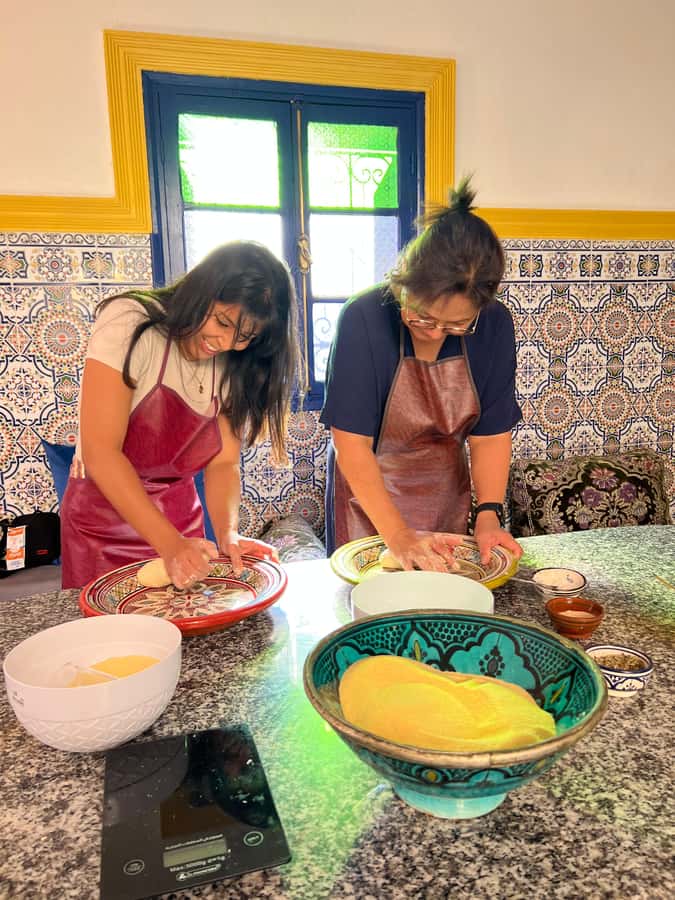
- A real hands-on class: You receive an apron and work with the ingredients, utensils, and dough from start to finish.
- Mint tea is part of the lesson: You prepare and pour Moroccan tea after cooking, then drink it with your breads.
- Small groups help: With no more than 10 participants, it is easier to ask for help and see the demonstrations.
- A local Bab Doukkala setting: The route to the workshop can lead through food markets used more by local residents than by tourists.
- Good take-home value: Electronic recipes are included, and some participants have had enough bread left to carry home.
Three Moroccan breads in one compact class
The class focuses on three familiar Moroccan staples. They are often grouped together as crepes, pancakes, or flat breads, but they are not simply three versions of the same recipe.
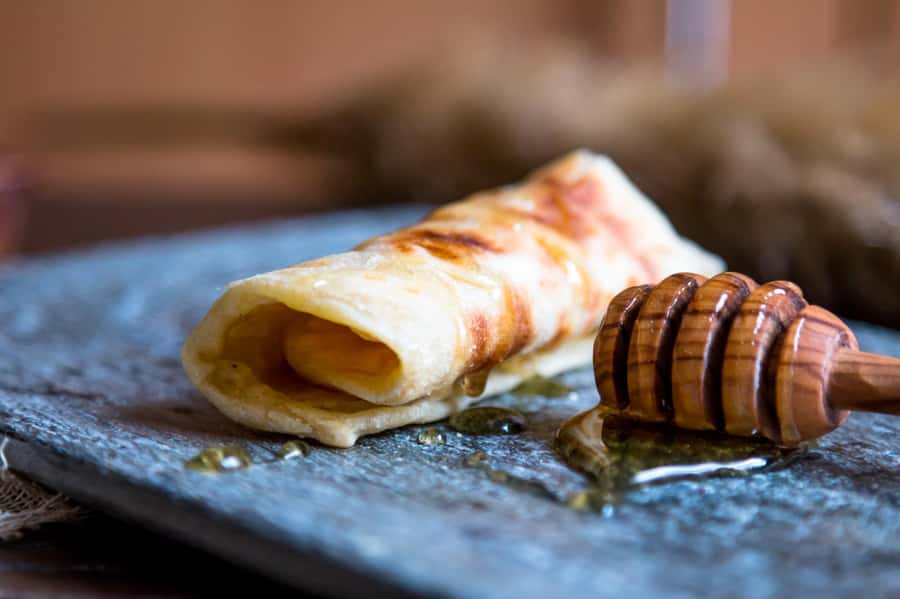
Msemen is the layered, square Moroccan crepe many people encounter at breakfast or with tea. Its dough is stretched and folded, usually with oil or fat between the layers, then cooked on a hot surface. The folding is the part worth watching closely. It is also the bread you may recognize from hotel breakfasts, so learning to make it gives you a useful connection to something you have likely already tasted in Morocco.
Harcha is a semolina pancake or galette. It has a different feel from msemen, with a grainier texture and a more compact shape. The technique is less about creating thin layers and more about handling the semolina dough properly before cooking.
Batbout is a Moroccan flat bread with a pita-like character. It is prepared and cooked differently again, giving you a useful comparison between a bread that puffs and breads that cook more like pancakes. Making all three in one sitting helps you understand how small changes in dough and heat create very different results.
The class is not designed as a professional baking course. It is a friendly introduction, with the host showing you each stage and correcting your technique as you work. If you like learning by doing, this is far more useful than watching a cook prepare bread while you sit at a table.
More Cooking Classes in Marrakech
- Marrakech: Moroccan Cooking Class with Pickup
★ 4.6 · 1,862 reviews - Marrakech: Traditional Moroccan Cooking Class & Market Visit
★ 4.8 · 1,861 reviews - Marrakesh: Moroccan Dishes Cooking Class with a Local Chef
★ 5.0 · 1,615 reviews
What happens when you arrive at Bab Doukkala
The meeting address is 44 Der Hajra in the Bab Doukkala area of Marrakech. You do not receive transport, so plan your route before class and allow time to find the workshop.
The route can be part of the appeal. One participant described walking through food markets that felt more local than tourist-oriented. That does not mean the walk is a formal market tour, but it does give you a chance to see ordinary food shopping and daily activity around Bab Doukkala before the baking begins.
Directions matter here. A WhatsApp message with instructions has helped participants find the workshop, and the location has been described as easy to reach once the directions are clear. I would still save the address and any message before leaving your accommodation. Marrakech medina streets can be confusing, especially if you are trying to arrive at a fixed time.
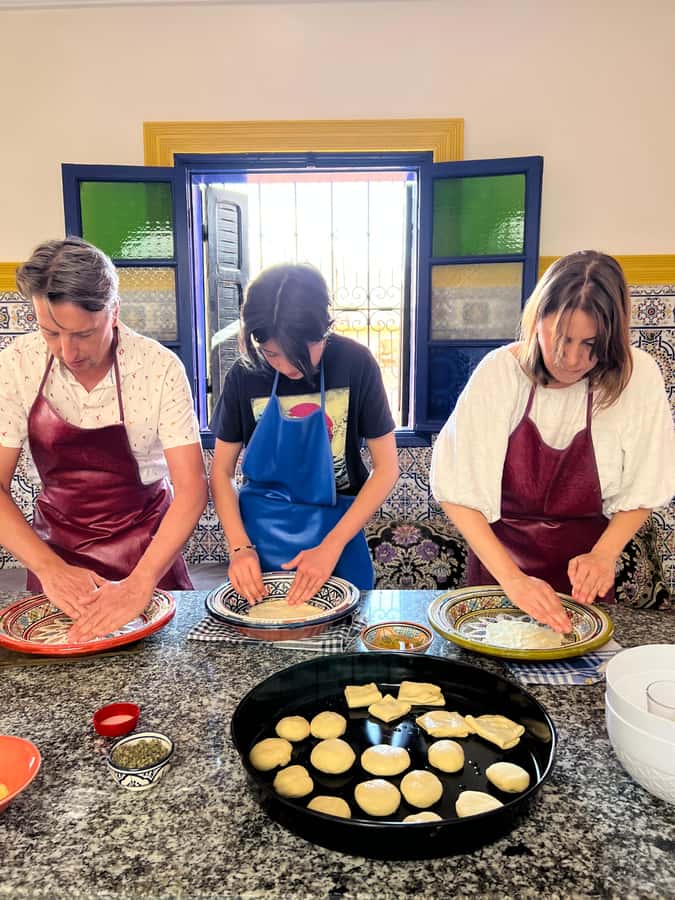
Once inside, you are provided with an apron, ingredients, and the utensils needed for the lesson. You do not need to bring flour, semolina, oil, or baking tools. Bring water, wear comfortable clothes suitable for cooking, and leave your finest holiday outfit at the hotel.
Getting your hands into the dough
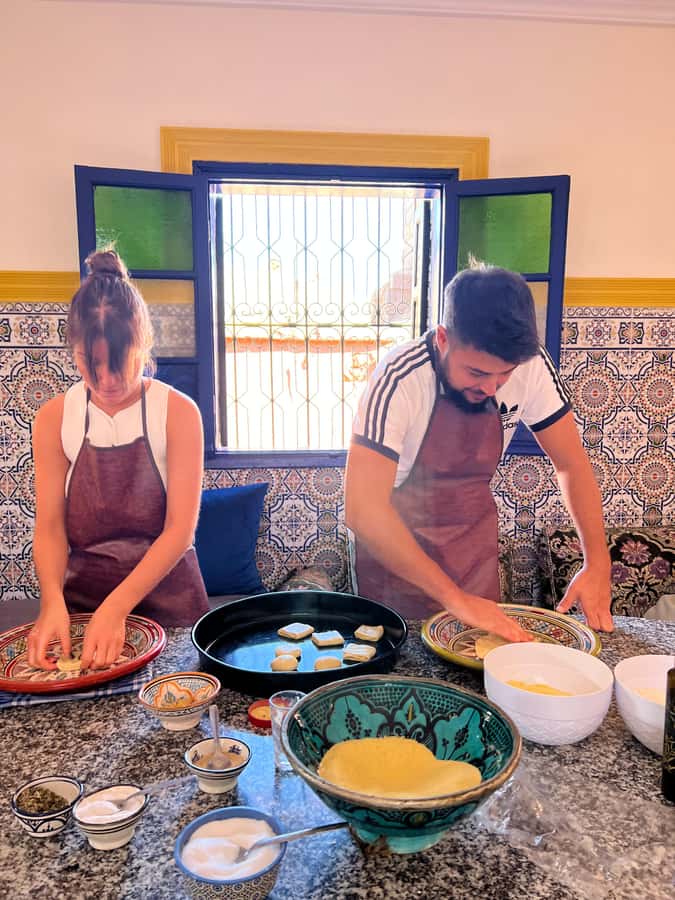
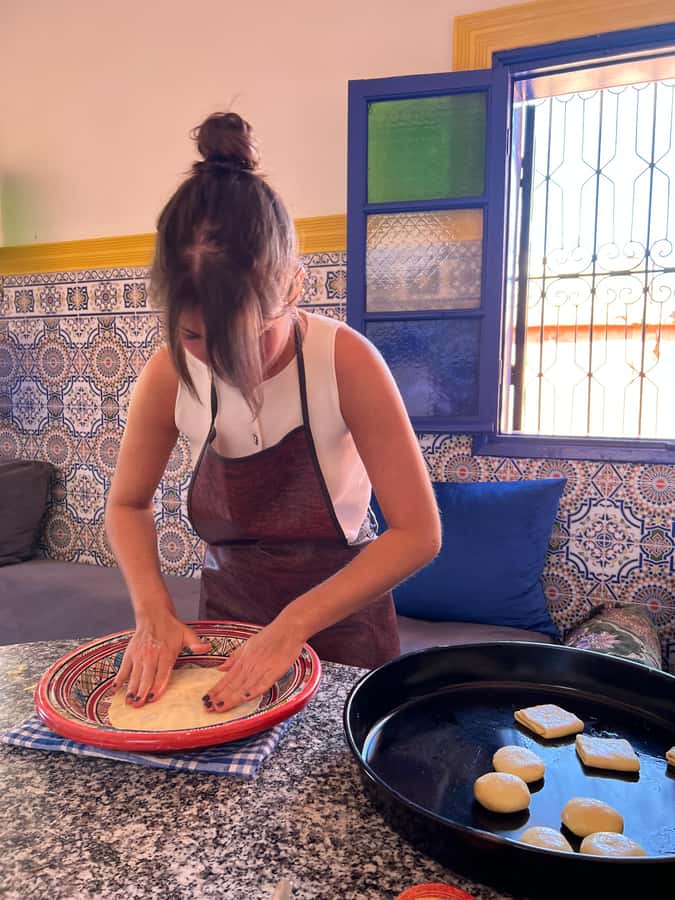
The best part of this class is the physical work. You are not just shown a finished bread and handed a recipe. You help mix, shape, stretch, fold, and cook the dough under guidance from the host.
The teaching style is practical. Demonstrations show what the dough should look and feel like, then you try the same movement yourself. For msemen, the stretching and folding can seem awkward at first. Having someone demonstrate the process directly is useful because a written recipe alone does not easily explain how thin to stretch the dough or how to fold it without tearing.
The host guides the class through the methods needed for each bread. Participants have praised the hands-on help, especially when the instructor physically demonstrates the technique rather than relying on spoken explanation. Jamila and Fatima are names associated with particularly warm teaching experiences, though the exact host may vary.
Language can be a mixed point. The class is offered in Arabic, French, and English, and a translator may be available for some groups. Still, the person demonstrating may speak little or no English. That did not prevent participants from learning, since the process is visual and physical, but it can make detailed questions harder to answer.
If you want a lesson filled with long explanations about Moroccan food history, this may feel light. If you want to make bread and learn the key movements, the direct approach works well.
The cooking stage gives the class its payoff
After preparation, you cook the breads. This is where you see whether your shaping and folding worked. The pace is active, but the class lasts two hours, so it remains a compact introduction rather than an all-day workshop.
You will likely cook the breads in batches. That creates a useful rhythm: prepare one dough, watch a demonstration, shape your own, then wait while the breads cook. You can compare the three types as they change on the hot surface.
The final results do not need to look perfect. Part of the fun is seeing how your first msemen or batbout differs from the instructor’s. The class is built around success at home, not around producing bakery-window perfection on your first attempt.
There can also be a lot of food. Some people finish everything during the tasting, while others have had enough bread left to take home. If you are traveling with a small group, ask about a box for leftovers. It is a practical benefit, especially after a large breakfast or during a packed day of sightseeing.
A few more Marrakech trips worth weighing up
- Moroccan Cooking Class & Marrakech Market Visit with Chef Khmisa
★ 5.0 · 1,504 reviews - Half-Day Cooking Class with Local Chef Laila in Marrakech
★ 5.0 · 952 reviews - Marrakech: Pottery Workshop with Moroccan Tea
★ 4.8 · 756 reviews - Marrakech: Moroccan Cooking Class with a Local Family
★ 4.9 · 668 reviews
Mint tea is more than a drink
The Moroccan mint tea ritual comes after the dough preparation and cooking. You help prepare the tea, then learn about pouring and serving it in the traditional way.
This is a good choice of activity for the class because tea brings the group together once the work is done. You sit down, taste the breads, and talk about Morocco and the rest of your trip. The class shifts from kitchen work to conversation without needing a separate meal reservation.
The tea is served with the baked creations and, depending on the spread, accompaniments such as olives, jam, and honey. The combination makes sense: msemen and harcha can be enjoyed with sweet additions, while olives offer a savory contrast.
The tea segment is not a standalone tea ceremony with a long cultural lecture. It is part of the cooking experience. You learn the basic preparation and serving ritual, then drink the tea with the food you have just made.
How much food do you get for $37?
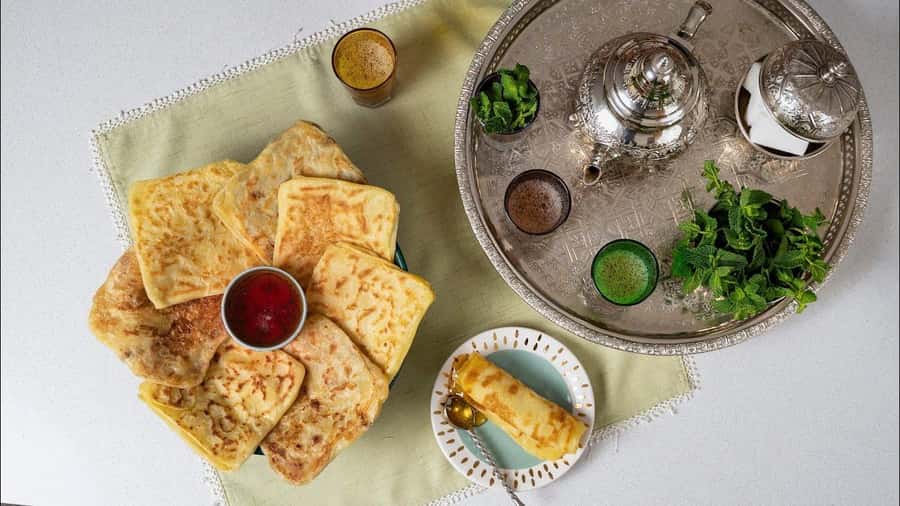
At $37 per person, this is priced as an activity rather than as a cheap breakfast. The value comes from the combination of instruction, ingredients, apron, utensils, tasting, tea, and recipes.
For two hours, the price is reasonable if you want a participatory experience. You are paying for access to a local workshop and for someone to guide you through techniques that would be difficult to learn from a short online recipe. The food also serves as your tasting meal, though you should not book this expecting a broad Moroccan lunch with several cooked dishes.
The small group improves the value. With a maximum of 10 people, the instructor has more time to watch your dough and help when a fold goes wrong. Groups can be smaller than the advertised limit, and some sessions have ended up with only two or three participants. That can make the class feel close to a private lesson, though group size depends on the date you choose.
The electronic recipes add useful long-term value. You can try the breads again at home instead of relying on memory. One participant had not received the recipes promptly and had to follow up, so keep an eye on your messages after the class. The recipes are part of what is included.
Who will enjoy this Marrakech activity?
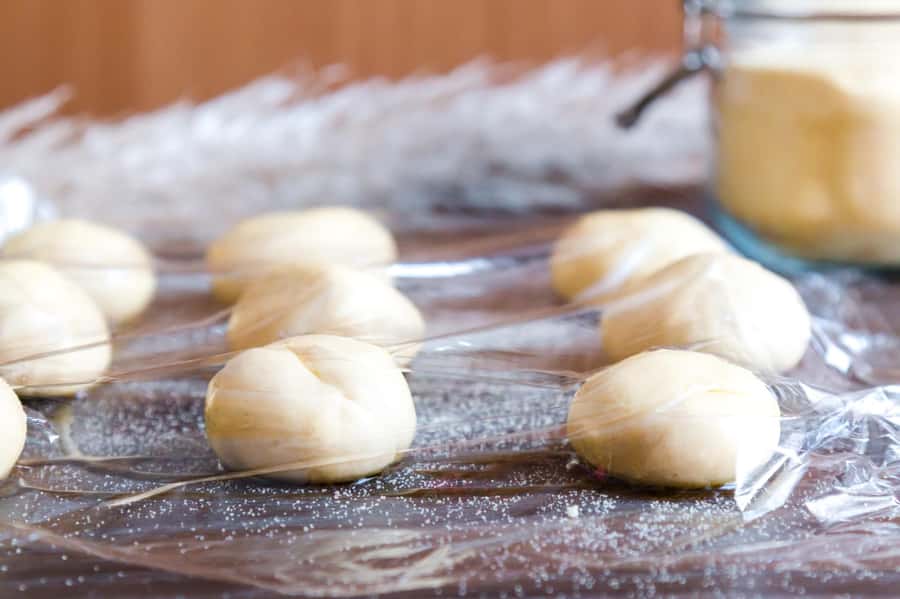
I would recommend the class to anyone who has been eating Moroccan bread and wants to understand how it is made. It is especially good for people who prefer an active experience to another guided walk through the medina.
It also suits families with older children. One family of four, including two children, enjoyed the hands-on format. Children under four are not accepted, and the class involves dough, hot cooking surfaces, and attention to instructions, so parents should decide if their children are ready for that setting.
Couples and small groups of friends should find it easy to work together. The class is social without requiring you to spend an entire day with strangers. Solo participants can also fit comfortably into the small-group format.
This is less suitable if you have food allergies or gluten intolerance. The breads are wheat or semolina-based, and people with food allergies are specifically excluded. The experience also does not provide transport, so it is not ideal if you need a fully escorted activity from your hotel.
A few practical cautions before booking
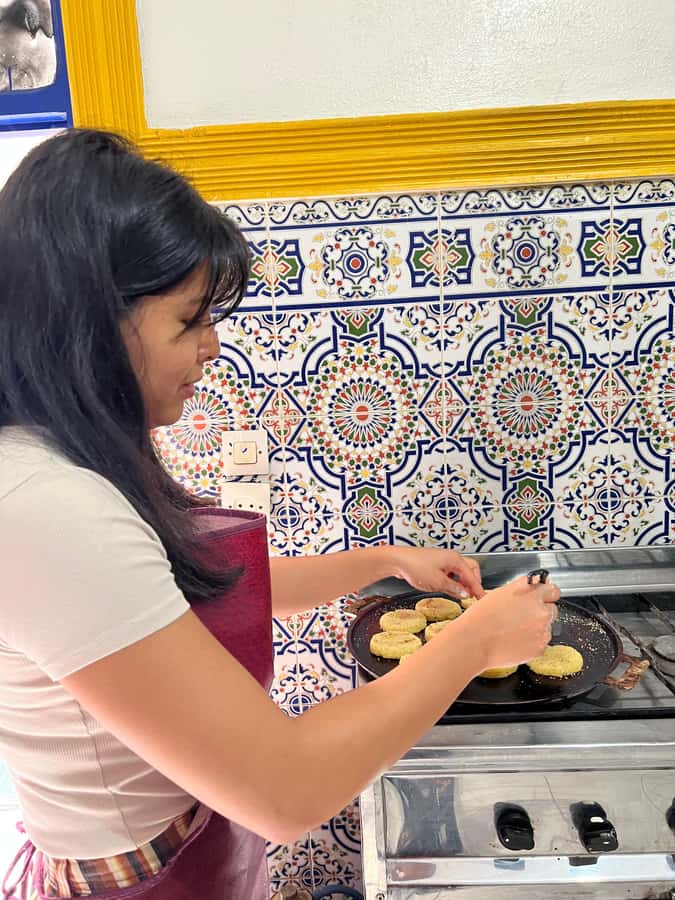
Wear comfortable clothing that you do not mind cooking in. Flour, oil, and dough are part of the work, and restrictive sleeves or delicate clothes will only make the class less pleasant.
Bring water and arrive ready to eat. The tasting is substantial enough that you may not need an immediate meal afterward, especially if you also take leftovers with you.
Keep your expectations realistic about language. English is listed as one of the available languages, and some groups have had translation help. But the demonstration itself may be led by someone who communicates mainly through gestures and hands-on instruction.
You should also check the starting time when booking, since the class runs for two hours and availability varies. Cancellation is free up to 24 hours beforehand, and you can reserve now and pay later, which helps if your Marrakech plans are still shifting.
Authenticity without turning the class into a performance
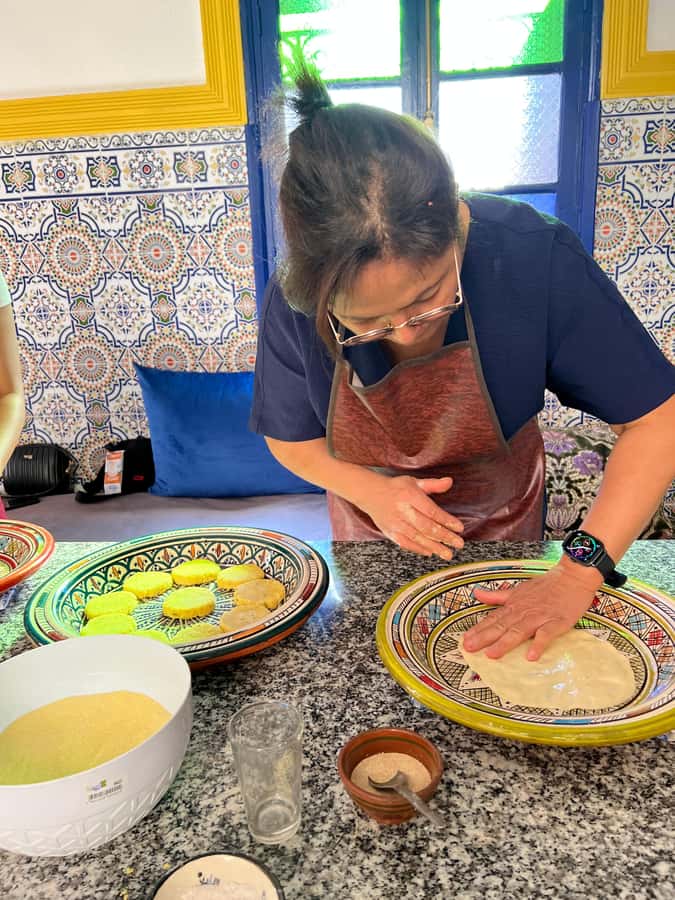
The workshop has a home-style feel rather than a polished restaurant-school atmosphere. One participant compared it to cooking at home, and that is a useful way to picture the setting.
You are learning breads that people actually eat, not decorative dishes created only for visitors. Msemen, harcha, batbout, mint tea, olives, and honey belong to the everyday food culture you encounter across Morocco. The class gives you a way to take that experience beyond the plate.
The Bab Doukkala location helps, too. The setting is in the heart of Marrakech, and the walk through local food markets can add context before you even enter the kitchen. This is not a formal cultural tour, but the combination of neighborhood, home-style cooking, and shared tea feels more personal than a standard restaurant meal.
The class also works across language differences better than many activities. Bread-making gestures are easy to understand, and the food itself gives everyone a common subject. Still, if you want detailed answers about ingredients or technique, ask early and make use of any translator or English-speaking helper available that day.
Should you book the bread class?
Book it if you want a short, friendly Marrakech activity with real participation, plenty to eat, and recipes you can use later. The strongest reasons are the three different breads, the small groups, and the chance to prepare mint tea in a local workshop.
I would be more cautious if you have dietary restrictions, dislike flour-and-dough work, or need detailed English instruction throughout. Otherwise, $37 is a fair price for two hours of cooking, tasting, and conversation, with the added bonus that you may leave with bread for later.
For the best fit, schedule it when you have already tasted Moroccan breakfast breads. You will recognize the foods, understand why the techniques matter, and return home with a better chance of recreating the msemen you enjoyed in Marrakech.
FAQ
How long does the Moroccan bread class last?
The class lasts two hours.
How much does the experience cost?
The listed price is $37 per person.
Where does the class take place?
The workshop is at 44 Der Hajra, Bab Doukkala, Marrakech.
Which Moroccan breads will I make?
You will make msemen, harcha, and batbout.
Is mint tea included?
Yes. You help prepare and taste traditional Moroccan mint tea as part of the class.
Are ingredients and cooking equipment provided?
Yes. The class includes the ingredients, utensils, and an apron.
Are recipes included?
Yes. Electronic recipes are included with the experience.
What languages are available?
Instruction is offered in Arabic, French, and English.
How many people can join the class?
It is a small-group experience limited to 10 participants.
Is the class suitable for young children or people with gluten intolerance?
Children under four are not permitted. The class is not suitable for people with food allergies or gluten intolerance.
More Cooking Classes
- Marrakech: Moroccan Cuisine Cooking Class in Local Home
★ 4.8 · 508 reviews - Marrakech: Moroccan Cooking Workshop at La Maison Arabe
★ 5.0 · 446 reviews - Marrakesh cooking class with chef Hassan – Local dishes
★ 5.0 · 425 reviews - Marrakech: Tajine Cooking Class in a Traditional Riad
★ 4.8 · 424 reviews
Just added around Marrakech
- Marrakech: Medina Souks, Hidden Markets and Shopping Tour★ 4.8 · 33 reviews
- Guided walking tour in Marrakech★ 4.5 · 33 reviews
- Sunset Camel Ride Marrakech with Transfers★ 5.0 · 33 reviews
- Agafay desert sunset camel ride Tour from Marrakech★ 5.0 · 33 reviews
- 2 Days Desert Agafay and Atlas Mountains Trek From Marrakech★ 3.8 · 33 reviews
- Atlas mountains, Ourika valley, berber villages trip & Guide★ 5.0 · 33 reviews
- Magical Dinner show and Quad bike In Agafay Desert Marrakech★ 4.5 · 33 reviews
- Camel Ride at the Palm Groves in Marrakech★ 5.0 · 33 reviews
Cooking Classes, compared.
Traditional Moroccan Cooking Class & Market Visit
Read our review →
Moroccan Dishes Cooking Class with a Local Chef
Read our review →
Moroccan Cooking Class & Marrakech Market Visit with Chef Khmisa
Read our review →
Half-Day Cooking Class with Local Chef Laila in Marrakech
Read our review →
Browse the lists this tour appears in