
Reviewed · FOOD & DRINK
Marrakech street food tour with a local
Come hungry, leave curious. This three-hour Marrakech food walk takes you beyond the familiar couscous and tagine, guiding you through Medina lanes to local eating spots and up to nine Moroccan dishes. I like the focus on foods many visitors might miss, especially msemen, sfenj, cactus fruit, grilled meats, and khoudenjal herbal infusion.
I also like the relaxed, personal feel. Guides such as Ismail and Mohamed have been praised for answering questions, navigating Jemaa el-Fnaa, and helping people try foods they might otherwise pass by. The main consideration is the sheer amount of food: you need to pace yourself, and some dishes, such as steamed sheep’s head, may be outside your comfort zone.
In This Review
- Key Points Before You Book
- Starting at Café de France in Jemaa el-Fnaa
- Walking Through Medina Alleys for Local Food
- Msemen Amer and the Moroccan Pancake Stop
- Harira Paired With Chebakia
- Makkla Bel Kefta, Marrakech’s Shakshuka-Style Dish
- Sfenj, Lhnidiya, and the Sweet Side of the Route
- Chwa and the More Adventurous Tasting
- Panaché and Khoudenjal Herbal Infusion
- What the Three-Hour Pace Feels Like
- Why the Local Guide Matters
- Is $40.71 Good Value?
- Who Should Book This Food Walk?
- Booking and Cancellation Details
- Should You Book the Marrakech Street Food Tour?
- FAQ
- How long does the Marrakech street food tour last?
- Where does the tour begin?
- Where does the experience finish?
- How many dishes can I try?
- Are food and drinks included in the price?
- Which foods may be included?
- Can dietary restrictions or allergies be accommodated?
- What is the cancellation policy?
Key Points Before You Book
- Up to nine tastings: The route can include Moroccan pancakes, soup, sweets, grilled meat, fruit, smoothies, and herbal tea.
- No standard tagine or couscous: This tour is built around lesser-known street foods and everyday local dishes.
- Three hours on foot: You meet at Café de France in Jemaa el-Fnaa and finish at the same point.
- A casual local experience: Expect small food stops and conversation rather than a polished restaurant-style production.
- All food and drinks included: At $40.71 per person, the price covers the tastings listed during the walk.
- Small enough to feel manageable: The group can have up to 15 people, and free cancellation is available until 24 hours before the start.
Starting at Café de France in Jemaa el-Fnaa
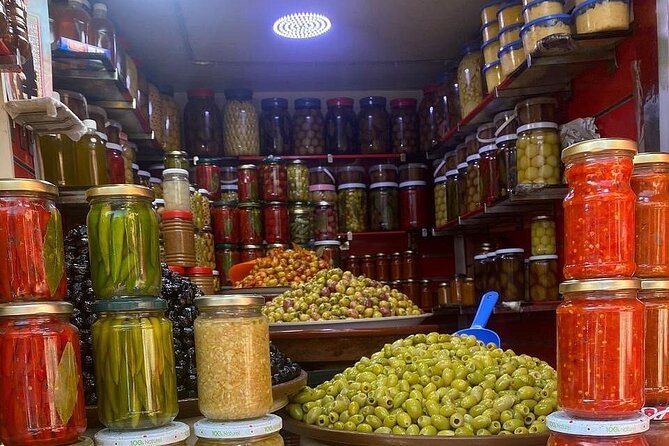
The tour begins at Café de France, at number 18, Znikat Rahba, beside Marrakech’s famous Jemaa el-Fnaa square. This is a practical meeting point, but the square can feel confusing at first, especially if you arrive during a busy period.
Give yourself time to find Café de France without rushing. The activity begins in the heart of the Medina, so you will be on foot almost immediately. There is no need to arrange a separate transfer for the tour itself, and the experience returns to the same meeting point at the end.
Jemaa el-Fnaa is more than a place to take a quick photograph. It is a working public space where food sellers, performers, shoppers, and local families meet. Starting here gives the guide a useful setting for explaining how Marrakech eats and socializes.
The square can also be intense. If you prefer quiet streets, the first few minutes may feel like a lot. A good guide makes a real difference here. Ismail was praised for steering a group through the square and partway home afterward, which suggests that route-finding and local confidence are useful parts of the experience.
More Food Tours:
- From Marrakech: Merzouga 3-Day Desert Safari with Food
★ 4.7 · 12,232 reviews - Marrakech: Street Food Tour by Night
★ 4.8 · 2,838 reviews - 3-Day Tour to Merzouga Erg Chebbi with Food & Camel Trek
★ 5.0 · 1,770 reviews
Walking Through Medina Alleys for Local Food
After meeting the guide, you move into the Medina’s narrow streets and stop at places favored by local people. The appeal is not simply the number of dishes. It is the chance to see how food fits into ordinary Marrakech life, away from a hotel dining room or a standard sightseeing route.
I like this format because eating becomes a reason to explore. You are not walking through the alleys just to look at them. Each stop gives you something to taste, a name to remember, and a chance to ask how it is prepared.
The tour is described as casual rather than slick. That can be a strength if you want an informal outing with room for conversation. It may be less suitable if you expect printed menus, formal demonstrations, or a tightly choreographed culinary presentation.
The maximum group size is 15. That is not a private tour, but it is still limited enough for the guide to explain dishes and respond to questions. The quality of the experience will depend partly on the guide and the pace of the group.
Msemen Amer and the Moroccan Pancake Stop
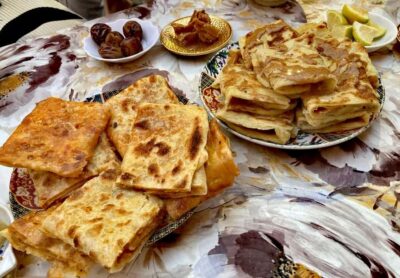
One early tasting may be msemen Amer, a traditional Moroccan pancake that can be filled with savory ingredients. Msemen is a useful introduction to the tour because it shows how Moroccan street food can be simple, filling, and adaptable.
The pancake is not presented as a fancy dish. Its appeal is texture and comfort, especially when eaten fresh. I would treat this as a sample rather than a full meal because several more stops follow.
This is also where you should begin pacing yourself. The food is included, and the route offers many tastings. It is easy to eat a full portion at the first stop and then find yourself too full for the more unusual dishes later.
Harira Paired With Chebakia
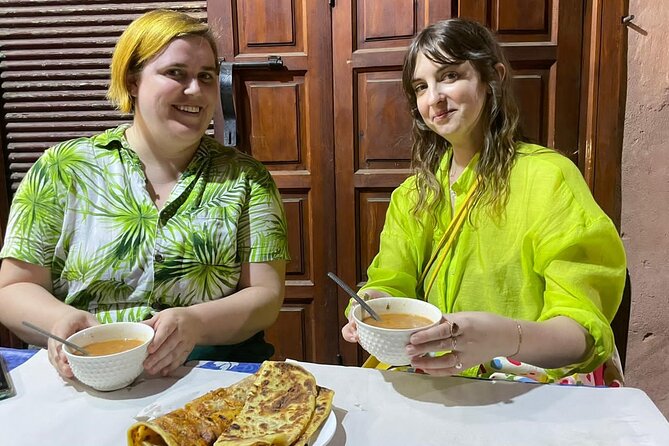
Harira and chebakia provide one of the clearest sweet-and-savory pairings on the route. Harira is a Moroccan soup, while chebakia is a sweet pastry often served alongside it.
The combination gives you more than another isolated taste. It shows how Moroccan meals and snacks often balance warming, savory food with something sweet. One review specifically described the tour as including soup, snacks, fruit, dessert, and drinks, so this pairing helps set the tone for the full route.
Harira is listed as vegetarian in the tour details. That matters if you avoid meat, though you should still tell the provider about allergies or dietary restrictions before the experience. Alternatives may be offered based on your needs and the available dishes.
A few more Marrakech trips worth weighing up
- Authentic Moroccan Food Tour in Marrakech with Dinner
★ 5.0 · 1,423 reviews - From Marrakech: Zagora 2-Day Desert Safari with Food & Camp
★ 4.5 · 1,137 reviews - Marrakech: Jemma El Fnaa Food Tour with Dinner
★ 4.7 · 394 reviews - Marrakech: Authentic Moroccan Food Walking Tour & Dinner
★ 4.8 · 261 reviews
Makkla Bel Kefta, Marrakech’s Shakshuka-Style Dish
Makkla bel kefta is described as a Moroccan twist on chakchouka. It is one of the more substantial tastings, and it gives the tour a chance to move beyond quick snacks and sweets.
The dish is particularly useful for people who already know Moroccan food from restaurant menus. If you have eaten tagine several times, a preparation like this can make the meal feel more varied. The tour’s purpose is not to repeat the dishes most commonly served to international visitors.
Because the exact serving style can depend on the food stop, you should expect an introduction and tasting rather than a cooking class. The guide’s explanation is part of the value. Ask about ingredients, seasoning, and how the dish fits into local eating habits.
Sfenj, Lhnidiya, and the Sweet Side of the Route
Sfenj are light, airy Moroccan doughnuts. They bring a softer, sweeter stop to a route that also includes soup, meat, and strong herbal drinks.
Lhnidiya is cactus fruit, a refreshing change in both texture and flavor. It is the sort of food many people might notice in a market but never order without a local suggestion. This is one of the tour’s better features: you get help deciding what is worth trying instead of relying only on familiar menu items.
The fruit also gives you a pause from heavier tastings. That sounds minor, but it matters during a three-hour food walk. The route is designed around variety, and the alternation between savory, sweet, fresh, and hot helps keep the experience from becoming one long succession of meat dishes.
Chwa and the More Adventurous Tasting
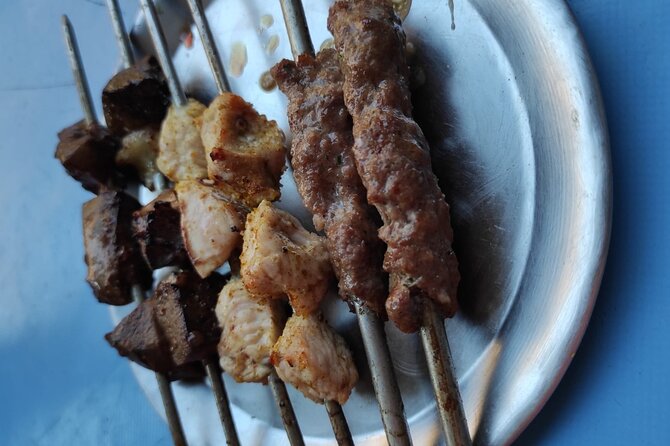
Chwa is grilled meat, with beef, turkey, and liver among the possible choices. This is likely to be one of the most approachable stops for cautious eaters, while the liver gives more adventurous diners something with a stronger flavor.
The route also includes rass mbekher, steamed sheep’s head seasoned with cumin. This is the point where the tour becomes more challenging for many people. You do not have to pretend every dish is for you, but trying a small amount can be a useful way to understand local food traditions.
The experience is designed to push you beyond your usual order without turning the meal into a dare. The guide can explain what you are eating, and the tour notes that alternatives may be possible for dietary restrictions. You should still communicate clearly in advance if you cannot eat a particular ingredient or animal product.
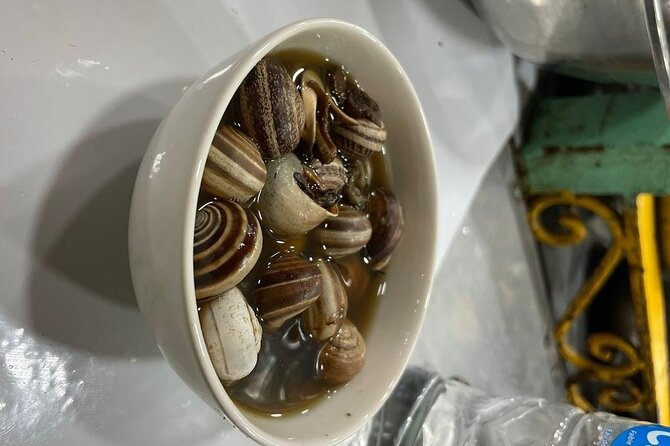
The highlights also refer to Moroccan grilled beef or chicken and snail soup. The detailed food list gives nine possible dishes but does not include snail soup, so the precise selection can vary. Think of the menu as a tasting framework rather than a guaranteed list of every item on every departure.
Panaché and Khoudenjal Herbal Infusion
Panaché is a fruit smoothie made with seasonal fruit. It gives the route a cool, fresh finish after the grilled meat and other savory stops.
Khoudenjal is a hot herbal infusion with eucalyptus. It is described as a drink that can clear the senses and aid digestion. Whether or not it has that effect for you, it offers a memorable final taste and a good example of how drinks can play a practical role in Moroccan food culture.
The tour may also include a hot herbal infusion more generally. At the end of several food stops, a warm drink helps mark a change of pace. You are no longer simply collecting bites. You are talking with the guide, thinking about the foods you tried, and making your way back toward Jemaa el-Fnaa.
What the Three-Hour Pace Feels Like
Three hours is long enough to cover a wide range of dishes without taking up an entire day. It also gives the guide time to move at a human pace rather than rushing you from one food stall to the next.
Still, this is a food-heavy outing. One of the most useful tips is to pace yourself at every stop. Try each dish, but do not feel obliged to finish every large serving immediately. The tour is built around quantity as well as variety, and overeating early can blunt your enjoyment later.
You will be walking through Medina streets between tastings. Wear practical shoes and leave room in your schedule for the route to run at a relaxed pace. The activity ends back at Café de France, so you can continue exploring Jemaa el-Fnaa afterward or use the square as a clear reference point for your next destination.
The tour is offered with a mobile ticket, and confirmation is received at booking. It is also near public transportation, which makes the central meeting point easier to reach.
Why the Local Guide Matters
The strongest part of this experience is the human connection. The food list is appealing, but a street food tour can quickly become a checklist if the guide only names each dish and moves on.
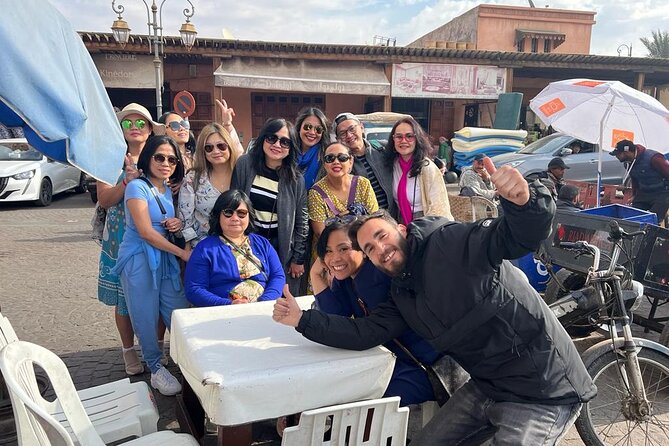
The guides praised by name include Ismail and Mohamed, while Lhoussaine led another warmly received outing with a friend. The useful pattern is clear: the guide is expected to explain the food, answer questions, and help you move through the Medina with confidence.
That personal element can also help with foods you would not choose alone. A local guide can explain why a dish is eaten, how it is seasoned, and what makes one stop different from another. You get a better sense of the people behind the recipes instead of treating the Medina as a backdrop.
The experience may not suit you if you want a highly polished tour with elaborate presentation. It is intentionally informal. I see that as a fair trade for access to small local spots and direct conversation.
Is $40.71 Good Value?
At $40.71 per person, the price is reasonable if you make full use of the tastings. Food and drinks are included, and the route offers up to nine dishes over about three hours. Even if you do not love every item, you are paying for a meal, a guided walk, local explanations, and help finding places you may not locate by yourself.
The value is strongest for a first visit to Marrakech. You get a practical introduction to the Medina and a list of foods to seek out later. The experience can also help you decide what to order at other restaurants during your stay.
The value is weaker if you eat very little, avoid most animal products, or already know Marrakech’s food scene well. Dietary alternatives may be available, but the tour is built around variety and includes unusual meats. Tell the provider about allergies and restrictions in advance so the guide can try to adjust the tastings.
A group of up to 15 keeps the cost below a private food walk, though it also means you may share the guide’s attention. With a maximum rather than an unlimited group, the format remains reasonably personal.
Who Should Book This Food Walk?
I would recommend it to first-time visitors who want more than tagine and couscous. It is also a good match for curious eaters, couples, small groups, and solo visitors who want a local guide while finding their feet in the Medina.
You will get the most from it if you arrive hungry, stay open-minded, and ask questions. The tour rewards people who enjoy trying unfamiliar foods, including sheep’s head, liver, cactus fruit, and herbal drinks.
Families with selective eaters should think carefully about the menu. There are approachable choices such as pancakes, soup, grilled meat, fruit, smoothies, and doughnuts, but the route also includes strong flavors and unusual ingredients.
You should also choose this experience if you prefer conversation and local stops over a formal food workshop. The hosts are praised for being friendly and attentive, but the tour is not presented as a luxury culinary event.
Booking and Cancellation Details
The tour is often booked about 19 days ahead, so booking early is sensible if your Marrakech dates are fixed. Confirmation arrives at the time of booking, and a mobile ticket is provided.
You can cancel for a full refund up to 24 hours before the local start time. Cancellations or changes made within 24 hours are not refunded or accepted. The tour requires a minimum number of participants, so if that minimum is not reached, you will be offered another date or experience, or receive a full refund.
Should You Book the Marrakech Street Food Tour?
Book it if you want to eat your way through Marrakech’s Medina with a local guide and you are ready for more than the usual Moroccan dishes. The combination of up to nine tastings, a three-hour walk, and friendly hosts makes the $40.71 price good value for an adventurous eater.
Skip it if you want a quiet restaurant meal, a private guide, or complete control over every ingredient. For everyone else, this is a practical first taste of Marrakech’s everyday food culture, especially if you remember to pace yourself and arrive genuinely hungry.
FAQ
How long does the Marrakech street food tour last?
The tour lasts approximately three hours.
Where does the tour begin?
The meeting point is Café de France at number 18, Znikat Rahba, in Jemaa el-Fnaa, Marrakech.
Where does the experience finish?
The activity ends back at the meeting point at Café de France.
How many dishes can I try?
You can try up to nine local dishes, depending on your tastes and the available selections.
Are food and drinks included in the price?
Yes. All food and drinks are included in the tour price.
Which foods may be included?
Possible tastings include msemen Amer, harira and chebakia, makkla bel kefta, sfenj, cactus fruit, grilled meats, steamed sheep’s head, panaché, and khoudenjal herbal infusion. The selection can vary, and the tour highlights also mention snail soup.
Can dietary restrictions or allergies be accommodated?
You should notify the provider in advance. Alternative dishes may be offered where possible.
What is the cancellation policy?
You can cancel at least 24 hours before the start time for a full refund. Cancellations or changes made less than 24 hours before the start are not accepted and are not refunded.
Just added around Marrakech
- Marrakech: Medina Souks, Hidden Markets and Shopping Tour★ 4.8 · 33 reviews
- Guided walking tour in Marrakech★ 4.5 · 33 reviews
- Sunset Camel Ride Marrakech with Transfers★ 5.0 · 33 reviews
- Agafay desert sunset camel ride Tour from Marrakech★ 5.0 · 33 reviews
- 2 Days Desert Agafay and Atlas Mountains Trek From Marrakech★ 3.8 · 33 reviews
- Atlas mountains, Ourika valley, berber villages trip & Guide★ 5.0 · 33 reviews
- Magical Dinner show and Quad bike In Agafay Desert Marrakech★ 4.5 · 33 reviews
- Camel Ride at the Palm Groves in Marrakech★ 5.0 · 33 reviews
Food & Drink, compared.
3-Day Tour to Merzouga Erg Chebbi with Food & Camel Trek
Read our review →
Authentic Moroccan Food Tour in Marrakech with Dinner
Read our review →
Browse the lists this tour appears in