
Reviewed · COOKING CLASSES
Marrakech: Moroccan Cooking Class with Local Chef
Food opens doors fast. This five-hour Marrakech experience takes you from Café de France into a local souq, then into the Riad Black Doors workshop for a hands-on Moroccan meal. I like the market visit because you see the fresh ingredients before they reach the cooking pot, and I like the friendly, family-style setting led by Moroccan Berber chefs such as Marouane, Abdou, and, in some sessions, Khalid.
The class also covers the mint tea ritual, not just the cooking. You learn how traditional dishes are prepared, hear about Moroccan and Amazir culture, and sit down to eat what you helped make. The main drawback is timing: a tagine can take 1 to 1.5 hours to cook, so part of the class may involve waiting after the preparation is finished.
The $35 price is strong value if you want food, local contact, and a meal in one outing. Just remember that the market visit is not offered during Ramadan or on Fridays, and pickup is not included.
In This Review
- Key points at a glance
- Meeting at Jamaa el Fna and walking into the Medina
- Shopping for ingredients in a local souq
- Entering Riad Black Doors for the cooking session
- Learning the Moroccan mint tea ritual
- Waiting for the tagine to cook
- Sitting down to eat what you prepared
- What the guide style adds
- Who will get the most from this $35 experience
- My verdict on the Marrakech cooking class
- FAQ
- Where does the Marrakech cooking class begin?
- Is hotel pickup included?
- How long does the activity last?
- Is the local market visit always included?
- What languages are available?
- What food will I cook?
- Can the class accommodate dietary restrictions?
- Are private sessions available?
- Can I cancel the booking for a refund?
Key points at a glance
- Start at Café de France: Meet in front of the main door on Jamaa el Fna Square, then walk about five minutes into the Medina.
- Shop away from the tourist center: The souq stop focuses on fresh produce, spices, and local specialties before cooking begins.
- Cook a full Moroccan meal: The menu can include salads, zaalouk, a chicken or vegetable tagine, accompaniments, and dessert.
- Learn from working chefs: Marouane and Abdou bring experience from Moroccan and overseas hotels and restaurants.
- Tea is part of the lesson: You learn how Moroccan mint tea is prepared and why serving it matters.
- Allow five hours: The activity includes shopping, cooking, tea, and a shared meal, with possible idle time while the tagine cooks.
Meeting at Jamaa el Fna and walking into the Medina
Your meeting point is easy to identify but can be crowded: stand in front of the main door of Café de France on Jamaa el Fna Square. There is no hotel pickup, so plan your own way to the square and arrive with enough time to find the entrance.
From there, you walk for about five minutes. That short route matters because the activity moves quickly from one of Marrakech’s best-known public spaces into the narrower lanes of the Medina. You are not being driven from a hotel to a cooking studio. The class begins with your feet on the ground and the city around you.
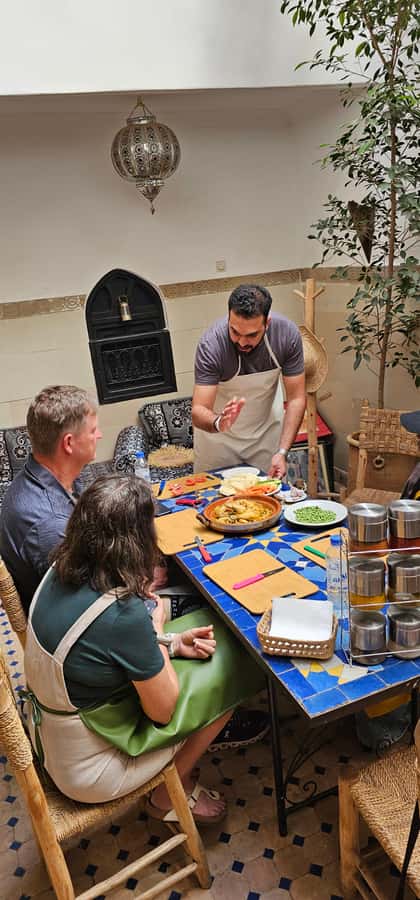
The location, Riad Black Doors, is in the heart of the Medina. A riad is a traditional Moroccan house built around an interior courtyard, and that setting gives the class a more personal feel than a standard restaurant lesson. The cooking takes place in a family-friendly workshop rather than a formal demonstration kitchen.
The language options are English, French, and Arabic. That makes the activity practical for a broad range of visitors, and it also suits mixed-language groups better than a class offered in only one language.
More Cooking Classes in Marrakech
- Marrakech: Moroccan Cooking Class with Pickup
★ 4.6 · 1,862 reviews - Marrakech: Traditional Moroccan Cooking Class & Market Visit
★ 4.8 · 1,861 reviews - Marrakesh: Moroccan Dishes Cooking Class with a Local Chef
★ 5.0 · 1,615 reviews
Shopping for ingredients in a local souq
The market visit is one of the best reasons to choose this experience. Before you prepare a dish, you walk through a food souq and buy fresh products with the chefs. You see the ingredients in their everyday setting, rather than finding them already measured in small bowls.
This part helps explain Moroccan food in a useful way. You can discuss spices, vegetables, and local specialties while standing beside the stalls where they are sold. It connects the finished tagine or salad to the produce and shopping habits that shape the meal.
The market is described as being away from the main tourist areas. That does not mean you should expect a quiet market. A souq is active by nature, and the Medina can be crowded and confusing. Still, walking with a local guide gives the visit a clear purpose. You are shopping for lunch, not simply passing through and trying to guess what everything is.
Before shopping, discuss food allergies and dietary restrictions with the chefs. This is important because the class is built around shared preparation. The menu may include chicken, but one session prepared both a chicken version and a vegetarian version, along with side dishes. Tell the hosts your needs early so they can explain what can be changed.
There is one firm scheduling detail: the market visit is not included during Ramadan or on Fridays. The cooking class still may be available, but you should not assume the souq stop will be part of the day at those times.
Entering Riad Black Doors for the cooking session
Back at the riad, the activity turns from shopping trip to practical lesson. The cooking portion lasts about 1.5 hours according to the schedule, though the full experience lasts five hours because the tea, cooking time, and meal are included separately.
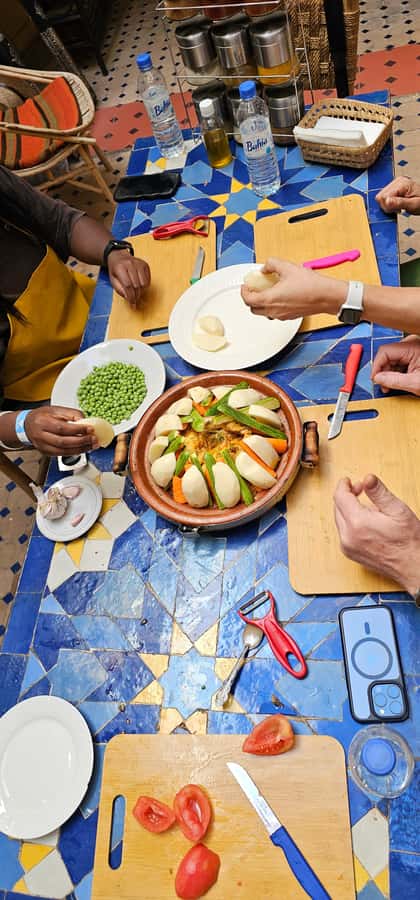
The chefs guide you through the preparation rather than simply cooking in front of you. You can expect to help with the dishes and learn how Moroccan spices and cooking methods work together. The stated aim is participation, so this suits you if you want to handle ingredients and follow instructions instead of watching a chef do everything.
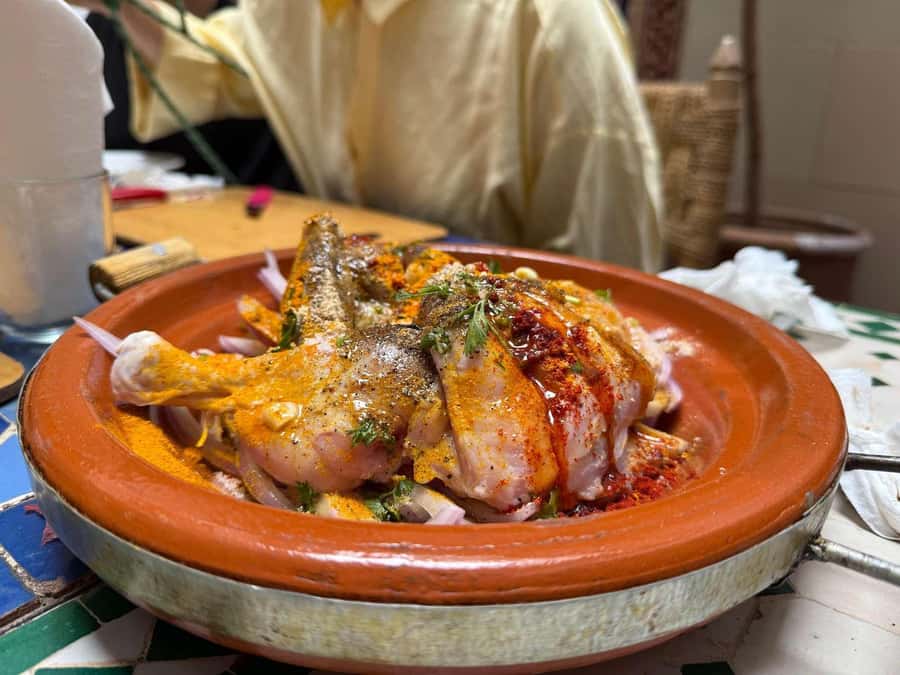
The menu is not fixed in the information provided, but it centers on classic Moroccan food. Examples include Moroccan salad, zaalouk made with eggplant, chicken tagine, vegetable dishes, accompaniments, and dessert. One group prepared both meat and vegetarian versions, which suggests that the final menu can respond to the group’s needs.
That flexibility is useful, but you should not book expecting one guaranteed recipe. If you have your heart set on a particular tagine or pastry, ask about the menu before you go. The chefs specialize in Moroccan cooking and pastry, so there is a good chance of learning several useful methods, but the exact dishes may vary.
The strongest part of this format is the advice given while you work. Khalid, who hosted several of the sessions described in the supplied material, was praised for sharing family cooking tips and for explaining Amazir identity and life in Marrakech. Marouane and Abdou are also described as passionate Berber chefs with professional experience in hotels and restaurants in Morocco and abroad.
That mix of home-style advice and professional experience is valuable. You get more than a recipe card. You can ask why an ingredient is used, how a cooking method fits Moroccan food, and what makes the dish taste right.
Learning the Moroccan mint tea ritual
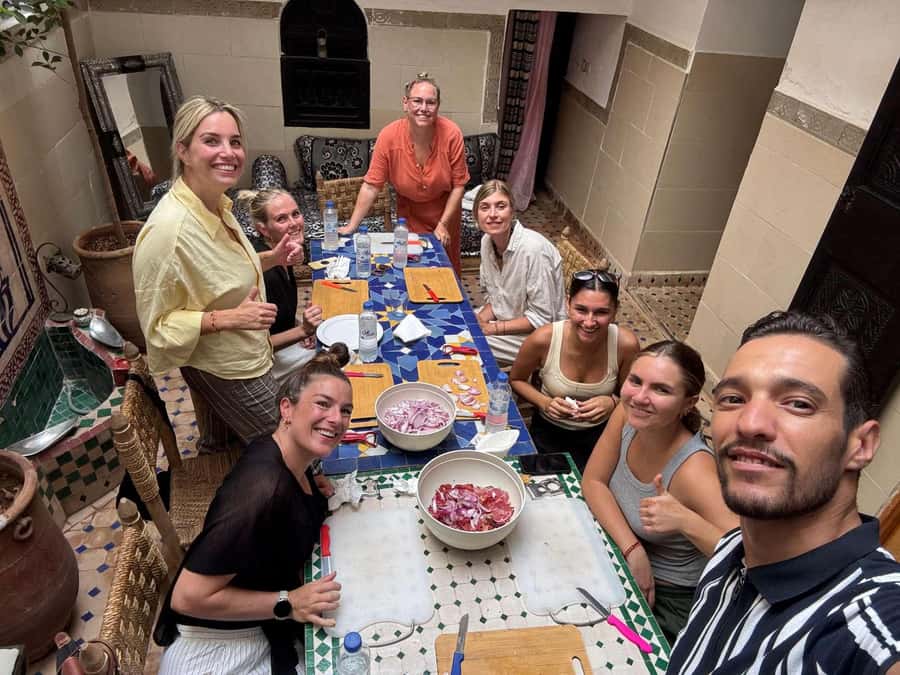
Tea receives its own half-hour section. This is not simply a drink handed to you while the tagine cooks. You learn about the preparation and the ritual around Moroccan mint tea.
The information provided does not spell out every step, so I would not promise a full technical lesson in pouring style or tea etiquette. You can expect an explanation of how the tea is made and an opportunity to drink it in the riad.
Tea also creates a natural pause between the market and the cooking work. In one session, the group enjoyed tea on the riad terrace while discussing culture, architecture, and family. That kind of conversation is a major part of the appeal, especially if you enjoy meeting the people behind the food.
The tea may be described as mint tea, and one account also refers to tea flavored with absinthe. The exact serving may depend on the day and host, so ask if the distinction matters to you. Either way, the tea ritual gives the class a cultural frame instead of making it only a recipe workshop.
A few more Marrakech trips worth weighing up
- Moroccan Cooking Class & Marrakech Market Visit with Chef Khmisa
★ 5.0 · 1,504 reviews - Half-Day Cooking Class with Local Chef Laila in Marrakech
★ 5.0 · 952 reviews - Marrakech: Pottery Workshop with Moroccan Tea
★ 4.8 · 756 reviews - Marrakech: Moroccan Cooking Class with a Local Family
★ 4.9 · 668 reviews
Waiting for the tagine to cook
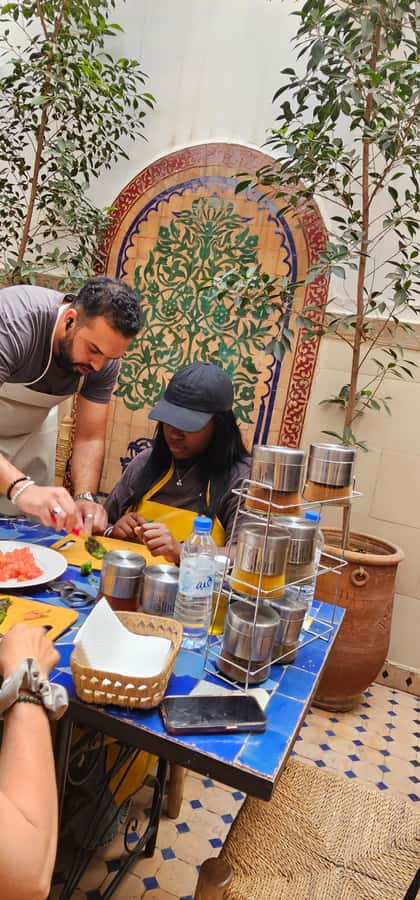
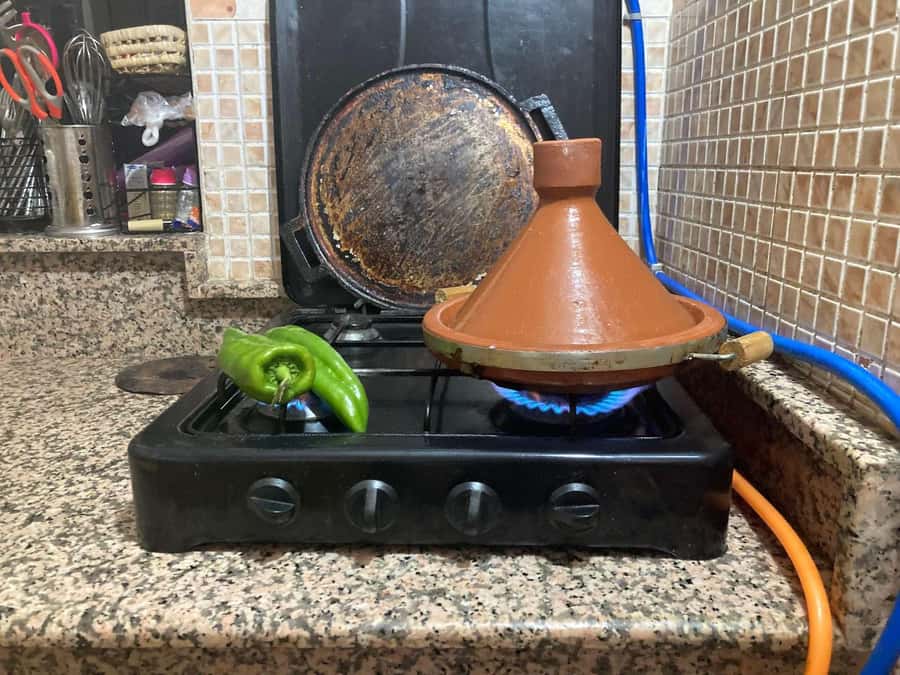
Here is the point where you need realistic expectations. Tagine is slow food. After you finish the preparation, the dish may need 1 to 1.5 hours before it is ready.
That wait can work well if the host continues the conversation, serves tea, or explains more about Moroccan traditions. It can feel less satisfying if all the planned preparation is over and you have nothing else to do. One class participant found this pause too long and suggested adding another dish during the cooking time.
I would treat this as the main weakness of the experience. The overall five-hour duration is generous, but the schedule may not feel full every minute. If you prefer a tightly packed class with constant activity, this could test your patience.
On the other hand, a slow cooking period is not automatically wasted time. You are in a riad in the Medina, and the relaxed setting can make the meal feel more like a shared afternoon than a timed kitchen workshop. You can use the pause to ask questions, talk with the chefs, or meet others in the group. Just do not expect five straight hours of chopping, stirring, and baking.
Sitting down to eat what you prepared
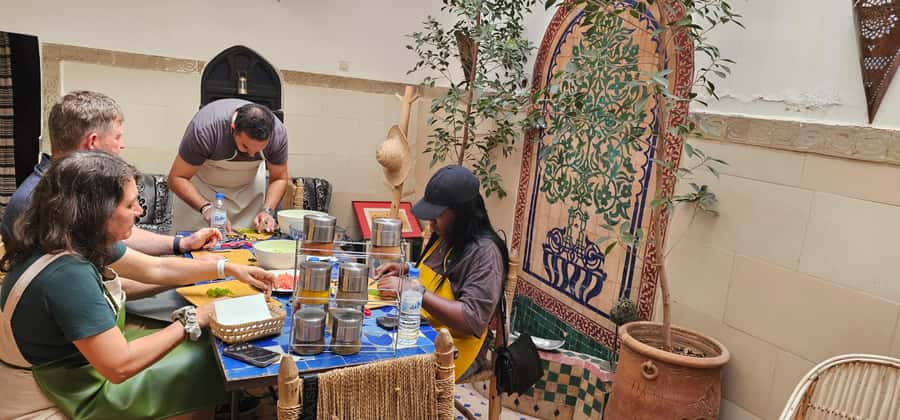
The reward comes at the end: you share the meal you have cooked. The food portion lasts about an hour, giving you time to taste the dishes rather than rushing through a quick sample.
This final meal makes the class better value than a short demonstration. For $35 per person, you receive a guide, the cooking lesson, tea, and food. You also get recipes or methods you can use at home. That is a fair deal in Marrakech if you value a personal cultural activity as much as the meal itself.
The food examples give you a sense of the spread. A typical session may include a Moroccan salad, zaalouk, and a chicken tagine, with other accompaniments. Dessert is also included in the planned menu, though the specific dessert is not named.
I like that you eat alongside the chef. The shared table keeps the experience informal and gives you a chance to ask final questions while the dishes are still in front of you. It also turns the meal into a natural ending rather than an afterthought.
The class returns to Café de France after the meal. Since pickup is not included, you should arrange your next plans from the square or nearby Medina. The stated schedule suggests the activity ends where it began.
What the guide style adds
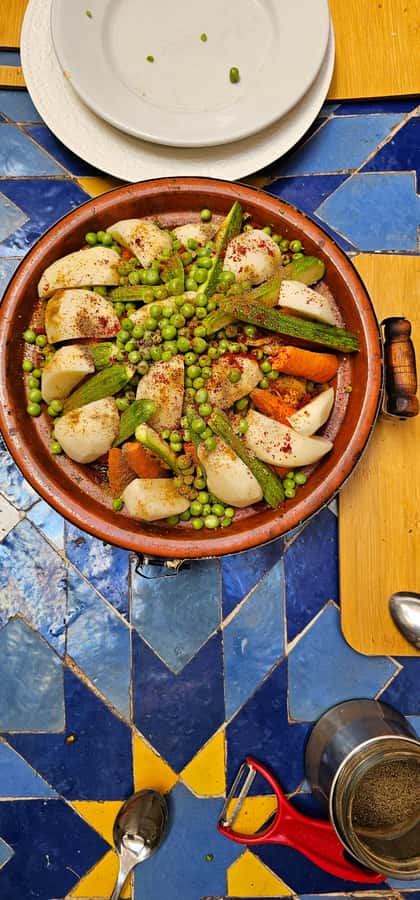
The cooking matters, but the hosts are just as important. Marouane and Abdou are Moroccan Berber chefs who focus on sharing food traditions and culture. Their professional background includes work with recognized hotels and restaurants in Morocco and abroad.
Several sessions were hosted by Khalid, who was praised for warmth, humor, and generosity. His conversations about Amazir heritage, family, architecture, and life in Marrakech added a cultural layer to the cooking. If your booking names Khalid, you can expect the experience to include plenty of conversation as well as kitchen instruction.
The tone appears to be welcoming rather than formal. One small group felt included from the start, as if visiting a family home. That makes this a good choice if you want contact with local hosts and do not mind sharing the class with other people.
Group size is not specified, so I would not assume a private lesson. Group sessions are available, and private sessions can be arranged on request. If you want one-on-one instruction or have complex dietary needs, ask about a private option before booking.
Who will get the most from this $35 experience
I would recommend this class to you if you want three things in one outing: a market visit, practical cooking, and a shared Moroccan meal. It is especially suitable for couples, small groups, and solo visitors who enjoy meeting a host and joining a family-style activity.
It also works well for people who want recipes to take home. The class explains methods and spices, so you can try to recreate Moroccan dishes after your trip instead of leaving with only photographs.
Families may appreciate the friendly setting, though the supplied information does not give a minimum age or child-specific program. Ask before booking if you are traveling with young children.
You may want to choose another activity if you dislike waiting or want a highly structured culinary school format. The slow tagine cooking time is real, and the exact menu is not guaranteed. You also lose the market portion during Ramadan and on Fridays.
The language options are English, French, and Arabic. Cancellation is free up to 24 hours before the experience, and you can reserve now and pay later. Those terms make it easier to fit the class around a changing Marrakech schedule, but the key practical issue remains the meeting point at Café de France.
My verdict on the Marrakech cooking class
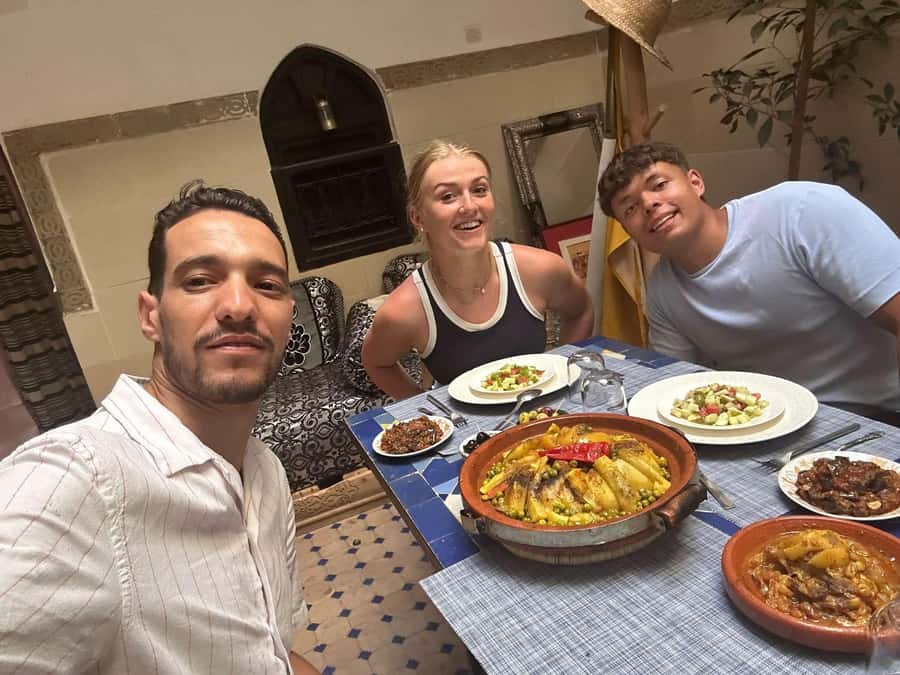
Book this experience if you want a personal introduction to Moroccan food rather than a polished restaurant show. The strongest features are the local market shopping, the hands-on preparation, the mint tea lesson, and the chance to talk with hosts about Moroccan and Amazir culture.
The value is very good at $35, since the price includes the guide, tea, cooking class, and final meal. Go in knowing that the tagine may leave you waiting for up to 1.5 hours, and that the market visit is unavailable during Ramadan or on Fridays.
For an easy decision, choose it when your priority is connection and practical food skills. Skip it only if you need a nonstop schedule, a fixed menu, or hotel pickup. For most food-minded visitors in Marrakech, this is a warm, useful afternoon with a meal at the end and recipes you can carry home.
FAQ
Where does the Marrakech cooking class begin?
The meeting point is in front of the main door of Café de France on Jamaa el Fna Square in Marrakech.
Is hotel pickup included?
No. Pickup is not included, so you need to reach Café de France on your own.
How long does the activity last?
The full experience lasts five hours. The schedule includes a walk, about 1.5 hours of cooking, 30 minutes for tea, and one hour for food tasting.
Is the local market visit always included?
No. The market visit is not included during Ramadan or on Fridays.
What languages are available?
The live tour guide service is offered in English, French, and Arabic.
What food will I cook?
The menu features classic Moroccan dishes, including starters, a main course, and dessert. Examples from the available information include Moroccan salad, zaalouk, chicken tagine, vegetable dishes, and accompaniments.
Can the class accommodate dietary restrictions?
You should discuss food allergies and dietary restrictions with the chefs before shopping and cooking. The menu can include a vegetarian version as well as a chicken version.
Are private sessions available?
Yes. Group sessions are available, and private sessions can be arranged upon request.
Can I cancel the booking for a refund?
Yes. You can cancel up to 24 hours in advance for a full refund. You can also reserve now and pay later.
More Cooking Classes
- Marrakech: Moroccan Cuisine Cooking Class in Local Home
★ 4.8 · 508 reviews - Marrakech: Moroccan Cooking Workshop at La Maison Arabe
★ 5.0 · 446 reviews - Marrakesh cooking class with chef Hassan – Local dishes
★ 5.0 · 425 reviews - Marrakech: Tajine Cooking Class in a Traditional Riad
★ 4.8 · 424 reviews
Just added around Marrakech
- Marrakech: Medina Souks, Hidden Markets and Shopping Tour★ 4.8 · 33 reviews
- Guided walking tour in Marrakech★ 4.5 · 33 reviews
- Sunset Camel Ride Marrakech with Transfers★ 5.0 · 33 reviews
- Agafay desert sunset camel ride Tour from Marrakech★ 5.0 · 33 reviews
- 2 Days Desert Agafay and Atlas Mountains Trek From Marrakech★ 3.8 · 33 reviews
- Atlas mountains, Ourika valley, berber villages trip & Guide★ 5.0 · 33 reviews
- Magical Dinner show and Quad bike In Agafay Desert Marrakech★ 4.5 · 33 reviews
- Camel Ride at the Palm Groves in Marrakech★ 5.0 · 33 reviews
Cooking Classes, compared.
Traditional Moroccan Cooking Class & Market Visit
Read our review →
Moroccan Dishes Cooking Class with a Local Chef
Read our review →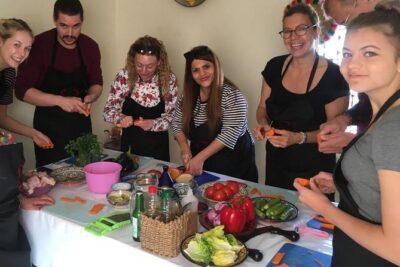
Moroccan Cooking Class & Marrakech Market Visit with Chef Khmisa
Read our review →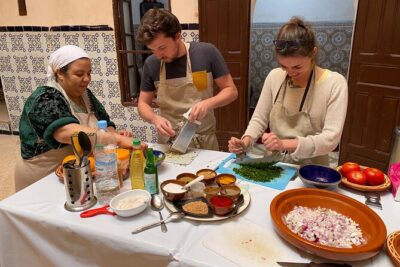
Half-Day Cooking Class with Local Chef Laila in Marrakech
Read our review →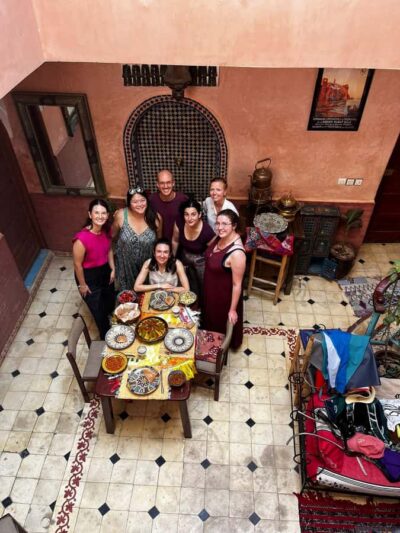
Browse the lists this tour appears in