
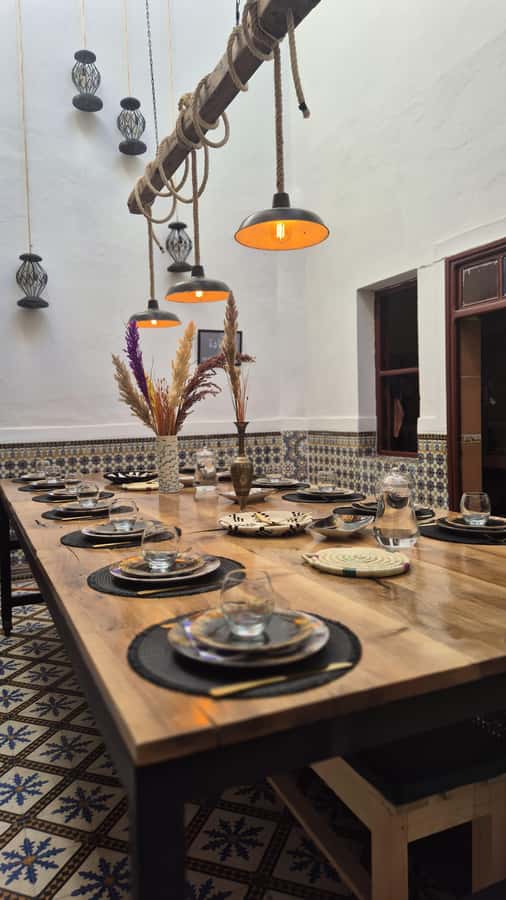
Reviewed · COOKING CLASSES
Marrakech: Moroccan Cooking Class with Amazing Local Chef!
Moroccan food is best learned with your hands. This four-hour class gives you a friendly, practical way to cook tagine, Moroccan salads, msemmen bread, and dessert while learning from local chefs in English, French, or Arabic. I like the warm tea welcome and the chance to eat what you prepare in a traditional riad or farmhouse setting. I also like that the class goes beyond recipes, with stories about Berber techniques, family traditions, and the influences that shaped Moroccan cooking. The main thing to consider is the dessert: the final course may be a simple juice or fruit-based preparation rather than a more elaborate pastry.
At $45 per person, this is a strong value if you want more than a meal. You receive four hours of instruction, fresh ingredients, utensils, tea, a shared lunch, and recipe cards for home. The class is also family-friendly, though very young children may find the long cooking session difficult.
In This Review
- Key points at a glance
- Arriving at ArtEscape Marrakech
- Mint tea, pastries, and a proper Moroccan welcome
- Preparing salads and learning the spice balance
- Building your tagine around the table
- Making msemmen, the flaky Moroccan bread
- Sitting down to your four-course meal
- The cultural context behind the recipes
- Is $45 a fair price?
- Timing, comfort, and access
- Who will enjoy this Marrakech cooking class?
- Final verdict: should you book it?
- FAQ
- How long does the Moroccan cooking class last?
- What dishes will I prepare?
- Is a vegetarian option available?
- Which languages are spoken during the class?
- Where is the meeting point?
- Does the meeting point have a visible sign?
- Can I use Uber or InDrive to get there?
- Is transportation included?
- Is the activity wheelchair accessible?
- What should I bring?
Key points at a glance

- Start with mint tea and pastries: The welcome ceremony sets a relaxed tone and gives you a taste of Moroccan hospitality before cooking begins.
- Prepare four courses by hand: You work on two Moroccan salads, a tagine of your choice, msemmen flatbread, and a sweet final course.
- Learn from Chafik, Mehdi, Chaima, and Fatima: The teaching team is praised for clear explanations, warmth, humor, and attention to each participant.
- Eat together in a beautiful setting: The class ends around a shared table, with your tagines, salads, bread, tea, and dessert served as a communal meal.
- Bring the recipes home: Recipe cards make this more useful than a one-time lunch, especially if you want to recreate the dishes later.
- Allow extra time to find the door: The meeting point is at ArtEscape Marrakech, door number 312, and the outside may not have a sign.
Arriving at ArtEscape Marrakech
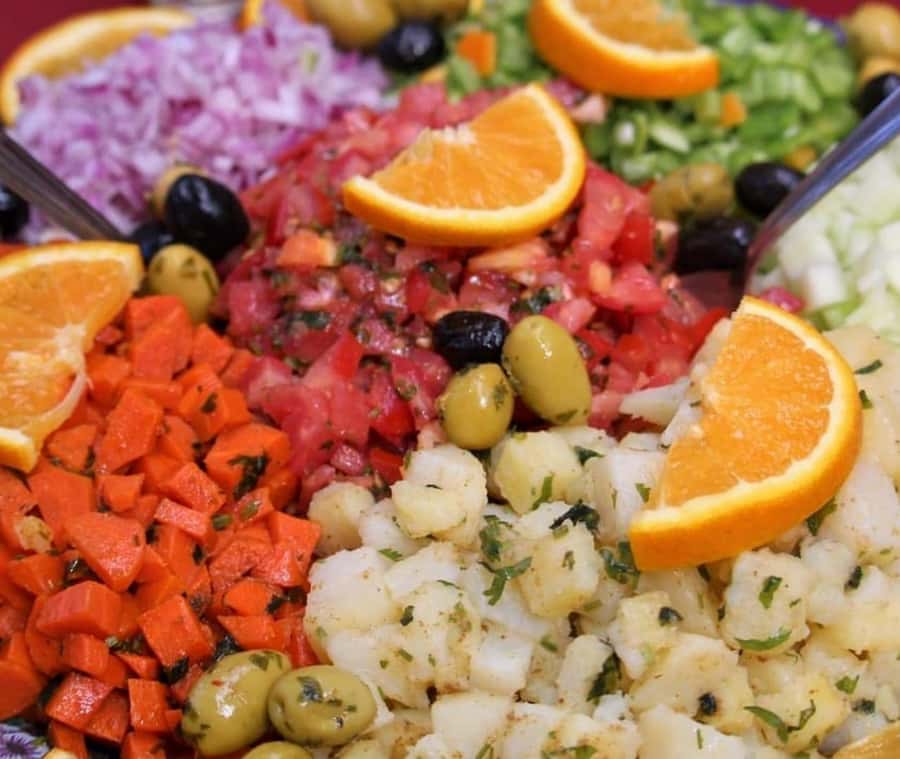
The meeting instructions ask you to use Google Maps and search for ArtEscape Marrakech. The exact address includes door number 312, and you should arrive 15 minutes early for introductions and welcome tea.
One useful detail is that the building may not have an outside sign. If you reach the correct pin but feel unsure, ring the bell rather than assuming you are lost. That small bit of preparation can prevent a rushed start, especially in Marrakech, where finding an exact entrance can take more effort than finding a neighborhood.
You can use Uber or InDrive to reach the location, which the organizers describe as easier than taking a taxi. Some bookings may also involve pickup and drop-off arrangements, so give accurate contact details and confirm the meeting plan after booking. The transportation experience has been smooth for some people and less smooth for at least one booking, so I would not leave the transport question until the morning of the class.
The class may take place in a traditional riad in Marrakech or at a farmhouse. Both settings are part of the appeal, but the exact setting matters if you have a strong preference. Ask for the confirmed location when you receive your booking details.
More Cooking Classes in Marrakech
- Marrakech: Moroccan Cooking Class with Pickup
★ 4.6 · 1,862 reviews - Marrakech: Traditional Moroccan Cooking Class & Market Visit
★ 4.8 · 1,861 reviews - Marrakesh: Moroccan Dishes Cooking Class with a Local Chef
★ 5.0 · 1,615 reviews
Mint tea, pastries, and a proper Moroccan welcome
The class begins with a tea ceremony. You receive Moroccan mint tea and pastries while the chef and group get acquainted. This is not just a quick drink before the serious work starts. In Morocco, serving tea is a social ritual, and it gives you a useful introduction to the hospitality that shapes the meal.
The relaxed opening also helps if you arrive knowing little about Moroccan food. You can ask questions before the chopping begins, meet the people at your table, and settle into the pace of the morning session, which runs from 10:30 a.m. to 2:30 p.m.
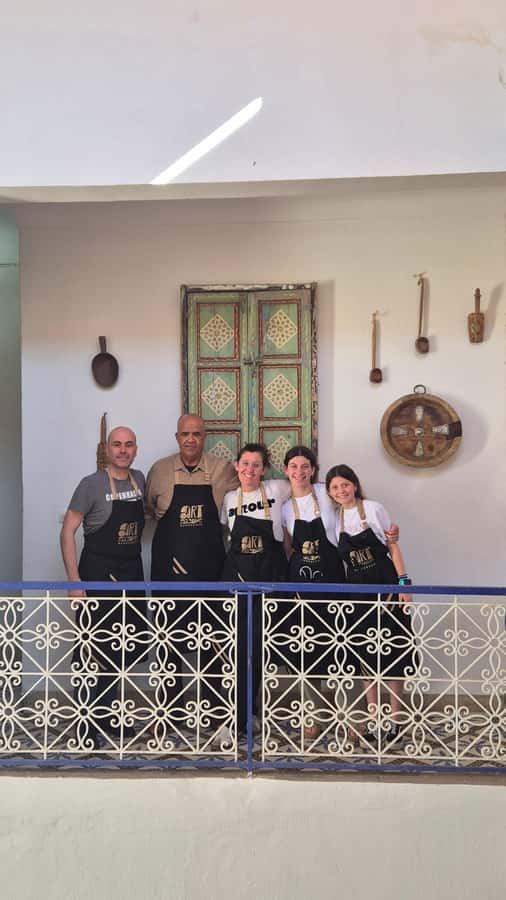
The teaching team has received especially warm praise for making people feel at home. Chafik is described as friendly, funny, and patient, while Mehdi has been praised for clear explanations and for sharing family food traditions. Chaima and Fatima are also noted for their welcoming personalities and careful guidance.
The language support is a real advantage. The activity is conducted in English, French, and Arabic, so mixed-language groups can take part without leaving anyone behind. You can ask questions as the work progresses rather than simply watching a demonstration.
Preparing salads and learning the spice balance
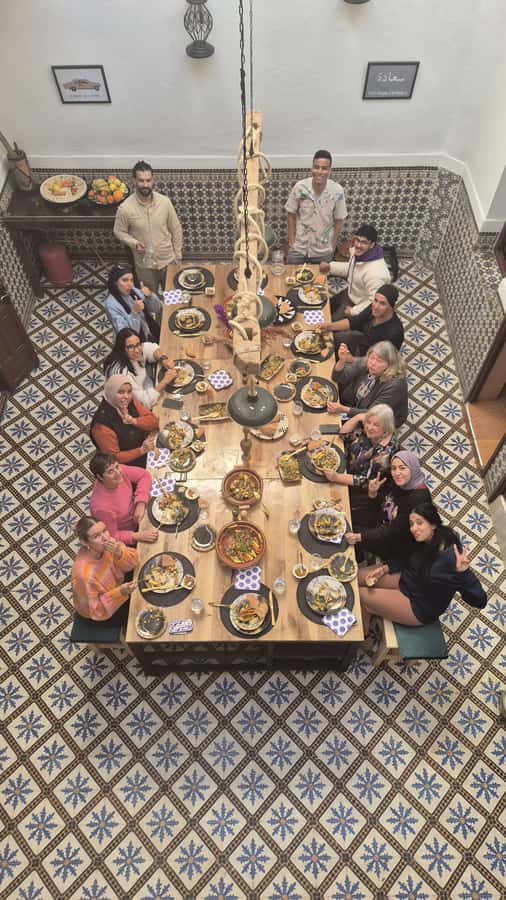
The first cooking tasks focus on two Moroccan salads. This gives you a manageable introduction to the kitchen and shows how Moroccan meals are often built from several smaller tastes rather than one large plate.
You work with fresh, seasonal ingredients and learn how spices are balanced. The point is not simply to add a large amount of seasoning. Moroccan cooking depends on proportion, patience, and the way ingredients are combined, so the chef’s step-by-step guidance is useful here.
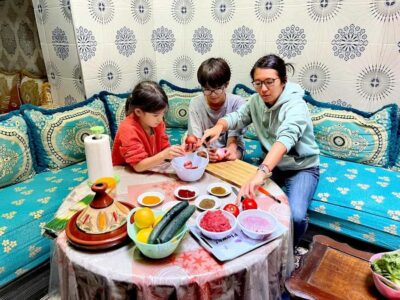
The hands-on format is one of the class’s strongest features. You are not sitting at the back while someone else prepares lunch. You help chop, season, mix, and arrange the dishes. The guides encourage participation and make sure the work is shared across the group.
This also makes the class suitable for families and first-time cooks. You do not need advanced kitchen skills. The explanations are designed to be clear rather than intimidating, and the staff can help if you are unsure about a technique.
Building your tagine around the table
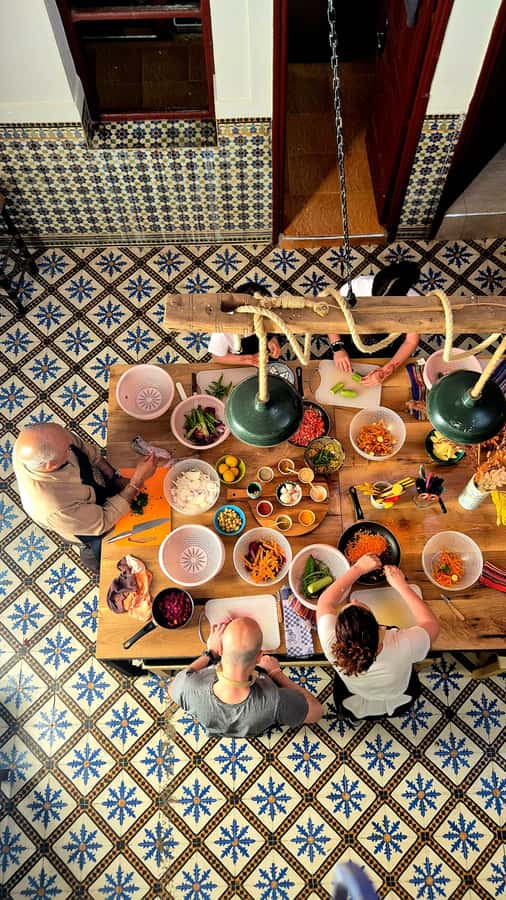
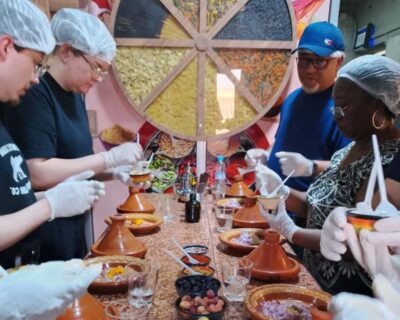
The tagine is the main event. You choose a tagine, with chicken and vegetable versions among the combinations prepared in the class. The chef shows you how to arrange the ingredients in the clay pot before the slow cooking begins.
This part is valuable because tagine is not just a stew served in a pointed dish. The pot shapes the cooking process, and the order of the ingredients matters. You see how vegetables, meat, sauces, and spices are positioned before the tagine is left to cook slowly.
The waiting period is used well. While the tagines cook, the group moves on to bread and other preparations rather than standing around. That keeps the four-hour schedule moving and gives you a sense of how Moroccan meals are planned in stages.
You should expect the final flavor to vary according to the tagine you choose and the ingredients available that day. The experience promises fresh seasonal produce, so the exact result may not be identical from one class to the next. That is a good thing for a cooking lesson, but it means you should not book expecting a fixed menu with every detail set in advance.
A few more Marrakech trips worth weighing up
- Moroccan Cooking Class & Marrakech Market Visit with Chef Khmisa
★ 5.0 · 1,504 reviews - Half-Day Cooking Class with Local Chef Laila in Marrakech
★ 5.0 · 952 reviews - Marrakech: Pottery Workshop with Moroccan Tea
★ 4.8 · 756 reviews - Marrakech: Moroccan Cooking Class with a Local Family
★ 4.9 · 668 reviews
Making msemmen, the flaky Moroccan bread
The bread lesson may be the most memorable part for many people. Msemmen is a Moroccan flatbread with a flaky texture, and the class shows you how to prepare and shape it using semolina flour.
This is a useful skill to learn because bread gives the meal a practical, hands-on element. You make one yourself, then cook it and eat it with accompaniments such as honey, nut butter, and sunflower oil. One of the strongest food memories from the class has been the pancakes with honey, which suggests that this simple course can be a real favorite.
Msemmen also gives the session a nice change of pace. Tagine preparation involves arranging ingredients and waiting for slow cooking, while bread requires more direct handling. You can expect the chef or assistant to demonstrate the process and then guide you as you try it yourself.
Do not worry if your first piece is not perfectly shaped. The class is about learning the method, not producing bakery-window perfection. The shared meal makes room for the occasional uneven fold.
Sitting down to your four-course meal
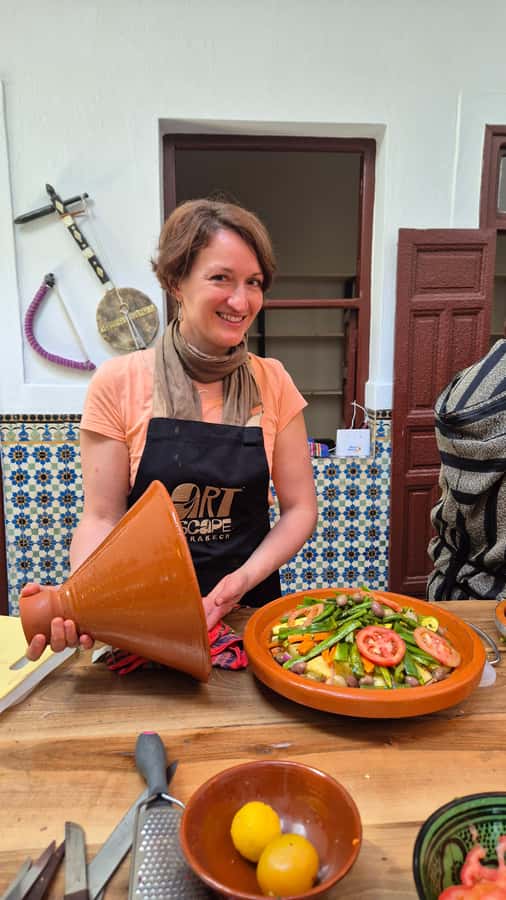
Once the cooking is finished, everyone sits down to eat together. The meal includes two Moroccan salads, your chosen tagine, msemmen, dessert, and Moroccan mint tea.
This shared table is more than a convenient ending. It lets you taste the connection between the separate parts of the lesson. The salads bring freshness, the tagine supplies the main warmth and spice, and the bread helps you scoop up sauces and dips in the traditional way.
The setting is described as beautifully decorated and comfortable, and the facilities have been praised for being clean. Staff members handle the washing and final preparation while you eat, which allows the group to focus on the food and conversation.
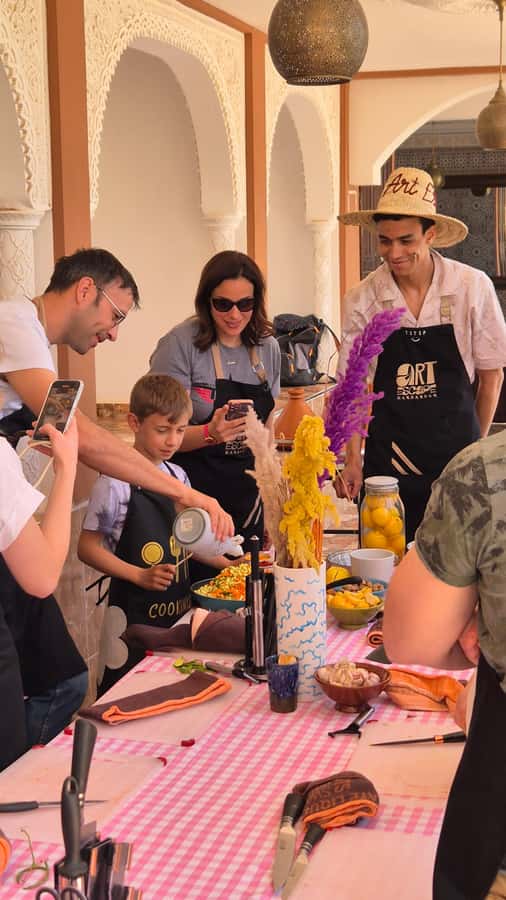
The social side is a major part of the value. You cook alongside people from different countries, divide tasks, and then share the same meal. The atmosphere has been described as feeling like cooking with friends, which is exactly the kind of setting that can make a group class work.
Dessert deserves a small note of caution. The advertised plan includes a sweet course, but the actual finish may be a blended drink such as beetroot, orange, lemon, and mint juice. One participant hoped for a more complex dessert, so if a pastry-making lesson is important to you, ask what will be served on your date.
The cultural context behind the recipes
The class connects food with Moroccan family life and Berber cooking traditions. As you prepare the dishes, the chef explains how techniques have been passed through generations and how North African and Mediterranean influences helped shape Moroccan cuisine.
That context makes the cooking more useful. You learn not only what to put in a tagine, but why certain ingredients and methods matter. Stories about family traditions also give the meal a human side that you will not get from reading a recipe card alone.
The guides are comfortable answering questions, and the multilingual format helps keep the conversation open. You can ask about spices, bread, preparation methods, or the role of a dish in Moroccan food culture.
I especially like this balance between instruction and conversation. The class is not presented as a formal lecture, yet you come away with a better sense of how Moroccan cooking fits into everyday life.
Is $45 a fair price?
At $45, the class offers good value for a four-hour activity. You receive a welcome ceremony, all ingredients, equipment, guided cooking, a full meal, tea, cultural explanation, and recipe cards.
A restaurant meal might cost less, but it would not teach you how to prepare the food or give you the same contact with local cooks. A private cooking lesson could cost more, while a standard food tour may offer tastings without the chance to make anything yourself.
The value is strongest if you plan to use the recipes later. The recipe cards turn the activity into something practical rather than a meal that disappears after lunch. You can try the tagine, salads, or msemmen at home and bring back a skill instead of only a food memory.
For families, couples, and solo visitors who like meeting people, the price is reasonable. If you dislike group activities or mainly want to eat without cooking, you may find a restaurant or food-focused tour more suitable.
Timing, comfort, and access
The main session runs four hours, from 10:30 a.m. to 2:30 p.m. That makes it an easy morning plan, but you should avoid scheduling another fixed activity too close to the finish. Cooking, eating, and transport can take longer than expected.
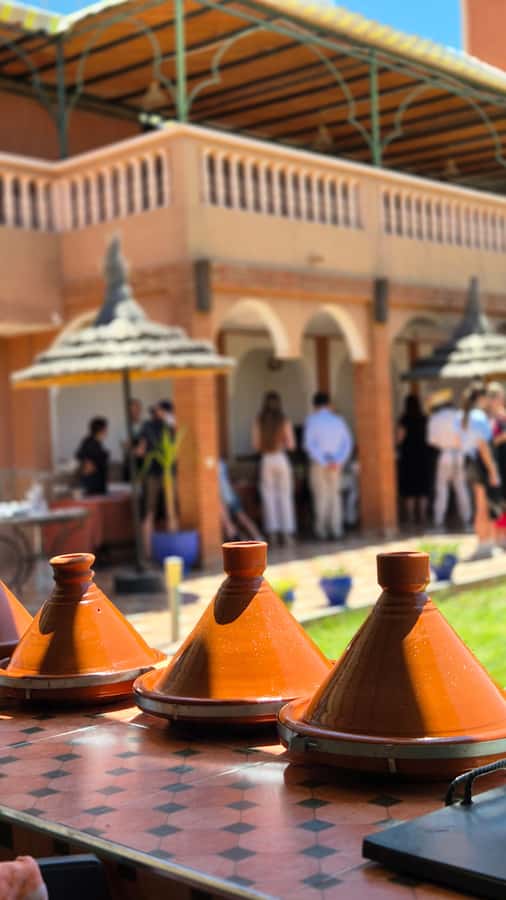
Wear comfortable shoes. You will be on your feet for parts of the preparation, and practical clothing is more useful than something formal. A camera is welcome, so you can record the setting, the clay tagines, and your bread-making attempt.
The activity is wheelchair accessible. You should still share any mobility needs when booking so the organizers can confirm the arrangements for your specific location.
Vegetarian options are available. Tell the organizers about allergies, dietary restrictions, or special requests during booking. This is especially important in a hands-on cooking class, where ingredients may be prepared before you arrive.
Pets, alcohol, and drugs are not permitted. Babies under one year are not considered suitable for the activity, and the four-hour length may also be tiring for very young children.
Who will enjoy this Marrakech cooking class?
I would recommend this class to you if you want a practical introduction to Moroccan food and enjoy learning by doing. It works particularly well for:
- Families with older children or teenagers
- Couples looking for a shared activity
- Solo visitors who enjoy meeting people at a communal table
- Home cooks who want recipes and techniques to try later
- First-time visitors who want food combined with cultural context
The experience is also a good choice if you have already seen the main sights and want a slower, more personal activity. Cooking creates natural conversation, and the multilingual staff can help mixed groups take part.
I would think twice if you want a highly formal culinary course, a fixed gourmet menu, or an elaborate dessert lesson. The focus is on hospitality, tradition, participation, and a satisfying shared lunch rather than professional chef training.
Final verdict: should you book it?
Yes, I would book this Moroccan cooking class if you have four free hours in Marrakech and want an activity that leaves you with both a meal and useful skills. The strongest points are the friendly teaching, clear instructions, excellent food, clean facilities, and relaxed group atmosphere.
Book it with three practical checks in mind: confirm the exact location, ask about pickup if you need it, and clarify the dessert if that course matters to you. Arrive 15 minutes early, use Google Maps for ArtEscape Marrakech, and look for door 312 even if there is no outside sign.
For $45, you get a generous amount of food, personal guidance, cultural context, and recipes to take home. It is one of the better choices in Marrakech for turning a meal into a real connection with Moroccan cooking.
FAQ
How long does the Moroccan cooking class last?
The class lasts four hours. The morning session runs from 10:30 a.m. to 2:30 p.m.
What dishes will I prepare?
You will prepare two Moroccan salads, a tagine of your choice, Moroccan msemmen bread, and a dessert or sweet final course.
Is a vegetarian option available?
Yes, vegetarian options are available. You should provide details about dietary needs or restrictions during booking.
Which languages are spoken during the class?
The activity is conducted in English, French, and Arabic.
Where is the meeting point?
Use Google Maps and search for ArtEscape Marrakech. The door number is 312, and you should arrive 15 minutes before the start time.
Does the meeting point have a visible sign?
The outside of the building may not currently have a sign. If you reach the correct location, ring the bell at door 312.
Can I use Uber or InDrive to get there?
Yes. The organizers state that Uber and InDrive can be used to reach the location and may be easier than regular taxis.
Is transportation included?
Some bookings may include pickup and drop-off arrangements, but you should provide accurate contact details and confirm the pickup time and location after booking.
Is the activity wheelchair accessible?
Yes, the activity is listed as wheelchair accessible. Share your accessibility needs during booking so the arrangements can be confirmed.
What should I bring?
Bring comfortable shoes and a camera. You should also tell the organizers about allergies, dietary restrictions, or special requests before the class.
More Cooking Classes
- Marrakech: Moroccan Cuisine Cooking Class in Local Home
★ 4.8 · 508 reviews - Marrakech: Moroccan Cooking Workshop at La Maison Arabe
★ 5.0 · 446 reviews - Marrakesh cooking class with chef Hassan – Local dishes
★ 5.0 · 425 reviews - Marrakech: Tajine Cooking Class in a Traditional Riad
★ 4.8 · 424 reviews
Just added around Marrakech
- Marrakech: Medina Souks, Hidden Markets and Shopping Tour★ 4.8 · 33 reviews
- Guided walking tour in Marrakech★ 4.5 · 33 reviews
- Sunset Camel Ride Marrakech with Transfers★ 5.0 · 33 reviews
- Agafay desert sunset camel ride Tour from Marrakech★ 5.0 · 33 reviews
- 2 Days Desert Agafay and Atlas Mountains Trek From Marrakech★ 3.8 · 33 reviews
- Atlas mountains, Ourika valley, berber villages trip & Guide★ 5.0 · 33 reviews
- Magical Dinner show and Quad bike In Agafay Desert Marrakech★ 4.5 · 33 reviews
- Camel Ride at the Palm Groves in Marrakech★ 5.0 · 33 reviews
Cooking Classes, compared.
Traditional Moroccan Cooking Class & Market Visit
Read our review →
Moroccan Dishes Cooking Class with a Local Chef
Read our review →
Moroccan Cooking Class & Marrakech Market Visit with Chef Khmisa
Read our review →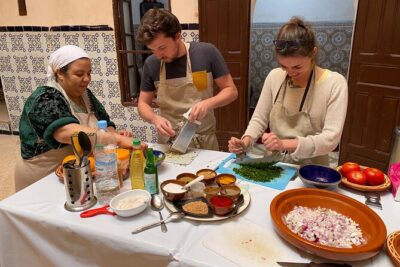
Half-Day Cooking Class with Local Chef Laila in Marrakech
Read our review →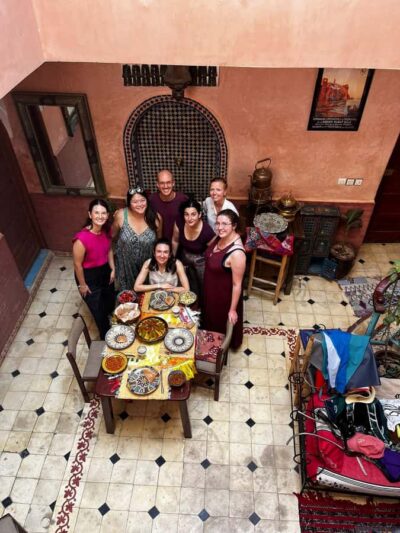
Browse the lists this tour appears in