
Reviewed · COOKING CLASSES
Marrakech: 3-Hour Open-Air Moroccan Cooking Course
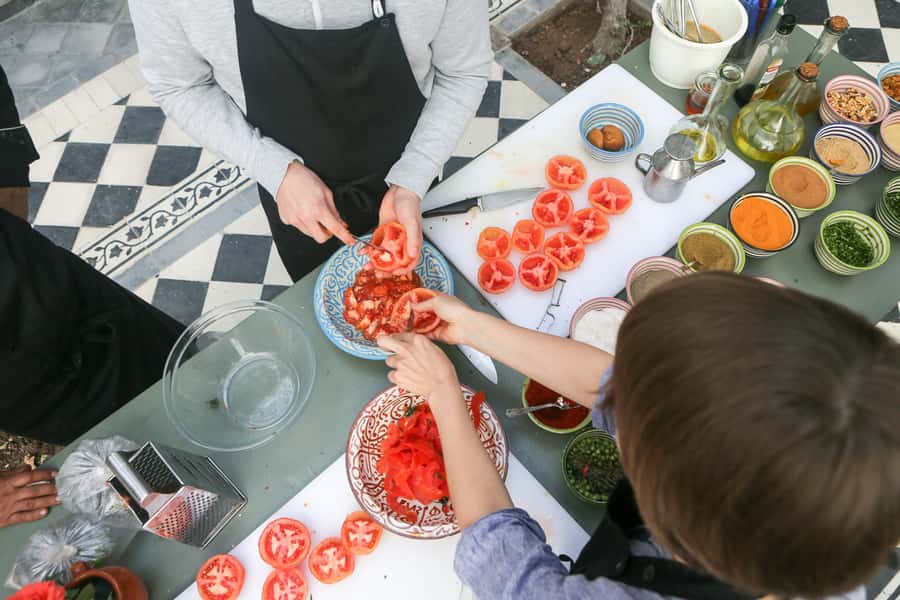
Moroccan lunch begins with your own hands. This small-group class brings you from Jemaa El Fna to a 14th-century riad, where you cook tagine, salads, and other traditional dishes under a head chef. I like the hands-on format and the chance to eat what you prepare, rather than simply watching a demonstration. I also like the calm courtyard setting, a welcome change after the noise of the medina.
The main consideration is time. The experience is advertised with a three-hour title but lists a four-hour duration, and Moroccan cooking is not a quick chop-and-serve affair. You should plan on a leisurely half day, not a tightly timed lunch stop. Wine is available, but it costs extra, and the class is not suitable for wheelchair users.
In This Review
- Key points at a glance
- From Jemaa El Fna to a quiet riad kitchen
- What you actually cook during the four hours
- Why the salads matter as much as the tagine
- A meal in the courtyard or on the roof
- The teaching style and group size
- What the $88 price gets you
- Timing your class around Marrakech
- Who should book this cooking class
- Should you book the Riyad El Cadi class?
- FAQ
- How long does the Moroccan cooking course last?
- Where do I meet the group?
- What languages are used during the class?
- Is lunch included in the price?
- Can I request a vegetarian, vegan, or gluten-free menu?
- Can children join the cooking class?
Key points at a glance
- Small group of two to eight: You get room to ask questions and take part in the preparation.
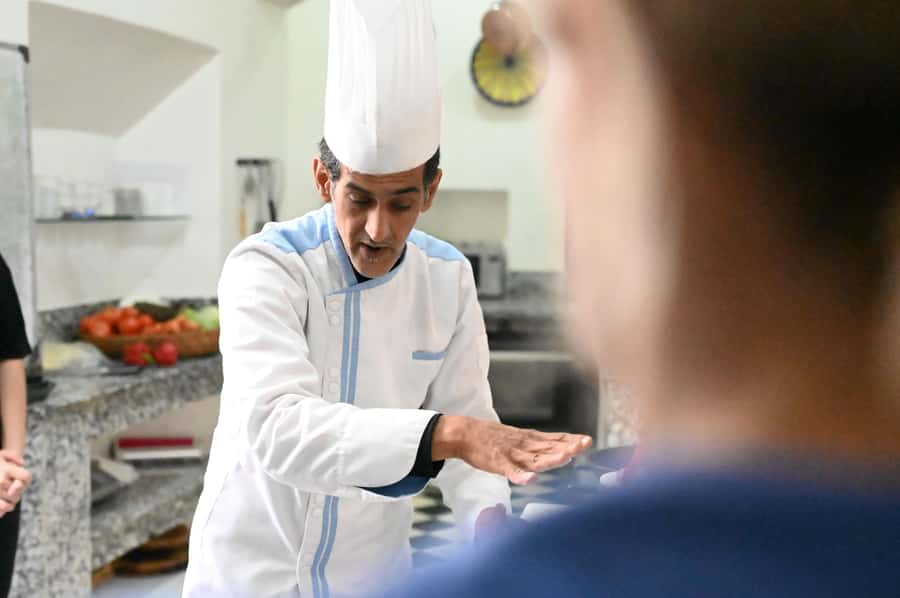
- Chef Hassan and the teaching team: Past sessions have included clear guidance, humor, and plenty of encouragement.
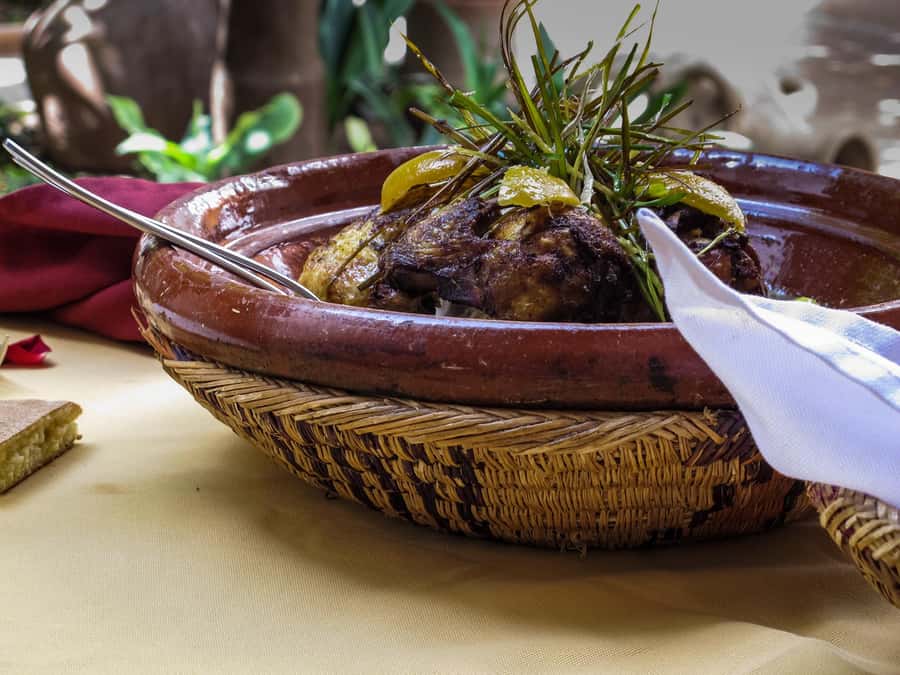
- A real Moroccan menu: You may prepare tagine, marinated chicken, vegetable dishes, and three traditional salads.
- A peaceful riad meal: Eat in the courtyard or choose a rooftop table after cooking.
- Flexible dietary choices: Vegetarian, vegan, and gluten-free versions can be arranged.
- Good practical value: The $88 price includes the class, lunch, water, tea or coffee, and recipes.
From Jemaa El Fna to a quiet riad kitchen
Your meeting point is Café de France at Jemaa El Fna, usually between 10:45 and 11:00 in the morning. An employee leads you from the square to Riyad El Cadi at 87 Derb Moulay Abdul Kader. That pickup matters in Marrakech, where finding a small riad entrance in the medina can be more work than expected.
The square is lively and easy to recognize, but it can also feel confusing if you are new to the city. Confirm your pickup time by phone in advance, as requested by the operator, and arrive with enough time to locate Café de France. The cooking course itself takes place at the riad, not in the square.
At Riyad El Cadi, the class begins with mint tea. This is more than a welcome drink. It gives you a few minutes to settle in, meet the chef, and shift from the hurried pace of the medina to the slower rhythm of Moroccan cooking.
The setting is part of the appeal. You cook in a courtyard kitchen within a traditional riad, with the architecture providing a more intimate backdrop than a modern culinary school. The open-air layout also helps the experience feel tied to Moroccan domestic life, even though you are there as a short-term visitor.
More Cooking Classes in Marrakech
- Marrakech: Moroccan Cooking Class with Pickup
★ 4.6 · 1,862 reviews - Marrakech: Traditional Moroccan Cooking Class & Market Visit
★ 4.8 · 1,861 reviews - Marrakesh: Moroccan Dishes Cooking Class with a Local Chef
★ 5.0 · 1,615 reviews
What you actually cook during the four hours
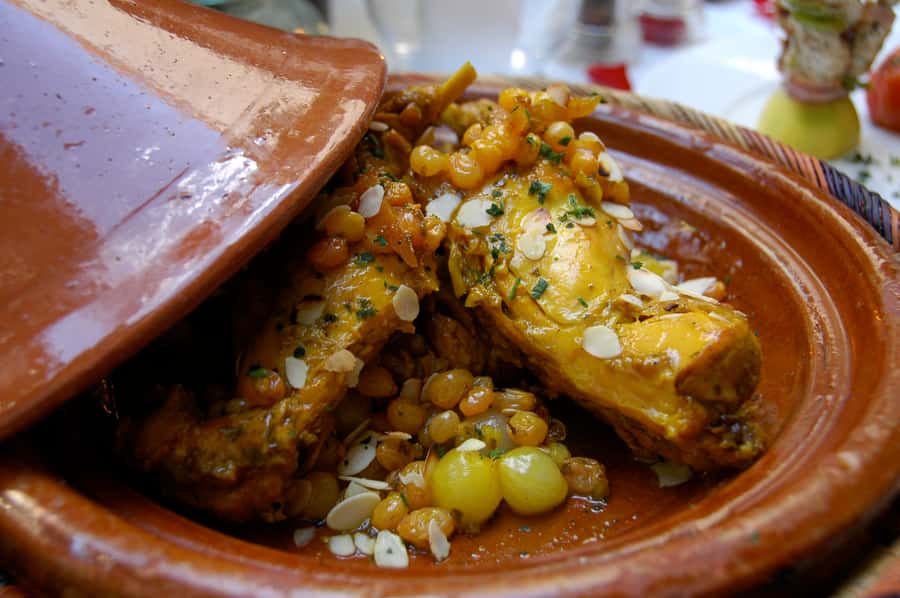
The menu centers on traditional Moroccan cooking, especially the balance of sweet, salty, sour, and aromatic flavors. The exact dishes can be adapted, but the class may include a tagine, marinated chicken, a vegetable tagine, and three Moroccan salads.
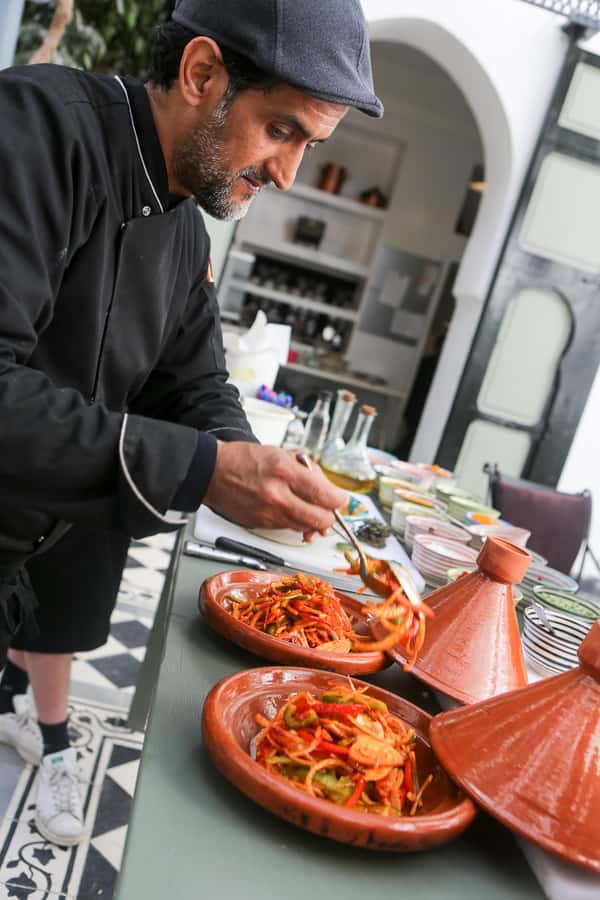
You begin with the ingredients and preparation. The chef explains the spices, fresh produce, and cooking methods before you start chopping, mixing, marinating, and seasoning. This is useful because Moroccan food can look simple on the plate while requiring careful timing and layering in the kitchen.
The tagine takes patience. Once it is placed over the fire, it cooks while you work on the salads and other dishes. That waiting period is not wasted time. It shows you why Moroccan food belongs to the slow-food tradition. A tagine is not meant to be rushed, and the class gives you a chance to see how the flavors develop over time.
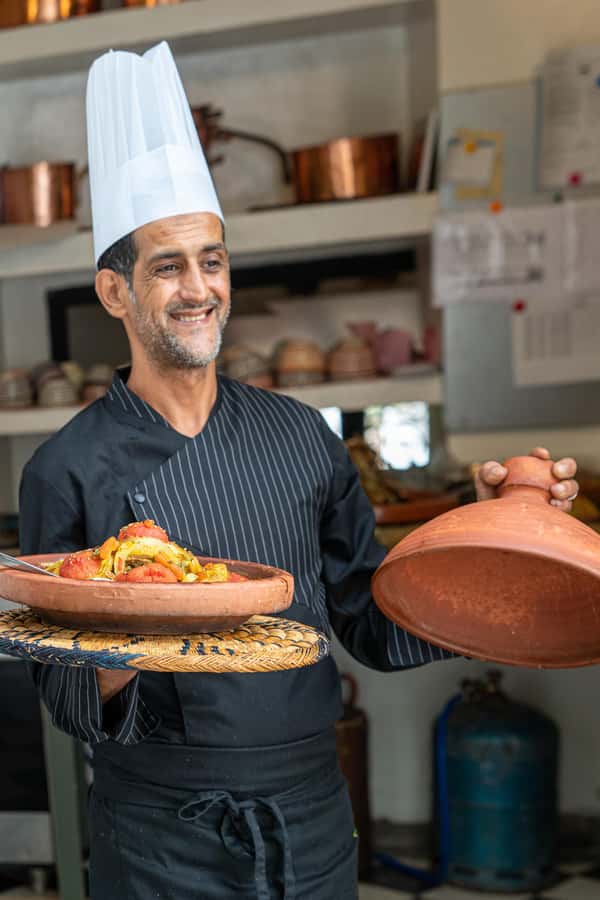
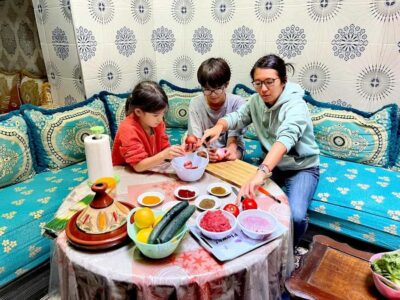
Chef Hassan has guided sessions with couples and small groups, explaining each stage and encouraging questions. If you enjoy learning by doing, this is the strongest part of the experience. You are not simply standing near a chef while someone else handles the knife and spices. You take part in the work, then see how the separate ingredients become a complete meal.
The class also introduces ingredients with strong ties to Moroccan cooking. You learn how preserved lemon brings a sharp, salty note to a dish, how rose water is used for fragrance and sweetness, and how ras el hanout combines several spices into a distinctive seasoning blend. These details help you understand why Moroccan food tastes different from a standard stew or grilled meal.
Why the salads matter as much as the tagine
Many visitors focus on tagine, but the salads give the meal its shape. Moroccan meals often begin with several small salads, and this class teaches you that they are not an afterthought.
Preparing three salads also gives you more practical work while the main dish cooks. You get to handle a wider range of ingredients and seasonings, and you can compare fresh, sweet, savory, and spiced flavors at the table.
I especially like this part for anyone who wants recipes to use at home. A tagine may require a special cooking vessel or a long cooking period, while salads are often easier to recreate. The class provides recipes in English or German, so you can take the techniques home rather than leaving the experience behind in Marrakech.
The menu is not fixed in the same way as a restaurant meal. Vegetarian, vegan, and gluten-free options are available, but you should communicate your needs when booking or before the class. The supplied information confirms that the cooking course can be tailored, but it does not promise every dish for every date.
A meal in the courtyard or on the roof
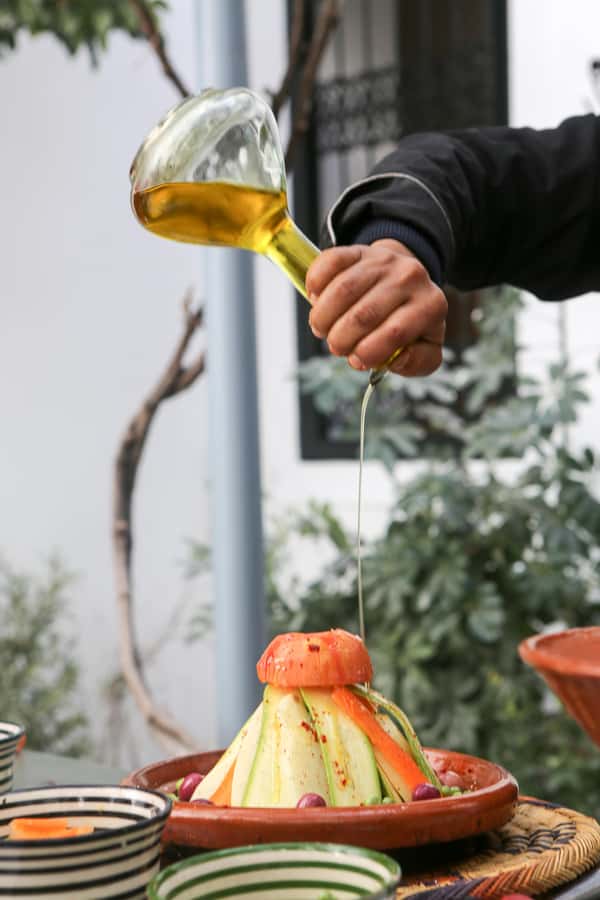
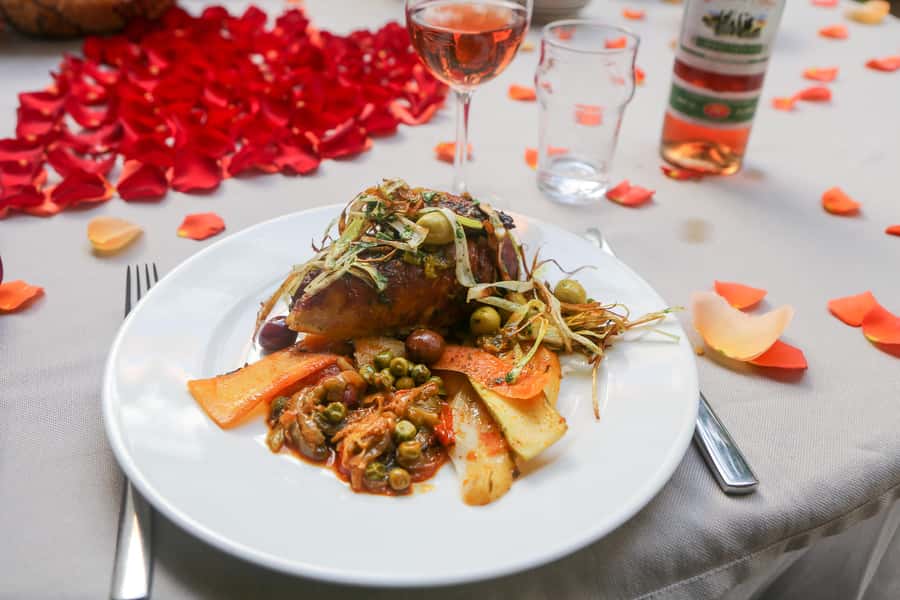
Once the cooking is finished, you sit down to eat the food you helped prepare. The meal is served in the peaceful courtyard or on the rooftop terrace, depending on your preference and what is available.
This is where the class feels rewarding. You have spent time preparing, waiting, adjusting, and learning, so the lunch becomes more than a standard included meal. You recognize the preserved lemon, the spice blend, and the salads because you worked with them yourself.
Past sessions have ended with beautifully arranged tables in the riad garden and a relaxed meal. The setting gives you time to enjoy the food without being pushed out for the next seating. You can have mineral water, then finish with mint tea or coffee.
Moroccan wine is available if you want it, though alcoholic drinks are not included in the $88 price. Wine and beer cost extra. If you are watching your budget, the included water and final tea or coffee are enough to complete the meal without adding a charge.
More Cooking Classes:
- Moroccan Cooking Class & Marrakech Market Visit with Chef Khmisa
★ 5.0 · 1,504 reviews - Half-Day Cooking Class with Local Chef Laila in Marrakech
★ 5.0 · 952 reviews - Marrakech: Moroccan Cooking Class with a Local Family
★ 4.9 · 668 reviews - Marrakech: Moroccan Cuisine Cooking Class in Local Home
★ 4.8 · 508 reviews
The teaching style and group size
The group is limited to eight people, with a minimum of two participants over age 14. That is a useful middle ground. You are likely to receive more direct help than in a large demonstration class, but you still have the social pleasure of cooking with other people.
A couple may find the experience especially comfortable. One past session had only two participants, who were guided through chicken, vegetable tagine, and three side dishes. A small group also gives you a better chance to ask why a spice is used, how long a dish should cook, or what substitute works at home.
The chef-led format is also suitable if you have little cooking experience. The instructions cover basic preparation as well as the cultural side of the food. You do not need to arrive with advanced knife skills or prior Moroccan cooking experience.
The language of instruction is French and English. Recipes are supplied in English or German. If you need another language, the listed information does not confirm that one is available.
Children up to age 13 are welcome at a reduced price if they are interested in cooking. The minimum rule applies to the group as a whole, requiring at least two people over 14. Families should confirm the details for their date before booking.
What the $88 price gets you
At $88 per person, this is not the cheapest lunch activity in Marrakech. The value depends on how you use it.
You receive the cooking instruction, ingredients for lunch, the meal itself, mineral water, tea or coffee, recipes, and pickup from Jemaa El Fna. You also get a small group, a traditional riad setting, and the chance to work directly with a chef. If you would otherwise pay separately for lunch and a cultural activity, the combined price becomes easier to justify.
The strongest value comes from the practical lesson. A restaurant meal gives you food for one afternoon. This class gives you recipes and methods that you can try again. The preserved lemon, ras el hanout, and salad techniques are useful reminders of Marrakech long after you leave.
Still, you should book it for the cooking, not only for the meal or the architecture. If you want a fast lunch with a short demonstration, four hours may feel too long. If you enjoy slow preparation and a relaxed table afterward, the duration makes sense.
The class includes lunch, but extra drinks are separate. Alcohol is optional and costs more. Pool time is also not included. A separate cook and swim experience is available in July, August, and September if using a pool matters to you.
Timing your class around Marrakech
The regular start is 11:00 in the morning, with pickup around 10:45 to 11:00. During summer, a 16:30 start may also be available. Check the date carefully because the late option is seasonal rather than guaranteed.
A morning class works well if you want lunch as your main meal of the day. It also leaves the afternoon open for more time in Marrakech. The summer afternoon start may be better if you prefer cooler hours, though the meal would then fall later in the day.
The four-hour duration deserves attention. The title refers to a three-hour cooking course, while the activity details give four hours. Since the class includes pickup, preparation, cooking, lunch, and a final drink, I would plan for the longer figure. Avoid booking a tightly timed transfer or another fixed activity immediately afterward.
Availability is not guaranteed for every requested date. The operator may ask you to choose another date and time if the class is not available. The small group size is a benefit, but it also means fewer spaces on each session.
You can cancel up to 24 hours ahead for a full refund, and the reserve-now, pay-later option keeps your plans flexible. Those terms are helpful when you are still arranging a Marrakech itinerary.
Who should book this cooking class
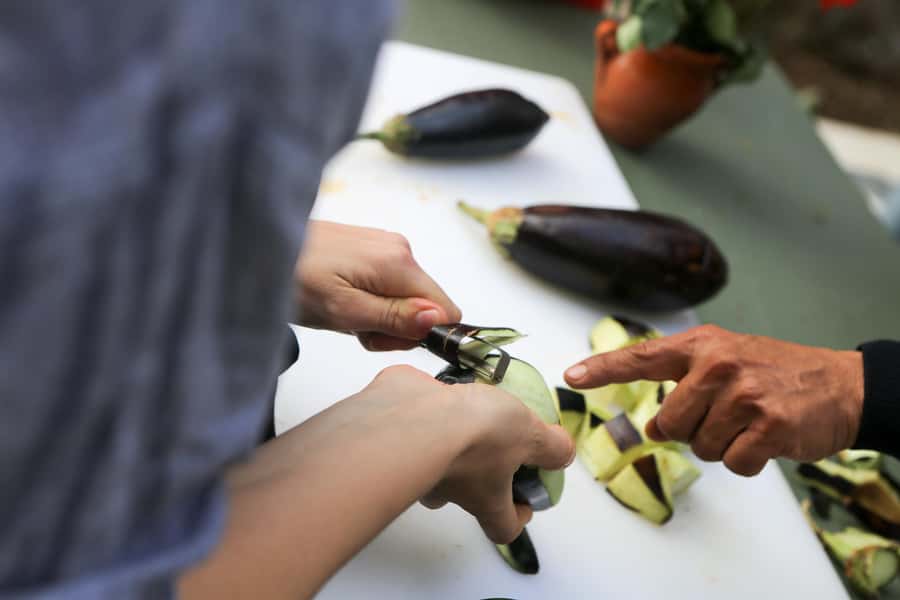
I would choose this experience if you want a cultural activity that includes food but is not simply a market tasting. It suits home cooks, curious eaters, couples, and families with children who like to take part rather than watch.
It is also a good choice for anyone who wants a calmer counterpoint to Jemaa El Fna. You begin in one of Marrakech’s most active public spaces, then move into a riad courtyard where the pace becomes slower and more personal.
The course may be less suitable if you dislike long meals, group activities, or hands-on preparation. The experience is not wheelchair accessible, and the provided information does not suggest an adapted setup.
Vegetarians, vegans, and people avoiding gluten have a strong reason to consider it, since those options can be arranged. I would still state your dietary needs clearly before the class so the kitchen can plan the menu.
If your main aim is to learn a single signature dish quickly, this may offer more food preparation than you need. You can expect several components, including salads, rather than a brief lesson on one tagine.
Should you book the Riyad El Cadi class?
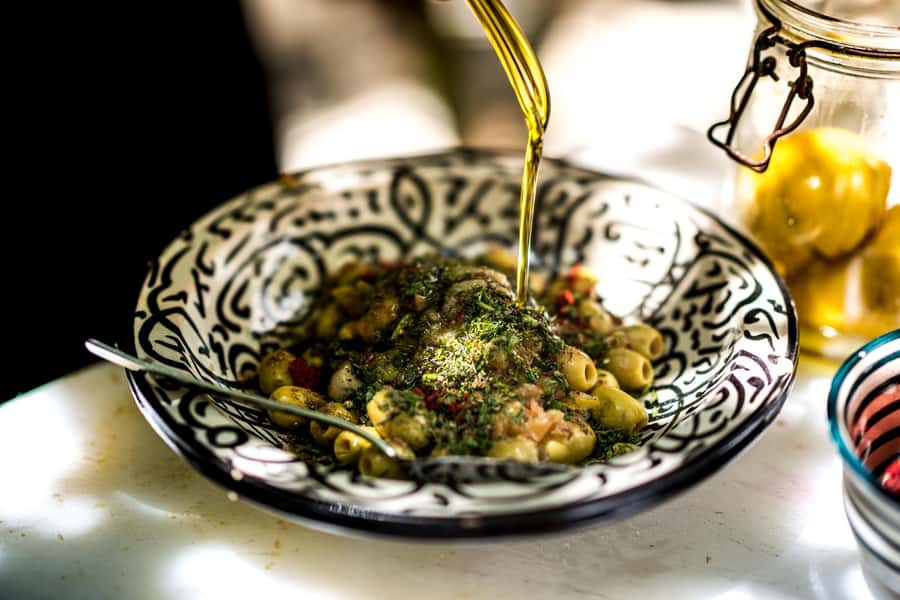
I would book this class if you value active learning, a small group, and a proper sit-down meal. The most praised features are consistent: Chef Hassan and the other instructors create a friendly atmosphere, the teaching is clear, and the food is both enjoyable and useful to learn.
The riad setting adds charm without replacing the cooking. You get to work with the ingredients, ask questions, wait for the tagine, and then eat the result in a courtyard or on the roof. That combination makes the $88 price reasonable for a four-hour cultural activity.
Skip it if you want a short, inexpensive lunch or if your schedule cannot handle a flexible end time. For everyone else, this is a thoughtful way to understand Moroccan food from the inside, one preserved lemon and slow-cooked tagine at a time.
FAQ
How long does the Moroccan cooking course last?
The activity details list a duration of four hours, although the experience title refers to three hours. Plan for four hours, including pickup, cooking, lunch, and tea or coffee.
Where do I meet the group?
Pickup is at Café de France in Jemaa El Fna Plaza, usually between 10:45 and 11:00. The cooking course takes place at Riyad El Cadi, 87 Derb Moulay Abdul Kader, Marrakesh.
What languages are used during the class?
Instruction is available in English and French. Recipes are provided in English or German.
Is lunch included in the price?
Yes. The cooking course, lunch, mineral water, and tea or coffee at the end are included. Additional drinks are not included.
Can I request a vegetarian, vegan, or gluten-free menu?
Yes. Vegetarian, vegan, and gluten-free options can be arranged. Share your dietary needs when making your booking.
Can children join the cooking class?
Children up to age 13 are welcome at a reduced price if they are interested in cooking. The activity requires at least two participants over age 14, and the total group size is limited to eight people.
More 3-Hour Experiences
- Marrakech Monuments & Souks 3-Hour Tour
★ 3.8 · 1,540 reviews - Marrakech: 3H Traditional Hammam & Massage & Hotel Transfer
★ 3.9 · 1,262 reviews - 3h Private Sidecar Ride / Secrets of Marrakech
★ 5.0 · 478 reviews - Marrakech: 3-Hour Monuments, Souks & Old Medina Walking Tour
★ 4.7 · 133 reviews
Just added around Marrakech
- Marrakech: Medina Souks, Hidden Markets and Shopping Tour★ 4.8 · 33 reviews
- Agafay desert sunset camel ride Tour from Marrakech★ 5.0 · 33 reviews
- Guided walking tour in Marrakech★ 4.5 · 33 reviews
- Sunset Camel Ride Marrakech with Transfers★ 5.0 · 33 reviews
- 2 Days Desert Agafay and Atlas Mountains Trek From Marrakech★ 3.8 · 33 reviews
- Atlas mountains, Ourika valley, berber villages trip & Guide★ 5.0 · 33 reviews
- Magical Dinner show and Quad bike In Agafay Desert Marrakech★ 4.5 · 33 reviews
- Marrakech: Ouzoud Waterfalls Trip, Guide & Boat + Lunch★ 4.7 · 33 reviews
Cooking Classes, compared.
Traditional Moroccan Cooking Class & Market Visit
Read our review →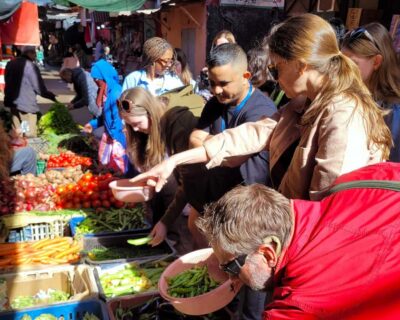
Moroccan Dishes Cooking Class with a Local Chef
Read our review →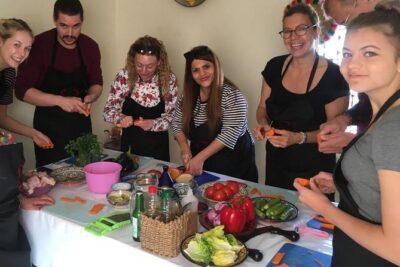
Moroccan Cooking Class & Marrakech Market Visit with Chef Khmisa
Read our review →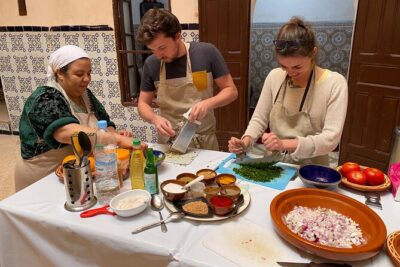
Half-Day Cooking Class with Local Chef Laila in Marrakech
Read our review →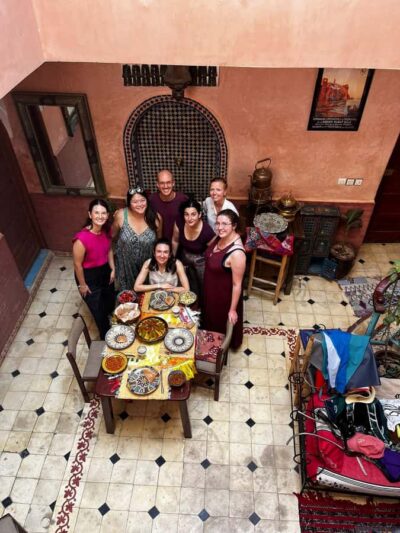
Browse the lists this tour appears in