
Reviewed · COOKING CLASSES
Make Variety of Moroccan Crepes with a Local
Flour, butter, and mint tea make a fine Marrakech afternoon. This cooking class brings you into a local home to learn Moroccan crepes, known as msemen, with hosts and chefs including Kawtar, Sabah, Jamila, and Khmisa. You work with the dough yourself, prepare several recipes, and sit down to eat what you have made.
I like the hands-on format and the warm, personal setting. You are not simply watching a demonstration. You handle the ingredients, shape the dough, cook the breads, and prepare Moroccan mint tea. I also like the small-group design, with space for a maximum of seven people in the highlights, although the booking details also state a maximum of 10. The main drawback is practical: the class does not include hotel pickup, and the meeting point at Mosquée Derb Alhajra may take some planning to reach.
In This Review
- What makes this Marrakech cooking class special
- Learning the difference between msemen and Moroccan pancakes
- Inside the local home with Kawtar and Sabah
- From first recipe to finished crepe
- Mint tea turns the lesson into a meal
- Why the two-and-a-half-hour schedule works
- A close look at the $37.17 price
- Group size, comfort, and the one serious caution
- Who will get the most from this class?
- Should you book Make Variety of Moroccan Crepes with a Local?
- FAQ
- Where does the Moroccan crepe class begin?
- How long does the cooking experience last?
- Are morning and afternoon sessions available?
- What is included in the price?
- Is hotel pickup included?
- What is the cancellation policy?
What makes this Marrakech cooking class special
- You make three types of Moroccan bread and crepes, according to the class experience described by past participants.
- The class takes place in a local home, giving you a more personal setting than a large commercial cooking school.
- You prepare mint tea as part of the lesson, then drink it with your freshly cooked food.
- Morning and afternoon start times are available, so you can fit the class around sightseeing.
- English and French instruction is provided, with the chef guiding you through each stage.
- The class is about 2 hours and 30 minutes, long enough for cooking, eating, and conversation without taking your entire day.
Learning the difference between msemen and Moroccan pancakes
The name of the experience uses both crepes and pancakes, but the central dish is Moroccan msemen. These square, folded breads are made from dough that is stretched, layered with fat, folded, and cooked until golden. They can be served sweet with honey at breakfast or used as a savory base for fillings such as meat.
That variety is part of the appeal. You are not learning one plain pancake recipe and calling it a day. The class is designed around several kinds of Moroccan crepes and breads, with one detailed account describing three traditional recipes.
You should arrive ready to work. The supplied apron and kitchen equipment mean you do not need to bring cooking tools. The useful part of this format is that you control the dough from the first look at the recipe through the final cooking stage. If you have ever watched someone stretch msemen and wondered how the dough becomes so thin without tearing, this is your chance to practice the technique with help close by.
The class description says the chef explains the methods needed for a successful result. That matters here because Moroccan dough work is more about touch than complicated equipment. A printed recipe alone will not show you how the dough should feel. Having someone correct your technique as you go makes the lesson more useful once you return home.
More Cooking Classes in Marrakech
- Marrakech: Moroccan Cooking Class with Pickup
★ 4.6 · 1,862 reviews - Marrakech: Traditional Moroccan Cooking Class & Market Visit
★ 4.8 · 1,861 reviews - Marrakesh: Moroccan Dishes Cooking Class with a Local Chef
★ 5.0 · 1,615 reviews
Inside the local home with Kawtar and Sabah
The meeting point is listed at Mosquée Derb Alhajra, J2M3+53J, Der Hajra, Marrakech 40000. The activity begins and ends at this meeting point, so you need to arrange your own way there and back. It is near public transportation, but you should confirm the exact meeting instructions before setting out, especially if you are staying in or around the medina.
Once you meet the hosts, the tone is intended to be relaxed and social. The home setting is important. You are sharing a meal and a cooking routine rather than moving through a formal demonstration room. One account describes the house as very pleasant and the welcome as especially friendly. Another praises Kawtar for her patience and teaching style.
The experience provider is Marrakech Cooking Class With Chef Khmisa, and Khmisa is also praised for sharing her skills with warmth and generosity. Names can vary depending on the host assigned to your date. The class information identifies Kawtar and Sabah as hosts, while individual experiences also refer to Jamila and Khmisa. If meeting a particular chef matters to you, ask when booking rather than assuming one name is guaranteed.
The guide and chef speak French and English. That makes the class accessible to many international visitors, and the lesson is built around direct instruction rather than a lecture. You can ask questions while mixing, stretching, folding, and cooking.
From first recipe to finished crepe
The cooking begins with an introduction to the recipe and the basic process. You receive an apron and the equipment needed, then work alongside the chef as the dough is prepared. The class description emphasizes that you are involved from start to finish, not simply invited to shape one final piece for a photograph.
The dough is the heart of the lesson. You will practice forming it and working it into the shape needed for Moroccan crepes and breads. This is where the chef’s guidance has real value. Small changes in handling can affect the final texture, and a local cook can show you the practical shortcuts that are difficult to learn from a recipe card.
The experience includes more than one preparation. Three types of traditional bread are specifically described, while the main summary refers to a variety of crepes. You might work on sweet and savory versions, though the exact recipes can depend on the class host and the day’s plan.
The savory option is particularly useful for understanding how msemen fits into Moroccan food. With meat or other fillings, it becomes a more substantial snack. The sweet version, served with honey, makes more sense as a breakfast or tea-time treat. Preparing both styles helps you see why msemen is so common in Moroccan homes.
After shaping the breads, you cook them and help finish the meal. The class description refers to taking your creation out of the oven, though Moroccan crepes and flatbreads may be prepared with different kitchen methods depending on the recipe. The important point is that you take part through the final cooking stage and then eat the results.
Mint tea turns the lesson into a meal
The mint tea is not an afterthought. Once the crepes and bread are ready, you prepare traditional Moroccan mint tea together. Tea service is a central part of Moroccan hospitality, and making it yourself gives the meal a little more meaning than simply having a drink placed in front of you.
The class includes tea or coffee and soft drinks, along with snacks. The main reward, though, is eating the breads you prepared. You get to compare the different recipes and see how the dough behaves in sweet and savory forms.
This is also the social part of the class. At the end, you can sit, taste the food, and talk about your Morocco plans. The chef is happy to offer culinary advice, recommendations, and opinions about your trip. That extra conversation may be especially helpful if you are still deciding where to eat or which Moroccan specialties to try next.
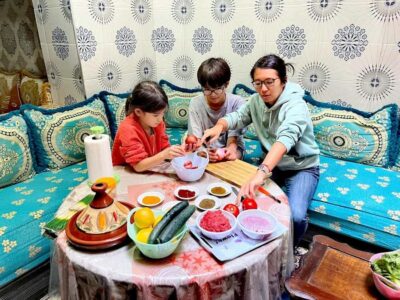
One family described the class as a pleasant activity for a mother and daughter, and another parent found it suitable for children. That does not mean every child will enjoy dough work, but the hands-on structure gives younger participants something concrete to do. You should consider the child’s patience and interest in cooking before booking.
More Cooking Classes:
- Moroccan Cooking Class & Marrakech Market Visit with Chef Khmisa
★ 5.0 · 1,504 reviews - Half-Day Cooking Class with Local Chef Laila in Marrakech
★ 5.0 · 952 reviews - Marrakech: Moroccan Cooking Class with a Local Family
★ 4.9 · 668 reviews - Marrakech: Moroccan Cuisine Cooking Class in Local Home
★ 4.8 · 508 reviews
Why the two-and-a-half-hour schedule works
At approximately 2 hours and 30 minutes, this is longer than a quick food demonstration but shorter than a full-day cooking program. You have time to learn several recipes, prepare tea, eat, and chat without giving up an entire day in Marrakech.
The morning option can work well if you want to cook before sightseeing. Fresh msemen with honey fits naturally into a late breakfast, and you still have the afternoon free. The afternoon option can break up a busy day of monuments, souks, and museums, then provide a filling snack or early meal.
Keep your schedule flexible around the class. Dough preparation, cooking, and conversation do not always run like a museum visit with a fixed exit time. The published duration is approximate, so avoid booking a tight appointment immediately afterward.
The experience is booked, on average, 22 days ahead. That is a useful sign that you should not leave it until the final evening if your dates are fixed. Confirmation is sent within 48 hours, subject to availability. The activity also requires a minimum number of participants, so a cancellation for low numbers is possible. If that happens, you are offered another date or experience, or a full refund.
A close look at the $37.17 price
At $37.17 per person, the class is not the cheapest way to eat msemen in Marrakech. You can buy Moroccan breads and tea for much less at a bakery or café. The price makes more sense if you want the recipe, the instruction, the equipment, and the time in a local home.
You are paying for an activity as well as food. The chef’s guidance is the part you cannot get by ordering a plate. If you plan to cook Moroccan food at home, the lesson may offer good value because you learn techniques that can be reused.
The price includes snacks, tea or coffee, soft drinks, and all equipment. A French and English-speaking guide and chef are also included. Hotel transportation and gratuities are not included, so build your own route to the meeting point and decide whether you want to tip at the end.
For a family or couple comparing several Marrakech activities, the cost may feel high beside a simple market visit. It becomes easier to justify if you value personal contact, want a rainy-day plan, or prefer an experience that produces both a meal and a skill.
Group size, comfort, and the one serious caution
The highlights describe a maximum of seven people, while the additional information gives a maximum of 10. That is a small group either way, but the difference is worth noting. A group of seven should feel more personal during dough work, while 10 people could make individual attention a little less constant.
The strongest praise centers on the welcome and the teaching. Kawtar is described as kind, and Jamila is praised for showing how to make three breads and mint tea while keeping everyone involved. Khmisa receives similar praise for her generosity and ability to pass on her skills.
There is one sharply negative account involving a change from a 3 p.m. appointment to 5:30 p.m., confusion about the meeting point, and an unpleasant welcome. The provider disputes that account and says the participant completed the experience before requesting a refund. Since the details conflict, I would take a simple precaution: confirm the time and meeting location directly before the class, especially for a last-minute booking.
The free cancellation policy allows a full refund if you cancel at least 24 hours before the start time. Changes or cancellations inside that 24-hour window are not accepted for a refund. The cut-off is based on Marrakech local time.
Who will get the most from this class?
I would recommend this experience to you if you want a quiet, personal activity away from the usual sightseeing route. It suits people who enjoy learning by doing, home cooks who want a Moroccan recipe to take back, and families with children who are happy to spend time handling dough.
It also works well for food-focused visitors who want context. You learn that msemen is not just a menu item. It is part of breakfast, snack time, hospitality, and home cooking. That understanding is more useful than simply photographing a plate.
The class may not suit you if you want a fast, polished demonstration with no participation. It may also disappoint if you expect a formal restaurant meal or hotel transfer. This is a home-based cooking session, and the value depends on your interest in the process.
If you have limited time in Marrakech, the 2.5-hour length is manageable. Just allow extra time for reaching the mosque meeting point and do not assume pickup is included.
Should you book Make Variety of Moroccan Crepes with a Local?
Yes, if you want to work with Moroccan dough, meet a local chef, and eat a meal you helped create. The 4.8 rating and 96 percent recommendation fit the experience’s strongest qualities: friendly instruction, several recipes, hands-on cooking, and a relaxed meal with mint tea.
I would book it for a morning or afternoon when you can keep the rest of your plans loose. Confirm the meeting time, check whether your host is Kawtar, Sabah, Jamila, or Khmisa, and remember that the group-size information varies between seven and 10 people.
Skip it if you only want the cheapest possible msemen. But if you want to understand how Moroccan crepes are made and leave with techniques you can use at home, the $37.17 fee is a fair price for an intimate cooking lesson.
FAQ
Where does the Moroccan crepe class begin?
The class begins at Mosquée Derb Alhajra, J2M3+53J, Der Hajra, Marrakech 40000, Morocco. The activity ends back at the same meeting point.
How long does the cooking experience last?
The class lasts approximately 2 hours and 30 minutes.
Are morning and afternoon sessions available?
Yes. You can choose between a morning or afternoon cooking class.
What is included in the price?
The price includes snacks, tea or coffee, soft drinks, all cooking equipment, and a French and English-speaking local guide and chef.
Is hotel pickup included?
No. Hotel pickup and drop-off are not included, so you need to make your own way to the meeting point.
What is the cancellation policy?
You can cancel at least 24 hours before the start time for a full refund. Cancellations or changes made less than 24 hours before the experience are not accepted for a refund.
Just added around Marrakech
- One Way – Marrakech Airport Private Taxi Transfers★ 4.5 · 17 reviews
- Majorelle Garden, YSL & Berber Museum: Exciting Round-Trip Tour★ 4.5 · 17 reviews
- Ourika valley day trip★ 5.0 · 17 reviews
- Marrakech: Agafay Desert Buggy Tour with Transfer★ 4.4 · 17 reviews
- From Marrakech: small group Day Trip To Essaouira Mogador★ 4.9 · 17 reviews
- Essaouira Day Trip from Marrakech★ 5.0 · 17 reviews
- From Marrakech: Ouzoud Waterfalls Full-Day Guided Tour★ 4.2 · 17 reviews
- Best Marrakech to Merzouga 3 D 2N Sahara Desert Tour Adventure★ 5.0 · 17 reviews
Cooking Classes, compared.
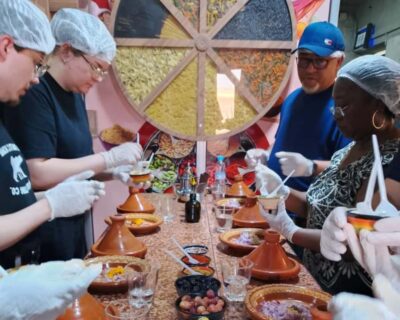
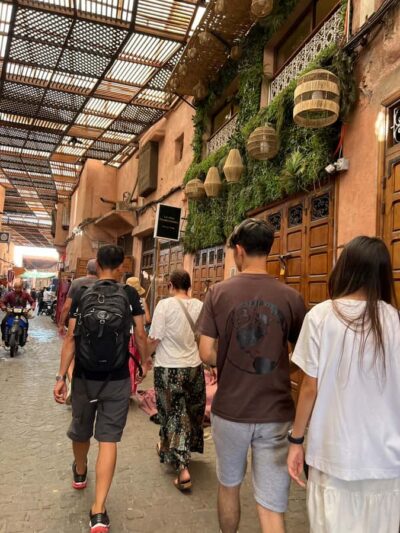
Traditional Moroccan Cooking Class & Market Visit
Read our review →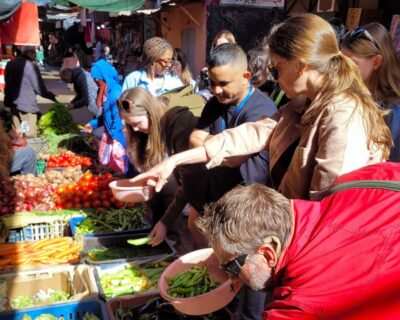
Moroccan Dishes Cooking Class with a Local Chef
Read our review →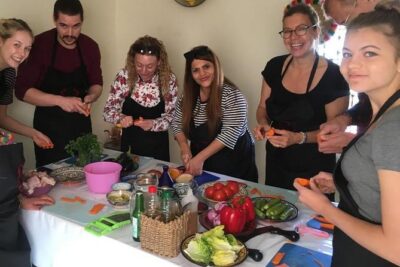
Moroccan Cooking Class & Marrakech Market Visit with Chef Khmisa
Read our review →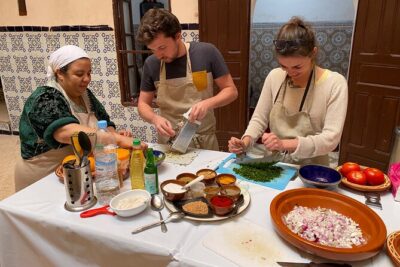
Half-Day Cooking Class with Local Chef Laila in Marrakech
Read our review →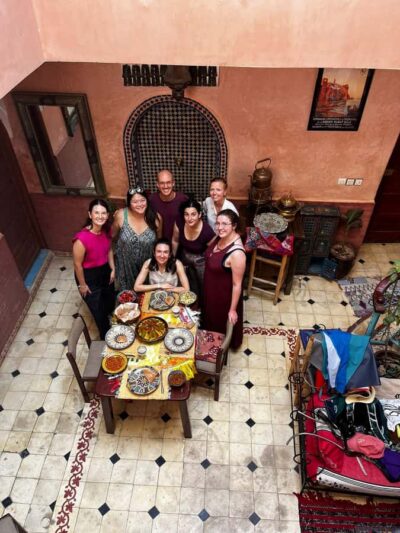
Browse the lists this tour appears in