
Reviewed · COOKING CLASSES
Cooking Classes Farm to Table Marrakech
Food tells the story of Marrakech. This half-day experience begins inside the old medina, where you walk through the alleys to a local market and help choose vegetables, meat, fruit, herbs, and spices. You then head to a peaceful farm setting for tea, sweets, a garden walk, and hands-on Moroccan cooking. I like the market visit because it gives the meal a real local context, and I like that you cook your own food rather than simply watch a chef work.
The class costs $75.60 per person and lasts about five hours. That is a fair price if you value instruction, ingredients, a substantial meal, and a cultural outing in one package. The main consideration is the pace: the market walk, transfer to the farm, preparation, and meal can fill much of the day, and the activity depends on good weather.
In This Review
- Key points at a glance
- From Koutoubia to the market
- Choosing spices, meat, and vegetables
- A peaceful farm setting outside the medina
- Getting hands-on with tajine
- More than one dish for lunch
- What the $75.60 price buys you
- The people make the class work
- Who should book this cooking class?
- Practical details before you reserve
- Should you book Farm to Table Marrakech?
- FAQ
- Where does the cooking class start?
- Where does the experience end?
- How long does the cooking class last?
- How many people can join the class?
- Is pickup available?
- What food do you cook?
- Do participants visit a market?
- Is the class suitable for children?
- What is the cancellation policy?
Key points at a glance
- Shop in a local Marrakech market: Help select fresh vegetables, meat, fruit, and spices before cooking.
- Cook in an outdoor farm kitchen: Prepare Moroccan food by hand in a quiet setting away from the medina’s noise.
- Small class size: The group is limited to 12 people, making it easier to ask questions and get help.
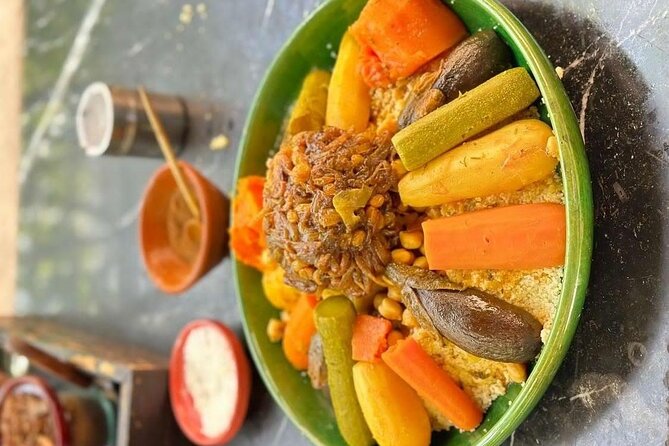
- More than one tajine: Depending on the class, you may prepare several tajines, couscous, Moroccan salads, bread, or meatballs.
- Chef Abdel and his team: Abdel is praised for his clear instruction, humor, and strong command of English.
- A useful five-hour plan: You spend half a day cooking, leaving the rest of your Marrakech schedule open.
From Koutoubia to the market
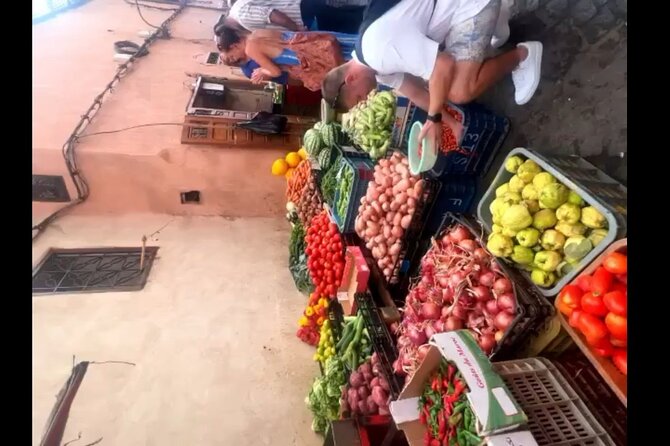
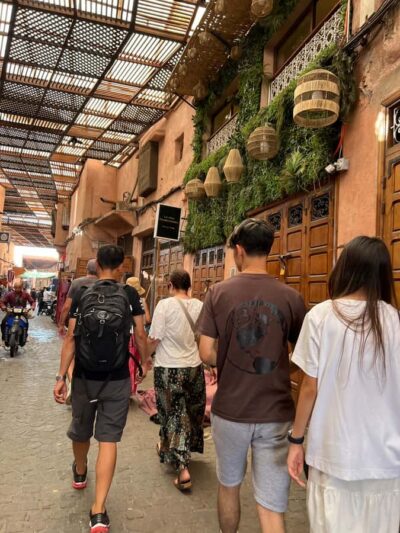
The meeting point is at Koutoubia in Marrakech, a practical reference point near the old medina. From there, the experience moves into the narrow alleys toward a local market. Pickup is offered, but the stated meeting point is Koutoubia, so confirm the exact arrangement when booking.
This opening walk matters. You are not simply handed a basket of preselected ingredients at a cooking school. You see the food stalls and take part in choosing the produce, proteins, herbs, and spices that will become lunch. You can also take photos and videos during the market visit, provided you do so respectfully.
The market portion gives you a better feel for how Moroccan cooking begins. Fresh ingredients are not an afterthought here. The class connects the sights and smells of the market with the cooking techniques you use later, which makes the meal easier to understand and remember.
The alleys can be busy and uneven, and market shopping is not a silent, polished demonstration. You should expect a working market rather than a staged food display. That is part of the appeal, though people who prefer to get straight to the kitchen may find this section longer than expected.
More Cooking Classes in Marrakech
- Marrakech: Moroccan Cooking Class with Pickup
★ 4.6 · 1,862 reviews - Marrakech: Traditional Moroccan Cooking Class & Market Visit
★ 4.8 · 1,861 reviews - Marrakesh: Moroccan Dishes Cooking Class with a Local Chef
★ 5.0 · 1,615 reviews
Choosing spices, meat, and vegetables
The shopping is one of the most useful parts of the morning because it introduces the building blocks of Moroccan food. The class may include vegetables, meat or poultry, fruit, herbs, and spices. One especially useful detail is the chance to work with ingredients such as preserved lemons and ras el hanout, a Moroccan spice blend with a complex mix of aromas.
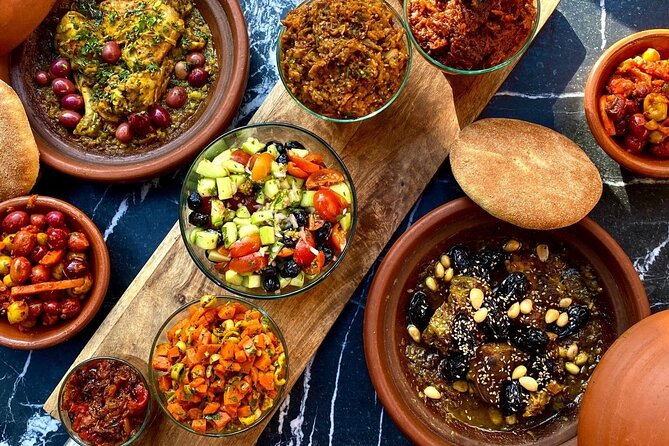
The exact menu is not fixed in every description, and the class appears to offer choices. You may select a sweet or savory tajine, with options that can include chicken, beef, lamb, or vegetables. Some sessions have also included couscous, fresh bread, several salads, and meatballs.
That flexibility is good news for mixed groups. If one person wants chicken and another prefers vegetables, the format may allow each person to prepare a preferred dish rather than forcing everyone into one recipe. Still, you should not assume every menu item appears at every session. Ask ahead if a particular dish, meat, or dietary need matters to you.
The market also makes the class feel less like a restaurant meal. You are learning how ingredients are selected before they are washed, chopped, seasoned, and cooked. For anyone who enjoys food shopping as much as eating, this is a strong part of the experience.
A peaceful farm setting outside the medina
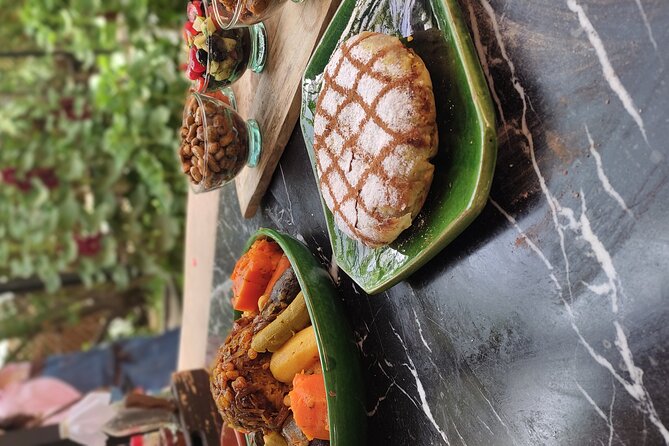
After the market, you go to the farm where the cooking takes place. The change in mood is important. Marrakech’s medina can be noisy and crowded, while the farm is described as quiet, scenic, and surrounded by trees and vegetation.
The visit begins with Moroccan tea and sweets, followed by a walk around the farm. This gives you time to settle in before the cooking starts. It also adds a social element to the class, since the meal is not treated as a rushed lesson with everyone immediately sent to a chopping board.
The setting is a major reason to choose this experience over a cooking class in a standard indoor kitchen. You cook outdoors and later eat in the garden. The surrounding greenery, charcoal cooking, and open-air arrangement help connect the food with a slower rural rhythm.
There is a practical tradeoff. The activity requires good weather, so a poor-weather cancellation is possible. If the operator cancels for that reason, you are offered another date or a full refund. The farm setting is a real strength on a pleasant day, but it is also the part most affected by heat, rain, or other weather conditions.
Getting hands-on with tajine
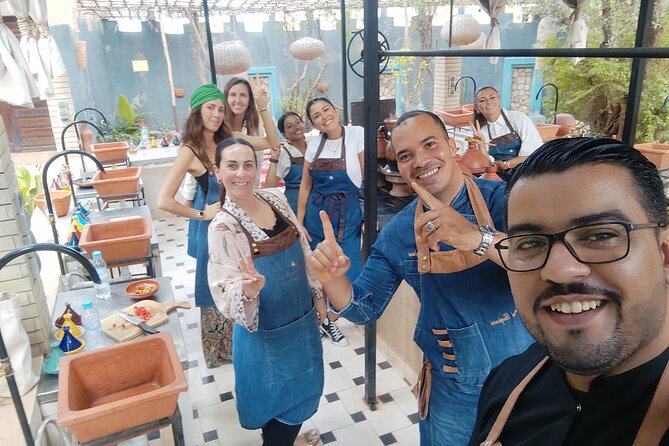
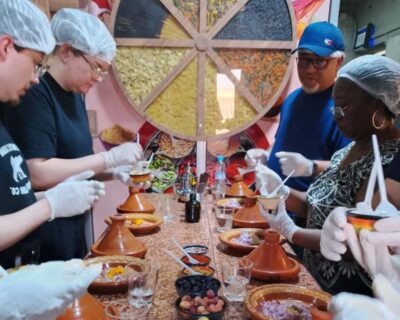
The main lesson is the Moroccan tajine, prepared at your own station and with your own hands. You wear a provided apron, which is a small touch but useful when you are chopping, mixing, and working with spices.
A tajine is both a dish and the conical cooking vessel traditionally used to prepare it. The shape helps steam circulate back into the food, keeping the contents moist as they cook. In this class, the point is not just to eat a tajine. You learn the preparation process and then sit down to eat the result.
Chef Abdel is repeatedly praised for being patient, funny, organized, and easy to understand. That matters in a hands-on class. Good instruction is not just a list of ingredients. You want someone who can explain methods, answer questions, and keep a group moving without turning the session into a lecture.
The class has a maximum of 12 people. That is small enough for a personal feel, though not necessarily private. If you want one-on-one attention throughout, ask about a private class. One booking was arranged as a private session, with the chef preparing several dishes and later sending the recipes by email.
A few more Marrakech trips worth weighing up
- Moroccan Cooking Class & Marrakech Market Visit with Chef Khmisa
★ 5.0 · 1,504 reviews - Half-Day Cooking Class with Local Chef Laila in Marrakech
★ 5.0 · 952 reviews - Marrakech: Pottery Workshop with Moroccan Tea
★ 4.8 · 756 reviews - Marrakech: Moroccan Cooking Class with a Local Family
★ 4.9 · 668 reviews
More than one dish for lunch
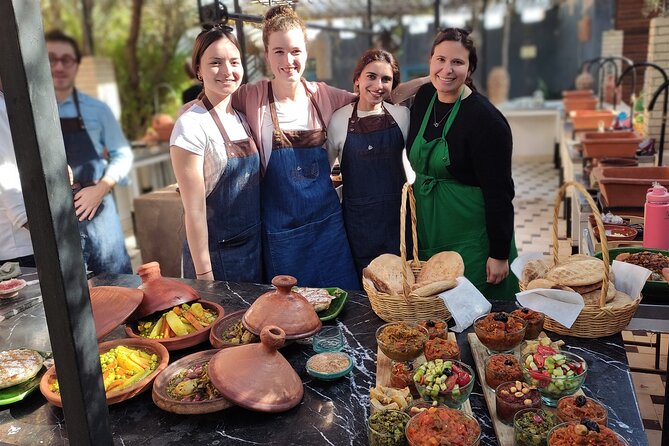
Although the experience is promoted around tajine, the meal can be broader than one pot. Sessions have included multiple tajines, couscous, fresh bread, meatballs, and as many as six or nine Moroccan salads. The salads are not merely decoration. Preparing several small dishes shows how Moroccan meals balance color, texture, acidity, herbs, and spice.
This variety also helps explain why the five-hour duration is reasonable. You are shopping, touring the farm, preparing food, learning techniques, and eating a generous meal. It is not a quick class where you make one recipe and leave.
Some dishes may be prepared individually, while others are made together as a group. That mix is useful. You get responsibility for your own tajine, but you also help create a larger shared meal. The result can feel more like cooking lunch with a Moroccan family than attending a formal demonstration.
Portions are described as generous, which makes the $75.60 price easier to justify. You are paying for more than the food on the plate. The fee also covers the market component, instruction, ingredients, the farm visit, tea and sweets, and the use of the cooking space.
What the $75.60 price buys you
At $75.60 per person, this is not the cheapest way to eat lunch in Marrakech. You can find a restaurant meal for far less. The better comparison is with other cooking classes and food activities, where the value depends on how much participation and teaching you receive.
Here, you get a half-day program rather than a single meal. The market visit adds cultural context, the farm provides a change of setting, and the cooking is hands-on. If you are likely to recreate the recipes at home, the value improves because the class can give you methods you can use again.
The group limit of 12 is another positive. A larger class might offer the same menu, but it would be harder to ask questions or work directly with the chef. This size should provide a reasonable balance between group energy and personal instruction.
Group discounts are available, which may help families or friends traveling together. A family group with children and teenagers aged 8 to 15 enjoyed the class, and the food portions were said to be generous. That makes it a sensible option for a mixed-age group, especially if everyone is willing to take part rather than simply wait for lunch.
The people make the class work
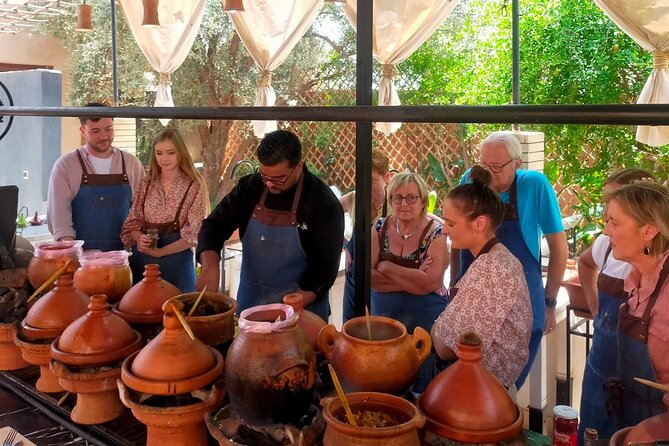
Chef Abdel is the central figure in the experience. His English is described as excellent, and his teaching style combines practical guidance with humor. That combination is valuable because Moroccan cooking involves many ingredients and methods that may be unfamiliar to you.
His assistant, Fathima, is also praised for the work behind the scenes. In a cooking class, the unseen organization matters. Ingredients need to appear at the right time, stations need attention, and the meal needs to reach the table without confusion.
The farm and family setting adds warmth, but it is best to keep your expectations realistic. This is a group activity, and the attention you receive can depend on the number of people and the pace of the session. With up to 12 participants, you should get help, but you should also expect to share the chef’s time.
The strongest part of the human experience is the welcome. The class is not presented as a stiff lesson. Tea, sweets, conversation, and a shared meal make it social as well as educational.
Who should book this cooking class?
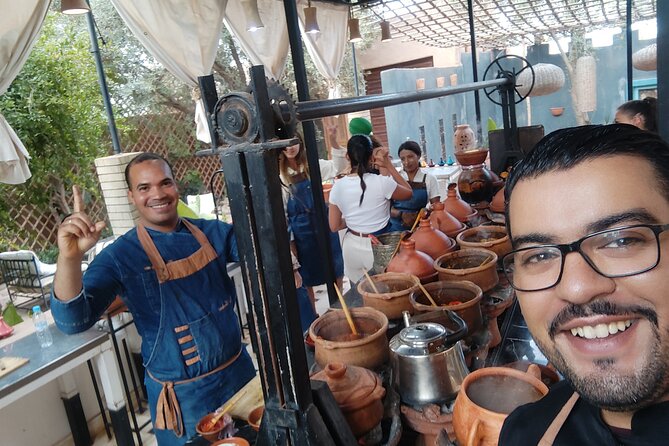
I would recommend it most strongly to people who want a break from Marrakech sightseeing and enjoy learning by doing. It suits couples, families, food lovers, and small groups of friends. You do not need to be an experienced cook. The point is to follow the steps, ask questions, and take part.
It is especially useful for anyone who has already eaten tajine in Morocco and wants to understand how it is made. It also works well for visitors who want a cultural activity with more substance than a quick photo stop.
Families should note that children and teenagers have taken part successfully, including a group with six young people aged 8 to 15. Still, the activity involves a market walk and food preparation, so younger children may need close supervision.
This is less suitable if you want a tightly timed activity or dislike communal cooking. The session takes about five hours, and the final menu can vary. It is also not the right pick if poor weather would seriously disrupt your plans, since the farm cooking depends on suitable conditions.
Practical details before you reserve
The experience is offered with mobile tickets and confirmation at booking. It begins at Koutoubia and ends back at the meeting point. The activity is near public transportation, and pickup is offered, but you should confirm whether your booking includes pickup or requires you to meet at Koutoubia.
The class is usually booked about 37 days ahead. That is a useful sign that planning early is sensible, especially if you have a fixed Marrakech itinerary or want a particular date. The maximum group size is 12, and the class may require a minimum number of participants to operate.
Free cancellation is available if you cancel at least 24 hours before the start time. Changes or cancellations inside that window are not accepted for a refund. The cutoff follows Marrakech local time.
Wear clothing you do not mind cooking in, even though an apron is provided. The class is hands-on, and the food preparation is not just a demonstration from a distance. If you have dietary restrictions, ask before booking, since the available menu and ingredient choices are not fully specified.
Should you book Farm to Table Marrakech?
Book it if you want to connect Marrakech’s market food with the meal on your plate. The combination of shopping, farm scenery, tea, instruction, and hands-on cooking gives the experience more depth than a standard restaurant lunch.
I especially like the small group limit, the choice of possible tajines, and the chance to prepare several side dishes. Chef Abdel’s clear English and friendly approach add real value, while Fathima and the wider team help keep the session welcoming and organized.
Skip it if you want a short activity, a guaranteed fixed menu, or a fully indoor experience. For everyone else, $75.60 is a reasonable price for a half-day cultural outing that leaves you fed, occupied, and better prepared to cook Moroccan food at home.
FAQ
Where does the cooking class start?
The activity starts at Koutoubia, Marrakesh 40000, Morocco.
Where does the experience end?
The activity ends back at the meeting point.
How long does the cooking class last?
The experience lasts approximately five hours.
How many people can join the class?
The activity has a maximum of 12 participants.
Is pickup available?
Pickup is offered. The listed meeting point is Koutoubia, so confirm the pickup details when booking.
What food do you cook?
The main dish is a traditional Moroccan tajine. Depending on the session, you may also prepare couscous, Moroccan salads, fresh bread, meatballs, or other tajine varieties.
Do participants visit a market?
Yes. You walk through the old medina to a local market and help purchase vegetables, proteins, fruit, herbs, and spices.
Is the class suitable for children?
A family group with children and teenagers aged 8 to 15 took part successfully. The maximum group size is 12.
What is the cancellation policy?
You can cancel at least 24 hours before the start time for a full refund. Cancellations or changes made less than 24 hours before the start time are not accepted, and poor-weather or minimum-participant cancellations offer either a different date or a full refund.
More Farms
- Authentic Moroccan Cooking Class in a Farm in Marrakech
★ 5.0 · 64 reviews - Moroccan Cooking Class: Farm-to-Table Tagine
★ 5.0 · 50 reviews
More Cooking Classes
- Marrakech: Moroccan Cuisine Cooking Class in Local Home
★ 4.8 · 508 reviews - Marrakech: Moroccan Cooking Workshop at La Maison Arabe
★ 5.0 · 446 reviews - Marrakesh cooking class with chef Hassan – Local dishes
★ 5.0 · 425 reviews - Marrakech: Tajine Cooking Class in a Traditional Riad
★ 4.8 · 424 reviews
Just added around Marrakech
- Marrakech: Medina Souks, Hidden Markets and Shopping Tour★ 4.8 · 33 reviews
- Guided walking tour in Marrakech★ 4.5 · 33 reviews
- Sunset Camel Ride Marrakech with Transfers★ 5.0 · 33 reviews
- Agafay desert sunset camel ride Tour from Marrakech★ 5.0 · 33 reviews
- 2 Days Desert Agafay and Atlas Mountains Trek From Marrakech★ 3.8 · 33 reviews
- Atlas mountains, Ourika valley, berber villages trip & Guide★ 5.0 · 33 reviews
- Magical Dinner show and Quad bike In Agafay Desert Marrakech★ 4.5 · 33 reviews
- Camel Ride at the Palm Groves in Marrakech★ 5.0 · 33 reviews
Cooking Classes, compared.
Traditional Moroccan Cooking Class & Market Visit
Read our review →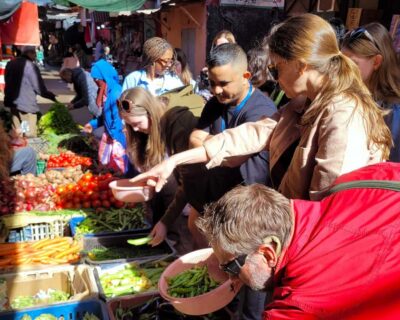
Moroccan Dishes Cooking Class with a Local Chef
Read our review →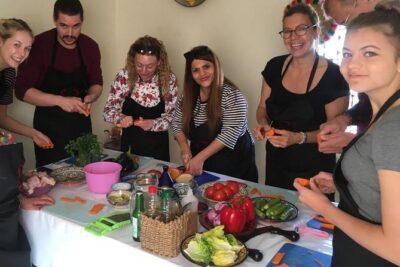
Moroccan Cooking Class & Marrakech Market Visit with Chef Khmisa
Read our review →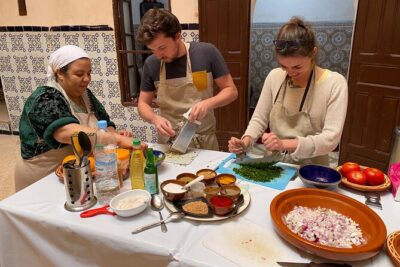
Half-Day Cooking Class with Local Chef Laila in Marrakech
Read our review →
Browse the lists this tour appears in