
Reviewed · FOOD & DRINK
Cook Moroccan Food & Try on Traditional Clothes like a local
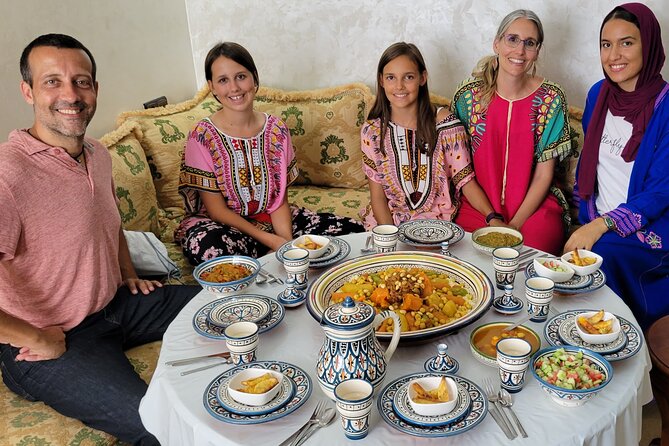
Come hungry, leave with recipes. This four-hour visit to Wissal’s Casablanca home combines hands-on Moroccan cooking with a warm look at family life. I like the mother-and-daughter format, which brings family recipes and stories into the kitchen, and I like that you prepare several dishes rather than stopping at one tagine. The chance to wear caftans and takchitas adds a playful cultural touch.
The main consideration is that this takes place in a private home, not a purpose-built cooking school. That is the point for many people, but you should expect a personal, home-style setting with the usual limits of someone else’s kitchen. The meeting point can also require careful planning, although Wissal has helped arrange taxis for some people.
In This Review
- Key points at a glance
- Why this Casablanca cooking class feels personal
- What happens when you arrive
- Cooking several Moroccan dishes, not just one
- The meal is part of the lesson
- Wearing caftans and takchitas
- Meeting the family and learning about Casablanca
- Price, timing, and practical value
- Who should book it?
- Should you book this Casablanca experience?
- FAQ
- Where does the experience take place?
- How long does the cooking experience last?
- How much does it cost?
- Is the class private?
- Can I choose lunch or dinner?
- What Moroccan foods might I prepare?
- Are vegetarian and vegan options available?
- Can I try traditional Moroccan clothing?
- Are food and drinks included?
- Can Wissal help with transportation?
- Is a mobile ticket available?
- Are service animals allowed?
- Can I cancel for a full refund?
Key points at a glance
- Four hours of cooking and conversation: Plan on a full meal, drinks, sweets, cultural discussion, and time for traditional clothing.
- Family recipes from Wissal’s grandmother: You may prepare tagine, couscous, pastilla, salads, and other Moroccan dishes, depending on the menu selected.
- Private for your group: You do not share the class with a large public group.
- Lunch or dinner choice: The schedule can fit different Casablanca sightseeing plans.
- Caftans and takchitas included: You can try traditional clothing and take memorable photos.
- Vegetarian and vegan options available: Tell Wissal about dietary needs when arranging the experience.
Why this Casablanca cooking class feels personal
Many food activities show you a market, point out spices, and serve a finished plate. This one takes a different route. You enter a Moroccan home and spend several hours cooking, eating, talking, and learning about family traditions.
Wissal leads the class with her mother, whose recipes were passed down from her own mother. That family connection matters. You are not simply following a generic recipe translated for tourists. You get an explanation of how Moroccan dishes are prepared at home, why certain spices are used, and how cooking knowledge passes from one generation to the next.
The setting also allows for conversation beyond food. Several people have used the time to ask about Moroccan customs, Muslim culture, daily life, and Casablanca. Wissal speaks good English, according to the information provided, which makes the cultural side of the visit accessible if you do not speak Arabic or French.
I would choose this early in a Casablanca stay. It gives you useful context for dishes you will see throughout Morocco, from tagine and couscous to mint tea and local salads. It also gives you a friendly point of contact at the start of a trip.
More Food Tours:
- Casablanca Food Tour – Moroccan Street Food Tour
★ 5.0 · 86 reviews - Casablanca Food Tour
★ 5.0 · 60 reviews - From Marrakech: Merzouga 3-Day Desert Safari with Food
★ 4.7 · 12,232 reviews
What happens when you arrive
The published meeting point is at the angle of Boulevard Tah and Boulevard Mohamed 6 in Casablanca. The wording of the address is not perfectly clear, so I would confirm the exact pickup details with Wissal before setting out.
The activity ends back at the meeting point. Some people have had Wissal arrange a taxi from a hotel or cruise terminal, with the fare clarified in advance. That is useful, but you should treat it as a transportation arrangement rather than assume a private transfer is part of the $61.20 price.
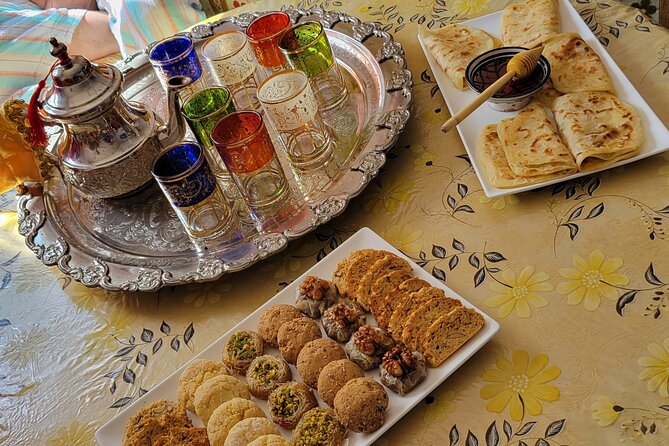
Once you arrive, the welcome begins with Moroccan drinks and sweets. Expect traditional mint tea with homemade cookies, and possibly Moroccan or Arabic coffee depending on the arrangements. One activity description also mentions virgin mojitos, local salads, and additional cookies during the meal.
This opening is more than a snack stop. Moroccan hospitality often begins with tea, and sitting down first gives you time to meet Wissal and her family before you start chopping vegetables. If you have food allergies or strong dislikes, this is also a good time to make sure the menu matches your needs.
Cooking several Moroccan dishes, not just one
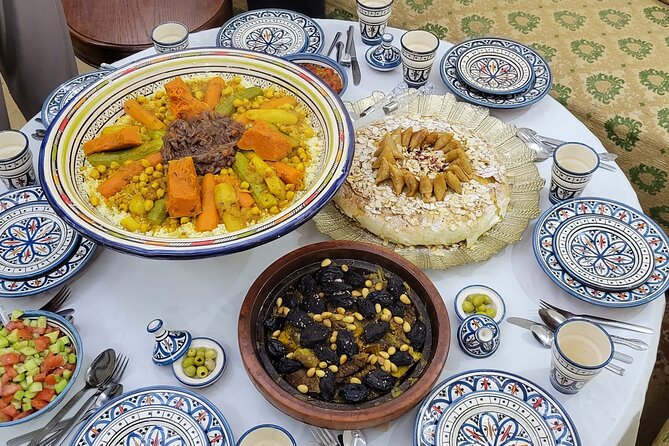
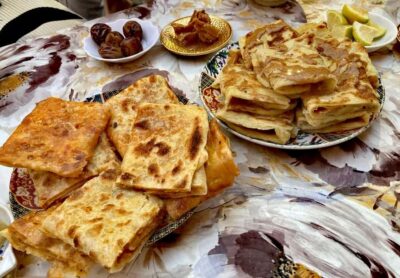
The cooking portion is the heart of the visit. You choose from classic Moroccan dishes, then prepare the food with Wissal’s guidance. The exact menu can vary, but the experience may include tagine, couscous, pastilla, chicken, vegetable dishes, hot salad, cucumber and tomato salad, mint tea, and virgin mojitos.
That range is one of the best reasons to book. You are not spending the whole class watching one dish simmer. You get a look at several parts of Moroccan home cooking: spice mixtures, vegetable preparation, salads, slow-cooked food, drinks, and sweets.
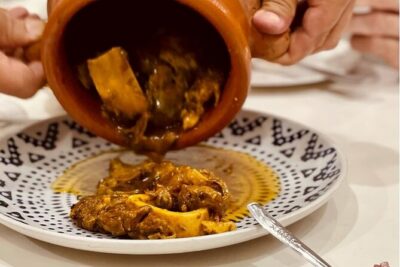
Tagine is likely to be a highlight. You may learn to prepare a chicken tagine, a vegetable tagine, or even two versions in one visit. The method is practical and easy to remember at home, even if you do not own the traditional cone-shaped cooking pot.
Couscous and pastilla offer a different lesson in texture and preparation. The supplied information identifies them as possible classic dishes, but it does not promise that every menu includes both. If one is especially important to you, ask Wissal before the class.
The meal may also include Moroccan salads, including cucumber and tomato salad or a hot salad. These dishes help balance the heavier main courses, and they show how a Moroccan meal often includes several small preparations rather than a single main plate.
The cooking is described as hands-on. You should expect to take part in preparation while Wissal explains the steps. Still, this is a private home, so the amount of work you do may depend on the menu, kitchen space, and the size of your group. People who want a polished demonstration with individual workstations may prefer a formal school. People who want to cook beside a Moroccan family will probably prefer this.
The meal is part of the lesson
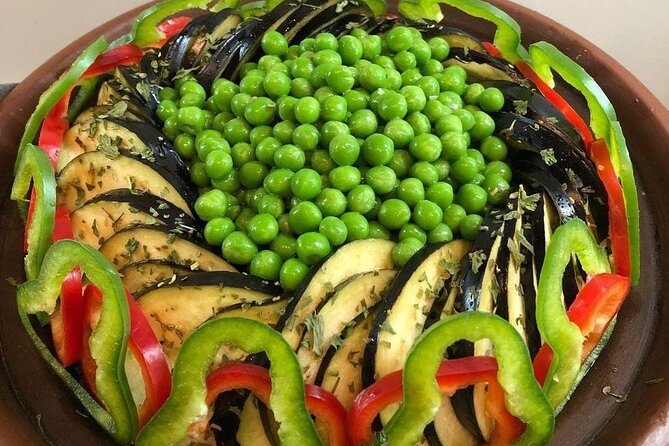
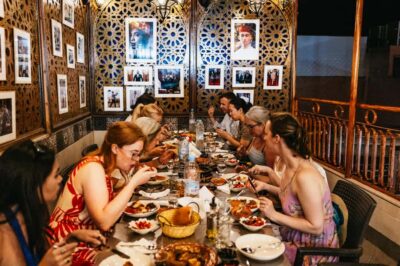
After the preparation, you sit down and eat what you have made. This is where the class becomes a shared meal rather than a series of kitchen tasks.
The food is served with mint tea, salads, sweets, and nonalcoholic drinks. The phrase come with an empty stomach is good advice. Four hours of snacks, cooking, tasting, and a full meal is a lot of food, especially if you also sample homemade cookies at the start.
I like the educational value of eating your finished dishes. You can compare your preparation with the host’s technique and ask questions while the flavors are fresh. You also leave with a better sense of how Moroccan food works as a complete meal, rather than thinking of tagine as an isolated restaurant dish.
The reviews repeatedly praise the quality of the tagine and the overall meal. That is encouraging, but taste is personal, and the menu may differ from one booking to another. It is best to view the meal as both dinner and a practical lesson.
A few more Casablanca trips worth weighing up
- Marrakech: Street Food Tour with a Local Guide
★ 4.9 · 3,119 reviews - Marrakech: Street Food Tour by Night
★ 4.8 · 2,838 reviews - 3-Day Tour to Merzouga Erg Chebbi with Food & Camel Trek
★ 5.0 · 1,770 reviews - Authentic Moroccan Food Tour in Marrakech with Dinner
★ 5.0 · 1,423 reviews
Wearing caftans and takchitas
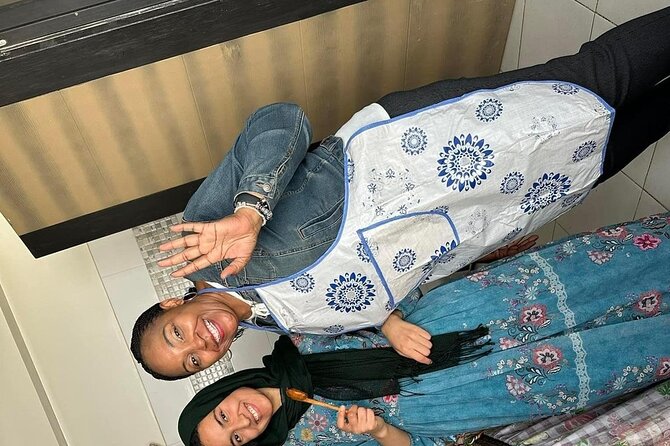
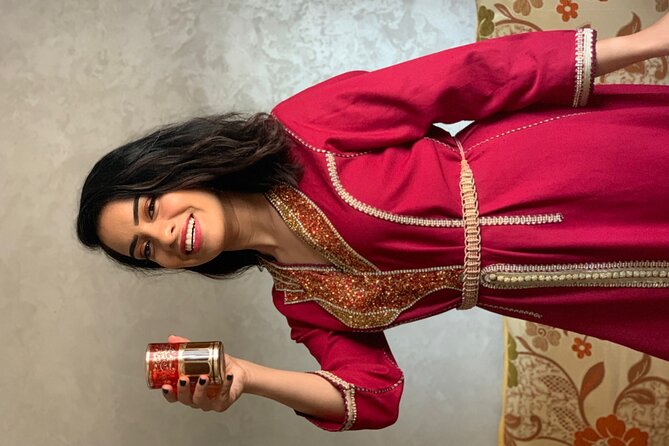
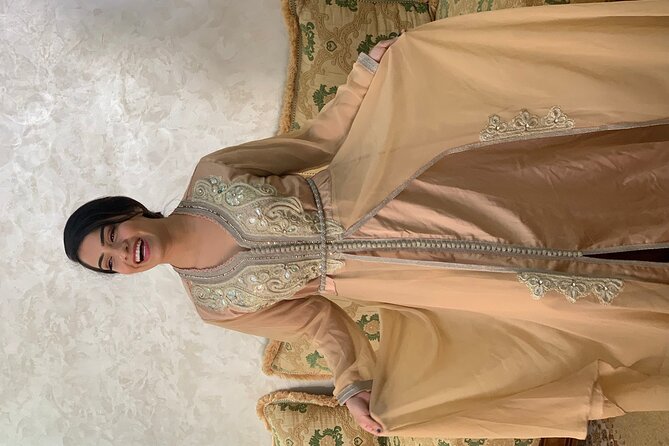
The clothing portion adds something you will not get from an ordinary cooking class. Wissal provides traditional Moroccan clothing for you to try, including caftans and takchitas.
This is designed for photos, but it also comes with cultural explanation. You can ask when these garments are worn and how they fit into Moroccan celebrations and social life. The activity description says you can try or observe traditional clothing, so the precise format may depend on the visit and the clothing available.
For many people, this will be a memorable part of the afternoon or evening. It gives you a chance to slow down, enjoy the visual side of Moroccan culture, and take photos in a home decorated with traditional Moroccan touches.
A little courtesy matters here. You are entering a family home and trying on personal cultural clothing. Follow Wissal’s instructions, handle the garments carefully, and ask before taking photographs of family members or private parts of the home.
Meeting the family and learning about Casablanca
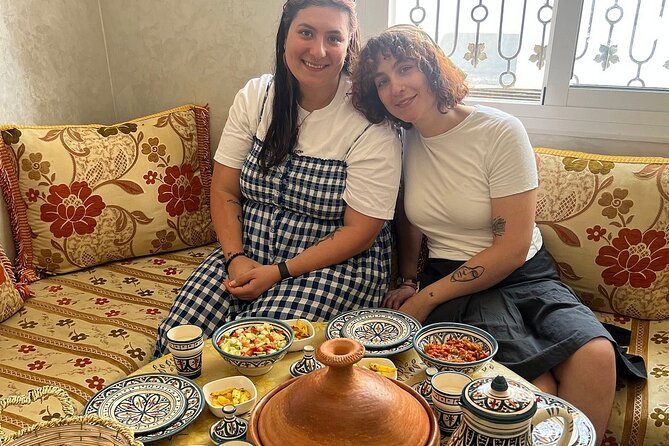
The mother-and-daughter partnership is the feature I find most appealing. Wissal brings conversation, organization, and English-language instruction, while her mother contributes family cooking knowledge. Other family members may also be present, including siblings.
That can make the visit feel more like being welcomed into a household than attending a commercial class. It also gives you room to ask questions that do not fit neatly into a recipe: how meals are planned, how Moroccan families use spices, what clothing means, or what life in Casablanca is like.
One particularly useful detail is that Wissal may contact you before the visit to ask about allergies, preferences, and what you want to learn. You can use that conversation to shape the class. If you want two kinds of tagine, more vegetarian dishes, or help with a particular recipe, ask early.
This flexibility is valuable for solo visitors, couples, families, and small groups. A seven-year-old has reportedly taken part in the experience, though young children may need help with kitchen tasks and patience during the longer meal.
Price, timing, and practical value
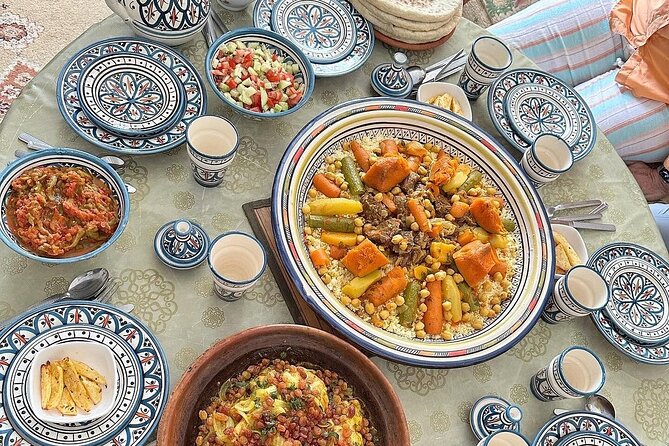
The price is $61.20 per person for about four hours. That is a fair amount of time for a private activity that includes food, drinks, instruction, clothing, and a home visit.
The value improves if you treat it as several activities in one. You are receiving a cooking lesson, a substantial meal, a cultural conversation, a clothing experience, and small local gifts to take home. A restaurant meal alone would not provide the same personal instruction or family contact.
It is also useful for people with limited time in Casablanca. You do not need to spend half a day navigating between a market, a kitchen, and a restaurant. The lunch or dinner option lets you place it around your sightseeing plans.
The biggest practical issue is transportation. The official meeting point is given in central Casablanca, but the class takes place at the hosts’ home. Confirm the address and meeting instructions. If you are staying at a hotel, arriving by cruise ship, or unfamiliar with Casablanca, ask if Wissal can help arrange a taxi and confirm the expected fare before you go.
The experience is offered with a mobile ticket, and confirmation is received at booking. Service animals are allowed, and the location is near public transportation. You should still confirm the exact home address and access details if you have mobility concerns, since the supplied information does not describe the interior layout.
Who should book it?
I would recommend this for anyone who wants contact with local people rather than a standard restaurant meal. It suits food lovers, curious first-time visitors, solo visitors, couples, families, and small private groups.
It is especially good for you if:
- You want to learn several Moroccan recipes.
- You enjoy conversation as much as sightseeing.
- You prefer a home visit to a formal cooking studio.
- You want vegetarian or vegan food arranged in advance.
- You like taking cultural photos with a story behind them.
- You are beginning a Morocco trip and want an introduction to local food.
It may not be the best fit if you want a market tour, a large professional kitchen, a strict timed lesson, or a guaranteed list of every dish. The class is adaptable, which is a strength, but it also means the exact menu and rhythm can change.
The perfect audience is someone who understands that a private home experience depends on mutual respect. Come ready to participate, ask questions, eat a generous amount, and accept that the evening may feel less polished than a commercial food school. That informality is also what gives it its charm.
Should you book this Casablanca experience?
I would book it, especially near the beginning of a Morocco trip. The combination of family recipes, several dishes, Moroccan tea, traditional clothing, and relaxed conversation gives you far more than a basic tagine lesson.
At $61.20, the visit offers good value for four hours of private food and cultural time. Before paying, confirm the meeting location, transportation plan, preferred menu, and any dietary needs. If those details work for you, this is one of the better choices in Casablanca for turning a meal into a personal connection.
FAQ
Where does the experience take place?
The activity takes place in Wissal’s home in Casablanca. The listed meeting point is at the angle of Boulevard Tah and Boulevard Mohamed 6, Casablanca, Morocco.
How long does the cooking experience last?
The experience lasts approximately four hours.
How much does it cost?
The listed price is $61.20 per person.
Is the class private?
Yes. This is a private activity, and only your group participates.
Can I choose lunch or dinner?
Yes. The experience offers lunch or dinner options to suit your schedule.
What Moroccan foods might I prepare?
The menu may include tagine, couscous, pastilla, chicken, vegetable tagine, local salads, hot salad, and cucumber and tomato salad. Ask Wissal about the exact menu you want.
Are vegetarian and vegan options available?
Yes. Vegetarian and vegan visitors are welcome, and suitable options can be requested.
Can I try traditional Moroccan clothing?
Yes. You can try traditional Moroccan clothing such as caftans and takchitas, with the opportunity to take photos.
Are food and drinks included?
Yes. The experience includes food prepared during the class, mint tea, homemade cookies, local salads, and nonalcoholic drinks such as virgin mojitos. The menu can vary.
Can Wissal help with transportation?
Some bookings have included help arranging a taxi to and from the home. Contact Wissal in advance to discuss your pickup needs and confirm the fare.
Is a mobile ticket available?
Yes. The experience provides a mobile ticket, and confirmation is received at the time of booking.
Are service animals allowed?
Yes. Service animals are allowed.
Can I cancel for a full refund?
Yes, if you cancel at least 24 hours before the local start time. Cancellations or changes made less than 24 hours before the start time are not accepted for a refund.
Just added around Casablanca
- Private Day Trip to Rabat Departure from Casablanca★ 5.0 · 33 reviews
- 3 Days Chefchaouen and Fez from Casablanca Private Tour★ 5.0 · 34 reviews
- Casablanca Private Full-Day Highlights Tour★ 5.0 · 34 reviews
- Sunset Camel Ride in the Palm Grove Of Marrakech★ 5.0 · 34 reviews
- Private Full-Day Tour in Casablanca with Pickup★ 5.0 · 34 reviews
- Atlas Trekking Morocco★ 5.0 · 35 reviews
- Marrakeck City tour from Casablanca all the day around trip★ 5.0 · 35 reviews
- Casablanca: City Highlights Tour★ 4.7 · 35 reviews
Food & Drink, compared.


3-Day Tour to Merzouga Erg Chebbi with Food & Camel Trek
Read our review →
Authentic Moroccan Food Tour in Marrakech with Dinner
Read our review →
Browse the lists this tour appears in