
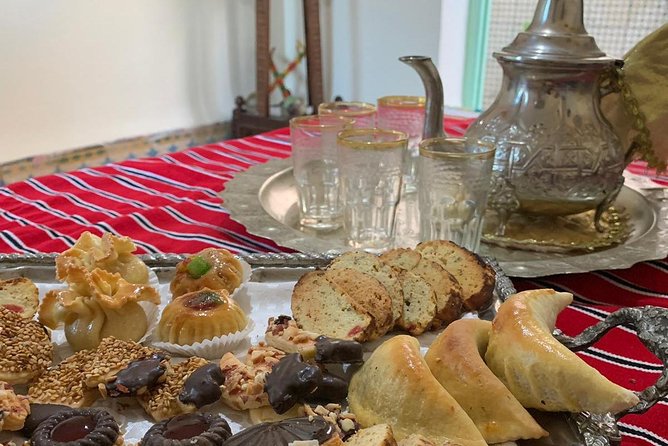
Reviewed · WORKSHOPS
Moroccan Hands on traditional pastries & Tea class in Marrakech
Pastry tells Morocco’s story one bite at a time. This three-hour Marrakech class brings you into a local home in the medina, where you share tea or coffee, learn family-style pastry methods, and bake treats such as corne de gazelle and ghriba. I like the home setting and the chance to learn Moroccan mint tea properly, not simply watch a kitchen demonstration.
The class also uses ordinary household ingredients and tools, so you can repeat the recipes after returning home. The main drawback is that the class may feel too simple if you expect a full cooking school lesson with many recipes: the format focuses on two traditional pastries, and some ingredients are prepared before you begin.
In This Review
- Key points at a glance
- A Marrakech pastry class inside a local home
- Your three-hour schedule, from tea to warm pastries
- Why the tea matters as much as the baking
- The pastries you are likely to make
- What the small group size means
- Is $40.65 a fair price?
- Who will enjoy this class most?
- Practical details before you reserve
- Should you book the Moroccan pastry class?
- FAQ
- Where does the Moroccan pastry class begin?
- Where does the activity end?
- How long does the class last?
- How much does the class cost?
- What pastries can you learn to make?
- Is Moroccan mint tea included?
- Do you receive the recipes?
- Do you get pastries to take home?
- Is hotel pickup included?
- Can you cancel for a full refund?
Key points at a glance
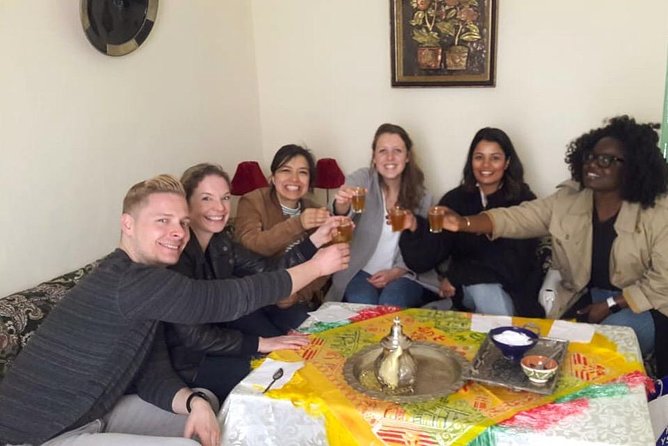
- A private-home setting: You meet a local host and her family in or near the Marrakech medina rather than attending a formal school.
- Two traditional pastries: The class may include corne de gazelle, ghriba, and similar Moroccan sweets, with the exact selection shaped by the session.
- Tea is part of the lesson: You learn how to prepare Moroccan mint tea and drink it with warm pastries from the oven.
- Small group size: The maximum is 10 people, which should allow more personal attention than a large demonstration.
- A practical souvenir: You receive the recipes and finish with a box of pastries to take home.
- Good value at $40.65: The price covers instruction, pastries, tea or coffee, recipes, tasting, and the take-home box.
A Marrakech pastry class inside a local home
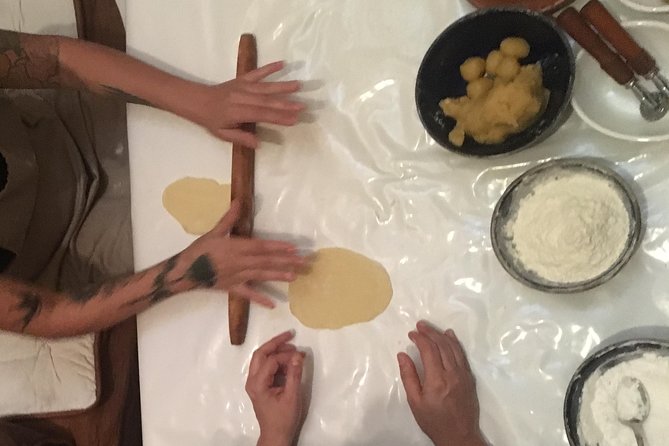
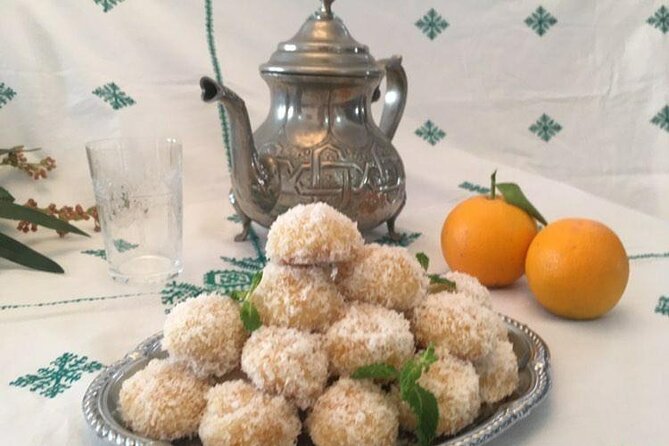
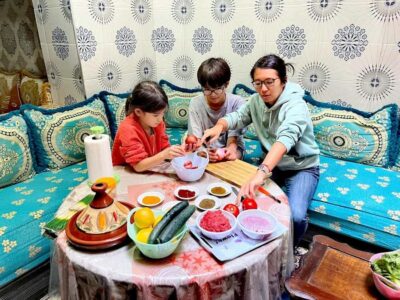
The heart of this activity is the setting. You meet at Rue Bab Doukkala, in Marrakech’s 40000 postal area, and the class takes place in a private home in the medina. That matters because Moroccan pastries are closely tied to hospitality. They are served with tea, offered to visitors, and prepared for family occasions.
Instead of treating pastry as a restaurant product, the host presents it as part of daily life. You sit down for Moroccan tea or coffee, meet the cook and her family, and then move into the practical work of preparing sweets. I like this approach because it connects the food to the ritual around it.
The home setting also means the class should feel more personal than polished. You are not entering an industrial kitchen with rows of professional equipment. The instructor’s promise is simpler: you will use items and ingredients that you can find at home, with no special machines required.
That practical focus is useful for anyone who wants to recreate the food. You do not need a commercial pastry oven or unusual tools waiting in your kitchen. The class is designed to show the small techniques that matter, including how to combine ingredients, shape the dough, and handle the pastry with care.
A few more Marrakech trips worth weighing up
- Marrakech: Moroccan Cooking Class with Pickup
★ 4.6 · 1,862 reviews - Marrakech: Traditional Moroccan Cooking Class & Market Visit
★ 4.8 · 1,861 reviews - Marrakesh: Moroccan Dishes Cooking Class with a Local Chef
★ 5.0 · 1,615 reviews
Your three-hour schedule, from tea to warm pastries
The precise order may change, but the session follows a clear rhythm. You arrive at the meeting point on Rue Bab Doukkala, meet the host, and settle into the home with a drink. Coffee is available, but the natural choice here is Moroccan mint tea, which becomes both refreshment and lesson.
The tea is not just poured beside the food. You learn how to make your own Moroccan mint tea, including the basic preparation that gives it its familiar place in Moroccan hospitality. Once the tea is ready, you can drink it with pastries fresh from the oven.
The pastry work follows. The class teaches a small selection of Moroccan sweets rather than trying to cover an entire cookbook in one afternoon. Corne de gazelle and ghriba are specifically named, along with other traditional pastries.
Corne de gazelle, often recognized by its crescent shape and almond filling, requires more care in shaping. Ghriba is a different style of Moroccan cookie, usually known for its crumbly texture and cracked surface. Making two different pastries gives you a useful contrast in method and texture.
The cook demonstrates the techniques and guides you through the preparation. You should expect a hands-on session, but not necessarily a pastry apprenticeship. One point of criticism is that some quantities may already be measured when you arrive, leaving you to mix and shape rather than prepare every stage from scratch.
That can be a weakness for serious home bakers. If you want to learn exact ingredient ratios, substitutions, dough development, and several advanced fillings, this class may feel light. If you want a friendly introduction that leaves time for conversation and tasting, the simpler structure works well.
Why the tea matters as much as the baking
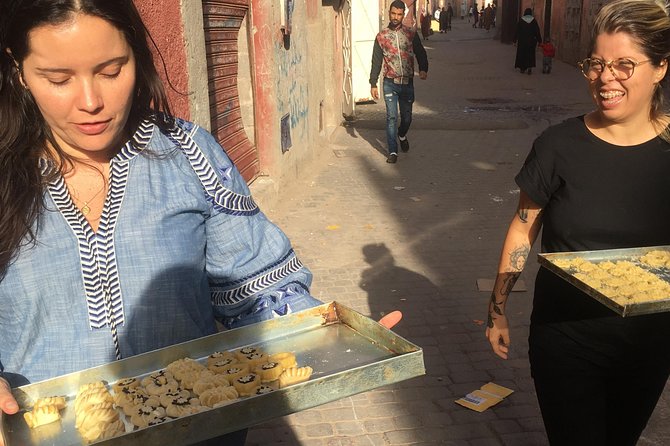
Moroccan mint tea is part of the social rhythm of the class. The pastry is not treated as a stand-alone dessert. It is served with tea or coffee, just as it would be during a visit at home.
I like this pairing because it helps you understand how the sweets are enjoyed. The warm pastry, the sweet tea, and the conversation all belong together. You are not only learning a recipe. You are learning the setting in which that recipe makes sense.
The class also offers a chance to talk about your trip to Morocco. At the end, the host is happy to offer culinary advice and recommendations. The information provided does not promise a formal city tour or a detailed lecture on Moroccan food, so you should see this conversation as an informal bonus rather than a guided sightseeing stop.
For many people, that relaxed exchange will be one of the best parts. You can ask about the pastries you have tasted, discuss what to look for in Moroccan food, or get suggestions connected to your time in Marrakech.
The pastries you are likely to make
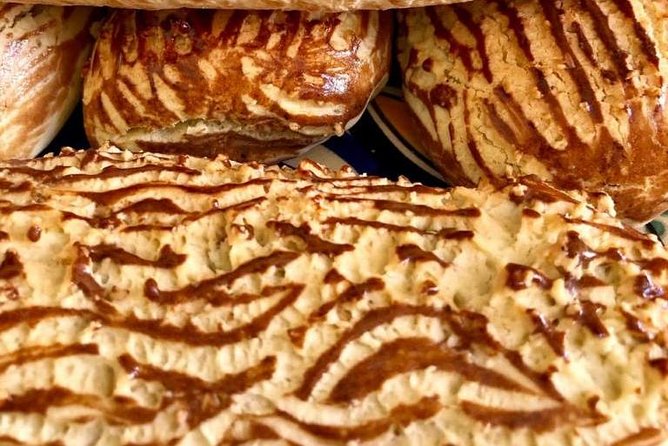
The named examples are corne de gazelle and ghriba, with the possibility of other Moroccan pastries. The exact menu is not presented as a fixed list, so you should not book expecting a guaranteed number of recipes or a particular combination beyond the examples given.
The class focuses on the secrets and small tricks that make Moroccan pastry distinctive. That may include shaping, filling, mixing, and baking, though the available details do not spell out every stage. The value is in seeing how a home cook handles the food, rather than receiving a recipe card with no context.
You also get a recipe to take with you. This is important because pastry instructions can be easy to forget, especially when the session includes tea, conversation, and several steps at once. The recipe gives you something to consult later and makes the class more than a one-time tasting.
At the end, you taste what you have baked. The food is served warm from the oven, along with tea or coffee. You also finish with a box of pastries to take home, so the activity gives you both an immediate snack and a small edible souvenir.
If you are flying soon after the class, pack the box carefully. The information provided confirms that you receive pastries to take home, but it does not state how long they keep or whether special packaging is available.
A completely different sort of day out of Marrakech:
- Marrakech: Agafay Desert Sunset, Camel Ride, and Dinner Show
★ 4.6 · 35,119 reviews - From Marrakech: Ouzoud Waterfalls Guided Hike and Boat Trip
★ 4.7 · 33,630 reviews - Marrakech: Agafay Desert Quad & Camel Rides with Dinner Show
★ 4.8 · 27,382 reviews - Marrakech: Agafay Desert Quad Biking Tour with Dinner-Show
★ 4.8 · 16,569 reviews
What the small group size means
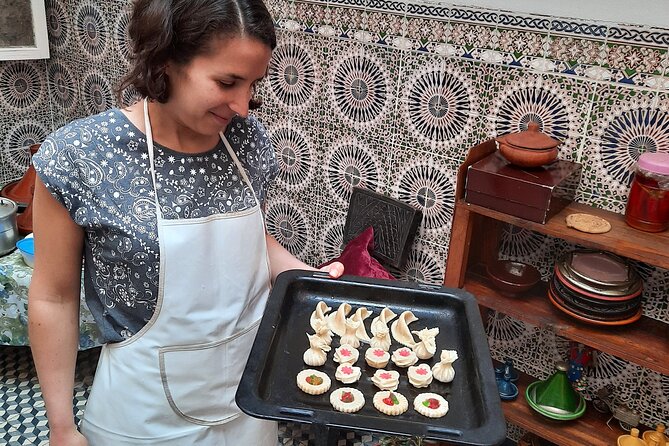
The maximum group size is 10 people. That is not the same as a private lesson, but it is small enough to keep the activity manageable.
A group of this size should give you a reasonable chance to see the demonstration and ask questions. It also suits the social side of the class. You can share the table with other people while still working directly with the cook.
The class has been praised for its friendly, home-style atmosphere and for the host’s clear English. English is specifically noted as being spoken well, which helps if you are learning unfamiliar techniques or need to ask about ingredients.
The experience is also suitable for different schedules because several time slots are offered. That flexibility helps you fit the class around sightseeing, though you should pay close attention to the confirmed start time.
One booking problem has been reported involving a one-hour misunderstanding over the start time. The operator stated that the participant arrived late after confusing the time, while the participant said the operator changed it. The useful lesson is simple: check the local start time, confirm the meeting point, and arrive early enough for Rue Bab Doukkala. If the timing is unclear, contact the operator before the day of the class.
Is $40.65 a fair price?
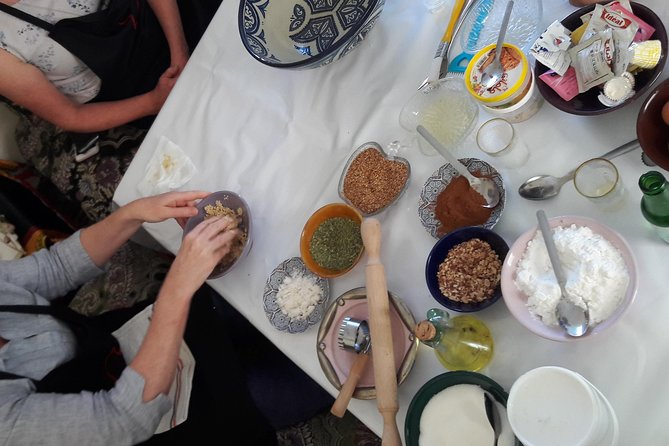
At $40.65 per person, this is a reasonable price if you value participation and a local setting. The fee includes coffee or tea, Moroccan pastries, the cooking lesson, a recipe, tasting, and a box of pastries to take home.
You are also paying for three hours of time with a home cook, not just for the ingredients. The host shares techniques, prepares tea with you, answers questions, and talks about Moroccan food. For someone interested in food culture, that makes the price stronger than the cost of a pastry tasting alone.
The value is less clear if your only goal is to eat Moroccan sweets. Pastries are widely available in Marrakech, and a bakery visit will cost less. This class earns its price through the instruction, the home environment, and the chance to make the food yourself.
It is also good value for couples, families, and small groups who want a break from sightseeing. You get a seated indoor activity, a warm meal-related treat, and a skill that can travel home with you.
Who will enjoy this class most?
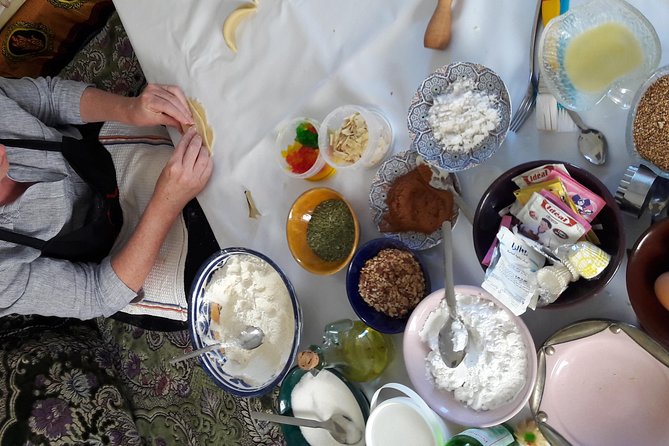
I would recommend it most strongly to people who like food, conversation, and simple practical activities. It suits first-time visitors who want a personal introduction to Moroccan hospitality without signing up for a full-day cooking program.
It is also a good pick for anyone who wants to learn recipes that can be made without industrial equipment. The class is designed around normal household items, so you can try the pastries again after your holiday.
Families may appreciate the accessible format. One critical assessment felt the preparation was simple enough for a young child, but that simplicity can work in your favor if you want an easy, low-pressure activity. The class does not appear to require advanced baking skills.
Experienced pastry makers should set expectations carefully. You may find the lesson too basic, especially if pre-measured ingredients reduce the amount of preparation you do. It is better viewed as an introduction to Moroccan home baking than as an advanced professional course.
Practical details before you reserve
The activity lasts about three hours and ends back at the meeting point. Hotel pickup is not included, so you are responsible for getting to Rue Bab Doukkala.
The meeting point is near public transportation, which is helpful if you are staying beyond easy walking distance. Since the location is in the Marrakech medina area, allow extra time to find the exact meeting place and avoid arriving at the last minute.
Confirmation is sent within 48 hours of booking, subject to availability. The group can include up to 10 people, and a minimum number is required for the activity to operate.
Free cancellation is available when you cancel at least 24 hours before the start time. Changes or cancellations made less than 24 hours before the start are not refunded. Poor weather or failure to reach the minimum group size can lead to a new date, another activity, or a full refund.
The class requires good weather, although much of the activity takes place indoors. If weather affects the session, the provider will offer another date or a full refund.
Should you book the Moroccan pastry class?
Book this class if you want a friendly home visit with hands-on baking, rather than a demanding pastry course. The strongest reasons are the private-home setting, the tea ritual, the warm pastries, the simple equipment, and the box of treats you take away.
You should skip it if you expect to prepare many recipes from start to finish or want advanced instruction. Two pastries and partly prepared ingredients may not be enough for serious bakers.
For most visitors, I see this as a fairly priced, culturally grounded three-hour activity. Confirm the start time, arrive early at Rue Bab Doukkala, and treat the class as a relaxed introduction to Moroccan sweets. If that sounds like your kind of afternoon, the 94 percent recommendation and 4.6 rating suggest you are making a sound choice.
FAQ
Where does the Moroccan pastry class begin?
The class begins at Rue Bab Doukkala, Marrakesh 40000, Morocco.
Where does the activity end?
The activity ends back at the meeting point.
How long does the class last?
The class lasts approximately three hours.
How much does the class cost?
The listed price is $40.65 per person.
What pastries can you learn to make?
The class may include corne de gazelle, ghriba, and other Moroccan pastries. The exact selection is not guaranteed in the provided details.
Is Moroccan mint tea included?
Yes. The experience includes coffee and/or tea, and you learn how to make Moroccan mint tea.
Do you receive the recipes?
Yes. A recipe is included.
Do you get pastries to take home?
Yes. The class finishes with a box of pastries to take home.
Is hotel pickup included?
No. Hotel pickup is not included. You need to make your own way to Rue Bab Doukkala.
Can you cancel for a full refund?
Yes, if you cancel at least 24 hours before the scheduled start time. Cancellations or changes made less than 24 hours before the start are not refunded.
Just added around Marrakech
- One Way – Marrakech Airport Private Taxi Transfers★ 4.5 · 17 reviews
- Majorelle Garden, YSL & Berber Museum: Exciting Round-Trip Tour★ 4.5 · 17 reviews
- Ourika valley day trip★ 5.0 · 17 reviews
- Marrakech: Agafay Desert Buggy Tour with Transfer★ 4.4 · 17 reviews
- From Marrakech: small group Day Trip To Essaouira Mogador★ 4.9 · 17 reviews
- Essaouira Day Trip from Marrakech★ 5.0 · 17 reviews
- Best Marrakech to Merzouga 3 D 2N Sahara Desert Tour Adventure★ 5.0 · 17 reviews
- From Marrakech: Ouzoud Waterfalls Full-Day Guided Tour★ 4.2 · 17 reviews
Workshops, compared.
Traditional Moroccan Cooking Class & Market Visit
Read our review →
Moroccan Dishes Cooking Class with a Local Chef
Read our review →
Moroccan Cooking Class & Marrakech Market Visit with Chef Khmisa
Read our review →
Half-Day Cooking Class with Local Chef Laila in Marrakech
Read our review →
Browse the lists this tour appears in