
Reviewed · ARTISAN AND CRAFT WORKSHOPS
Marrakech: Pottery Workshop
Clay makes Marrakech wonderfully hands-on. This four-hour workshop takes you beyond the souks and into the working world of Moroccan pottery, where you learn how clay is prepared, shaped, fired, and glazed. I especially like the chance to use both the traditional potter’s wheel and molding methods, plus the relaxed tea and Moroccan pastry break with the craftsman.
I also like the personal feel of a private group, with help from an experienced artisan and interpretation in English, French, or Arabic. The main caution is the price: at $93 per person, this is not a bargain class, so you should book it for the hands-on instruction and cultural contact rather than for the amount of pottery you take home.
In This Review
- Key points to know before booking
- Why this pottery class is different from a standard craft activity
- Meeting at Jamaa el Fna Square
- Starting with Moroccan clay and workshop craft
- Trying the traditional potter’s wheel
- Learning the molding technique
- Watching firing and glazing complete the process
- Taking a tea break with Moroccan cakes
- How the private group changes the experience
- Is $93 per person good value?
- Who should book this Marrakech pottery workshop?
- Practical details for a smoother visit
- Should you book it?
- FAQ
- How long does the Marrakech pottery workshop last?
- Where is the meeting point?
- What pottery techniques will I learn?
- Are tea and Moroccan pastries included?
- What languages are available?
- Can I cancel the activity?
Key points to know before booking
- Two Moroccan shaping methods: You learn both turning clay on a traditional wheel and forming pottery with molds.
- A working artisan’s workshop: The class covers the full process, from preparing raw clay soil to firing and glazing finished pieces.
- A patient, friendly teaching style: Instructor Tariq received especially warm praise, while Wiam was noted for clear English interpretation.
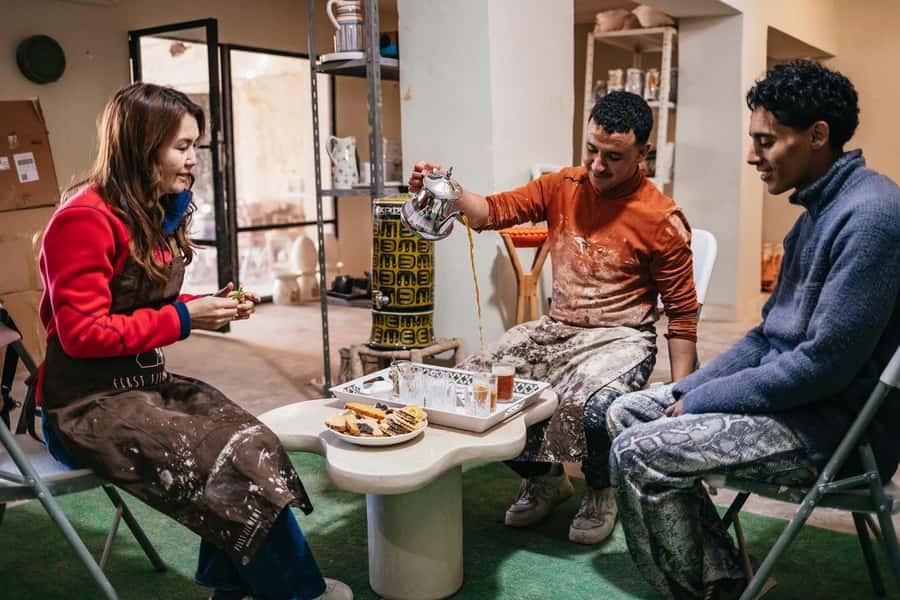
- A proper Moroccan break: Tea, water, and Moroccan cakes are included midway through the four-hour session.
- Private group format: You get a more personal class than you would in a large public workshop.
- Comfortable clothes matter: Clay work can be messy, so wear practical clothing and shoes you do not mind getting dirty.
Why this pottery class is different from a standard craft activity
Marrakech offers plenty of ways to shop for Moroccan ceramics. This workshop lets you see how those objects begin, before they become polished bowls, plates, or decorative pieces in a shop window.
That difference matters. Instead of simply buying a finished item, you spend time with the materials and watch the stages that give pottery its final form. You handle the clay yourself, learn how it responds to pressure, and gain a better sense of the skill behind everyday Moroccan ceramics.
The class lasts four hours, which gives it room to be more than a quick souvenir-making session. You should have time to hear about the materials, try the main techniques, watch the workshop’s organization, and pause for tea with the craftsman.
The activity is also arranged as a private group. That is useful if you want to ask questions, need extra help with the wheel, or prefer not to work in a crowded class. The experience is still practical and informal, but the format should give you more direct contact with the instructor.
More Artisan and Craft Workshops in Marrakech
- Marrakech: Traditional MRC Hammam and Massage with Argan Oil
★ 4.0 · 1,202 reviews - Marrakech: Pottery Workshop with Moroccan Tea
★ 4.8 · 756 reviews - Marrakech: Traditional Moroccan Hammam, Massage & Argan Oil
★ 4.3 · 294 reviews
Meeting at Jamaa el Fna Square
Your meeting point is in front of the post office at Medina Jamaa el Fna Square. This is a clear central landmark, but give yourself enough time to reach it if you are staying inside the medina. The square can be confusing when you are new to Marrakech, so check the meeting instructions carefully and arrive ready to identify the post office.
The class itself takes place at a traditional pottery workshop near Marrakech. The supplied information does not specify the exact transfer arrangements or travel time from the square, so you should confirm those details when checking available start times.
That small gap in information is worth noting. The meeting point is specific, but the experience description focuses mainly on the workshop rather than the ride there. If your schedule is tight, allow room around the four-hour class instead of planning another fixed activity immediately afterward.
The activity offers different starting times depending on availability. This gives you some choice, but the four-hour duration is long enough to shape the rest of your day. A morning class may leave time for the medina later, while an afternoon class could work well after sightseeing in central Marrakech.
Starting with Moroccan clay and workshop craft
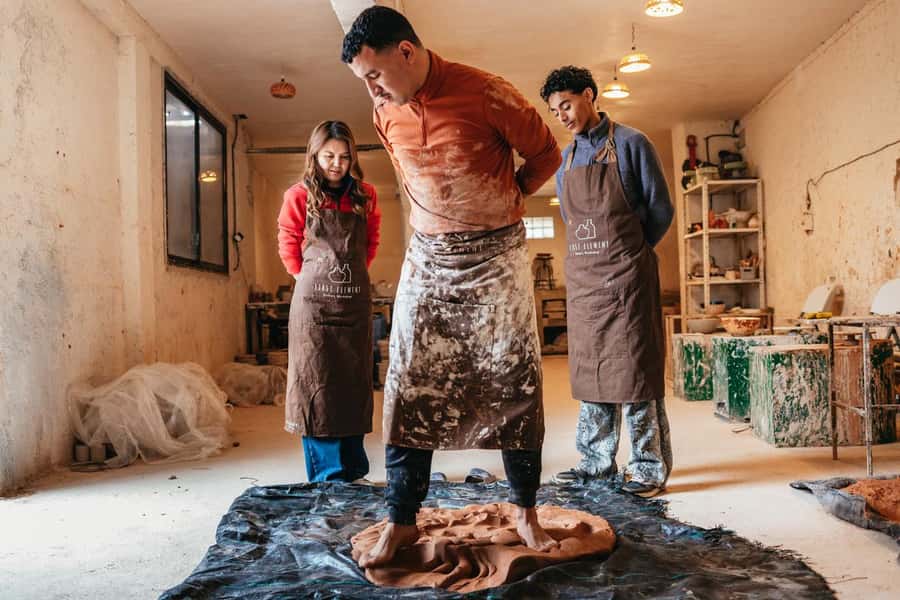
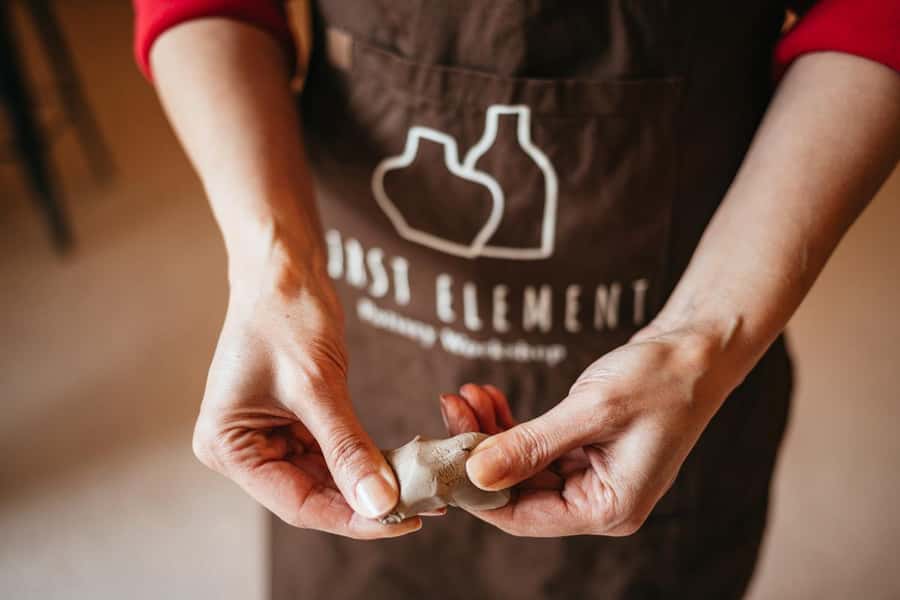
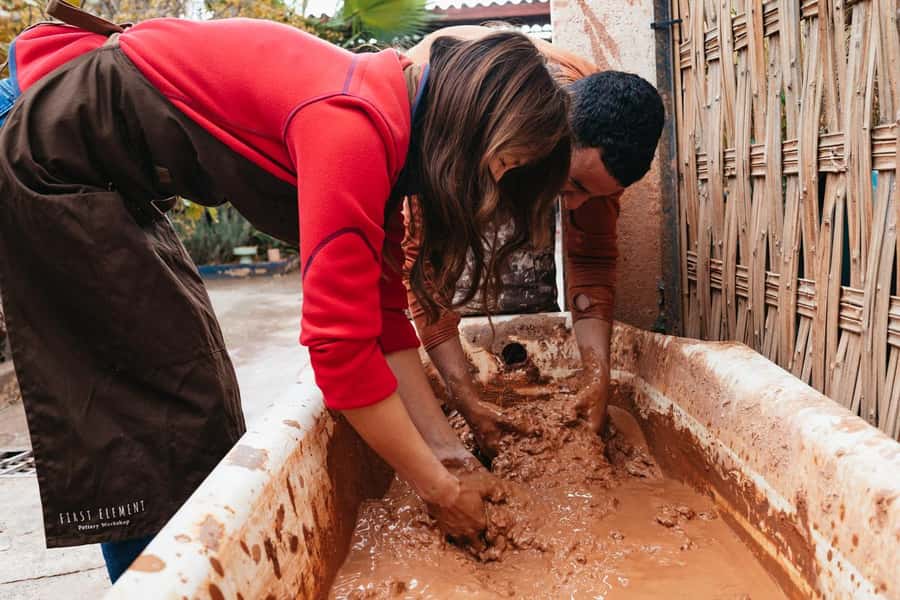
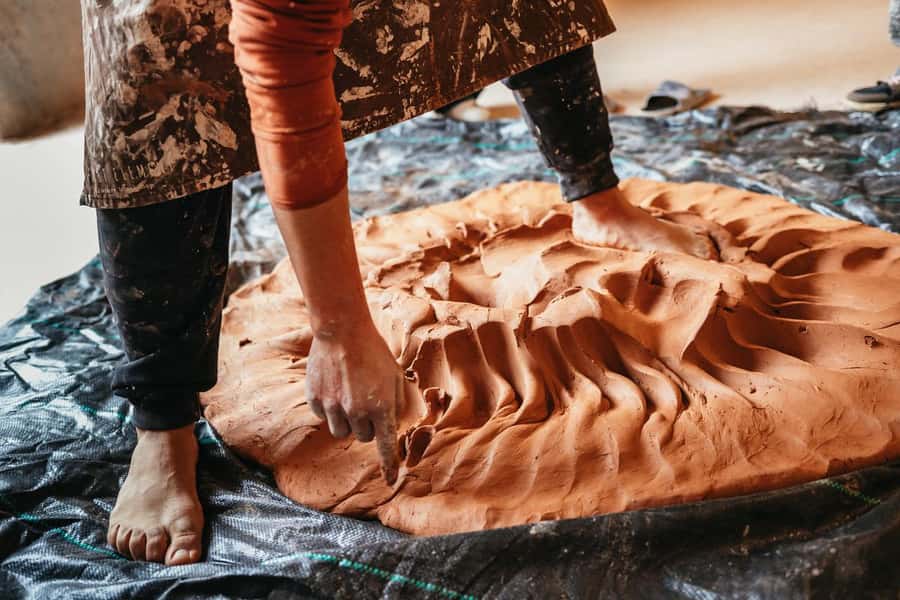
The class begins with the materials. You learn about the clay soil and how it is prepared before it can be shaped. This is one of the most useful parts of the experience because it explains the work that usually disappears behind a finished piece of pottery.
Clay is not simply picked up and placed on a wheel. It must be prepared so it can respond to the hands of the potter. The workshop gives you a view of that early stage and helps you understand why consistency, moisture, and careful handling matter.
You will not just hear a short explanation and move on. The stated program is designed to show the organization of the whole workshop, from first clay preparation through firing and glazing. That wider view makes the class feel connected to real Moroccan craft production rather than a one-off art lesson.
The setting is also part of the appeal. You are seeing pottery made in a traditional workshop near the city, with an artisan explaining the process as you work. The goal is not to produce a perfect professional object. It is to understand the method and feel how much control an experienced potter has over a material that can seem floppy and uncooperative at first.
Trying the traditional potter’s wheel
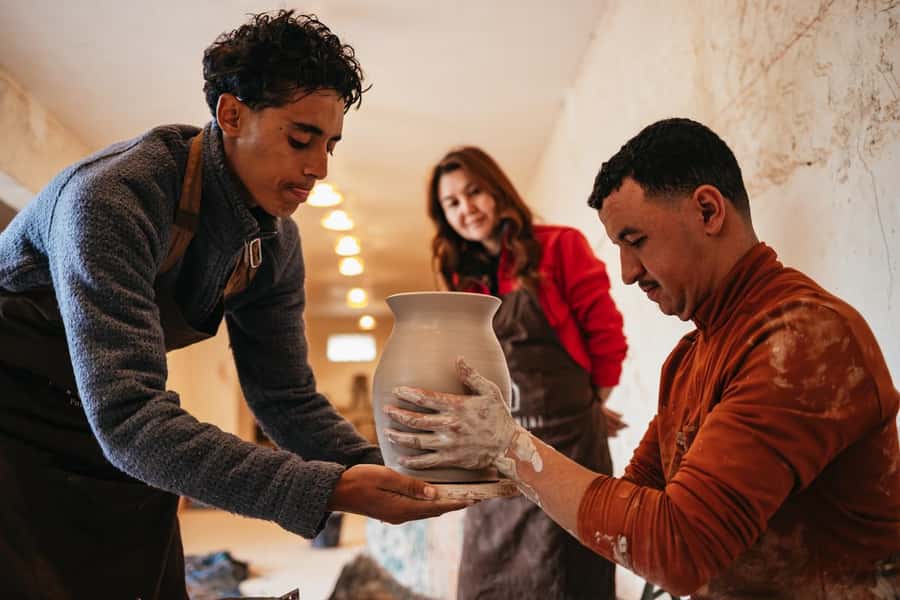
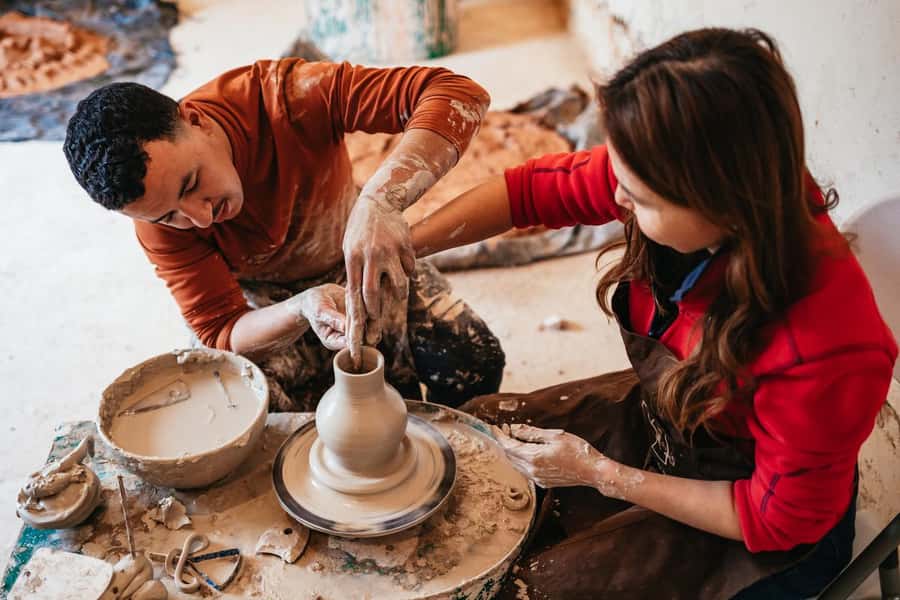
The turning technique uses the famous traditional potter’s wheel. This is likely the most eagerly anticipated part of the class, but it can also be the most demanding. Shaping clay on a wheel requires steady hands and careful pressure. Push too hard and the form can collapse. Move too quickly and the clay may lose its balance.
An experienced craftsman helps you during the class, so you are not left to puzzle out the wheel alone. That support is important for beginners. The aim is to let you take part while the artisan shows you how the material behaves.
Tariq was singled out as an excellent tutor and artist, while another class included a very patient craftsman who guided the work with humor. Those details point to the tone you can expect: practical instruction, encouragement, and room to make mistakes without feeling foolish.
If Wiam is handling the interpretation for your session, her fluent English has been praised for keeping communication smooth. The activity is available in English, French, and Arabic, so language support is built into the experience rather than left to chance.
Do not judge the class by how professional your first shape looks. Pottery wheels are harder than they appear. The value is in learning the basic movement and understanding the concentration behind the objects you see in Moroccan shops.
More Artisan and Craft Workshops:
- Marrakech: Traditional Moroccan Hammam with Argan Black Soap
★ 3.8 · 120 reviews - Marrakech: Traditional MRC Hammam and Massage with Argan Oil
★ 3.9 · 91 reviews - Lamsaty Pottery Workshop with Moroccan Tea
★ 5.0 · 75 reviews - Marrakech Medina Basket Embroidery Workshop
★ 4.9 · 69 reviews
Learning the molding technique
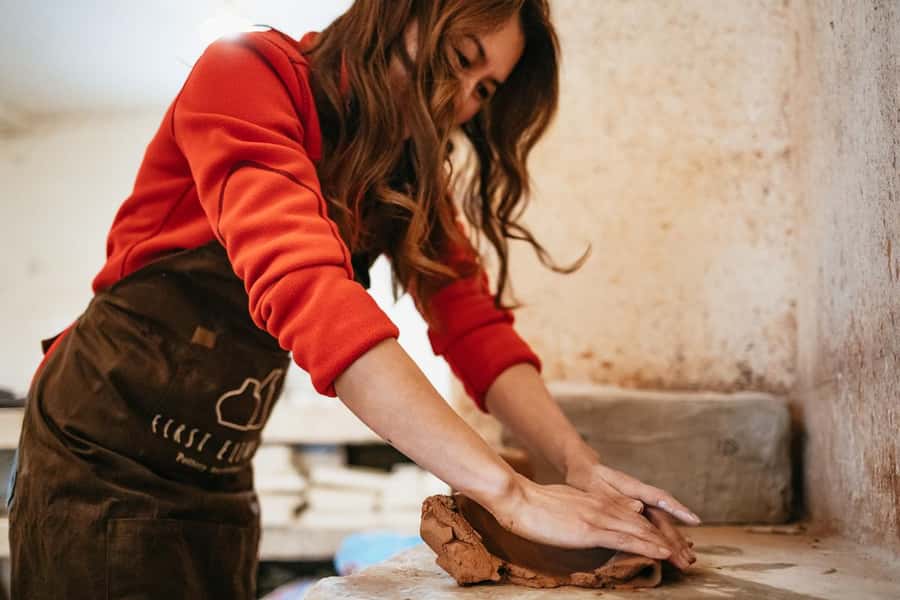
The second method is molding. This is a different approach from turning and gives you a better sense of the range of Moroccan pottery work.
With the wheel, you shape the clay by controlling a spinning form. With molding, the form comes from pressing or fitting clay into a set shape. The contrast helps you see why potters choose one technique over another and how different objects may require different methods.
For you, this part can be a welcome change after the concentration of the wheel. It also makes the session accessible to people who do not find turning intuitive. You get two ways to work with clay instead of spending the entire class trying to master one difficult motion.
The information provided does not promise a specific finished object, color, or number of pieces to take home. That is important when deciding if the $93 price feels right. Book it for the instruction and workshop experience first. Treat any finished pottery or end-of-class surprise as an added benefit, not the main value.
Watching firing and glazing complete the process
Pottery does not end when the shape is formed. The workshop also gives you a look at firing and glazing, the stages that make a clay object stronger and give it its finished surface.
Firing changes the fragile shaped clay into a more durable ceramic. Glazing adds color, sheen, or surface protection, depending on the method used. Seeing these steps helps connect your small class project with the finished Moroccan ceramics sold throughout the city.
The supplied details do not specify how long your own piece will take to dry, fire, or glaze, and they do not promise that you will collect it later. Ask the provider if taking a finished piece home matters to you. Without that confirmation, pack carefully and avoid assuming that your pottery will be ready at the end of four hours.
Even without a finished object, the demonstration has value. You learn why ceramics take time and why handmade pieces can cost more than factory-made souvenirs. The class makes that difference easier to see.
Taking a tea break with Moroccan cakes
Halfway through the session, you pause for local herbal tea and Moroccan pastry. Water is also included.
This is more than a snack break. After working with clay, tea gives the class a natural pause and creates time for conversation with the craftsman. The experience is designed around sharing as well as instruction, and the break adds a distinctly Moroccan social touch.
The pastry is included in the price, but do not expect a full meal. If you need lunch or have a specific dietary requirement, plan accordingly. No dietary details are provided, so you should ask before booking if ingredients are a concern.
The break also helps the four-hour format feel less tiring. Pottery asks you to concentrate with your hands and eyes, and a quiet pause prevents the class from becoming one long stretch of practical work.
How the private group changes the experience
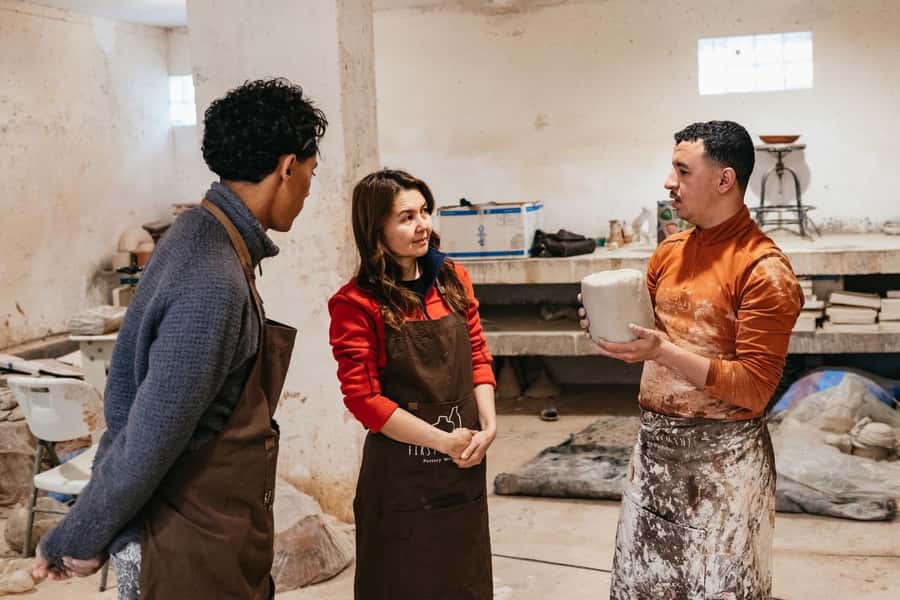
A private group is one of the strongest practical features here. In a small personal setting, you can ask the artisan to repeat a movement, request help with the wheel, or spend more time on the molding method.
This format suits couples, families, and friends who want to share an activity without being folded into a large class. It can also work well for solo visitors who prefer direct instruction, although the supplied details do not state the maximum group size.
The private arrangement does not guarantee that every participant will produce a flawless piece. Pottery still requires practice. It does mean the session should feel more focused on your group’s pace than a general workshop with many people competing for the instructor’s attention.
Photography is included. That is useful because clay-covered hands, a spinning wheel, and the workshop setting make good memories even if your pottery turns out a little lopsided. The information does not specify who takes the photographs or how many you receive, so ask if professional photos are important to you.
Is $93 per person good value?
At $93, this pottery class sits in the premium range for a four-hour hands-on activity. One verified booking described it as fun and educational but perhaps a little expensive for what you get. That is a fair concern.
The price makes more sense if you value several elements together: a private group, an experienced craftsman, translation in three languages, tea and Moroccan cakes, a look at the full pottery process, and time to try two techniques.
It makes less sense if you mainly want a cheap souvenir or a short demonstration. You may spend a good part of your visit shaping clay rather than exploring Marrakech, and the information does not confirm the number or size of finished pieces included.
I would compare it with the cost of other private cultural activities in Marrakech, but I would not compare it with the price of a ceramic bowl in a market. This is a lesson and a meeting with an artisan, not simply a shopping trip.
The strong rating of 4.9 from 47 reviews supports the idea that the teaching and personal contact are the main strengths. The most consistent praise centers on the craftsman’s patience, humor, artistic ability, and kindness. Those qualities can make or break a beginner class, especially when the technique feels difficult.
Who should book this Marrakech pottery workshop?
I would recommend it to you if you like making things, want a break from sightseeing, or prefer meeting local craftspeople to simply browsing shops. It is also a good choice for families and small private groups looking for a shared activity with a clear cultural connection.
You do not need previous pottery experience. The class is built around learning the methods, and the artisan helps you during the work. Still, you should enjoy hands-on activities and be comfortable with the possibility that your first attempts will be imperfect.
The workshop may not suit you if your Marrakech schedule is packed or if you want a polished souvenir guaranteed at the end. It is also less attractive if $93 feels high for an activity where the final item and collection arrangements are not specified.
Wear comfortable clothes and shoes. Clay work is not a good match for delicate clothing, high-maintenance footwear, or anyone worried about getting a little messy. Bring a patient attitude and let the instructor guide your hands.
Practical details for a smoother visit
The activity lasts four hours, so plan it as a major half-day commitment. The meeting point is in front of the post office at Medina Jamaa el Fna Square, and starting times depend on availability.
You can cancel up to 24 hours before the activity for a full refund. The reserve-now, pay-later option lets you hold a place without paying immediately, which is useful while you sort out your Marrakech schedule.
The tour is offered in English, French, and Arabic. If you need a particular language, confirm it when booking rather than assuming every session will use all three.
The class includes:
- Tea and Moroccan pastry
- Water
- Photography
- Instruction from an experienced craftsman
- A private group format
The information does not state transportation details, the exact workshop address, what happens to finished pottery, or the maximum group size. Those are the four points I would confirm before paying, especially if you have limited time or want to take your piece home.
Should you book it?
Book this workshop if you want a personal, hands-on look at Moroccan craft and you are happy to pay for instruction rather than a guaranteed finished product. The private format, patient teaching, two shaping methods, and tea break give the four hours a warm, social feel.
Skip it if your priority is low cost, a quick activity, or a confirmed souvenir. For the right person, $93 buys more than clay on a wheel. It buys time with an artisan and a clearer understanding of how Moroccan pottery is made.
FAQ
How long does the Marrakech pottery workshop last?
The workshop lasts four hours. Starting times vary, so you should check availability when booking.
Where is the meeting point?
Meet in front of the post office at Medina Jamaa el Fna Square in Marrakech’s medina.
What pottery techniques will I learn?
You will learn two common Moroccan shaping methods: turning clay on a traditional potter’s wheel and forming clay with molds.
Are tea and Moroccan pastries included?
Yes. The experience includes a tea break, Moroccan pastry, and water.
What languages are available?
Instruction and interpretation are available in English, French, and Arabic.
Can I cancel the activity?
Yes. You can cancel up to 24 hours in advance for a full refund. The reserve-now, pay-later option also allows you to book without paying immediately.
More Workshops
- Marrakech: Moroccan Cooking Class with Pickup
★ 4.6 · 1,862 reviews - Marrakech: Traditional Moroccan Cooking Class & Market Visit
★ 4.8 · 1,861 reviews - Marrakesh: Moroccan Dishes Cooking Class with a Local Chef
★ 5.0 · 1,615 reviews - Moroccan Cooking Class & Marrakech Market Visit with Chef Khmisa
★ 5.0 · 1,504 reviews
Just added around Marrakech
- Marrakech: Medina Souks, Hidden Markets and Shopping Tour★ 4.8 · 33 reviews
- Sunset Camel Ride Marrakech with Transfers★ 5.0 · 33 reviews
- Agafay desert sunset camel ride Tour from Marrakech★ 5.0 · 33 reviews
- Guided walking tour in Marrakech★ 4.5 · 33 reviews
- 2 Days Desert Agafay and Atlas Mountains Trek From Marrakech★ 3.8 · 33 reviews
- Atlas mountains, Ourika valley, berber villages trip & Guide★ 5.0 · 33 reviews
- Magical Dinner show and Quad bike In Agafay Desert Marrakech★ 4.5 · 33 reviews
- Camel Ride at the Palm Groves in Marrakech★ 5.0 · 33 reviews
Artisan and Craft Workshops, compared.
Traditional MRC Hammam and Massage with Argan Oil
Read our review →
Traditional Moroccan Hammam, Massage & Argan Oil
Read our review →
ATV Quad Biking and Goats On Argan Trees with Tea
Read our review →
Traditional Moroccan Hammam with Argan Black Soap
Read our review →Traditional MRC Hammam and Massage with Argan Oil
Read our review →
Pottery and Mosaic Workshop in Fes Led by Local Artisans
Read our review →
Browse the lists this tour appears in