
Reviewed · MERZOUGA AND SAHARA DESERT TOURS
Marrakech: 4D Desert to Merzouga w/ 2 nights in the desert
Sahara scenery comes with a long road. This four-day trip links Ait Ben Haddou, Todra Gorge, and Erg Chebbi with camel rides, desert camping, and a night in the Dades Valley. I like the chance to see several major sights without arranging separate transport, and I especially like the extra time around Merzouga, where you can slow down instead of racing straight back to Marrakech.
The $234 price is fair for a minibus, three nights of accommodation, breakfasts and dinners, a camel trek, and drop-off in Marrakech or Fez. The catch is the amount of time spent on the road. Lunch stops can be expensive, the schedule needs clearer explanation, and the return to Marrakech is a very long day.
In This Review
- Key points to know before booking
- What the $234 price really buys you
- Day one: Marrakech to Ait Ben Haddou and the Dades Valley
- Day two: Todra Gorge and the road of 1,001 kasbahs
- Day three: Camels, Erg Chebbi, and the extra desert time
- Day four: Sunrise and the long road back
- Transport, drivers, and the human side of the trip
- Heat, cold, food, and what to pack
- Who should book this four-day desert trip?
- Should you book it?
- FAQ
- How long is the Marrakech to Merzouga tour?
- What accommodation is included?
- Are camel rides included?
- Are lunches included in the price?
- Is Ait Ben Haddou guided?
- What happens if the Atlas Mountain road is closed in winter?
Key points to know before booking
- Two nights near the desert make the difference: You get time for sunset, sunrise, and optional activities instead of treating Merzouga as a quick photo stop.
- Ait Ben Haddou is the first major sight: The UNESCO-listed kasbah is striking, but a local guide costs extra and may affect how freely you explore.
- Expect long minibus days: The vehicle is a modern, air-conditioned 17-seat minibus, but the mountain roads and return journey still require patience.
- The desert camp is basic in practical ways: Bring a power bank, and pack a warm layer because desert nights can feel cold.
- Optional activities cost extra: Quad biking, buggy rides, sandboarding, and a nomad family visit are not part of the base price.
- Pack food and water for lunch stops: Restaurants along the route may charge about 120 to 150 MAD for meals that are not always good value.
What the $234 price really buys you
At $234 per person, this is not simply a camel ride with a night in a tent. You are paying for a four-day transport route across southern Morocco, accommodation in the Dades Valley and Merzouga, meals listed as breakfast and dinner, camel trekking, and hotel or riad pickup in Marrakech.
That package has real value if you want to reach the Sahara without renting a car or negotiating several transfers. The route covers a lot of ground, and the included transport alone would be useful for many visitors. You also avoid the work of finding a Dades hotel, desert auberge, and camp separately.
Still, the price does not cover lunches, drinks, local guiding at Ait Ben Haddou, or paid desert activities. A local guide there is listed at about €2, while quad bikes, buggies, and the nomad visit are extra. Set aside additional money for these items rather than treating $234 as your final cost.
The best value comes from the extra desert night. A shorter trip follows much of the same road, but this four-day version gives you more time around Merzouga. That slower pace was especially appreciated by visitors who wanted time at the hotel, in the pool, and around the dunes before the return drive.
More Sahara Desert Tours:
- From Marrakech: Quad, Camel, & Dinner 3-Day Merzouga Tour
★ 4.9 · 483 reviews - 3 Days Group Tour from Marrakech to Merzouga Desert
★ 5.0 · 147 reviews - Marrakech: 3-Day Luxurious Desert Tour to Fes via Merzouga.
★ 4.9 · 116 reviews
Day one: Marrakech to Ait Ben Haddou and the Dades Valley
The first morning begins with pickup from your Marrakech hotel or riad. If your accommodation sits on a narrow street that the minibus cannot reach, you will meet at the closest practical pickup point.
The route crosses the Atlas Mountains before reaching Ait Ben Haddou. This is a full day in the vehicle, so comfortable clothes and shoes matter. The road provides excellent views, but you should not mistake a scenic drive for an easy one. You will spend a large part of the day seated.
Ait Ben Haddou is the first major stop and one of Morocco’s most recognizable fortified villages. Its earthen walls and clustered buildings have appeared in films and on magazine covers, but the place is more rewarding when you look beyond the famous views. Walk the lanes, climb for the panorama, and notice how the village rises above the surrounding ground.
You may explore independently or hire a local guide for an extra charge. The scheduled free time is useful, but clarify the arrangement before you arrive. One disappointing experience involved a paid guide, shopping stops, and less time for independent photographs. That is not a reason to skip Ait Ben Haddou, but it is a reason to say clearly that you want time to explore without shopping.
A tea stop at Salon Du The Panormaique has been part of some departures. From there, the views make a pleasant break after the mountain crossing. Lunch is at your own cost, and the stop may be at a tourist-oriented restaurant, so snacks are a smart backup.
After Ait Ben Haddou, the road continues toward Ouarzazate, whose name is often translated as noises or without noise depending on the explanation you hear. You have free time for lunch there before continuing toward the Dades Valley.
The overnight stay is at a kasbah-style hotel in the Dades area, listed as Kasbah Amazigh in the tour details and as Kasbah La Porte du Dadès on some departures. Expect a private en-suite room, dinner, and breakfast. The hotel has been described as comfortable, with a buffet dinner and sunset views. Water pressure in at least one room was weak, and pool access may depend on maintenance and weather.
Day two: Todra Gorge and the road of 1,001 kasbahs
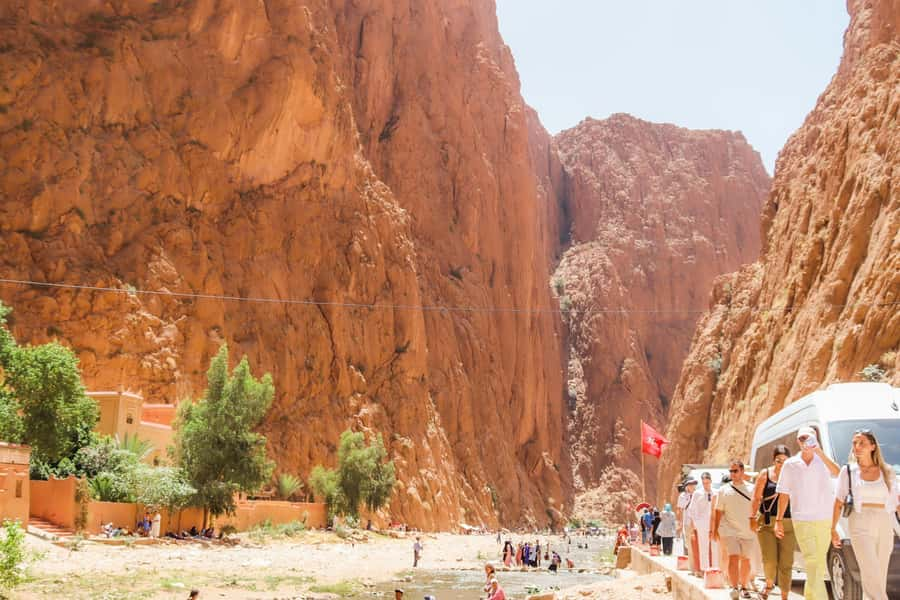
Day two brings some of the finest scenery of the route. You travel through the Dades Valley and along the so-called Road of 1,001 Kasbahs, a name that captures the repeated sight of fortified buildings, palms, dry hills, and small settlements.
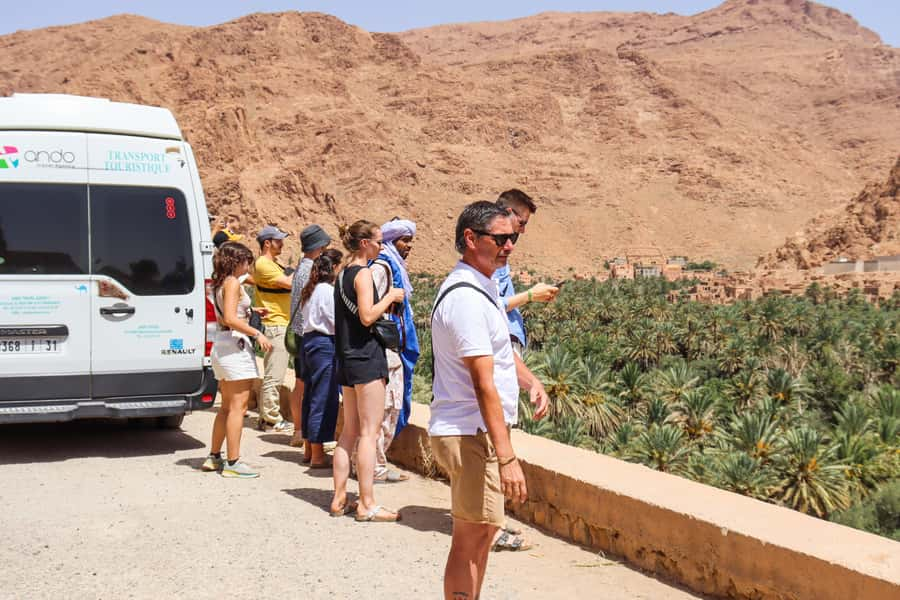
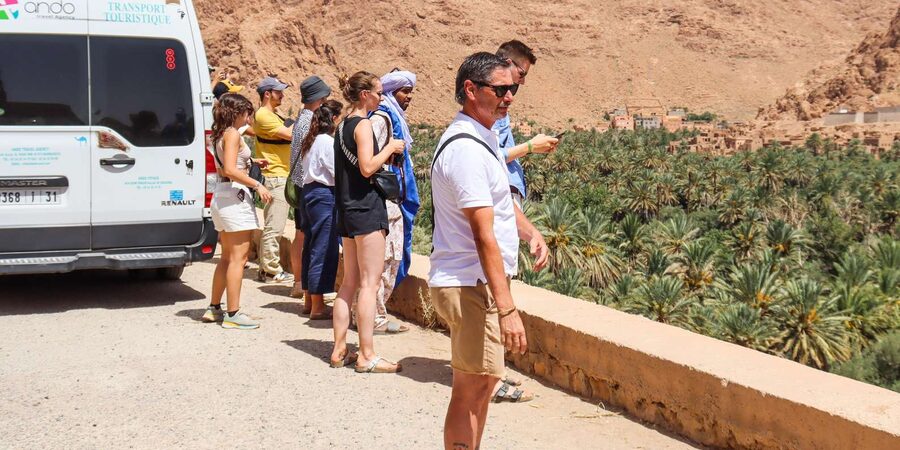
The stop at Todra Gorge gives you a close look at the canyon walls. The gorge is a welcome change after the open valley views, and the short visit lets you stretch your legs while taking in the rock formations. The route also includes an oasis viewpoint, where the green palms form a sharp contrast with the dry surroundings.
A local guide called Moha has led this section on some trips. Guide quality can make a real difference here, since a few clear explanations turn a series of roadside stops into a connected picture of southern Morocco. The included driver speaks Arabic, English, and French, but local guiding arrangements are not always the same at every stop.
Lunch again is not included. You may be directed toward a café or restaurant used by tour groups. Prices of 120 to 150 MAD for a menu have been reported, with portions and quality varying. A local lunch at around 80 MAD has also been possible, so ask to see the menu and price before ordering.
The day ends near Merzouga, usually at a desert auberge or hotel at the edge of the dunes. This stop matters because it gives you a place to refresh and prepare for the camp. You may have access to a pool, though the condition of the water and maintenance can vary. Use this time to charge devices, organize an overnight bag, and keep anything you need for the camp close at hand.
Day three: Camels, Erg Chebbi, and the extra desert time
The Merzouga portion is the heart of the trip. After breakfast, you can enjoy free time at the desert hotel before heading toward the Erg Chebbi dunes. Some departures include time to swim or relax at the pool, while others may feel quieter if no activity has been arranged.
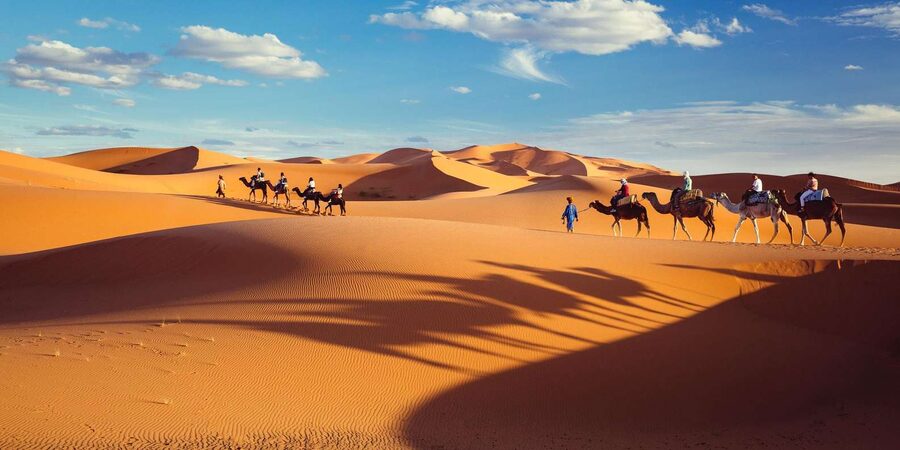
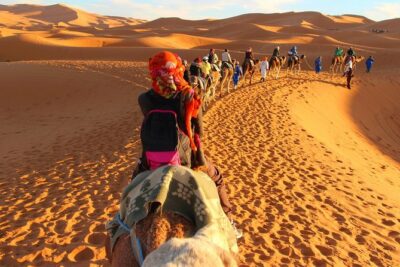
The camel ride usually takes place around sunset, followed by a second ride for sunrise. The camels carry you between the dunes as the light changes, and the slow pace suits the setting. You will want sunglasses, a hat, comfortable trousers, and a headscarf to protect your face from sun and blowing sand.
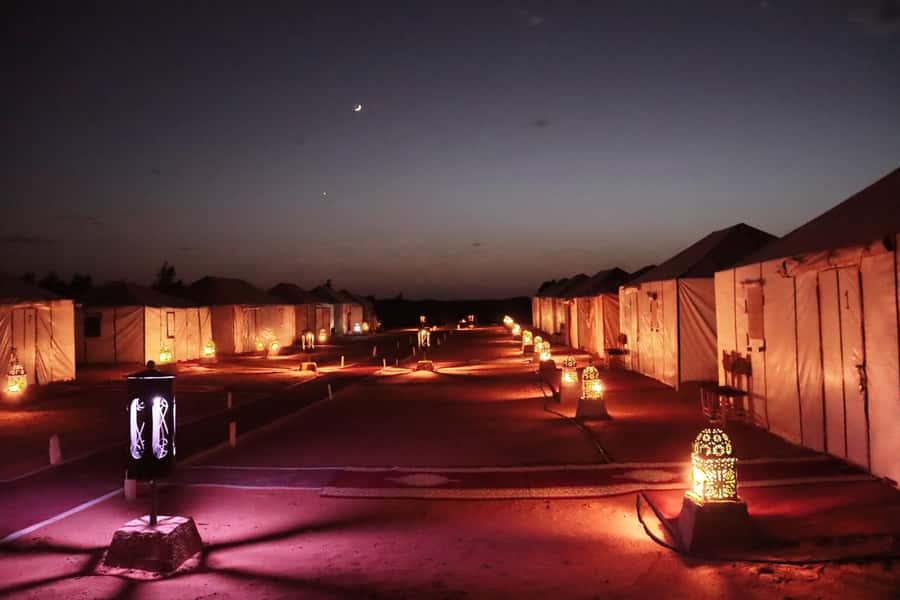
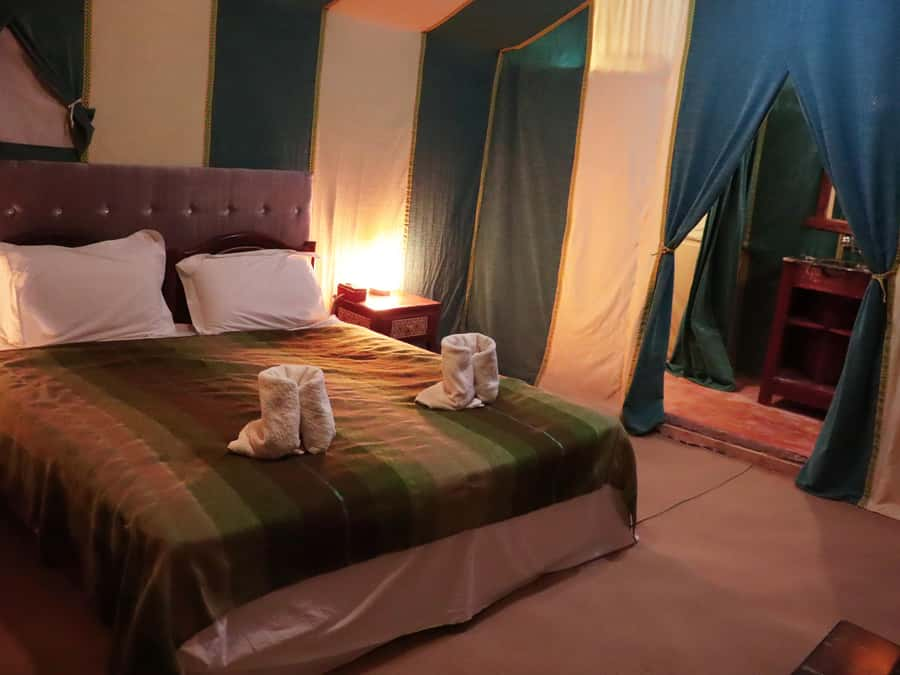
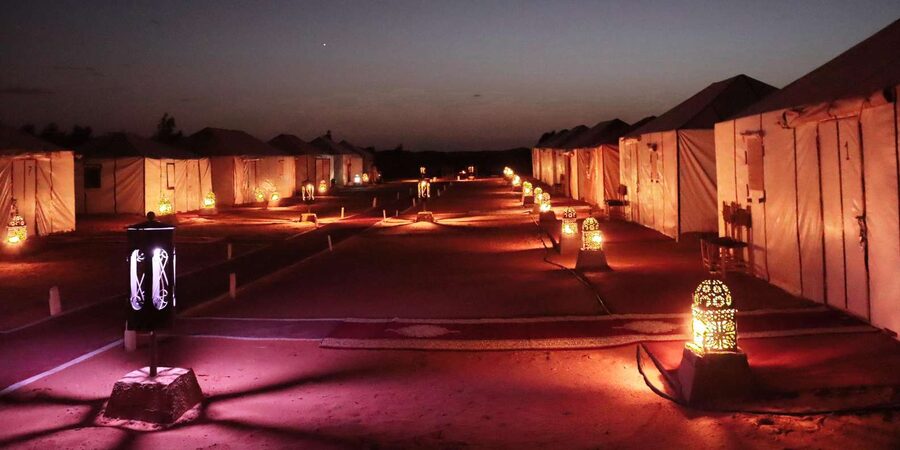
The tour information calls for a private standard tent at a nomad-style camp, with dinner and breakfast. In practical terms, the camp may be comfortable enough for one night, but do not expect a normal hotel room. One important detail is the lack of power outlets in the tent. Bring a charged power bank.
The shared bathroom may not include a shower, so plan your washing routine around the auberge before departure or the hotel after the camp. Pack a small overnight bag rather than carrying your full suitcase into the dunes. This makes the camel transfer easier and keeps the camp stay simple.
Dinner includes Moroccan dishes such as tagine and salted rice on some departures. Food has been praised, though portions can be modest. After dinner, a traditional Berber music performance may be arranged around the camp. The atmosphere depends on the group, weather, and camp setup, but this is the evening when the tour feels most distinct from an ordinary sightseeing circuit.
You can also pay for extra experiences. Options include:
- Quad biking across the dunes
- Buggy rides
- Sandboarding
- A 4×4 visit to nomad families
- Tea and Berber pizza with a nomad family
The nomad visit has been particularly well received by people who chose it. It adds human contact to the desert experience, rather than reducing Merzouga to dunes and camels. It is still optional, so confirm the cost before agreeing.
The extra desert night is the strongest reason to choose this four-day plan. It gives you room to enjoy the dunes without immediately packing up after sunrise. One point needs clarification before you book: the written schedule describes a hotel stay near Merzouga followed by a camp night, while some departures have included an additional night at the Sahara hotel or a quiet day with few organized activities. Ask exactly where you sleep on each night and what is planned during the free day.
A few more Ouarzazate trips worth weighing up
- From Marrakech: Guided Ouzoud Waterfalls Tour with Boat Ride
★ 4.9 · 737 reviews - From Marrakech To Essaouira Mogador Full Day Trip Smallgroup
★ 4.9 · 280 reviews - Tour from Ouarzazate to Vallee Du Draa and Dunes Of Tinfou
★ 5.0 · 155 reviews - From Ouarzazate: 2-Day Excursion to Zagora Desert
★ 4.7 · 93 reviews
Day four: Sunrise and the long road back
Wake before breakfast for the sunrise camel ride. The light over Erg Chebbi is worth the early start, and the return ride gives you a second chance to settle into the camel rhythm. After breakfast, you leave the desert for the long drive back to Marrakech.
The route may pass through Ouarzazate again, with lunch and short breaks along the way. Arrival in Marrakech can be around 8:30 p.m., although some departures have reached the city closer to 6 p.m. Traffic, road conditions, and the number of stops all affect the timing.
This is the least relaxing part of the experience. You have already spent several days on the road, and the final drive can feel especially tiring. One poor experience involved a driver who did not use the air conditioning consistently and refused a requested train-station drop-off. Confirm your final drop-off plan before departure, particularly if you have a train or flight soon afterward.
You can also finish in Fez instead of returning to Marrakech. That route goes via Midelt and Ifrane and is a useful choice if you are continuing through Morocco. It is still a long transfer, so do not schedule an important connection too closely afterward.
Transport, drivers, and the human side of the trip
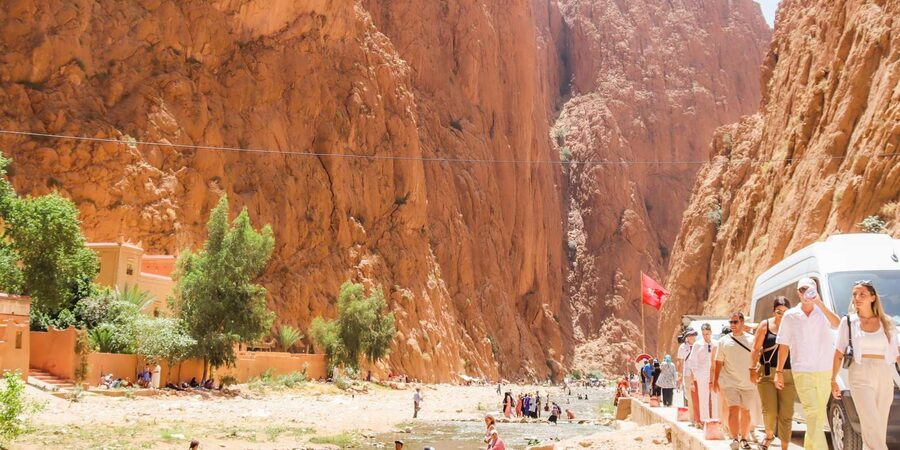
The vehicle is described as a modern, air-conditioned minibus with up to 17 seats. That group size keeps the price down, but it also means less flexibility than a private tour. You will follow the group’s meal stops, photo breaks, and departure times.
Driver quality can shape the whole experience. Names connected with different departures include Haj, Rarhib, Abderrahman Abbassi, Mohammed, and Kiki. Abderrahman Abbassi has been praised for his humor and kindness, while Haj and Rarhib were also singled out for making the journey pleasant. Your driver may be different, so treat these names as examples rather than a guarantee.
The driver is listed as speaking Arabic, English, and French. That helps with basic explanations and practical needs, but it does not mean every stop includes a full guided tour. Ait Ben Haddou may require a separate guide, and Todra Gorge guiding can vary.
The main risk is organization. Get the daily plan, hotel names, meal arrangements, and optional costs confirmed at the start. A clear plan prevents small surprises from becoming major frustrations after several hours on the road.
Heat, cold, food, and what to pack
Summer in Merzouga can be extremely hot. July temperatures have made the desert hotel and camel ride tiring, so drink water, cover your head, and avoid treating the midday heat as a test of endurance.
Desert nights can be cold, especially after the sun disappears. Pack a warm sweater or fleece and long trousers even if Marrakech feels hot when you leave.
Bring:
- Comfortable walking shoes
- Loose, weather-appropriate clothes
- A headscarf, hat, and sunglasses
- Refillable water and snacks
- A power bank
- A small bag for the camp night
- Warm clothing for the desert after dark
Lunches and drinks are not included. Tourist restaurants may charge more than you expect, and some do not display clear menus. Carry snacks and ask the price before ordering. Breakfast quality has been uneven, while dinners have generally been more satisfying.
Who should book this four-day desert trip?
I would choose this tour if you want the Sahara experience but do not want to arrange southern Morocco’s transport yourself. It suits first-time visitors who value a fixed route, included accommodation, camel rides, and a guide-driver who can handle the long distances.
It is also a good fit if you want more than a rushed three-day trip. The extra night gives you time to rest, use the hotel facilities when available, and add a quad bike or nomad visit.
I would hesitate if you dislike long drives, strict group schedules, or tourist-priced lunch stops. Families with young children should note that the activity is specifically described as unsuitable for children because of the driving time. Winter visitors should also ask about the Atlas crossing. If snow or road closure blocks the usual route, the alternative via Taroudant costs a mandatory €10 per person.
Cancellation is flexible up to 24 hours before departure for a full refund, and you can reserve now and pay later. Those terms help if your Morocco plans are still shifting, but they do not remove the need to check the route and accommodation details.
Should you book it?
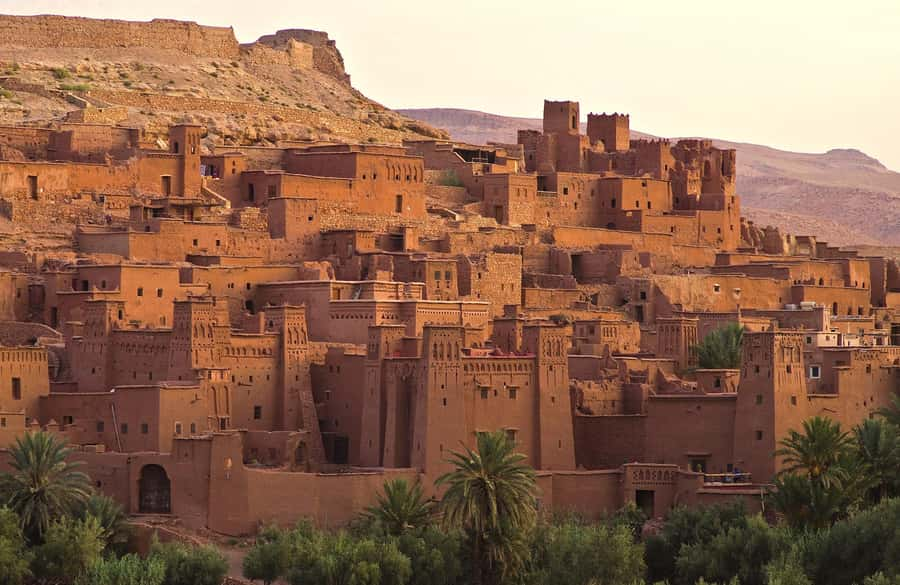
Book this trip if Erg Chebbi and a camel camp are your main goals, and you accept that the Sahara requires long road days. The scenery, Ait Ben Haddou, Todra Gorge, sunset camel ride, sunrise, and extra Merzouga time make the package good value at $234.
Go in prepared: carry food and water, bring a power bank and warm layer, budget for optional activities, and confirm the exact schedule with your driver. If you want privacy, flexible meal stops, and full control over every visit, pay more for a private trip. If you want the major southern Morocco sights in one affordable route, this group tour can deliver a memorable desert experience, with a few rough edges.
FAQ
How long is the Marrakech to Merzouga tour?
The tour lasts four days and includes transport from Marrakech to southern Morocco and back, with the option to finish in Fez instead.
What accommodation is included?
The package includes a private en-suite room at a kasbah in the Dades Valley and a private standard tent at a desert camp in Erg Chebbi. Breakfast and dinner are included at these stays.
Are camel rides included?
Yes. The package includes camel trekking in Erg Chebbi for sunset and sunrise.
Are lunches included in the price?
No. Lunches and beverages are not included, so you should budget separately and consider bringing snacks and water.
Is Ait Ben Haddou guided?
A local guide is available at an extra charge of about €2. You can also explore the site independently, but confirm how much free time you will have before the visit begins.
What happens if the Atlas Mountain road is closed in winter?
An alternative route via Taroudant is available if the usual road is blocked. A mandatory supplement of €10 per person applies when that route is used.
Just added around Ouarzazate
- 2 Days Trip From Marrakech To Ouarzazate & Dades Valley★ 4.9 · 17 reviews
- 3 Days – 2 Nights Desert Tour From Marrakech with Camel Ride★ 4.1 · 19 reviews
- Guided tour of the Palmerie de Skoura by electric mountain bike★ 5.0 · 19 reviews
- Excursion from Marrakech to Ourika Valley★ 5.0 · 20 reviews
- From Marrakech : 2 Days 1 night trip to Fes via Merzouga★ 4.4 · 20 reviews
- 3-Days Private Discovery of the desert from Ouarzazate to M’Hamid in 4×4★ 5.0 · 20 reviews
- From marrakech : Day trip to Ouarzazate and Ait benhaddou★ 4.7 · 22 reviews
- Fint Oasis Private Day Hike★ 5.0 · 23 reviews
Merzouga and Sahara Desert Tours, compared.
3 Days Desert Tour From Marrakech To Merzouga Dunes & Camel Trek
Read our review →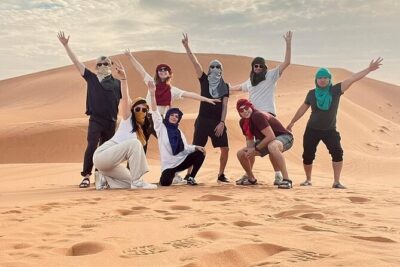
3-Day Marrakech to Merzouga Desert Tour: Camel Rides & Overnights
Read our review →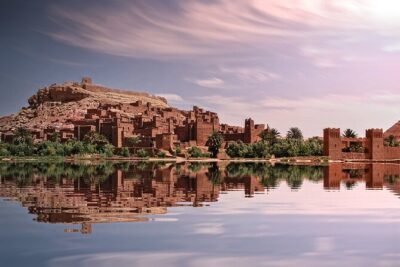
3-Day Marrakech to Fes Sahara Desert Tour via Merzouga
Read our review →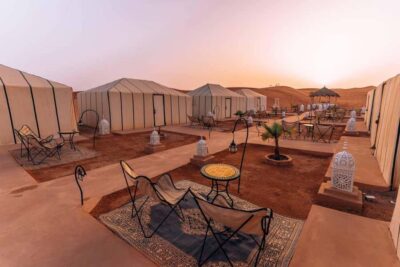
3-Day Merzouga Desert Experience Camel & Meals
Read our review →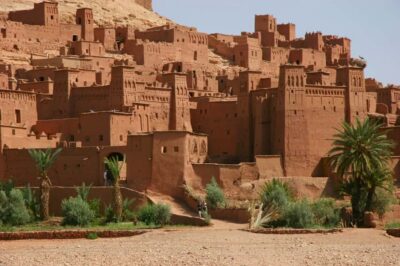
3-Day Tour to Merzouga Erg Chebbi with Food & Camel Trek
Read our review →Browse the lists this tour appears in