
Reviewed · WALKING TOURS
Tangier: Food Walking Tour
Eat your way through Tangier. This three-hour walk pairs six tasting stops and a full meal with the old city’s narrow lanes, markets, and sea views. I like the mix of street food, cafés, market stalls, and sit-down dishes, and I like that guides such as Rabab, Mohammed, Ismail, and Anas add local stories rather than simply handing you plates. The main drawback is the walking terrain: uneven streets and steps make this a poor choice for wheelchair users or anyone with limited mobility.
Come hungry. The portions add up quickly, and you are meant to arrive on an empty stomach. I also appreciate the flexible approach to vegetarian, gluten-free, and lactose-free diets, though you should state your needs when booking so the guide can plan the stops.
In This Review
- Key points to know before you book
- Starting beside the cannon at Sour Meêgazine
- M’Sallah: the first taste of local life
- Grand Socco: Tangier’s public meeting place
- Place de la Kasbah: the biggest food section
- The local café: a pause after the food
- Ending at Café Hafa with Tangier below you
- What you are likely to eat
- Why the guide matters more than the menu
- Is $73 a fair price?
- Who should book this walk?
- FAQ
- How long is the Tangier Food Walking Tour?
- Where does the tour begin?
- Where does the tour finish?
- Is transportation included?
- What food is included?
- Can dietary restrictions be accommodated?
- Is the tour suitable for wheelchair users?
- Should you book it?
Key points to know before you book
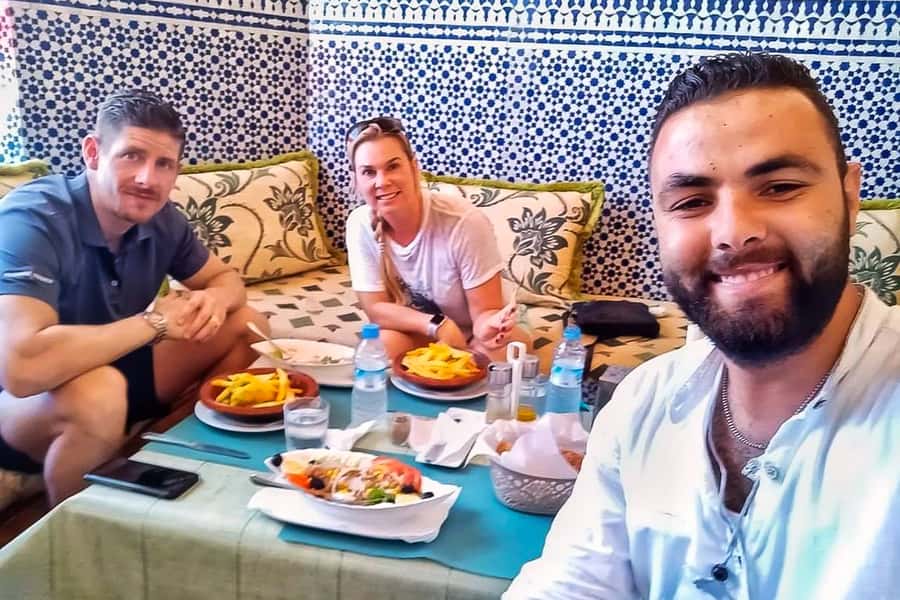
- Six tastings plus lunch: This is not a nibble-only outing. Expect enough food to replace a meal, with bread, soups, pastries, tagine, drinks, and local specialties depending on the route.
- A real walk through Tangier: The route links Sour Meêgazine, M’Sallah, Grand Socco, Place de la Kasbah, a local café, and Café Hafa.
- Guides make the difference: Rabab, Mohammed, Ismail, Ahmed, Abdul, and Anas are praised for their warmth, local contacts, cultural insight, and ability to adjust the pace.
- Good for curious eaters: The tour explains why dishes are eaten, how they are made at home, and where you can buy more food afterward.
- Plan for uneven streets: Comfortable shoes are essential, and the experience is not suitable for wheelchair users or people with mobility impairments.
- Strong value at $73: You are paying for food, guiding, water, and a useful introduction to Tangier’s old districts, not just a sequence of tastings.
Starting beside the cannon at Sour Meêgazine
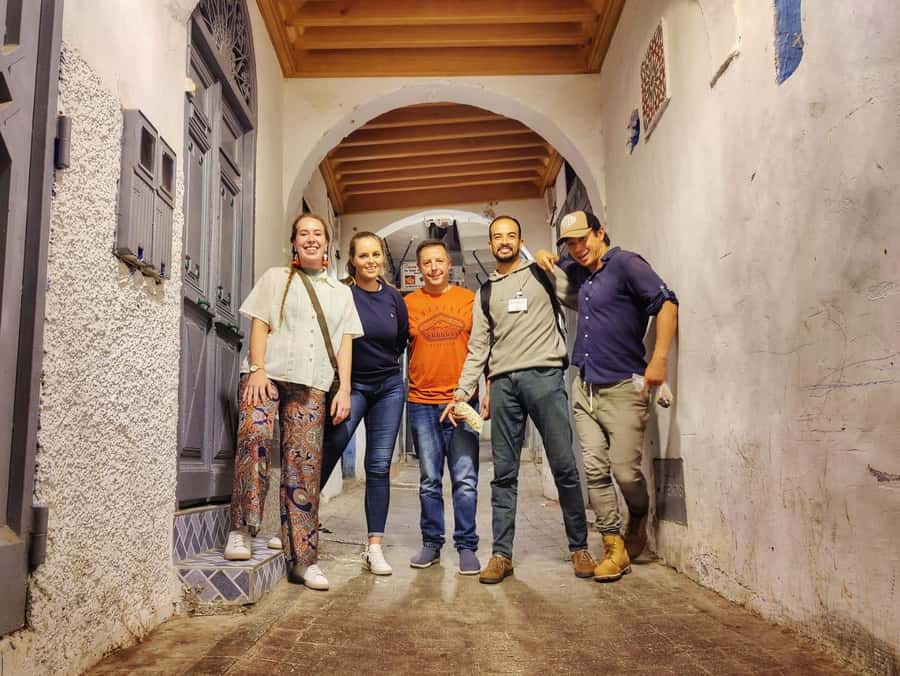
The meeting point is next to the third cannon, the one in the middle, at Sour Meêgazine in Tangier. This precise landmark matters because old-city meeting points can be confusing, especially when several streets seem to lead to the same place.
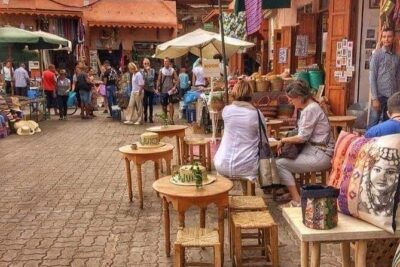
From there, the walk moves into Tangier’s historic center. You are not being driven between restaurants or placed in a tourist bus. The route is on foot, through streets where vendors, artisans, and residents are going about their daily work.
That is one of the tour’s main strengths. Food gives you a reason to pause, but the walk lets you see how Tangier works. You pass fresh produce sellers, local shops, and traditional buildings while your guide explains the food, customs, religion, and everyday habits connected to what you are eating.
The route is conducted in English. Guides are described as friendly and adaptable, and several have strong personal ties to Tangier. Mohammed, for example, was born in the Medina and can connect the food to the area’s past and present. Anas is praised for showing the city through his own local favorites, while Rabab is known for adjusting the experience for families and different tastes.
More Walking Tours in Tangier
- 3h Private Walking Tour in Tangier Kasbah Medina & Colorful Souks
★ 5.0 · 148 reviews - Tangier: Private Guided Walking Tour of the Tangier Medina
★ 4.7 · 105 reviews - Private Walking Tour in Tetouan with Pickup
★ 5.0 · 87 reviews
M’Sallah: the first taste of local life
The first main stop is M’Sallah, where you spend about 45 minutes on a guided walk and food tasting. This is a useful opening section because it gets you into the rhythm of the tour without rushing straight from one plate to the next.
You might try items such as caliente, a handmade local specialty, along with bread, olives, soup, or other simple foods sold in the area. The exact selection can change, but the purpose is clear: start with food that locals eat, not a polished international menu designed for visitors.
The guide also gives context as you go. You can ask why a dish is popular, how it is prepared at home, or what changes during religious occasions. That conversation is often more useful than a long formal lecture because it connects directly to the food in front of you.
M’Sallah also gives you an early look at the architecture and narrow lanes of the old town. Bring your phone or camera, but keep it ready for quick shots rather than staged photo sessions. The route is about seeing daily life as much as collecting pictures.
Grand Socco: Tangier’s public meeting place
The next 45-minute section takes you to Grand Socco. This is one of the city’s best-known public spaces and a natural place to watch Tangier’s daily movement.
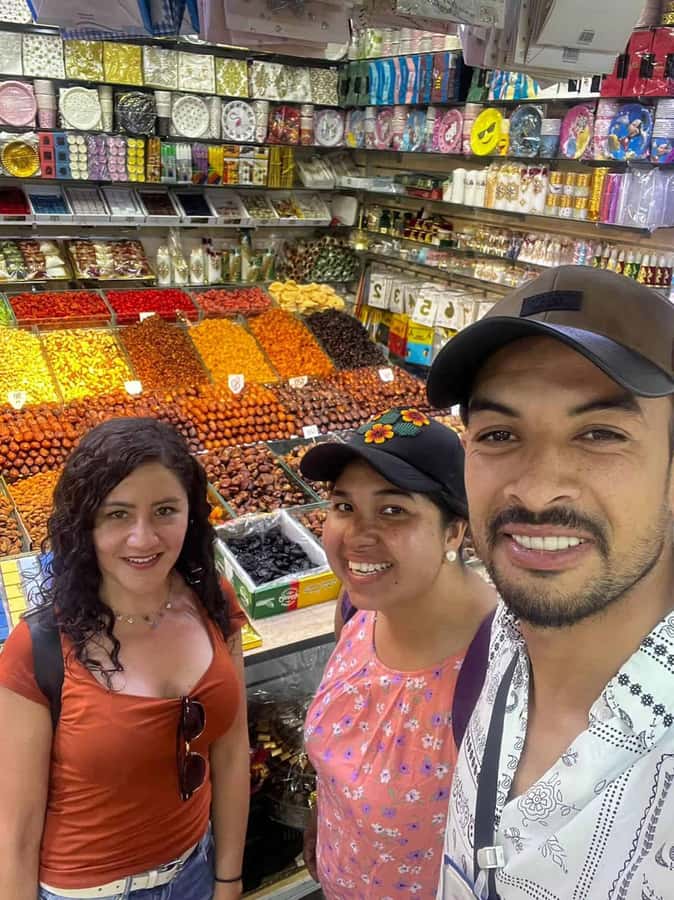
Here, the food and the setting work together. You may stop with a vendor, visit a market stall, or sit briefly while the guide explains what you are trying. Past tastings have included stuffed dates, smoothies, meat pastries, olives, and local bread, though your exact menu may differ.
This variety is important. Moroccan food is not one single flavor or texture, and this stop helps you notice the range. A sweet date, a savory pastry, a fresh drink, and warm bread each show a different part of the local food culture.
Grand Socco is also a good place to ask practical questions. If you want to buy ingredients, snacks, or sweets later, ask the guide where to go. One of the useful features of this tour is that the food does not end when the walk ends. Your guide can point you toward places to continue exploring on your own.
The public setting can also mean more noise and activity. If you prefer quiet restaurant meals, this section may feel less controlled. For me, that is part of the appeal, since the point is to understand Tangier through its ordinary food stops rather than through a carefully staged dining room.
Place de la Kasbah: the biggest food section
The longest part of the experience takes place around Place de la Kasbah, with roughly one hour for walking, explanations, and tastings. This is where the tour settles into its main course.
The Kasbah area is known for narrow alleyways, traditional architecture, and views across the city. You should expect some uneven paving and changes in level. Comfortable shoes are not a minor suggestion here. Wear something that lets you walk steadily and stop without worrying about slippery soles.
The food selection can be broad. Past menus have included bissara, bread, olives, meat pastry, tagine, stuffed dates, and drinks. Bissara is a filling bean soup, the sort of humble dish that tells you more about daily Moroccan eating than an expensive restaurant plate might. Tagine, served as part of the meal, gives you a chance to slow down and taste a more complete dish.
You may also encounter caliente, a warm chickpea-based street food associated with northern Morocco. These simple foods are valuable because they show how much flavor can come from inexpensive ingredients, careful seasoning, and local cooking habits.
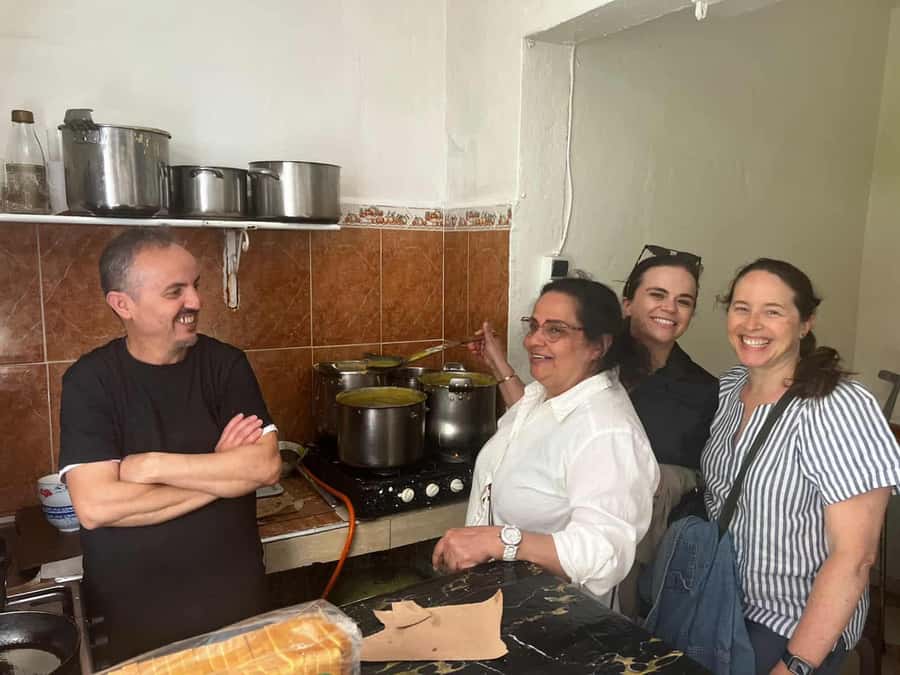
The guide’s role is especially important here. Ismail is praised for explaining Tangier’s culture, history, and cuisine at each stop. Mohammed is noted for explaining how foods are prepared differently at home. Those details help you understand that a recipe is not fixed. Family habits, available ingredients, religious traditions, and the occasion can all change what appears on the table.
If you are eating with children, tell the guide what they like and how much walking they manage comfortably. One group with three children had the route and food adjusted to suit them. That does not mean every preference can be guaranteed, but the guides appear willing to make sensible changes.
More Food Tours:
- Tangier Food Cooking Class and Private City Tour
★ 5.0 · 73 reviews - Tangier Food Tour with a foodie guide, Medina & Souks!
★ 5.0 · 45 reviews - From Marrakech: Merzouga 3-Day Desert Safari with Food
★ 4.7 · 12,232 reviews - Marrakech: Street Food Tour with a Local Guide
★ 4.9 · 3,119 reviews
The local café: a pause after the food
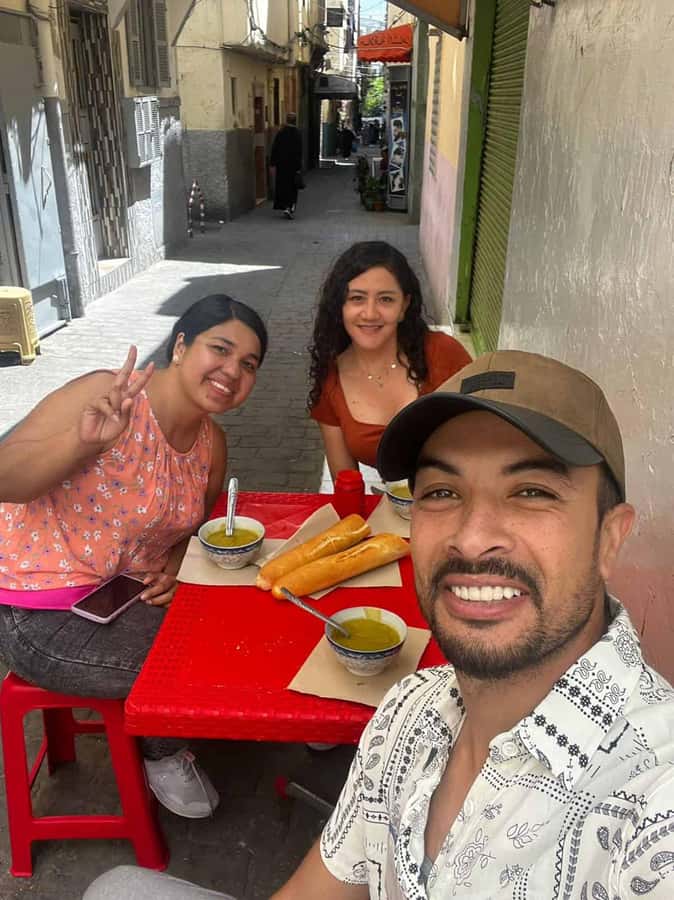
The final 30 minutes are set aside for a café break and more guided conversation. This pause is well timed because the tastings and meal can be substantial.
A Moroccan café is not simply a place to refuel. It is also a useful window into social life, where people meet, talk, and watch the street. Your guide can explain local drinks and customs while you take a break from walking.
The café section gives the tour a slower finish. Earlier stops may be spread across markets and lanes, while this one lets you sit, ask questions, and sort out what you have eaten. You can also use this time to ask for recommendations for the rest of your stay in Tangier.
During Ramadan, the format may change. One recent experience became an iftar meal with the guide and the guide’s family. That can be a special cultural opportunity, but it is a different arrangement from the standard route, so confirm the plan if your visit falls during Ramadan.
Ending at Café Hafa with Tangier below you
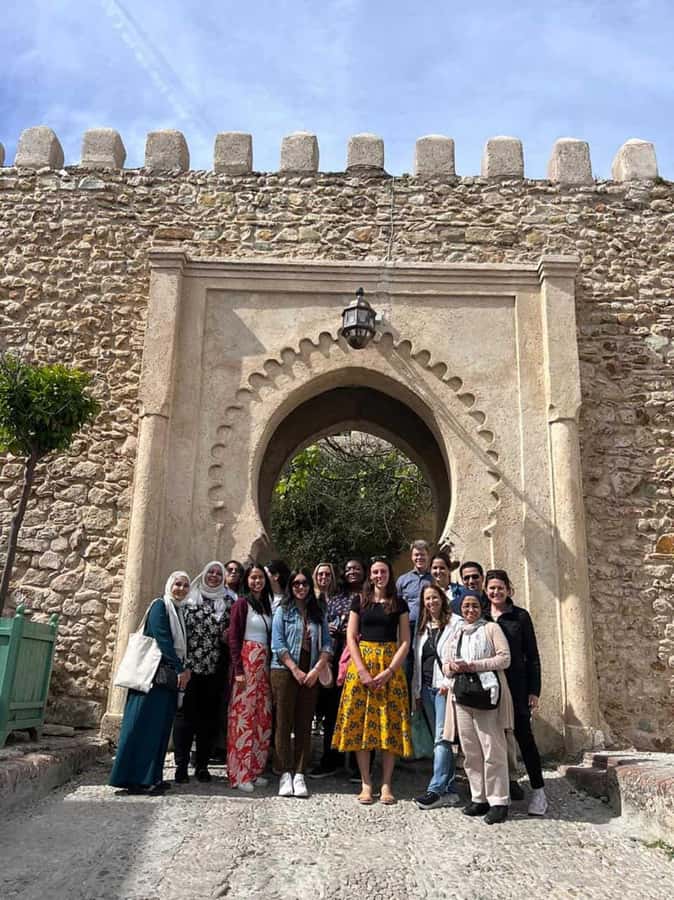
The tour ends at Café Hafa. The finish gives the walk a clear sense of place rather than leaving you beside an anonymous restaurant.
The café is known for its setting and city views, making it a strong final point for photographs. After several hours of food and street scenes, you can look back across Tangier and understand the route as a connected part of the city rather than a list of separate stops.
This ending also works well for planning. You can ask your guide what to eat next, where to buy additional food, or which parts of the old town deserve another walk. If you have a free afternoon, finishing here leaves you in a useful area for continuing on foot.
Do remember that transportation is not included. You need to make your own way to Sour Meêgazine at the beginning and arrange your onward transport from Café Hafa. The route itself is walked, not covered by a private vehicle.
What you are likely to eat
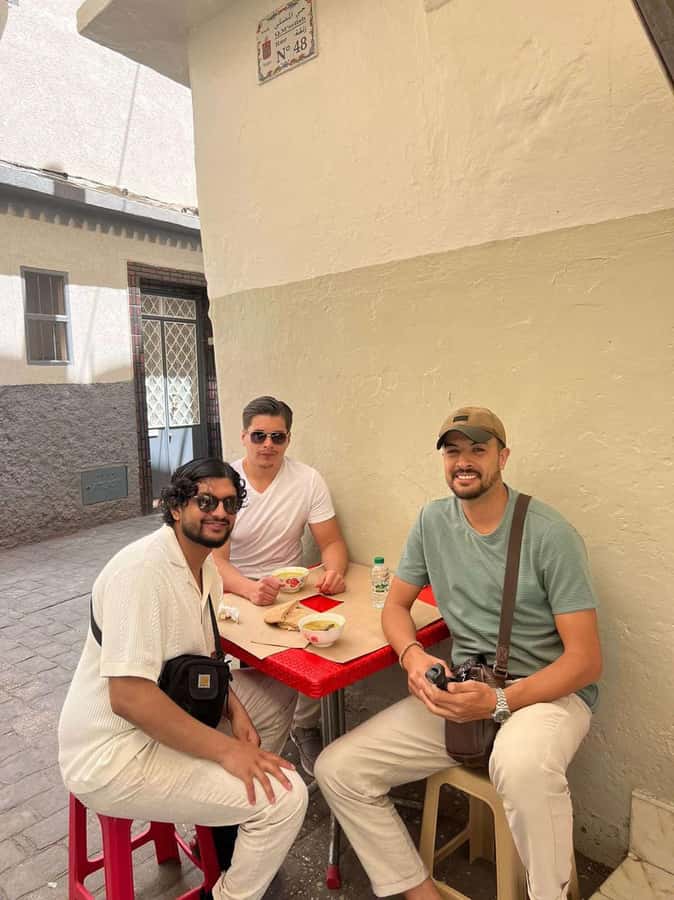
The tour promises six tasting stops and a full meal, with bottled water included. That is a much better setup for understanding Moroccan food than one large restaurant meal because you can compare different settings and styles.
Possible foods include:
- Caliente
- Bissara
- Stuffed dates
- Local bread
- Olives
- Meat pastries
- Smoothies or other local drinks
- Tagine
The exact dishes can vary, so do not book expecting a fixed tasting menu. That flexibility is useful because the guide can respond to what is available and to the dietary needs of the group.
You should arrive hungry. This advice is serious. The stops are spaced through the walk, but the combined amount can be enough to leave you very full before the final café. A light meal earlier in the day is not the best plan.
Vegetarian, gluten-free, and lactose-free needs can be accommodated as long as you provide the information in advance. Ask specific questions when booking if an allergy is involved. The supplied details promise an effort to meet dietary restrictions, but they do not guarantee that every ingredient can be excluded at every stop.
Why the guide matters more than the menu
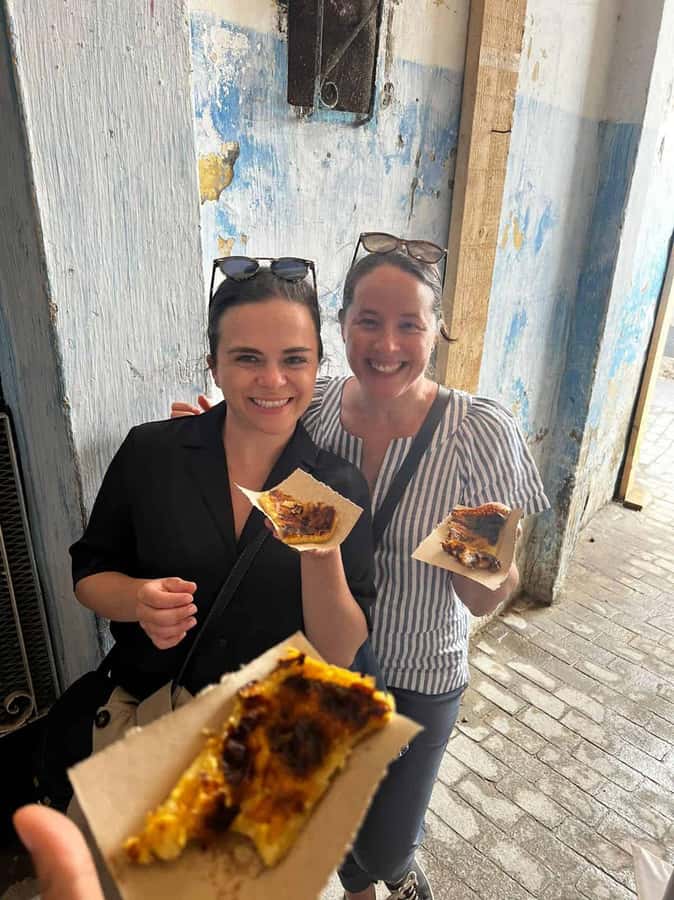
Food tours can fail when the guide only names each dish and moves on. This one depends heavily on the person leading it, and the guide praise is unusually consistent.
Rabab is described as friendly, well connected with the food sellers, and able to adjust the route for a family with children. Ismail is praised for pairing each stop with a story about Tangier’s culture and food. Ahmed is noted for a calm pace and clear explanations about both drinks and history.
Mohammed appears several times in the strongest feedback. His knowledge of the Medina, where he was born, helps turn the old city into more than scenery. He also adjusted for dietary needs and kept the group engaged. Anas is described as lively, kind, and proud of Tangier, with a knack for taking people to local favorites.
You cannot choose your guide with certainty from the information provided. Still, the range of positive guide experiences suggests that the company’s strength is its people, not just its food list. If you enjoy asking questions, tell your guide that early. The more you interact, the more useful the walk becomes.
Is $73 a fair price?
At $73 per person, this is not the cheapest way to buy food in Tangier. You could certainly eat a few snacks and a meal for less if you order on your own.
The value comes from the combination. The price covers six tasting stops, a full meal, bottled water, and an English-speaking guide for three hours. You are also paying for access to small local places, help with ordering, cultural explanations, and a route through parts of Tangier that can be difficult to understand on your first visit.
The amount of food matters. This is not a tour where you pay $73 for three tiny samples and a lecture. The food should be substantial enough to serve as a major meal, and the stops include several kinds of vendors and dining settings.
I would consider it good value if you are new to Tangier, curious about Moroccan food, or short on time. It is less compelling if you already know the Medina well, speak with local vendors comfortably, and mainly want the lowest possible food cost.
The reserve-now, pay-later option also helps if your schedule is still moving. Free cancellation is available up to 24 hours before the start time for a full refund, which gives you some room to adjust plans.
Who should book this walk?
This experience suits first-time visitors who want an introduction to Tangier that combines food, streets, markets, and history. It also works for people who prefer small local stops to formal sightseeing.
Food-focused couples and solo visitors should find plenty to enjoy, especially if they like trying unfamiliar dishes. Families can also consider it, since guides have adjusted the pace and food for children, but parents should be honest about how long their children can walk.
I would not choose this tour for anyone using a wheelchair or dealing with significant mobility limits. The route passes through narrow, uneven old-city streets, and the information specifically says it is not suitable for wheelchair users or people with mobility impairments.
Pet owners should also note that pets are not allowed. Wear comfortable shoes, carry only what you need, and leave room in your appetite for the final meal.
FAQ
How long is the Tangier Food Walking Tour?
The experience lasts three hours. The route includes guided food stops at M’Sallah, Grand Socco, and Place de la Kasbah, followed by a café break and a finish at Café Hafa.
Where does the tour begin?
Meet next to the third cannon, the cannon in the middle, at Sour Meêgazine in Tangier.
Where does the tour finish?
The tour ends at Café Hafa.
Is transportation included?
No. Transportation is not included, so you must arrange your own way to the meeting point and from the end point.
What food is included?
The tour includes six tasting stops and a full meal, plus bottled water. Foods may include caliente, stuffed dates, bissara, bread, olives, meat pastries, smoothies, and tagine.
Can dietary restrictions be accommodated?
Vegetarian, gluten-free, and lactose-free diets can be accommodated when requested. Tell the provider about your needs in advance so the guide can plan appropriately.
Is the tour suitable for wheelchair users?
No. The experience is not suitable for wheelchair users or people with mobility impairments. Comfortable shoes are recommended because the route passes through old streets and markets on foot.
Should you book it?
Book this tour if you want your first taste of Tangier to come through local food, old streets, and conversation rather than a standard sightseeing route. The mix of six stops, a full meal, market life, and the Café Hafa finish gives you a strong introduction to the city in a short time.
I would especially recommend it early in your stay. You can use the guide’s advice for the rest of your meals, return to places you liked, and approach the Medina with better bearings. Skip it if you need a step-free route, dislike eating a large amount of food, or want complete control over every dish and restaurant.
For most curious eaters who can handle the walking, $73 buys more than lunch. It buys context, local connections, and a practical first look at Tangier through the food people actually eat.
More Walking Tours
- Private walking tour to Tangier old town with guided visit.
★ 5.0 · 86 reviews - Tangier Private Guided Walking Tour
★ 5.0 · 71 reviews - Walking Tangier Tour from ancient Kasba to Bustling Souks
★ 5.0 · 70 reviews - Walking Tour Of Tangier
★ 5.0 · 50 reviews
More Food
- Marrakech: Street Food Tour by Night
★ 4.8 · 2,838 reviews - 3-Day Tour to Merzouga Erg Chebbi with Food & Camel Trek
★ 5.0 · 1,770 reviews - Authentic Moroccan Food Tour in Marrakech with Dinner
★ 5.0 · 1,423 reviews - From Marrakech: Zagora 2-Day Desert Safari with Food & Camp
★ 4.5 · 1,137 reviews
Just added around Tangier
- Full Day Private Tour to Tetouan and Chefchaouen★ 5.0 · 33 reviews
- Tangier: Private City Walking Tour with Pickup★ 4.8 · 33 reviews
- Private Tangier Tour from Ferry or Cruise Ship Including Lunch★ 5.0 · 34 reviews
- private tour of Tangier included (Camel Ride) and Beautiful View)★ 5.0 · 34 reviews
- Tangier City Tour★ 4.5 · 34 reviews
- Half-Day Tangier Private Tour & Camel Ride & Colorful Markets★ 5.0 · 34 reviews
- Tangier Private Full-Day Tour: Explore Top Sights & Local Culture★ 5.0 · 35 reviews
- Tangier: Guided Day Trip to Chefchaouen★ 4.3 · 35 reviews
Walking Tours, compared.
Ben Youssef, Secret Garden, & Souks Walking Tour
Read our review →
Explore Fes: Unforgettable Guided Walking Tour of the Medina
Read our review →
Exclusive Fez Medina Walking Tour with Private Guide
Read our review →
Browse the lists this tour appears in