
Reviewed · CASABLANCA TOURS
Private Grand Tour of Morocco
Morocco packs several worlds into one trip. This private 12-day journey runs from Casablanca and the Atlantic coast to Marrakech, the Atlas Mountains, the Sahara, Fez, the Rif, Tangier, Rabat, and back to Casablanca. You travel in an air-conditioned vehicle, stay in riads and hotels, receive guided visits in key cities, and still get time to wander on your own.
I like the private format, since your group can shape the pace and ask for help when needed. I also like the mix of Morocco’s major sights with strong local settings, from seafood stalls in Essaouira to the narrow streets of Fez and a sunset camel ride at Erg Chebbi. The main drawback is the pace: this is a big country, and several days include long drives, early starts, or both.
In This Review
- Key Points Before You Book
- A Grand Loop That Covers Nearly Every Side of Morocco
- El Jadida and Essaouira: An Atlantic Opening
- Marrakech After Dark and Inside the Medina
- Crossing the High Atlas to Aït Benhaddou
- Todra Gorge and the Erg Chebbi Sunset
- From Desert Sands to Fez
- Roman Ruins and the Imperial City of Meknes
- Chefchaouen, Tangier, and Morocco’s Northern Edge
- Cap Spartel, Hercules Caves, Lixus, and Rabat
- Casablanca’s Final Morning and Practical Value
- Is This Private Morocco Tour Right for You?
- FAQ
- How long is the Private Grand Tour of Morocco?
- What is included in the price?
- Are flights included?
- Where does the tour start?
- Where does the tour end?
- Is this a private tour?
- Is a camel ride included?
- Is the Hassan II Mosque open every day?
Key Points Before You Book
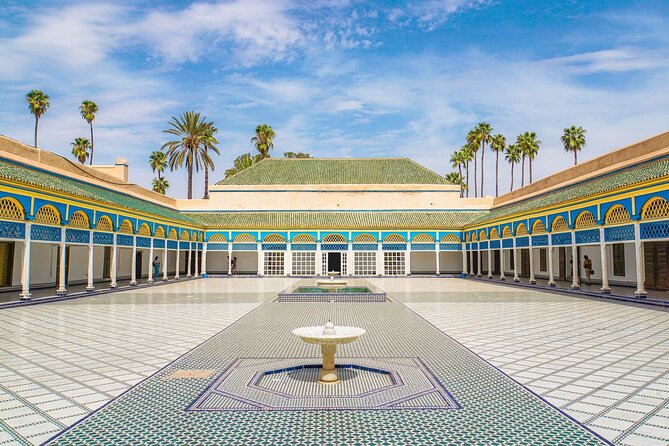
- Atlantic coast to Sahara: You see El Jadida, Essaouira, Marrakech, the Atlas Mountains, desert dunes, Fez, Chefchaouen, Tangier, Rabat, and Casablanca.
- Private transport throughout: Your group travels in an air-conditioned vehicle with a driver, avoiding the work of arranging long-distance transfers.
- Three standout guided experiences: Private guided walks in Marrakech and Fez, plus a guided tour of Atlas Studios. Admissions are included where specified.
- Riads in the old cities: Staying in Riad Mimouna, Riad Azoulay, Riad el Yacout, and other riads places you close to the medinas.
- A real desert night: At Erg Chebbi, you ride camels into the dunes for sunset before dinner and an evening at Auberge Dunes D’or.
- Best for active sightseers: You need moderate fitness for uneven streets, stone paths, camel riding, and long days in the vehicle.
A Grand Loop That Covers Nearly Every Side of Morocco
The route is ambitious. In 12 days, you cross the country from west to south, then turn north and east before returning to Casablanca. That gives you remarkable variety, but it also means you should not expect a leisurely stay in every place.
The tour begins at Mohamed V Airport in Casablanca at 6:00 a.m. Pickup is included, which makes the first morning simple. From there, you head south to El Jadida, then continue to Essaouira. Later, the route moves inland through Marrakech and the High Atlas, across the desert, north to Fez and Chefchaouen, and west through Tangier, Rabat, and Casablanca.
That private vehicle is a major part of the value. You are not simply paying for sightseeing stops. You are also paying to have the long transfers organized, with a driver who takes care of the roads and timing. Still, bring patience. Morocco’s distances look manageable on a map, but winding mountain roads and long cross-country stretches make this a road trip as much as a cultural tour.
A few more Casablanca trips worth weighing up
- From Marrakech: Casablanca Tour with Hassan II Mosque Visit
★ 4.7 · 4,756 reviews - Casablanca: Hassan II Mosque Premium Tour with Entry Ticket
★ 4.5 · 2,971 reviews - Casablanca City Tour with Hassan II mosque ticket
★ 5.0 · 2,480 reviews
El Jadida and Essaouira: An Atlantic Opening
Your first stop is El Jadida, about two hours south of the airport. The Portuguese-built walled citadel gives you an immediate sense of Morocco’s position between Africa, Europe, and the Atlantic trade routes.
You have about an hour to walk the ramparts and visit the underground cistern. The cistern is the unusual stop here. You descend below the old city into a shadowy chamber that has appeared in several films. It is a brief visit, but it gives the first day a sense of discovery rather than making it only a transfer day.
Then comes roughly four hours on the road to Essaouira. That is a lot of driving after an early airport pickup, so do not expect to arrive ready for a full evening of sightseeing. The reward is an overnight stay inside the old city at Riad Mimouna.
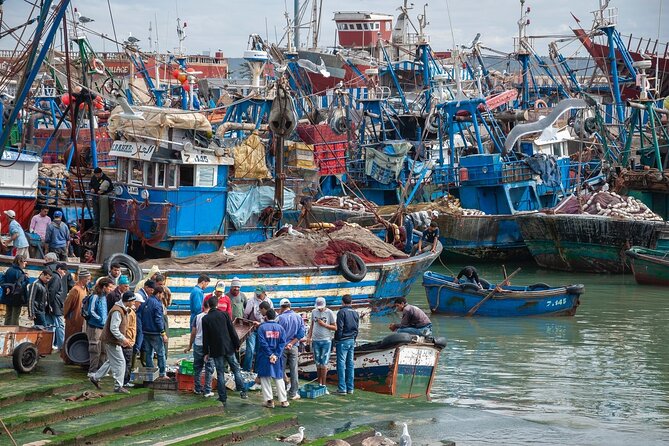
Essaouira works well as the opening destination because it is atmospheric without demanding a formal tour. You can stroll the narrow streets, watch cooking smoke rise from food stalls, and choose between a restaurant and casual seafood vendors. The evening is free, giving you room to recover from the journey.
The next morning, breakfast comes before checkout and a few hours to explore Essaouira. Walk along the citadel walls, visit the fishing port, and consider lunch from the seafood stalls if that appeals to you. Thuja wood is a local specialty, and the scent from workshops adds another layer to the walk.
You then face a three-hour transfer to Marrakech. I like the free time in Essaouira, but the schedule leaves little room for a slow beach-town stay. Think of it as a focused introduction, not a complete coastal holiday.
Marrakech After Dark and Inside the Medina
You arrive in Marrakech in the late afternoon and check into Riad Azoulay, located in the Medina. This location matters. Staying inside the old city lets you reach the evening action on foot, though narrow lanes can make arrival with luggage less direct than a conventional hotel.
Your first night is largely your own. The main event is Jemaa el-Fnaa, Marrakech’s famous square, where food vendors, musicians, acrobats, storytellers, and snake charmers fill the evening. The square is exciting, but the food sellers can be pushy. I would walk around once before choosing where to eat, and I would keep your belongings close in the crowd.
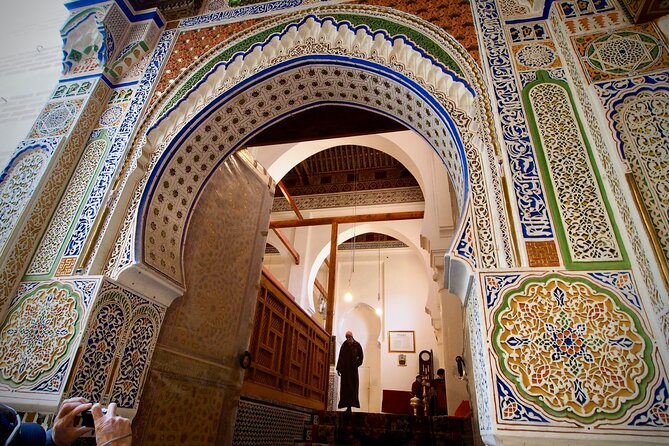
The next day includes breakfast and a private four-hour guided tour of Marrakech. This is one of the strongest uses of a guide on the whole trip. The Medina can feel like a maze, and the guide helps connect the Saadian Tombs, the madrasa, restored palaces, ruins, markets, and food traditions.
You also get time around the guided portion to explore independently. That balance is important. A guide gives you context and helps you avoid missing major sites, while free time lets you linger over a shop, return to a favorite street, or simply sit with a mint tea.
The main caution is sensory overload. Scooters move quickly through crowded lanes, vendors may call out to you, and four hours on foot can feel full. Wear shoes suited to uneven streets and keep water with you.
Crossing the High Atlas to Aït Benhaddou
Day four begins with a drive south from Marrakech and a four-hour crossing of the High Atlas Mountains. The Tizi-n-Tichka Pass brings sharp turns, steep drops, and broad mountain views. If you dislike winding roads, this is a day to prepare for. If you enjoy road scenery, it is one of the trip’s most memorable transfers.
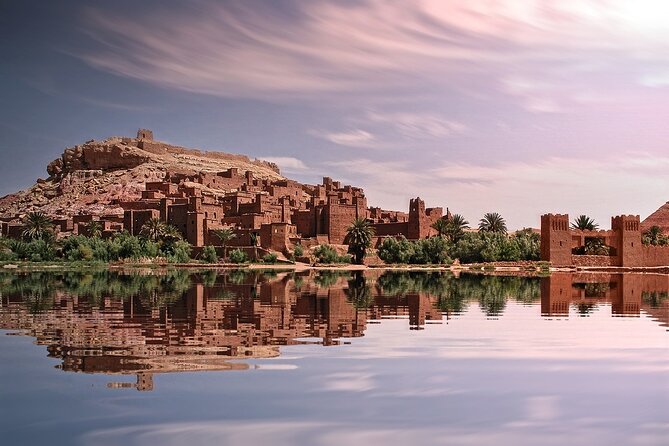
Aït Benhaddou follows the mountain crossing. The fortified village rises above the route that once linked Marrakech with trans-Saharan trade. You cross a bridge and walk uphill over uneven stone streets, passing small shops and vendors on the way to the summit.
The climb is not extreme, but the stones and slope call for reasonable mobility. At the top, views reach toward the Atlas and the valley. This is a place where the physical setting explains the history better than a museum label could.
Next comes Atlas Studios near Ouarzazate. The one-hour guided visit moves through sets representing places such as Rome, Jerusalem, China, and Egypt. It is a playful stop, and some people will enjoy seeing how Morocco has been dressed up for the screen. Others may find it less essential than the kasbahs and old cities.
Afterward, you drive about an hour to Skoura for dinner and the night. This is another day with a full road schedule, but the sequence works well: mountains, historic village, film sets, then a quieter overnight stop.
A completely different sort of day out of Casablanca:
- Casablanca: City Tour with Hassan II Mosque Entry Ticket
★ 4.6 · 1,137 reviews - Private Tour of Casablanca with Hassan II Mosque Entry Ticket
★ 5.0 · 1,102 reviews - Marrakech Day Trip with Camel Ride from Casablanca
★ 5.0 · 740 reviews - Casablanca: Hassan II Mosque & City Highlights Tour
★ 4.5 · 573 reviews
Todra Gorge and the Erg Chebbi Sunset
From Skoura, the route moves through the Valley of Roses, an area known for rosewater production, villages, and earthen kasbahs. The scenery changes from the plains near Marrakech to a much drier setting, making the drive itself part of the experience.
You then stop at Todra Gorge. The driver drops you at one end and waits at the other, allowing you to walk along a short paved road beside a stream. The cliffs rise about 500 feet on either side. The walk is described as quick and easy, but you should still wear stable shoes and watch your footing.
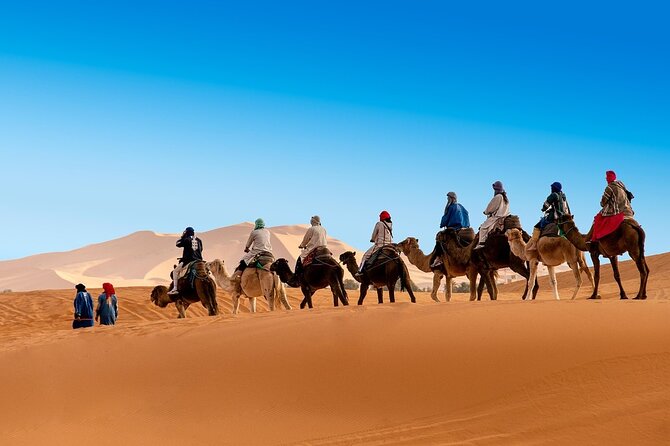
After about three hours on the road, the mountains give way to the sands of Erg Chebbi. You check into Auberge Dunes D’or, have a short break, and then join a camel caravan for sunset.
The camel ride is not a fast adventure. The animals sway as they climb and descend the dunes, and the movement can feel awkward at first. The payoff comes when you stop, walk up a dune, and watch the colors change as the sun drops.
You return by camel to the auberge for dinner and the evening. This is not presented as a luxury desert camp with a long list of amenities. It is a simple desert base, and that is worth understanding before you book. The appeal is the setting and the sunset, not a long menu of resort services.
From Desert Sands to Fez
The drive from Erg Chebbi toward Fez is one of the tour’s hardest days. The route starts with desert scenery, then rises into the Middle Atlas Mountains. Forests, streams, villages, and the possibility of seeing Barbary Apes provide a sharp change from the dunes.
The schedule lists several hours of driving before arrival in Fez, and the day can feel long. I would treat this as a scenic transfer rather than planning a major activity at the end. Once in Fez, you check into Riad el Yacout, have dinner, and get the rest of the evening to yourself.
The riad setting is a welcome contrast to the road. A courtyard and traditional design offer a calmer arrival than a standard roadside hotel. After the desert and mountain crossing, that pause matters.
The following morning begins early with breakfast and a five-hour walking tour of the Fez Medina. Fez is one of the places where a private guide earns his or her keep. The lanes twist through markets, craft workshops, food stalls, and historic buildings, and motor vehicles are absent from the narrowest streets.
You will see metalworkers hammering brass and bronze, weavers at work, and stalls selling traditional crafts. Fez is a strong place to shop, but a five-hour walk can be tiring. If you want to buy something, ask your guide about quality, prices, and how to arrange shipping if needed.
The tour’s past customers give special praise to guides Aziz in Marrakech and Mohammed in Fez. Those names may not be guaranteed for every departure, but they show the kind of local guiding the company has used. The planning contact, Luiza, is also repeatedly praised for quick replies and for shaping itineraries around individual needs.
Roman Ruins and the Imperial City of Meknes
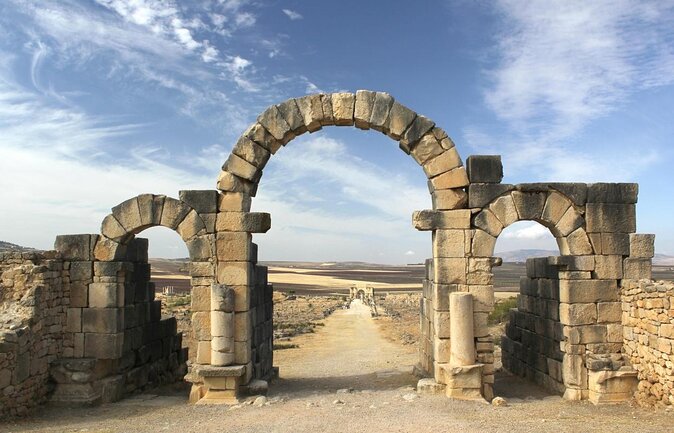
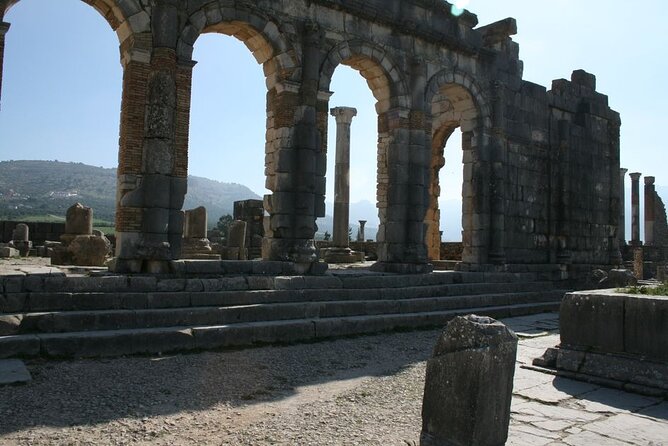
Day eight adds two major sites without requiring you to change hotels. A 90-minute drive from Fez brings you to Volubilis, founded in the third century BC and later an important Roman outpost.
You can walk the ancient streets, homes, and shops on your own. A guided upgrade is available, while admission to the site is included. If Roman ruins interest you, allow yourself time to look beyond the most obvious columns. The value here comes from seeing an ancient city in an open setting rather than viewing isolated objects in a museum.
Meknes follows on a short drive. The self-guided visits include the Heri es Souani granary and stables, Prison de Kara, and the Mausoleum of Moulay Ismail. These sites give the day an imperial focus after the Roman remains.
You return to Fez afterward, with the rest of the day free. That return is practical, since it avoids another hotel change, but it also means the day has more driving than the short stop descriptions might suggest.
Chefchaouen, Tangier, and Morocco’s Northern Edge
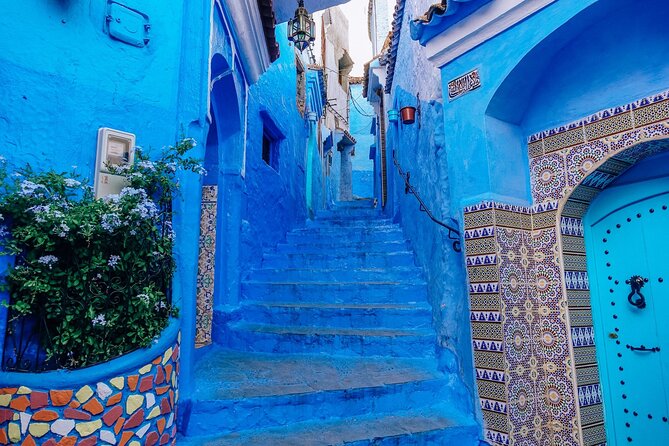
Day nine takes you north for about four hours to Chefchaouen. The blue-painted old city is the visual change many people anticipate most. Once checked into your riad, you can walk through the winding Medina, visit the waterfall and stream, or hike to sunset hill.
You should not expect a formal guided tour here. The charm is simply wandering at your own pace, taking photos, and stopping at small restaurants. The blue walls make nearly every turn appealing, but the walking surfaces are still uneven in places.
The next morning brings a 2.5-hour drive to Tangier. With Europe only eight miles away across the Strait of Gibraltar, Tangier has a different feel from the inland cities. You have the afternoon to explore the White City, the American Legation museum, the Kasbah walls, and the Grand Socco market.
The free afternoon is useful because Tangier has several worthwhile stops spread around the old city. The tour does not overload this part with a formal guide, so you can choose between history, markets, and a simple walk through the whitewashed streets.
Cap Spartel, Hercules Caves, Lixus, and Rabat
Day eleven begins with a short drive to Cap Spartel National Park, where the Atlantic meets the Mediterranean. The stop is brief, about 30 minutes, but the rocky coast provides a clean break from city streets.
The nearby Caves of Hercules also receive a short visit. The tunnels were carved by the Phoenicians, and the walk is compact. These are quick photo and scenery stops, not half-day explorations.
You then head south to the Roman ruins of Lixus, described as the mythological garden of the Hesperides. The self-guided visit includes the city and its coliseum remains. If seafood appeals to you, lunch in nearby Larache is suggested, though that meal is not listed among the included dinners.
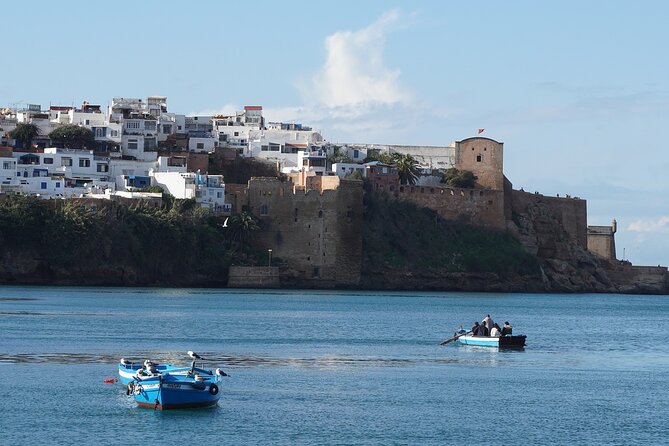
Rabat comes next, with about two hours to see the Hassan Tower, the royal tombs, and the Kasbah of the Udayas. The Kasbah sits above the Salé River and was once a pirate fortress. Its gardens and elevated setting make it a fine final city stop before Casablanca.
The last drive is about an hour to Casablanca. You stay overnight, which is sensible for an airport departure the next day.
Casablanca’s Final Morning and Practical Value
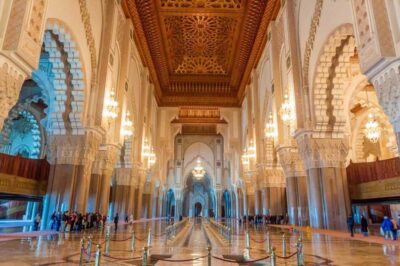
Your last morning includes a sightseeing drive through Casablanca’s French colonial and Art Deco district, followed by a tour of Hassan II Mosque. The mosque tour is closed on Fridays, so check your departure day carefully before booking.
The driver then takes you to Casablanca airport. Since the tour ends there, the final transfer is straightforward, but you should confirm your flight timing against the sightseeing schedule.
At $2,471 per person, the price is easiest to judge by what it replaces. It includes all accommodations, private vehicle transport, guided tours, listed admissions, ten breakfasts, and three dinners. Flights and tips are extra.
For a private 12-day trip covering this much ground, the price can offer solid value, especially for people who would otherwise need to arrange drivers, hotels, guides, and admission tickets separately. Group discounts may improve the cost for larger parties. The value is weaker if you prefer to stay several nights in each city or dislike long road transfers.
The accommodation level is described as Jr. Suite lodging, with stays at named riads and an auberge. Riads are often part of the appeal in Morocco because they place you inside the old cities, but their layouts can include stairs and narrow passages. The tour requires moderate physical fitness, and that is an important part of the price decision.
Free cancellation is available up to 24 hours before the start time for a full refund. Changes or cancellations inside that period are not accepted for a refund. Tips are not included, so plan for those separately.
Is This Private Morocco Tour Right for You?
Book this tour if you want to see a great deal of Morocco without managing the transport yourself. It suits first-time visitors, families, friends traveling together, and anyone who values a private vehicle, riad stays, city guides, and built-in flexibility.
It is especially good for you if Marrakech, Fez, the Sahara, Chefchaouen, and Tangier are all on your wish list. The strongest features are the private structure, responsive planning support from Luiza, local guides such as Aziz and Mohammed when assigned, and the mix of guided sightseeing with free time.
Think twice if you want a slow trip. The route is a whirlwind by design, with long drives from Essaouira to Marrakech, across the Atlas, from the desert to Fez, and through northern Morocco. If you accept that rhythm, this is an efficient and memorable way to see the country’s main regions. If not, ask about adding rest days or removing stops before you commit.
FAQ
How long is the Private Grand Tour of Morocco?
The tour lasts approximately 12 days, beginning at Mohamed V Airport in Casablanca and ending in Casablanca.
What is included in the price?
The price includes an air-conditioned vehicle, all accommodations, guided tours and listed admissions, ten breakfasts, and three dinners.
Are flights included?
No. Flights are not included in the tour price.
Where does the tour start?
The tour starts at Mohamed V Airport in Casablanca, Morocco. The listed start time is 6:00 a.m.
Where does the tour end?
The tour ends in Casablanca, with a driver transfer to Casablanca airport after the final sightseeing.
Is this a private tour?
Yes. Only your group participates in the private tour.
Is a camel ride included?
Yes. At Erg Chebbi, you join a camel caravan into the dunes to watch the sunset, then return to Auberge Dunes D’or.
Is the Hassan II Mosque open every day?
The tour information notes that the Hassan II Mosque tour is closed on Fridays.
Just added around Casablanca
- Private Half-Day Guided Tour of Casablanca★ 4.0 · 17 reviews
- Private 10 days Tour From Casablanca Via Desert★ 5.0 · 17 reviews
- Casablanca day trip from the cruise ship passenger.★ 4.2 · 17 reviews
- Morocco 8-Night Tour: Chefchaouen, Desert & Hot Air Balloon★ 5.0 · 18 reviews
- Private 11 Day Tour From Casablanca Imperial Cities Sahara Desert★ 5.0 · 18 reviews
- Private Casablanca Layover Tour with Round-Trip Airport Transfer★ 4.5 · 18 reviews
- Big Morocco Tour 15 Days From Casablanca★ 5.0 · 18 reviews
- Casablanca Airport Transfer from hotel in Casablanca★ 5.0 · 18 reviews
Casablanca Tours, compared.
Hassan II Mosque Premium Tour with Entry Ticket
Read our review →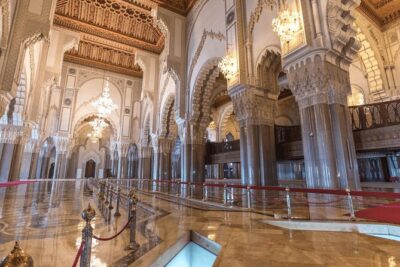
Casablanca City Tour with Hassan II mosque ticket
Read our review →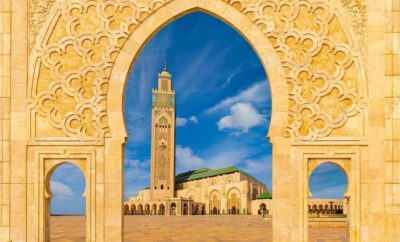
Private Tour of Casablanca with Hassan II Mosque Entry Ticket
Read our review →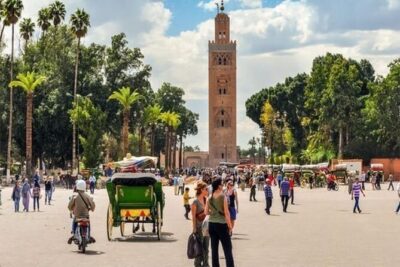
Marrakech Day Trip with Camel Ride from Casablanca
Read our review →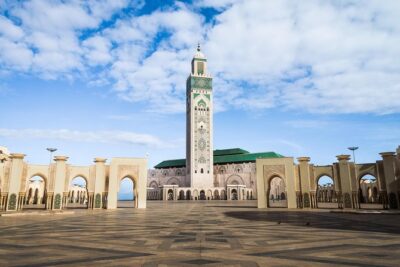
Browse the lists this tour appears in