
Reviewed · MERZOUGA AND SAHARA DESERT TOURS
Private 8 Days Morocco Tour From Marrakech with Sahara Desert
Morocco rewards travelers who keep moving. This eight-day private journey links Marrakech, the High Atlas, ancient kasbahs, desert villages, and the Sahara without making you organize every transfer yourself. I like the private vehicle and flexible attention, and I especially like the chance to share lunch with a local family rather than seeing Morocco only through palace doors and hotel dining rooms.
The route also gives you a proper night in the desert, with a camel ride at sunset and a camp beneath the stars. The main drawback is the amount of time spent on the road. You will cover a large part of southern Morocco, so some days feel like scenic transport with stops rather than long stays in one place.
In This Review
- The best parts of this Morocco journey
- Who this eight-day route suits best
- Day 1: Arriving in Marrakech and finding Jemaa el-Fnaa
- Day 2: Palaces, tombs, gardens, and the Medina
- Day 3: Crossing Tizi n’Tichka to Ait-Ben-Haddou
- Day 4: Todgha Valley and the fossils of Erfoud
- Day 5: Gnawa music, desert villages, and a sunset camel ride
- Day 6: Rissani’s market and the long Draa Valley
- Day 7: Telouet Kasbah on the return to Marrakech
- Day 8: Airport transfer and the final practical details
- Is $2,090.62 per person good value?
- My verdict: should you book it?
- FAQ
- How long is the tour?
- Is this a private tour?
- Is airport pickup offered?
- What is included in the price?
- Are drinks included?
- Will I ride a camel in the Sahara?
- Is there an overnight stay in the desert?
- Can I visit Rissani Market on market day?
- What is the cancellation policy?
The best parts of this Morocco journey
- Marrakech with a private local guide: See Jemaa el-Fnaa, the Bahia Palace, Saadian Tombs, the Medina, and Jardin Majorelle in one well-packed day.
- A drive across the High Atlas: Cross Tizi n’Tichka and pass Berber villages on the road toward Ait-Ben-Haddou.
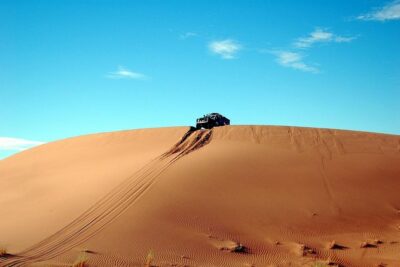
- A real Sahara overnight: Ride a camel across Merzouga’s golden dunes at sunset and sleep in a glamping camp under the stars.
- Local contact beyond sightseeing: Eat a homemade lunch with a local family and hear Gnawa music in Khamlia.
- Kasbahs and desert valleys: Visit Ait-Ben-Haddou and Telouet Kasbah, then see the Dades, Todgha, and Draa valleys.
- Private travel for your group: You avoid a large coach and can discuss comfort, timing, and stops with your driver.
Who this eight-day route suits best
I would choose this tour if you want to see southern Morocco in one trip and prefer having transport, drivers, and many visits arranged in advance. A private tour is especially useful here because the route crosses mountain passes, long desert roads, and scattered villages. You are not tied to a fixed group, and only your party participates.
The route is broad rather than slow. In eight days, you see Marrakech, the Atlas Mountains, Ait-Ben-Haddou, the Rose Valley, Dades, Todgha, Erfoud, Merzouga, Rissani, the Draa Valley, and Telouet. That range is the chief attraction, but it also means you should expect several long drives and fairly short visits at some stops.
The tour is a good fit for families and small groups who want a private vehicle. A family of six has previously used the service, and the team has also handled honeymoon trips and groups of six women. The road time may be tiring for very young children, but the private format gives your group more control than a shared bus.
More Sahara Desert Tours in Marrakech
- From Marrakech: 3-Day Merzouga and Sahara Desert Tour
★ 4.9 · 15,308 reviews - From Marrakech: Merzouga 3-Day Desert Safari with Food
★ 4.7 · 12,232 reviews - 3 Days Desert Tour From Marrakech To Merzouga Dunes & Camel Trek
★ 5.0 · 10,125 reviews
Day 1: Arriving in Marrakech and finding Jemaa el-Fnaa
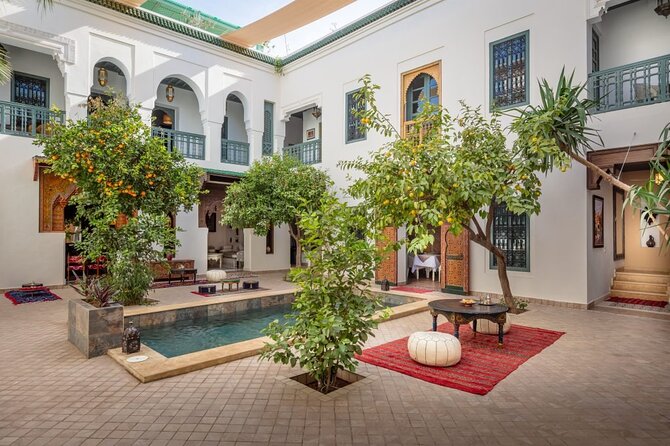
Your arrival at Menara Airport is followed by a transfer to your riad with an English-speaking private driver. The first day is intentionally light, which is sensible after a flight. You have time to settle in, then walk toward Jemaa el-Fnaa if your energy and arrival time allow.
Jemaa el-Fnaa is the place to get your first feel for Marrakech. The square changes character through the day, and it is the natural starting point for the Medina. Since the first day includes about two hours in Marrakech with no admission charge listed, you should treat it as an easy orientation period rather than a formal sightseeing day.
One practical point needs checking before payment: the description refers to a riad, hotels, and a desert camp, but the stated inclusions list transportation, parking, four dinners, and seven breakfasts. Ask the operator in writing if all accommodation is included in the quoted $2,090.62 per person price.
Day 2: Palaces, tombs, gardens, and the Medina
The second day is the tour’s main Marrakech visit, led by a local English-speaking guide. It begins at Jemaa el-Fnaa, where you might see snake charmers, storytellers, singers, and dancers. The scheduled visit is only about 20 minutes, so the real value is the guide’s explanation and the chance to understand how the square fits into daily life.
The Koutoubia Mosque comes next. Its 70-meter minaret is one of Marrakech’s clearest landmarks, and the mosque dates to the 12th century. The planned stop is brief, about 20 minutes, so you should expect an exterior visit rather than a long interior tour.
At Bahia Palace, carved stucco, painted surfaces, mosaics, courtyards, and gardens show the tastes of 19th-century Moroccan elites. The palace covers a large area, but the scheduled time is 30 minutes. That is enough for a first look, though not enough to linger over every room or garden.
The Saadian Tombs offer a smaller but more concentrated visit. Built at the end of the 16th century under Ahmad al-Mansur, the tomb complex contains more than 100 graves in a decorated garden, including members of the Saadi dynasty. The narrow entrance passage and compact setting make this one of the day’s more intimate sights.
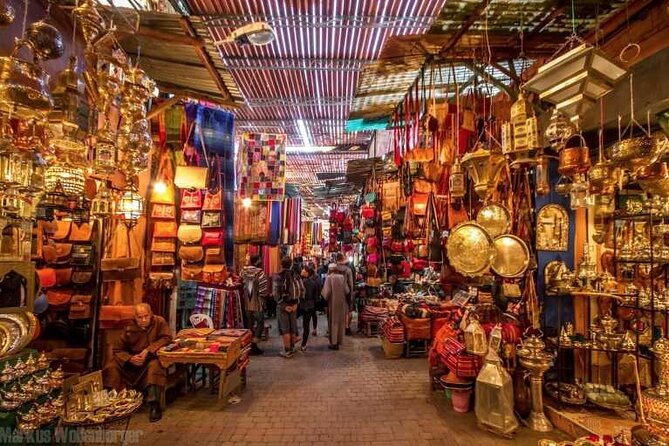
You then spend about two hours walking through the Medina. This is where comfortable shoes matter. The cobbled alleys, handicraft shops, mosques, and Quranic schools are best understood with a guide who can explain what you are seeing and help you keep your bearings.
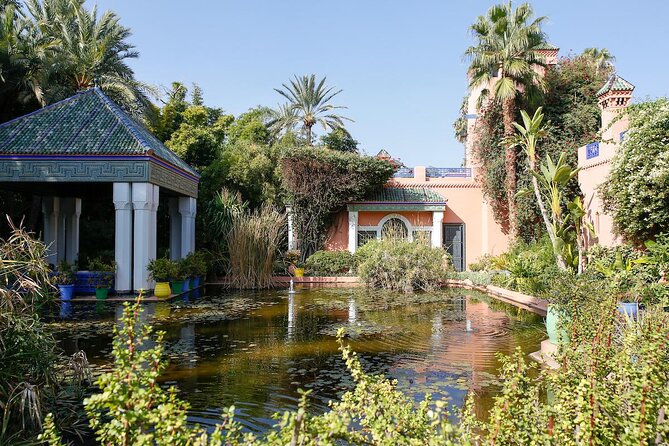
Jardin Majorelle closes the day with a different mood. Jacques Majorelle created the botanical garden over nearly 40 years, beginning in 1923, and the property later received careful restoration from Yves Saint-Laurent and Pierre Bergé. You have about an hour there, with admission included. The garden is a welcome pause after the tight streets of the Medina, though shoppers and art lovers may wish the schedule allowed more time.
Day 3: Crossing Tizi n’Tichka to Ait-Ben-Haddou
The road out of Marrakech climbs into the High Atlas Mountains, passing Berber villages and wide mountain views. The short scheduled stop at Tizi n’Tichka is only about 20 minutes, but the drive itself is part of the experience. Mountain roads can make this a demanding day, so keep water within reach and do not plan anything strenuous for the evening.
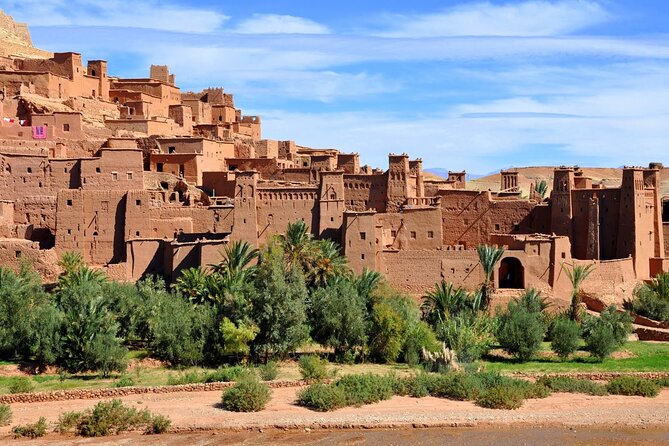
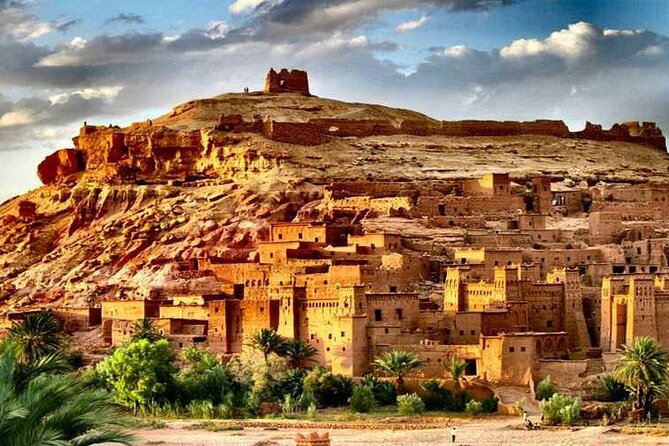
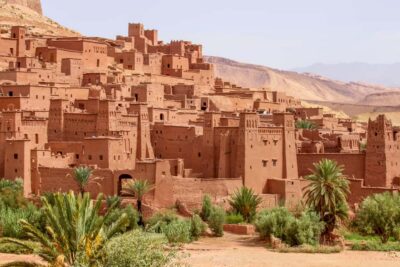
Ait-Ben-Haddou is the major sight of the day. This fortified ksar is built from rocks, mud bricks, straw, and palmwood, and it has been recognized as a UNESCO World Heritage site since 1987. Its walls and earthen towers are instantly recognizable, helped by appearances in films such as Gladiator and Lawrence of Arabia.
The planned visit lasts about two hours, including lunch somewhere in the area. That gives you time to walk among the buildings and see how the earthen architecture rises from the surrounding dry country. The site is historic, but it is not a museum frozen in time. Berber people still live there, which adds a human dimension to the visit.
The route continues through the Rose Valley toward Kalaat M’Gouna. Thousands of rose bushes cover the hillsides, and spring is the best time to see them in bloom and catch their scent. Outside the flowering season, the stop may feel more scenic than floral, so set your expectations accordingly.
You finish near Boumalne Dades, in the Dades Valley. The stop is short, about 20 minutes for views and photographs, followed by the drive to your hotel. This is a day of changing scenery more than long museum visits.
More Sahara Desert Tours:
- 3-Day Marrakech to Merzouga Desert Tour: Camel Rides & Overnights
★ 5.0 · 8,734 reviews - 3-Day Marrakech to Fes Sahara Desert Tour via Merzouga
★ 5.0 · 6,546 reviews - Marrakech: 3-Day Merzouga Desert Experience Camel & Meals
★ 4.6 · 6,252 reviews - From Marrakech: 2-Day Sahara Tour to Zagora & Ait Ben Haddou
★ 4.4 · 1,925 reviews
Day 4: Todgha Valley and the fossils of Erfoud
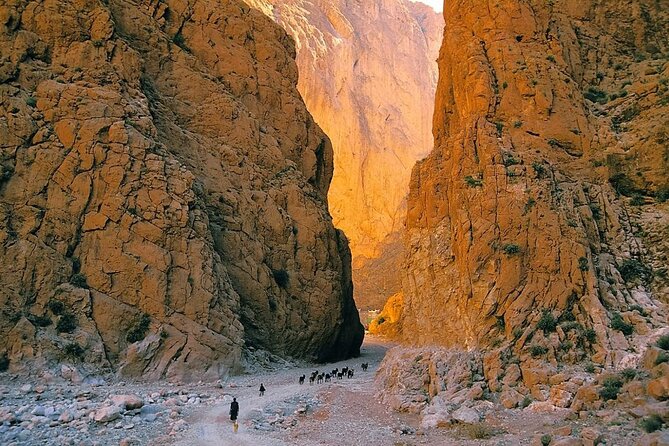
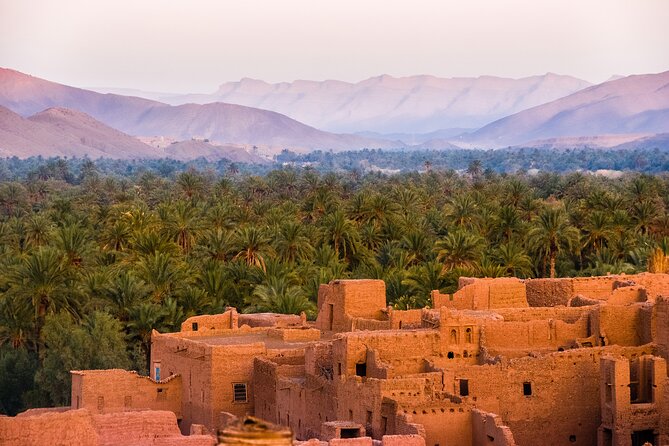
Todgha Valley brings palms, fig trees, almond trees, old kasbahs, and the Todgha River. The route notes Jewish kasbahs in the valley, reflecting the area’s former Jewish communities. You then walk through Todgha Gorges for about an hour, with the possibility of seeing a nomadic family bringing livestock to the river.
The gorge visit is one of the trip’s stronger outdoor moments because it gets you out of the vehicle and into the terrain. Still, the available information does not promise a specific hiking distance or difficulty. If you need a particular walking level, ask the operator before departure.
Later, in Erfoud, you visit a fossil factory for about 30 minutes. This is more than a shopping stop on paper: you learn how geological change shaped the region and how fossil-bearing rock is turned into sinks, tables, and other objects. The commercial side is clear, so decide in advance if you want to browse or simply learn about the process.
Day 5: Gnawa music, desert villages, and a sunset camel ride
Khamlia offers a cultural stop that differs from the architecture and scenery earlier in the week. The village is known for Gnawa music, performed with instruments including the hajhouj, qraqeb, and drums. The history behind the community is tied to Africans brought to Morocco as enslaved people in past centuries, so this visit deserves attention and respect rather than being treated as a quick musical show.
The tour then explores the Merzouga area by off-road vehicle, visiting remote Berber villages. The route description says you may encounter desert wildlife such as fennec foxes, sand cats, or sand fish. These sightings are possibilities, not promises, so enjoy the open desert even if no animals appear.
A homemade lunch with a local family is one of the most valuable parts of the week. You get a direct look at Moroccan customs and daily life, and the meal offers a break from the standard restaurant circuit. Because this is a personal cultural exchange, approach it with courtesy, patience, and curiosity.
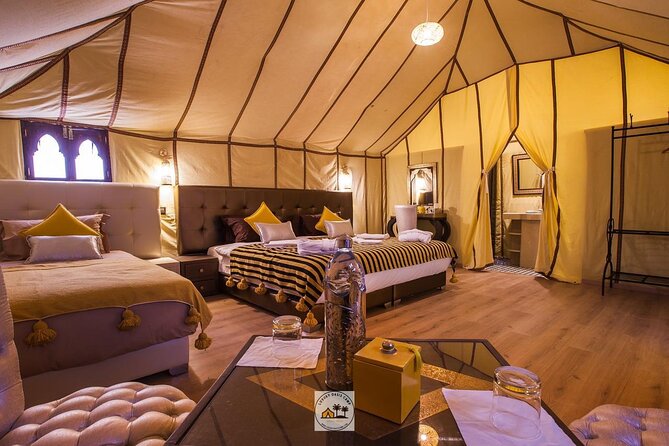
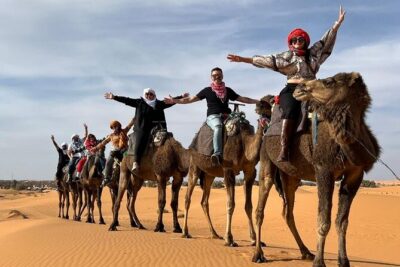
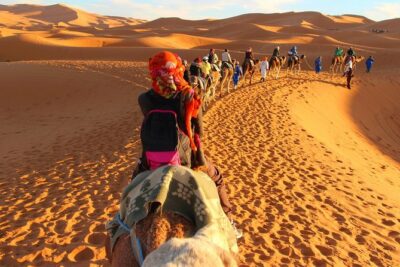
In the late day, you ride a camel for about an hour across Merzouga’s dunes as the sun goes down. The camel journey is not long, but it gives you time to watch the dunes change color and reach the camp in a traditional way. The overnight stay is described as glamping, with a night beneath thousands of stars.
Desert nights can be cold, even after a hot afternoon. The information provided does not specify the camp’s exact facilities or heating, so ask what bedding, bathroom arrangements, and cold-weather equipment are supplied. If you have back or knee problems, also ask about the camel ride and the option for vehicle transport.
Day 6: Rissani’s market and the long Draa Valley
Rissani’s market is scheduled for one hour and takes place on Tuesdays, Thursdays, and Sundays. The timing matters. If your visit falls on one of those days, you see a working market selling fruit, vegetables, meat, dates, nuts, spices, crafts, and even livestock such as donkeys, sheep, and goats.
This is the kind of stop that gives a desert route practical local context. It is not just scenery. You see where people shop, trade, and meet, although the market may be more active and varied on its market days than at other times.
The Draa Valley follows, with about an hour for views. The Draa is described as Morocco’s longest river at 1,100 kilometers, though parts of it run dry for much of the year. Palm groves and henna cultivation give the valley a distinct character, and the route shows how water supports settlement in an otherwise dry region.
Day 7: Telouet Kasbah on the return to Marrakech
Telouet Kasbah sits in the High Atlas and was the home of the El Glaoui family until Moroccan independence. The exterior may look weathered, but the interior is the main reason to stop. Decorative tilework and architectural details make the one-hour visit worthwhile.
This day helps break up the return toward Marrakech, but it is still primarily a transfer day. Telouet also gives you another view of Morocco’s political past, different from the Saadian Tombs and Bahia Palace in Marrakech. The repeated appearance of kasbahs across the route helps you see how power, trade, and protection were tied to architecture.
Day 8: Airport transfer and the final practical details
On the last day, the driver transfers you either to Marrakech or Casablanca Airport at your flight time. The listed transfer time is about one hour, but you should confirm the airport, pickup time, and flight-day plan directly with the provider.
Private transportation is included, along with parking fees. Four dinners and seven breakfasts are listed, while drinks are not included. Since the route includes long drives and remote areas, budget separately for beverages, lunches not covered by the program, and any purchases at craft or fossil stops.
The meeting information names Groupe L’Adresse Cafe and Restaurants at 5 rue de la Koutoubia, beside Jemaa el-Fnaa, as the start and end point. At the same time, the first day describes airport pickup. Confirm your exact pickup location so you are not carrying bags through the square looking for the driver.
Is $2,090.62 per person good value?
The price is substantial, but the value depends on what the final booking includes. You are paying for eight days of private transport, parking, airport transfers, guiding in Marrakech, camel trekking, selected admissions, four dinners, seven breakfasts, and a route that would be difficult to arrange efficiently on your own.
You also receive the convenience of one company coordinating the driver, accommodations, desert camp, local meal, and sightseeing. Past arrangements have included drivers and guides such as Sliman, Souleimane, Mustafa, Ismail, Abdul Aziz, and Said Taouchikht. The strongest pattern is attentive service: drivers arriving on time, keeping the vehicle comfortable, answering questions quickly, and adjusting plans to suit families and couples.
Still, do not assume the price covers every overnight stay simply because riads, hotels, and glamping appear in the description. Confirm accommodation, room arrangements, lunches, guide fees outside Marrakech, and the exact vehicle before booking. At this price, those details should be clear.
My verdict: should you book it?
Book this tour if you want a private, carefully supported route from Marrakech to the Sahara and back, with culture mixed into the scenery. The strongest moments are the local family lunch, Khamlia’s Gnawa music, the desert camp, Ait-Ben-Haddou, and the freedom of having your own driver.
I would hesitate only if you dislike long road days or want a slow holiday based in two or three places. Before booking, confirm accommodation, camp facilities, airport arrangements, and what happens if your dates do not match Rissani’s market days. If those points work for you, the tour offers a practical way to see much of southern Morocco in a single week, with personal service rather than a large coach group.
FAQ
How long is the tour?
The tour lasts approximately eight days, beginning with arrival in Marrakech and ending with a transfer to Marrakech or Casablanca Airport.
Is this a private tour?
Yes. Only your group participates, and private transportation is included.
Is airport pickup offered?
Yes. On arrival at Menara Airport in Marrakech, an English-speaking private driver transfers you to your riad. Confirm the exact pickup details before arrival.
What is included in the price?
Private transportation, parking fees, four dinners, and seven breakfasts are listed as included. Selected admissions, such as Bahia Palace, Saadian Tombs, Jardin Majorelle, Telouet Kasbah, Gnawa music, the local family lunch, and the camel ride, are also marked as included in the itinerary.
Are drinks included?
No. Drinks are not included.
Will I ride a camel in the Sahara?
Yes. The itinerary includes an approximately one-hour camel trek through the Merzouga dunes at sunset.
Is there an overnight stay in the desert?
Yes. The experience includes a glamping night beneath the stars in the Sahara. The exact camp facilities are not specified, so confirm them before booking.
Can I visit Rissani Market on market day?
Rissani Market takes place on Tuesdays, Thursdays, and Sundays. Check your exact itinerary dates if the market is important to you.
What is the cancellation policy?
You can cancel at least 24 hours before the experience start time for a full refund. Cancellations or changes made within 24 hours are not refunded or accepted. If poor weather or an insufficient number of participants causes cancellation, you are offered another date or a full refund.
Just added around Marrakech
- One Way – Marrakech Airport Private Taxi Transfers★ 4.5 · 17 reviews
- Majorelle Garden, YSL & Berber Museum: Exciting Round-Trip Tour★ 4.5 · 17 reviews
- Ourika valley day trip★ 5.0 · 17 reviews
- Marrakech: Agafay Desert Buggy Tour with Transfer★ 4.4 · 17 reviews
- From Marrakech: small group Day Trip To Essaouira Mogador★ 4.9 · 17 reviews
- Essaouira Day Trip from Marrakech★ 5.0 · 17 reviews
- From Marrakech: Ouzoud Waterfalls Full-Day Guided Tour★ 4.2 · 17 reviews
- Best Marrakech to Merzouga 3 D 2N Sahara Desert Tour Adventure★ 5.0 · 17 reviews
Merzouga and Sahara Desert Tours, compared.
3 Days Desert Tour From Marrakech To Merzouga Dunes & Camel Trek
Read our review →
3-Day Marrakech to Merzouga Desert Tour: Camel Rides & Overnights
Read our review →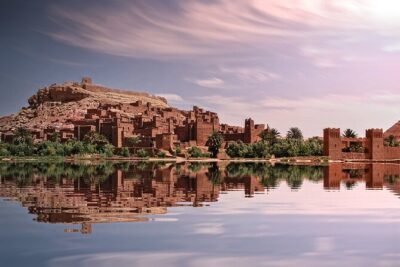
3-Day Marrakech to Fes Sahara Desert Tour via Merzouga
Read our review →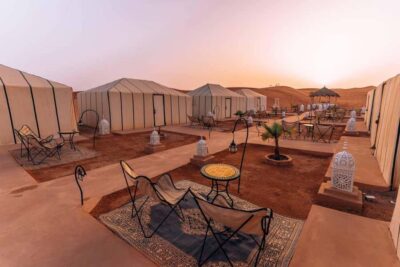
3-Day Merzouga Desert Experience Camel & Meals
Read our review →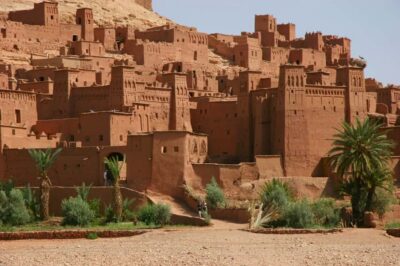
3-Day Tour to Merzouga Erg Chebbi with Food & Camel Trek
Read our review →Browse the lists this tour appears in