
Reviewed · CITY TOURS
Marrakech walking tour with official city guide
Marrakech reveals itself on foot. I like the way this four-hour walking tour links the city’s major sights with a multilingual official guide, and I like that entrance fees are included rather than added one by one at each door. The small group, capped at 15 people, should also make it easier to ask questions.
The main tradeoff is the early 8:00 am start and the amount of walking. You will cover several separate sights and the souks in one morning, with no meal or drink included, so this works best if you want a brisk first look rather than a slow, relaxed day in the medina.
In This Review
- Key points at a glance
- What this Marrakech walk is really for
- Beginning at Jemaa el-Fnaa at 8:00 am
- Bahia Palace and the scale of royal life
- The Saadian Tombs and a sealed royal past
- Medersa Ben Youssef and the life of a student
- Jemaa el-Fnaa and the souks
- What the $111.50 price includes
- Who will get the most from this tour
- Practical details before you reserve
- Should you book this Marrakech walking tour?
- FAQ
- How long does the Marrakech walking tour last?
- What time does the tour begin?
- Where does the tour start?
- Where does the tour end?
- Which attractions are included?
- Are admission fees included?
- What languages does the guide speak?
- How many people can join the tour?
- Are meals and drinks included?
- Can I cancel for a full refund?
Key points at a glance
- Four major Marrakech sights in one morning: Visit Bahia Palace, the Saadian Tombs, Medersa Ben Youssef, and Jemaa el-Fnaa.
- Official multilingual guidance: The tour is offered in English, Spanish, or French, giving you context as you move through the old city.
- Admission fees included: Your ticket covers entry to the listed sites, which makes the $111.50 price easier to judge.
- Small group, maximum 15 people: This is more personal than a large coach excursion, especially in narrow medina streets.
- Hotel pickup may be available: The tour advertises pickup and round-trip transfers, but the stated meeting point is Jemaa el-Fnaa, so confirm the exact arrangement before booking.
- A strong first-day option: The route gives you a useful orientation before you return to the souks or monuments on your own.
What this Marrakech walk is really for
I would treat this as an orientation tour with serious sightseeing built in. In four hours, you get a guided introduction to the medina, several important monuments, and the city’s main public square. That is a lot of ground, but it gives you a clear map in your head for the rest of your stay.
The guide matters here. Marrakech’s old city is made up of busy market lanes, monumental gateways, courtyards, and side streets that can feel confusing at first. A local guide can connect the buildings to the rulers, religious schools, burial traditions, and trade routes that shaped the city.
The tour is offered in English, Spanish, or French. A guide named Ayoub has been praised for being thoughtful, attentive, and willing to answer questions in detail. That is exactly the sort of guide you want in Marrakech, where a quick explanation can turn a pretty courtyard into a place with a clear purpose.
The group limit of 15 is useful, though it does not mean you will have a private tour. In narrow streets, a group of that size can still need to bunch together. The advantage is that you should have a better chance of hearing the guide and getting an answer than you would in a much larger group.
More City Tours in Marrakech
- Marrakech: Private Guided Half-Day City Tour
★ 5.0 · 1,249 reviews - Marrakech Historical and Cultural Tour – Half Day City Tour
★ 4.5 · 1,180 reviews - Marrakech City Tour: Private Custom-Made
★ 4.5 · 596 reviews
Beginning at Jemaa el-Fnaa at 8:00 am
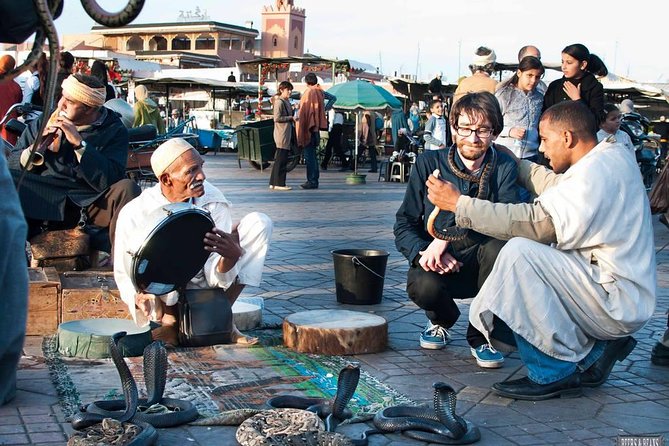
The stated meeting point is Jemaa el-Fnaa, Marrakech’s famous central square. The activity begins at 8:00 am and ends back at the meeting point, so you should plan to arrive early and allow time to find the exact meeting spot.
An early start is practical. The square and surrounding market lanes are central to the city experience, but the morning gives your guide room to explain the area before you get caught up in the day’s activity. It also lets you see the square as a place of commerce and daily life, not only as a stop on a sightseeing checklist.
There is one point worth checking before you pay. Pickup is offered in the tour details, and round-trip hotel transfers are listed as a benefit, but the formal meeting information gives Jemaa el-Fnaa as the start and finish. Ask the operator, Gboo Morocco Tours, if pickup applies to your hotel and how the transfer changes the meeting instructions.
Bahia Palace and the scale of royal life
The first listed stop is Bahia Palace, with about 30 minutes inside and admission included. The name is commonly translated as palace of the beautiful or palace of the brilliant, and the building is one of Morocco’s major architectural monuments.
The palace was built in the southeastern part of the medina between 1866 and 1867 for Si Moussa, chamberlain to Sultan Hassan I. Moroccan architect El Mekki designed the northern section. The full complex covered eight hectares, or about 8,000 square meters, and was considered the largest and most luxurious palace in Morocco at the time.
Those numbers help you understand the site before you enter. Bahia Palace is not simply one grand room. It is a large palace complex whose size reflects the power and status of its owner. Your guide can give the building a political and social setting that you would miss if you only walked through, admired the decoration, and moved on.
Thirty minutes is enough for a focused visit, but it is not generous if you want to linger over every architectural detail. If you enjoy taking photographs or studying decorative work, you may find this part quick. The benefit of the guided format is that you will not spend your limited time wondering which parts matter most.
The Saadian Tombs and a sealed royal past
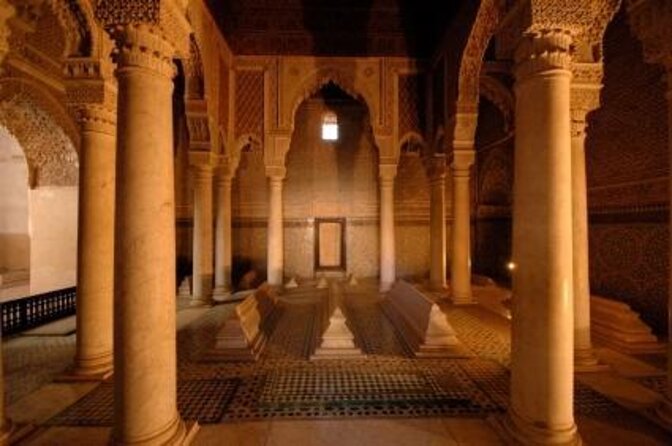
Next comes the Saadian Tombs, close to the mosque of the Kasbah. This stop also lasts about 30 minutes, with admission included.
The tombs are among the few surviving remains connected with the Saadian dynasty, which ruled Marrakech during a golden period from 1524 to 1659. Their survival is tied to a striking decision by Sultan Moulay Ismail in the early 18th century. He ordered traces of the earlier dynasty removed, but he did not destroy the burials. Instead, the entrance to the necropolis was closed.
The site remained unknown to the outside world until its rediscovery in 1917. That story gives the tombs a special quality. You are not only looking at a royal burial place, but also at a monument that was deliberately shut away and later found again.
The short visit should suit you if you want the main explanation and a look inside without spending a large part of the morning at one monument. If you prefer quiet, extended visits, the fixed 30-minute schedule may feel restrictive. The tour is designed to connect four places, not to give each one an hour.
More Walking Tours in Marrakech
- Marrakech: Ben Youssef, Secret Garden, & Souks Walking Tour
★ 4.6 · 2,802 reviews - Marrakech: Colorful Medina Souks Guided Walking Tour
★ 4.7 · 2,470 reviews - Marrakech: Medina by Night Walking Tour with Moroccan Tea
★ 4.6 · 586 reviews - Marrakech: Medina Souks Guided Walking Tour
★ 4.5 · 381 reviews
Medersa Ben Youssef and the life of a student
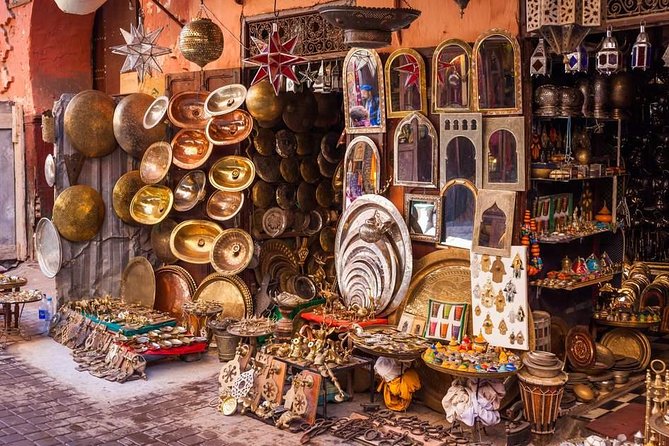
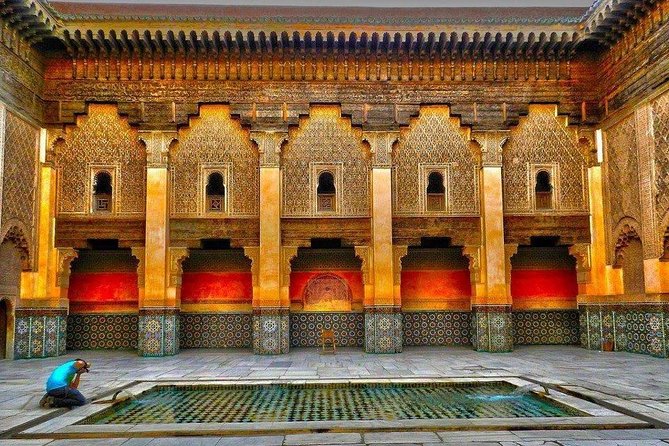
The third major monument is Medersa Ben Youssef, described as a Koranic school and Islamic college. You have about 30 minutes here, and entry is included.
The school was founded at the beginning of the 14th century by the Moroccan monarch Abu el Hassan. It was later enlarged and redecorated under the Saadians in 1570, when it became the largest Islamic college in the Maghreb. Up to 900 students could live there while studying law and theology.
That detail changes how you read the building. This was not only a beautiful religious structure. It was also a working place of study, residence, food, and daily routine. Students received lodging and meals from the monarchy, although they had to prepare the food themselves.
The bronze entrance door and decoration make the medersa a natural highlight, but the building’s purpose is just as important as its appearance. It was converted into a museum in 1960 and renovated in 1999, helping make it one of Marrakech’s most visited sights.
Your guide can help you notice the difference between a school designed for students and a palace designed for a ruler. That comparison is one of the best reasons to visit both Bahia Palace and Medersa Ben Youssef on the same morning.
Jemaa el-Fnaa and the souks
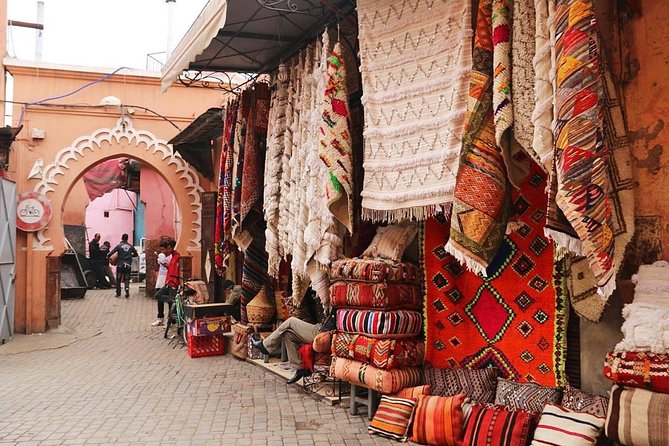
The final stop receives the longest allocation, about one hour. Jemaa el-Fnaa is the heart of Marrakech’s public life, and the surrounding souks give you the clearest sense of how the old city functions as a market district.
A souk is an Arab market. Traditionally, these markets supplied everyday goods to local residents, while also serving people moving along major trade routes. Marrakech sat at the meeting point of routes from the north, south, east, and west, so goods could arrive from across Morocco, nearby African countries, and places farther away.
The guide can help you read the souks as more than a maze of shops. You will see a district shaped by commerce, movement, bargaining, and the needs of a large city. The atmosphere can be intense, and the narrow lanes may feel confusing without someone showing you how the area fits together.
An hour is a useful amount of time for an introduction. It gives you a chance to learn the layout and understand the role of the square before exploring independently. It is not enough for an unhurried shopping session, and you should not expect to negotiate for rugs, leather goods, or other purchases as part of the formal tour.
This is also the point where the walking format earns its keep. A vehicle cannot give you the same sense of the souks’ lanes and connections. You move at street level, with the guide pointing out the market district as part of Marrakech’s daily life.
What the $111.50 price includes
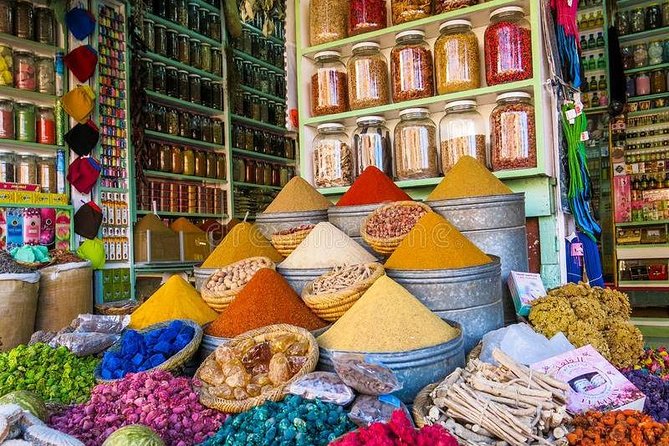
At $111.50 per person, this is not a bargain-priced stroll. The value depends on how much you want handled for you.
The price includes about four hours with an official guide, entry fees for the listed sights, and the advertised pickup or transfer service. Those inclusions matter in Marrakech, where separate admission charges and transport can make a supposedly cheap morning harder to price accurately.
The small group also adds value. A maximum of 15 people is not private guiding, but it is a reasonable size for a walking route through the medina. You are paying for interpretation and organization as much as for the monuments themselves.
Meals, drinks, and personal expenses are not included. You should plan for those separately, and you may want water before the tour begins. Group discounts are available, so the per-person cost may make more sense for families or larger parties than for a solo visitor.
The tour is often booked well ahead, with an average booking lead time of about 54 days. That does not guarantee a date will sell out, but it is a useful reminder to reserve early if your Marrakech schedule is fixed.
Who will get the most from this tour
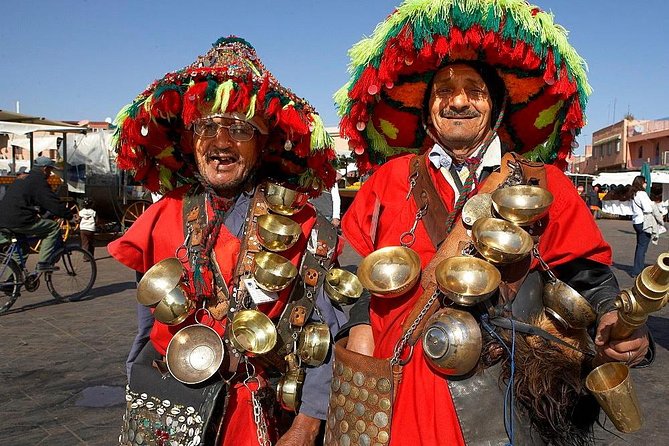
I would recommend it most strongly for a first visit to Marrakech. You get a broad introduction without having to work out the medina’s layout, ticketing, or monument sequence yourself.
It also suits you if you enjoy asking questions. The guide speaks English, Spanish, or French, and the smaller group should make conversation possible. Ayoub’s attentive approach is a good sign for anyone who wants more than a list of dates and building names.
This is less suited to you if you already know the medina well or want to spend a full morning at one palace. The schedule gives each monument a set window, then devotes a full hour to Jemaa el-Fnaa and the souks. It is efficient, but not leisurely.
The walking demands matter too. The activity lasts around four hours and includes several stops spread through the old city. Most people can participate, and service animals are allowed, but you should be comfortable spending the morning on foot.
Practical details before you reserve
The formal start time is 8:00 am at Jemaa el-Fnaa, with the tour ending at the same meeting point. Because pickup is also advertised, confirm whether the operator will collect you from your hotel or expects you to reach the square independently.
The tour requires good weather. If poor weather forces a cancellation, you will be offered another date or a full refund. The operator also requires a minimum number of participants, so a cancellation for that reason brings the same choice of another date or experience, or a full refund.
You can cancel for a full refund up to 24 hours before the start time. Changes or cancellations inside that 24-hour window are not accepted and are not refunded. The cutoff follows local Marrakech time.
The tour accepts mobile tickets, which is handy when you are moving between a hotel, meeting point, and old-city streets. Confirmation is provided when you book.
Should you book this Marrakech walking tour?
Book it if you want a well-organized first morning that combines four important sights with an introduction to the medina. The included admissions, multilingual official guide, and maximum group size of 15 help justify the $111.50 cost, especially if hotel pickup applies to your reservation.
I would skip it if your priority is a slow visit with long photography stops, extended shopping, or independent wandering. The route is brisk, and the 8:00 am start plus four hours of walking requires some energy.
For many first-time visitors, this is a sensible way to get oriented. You can learn the city’s shape, hear the stories behind its monuments, and return to the souks later with a better idea of where you are.
FAQ
How long does the Marrakech walking tour last?
The tour lasts approximately four hours.
What time does the tour begin?
The stated start time is 8:00 am.
Where does the tour start?
The stated meeting point is Jemaa el-Fnaa in Marrakech.
Where does the tour end?
The activity ends back at the meeting point at Jemaa el-Fnaa.
Which attractions are included?
The tour visits Bahia Palace, the Saadian Tombs, Medersa Ben Youssef, and Jemaa el-Fnaa and its surrounding souks.
Are admission fees included?
Yes. Entrance fees to the listed sites are included.
What languages does the guide speak?
The official guide service is available in English, Spanish, or French.
How many people can join the tour?
The maximum group size is 15 participants.
Are meals and drinks included?
No. Meals, drinks, and personal needs are not included.
Can I cancel for a full refund?
Yes. You must cancel at least 24 hours before the local start time to receive a full refund. Cancellations within 24 hours are not refunded.
More Walking Tours
- Medina of Marrakech Walking Tour
★ 4.0 · 300 reviews - Marrakech: Authentic Moroccan Food Walking Tour & Dinner
★ 4.8 · 261 reviews - Medina Walking Tour Secrets
★ 5.0 · 245 reviews - Guided walking tour in Marrakech Medina and Souks
★ 5.0 · 210 reviews
Just added around Marrakech
- One Way – Marrakech Airport Private Taxi Transfers★ 4.5 · 17 reviews
- Majorelle Garden, YSL & Berber Museum: Exciting Round-Trip Tour★ 4.5 · 17 reviews
- Ourika valley day trip★ 5.0 · 17 reviews
- Marrakech: Agafay Desert Buggy Tour with Transfer★ 4.4 · 17 reviews
- From Marrakech: small group Day Trip To Essaouira Mogador★ 4.9 · 17 reviews
- Essaouira Day Trip from Marrakech★ 5.0 · 17 reviews
- From Marrakech: Ouzoud Waterfalls Full-Day Guided Tour★ 4.2 · 17 reviews
- Best Marrakech to Merzouga 3 D 2N Sahara Desert Tour Adventure★ 5.0 · 17 reviews
City Tours, compared.
Casablanca City Tour with Hassan II mosque ticket
Read our review →
Blue City magic: Affordable Day Trip from Fez to Chefchaouen
Read our review →
Marrakech Historical and Cultural Tour – Half Day City Tour
Read our review →
Browse the lists this tour appears in