
Reviewed · MERZOUGA AND SAHARA DESERT TOURS
Marrakech to Fes 3-Day Sahara Desert Tour
The desert is only three long days away. This journey links Marrakech and Fes while taking you over the High Atlas, past Aït Ben Haddou, through the Todra Gorge, and into the golden Erg Chebbi dunes. I like the strong variety: one day brings mountain roads and kasbahs, the next brings canyon walls and desert camps, and the last carries you across the Ziz Valley and Middle Atlas to Fes.
I also like that the trip includes the main Sahara experiences without adding a large list of extra charges for camel trekking, camp services, breakfast, or dinner. The main caution is the pace. The drive is demanding, especially the eight to nine hours from Merzouga to Fes, and lunch stops may be expensive and limited.
The small group, capped at 17 people, keeps this more manageable than a large coach trip. Drivers such as Youssef, Hamza, Hassan, Mohamed Rasta, and Oussama have earned praise for being kind and helpful, though the quality of local guiding and camel handling can vary. Pack patience, water, and a small overnight bag, and you will be better prepared for the road.
In This Review
- Key points to know before booking
- Why this route works from Marrakech to Fes
- Day one: Tizi n’Tichka and the red walls of Aït Ben Haddou
- Day two: Todra Gorge, cooperatives, and the Erg Chebbi dunes
- The camel trek and night in the Berber camp
- Day three: sunrise, the Ziz Valley, and the long road to Fes
- Transport, group size, and the role of your driver
- Lunch stops and extra costs
- Who should book this Sahara tour?
- Should you book it?
- FAQ
- How long is the Marrakech to Fes Sahara tour?
- What is included in the price?
- Are lunches included?
- How much can lunch cost?
- Is Aït Ben Haddou entry included?
- Is the camel trek included?
- What should I take to the desert camp?
- Is sandboarding guaranteed?
- How long is the drive from Merzouga to Fes?
- Can I request vegetarian food?
- Where will I be picked up in Marrakech?
- Is the tour suitable for pregnant women?
Key points to know before booking
- Tizi n’Tichka sets the tone: You cross the High Atlas on North Africa’s highest road, with photo stops and mountain villages along the way.
- Aït Ben Haddou is a real highlight: The UNESCO-listed fortified village is striking, but the included visit is mainly an outside visit and local guide fees cost extra.
- The camel ride is short but memorable: You cross Erg Chebbi by camel, reach camp for sunset, eat dinner, and hear drum music by the fire.
- Day three is mostly transport: The route from Merzouga to Fes takes about eight to nine hours, with stops through the Ziz Valley and Middle Atlas.
- Lunches need a budget: Lunch is not included, and some roadside restaurants may cost around 130 Moroccan dirhams per meal.
- Drivers can make a big difference: Youssef and Hamza have been especially praised for helping with illness, injuries, and general comfort.
Why this route works from Marrakech to Fes
Morocco is a large country, and the desert does not sit neatly between its two best-known imperial cities. This tour solves that geography problem by making the crossing itself part of the experience. Instead of returning to Marrakech after seeing the Sahara, you continue east and north to Fes.
That saves you a separate return journey, but it also means long hours in the minivan. You should think of this as a scenic transfer with major stops, not a relaxed three-day stay in the desert. You will see a lot, but you will not linger everywhere.
The price of $118 per person is attractive for what is included. Transport, hotel accommodation, camp accommodation, two breakfasts, two dinners, the camel trek, and Fes drop-off are all covered. At this price, the tour works best for visitors who want the essential route and are comfortable with simple arrangements.
The trade-off is that lunches, drinks, optional guides, and personal insurance are not included. Local guide fees at attractions are listed at about €2 per person, which is modest, but meals can add up quickly. Carry water and keep some Moroccan dirhams ready.
More Sahara Desert Tours in Marrakech
- From Marrakech: 3-Day Merzouga and Sahara Desert Tour
★ 4.9 · 15,308 reviews - From Marrakech: Merzouga 3-Day Desert Safari with Food
★ 4.7 · 12,232 reviews - 3 Days Desert Tour From Marrakech To Merzouga Dunes & Camel Trek
★ 5.0 · 10,125 reviews
Day one: Tizi n’Tichka and the red walls of Aït Ben Haddou
Pickup begins early from your Marrakech hotel or riad. If you are staying inside the Medina, the van may not reach your door. You will meet at the closest point that a vehicle can access, with the exact time confirmed the day before.
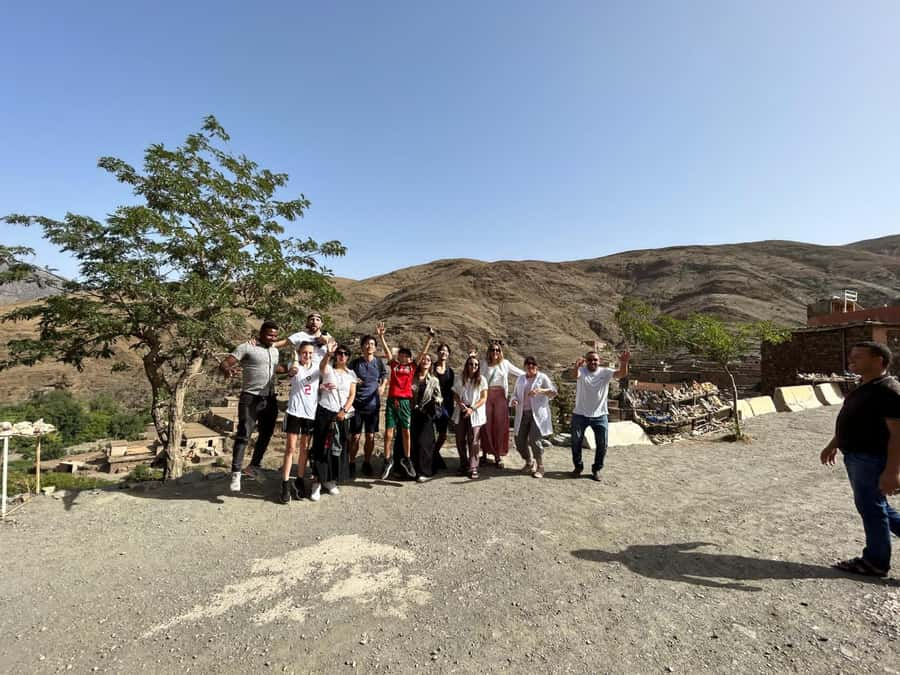
The first major stretch climbs into the High Atlas. The road reaches Tizi n’Tichka, a high mountain pass known as the highest road in North Africa. The route includes stops for photographs, a quick coffee, and short breaks. These pauses matter because the day involves many hours on winding roads.
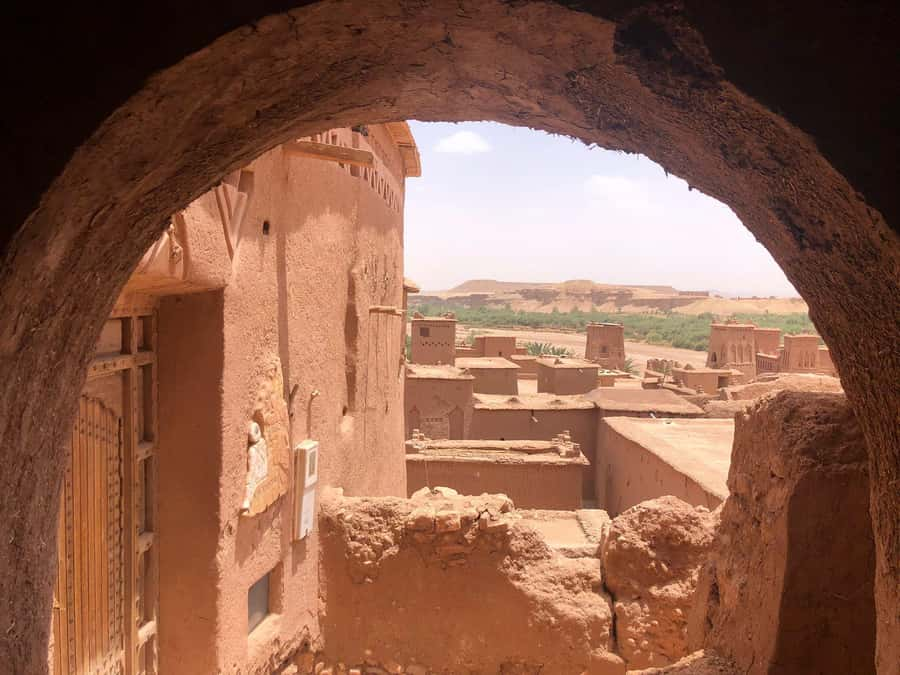
You pass small villages and changing mountain scenery before reaching Aït Ben Haddou. The settlement is a fortified earthen village, built from reddish mud-brick structures that rise above the surrounding area. Its appearance has made it useful as a film setting, including for Gladiator, Lawrence of Arabia, and Kingdom of Heaven.
You get about an hour to explore with a local guide if you choose to pay the extra fee. The guide arrangement is worth considering carefully. One guide may provide a fixed explanation with limited answers to questions, so do not expect a specialist-led historical tour. Still, the site itself is impressive, and you can enjoy the narrow lanes, towers, and views even if the commentary is basic.
Aït Ben Haddou is the first major reward for the early departure. The visit is not a full day, and the description emphasizes an outside visit, so you should not expect a detailed museum experience. You will have lunch afterward, but lunch is paid separately.
The afternoon continues through Ouarzazate, Klaa Mgouna, and the Dades Valley toward Dades or Tinghir. The route brings more red rock, dry valleys, and village scenes. You arrive at the hotel in the late afternoon, with dinner in the Rose Valley before bed.
The hotel is described as fine rather than luxurious. That is a fair expectation. This night is about having a bed and a meal after a full day on the road, not about resort comforts.
Day two: Todra Gorge, cooperatives, and the Erg Chebbi dunes
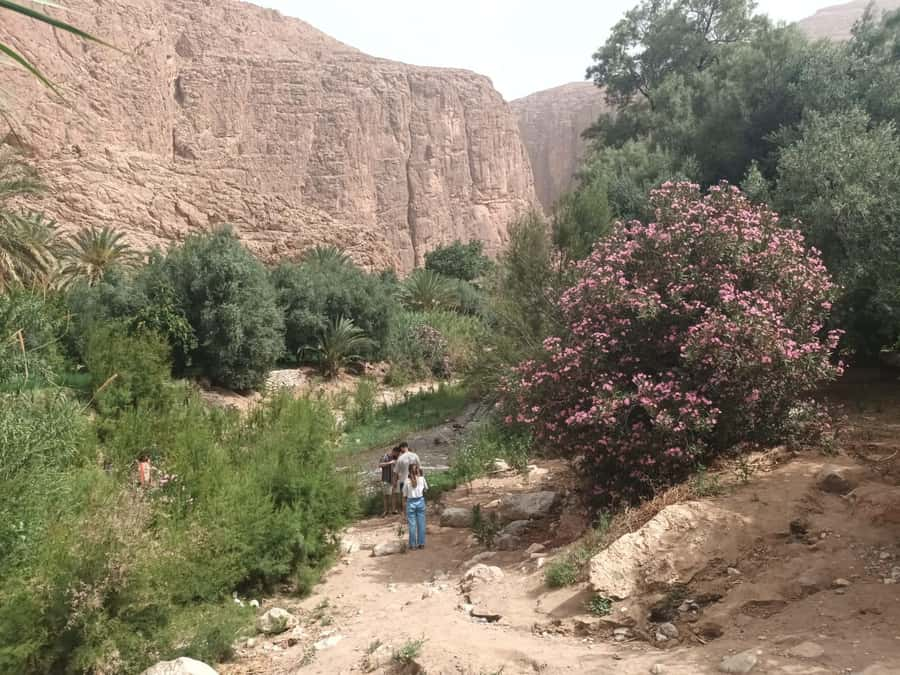
After breakfast, you set out toward Merzouga. The route passes Tinghir, Tinjdad, and Erfoud, with traditional Berber villages along the way. The big morning stop is Todra Gorge.
At the gorge, you walk through the canyon with a local guide. The narrow rock walls create a strong contrast with the broad mountain roads from the day before. The walk gives you a chance to leave the vehicle and use your legs, though the exact length of the walk is not specified.
You also stop at a local cooperative. These visits can offer a useful look at regional crafts and products, especially if you want more contact with local working life than a string of viewpoints provides. They can also feel commercial, so buy only if something genuinely appeals to you.
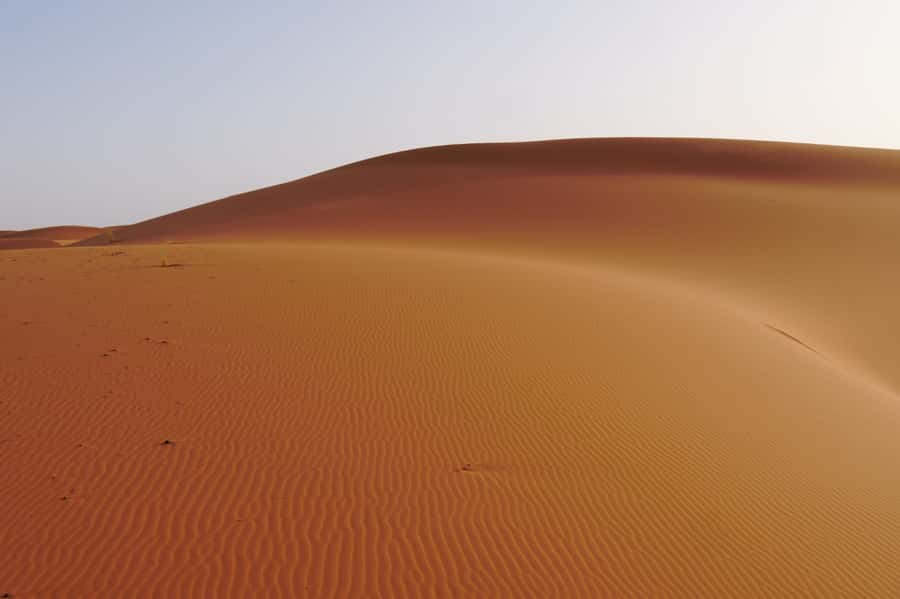
The route then changes character as you approach Merzouga. Erfoud and the surrounding desert country prepare you for the dunes, but the main visual moment comes when Erg Chebbi appears. The sand is golden, broad, and unmistakably different from the stony stretches earlier in the day.
At Merzouga, you can rest before preparing for the overnight camp. You leave your larger luggage in the vehicle and take a small bag for the night. This is an important practical detail. Do not bring your full suitcase on the camel.
The camel trek and night in the Berber camp
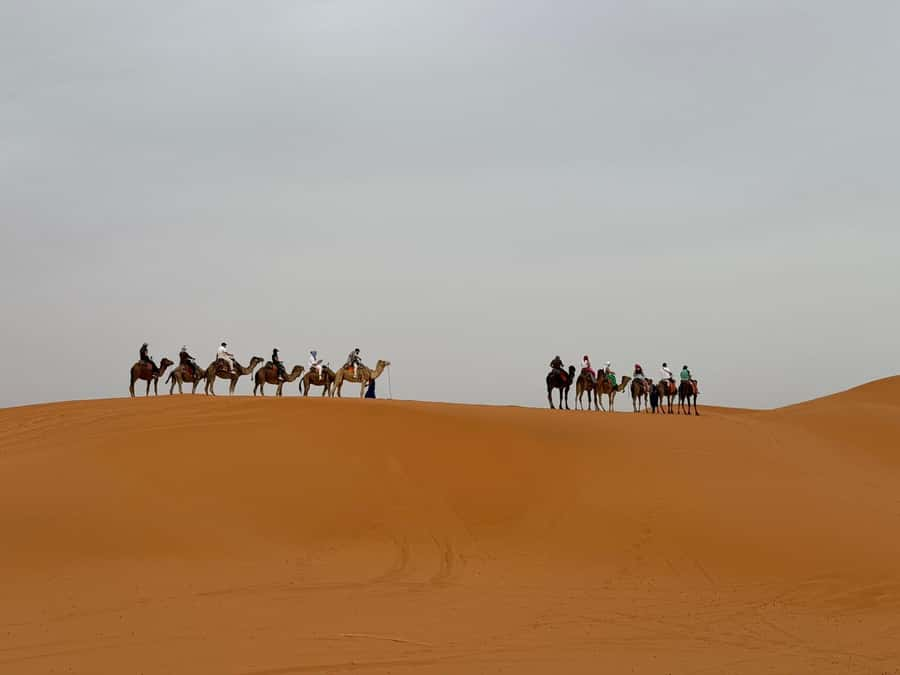
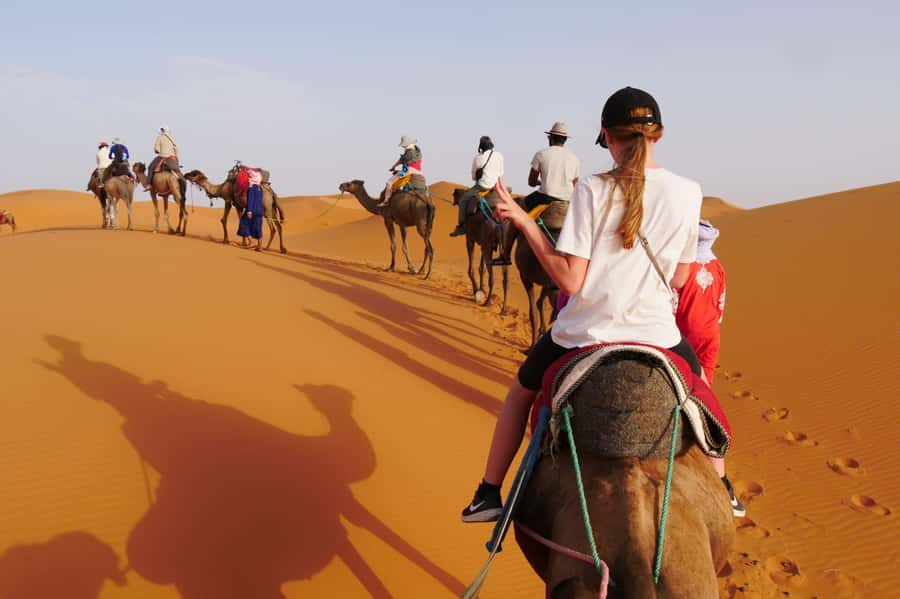
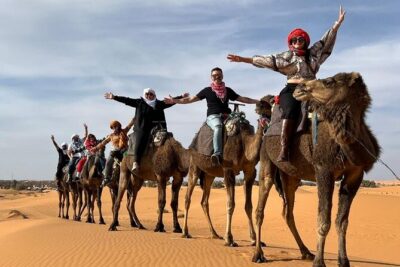
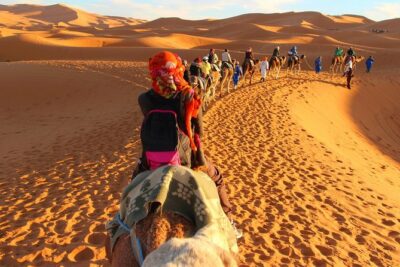
The camel trek carries you into the Erg Chebbi dunes. You ride across the sand and reach the camp in time for sunset. From there, you can walk up the dunes and watch the light change across the sand.
The camel ride is a memorable part of the trip, but it is not a luxury activity. Mounting a camel can be awkward, and you should hold on carefully when the animal rises or sits. One person reported being thrown while getting on and receiving scratches, with no camel handler coming to check immediately. That is a serious reminder to take your time and ask for help if you feel unsteady.
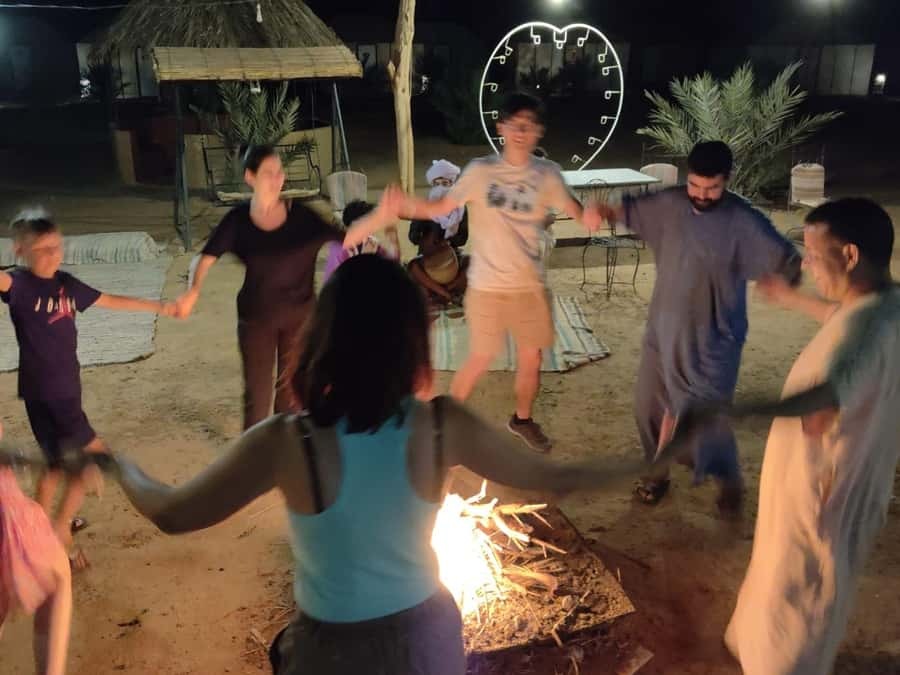
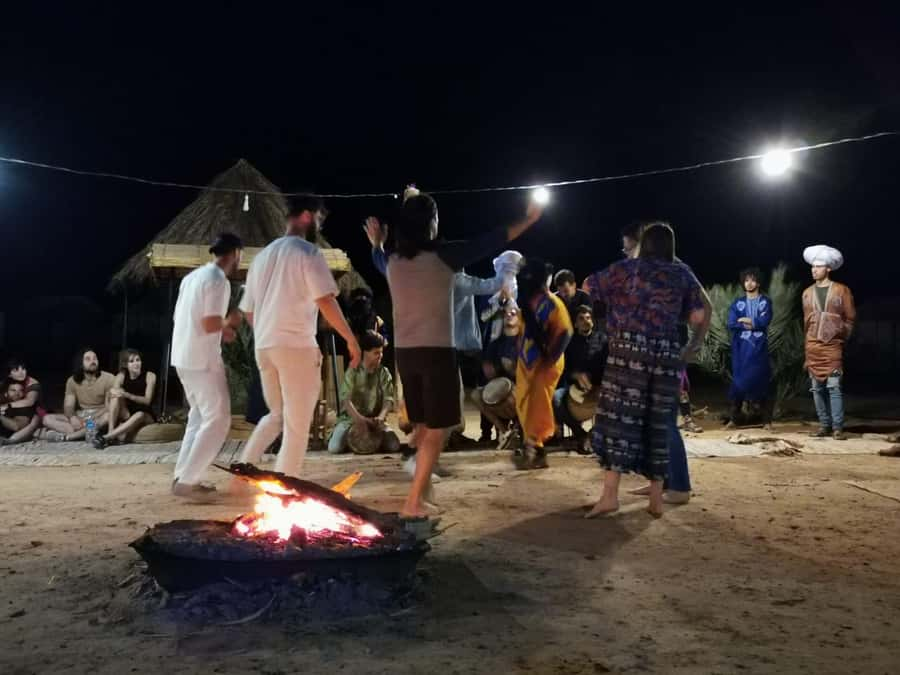
The camp includes traditional Berber nomad tents, dinner, camp staff support, and drum music around the fire. You sleep beneath the desert sky, an experience that gives the tour its emotional center. The supplied information does not promise hotel-style facilities, so pack basic personal items, including soap, since this may not be provided.
Sandboarding may be available if the camp has equipment. Treat it as a bonus, not a guaranteed activity. If it matters to you, ask at the camp rather than assuming boards will be waiting.
Food is included at dinner and breakfast, but not at lunch. A vegetarian option is available if you request it when booking. Bring your own water and drinks, since beverages are not included.
The desert portion is where the tour feels most worthwhile. You get the sunset, a campfire meal, a camel ride, and the early morning sunrise without paying separately for each part. The camp may be simple, but the setting does most of the work.
More Sahara Desert Tours:
- 3-Day Marrakech to Merzouga Desert Tour: Camel Rides & Overnights
★ 5.0 · 8,734 reviews - 3-Day Marrakech to Fes Sahara Desert Tour via Merzouga
★ 5.0 · 6,546 reviews - Marrakech: 3-Day Merzouga Desert Experience Camel & Meals
★ 4.6 · 6,252 reviews - From Marrakech: 2-Day Sahara Tour to Zagora & Ait Ben Haddou
★ 4.4 · 1,925 reviews
Day three: sunrise, the Ziz Valley, and the long road to Fes
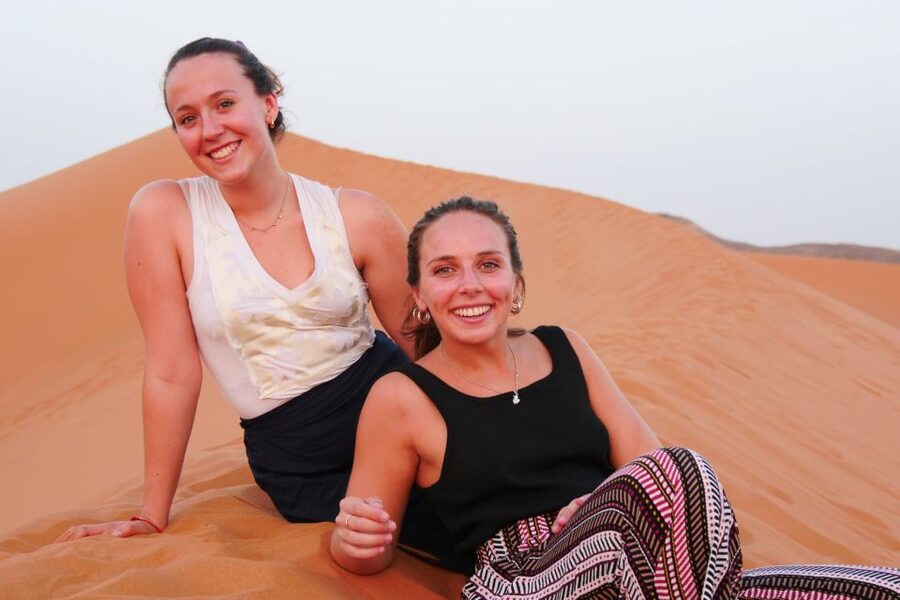
You wake early for sunrise over the dunes. This is one of the best moments on the route, but it also requires a little effort. The sunrise depends on getting up before breakfast and returning to Merzouga by camel afterward.
Once breakfast is finished, the group begins the drive to Fes. The road crosses the Ziz Valley through Errachidia and continues into the Middle Atlas Mountains. You stop at the Ziz Valley for photographs, giving you a final look at the dry southern scenery before the route turns toward northern Morocco.
The drive from Merzouga to Fes takes around eight to nine hours, depending on stops and road conditions. This is the part you need to accept before booking. It is not a quick transfer, and the long day can feel tiring after the early desert start.
The vehicle is described as comfortable, though one account reported that the air conditioning stopped working at times, leaving people hot. Conditions can vary, but it is sensible to wear light clothing, keep water close, and avoid putting everything you need in the luggage area.
Arrival in Fes is expected in the late afternoon. Drop-off is provided at your accommodation or the closest accessible location. As with Marrakech pickup, a car-free Medina location may require a short walk from the meeting point.
Transport, group size, and the role of your driver
The tour uses a minivan with a maximum of 17 participants. That is still a group, but it is far easier to organize than a full-size bus. You can expect a social ride and limited control over the exact timing of stops.
Your driver is also your English-speaking guide for much of the journey. This role matters. Drivers praised by name include Youssef, Hamza, Hassan, Mohamed Rasta, and Oussama. Youssef was especially helpful when a passenger became carsick, stopping at a pharmacy and moving the passenger to the front. He also used a first-aid kit after a camel-related injury.
That kind of practical care can shape the whole trip. The road is long, and a driver who responds calmly to illness or discomfort is worth a great deal. Still, the driver and the local guides are separate roles. Do not assume the person driving the van will give detailed commentary at every monument.
The tour is offered in English. If you have motion sickness, request a front seat early, though the seat cannot be guaranteed. The mountain roads and the final desert-to-Fes drive make this worth planning for.
Lunch stops and extra costs
Lunches and drinks are not included. This is normal for a low-cost Morocco transfer, but the way meals are handled can affect your satisfaction.
Some roadside restaurants used by the group may be more expensive than expected, with one account putting lunch at about 130 dirhams. The food quality may not always match the price. In some places, you may have little choice about where to eat, particularly on the second day.
I would budget for these meals before booking and ask the driver whether alternatives are possible. Carry snacks, but do not assume you can skip every restaurant stop. The route is remote in places, and the group moves on a shared schedule.
There may also be commercial stops at cooperatives and other businesses. These can be useful if you want to see local products, but they can lengthen the day and add pressure to spend. You are free to look without buying.
Attractions may offer optional local guides for about €2 per person. A guide can help you understand Aït Ben Haddou or Todra Gorge, but the quality may vary. If you prefer to explore quietly, you can keep the extra money.
Who should book this Sahara tour?
I would recommend this trip to a first-time Morocco visitor who wants the major sights between Marrakech and Fes without arranging several separate transfers. It suits people who value variety, do not mind early starts, and want one night in a desert camp.
It also suits budget-minded visitors. The included camel trek, two dinners, two breakfasts, hotel night, camp night, and Fes drop-off make $118 a strong value if you were already planning to travel between the two cities.
I would hesitate if you need lots of free time, dislike winding roads, or expect polished guiding at every stop. Pregnant women should not book, as the activity is specifically listed as unsuitable. Anyone with a serious concern about camel mounting, long van rides, or basic camp facilities should ask questions before paying.
Book only if you can treat the road as part of the adventure. The tour includes beautiful places, but it does not pretend to be slow travel.
Should you book it?
Book this tour if your priority is seeing the Sahara efficiently. The route delivers Aït Ben Haddou, Todra Gorge, Erg Chebbi, a camel trek, desert sunset and sunrise, and a practical arrival in Fes at a low price.
Go in with clear expectations: lunches may be overpriced, local guiding can be uneven, the minivan journey is long, and the desert camp may lack small comforts such as soap. Confirm your pickup point, request a vegetarian meal in advance if needed, pack a small bag and plenty of water, and keep your most important items with you.
If you can accept those compromises, the golden dunes and the night under nomadic tents are likely to be the memories that make the long road worthwhile.
FAQ
How long is the Marrakech to Fes Sahara tour?
The tour lasts three days, beginning in Marrakech and ending with drop-off in Fes.
What is included in the price?
The price includes Marrakech pickup, minivan transport, an English-speaking driver or guide, one hotel night in Dades or Tinghir, one night at a Berber desert camp, breakfast and dinner on both nights, the camel trek, desert camp services, and Fes drop-off.
Are lunches included?
No. Lunches and drinks are not included, so you should budget for them separately.
How much can lunch cost?
One reported lunch cost was about 130 Moroccan dirhams. Prices and restaurant choices can vary, so ask your driver about available options.
Is Aït Ben Haddou entry included?
The tour includes a visit to Aït Ben Haddou, described as an outside visit. Optional local guide fees are not included and may cost about €2 per person.
Is the camel trek included?
Yes. The camel trek into the Erg Chebbi dunes is included, along with the desert sunset and sunrise experiences.
What should I take to the desert camp?
Pack a small overnight bag. Your larger luggage can remain in the vehicle. It is also wise to bring water, drinks, and personal items such as soap.
Is sandboarding guaranteed?
No. Sandboarding is available only if the camp provides the equipment.
How long is the drive from Merzouga to Fes?
The drive takes approximately eight to nine hours, depending on stops and road conditions.
Can I request vegetarian food?
Yes. A vegetarian option is available, but you should advise the tour provider when booking.
Where will I be picked up in Marrakech?
Pickup is available from your hotel or riad. If your accommodation is inside the Medina and the vehicle cannot reach it, you will meet at the closest accessible point.
Is the tour suitable for pregnant women?
No. Pregnant women are listed as unsuitable for this activity.
More 3-Day Experiences
- From Marrakech: Unforgettable 3-Day Desert Tour to Fes
★ 4.9 · 2,614 reviews - 3-Day Tour to Merzouga Erg Chebbi with Food & Camel Trek
★ 5.0 · 1,770 reviews - From Marrakech: 3-Day Sahara Tour with Private tent & Meals
★ 4.8 · 1,652 reviews - Marrakech to Merzouga Desert 3-Day via the High Atlas Mountains
★ 5.0 · 1,434 reviews
Just added around Marrakech
- One Way – Marrakech Airport Private Taxi Transfers★ 4.5 · 17 reviews
- Majorelle Garden, YSL & Berber Museum: Exciting Round-Trip Tour★ 4.5 · 17 reviews
- Ourika valley day trip★ 5.0 · 17 reviews
- Marrakech: Agafay Desert Buggy Tour with Transfer★ 4.4 · 17 reviews
- Essaouira Day Trip from Marrakech★ 5.0 · 17 reviews
- From Marrakech: small group Day Trip To Essaouira Mogador★ 4.9 · 17 reviews
- Best Marrakech to Merzouga 3 D 2N Sahara Desert Tour Adventure★ 5.0 · 17 reviews
- From Marrakech: Ouzoud Waterfalls Full-Day Guided Tour★ 4.2 · 17 reviews
Merzouga and Sahara Desert Tours, compared.
3 Days Desert Tour From Marrakech To Merzouga Dunes & Camel Trek
Read our review →
3-Day Marrakech to Merzouga Desert Tour: Camel Rides & Overnights
Read our review →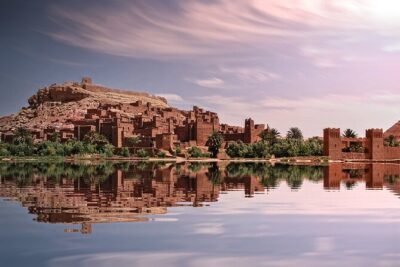
3-Day Marrakech to Fes Sahara Desert Tour via Merzouga
Read our review →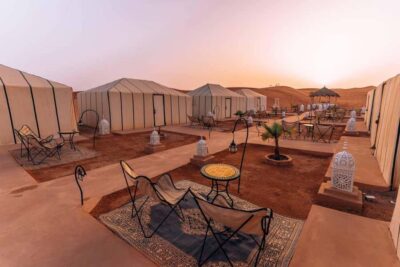
3-Day Merzouga Desert Experience Camel & Meals
Read our review →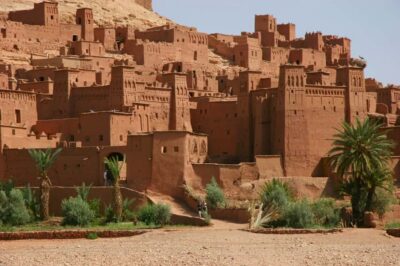
3-Day Tour to Merzouga Erg Chebbi with Food & Camel Trek
Read our review →Browse the lists this tour appears in