
Reviewed · MEDINA AND SOUK WALKS
Marrakech: Babouch Making Workshop in the Medina
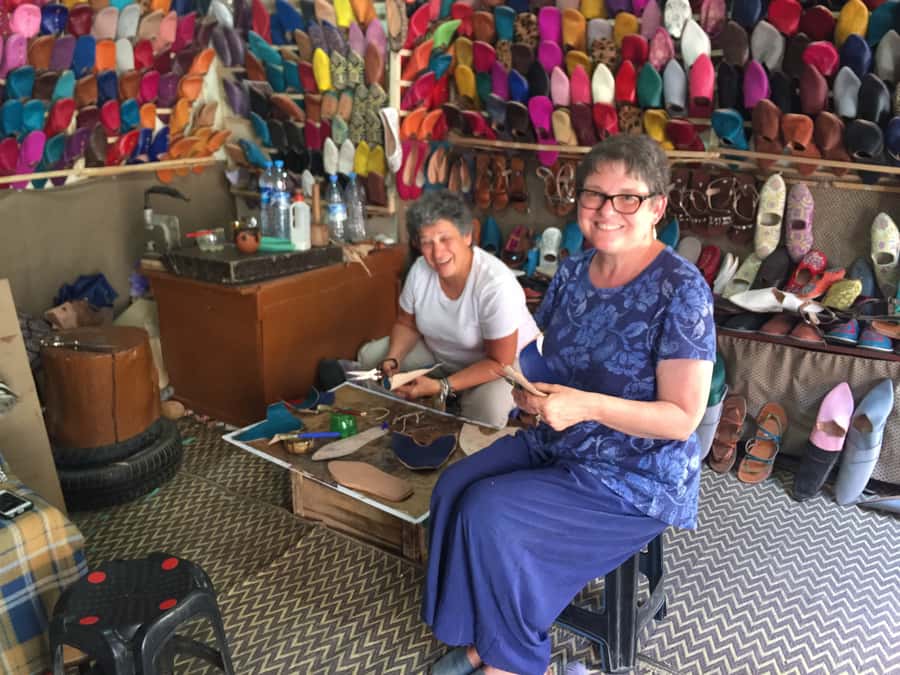
Make the souvenir, not just the purchase. This four-hour babouch workshop takes you beyond the souk stalls and into the craft itself, where artisan Youssef guides you through leather selection, cutting, gluing, stitching, and finishing. I like the calm, hands-on pace, and I like that you leave with a pair fitted to your feet rather than a mass-produced keepsake. The main drawback is the meeting point, which several people found confusing.
The workshop costs $81 per person and runs as a private group, so it suits couples, families, and friends who want personal help. Guides such as Khaoula, Ouiam, and Yasmine have been praised for clear English and for leading people safely through the medina. Confirm the exact meeting spot by message before you go, especially if you see Rue Bani Marine listed beside the Post Maroc building.
In This Review
- Key points to know before booking
- Why making babouch beats buying another souvenir
- Finding the workshop from Jamaa el Fna
- The first stage: leather, patterns, and choices
- Cutting, gluing, hammering, and stitching
- Tea, sweets, and the human side of the class
- Your finished slippers and possible extras
- Is $81 a fair price?
- Who will enjoy this four-hour workshop?
- Timing, cancellations, and small planning tips
- Should you book the babouch workshop?
- FAQ
- Where does the babouch workshop meet?
- How long does the experience last?
- What do I make during the workshop?
- Do I keep the slippers I make?
- Who teaches the workshop?
- Are guides available in English?
- Is the workshop private?
- Are tea and food included?
- Are photographs included?
- Can I cancel the booking?
Key points to know before booking
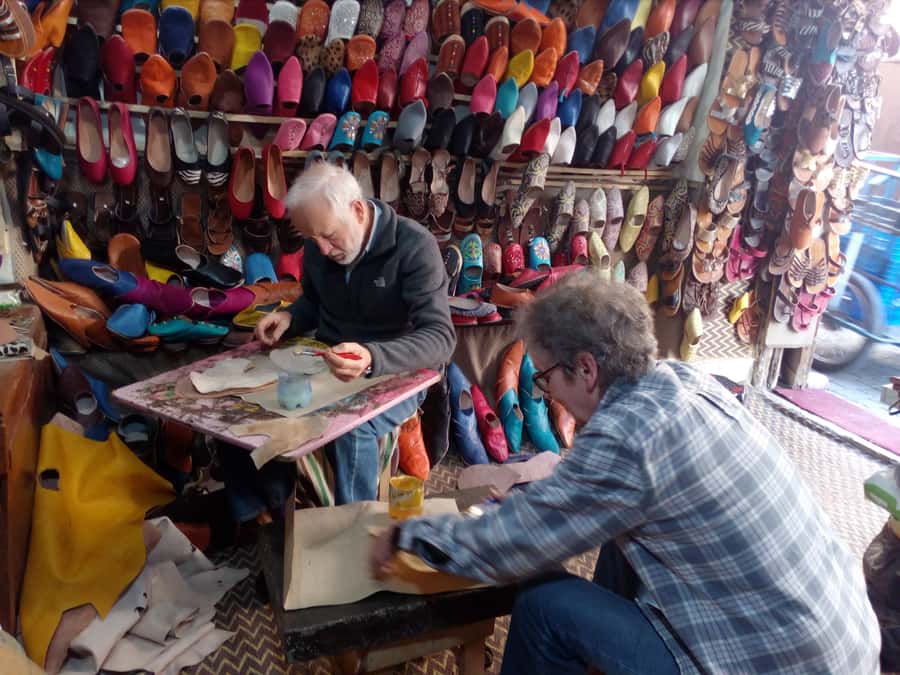
- You make a real pair of babouch: Choose the leather, cut the pieces, and help construct slippers sized for your feet.
- Youssef is the central teacher: He explains leather preparation and shares a family craft tradition spanning five generations.
- A guide handles translation and the medina route: Khaoula, Ouiam, Yasmine, or another English, French, or Arabic-speaking guide may assist.
- Tea and Moroccan pastries break up the work: Water, mint tea, and homemade sweets are included.
- The finished slippers go home with you: Each participant receives a pair made during the session.
- The meeting point needs care: Look for the Post Maroc building in front of Jamaa el Fna, and confirm the precise entrance.
Why making babouch beats buying another souvenir
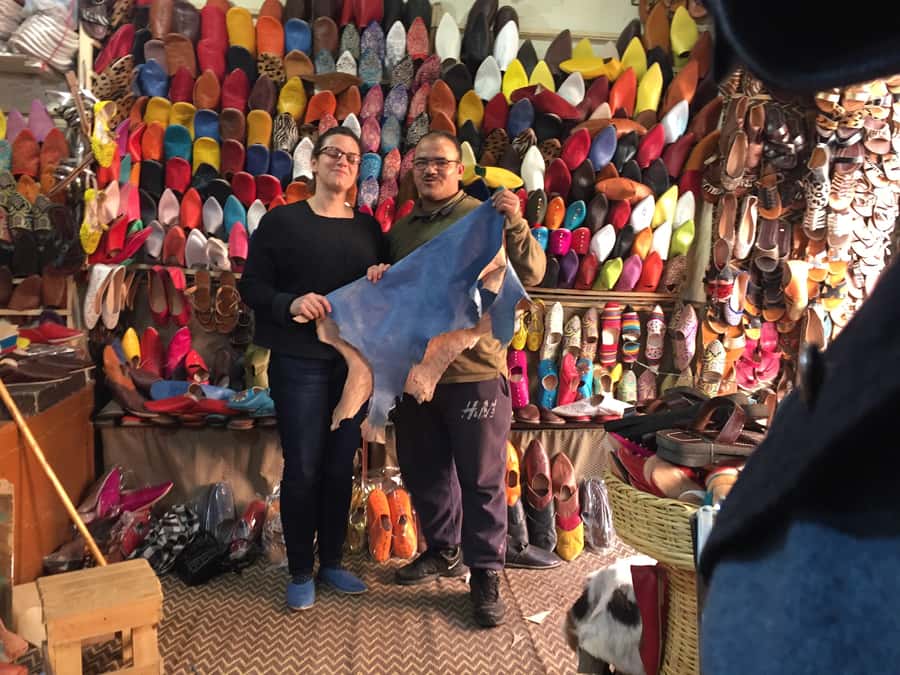
Marrakech gives you no shortage of leather goods. You can buy slippers in minutes, often after a lively round of bargaining. This workshop asks you to slow down and see what those slippers require before they reach a shop display.
Babouch, also written babouche, are traditional Moroccan leather slippers. Their simple shape can fool you. A finished pair involves choosing suitable leather, tracing patterns, cutting accurately, joining the pieces, and stitching them into a wearable form. The workshop lets you handle several of those stages yourself, while the artisan steps in when precision matters.
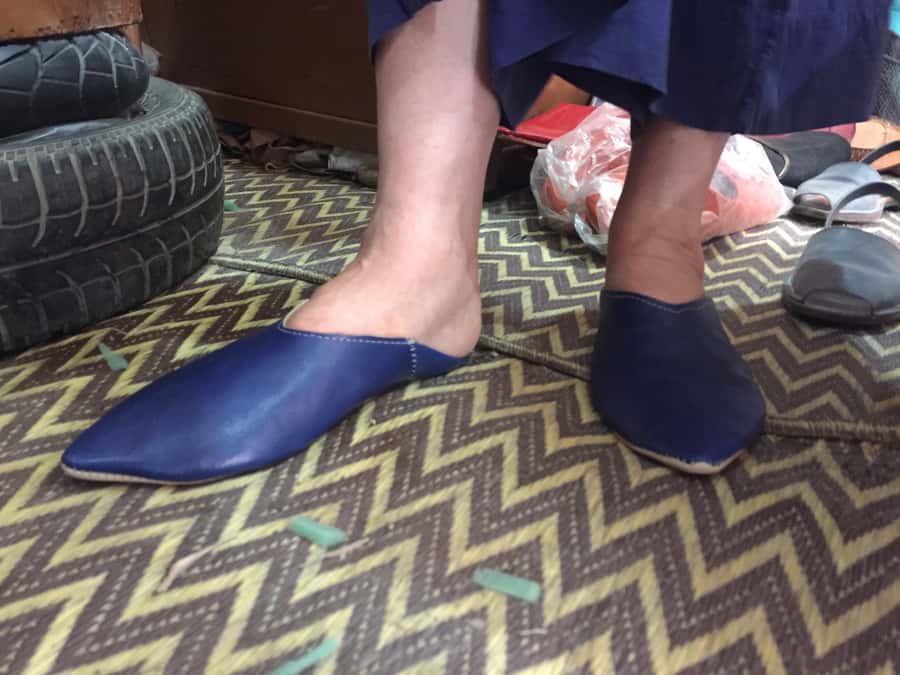
I especially like the sense of ownership. You do not simply select a color from a shelf. You help shape the pair, and the size is adjusted to your feet. One participant with very small feet had the slippers modified during the session. That kind of personal fitting gives the souvenir more value than a standard pair bought in the souk.
The second appeal is the contact with a working craftsperson. Youssef does not only show a finished product. He explains how leather is prepared and how different types are used for Moroccan leather goods. You get a direct look at a trade that is easy to miss when you see only the polished merchandise.
More Medina and Souk Walks in Marrakech
- Marrakech: Bahia Palace, Saadian Tombs, Souk and Medina Tour
★ 4.7 · 4,974 reviews - Marrakech: Ben Youssef, Secret Garden, & Souks Walking Tour
★ 4.6 · 2,802 reviews - Marrakech: Colorful Medina Souks Guided Walking Tour
★ 4.7 · 2,470 reviews
Finding the workshop from Jamaa el Fna
The official meeting point is in front of the post office at Jamaa el Fna Square. In practical terms, you should look for the Post Maroc building and the guide at its entrance. The wording can be confusing because Rue Bani Marine may appear prominently, while the guide is actually waiting in front of the post office.
This is the one part I would treat as a small project, not a casual meeting. Several people had trouble finding the correct spot, although a quick WhatsApp call or early contact with the guide solved the problem. If you have mobile service, save the contact number and message before setting out.
The guide matters once you leave the square. The workshop lies farther into the souks, and the narrow lanes can be hard to follow on your first visit. Yasmine has been praised for keeping the route organized and helping people find their way, while Khaoula and Ouiam have been singled out for clear explanations and friendly support.
One participant arrived alone and ended up with one-to-one attention. Another said the guide helped with a separate tagine purchase after the class. That extra help is not the formal purpose of the workshop, but it shows why meeting the guide properly is useful. You are not simply being pointed toward a shop and left to fend for yourself.
The first stage: leather, patterns, and choices
Inside the studio, you receive the tools and raw materials needed for the practical work. The first choices include the leather type, color, and style of your slippers. Those decisions give you a small but welcome amount of creative control.
The exact styles available can vary, so do not expect a large design menu to be guaranteed. The important point is that you are involved in the choice rather than accepting one finished model. If you want a particular color or a simple style, say so early.
Youssef introduces the leather and explains how it is prepared for use. This is an important part of the session because it connects the raw material to the finished babouch. You begin to see why leather goods that look modest can take real skill to produce.
You then work with templates and mark out the pieces. This is not a craft class where everything is preassembled for you. You may draw patterns, cut leather, apply glue, and take part in the construction. The guide helps with translation and keeps the process moving, while the artisans show you how each step works.
The pace is relaxed. One person described the workshop as a calm break from the busy medina, with time to watch the street life during pauses in the leatherwork. That makes the activity a good counterpoint to a morning spent shopping or walking through crowded lanes.
Cutting, gluing, hammering, and stitching
The hands-on work is simple enough to follow, but it still requires care. Cutting needs a steady hand. Gluing needs control. Stitching and finishing need more experience than most first-time makers possess, which is where Youssef and the other artisan provide close help.
The session may include hammering and other practical steps, so this is not just a demonstration with a photo at the end. You take part, make choices, and see the slippers take shape. The artisans then handle or guide the parts that call for speed and accuracy.
Several people were surprised by how quickly the experienced craftsperson stitched the slippers. That moment is worth watching closely. You may spend time preparing the pieces, then see an artisan complete a skilled section in a fraction of the time. It gives you a better sense of the difference between learning a process and mastering it.
Do not judge the value of the class by how much of every technical step you complete alone. The goal is shared making. You learn the method, contribute to the work, and receive expert help so the final pair is usable. A completely beginner-made slipper might be a charming oddity, but you probably want something you can actually wear.
The guide also serves as a bridge between you and the artisan. Youssef speaks English and French, and the listed instruction languages are English, French, and Arabic. A translator may still be present to make sure every instruction is clear. Khaoula, in particular, has been praised for translating carefully and keeping the mood light.
More Medina and Souk Walks:
- Marrakech: Saadian Tombs & Bahia Palace, Medina Guided Tour
★ 4.6 · 1,989 reviews - Marrakech Monuments & Souks 3-Hour Tour
★ 3.8 · 1,540 reviews - Marrakech: Bahia Palace, Madrasa Ben Youssef and Medina Tour
★ 4.7 · 1,347 reviews - Marrakech: Madrassa Ben Youssef, Secret Garden & Medina Tour
★ 4.8 · 1,303 reviews
Tea, sweets, and the human side of the class
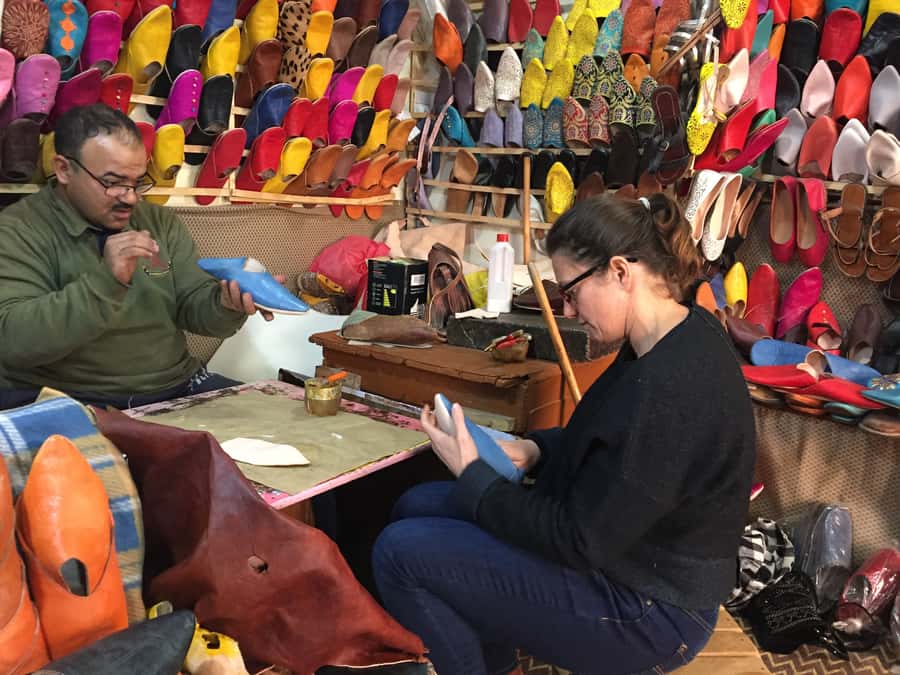
A tea break comes during the workshop, with water, Moroccan mint tea, and homemade pastries or cookies. It is a small inclusion, but it suits the pace of the activity. Leatherwork asks for attention, and a pause gives you time to chat, look over the materials, and let your hands rest.
The refreshments also make the class feel less like a commercial transaction. You are sitting with people who work in the medina and sharing a familiar local welcome. Conversations have ranged from leather and babouch to Moroccan culture, daily life, and even casual French practice.
That personal contact is one of the strongest reasons to choose this activity. The class is not built around a lecture. You learn through conversation and demonstration, with the artisan close by. Some people have described listening to music during the work, joking with the makers, and enjoying an easy atmosphere.
The mood is generally gentle and patient. That matters if you are traveling with a child. One parent and an 11-year-old spent about three hours making slippers and found the session both manageable and rewarding. Younger children may need help with cutting or other tools, but the private format gives your group more room to work at its own speed.
Your finished slippers and possible extras
At the end, each participant takes home a pair of babouch made during the workshop. The slippers are fitted to your size, and the artisans can make adjustments when needed. You should leave time to inspect the fit before departing, since small corrections are easier while you are still in the studio.
The finished pair is the obvious souvenir, but the better keepsake is knowing how it was made. You will likely notice the work differently when you see babouch later in the souks. A row of slippers stops being just a colorful display and becomes a collection of cut pieces, seams, and finishing decisions.
The workshop may also lead to other custom leather work. One participant arranged a bespoke belt with Youssef, collected it several days later, and found the price reasonable. This is not listed as a guaranteed part of the experience, so treat it as an optional conversation, not an included extra.
Photographs are taken during the session and emailed afterward. That is useful because your hands may be occupied with leather and tools, and you do not have to interrupt the process constantly to take pictures. Make sure the provider has the correct email address.
Is $81 a fair price?
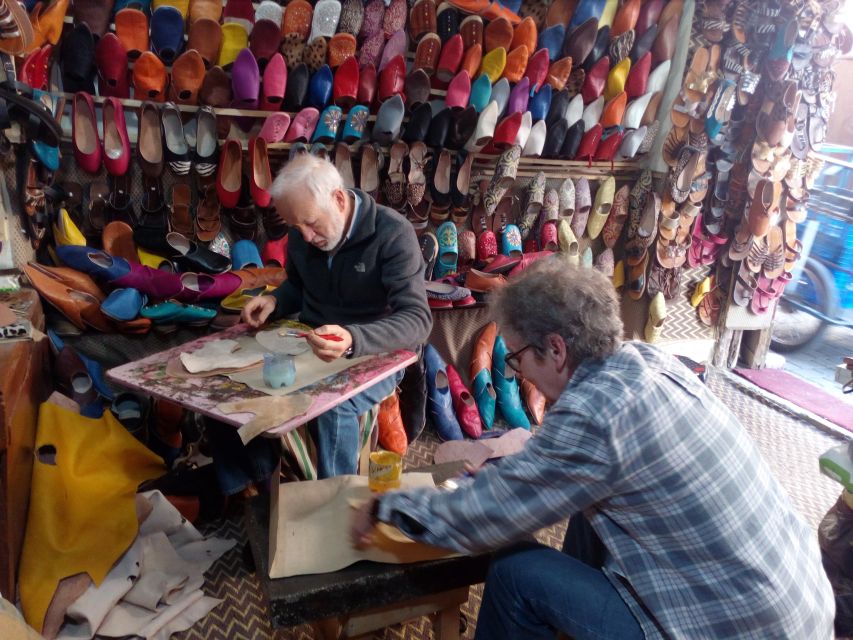
At $81 per person, this is not the cheapest way to get Moroccan slippers. If all you want is a pair of babouch, the souks offer faster and potentially less expensive options. You are paying for instruction, private-group attention, materials, refreshments, a guide through the medina, photographs, and the finished pair.
The private format is the key value. You are not placed in a large class where the artisan must rush from person to person. A solo participant received individual attention, and couples have been able to make his-and-hers slippers together. Families also benefit because the guide can adapt explanations and help different people at different stages.
The price makes more sense if you value time with a local craftsperson and want an activity rather than a purchase. It is also useful for a first or second day in Marrakech, when you are still learning how the medina works. The class gives you a calm, structured introduction before you spend more time shopping in the souks.
If your budget is tight or your schedule is short, you might prefer buying slippers and saving the four hours for another sight. The workshop is worth its price for the experience, not because it is the most economical footwear deal in town.
Who will enjoy this four-hour workshop?
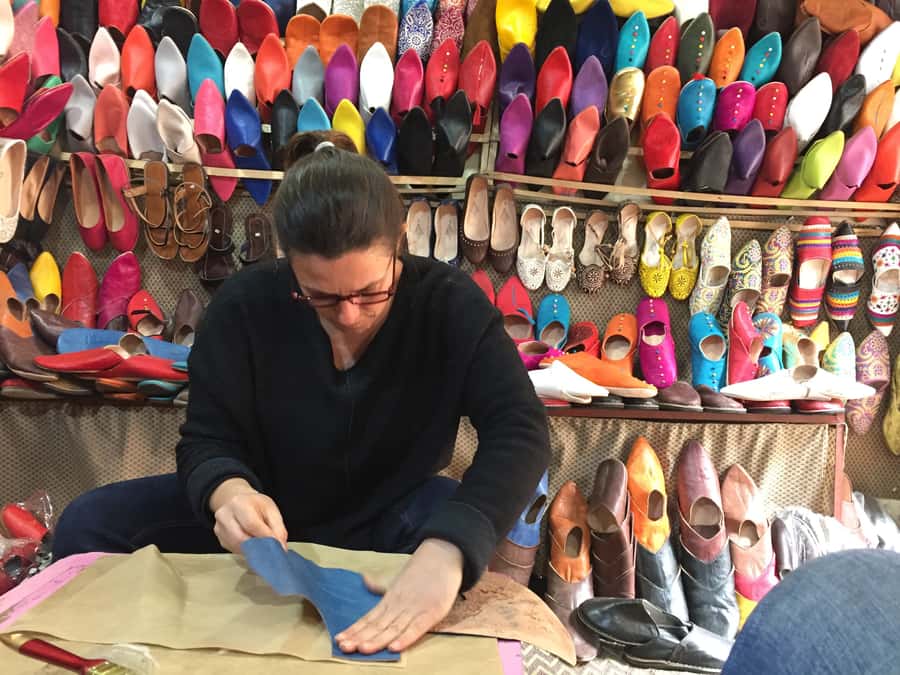
I would recommend it most strongly to:
- Couples who want matching or coordinated handmade souvenirs
- Families with older children who enjoy practical activities
- Solo visitors who like personal instruction
- Anyone interested in Moroccan craft and local working life
- Shoppers who want to understand the goods sold in the souks
- Visitors who prefer a quiet cultural activity to another sightseeing stop
It suits people who are happy to work with their hands and accept guidance. You do not need prior leatherworking skill. The steps are explained clearly, and the artisan helps with the difficult parts.
It may not suit you if you dislike sitting for several hours, want a fast shopping stop, or expect to produce a flawless pair without artisan assistance. The workshop is relaxed, but it is still a practical class. You will be cutting, handling materials, and concentrating.
The activity is listed as wheelchair accessible, and it is a private group. The guide languages are English, French, and Arabic. Since exact arrangements can matter for accessibility and movement through the medina, confirm your needs when booking.
Timing, cancellations, and small planning tips
The experience is advertised as four hours, with the workshop itself described as about three and a half hours. Allow the full four hours, including the meeting and walk through the medina. A morning booking can be a smart choice because it leaves the rest of the day open for the souks and Jamaa el Fna.
Wear something comfortable and choose footwear that is easy to remove if needed. You will be working with leather and workshop tools, so avoid bringing anything delicate that you would worry about.
The activity offers free cancellation up to 24 hours before the start for a full refund. You can also reserve now and pay later, which helps if your Marrakech schedule is still shifting.
Most of all, contact the guide before arriving. Use the Post Maroc building as your main landmark, not only the street name. That one step can prevent the only recurring practical snag.
Should you book the babouch workshop?
I would book it if you want a personal, creative activity with a useful souvenir at the end. Youssef’s patient instruction, the guide’s translation, the private-group setup, and the chance to choose and fit your own slippers give the experience real substance.
I would skip it if you only want cheap babouch or have very limited time in Marrakech. But if four hours suits your plans, this is one of the better ways to connect with the medina beyond its shopping stalls. Confirm the meeting point, arrive ready to work, and let the finished slippers remind you that Moroccan craft is something you can take part in, not just take home.
FAQ
Where does the babouch workshop meet?
The meeting point is in front of the post office, the Post Maroc building, at Jamaa el Fna Square.
How long does the experience last?
The activity lasts four hours, with the workshop itself described as about three and a half hours.
What do I make during the workshop?
You make a traditional Moroccan pair of babouch slippers using leather, templates, and the provided tools and materials.
Do I keep the slippers I make?
Yes. Each participant receives a pair of babouch to take home after the workshop.
Who teaches the workshop?
The main artisan is Youssef, a leatherworker with a family craft tradition spanning five generations. Another artisan may also help during the practical work.
Are guides available in English?
Yes. Instruction and guide support are available in English, French, and Arabic.
Is the workshop private?
Yes. The activity is listed as a private group experience.
Are tea and food included?
Yes. Water, a tea break, and homemade Moroccan snacks such as pastries or cookies are included.
Are photographs included?
Yes. Photographs taken during the workshop are emailed to participants.
Can I cancel the booking?
You can cancel up to 24 hours in advance for a full refund. The activity also offers a reserve-now, pay-later option.
More Workshops
- Marrakech: Moroccan Cooking Class with Pickup
★ 4.6 · 1,862 reviews - Marrakech: Traditional Moroccan Cooking Class & Market Visit
★ 4.8 · 1,861 reviews - Marrakesh: Moroccan Dishes Cooking Class with a Local Chef
★ 5.0 · 1,615 reviews - Moroccan Cooking Class & Marrakech Market Visit with Chef Khmisa
★ 5.0 · 1,504 reviews
Just added around Marrakech
- Marrakech: Medina Souks, Hidden Markets and Shopping Tour★ 4.8 · 33 reviews
- Agafay desert sunset camel ride Tour from Marrakech★ 5.0 · 33 reviews
- Guided walking tour in Marrakech★ 4.5 · 33 reviews
- Sunset Camel Ride Marrakech with Transfers★ 5.0 · 33 reviews
- 2 Days Desert Agafay and Atlas Mountains Trek From Marrakech★ 3.8 · 33 reviews
- Atlas mountains, Ourika valley, berber villages trip & Guide★ 5.0 · 33 reviews
- Magical Dinner show and Quad bike In Agafay Desert Marrakech★ 4.5 · 33 reviews
- Marrakech: Ouzoud Waterfalls Trip, Guide & Boat + Lunch★ 4.7 · 33 reviews
Medina and Souk Walks, compared.
Bahia Palace, Saadian Tombs, Souk and Medina Tour
Read our review →
Ben Youssef, Secret Garden, & Souks Walking Tour
Read our review →
Saadian Tombs & Bahia Palace, Medina Guided Tour
Read our review →
Museum, Al Attarine Madrasa & Tannery and Medina Tour
Read our review →

Bahia Palace, Madrasa Ben Youssef and Medina Tour
Read our review →Browse the lists this tour appears in