
Reviewed · HISTORICAL TOURS
Hidden historical sites at Medieval City of Fez
Fez rewards a guide who knows the maze. This private walk with Mouanis, a Fez-born guide, brings you through the old medina’s religious sites, craft quarters, tanneries, and quieter lanes. I like the small-group format, which costs $29.04 for up to six people, and the chance to see local artisans at work rather than simply pass closed doors. The main drawback is that several admission fees, food, parking, and transport cost extra.
I also like the practical side of this tour. Mouanis is praised for navigating the confusing streets, answering questions plainly, and adjusting the pace or route when needed. You should expect a full three to four hours on foot, with plenty of uneven streets, crowds, smells, and sales pitches along the way.
In This Review
- Key points to know before you book
- Why a private walk helps in Fez el Bali
- Al-Qarawiyyin: Fez’s spiritual and educational center
- Nejjarine Museum and the old carpenters’ inn
- Cherratin Medersa and the city’s religious schools
- Moulay Idriss II and the sacred heart of Fez
- Chouara Tannery: Fez’s most famous working quarter
- Carpet making and the difference between styles
- The medina itself is the main attraction
- Sidi Ahmed al-Tijani and Fez’s Sufi tradition
- Price, group size, and what you really pay
- Who will get the most from this walk
- Should you book the Fez medina tour?
- FAQ
- How long does the Fez medina tour last?
- What time does the tour start?
- Where does the tour begin?
- Where does the tour end?
- Is this a private tour?
- What is included in the price?
- Are attraction admission fees included?
- Is food included?
- What is the cancellation policy?
Key points to know before you book
- A private tour for up to six: The flat group price offers good value for couples, families, and small groups.
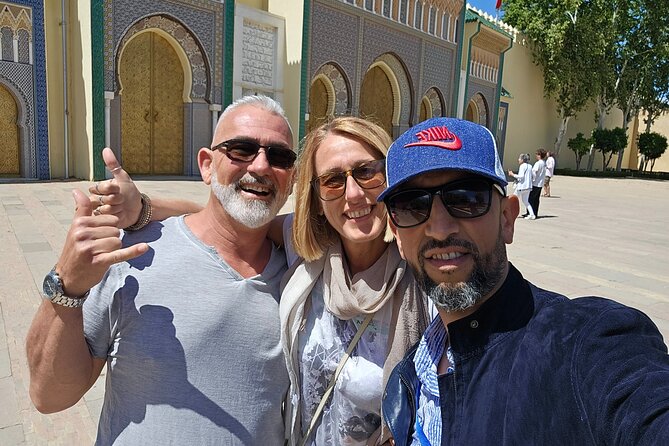
- Mouanis knows the medina personally: He was born and raised in Fez and is repeatedly praised for finding lesser-known lanes and explaining the city clearly.
- Craft workshops are part of the day: You may see carpet making and other handcrafts in progress, not just finished goods in shop windows.
- Eight stops cover the essential Fez story: Expect religious monuments, a historic inn, a madrasa, the tannery, craft areas, and the wider medina.
- The tour is walk-heavy: The old city is a maze of narrow, car-free streets, so comfortable shoes matter.
- Extra costs are modest but real: Meals, cafes, attraction tickets, parking, and transport are not included.
Why a private walk helps in Fez el Bali
Fez el Bali is the oldest walled part of Fez, founded as the capital of the Idrisid dynasty between 789 and 808. UNESCO listed the Medina of Fez as a World Heritage Site in 1981. The old city is often described as the largest car-free urban area in the world, with about 9,400 streets and alleyways.
That number gives you a sense of the problem. You can enjoy wandering here, but it is easy to lose your bearings, miss a doorway, or spend half an hour circling the same market lane. A local guide can turn the medina from a puzzle into a place with a story.
This is not a coach tour. The experience is private, and only your group participates. That matters in Fez because the streets are narrow and stops often require a pause in a busy passage. You can ask questions as they come up, spend more time at a craft workshop, or move along when a site does not hold your interest.
The starting point is 8 Rue Sidi El Khiyat, with a 10:30 a.m. start. The walk ends on Rue Talaa Sghira, in the medina. Since the route begins and ends in different places, you get a useful cross-section of the old city instead of returning to the same gate.
More City Tours in Fez
- Blue City magic: Affordable Day Trip from Fez to Chefchaouen
★ 4.6 · 1,960 reviews - Private Half-Day Tour of the Authentic City of Fez
★ 5.0 · 199 reviews - Day Trip to Chefchaouen the blue city
★ 4.0 · 187 reviews
Al-Qarawiyyin: Fez’s spiritual and educational center
The first stop is the Mosque and University of al-Qarawiyyin, founded as a mosque by Fatima al-Fihri between 857 and 859. It later became one of the leading religious and educational centers of the Islamic Golden Age.
The site is one of Fez’s essential landmarks because it connects the city’s religious life with its role as a center of learning. It is also often described as the oldest university in the world, though the meaning of the word university has changed across centuries.
Only about 10 minutes are scheduled here, and admission is listed as free. That short stop suggests a focused explanation rather than a long indoor visit. As with other religious buildings in Fez, access can depend on the area open to visitors, so the value here is the setting, the history, and the guide’s explanation of the institution.
I would pay close attention to how Mouanis explains the mosque’s place in daily life. Fez is Morocco’s spiritual, religious, and cultural capital, and this stop sets the tone for the rest of the walk.
Nejjarine Museum and the old carpenters’ inn
Next comes the Nejjarine Museum of Wooden Arts and Crafts, housed in Funduq al-Najjarin. A funduq was a traditional inn or caravanserai, a place where merchants could stay and store goods. This one is associated with carpenters, and its setting gives you a look at how trade and lodging once worked inside the medina.
Around 30 minutes are allowed here. Admission is not included, with the tour information estimating attraction fees at about $2. That is a small additional cost for a stop that adds depth to the craft side of the walk.
The museum helps explain why Fez is known as Morocco’s capital of handicrafts. You are not simply looking at decorative objects. You are seeing the connection between workshops, merchant routes, old inns, and the skilled trades that still shape the medina.
If you enjoy architecture, this is likely one of the more satisfying stops. If you prefer a fast-moving street walk, it may feel like a pause. I would keep it, since the museum gives context to the artisans you see later.
Cherratin Medersa and the city’s religious schools
The Cherratin Medersa was built in 1670 by the Alawi sultan Moulay al-Rashid. It is also called Er-Rachidia Madrasa or Ras al-Cherratine Madrasa. Its name refers to rope makers, linking the school to the working trades of the surrounding area.
A madrasa is an Islamic school, traditionally connected with religious study. This stop shows that Fez was not only a place of worship. It was also a place where students studied, lived, and moved through a network of schools tied to the city’s mosques and neighborhoods.
You get about 20 minutes here, and admission is not included. The listed estimate for attraction fees is about $2, though the exact amount can vary. Ask Mouanis to point out the features that distinguish this madrasa from the other religious buildings on the route. A short visit becomes much more useful when you understand how the school served its community.
More Historical Tours in Fez
- Fez: Guided Walking Tour of the Historic Medina
★ 5.0 · 359 reviews - Full-day Historical Meknes Volubilis and Moulay Idriss Tour
★ 4.5 · 196 reviews - Fes: A Guided Walking Tour Through the Historic Medina
★ 4.4 · 97 reviews - Discover the secrets of the Medina of Fez: guided cultural tour (private)
★ 5.0 · 68 reviews
Moulay Idriss II and the sacred heart of Fez
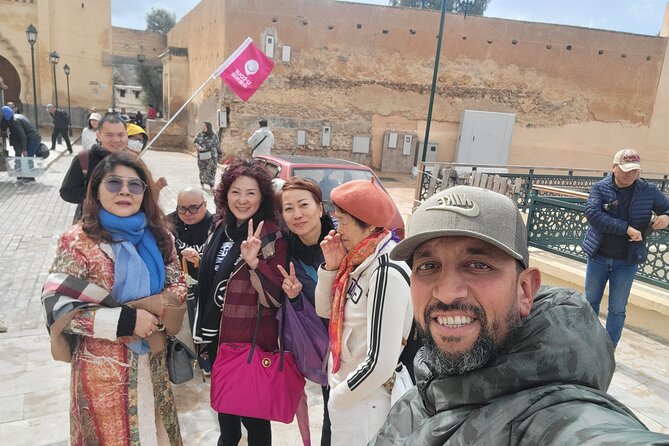
The Zaouia of Moulay Idriss II contains the tomb of Idris II, who ruled Morocco from 807 to 828 and is regarded as the main founder of Fez. A zaouia is a religious complex or shrine connected with worship, teaching, and remembrance.
The visit is scheduled for about 10 minutes and listed as free. It is a brief stop, but it carries major importance for understanding how Fez sees itself. Moulay Idriss II is not just a historical ruler in this setting. He is central to the city’s religious identity.
The route gives you a series of short visits rather than one long museum session. That works well here. You get a clear introduction, then continue through the medina before the details blur together. Dress and behavior should be respectful around religious sites, and access may depend on the area open at the time.
Chouara Tannery: Fez’s most famous working quarter
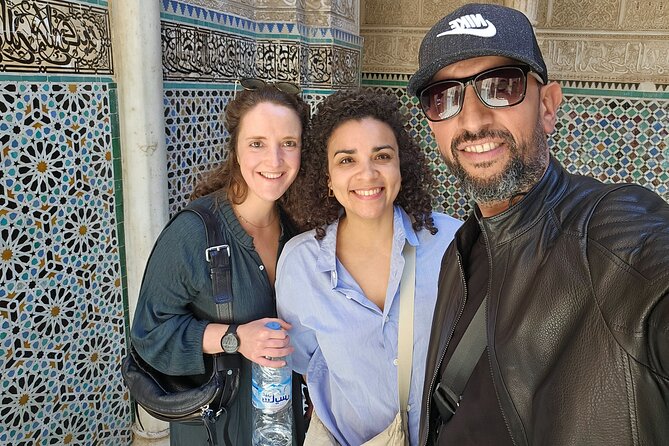
The Chouara Tannery is the largest and one of the oldest of Fez’s three tanneries. It sits in Fes el Bali near the Saffarin Madrasa and the Oued Fes, also known as the Oued Bou Khrareb.
The scheduled visit lasts about 30 minutes and admission is listed as free. This is one of the most memorable parts of the route because it shows an old trade still operating within the medina. Leather work here is not presented as a polished museum display. It is a working craft quarter with strong smells and active production.
That smell is part of the deal. Some shops provide mint to hold near your nose, but that detail is not guaranteed by the tour, so bring your own tolerance for pungent odors. The tannery can also be a place where shopkeepers encourage purchases. A good guide helps you understand what you are seeing while giving you room to decide if you want to buy.
I like this stop because it connects history to work. You see why Fez became famous for leather, and you can better judge the effort behind the bags, slippers, belts, and other goods sold throughout the souqs.
Carpet making and the difference between styles
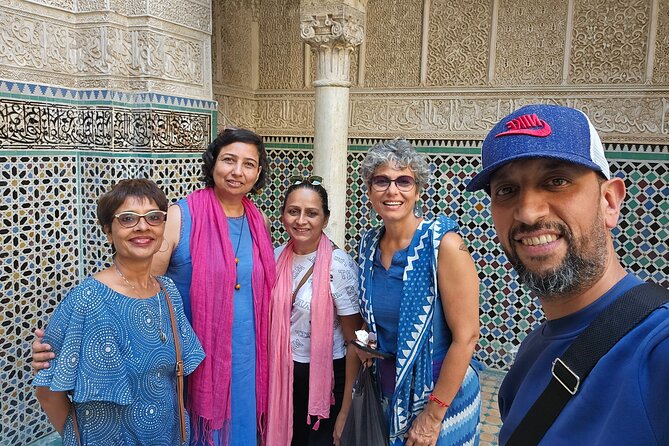
The carpet workshop offers a look at the creative process behind one of Morocco’s best-known crafts. The focus is on seeing carpets being made and learning the difference between Arab and Berber carpets.
About 30 minutes are planned here, and admission is listed as free. This is also the point where shopping pressure may be strongest. The tour description places importance on visiting a carpet workshop, and the direct feedback about the experience praises the chance to see craftspeople working. Still, you should decide in advance how interested you are in buying.
A useful approach is to treat this as a demonstration first. Ask about the materials, patterns, production time, and regional differences. Then compare prices and do not feel obliged to purchase. The value of the stop is not limited to taking home a rug. Understanding how the item was made gives you a better basis for judging quality.
Some people love this hands-on look at Moroccan craft. Others may find the sales portion tiring. Tell Mouanis what you want from the visit, especially if your group is more interested in observation than shopping.
The medina itself is the main attraction
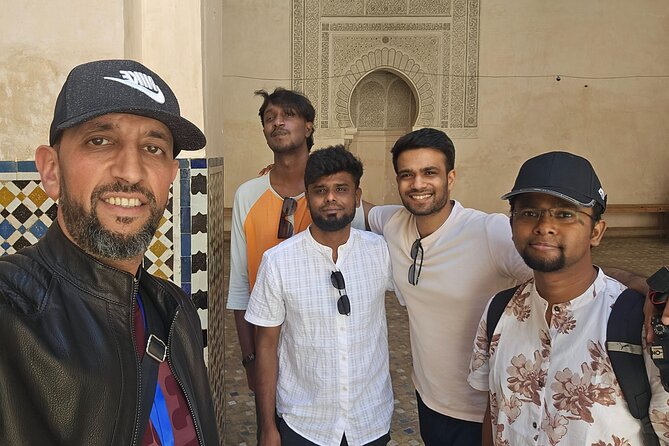
One hour is set aside for the Medina of Fez, and that may be the most important part of the experience. The named monuments give the walk structure, but the real pleasure comes from moving between them through lanes filled with shops, workshops, religious buildings, food smells, and everyday activity.
Fez is described as the capital of handicraft and cooking, and the medina brings both together. You might pass a craftsman at work, see goods being carried through a lane, or catch the contrast between a quiet courtyard and a crowded market street. The city can feel intense, but that intensity is exactly why a guide helps.
Mouanis is repeatedly praised for knowing the medina’s side streets and for showing areas that are difficult to find alone. He is also described as fluent in English, friendly, and willing to answer questions without delivering a stiff, memorized speech. That practical style suits Fez. You need clear directions and useful context more than a long lecture.
The one-hour block is not a promise that every lane will be covered. No walking tour can show all 9,400 streets. Instead, expect a guided sample of the old city, with the route shaped by the day’s pace and your interests.
Sidi Ahmed al-Tijani and Fez’s Sufi tradition
The final listed stop is the Zaouia of Sidi Ahmed al-Tijani, also known as Zawiya Tijaniya Al Koubra. It is a Sufi religious complex used for education and commemoration.
The visit lasts about 10 minutes and admission is listed as free. It adds another religious layer to the day, after the mosque, university, madrasa, and Moulay Idriss shrine. You see that Fez’s spiritual identity is not tied to one building or one period.
Because this is a religious site, the visit should be approached with respect. The exact access available is not specified, so your guide’s explanation may be more important than the length of time inside.
Price, group size, and what you really pay
At $29.04 per group for up to six people, this is a strong price if you are traveling with family or friends. Split six ways, the guiding cost is very low. For two people, it is still reasonable if you value navigation, local history, and access to working craft areas.
The base price includes bottled water. It does not include restaurant meals, estimated at $15 to $25, cafes at about $1.50, attraction fees at about $2, parking at about $2, or transport fees listed at $20. These figures are useful for budgeting, but they are not all unavoidable for every participant. The tour begins and ends in the medina, so parking and transport may not apply to you.
Food is not part of the set route, but the experience allows room for a snack or meal depending on timing. Direct feedback about the walk includes a pleasant snack stop, though you should not treat a particular food stop as guaranteed.
The mobile ticket is convenient, and confirmation is sent within 48 hours, subject to availability. Free cancellation is available if you cancel at least 24 hours before the 10:30 a.m. start. Inside that window, the payment is not refunded and changes are not accepted.
Who will get the most from this walk
I would choose this experience if you want a private introduction to Fez and do not want to spend your first day guessing which lane leads where. It suits first-time visitors, small groups, couples, families, and anyone interested in architecture, religion, history, and Moroccan crafts.
It is also a good match if you want to ask plenty of questions. The guide’s strongest qualities are described as clear explanations, local familiarity, flexibility, and calm navigation. Several people specifically valued his ability to show less obvious places and steer them away from tourist traps.
You may want a different arrangement if you dislike shopping visits or want a tour devoted only to monuments. The carpet workshop and craft stops are central to the experience, and some extra spending opportunities are part of the medina setting.
Bring water beyond the supplied bottle if you need it, wear comfortable shoes, and leave room in your schedule after the tour. The three to four hours are an estimate, and Fez is better enjoyed when you are not racing to the next appointment.
Should you book the Fez medina tour?
Book it if you want the old city explained by someone who grew up there, especially if your group can share the $29.04 price. The mix of al-Qarawiyyin, historic schools, shrines, the tannery, carpets, and ordinary medina streets gives you a useful first look at Fez from several angles.
Skip it if you want complete independence, dislike craft demonstrations, or prefer to explore without a guide. For most first visits, though, Mouanis’s local navigation and friendly, flexible approach address Fez’s biggest challenge: knowing where to go and understanding what you are seeing once you get there.
FAQ
How long does the Fez medina tour last?
The experience lasts approximately three to four hours.
What time does the tour start?
The scheduled start time is 10:30 a.m.
Where does the tour begin?
It begins at 8 Rue Sidi El Khiyat, Fes 30110, Morocco.
Where does the tour end?
It ends at 3269+V44, Rue Talaa Sghira, Fès, Morocco.
Is this a private tour?
Yes. Only your group participates, and the price covers up to six people.
What is included in the price?
Bottled water is included.
Are attraction admission fees included?
No. Admission fees are not included, with an estimated cost of about $2 listed for attractions.
Is food included?
No. Restaurants and cafes are not included. Restaurant costs are estimated at $15 to $25, and cafes at about $1.50.
What is the cancellation policy?
You can cancel at least 24 hours before the local start time for a full refund. Cancellations or changes made less than 24 hours before the start are not accepted and are not refunded.
More Historical Tours
- History and culture with Fes Medina private tour guide
★ 5.0 · 56 reviews - Wonderful Day Tour in Fes: A Historical and Cultural Guided Trip
★ 5.0 · 53 reviews - Fez medina and it’s secrets : cultural tour (private)
★ 5.0 · 32 reviews - Full-Day Historical Tour to Meknes Volubilis and Moulay Idriss
★ 4.0 · 23 reviews
Just added around Fez
- day trip from fez to middle atlas mountain★ 5.0 · 17 reviews
- Volubilis and Meknes day trip from Fez★ 4.5 · 17 reviews
- Private 4 Days Desert Tour from Fes to Marrakech★ 5.0 · 17 reviews
- Fes: Authentic Cooking Class and Old Medina Visit★ 4.9 · 17 reviews
- Half Day Guided Walking Tour in the Medina of Fez★ 5.0 · 17 reviews
- Discover Fez and it’s hidden secrets with a local★ 5.0 · 17 reviews
- Fes with the Hidden Alleys to Explore★ 5.0 · 17 reviews
- Day trip to Volubilis and Meknes from Fez★ 5.0 · 17 reviews
Historical Tours, compared.
Marrakech Historical and Cultural Tour – Half Day City Tour
Read our review →
Full-day Historical Meknes Volubilis and Moulay Idriss Tour
Read our review →
Casablanca Cultural Tour: Medina, Views & Local Delights
Read our review →
Casablanca to Fez: Scenic & Historical Day Trip with Lunch
Read our review →
A Guided Walking Tour Through the Historic Medina
Read our review →
Half Day Guided Tour in Marrakech History & Culture
Read our review →Browse the lists this tour appears in