
Reviewed · HISTORICAL TOURS
Half Day Guided Tour in Marrakech History & Culture
Marrakech reveals itself one alley at a time. This three-hour walk links the city’s key sights with its working souks, giving you both grand monuments and everyday craft traditions in one compact outing. I like the mix of Koutoubia Mosque, Bahia Palace, and Ben Youssef Madrasa, and I like that the guide adds context to carpets, spices, leather, lanterns, and dyed cloth. The main consideration is pace: three hours is a lot of ground for a tour that includes two paid monuments and several market areas.
At $23.23 per person, the price is fair for a certified local guide, though entrance fees are extra. Guides such as Ibrahim and Mo have been praised for answering questions carefully, adapting the walk to personal interests, and offering practical shopping advice. The group can reach 20 people, so ask about the group size if you want a quieter, more personal walk.
In This Review
- Key points at a glance
- Why this three-hour Marrakech walk works
- Koutoubia Mosque and its famous minaret
- Bahia Palace, where decoration takes over
- Jemaa el-Fnaa, Marrakech’s public stage
- The souks, from spices to leather
- The Souk of Dyers and its hanging colors
- Carpet souk, patterns, symbols, and bargaining
- Ben Youssef Madrasa and the quiet courtyard
- Price, group size, and what you actually receive
- Who should book this Marrakech tour?
- Should you book it?
- FAQ
- How long does the Marrakech History and Culture Tour last?
- What sights are included?
- Are entrance fees included in the price?
- How much does the tour cost?
- Where does the tour start?
- Where does the tour finish?
- Is the tour guided by a local expert?
- How large can the group be?
- Is the tour available with a mobile ticket?
- Can I cancel for a full refund?
Key points at a glance
- Three major sights in one walk: See Koutoubia Mosque, Bahia Palace, and Ben Youssef Madrasa during a focused introduction to Marrakech.
- A real look at craft work: Visit the souks of dyers, carpets, spices, leather, metal, wood, and ceramics.
- Useful shopping guidance: Your guide can explain bargaining customs and help you understand what you are buying.
- Strong guide feedback: Ibrahim and Mo are praised for clear explanations, cultural insight, and help with shopping choices.
- Low starting price: The $23.23 fee covers the guide, while Bahia Palace and Ben Youssef Madrasa charge separate admission.
- Easy half-day format: The tour starts and ends near Jemaa el-Fnaa, with a mobile ticket and free cancellation up to 24 hours before departure.
Why this three-hour Marrakech walk works
Marrakech can feel confusing at first. The medina is a maze of narrow lanes, small market sections, courtyards, workshops, and grand religious buildings. A local guide gives you a thread to follow, both physically and culturally.
This tour is especially useful on your first day in the city. It begins near Jemaa el-Fnaa and returns to the same general meeting point, so you can use it to get your bearings before exploring the medina alone. The guide does more than point out old buildings. The focus also falls on how Marrakech trades, prays, studies, makes things, and welcomes visitors.
I like that the route does not treat the souks as one giant shopping area. You are introduced to specialized sections, including the spice market, fabric market, jewelry market, dyers’ souk, and carpet souk. That structure helps you understand why the medina feels less like a single bazaar and more like a collection of traditional trades.
Still, you should keep the schedule in mind. The stated visit times add up to about three hours before allowing much extra time for moving through the souks. The walk may feel brisk, especially if you want long visits inside both Bahia Palace and Ben Youssef Madrasa. If you prefer slow photography, extended shopping, or detailed museum-style explanations, plan to return to one or more sites later.
More Historical Tours in Marrakech
- Marrakech Historical and Cultural Tour – Half Day City Tour
★ 4.5 · 1,180 reviews - Historical Marrakech Walking Tour
★ 5.0 · 198 reviews - Marrakech: Historical Discovery Tour
★ 4.1 · 87 reviews
Koutoubia Mosque and its famous minaret
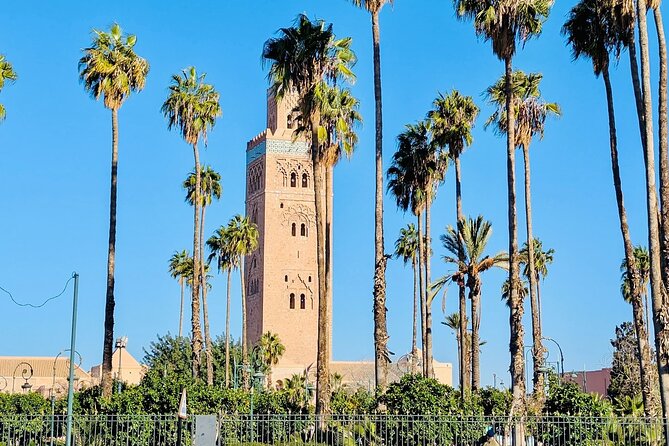
The first major stop is Koutoubia Mosque, one of Marrakech’s defining landmarks. Its 12th-century minaret rises above the medina and helps you understand the city’s shape from the start.
The guide explains the minaret’s Andalusian design, its place in Marrakech’s story, and its role as a visual marker for people approaching the city. You also spend time in the surrounding gardens, where the monument is easier to view from a little distance.
Admission is free, but non-Muslim visitors should not expect an interior visit to the mosque itself. The value here is the explanation, the exterior architecture, and the setting. A 30-minute stop is enough for an introduction and photographs, though it is not a detailed architectural study.
I find this a smart opening stop because the minaret gives you an immediate sense of place. After the quieter gardens, the route moves toward the energy of the central square and the tighter market lanes.
Bahia Palace, where decoration takes over
Bahia Palace requires a separate admission fee, listed as less than 10 euros. That extra cost is modest, but you should carry it in your mental budget because it is not included in the tour price.
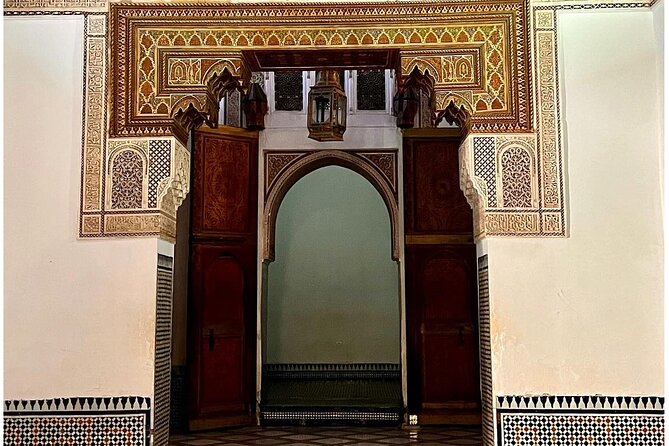
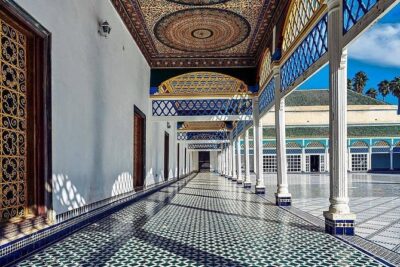
Inside, the visit focuses on the palace entrance, gardens, interior courtyards, and decorated rooms. Look for carved wooden ceilings, mosaics, and detailed ornamental work. The palace is best understood as a display of courtly life and Moroccan craftsmanship, rather than as a single grand room or fortress.
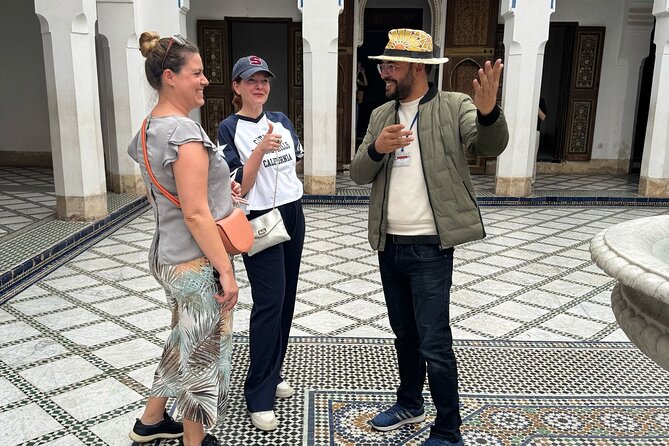
The guide’s role matters here. Without context, you may simply see a sequence of attractive courtyards. With an explanation of the palace’s structure and past use, the details begin to make more sense. The open courtyards also offer a welcome pause from the narrow streets outside.
The planned visit lasts about an hour, making Bahia Palace one of the longer stops. That is useful if you want time to look closely at the tilework and wood carving. The drawback is that this hour puts pressure on the rest of the route. If the group moves slowly at the entrance or pauses for questions, the market portion may feel shorter.
Jemaa el-Fnaa, Marrakech’s public stage
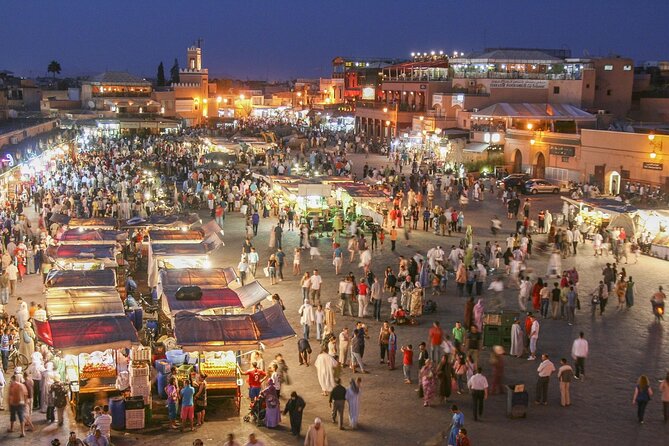
Jemaa el-Fnaa is the city’s best-known gathering place and another free stop. The guide explains how the square functions as a meeting point where food sellers, juice stands, musicians, street performers, spice merchants, and shops all compete for attention.
The square is also tied to oral tradition and public entertainment, which helps explain its UNESCO World Heritage status. The important point is not just what you see, but how the place changes through the day. A guide can help you read the activity instead of treating it as a wall of noise and color.
You may encounter snake charmers and other performers. Watch your belongings, stay aware of requests for payment, and follow your guide’s advice before taking photographs of people. The tour includes a 30-minute explanation, not a meal or a dedicated evening food visit, so do not book it expecting a full tasting tour.
I like this stop because it connects the formal monuments to daily city life. Koutoubia and Bahia Palace show power, faith, and design. Jemaa el-Fnaa shows Marrakech as a place where people gather, trade, perform, and eat.
More Historical Tours:
- Private Cultural Tour in Marrakech City
★ 5.0 · 77 reviews - 1 Day Guided Tour of World Heritage Kasbah Ait Ben Haddou from Marrakech
★ 3.5 · 73 reviews - Enchanting Half-Day Journey of Marrakech into History & Culture.
★ 4.5 · 72 reviews - private VIP half journey of Marrakesh : History & Culture.
★ 4.5 · 64 reviews
The souks, from spices to leather
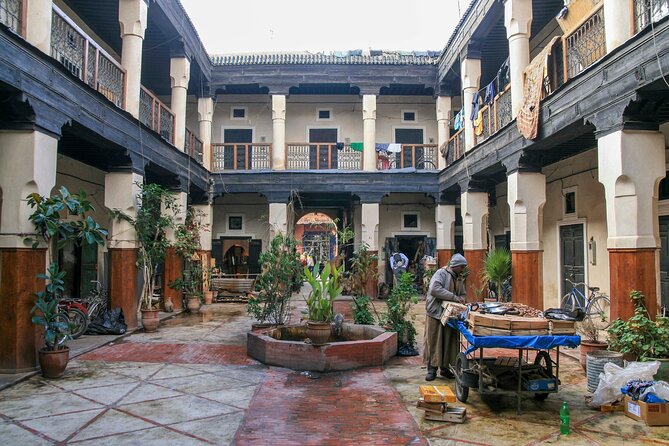
The souks are the heart of the walk. You follow the guide through narrow lanes where each section may focus on a different product or trade. Expect discussion of leather, metal, wood, ceramics, fabrics, spices, jewelry, lanterns, and carpets.
This is where the tour becomes most practical. A guide can explain how traditional markets operate, what different objects are used for, and how bargaining fits into the buying process. You are not required to purchase anything, but the visit gives you a better basis for deciding when an item interests you and when you should simply keep walking.
Shopping advice is one of the strongest reasons to take this tour early in your stay. Guides Ibrahim and Mo have been singled out for offering useful suggestions about shops and markets, as well as answering individual questions. That kind of help can prevent a rushed purchase during your first confusing walk through the medina.
The tradeoff is that a souk visit may include commercial stops. You could be invited to look at rugs, leather goods, spices, or lanterns. If you are not shopping, say so politely and clearly. A good guide should help you understand the craft without making the purchase the whole point of the visit.
The Souk of Dyers and its hanging colors
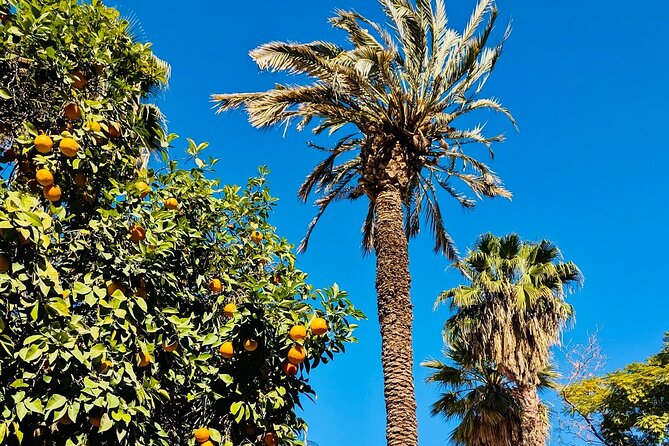
The dyers’ souk offers a close look at one of Marrakech’s older crafts. Fabrics are colored in vats using natural pigments, then hung to dry. The fabrics create a striking display, but the useful part of the visit is seeing how much work sits behind a finished textile.
The guide explains the dyeing process, from applying color to drying the cloth, and places the craft in the economic life of the medina. This is a good stop for anyone interested in textiles, clothing, interior decoration, or traditional production methods.
The information provided does not give a separate time for the dyers’ souk, so expect this to be part of the broader market walk rather than a long workshop visit. You will observe the process, but you should not assume that you will make or dye an item yourself.
Carpet souk, patterns, symbols, and bargaining
The carpet souk is likely to be the most sales-focused part of the route. You see Berber and Arabic rugs in many patterns and colors, while the guide explains weaving methods and the meanings that may appear in the designs.
A merchant may unroll several carpets for you. That can be helpful if you are genuinely shopping, but it can also take time and create pressure if you are only looking. The tour gives you a chance to learn how bargaining works, which is useful even if you leave without buying anything.
I recommend deciding your budget before entering this section. Also decide whether you are willing to carry a rug home, arrange shipping, or simply admire the workmanship. The guide can explain the market tradition, but you remain responsible for checking size, material, condition, and final price before purchasing.
The carpet souk adds something important to the tour: it shows that Moroccan culture is not only found in palaces and monuments. It also lives in the skills of people producing and selling useful objects today.
Ben Youssef Madrasa and the quiet courtyard
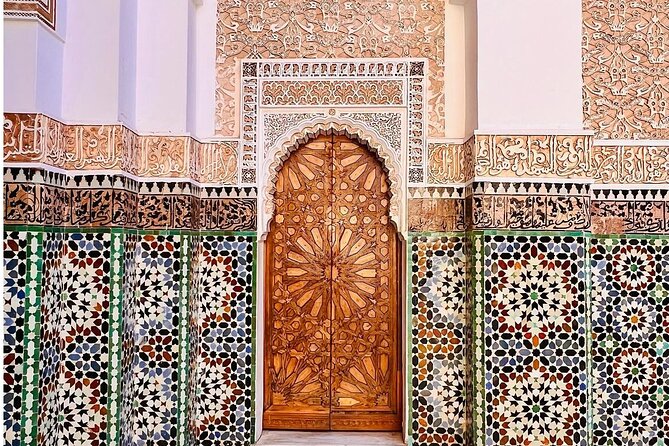
Ben Youssef Madrasa is the final major monument and requires its own admission fee, listed as less than 5 euros. That small extra payment brings you into one of Marrakech’s finest examples of Islamic architecture.
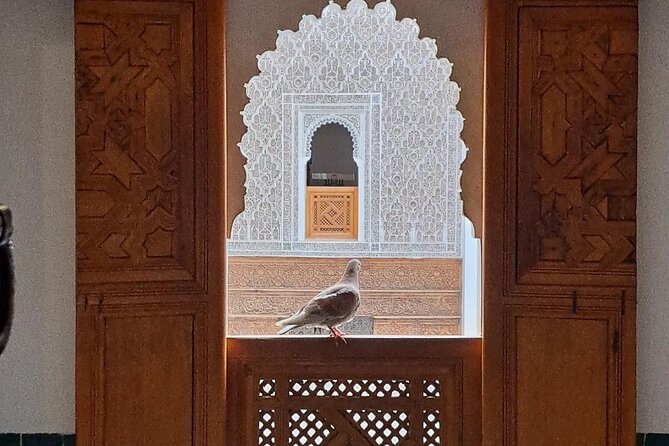
The madrasa was founded in the 14th century and once welcomed students from across North Africa for religious study. Inside, the route covers the courtyard, decorated surfaces, wooden carving, mosaics, and the small student rooms.
The contrast with the souks is part of the appeal. After tight lanes, sales pitches, and constant movement, the madrasa offers a more ordered setting. Its design encourages you to look up, across, and into the details around the courtyard.
A one-hour visit sounds generous, but crowd levels and group movement can affect how much time you get in each area. The madrasa is a strong final stop because it leaves you with a sense of the city’s intellectual and religious past, not only its shopping culture.
Price, group size, and what you actually receive
At $23.23 per person, this is a good-value introduction if you want a guide-led walk rather than a private experience. The fee includes a certified local guide and professional service. It does not include the Bahia Palace or Ben Youssef Madrasa entrance charges, which together are listed at less than 15 euros.
The group limit is 20 people. That is manageable, but it is not intimate. If the group reaches its maximum, you may stand farther from the guide in busy lanes or need to wait while everyone enters a monument.
The mobile ticket keeps the booking simple. Confirmation is provided at booking, and the meeting point is at Argana, near Jemaa el-Fnaa, at number 18 on Znikat Rahba. The activity ends back at the meeting point, which is convenient for continuing your own exploration afterward.
Most people can participate, and service animals are allowed. The tour is near public transportation. No hotel pickup is included in the information provided, so you should arrange your own way to the stated meeting point.
The cancellation rule is flexible if you plan ahead: cancel at least 24 hours before the local start time for a full refund. Changes or cancellations made inside that window are not accepted for a refund.
Who should book this Marrakech tour?
I would choose this walk if you want a first look at the medina, prefer history with practical shopping advice, and have only half a day available. It is also a good fit if you want major monuments without arranging separate guides and tickets for each site.
Families and first-time visitors may appreciate the structure. The guide keeps the route moving and gives you a clear framework for exploring the medina later. People interested in crafts will get extra value from the dyers’ and carpet sections.
I would hesitate if you want a private tour, dislike shopping areas, or need long uninterrupted time for photography. The group may include up to 20 people, and the schedule has plenty packed into three hours. You should also be comfortable walking through narrow, busy lanes and standing during explanations.
Should you book it?
Book this tour if you want an affordable introduction to Marrakech’s monuments, markets, and craft traditions in one morning or afternoon. The strongest benefits are the local guide, the clear route through a confusing medina, and the practical help with bargaining and shopping.
Skip it if you already know the medina well or would rather explore at your own pace. For most first-time visitors, though, $23.23 is a sensible price for a guided foundation, especially if your guide is as helpful and adaptable as Ibrahim or Mo. Just budget for the two monument fees and treat the souk visits as cultural instruction first, shopping opportunity second.
FAQ
How long does the Marrakech History and Culture Tour last?
The tour lasts approximately three hours.
What sights are included?
The route includes Koutoubia Mosque, Bahia Palace, Jemaa el-Fnaa, Marrakech’s souks, the Souk of Dyers, the Marrakech Carpet Souk, and Ben Youssef Madrasa.
Are entrance fees included in the price?
No. Entrance to Bahia Palace and Ben Youssef Madrasa is not included. Bahia Palace costs less than 10 euros, and Ben Youssef Madrasa costs less than 5 euros, according to the provided details.
How much does the tour cost?
The listed price is $23.23 per person.
Where does the tour start?
The meeting point is Argana, J2H6+CPV, Jamâa el-Fnna, number 18, Znikat Rahba, Marrakech 40000, Morocco.
Where does the tour finish?
The activity ends back at the meeting point.
Is the tour guided by a local expert?
Yes. The package includes a certified local tour guide. The experience is provided by Mohcine.
How large can the group be?
The maximum group size is 20 people.
Is the tour available with a mobile ticket?
Yes. The experience includes a mobile ticket.
Can I cancel for a full refund?
Yes, if you cancel at least 24 hours before the experience start time. Cancellations or changes made less than 24 hours before the start time are not accepted for a refund.
Just added around Marrakech
- Marrakech: Medina Souks, Hidden Markets and Shopping Tour★ 4.8 · 33 reviews
- Guided walking tour in Marrakech★ 4.5 · 33 reviews
- Sunset Camel Ride Marrakech with Transfers★ 5.0 · 33 reviews
- Agafay desert sunset camel ride Tour from Marrakech★ 5.0 · 33 reviews
- 2 Days Desert Agafay and Atlas Mountains Trek From Marrakech★ 3.8 · 33 reviews
- Atlas mountains, Ourika valley, berber villages trip & Guide★ 5.0 · 33 reviews
- Magical Dinner show and Quad bike In Agafay Desert Marrakech★ 4.5 · 33 reviews
- Camel Ride at the Palm Groves in Marrakech★ 5.0 · 33 reviews
Historical Tours, compared.
Marrakech Historical and Cultural Tour – Half Day City Tour
Read our review →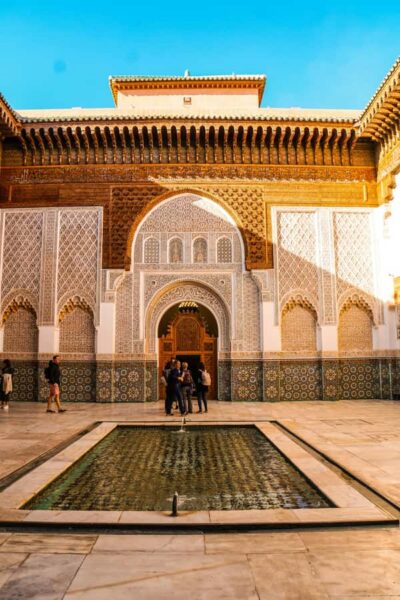
Full-day Historical Meknes Volubilis and Moulay Idriss Tour
Read our review →
Casablanca Cultural Tour: Medina, Views & Local Delights
Read our review →
Casablanca to Fez: Scenic & Historical Day Trip with Lunch
Read our review →
A Guided Walking Tour Through the Historic Medina
Read our review →
Browse the lists this tour appears in