
Reviewed · MERZOUGA AND SAHARA DESERT TOURS
From Marrakesh: Private 4-Day Sahara Desert Discovery Tour
Desert nights are worth the long road. This private four-day trip links Marrakesh with the High Atlas, Aït Benhaddou, the Dades and Todra Gorges, and the Sahara’s Erg Chebbi dunes. I like the private vehicle and flexible guide, which make long drives easier to manage, and I like the mix of kasbahs, souks, palm groves, and desert scenery rather than a trip focused only on camel riding.
The main drawback is the distance. You cover roughly 1,200 kilometers according to one recent account, so several days involve long stretches in the car. The Sahara camp can also feel less remote than the photographs suggest, with other camel groups, hotels, and quad bikes near some camps.
In This Review
- Key points before you book
- What the $440 price really covers
- Day 1: Tizi n’Tichka, Aït Benhaddou, and the kasbah country
- Day 2: Dades Gorge, Todra Gorge, and the Erg Chebbi dunes
- Day 3: Sunrise, Rissani’s souk, and the Drâa Valley
- Day 4: Returning across the High Atlas
- Food, rooms, and the level of comfort
- Who will enjoy this tour most?
- Practical details to settle before departure
- Should you book this Sahara trip?
- FAQ
- How long is the tour?
- Where does the tour begin and end?
- Is the tour private?
- Is camel riding included?
- Is desert camping included?
- Which meals are included?
- Are entrance fees included?
- What should I bring?
Key points before you book
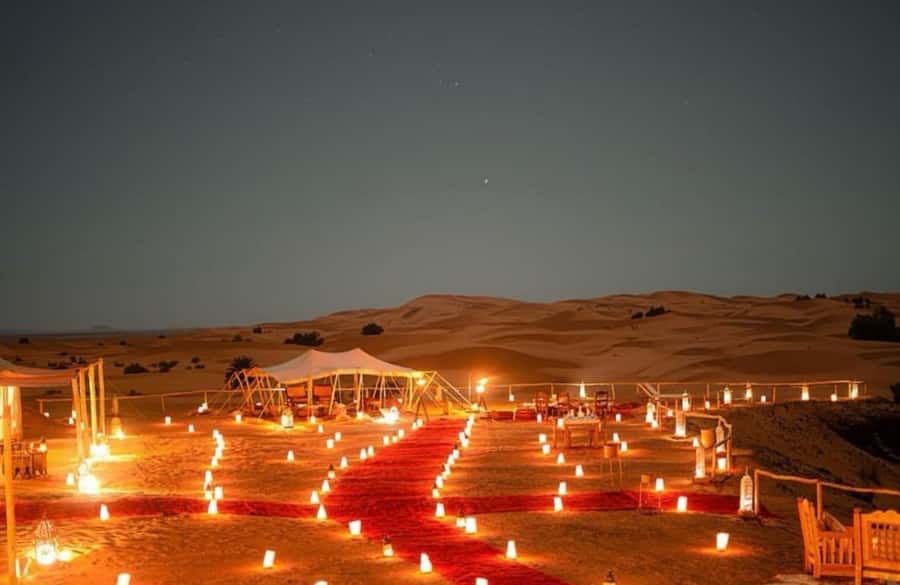
- Erg Chebbi by camel: Ride into the dunes around sunset or sunrise and spend the night in a traditional nomadic-style tent.
- Aït Benhaddou and Tourirt: See two of southern Morocco’s best-known kasbahs, with a chance to add Atlas Studios in Ouarzazate.
- A demanding but scenic route: Cross the Tizi n’Tichka Pass twice and travel through the Dades Valley, Todra Gorge, Drâa Valley, and Agdz.
- Private touring matters: Your English, French, Spanish, or Arabic-speaking guide can adjust stops and explain local customs along the way.
- Good accommodation value: Breakfasts, dinners, riads, kasbah stays, transport, fuel, and the camel safari are included in the $440 price.
- Bring lunch money: Lunches, monument entry fees, and alcoholic drinks are not included.
What the $440 price really covers
At $440 per person, this is not a budget bus ride. It is a private trip with an air-conditioned vehicle, a dedicated guide, fuel, accommodation, all breakfasts and dinners, and the camel safari. For a four-day route covering the Atlas Mountains and the far southeastern desert, that bundle gives you a clear sense of value.
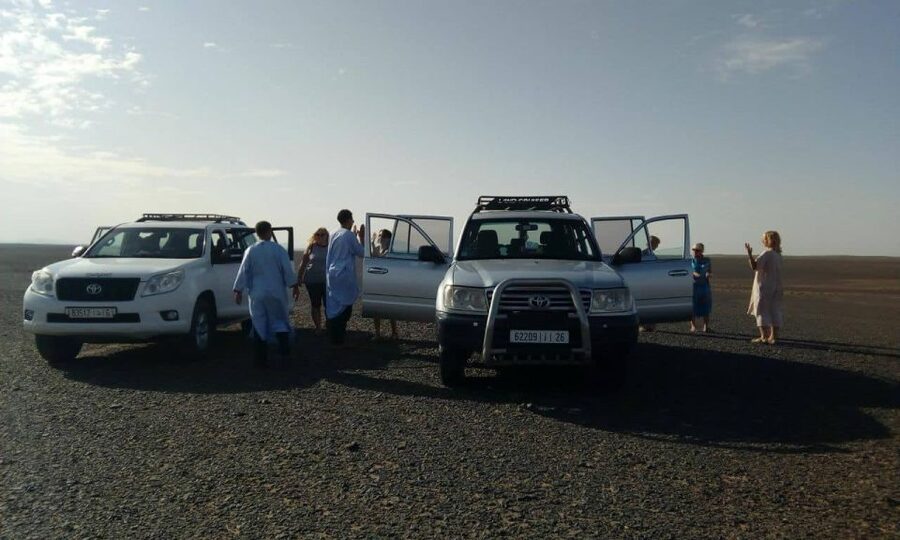
The strongest part of the package is the private setup. You are not tied to a large coach group or a rigid stop schedule. Several people who took the trip appreciated being able to pause for photographs, stretch their legs, ask questions, or adjust the plan. One group had a comfortable SUV with Wi-Fi, while another used a Toyota 4×4.
The exact vehicle and room style can vary, so I would ask about those details before paying if comfort matters to you. The accommodation is described as comfortable, with riads, kasbah-style lodging, and a desert camp. One account praised the hotels and meals throughout but found the Ouarzazate hotel noisy because it sat on a busy street. That is a useful reminder that mid-luxury does not mean every night will be polished or quiet.
You pay separately for lunch and monument entries. That matters most at places such as Aït Benhaddou and Atlas Studios, where the guide can take you to the site but admission is extra. Keep some Moroccan dirhams available for food, entry fees, market purchases, and tips.
More Sahara Desert Tours in Marrakech
- From Marrakech: 3-Day Merzouga and Sahara Desert Tour
★ 4.9 · 15,308 reviews - From Marrakech: Merzouga 3-Day Desert Safari with Food
★ 4.7 · 12,232 reviews - 3 Days Desert Tour From Marrakech To Merzouga Dunes & Camel Trek
★ 5.0 · 10,125 reviews
Day 1: Tizi n’Tichka, Aït Benhaddou, and the kasbah country
The first day takes you over the High Atlas Mountains on the twisting Tizi n’Tichka Pass. The road is famous for its bends and broad mountain views, and the changing scenery gives you a quick lesson in Morocco’s geography. Marrakesh’s busy urban setting gives way to high mountain slopes, then to the drier southern side of the range.
This is a long driving day, but a private vehicle helps. You can stop for photographs and short breaks instead of waiting for a whole coach. If you suffer from motion sickness, sit toward the front and bring water. The winding road is part of the experience, but it can be tiring.
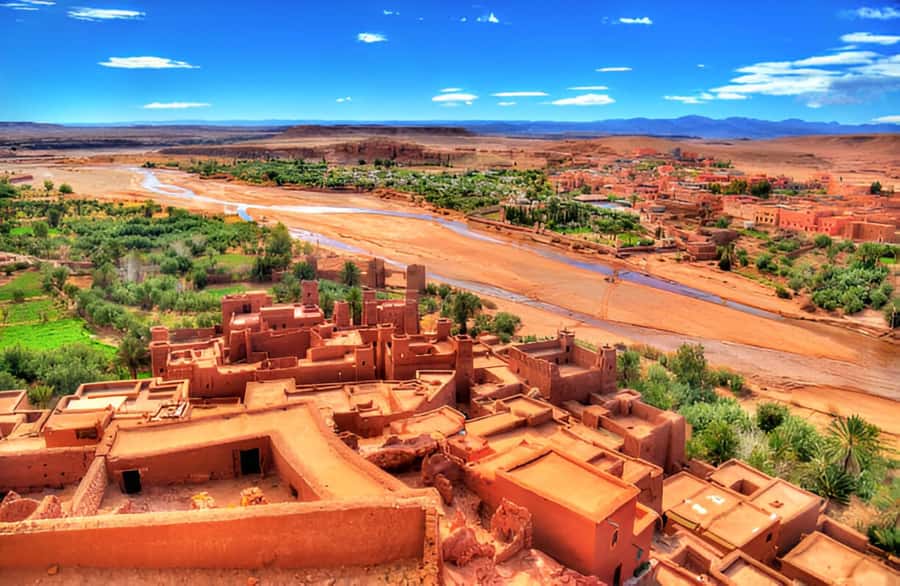
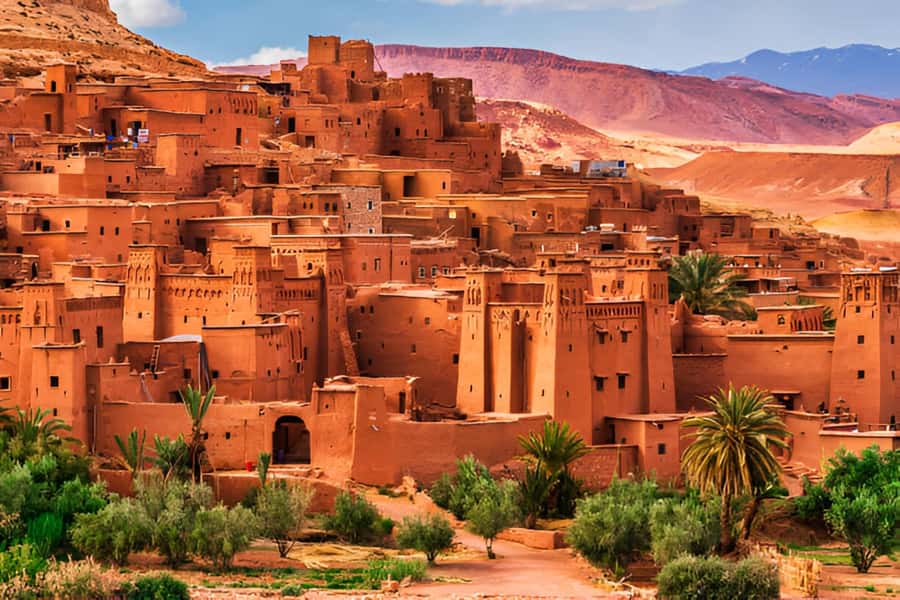
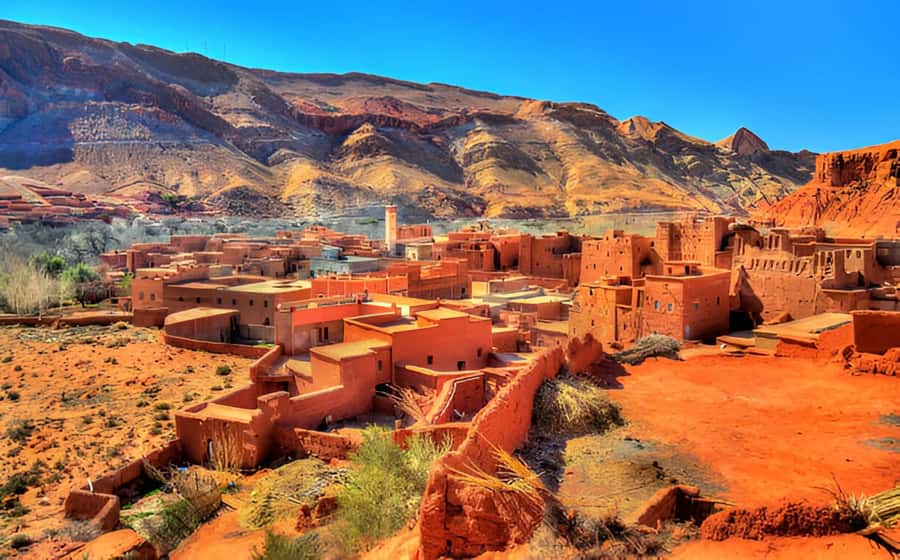
Aït Benhaddou is the major stop. This fortified village of earthen buildings has appeared in major films and television productions, but its value is not only cinematic. Its passageways, towers, and compact walls show how southern Moroccan settlements were built from local earth and organized for protection and trade.
You should allow yourself time to look beyond the famous viewpoint. The best part is often the climb through the narrow lanes and the view back across the surrounding valley. Some local guiding and entry arrangements may be separate from the main tour, so ask your guide what is included before you begin.
The route then reaches Ouarzazate, often called the gateway to the desert. You may visit Atlas Studios, described here as Africa’s largest film studio. It is an optional-feeling addition in practical terms because entrance fees are not included, and it will appeal most to people who enjoy film sets, props, and production stories. If you would rather spend more time around old buildings and local life, you may prefer to keep the stop shorter.
Lunch is planned around the Kasbah of Tourirt, once connected with the Glaoui Dynasty. The building gives you another look at the defensive kasbah style, with thick walls and earth-colored architecture. Lunch itself is not included, so confirm the stop and menu with your guide.
In the afternoon, you pass through the Rose Valley toward Skoura. The valley is known for rose cultivation, and the road brings a shift from bare rock to palms and irrigated greenery. In Skoura, the Kasbah of Amerhidil sits by the Amerhidil River and is described as one of Morocco’s largest kasbahs.
The day ends in the Dades Valley. This is a sensible overnight stop because it breaks up the long route to the Sahara. It also puts you close to the Dades Gorge for the next morning.
Day 2: Dades Gorge, Todra Gorge, and the Erg Chebbi dunes
After breakfast, you visit the Dades Gorge, a dramatic area of red rock, winding roads, and steep walls. The gorge attracts climbers, bird watchers, and photographers, so it is worth bringing a camera even if you have no interest in technical hiking.
A mint tea stop gives the morning a slower rhythm. Mint tea is often called Berber Whiskey, a playful local nickname that helps explain how central tea is to hospitality. Your guide can add context about the communities and traditions along the route, which is one of the real benefits of having a private local driver-guide rather than simply following a transfer service.
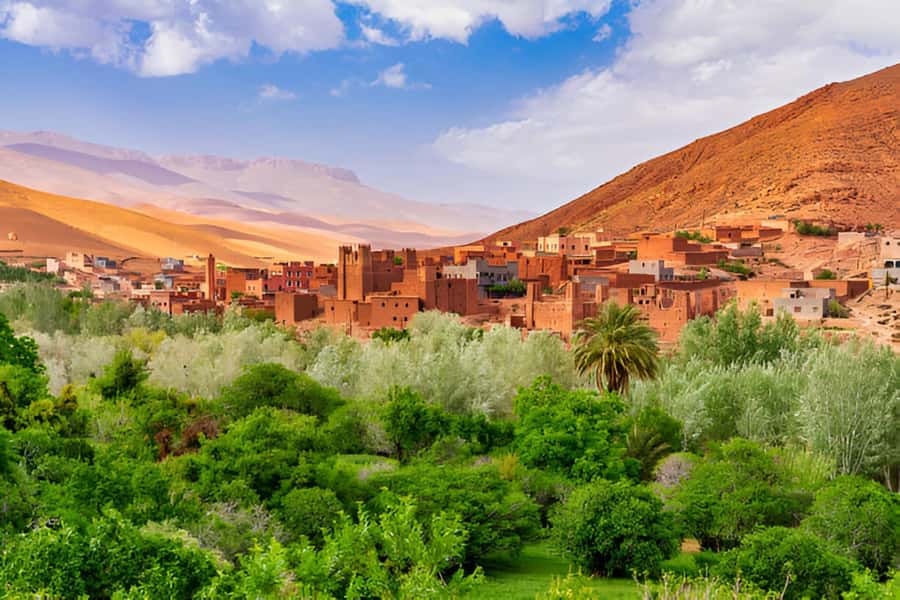
The trip continues through Boulmane Dadès and Tinghir. Palm trees and irrigated gardens appear in the valleys, creating a strong contrast with the dry rock around them. These transitions are one of the best reasons to take the overland route. You are not simply moving from Marrakesh to a desert camp. You are watching the country change mile by mile.
Todra Gorge is the next major stop, with lunch afterward. The gorge is known for its tall rock walls and is another favorite area for climbers and photographers. The supplied details describe a leisurely lunch, but you should still expect a full day of driving and sightseeing. This is not a relaxed resort schedule.
From Todra, you continue toward Merzouga and the Erg Chebbi dunes. The final approach marks the shift from rocky valleys to open desert. At Merzouga, you leave the vehicle for the camel safari.
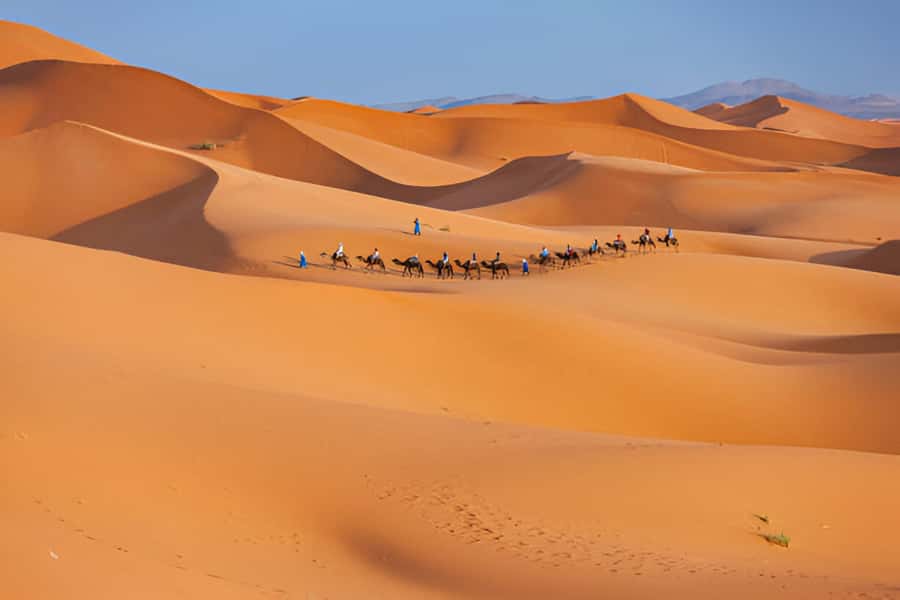
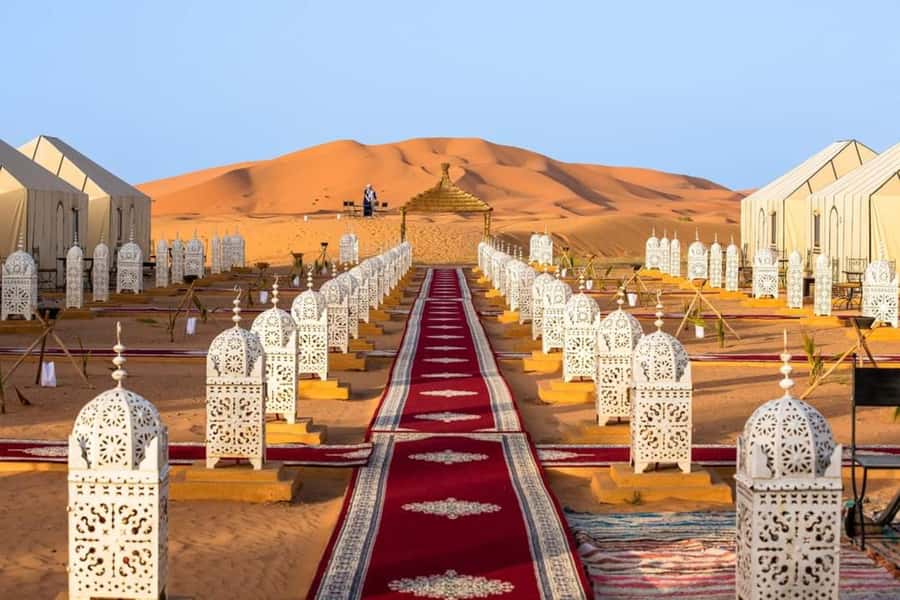
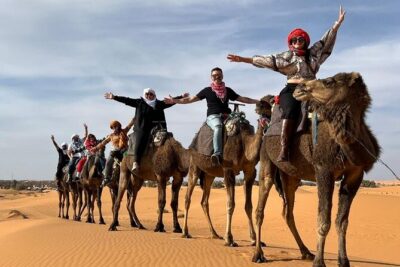
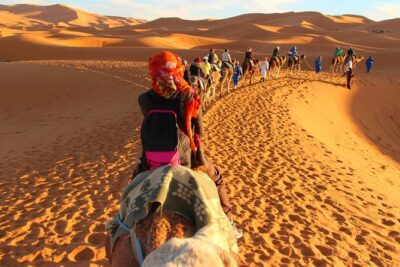
The camel ride is the emotional center of the trip. You cross the wind-shaped dunes toward camp, usually with the best light near sunset or sunrise. The ride itself can be slow and slightly awkward, but that is part of the charm. You are not racing across the sand. You are watching shadows lengthen over the dunes.
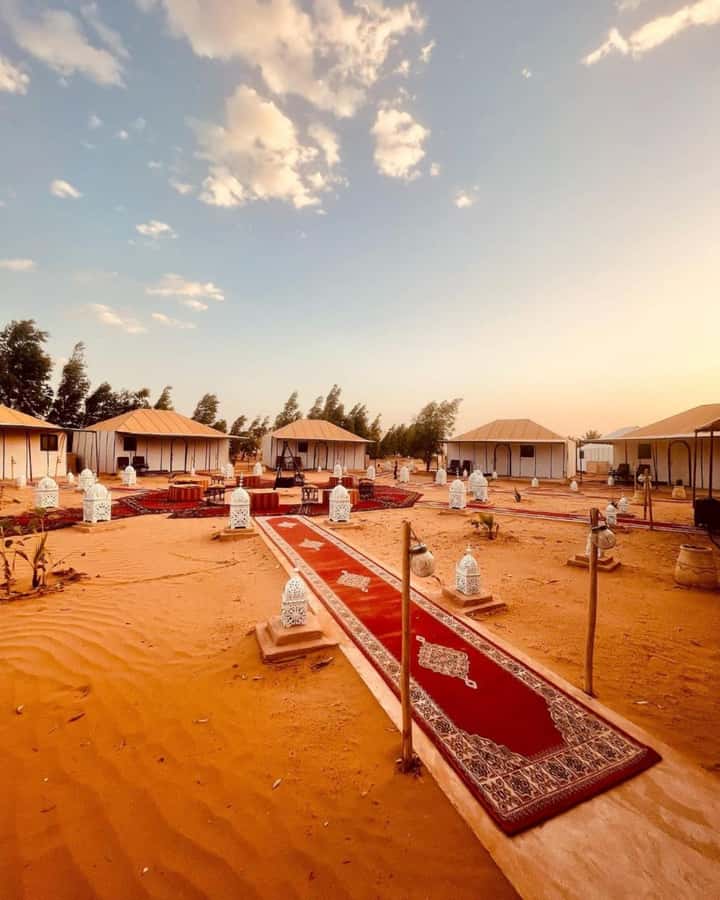
At camp, dinner and traditional music around a fire are part of the evening described by recent visitors. You sleep in a traditional nomadic camel-hair tent. The phrase traditional tent should not make you expect a completely isolated wilderness camp. One person specifically found the desert area busy, with other camel groups, hotels, and loud quad bikes nearby.
That criticism is fair and important. Erg Chebbi is a major Moroccan destination, so the experience can feel touristy at its busiest. Still, the dunes, evening light, music, and night away from Marrakesh create a memorable change of pace.
Day 3: Sunrise, Rissani’s souk, and the Drâa Valley
Wake early for the desert sunrise. This is the moment to keep your camera ready and wear warm layers if you are visiting outside summer. Desert temperatures can shift sharply between day and night, and the provided packing advice sensibly includes sunglasses, a hat, sunscreen, and comfortable shoes.
After breakfast, camel riders return from the camp before the road continues to Rissani. The town is a useful stop for seeing a more traditional market setting. You visit the ksours and kasbahs of Tafilalt and pass the Tafilalt Palm Grove, where date palms grow in the oasis environment.
If your timing matches local market day, Rissani’s souk is a highlight. You may also visit the zaouia of Moulay Ali Sherif, the mausoleum of the founder of the dynasty. This part of the trip adds cultural depth after the desert spectacle. It gives you a look at trade, religious tradition, and oasis life rather than only scenic viewpoints.
A private guide is especially useful here. One recent visitor appreciated being handed over to local guides in specific towns, particularly in Rissani. That arrangement can help you understand the market without wandering through it without context. At the same time, ask clearly about shopping stops. Local markets are genuine places, but some visits may include commercial expectations.
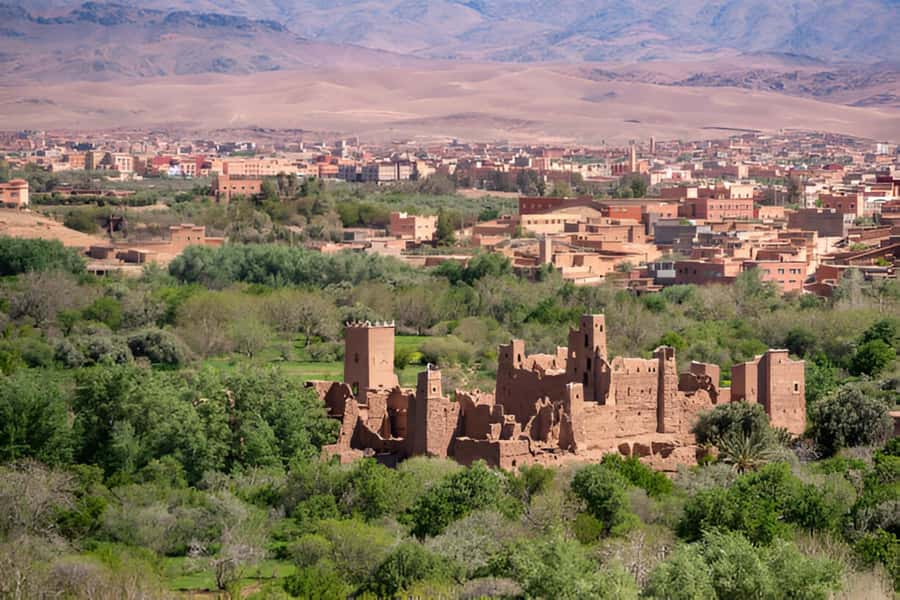
The afternoon route heads toward Ouarzazate through Alnfe, Tazarine, the Drâa Valley, and Agdz. The Drâa is known for its long palm-filled valley and villages shaped by water and agriculture. The contrast between the palm groves and surrounding red rock is one of the most memorable visual changes on the route.
Tamnougalt Kasbah is another major stop. Its location in the Drâa Valley makes it a useful place to understand how kasbahs worked as homes, strongholds, and community centers. You then spend the night in a kasbah riad, with another opportunity to visit Tourirt if the timing allows.
The third day is a lot of ground. If you want more time in the desert, one past group arranged to spend an additional night there instead of splitting the return drive in the usual way. That kind of change may be possible on a private tour, but you should agree on it before departure.
More Sahara Desert Tours:
- 3-Day Marrakech to Merzouga Desert Tour: Camel Rides & Overnights
★ 5.0 · 8,734 reviews - 3-Day Marrakech to Fes Sahara Desert Tour via Merzouga
★ 5.0 · 6,546 reviews - Marrakech: 3-Day Merzouga Desert Experience Camel & Meals
★ 4.6 · 6,252 reviews - From Marrakech: 2-Day Sahara Tour to Zagora & Ait Ben Haddou
★ 4.4 · 1,925 reviews
Day 4: Returning across the High Atlas
The final day retraces the route toward Marrakesh and crosses the Tizi n’Tichka Pass again. The return is mainly a transport day, with lunch on the way. You will have seen a great deal in four days, but you should not expect a leisurely final morning.
The private format makes this return easier. Your guide can explain the places you pass, stop for photos, and help keep the drive comfortable. Past guides named Hassan, Mohamed, Khalid, Said, Hamid, Youssef, and Abdelhadi have been praised for safe driving, patience, local knowledge, and friendly conversation. The assigned guide may be different, but the driver-guide relationship is clearly central to the experience.
I would ask in advance how much time you will have at each major site. The published plan covers a lot: two mountain crossings, multiple gorges, several kasbahs, a desert camp, a market, and long transfers. Four days works for seeing the main route, but it leaves little room for slow exploration.
Food, rooms, and the level of comfort
Breakfast and dinner are included each day, while lunches are not. The food received strong praise for quality, and one group found a local lunch stop that became one of the best meals of the trip. Your guide can help you order, which is useful when menus are unclear or when you want something outside the standard tourist choices.
Accommodation includes riads, kasbah-style lodging, and the desert camp. Accounts describe the rooms as clean and comfortable, with welcoming staff. The Dades Gorge accommodation received especially warm praise for its character.
Do keep your expectations balanced. This is a road trip through remote areas, not a four-night luxury hotel stay. A busy street, a basic room, or a less secluded camp is possible. The overall package offers good comfort for the price, but the scenery and guide are more important strengths than hotel polish.
Who will enjoy this tour most?
I would choose this trip if you want to see a large part of southern Morocco without arranging every transfer yourself. It suits couples, families, and small private groups who value flexibility and want a dedicated driver.
It is also a good fit if your main goals include:
- Seeing Aït Benhaddou and several kasbahs in one trip
- Crossing the High Atlas by road
- Spending a night in the Erg Chebbi dunes
- Visiting Rissani on market day
- Learning about Berber culture and local customs from a Moroccan guide
- Combining major sights with smaller stops and local meals
I would hesitate if you dislike long drives, winding mountain roads, or early mornings. The desert camp may also disappoint you if you expect total silence and complete separation from other groups. For that kind of solitude, you would need to ask specifically about camp location, season, and the possibility of a quieter arrangement.
Practical details to settle before departure
Pickup is available from hotels in Marrakesh. Provide the full accommodation details when booking, along with the full names of everyone in your group. The guide languages listed are English, French, Spanish, and Arabic.
Bring a passport or ID card, comfortable shoes, sunglasses, a sun hat, and sunscreen. The tour does not allow pets. Since lunch and entrance fees are extra, bring enough cash in Moroccan currency for those costs and for personal purchases.
The booking terms are flexible: you can cancel up to 24 hours before departure for a full refund, and the reserve-now, pay-later option lets you hold the booking without paying immediately. Check the available starting time because the departure hour can vary.
Should you book this Sahara trip?
You should book it if you want the classic Morocco road journey, with Aït Benhaddou, red-rock gorges, palm oases, kasbahs, a Rissani souk, and a camel ride into Erg Chebbi all in one four-day package. The strongest reasons to go are the private vehicle, the helpful driver-guides, the quality of the included meals, and the chance to adjust the pace.
You should skip it if you want a short desert break or a quiet luxury retreat. The route is long, the return drive is substantial, and the dunes can be busy. For most people who accept those limits, $440 per person is a fair price for the amount of transport, accommodation, food, guiding, and desert activity included.
FAQ
How long is the tour?
The experience lasts four days.
Where does the tour begin and end?
Pickup and return are arranged from hotels in Marrakesh.
Is the tour private?
Yes. It is offered as a private group experience with a private English-speaking guide, with French, Spanish, and Arabic also listed as available languages.
Is camel riding included?
Yes. A camel safari into the Erg Chebbi dunes is included.
Is desert camping included?
Yes. The program includes an overnight stay in a bivouac, with accommodation in a traditional nomadic camel-hair tent.
Which meals are included?
All breakfasts and dinners are included. Lunches are not included.
Are entrance fees included?
No. Entrance fees to monuments are not included in the price.
What should I bring?
Bring a passport or ID card, comfortable shoes, sunglasses, a sun hat, and sunscreen. Pets are not allowed.
More 4-Day Experiences
- From Marrakech 4 Days Tour To Morocco Sahara Desert
★ 5.0 · 553 reviews - From Marrakech: Merzouga 4 Day Luxury Tour w/ Optional Quad
★ 4.8 · 332 reviews - From Marrakesh: 4-Day Private Atlas Mountains & Desert Tour
★ 4.8 · 197 reviews - 4 Days Desert Tour From Marrakech to Fes via Merzouga Dunes
★ 5.0 · 169 reviews
Just added around Marrakech
- Marrakech: Medina Souks, Hidden Markets and Shopping Tour★ 4.8 · 33 reviews
- Guided walking tour in Marrakech★ 4.5 · 33 reviews
- Sunset Camel Ride Marrakech with Transfers★ 5.0 · 33 reviews
- Agafay desert sunset camel ride Tour from Marrakech★ 5.0 · 33 reviews
- 2 Days Desert Agafay and Atlas Mountains Trek From Marrakech★ 3.8 · 33 reviews
- Atlas mountains, Ourika valley, berber villages trip & Guide★ 5.0 · 33 reviews
- Magical Dinner show and Quad bike In Agafay Desert Marrakech★ 4.5 · 33 reviews
- Camel Ride at the Palm Groves in Marrakech★ 5.0 · 33 reviews
Merzouga and Sahara Desert Tours, compared.
3 Days Desert Tour From Marrakech To Merzouga Dunes & Camel Trek
Read our review →
3-Day Marrakech to Merzouga Desert Tour: Camel Rides & Overnights
Read our review →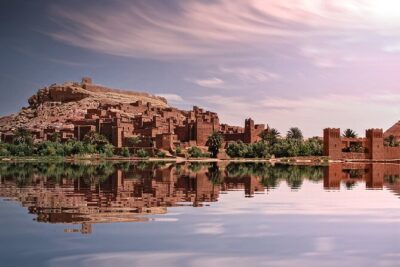
3-Day Marrakech to Fes Sahara Desert Tour via Merzouga
Read our review →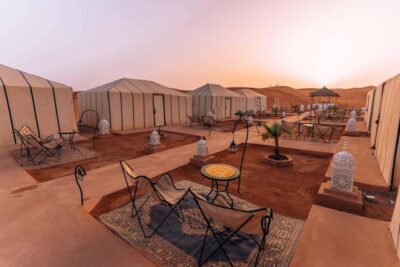
3-Day Merzouga Desert Experience Camel & Meals
Read our review →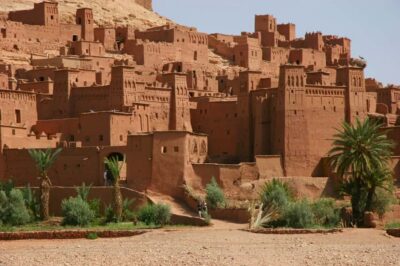
3-Day Tour to Merzouga Erg Chebbi with Food & Camel Trek
Read our review →Browse the lists this tour appears in