
Reviewed · HISTORICAL TOURS
Discovery of Moroccan Culinary Heritage, History and Secrets
Moroccan cooking starts with the spice measure. This two-hour experience pairs a hands-on cooking class with the Moroccan Culinary Arts Museum, where a traditional cook known as a Dada explains how herbs, spices, bread, and slow cooking shape the country’s food. I like the purpose-built kitchen with 34 workstations, and I like that the class ends with your own meal, Moroccan tea, and optional local wine. The main caution is that the experience is advertised in English or French, yet one visitor booked English and received a French-language class.
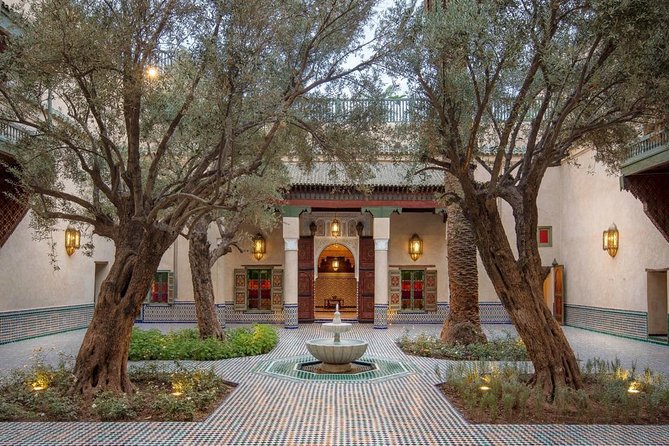
The setting is another strong point. The museum occupies a restored riad near Bahia Palace, with a peaceful courtyard, a Moroccan sitting room, and a terrace for eating. The museum displays have pleased many visitors, though some found them less impressive than the building itself. At $69.79 per person, this is best value for people who want to cook, not for anyone seeking only a quick museum visit.
In This Review
- Key points at a glance
- A cooking class inside a restored Marrakech riad
- The museum explains Morocco through food
- Bread, spices, and the neighborhood food trail
- What you actually cook during the class
- Eating what you made on the terrace
- Is $69.79 good value in Marrakech?
- Who will enjoy this experience most?
- Booking advice and cancellation terms
- Should you book the Moroccan Culinary Heritage experience?
- FAQ
- Where does the Moroccan cooking experience begin and end?
- How long does the experience last?
- What dishes might I prepare?
- Is food included in the price?
- Is Moroccan wine part of the experience?
- How many people can join the class?
Key points at a glance
- A Dada leads the cooking: Learn traditional methods for seasoning, bread making, tajine, couscous, salads, and dessert.
- The class takes place in a teaching kitchen: Thirty-four stations give the space a professional, organized feel.
- You visit local food sources: The program includes a bread oven and a neighborhood herbalist where spices come from.
- The riad is part of the experience: A restored building, courtyard, Moroccan living room, and terrace add atmosphere without requiring a long trip across Marrakech.
- Food and tea are included: Bottled water, lunch, coffee, and tea are listed as included, while Moroccan wine is optional and alcohol costs extra.
- The group can reach 34 people: The kitchen is built for teaching, but a full class may feel less personal than a small workshop.
A cooking class inside a restored Marrakech riad
The meeting point is the Moroccan Culinary Arts Museum on Rue Riad Zitoun el Jdid, in Marrakech. It is close to Bahia Palace, an area already on many sightseeing routes, so you can pair the class with palace visits and old-city wandering.
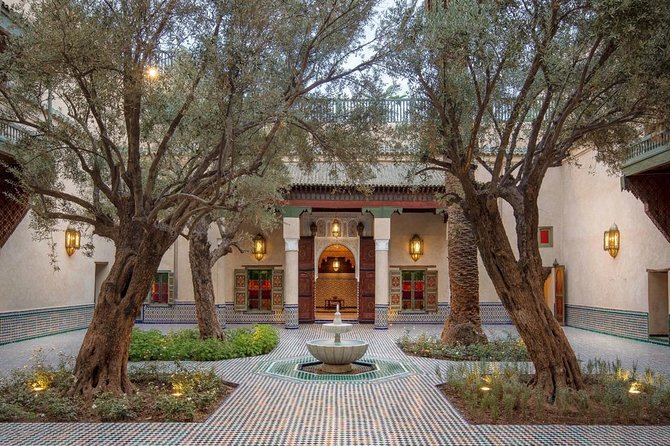
The building does much of the welcoming. It is a restored riad with a courtyard and several floors, including a terrace. The museum was described as once being connected with visitors to the Bahia Palace, and its architecture has received especially warm praise. If you arrive early, take a moment to look around before the cooking begins. The setting is not a plain classroom with fluorescent lights. It gives the lesson a sense of place.
Reception is handled in French or English, followed by an introduction to the class. Staff have been praised for being friendly and well organized, and Younes has been singled out for a warm welcome and helpful guidance. Still, confirm your preferred language when booking and again at arrival. Language delivery has not always matched the reservation.
More Historical Tours:
- Marrakech Historical and Cultural Tour – Half Day City Tour
★ 4.5 · 1,180 reviews - Fez: Guided Walking Tour of the Historic Medina
★ 5.0 · 359 reviews - Historical Marrakech Walking Tour
★ 5.0 · 198 reviews
The museum explains Morocco through food
The museum provides a useful starting point because Moroccan food is not just a list of recipes. Displays cover ingredients, cooking methods, serving customs, utensils, furniture, and the role of hospitality at the table. Videos and information panels explain the background of Moroccan dishes, while food stations show how certain products are prepared and presented.
I would set your expectations correctly. The building, courtyard, and general presentation have earned the strongest praise. The displays are informative, but some people found them a little modest compared with the dramatic riad itself. That does not make the museum a poor stop. It simply means the cooking lesson is likely to be the main event if you are paying the full activity price.
The museum is especially useful for questions that come up during a Morocco trip. What is the difference between a tajine and tangia? How is Moroccan bread made? Why are salads served in several small dishes? How does pastilla fit into the larger food tradition? The exhibits help you notice these details later in restaurants and homes.
A basic museum visit and a tasting option have also been available separately at lower historical prices. Those figures are not the same as the $69.79 cooking experience, so do not compare them as identical products. If you only want the building and a few samples, ask about the current museum options. If you want instruction and a meal, this longer booking is the relevant choice.
Bread, spices, and the neighborhood food trail
The itinerary includes a demonstration of Moroccan bread making. Bread is a daily part of Moroccan meals, so this is one of the most practical parts of the program. You are not only watching a famous dish take shape. You are seeing how a simple staple supports the rest of the meal.
The visit continues to a bread oven and a neighborhood herbalist. This short walk connects the polished museum kitchen with the places that supply the ingredients. Spices can look anonymous in a market stall, especially when you are not sure how they are used. A guide who explains their role gives you a better way to understand the difference between aroma, heat, color, and balance.
The experience focuses on dosing spices rather than dumping in a random spoonful of everything. That matters. Moroccan food often tastes layered but not harsh, and the skill lies in restraint as much as variety. A Dada can show you how a dish changes when the seasoning is measured carefully, when onions are cooked slowly, or when ingredients are added at the right time.
The exact market route and time spent outside are not specified, so think of this as a short food-oriented visit rather than a full market tour. Wear comfortable shoes, and do not count on a long independent shopping period.
What you actually cook during the class
The program is designed around several parts of a Moroccan meal. Dishes mentioned in the experience include tajine, couscous, Moroccan salads, and other local recipes. Specific sessions have included chicken tajine, two salads, a dessert, and three-course meals.
That range is useful because Moroccan cooking is often misunderstood as one famous pot. The class shows how a meal is assembled: fresh salads or vegetable dishes, a main course cooked with care, bread, tea, and sometimes something sweet. You learn more by preparing several components than by spending two hours on a single recipe.
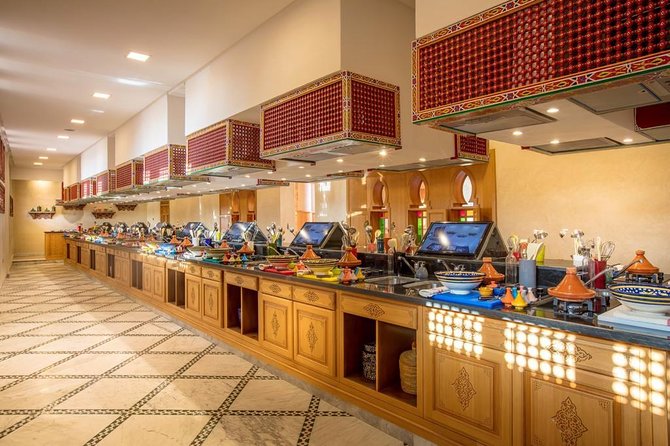
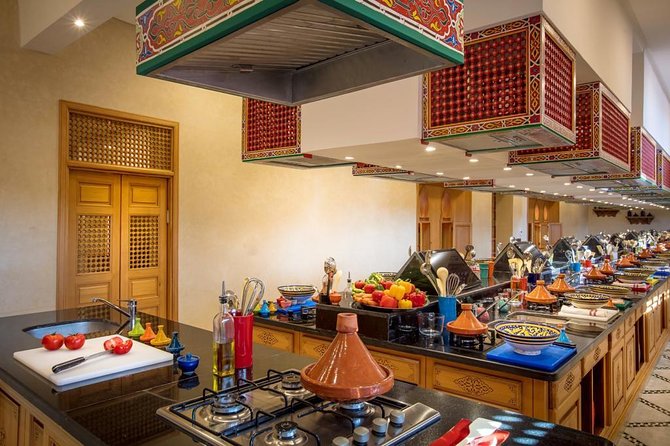
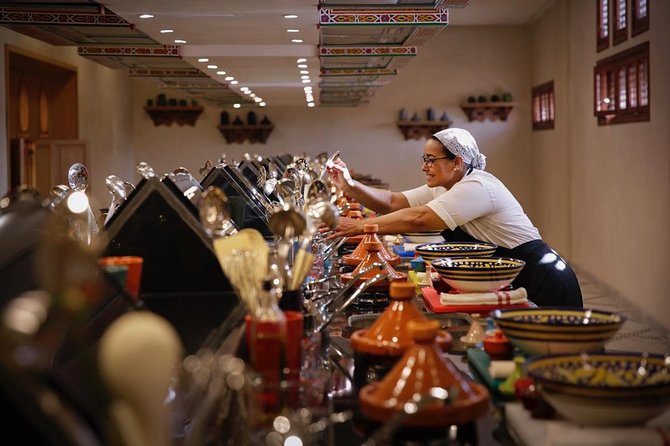
The kitchen is described as professional grade and designed specifically for teaching. Each of the 34 stations gives you room to take part rather than simply watch a chef work at a distant counter. Staff assistants provide verbal and hands-on help, which is good news if you are not confident around a knife or have never prepared a tajine.
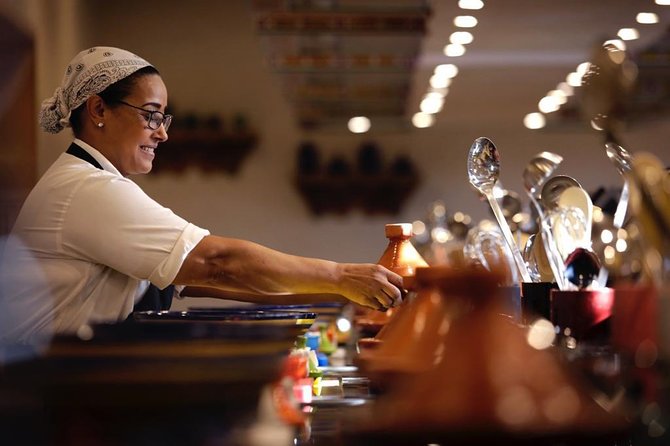
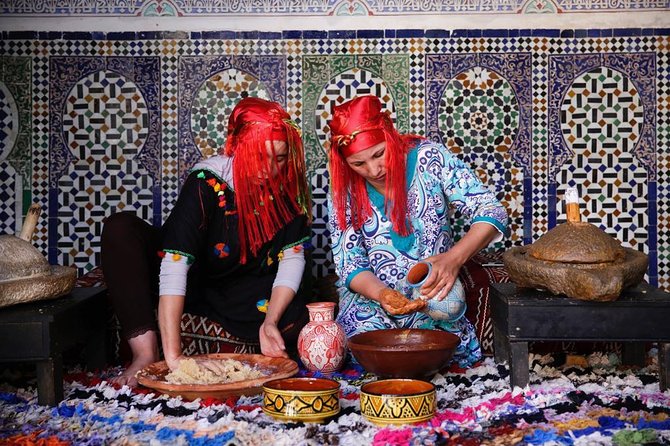
The Dada is the heart of the lesson. This traditional Moroccan cook teaches the small habits that recipes often leave out: how much spice to use, how to shape or handle bread, and how cooking methods affect the final taste. Instruction can be supported by interpreters, so the quality of the translation matters. Again, check the language arrangement before you arrive.
A class of up to 34 people is not intimate. The large capacity is part of why the kitchen works so well, but it can also mean less individual attention during busy moments. The staff support helps, though people wanting a quiet private lesson should ask about group size before paying.
A completely different sort of day out of Morocco:
- Marrakech: Agafay Desert Sunset, Camel Ride, and Dinner Show
★ 4.6 · 35,119 reviews - From Marrakech: Ouzoud Waterfalls Guided Hike and Boat Trip
★ 4.7 · 33,630 reviews - Marrakech: Agafay Desert Quad & Camel Rides with Dinner Show
★ 4.8 · 27,382 reviews - Marrakech: Agafay Desert Quad Biking Tour with Dinner-Show
★ 4.8 · 16,569 reviews
Eating what you made on the terrace
After the cooking, you eat the prepared dishes. This is more satisfying than receiving a plate made entirely by someone else. You recognize the ingredients, understand the steps, and can judge the seasoning with the lesson still fresh.
Lunch is included, along with bottled water and coffee or tea according to the stated inclusions. The Moroccan tea ceremony is another scheduled part of the experience. Tea is not a rushed afterthought here. It gives the class a calm ending and introduces one of Morocco’s best-known hospitality rituals.
Moroccan wine can be added as an optional discovery, but alcoholic beverages are not included in the listed price. If you choose the wine option, confirm the extra cost before ordering. One past visitor also reported paying separately for bottled water and not receiving tea or coffee, despite the stated inclusions. That appears to be an inconsistency, not the advertised arrangement, but it is sensible to check what is included when you sit down.
The terrace adds a pleasant change from the kitchen. You may find the meal feels more like a shared Moroccan welcome than a formal cooking exam. This is a good setting for couples, families, and friends who want conversation along with the food.
Is $69.79 good value in Marrakech?
At $69.79 per person, the experience is not the cheapest way to eat Moroccan food. You can find a meal in Marrakech for much less, and a museum-only visit has historically cost far less than this package.
The price makes more sense when you count the complete program: museum context, bread demonstration, visit to the oven and herbalist, instruction from a Dada, use of a large teaching kitchen, the meal you prepare, tea, and museum setting. You are paying for participation and explanation, not just admission and lunch.
I think the value is strongest for first-time visitors who want a practical connection to Moroccan food. You leave with methods you can try at home, a better sense of how dishes fit together, and a clearer idea of what you are eating during the rest of your trip.
The value is weaker if you are short on time and mainly want an attractive riad. The museum can be visited separately, and the building itself may be the part you enjoy most. Likewise, food lovers who expect a long, market-based culinary tour should note that the full activity is listed at about two hours, even though some descriptions call it a half-day class. Use the stated two-hour duration for planning.
Who will enjoy this experience most?
I would recommend the class to people who like to participate. You do not need advanced cooking ability. The staff offer support, and the structure is designed to make the work manageable. Even a self-described weak cook can take part with help.
Families can also find it appealing. A 12-year-old has taken part successfully with an adult, and the mix of museum displays, food preparation, and tasting gives younger visitors more variety than a quiet museum alone.
Couples and friends will appreciate the shared meal and terrace. The class also suits anyone who wants to understand Moroccan hospitality through food rather than only through sightseeing.
It may not suit you if you dislike group activities, need guaranteed instruction in a particular language, or are mainly interested in wine. Alcohol is optional and excluded from the price, while language arrangements should be confirmed in advance.
Service animals are allowed, and the meeting point is near public transportation. The experience ends where it begins, at the museum.
Booking advice and cancellation terms
Book ahead if the cooking class is central to your Marrakech plans. The museum has sometimes had space while the cooking sessions were full, so an unplanned visit may not secure the class you want.
Confirmation is normally received at booking. If you reserve within one day of the activity, confirmation arrives as soon as possible and depends on availability.
You can cancel for a full refund up to 24 hours before the local start time. Cancellations or changes made inside that 24-hour window are not accepted for a refund. This is worth noting if your Marrakech schedule depends on weather, flights, or a changing day-trip plan.
Should you book the Moroccan Culinary Heritage experience?
Book it if you want to learn by doing. The excellent kitchen setup, patient staff support, restored riad, and chance to eat tajine, salads, couscous, or dessert made during the lesson create a useful two-hour introduction to Moroccan food.
I would be more cautious if you want a private class, a guaranteed English-speaking teacher, or a major museum visit with extensive objects and displays. Confirm the teaching language, inclusions, and wine cost before arrival.
For most food-focused visitors, the experience earns its strong 4.6 rating because it combines culture, cooking, and a proper meal in one compact outing. Just book ahead and treat the class, not the museum alone, as the reason to pay the full price.
FAQ
Where does the Moroccan cooking experience begin and end?
It begins and ends at the Moroccan Culinary Arts Museum on Rue Riad Zitoun el Jdid, Marrakesh 40000, Morocco.
How long does the experience last?
The listed duration is approximately two hours. Some descriptions refer to it as a half-day cooking class, so use two hours as the practical planning time.
What dishes might I prepare?
The class covers Moroccan dishes such as tajine, couscous, Moroccan salads, and other recipes. Sessions have included chicken tajine, two salads, and dessert.
Is food included in the price?
Yes. Lunch, bottled water, and coffee or tea are listed as included. Alcoholic drinks are not included.
Is Moroccan wine part of the experience?
Moroccan wine is available as an optional discovery, but alcoholic beverages are excluded from the listed price.
How many people can join the class?
The activity accepts a maximum of 34 participants. The kitchen has 34 cooking stations designed for teaching.
Just added around Morocco
- Marrakech: Medina Souks, Hidden Markets and Shopping Tour★ 4.8 · 33 reviews
- Merzouga 4×4 Desert Tours & Excursions★ 5.0 · 33 reviews
- Agafay desert sunset camel ride Tour from Marrakech★ 5.0 · 33 reviews
- Guided walking tour in Marrakech★ 4.5 · 33 reviews
- Sunset Camel Ride Marrakech with Transfers★ 5.0 · 33 reviews
- 2 Days Desert Agafay and Atlas Mountains Trek From Marrakech★ 3.8 · 33 reviews
- Fun buggies in Agadir Forest and Beach Dunes★ 4.5 · 33 reviews
- Atlas mountains, Ourika valley, berber villages trip & Guide★ 5.0 · 33 reviews
Historical Tours, compared.
Marrakech Historical and Cultural Tour – Half Day City Tour
Read our review →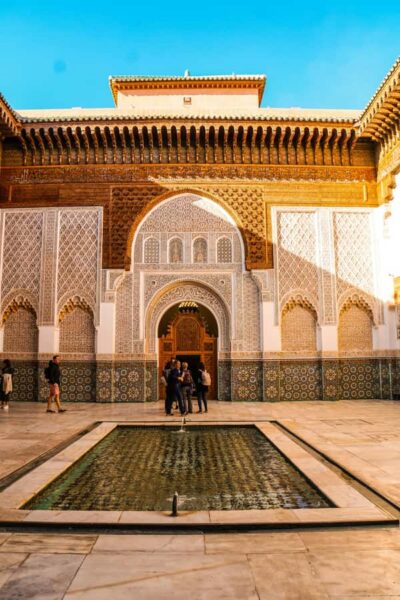
Full-day Historical Meknes Volubilis and Moulay Idriss Tour
Read our review →
Casablanca Cultural Tour: Medina, Views & Local Delights
Read our review →
Casablanca to Fez: Scenic & Historical Day Trip with Lunch
Read our review →
A Guided Walking Tour Through the Historic Medina
Read our review →
Half Day Guided Tour in Marrakech History & Culture
Read our review →Browse the lists this tour appears in