
Reviewed · CITY TOURS
Casablanca City Private Tour
Casablanca rewards a closer look. This private five-hour tour brings together the city’s grand mosque, French-era civic center, traditional markets, royal quarter, and old port district, all in one well-paced outing. I like the range here: you get major sights, local neighborhoods, and plenty of context rather than a single photo stop. I also like the private format, which lets your group ask questions and adjust the pace.
The main consideration is the Hassan II Mosque ticket, which costs extra and is not included. The tour also covers a lot of ground in five hours, so you should expect an overview rather than a slow, unhurried study of each neighborhood. Guide Abdellatif, also called Abdel in some feedback, receives especially warm praise for his English, history knowledge, patience, and ability to add local details such as mint tea and sweet treats.
In This Review
- Key points to know before booking
- Why this tour works for a short stay
- Hassan II Mosque: Casablanca’s essential first stop
- Mohammed V Square and the city’s public face
- Habous Quarter: markets, lanes, and a different Casablanca
- The Royal Palace area in Habous
- Old Medina: the city’s older port quarter
- What the guide adds to the experience
- Transport, pace, and group value
- Who should book this Casablanca tour?
- Should you book the Casablanca City Private Tour?
- FAQ
- How long is the Casablanca City Private Tour?
- How many people can join the private tour?
- Is pickup available?
- Is the Hassan II Mosque admission ticket included?
- Are coffee and tea included?
- What sights are included in the itinerary?
- What is the cancellation policy?
Key points to know before booking
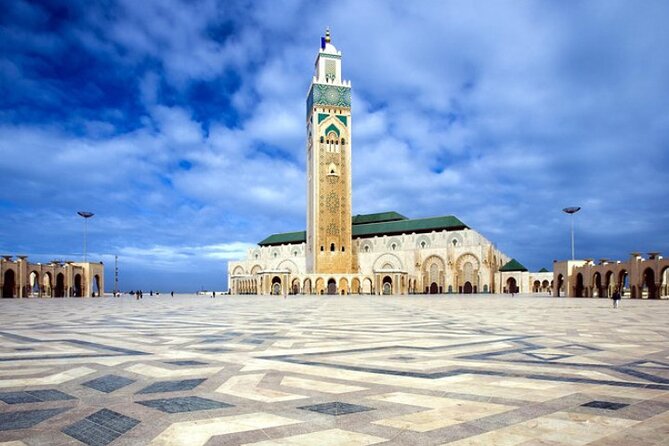
- The Hassan II Mosque is the centerpiece: Allow about 75 minutes for one of Casablanca’s most impressive sights, but remember that admission is separate.
- You cover five major areas in five hours: The schedule includes the mosque, Mohammed V Square, Habous, the Royal Palace area, and the Old Medina.
- A private vehicle saves time: An air-conditioned vehicle helps connect districts that would be awkward to combine on foot.
- Abdellatif is a major strength: His explanations cover architecture, religion, colonial rule, local culture, and Casablanca’s Jewish heritage.
- Habous adds everyday Morocco: Its lanes and markets offer a more intimate change of pace after the monumental mosque.
- The price can work well for a group: At $174.22 for up to 15 people, the per-person cost drops sharply when shared by several people.
Why this tour works for a short stay
Casablanca is often treated as a place to pass through before heading to Marrakech, Rabat, or Fez. That is a mistake. It is Morocco’s economic center, a port city shaped by Berber, Arab, Islamic, Jewish, Portuguese, and French influences. The city is not built around one perfectly preserved old quarter, so it helps to have someone explain how the pieces fit.
This outing gives you that broad view. You move from the Atlantic-facing Hassan II Mosque to the formal Mohammed V Square, then into Habous, the royal quarter, and the Old Medina. Each stop shows a different Casablanca.
I especially like the balance between famous landmarks and places where daily life continues. The mosque is a major architectural attraction, but the markets of Habous and the lanes of the Old Medina give you a better sense of the city as a lived-in place.
The private arrangement matters. A group of two or four can stop to ask about a tile pattern, a building style, a religious custom, or the city’s Jewish communities without waiting for a busload of strangers. A group of up to 15 can also share the cost, making the $174.22 rate more attractive than it first appears.
The tour is listed at about five hours. The scheduled stop times add up to that full length, so this is not a quick three-hour orientation. You will need to keep moving, though, particularly if you want meaningful time in both Habous and the Old Medina.
More City Tours in Casablanca
- Casablanca City Tour with Hassan II mosque ticket
★ 5.0 · 2,480 reviews - Casablanca: City Tour with Hassan II Mosque Entry Ticket
★ 4.6 · 1,137 reviews - Casablanca: Hassan II Mosque & City Highlights Tour
★ 4.5 · 573 reviews
Hassan II Mosque: Casablanca’s essential first stop
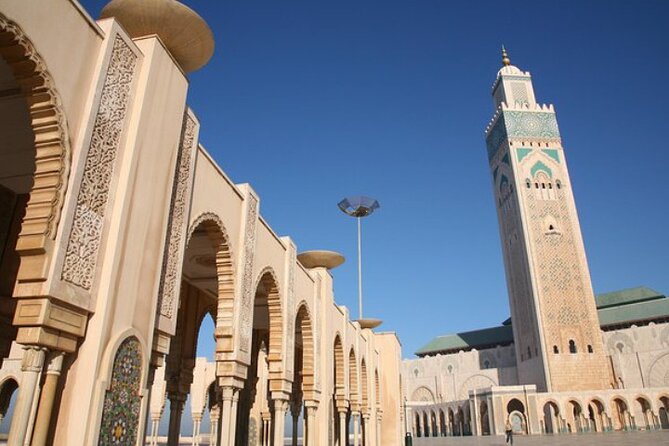
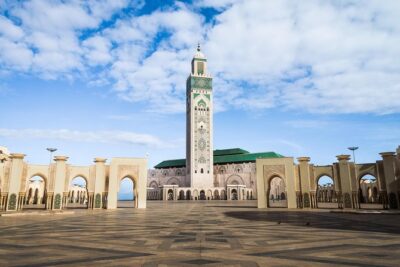
The Hassan II Mosque deserves the longest and earliest visit. Its minaret rises 210 meters, or 689 feet, and is described as the second tallest minaret in the world. It is also the largest functioning mosque in Africa and among the largest in the world.
The setting is part of the appeal. The mosque looks toward the Atlantic, giving the complex a strong relationship with the sea. Its scale is hard to grasp in a single photograph, so the hour and 15 minutes scheduled here is useful. You have time to look closely instead of simply stepping out of a vehicle, taking a picture, and leaving.
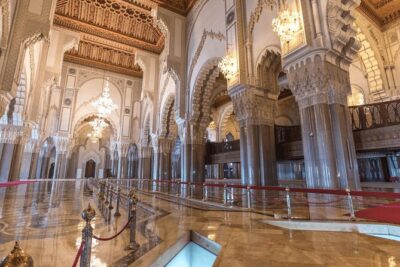
Expect attention to detail: tilework, carved surfaces, ornate finishes, and carefully executed craftsmanship. A good guide can help you read those details instead of seeing them as one large sweep of decoration. Abdellatif is particularly praised for explaining the mosque and its surroundings, making this the part of the tour where his subject knowledge is most valuable.
Admission is not included. This is the most important cost detail to settle before you book, since the tour price and the mosque ticket are separate. Entry arrangements can also affect the timing, so it is worth confirming the meeting plan and ticket procedure in advance.
Dress and conduct should be respectful at a major religious site. The supplied information confirms that a ticket is required, but it does not specify the current entry rules or visiting schedule. Ask the operator for those details before arrival rather than assuming the tour price covers everything.
Mohammed V Square and the city’s public face
After the mosque, the 30-minute stop at Mohammed V Square changes the mood. This is Casablanca’s formal civic center, surrounded by public buildings that mix Moorish decoration with French colonial planning.
Look for the Wilaya and its clock tower, the Courts of Justice, and the ornate central fountain. The courthouse is particularly useful for understanding the city’s architectural language, with arches and decorative details that reflect Moroccan design within a French-era urban setting.
The square is also a place to watch Casablanca function. Locals, visitors, officials, and passersby cross paths here, and the broad civic setting contrasts with the tighter lanes you will see later. The Grand Théâtre de Casablanca adds a modern note on one side, creating an interesting conversation between older public architecture and contemporary city life.
Thirty minutes is enough for an introduction and photographs. It is not enough for a long architectural study, so keep your expectations sensible. The value here comes from the guide’s explanation and the way this stop links Casablanca’s political, civic, and colonial past.
Habous Quarter: markets, lanes, and a different Casablanca
The Habous Quarter, often called the New Medina, receives about an hour and 15 minutes. That is enough time to slow down after the square and explore a neighborhood built during the early French protectorate. Its development began in 1916, making it older than the name New Medina might suggest.
Habous is one of the strongest parts of the itinerary for anyone who wants more than monumental buildings. Its narrow alleys and markets offer a chance to see Moroccan shopping streets in a less ancient setting than the Old Medina. You might find food, crafts, leather goods, or other local products, but the available details do not promise particular shops or purchases, so treat shopping as an optional part of the visit.
This is also a good place to ask questions. The quarter helps show how Moroccan forms, French planning, commerce, and residential life can share one district. The architecture is not simply old or new. It reflects a period when Casablanca was changing quickly under the protectorate.
Several comments about the guide highlight small cultural touches, including mint tea, local sweets, and an explanation of how to pour tea. Those details matter because they turn a sightseeing circuit into a conversation about hospitality and custom. Tea may not be guaranteed as part of every departure, however. Coffee and tea are specifically listed as not included, so do not book this expecting refreshments to be covered.
A few more Casablanca trips worth weighing up
- From Marrakech: Casablanca Tour with Hassan II Mosque Visit
★ 4.7 · 4,756 reviews - Casablanca: Hassan II Mosque Premium Tour with Entry Ticket
★ 4.5 · 2,971 reviews - Private Tour of Casablanca with Hassan II Mosque Entry Ticket
★ 5.0 · 1,102 reviews - Marrakech Day Trip with Camel Ride from Casablanca
★ 5.0 · 740 reviews
The Royal Palace area in Habous
The Royal Palace of Casablanca is located in the Habous neighborhood and receives a 30-minute stop. The palace was built in the 1920s and designed by Louis-Paul and Félix-Joseph Pertuzio, with gardens planned by Jean-Claude Nicolas Forestier.
The itinerary lists this as a free stop, but it does not say that visitors enter the palace. Plan to view the area from permitted public points rather than expecting an interior tour. Royal residences naturally involve security restrictions, and the supplied information gives no promise of access beyond the stop itself.
Even from outside, the visit adds useful context. The palace connects Casablanca to Morocco’s monarchy and gives the Habous section a formal counterpoint to its market lanes. If you are interested in architecture, ask the guide about the building’s design and the French influence visible in the quarter.
This stop may feel brief if your main interest is royal architecture. It works better as a short orientation within the neighborhood, not as a full palace visit.
Old Medina: the city’s older port quarter
The final stop is the Old Medina, with about an hour and 30 minutes. This is the longest neighborhood visit on the schedule and gives you time to walk through the older core of Casablanca.
The district’s past reaches back through several layers of rule and settlement. The area was associated with Anfa, a significant port, and later came under Berber and Islamic dynasties. The Portuguese destroyed the area in the late 1460s and later built a military fortress on the coast. Their name for the surrounding place was Casa Branca, or White House, a name that eventually shaped Casablanca.
You do not need to memorize every dynasty to appreciate the visit. The useful point is that Casablanca was never just one thing. Its port brought trade, conflict, migration, and outside powers. The Old Medina makes that story physical through its streets, walls, shops, and proximity to the coast.
An hour and a half gives you more breathing room than the square or palace stop. You can look around, ask questions, and notice how the Old Medina differs from Habous. The two districts are both associated with traditional markets, but they come from different periods and have different urban character.
The tour description does not promise a meal, shopping credit, or a particular market purchase. It does mention that one guide has taken a group to a seaside lunch and that another itinerary included synagogues, a Jewish museum, and a cemetery. Those additions may reflect the group’s interests and the guide’s flexibility rather than fixed inclusions. Ask ahead if you want a Jewish heritage focus, a seaside meal, or extra stops.
What the guide adds to the experience
The strongest praise centers on Abdellatif, also referred to as Abdel. His role appears to go well beyond pointing out buildings. He explains Casablanca’s architecture, religion, colonial period, culture, and the place of Jewish communities in Moroccan society.
That range is important in Casablanca. Without context, the city’s French-inspired public buildings, Islamic ornament, old port, and modern theater can feel disconnected. A guide who can tie them together helps you understand why the city looks the way it does.
The feedback also highlights patience, friendliness, strong English, and a willingness to answer questions. One particularly useful detail is that he has shown visitors sites that are not always part of a basic city circuit. Another is his attention to comfort, which matters when an outing combines walking with several vehicle transfers.
Guide assignment can change, so I would not assume Abdellatif will lead every departure unless the operator confirms it. Still, his repeated mention is a strong reason to ask about availability when booking.
Transport, pace, and group value
The tour includes an air-conditioned vehicle and pickup is offered. That makes a real difference in Casablanca, where the stops are spread across different districts. You get the convenience of riding between areas instead of spending much of the half-day arranging taxis.
The vehicle is also useful for older family members or anyone who wants to limit long walks between sights. One family specifically found the experience suitable with an 80-year-old participant. The tour still includes walking in markets and historic quarters, so comfort with some time on foot is necessary.
Because this is a private activity, only your group participates. The maximum group size is 15, and that creates two different value calculations. For a couple, $174.22 is a fairly significant outlay for five hours, though the private attention may justify it if your time is limited. For a family or larger group, the cost per person becomes much more reasonable.
The mobile ticket is convenient, and confirmation is sent at booking. Free cancellation is available if you cancel at least 24 hours before the start time. Cancellations within 24 hours are not refunded, and changes inside that window are not accepted. The tour also requires a minimum number of participants, with an alternative date or full refund offered if the operator cancels for that reason.
Who should book this Casablanca tour?
I would choose this tour if you have one day or less in Casablanca and want a well-organized introduction. It is especially useful if you are arriving by cruise, stopping between cities, or staying near Casablanca but do not want to spend your first hours figuring out transport.
It suits first-time visitors who want history explained in plain language. It also fits families and mixed-age groups because the vehicle reduces the strain of moving across town, while the private format allows the guide to adjust explanations and walking speed.
This is a good match for architecture fans, students of Moroccan history, and people curious about the city’s Muslim, French, Berber, Portuguese, and Jewish influences. Ask in advance about adding Jewish heritage sites if that is your priority.
I would hesitate if you want a slow food tour, extensive shopping, or long interior visits. The schedule is full, mosque admission costs extra, and the palace stop does not promise entry. You may also prefer a walking tour if your main goal is to spend several hours in one neighborhood rather than connect the city’s major areas.
Should you book the Casablanca City Private Tour?
Book it if you want to see Casablanca’s main sights in a single half-day and value a guide who can explain the city’s many influences. The Hassan II Mosque, Mohammed V Square, Habous, Royal Palace area, and Old Medina create a sensible first look at Casablanca, and the private vehicle keeps the route practical.
Before paying, confirm the mosque ticket cost, pickup details, guide assignment, and any special interests such as Jewish heritage or a seaside meal. For a larger group, the $174.22 price is appealing. For two people, it is worth paying mainly for the private attention, transport, and time saved.
FAQ
How long is the Casablanca City Private Tour?
The tour lasts approximately five hours.
How many people can join the private tour?
The tour is private for your group and can include up to 15 people.
Is pickup available?
Yes. Pickup is offered.
Is the Hassan II Mosque admission ticket included?
No. Admission to the Hassan II Mosque is not included in the tour price.
Are coffee and tea included?
No. Coffee and tea are listed as not included.
What sights are included in the itinerary?
The stops are the Hassan II Mosque, Mohammed V Square, the Habous Quarter, the Royal Palace of Casablanca area, and the Old Medina.
What is the cancellation policy?
You can cancel at least 24 hours before the start time for a full refund. Cancellations or changes made within 24 hours are not accepted for a refund.
Just added around Casablanca
- Private Half-Day Guided Tour of Casablanca★ 4.0 · 17 reviews
- Private 10 days Tour From Casablanca Via Desert★ 5.0 · 17 reviews
- Casablanca day trip from the cruise ship passenger.★ 4.2 · 17 reviews
- Morocco 8-Night Tour: Chefchaouen, Desert & Hot Air Balloon★ 5.0 · 18 reviews
- Private 11 Day Tour From Casablanca Imperial Cities Sahara Desert★ 5.0 · 18 reviews
- Private Casablanca Layover Tour with Round-Trip Airport Transfer★ 4.5 · 18 reviews
- Big Morocco Tour 15 Days From Casablanca★ 5.0 · 18 reviews
- Casablanca Airport Transfer from hotel in Casablanca★ 5.0 · 18 reviews
City Tours, compared.
Casablanca City Tour with Hassan II mosque ticket
Read our review →
Blue City magic: Affordable Day Trip from Fez to Chefchaouen
Read our review →
Marrakech Historical and Cultural Tour – Half Day City Tour
Read our review →
Browse the lists this tour appears in