
Reviewed · 7-DAY EXPERIENCES
7-Day Imperial Cities – Private Group
Morocco packs a lot into one week. This private tour links Casablanca, Rabat, Volubilis, Meknes, Fez, and Marrakech with private transportation and a guide who stays with your group. I like the easy airport or hotel pickup, and I like the freedom to adjust each day to your pace. The main catch is the schedule: several days involve long drives, and Fez and Marrakech deserve more time than a single guided visit can provide.
The strongest part is the human service. Guides and drivers such as Omar, Ibrahim, Hassan Amraoui, Noureddine, and Kalid have been praised for being friendly, careful, and helpful beyond basic sightseeing. You should also know that the $1,485 price covers six nights, breakfasts, activities, and transport, but not all meals or drinks.
In This Review
- Key points to know before booking
- A practical look at the seven-day route
- Day 1: Casablanca’s mosque and Rabat’s unfinished tower
- Day 2: Volubilis mosaics and Meknes’s royal ambitions
- Day 3: Fez from the royal palace to the old medina
- Day 4: The long transfer south to Marrakech
- Day 5: Marrakech palaces, minarets, and useful shopping
- Day 6: Choose your own Marrakech
- Day 7: Returning to Casablanca
- What the $1,485 price really covers
- The guide can make or break the week
- Should you book this Morocco tour?
- FAQ
- What cities does the seven-day tour visit?
- Where does the tour start and finish?
- Is transportation included?
- How many nights of accommodation are included?
- Are meals included?
- Is admission to Hassan II Mosque included?
- Can non-Muslims enter the Mausoleum of Moulay Ismail?
- What is the maximum group size?
- Can I cancel for a full refund?
Key points to know before booking
- Hassan II Mosque begins the trip with a major architectural sight: Admission is included, and non-Muslims may enter.
- Volubilis adds Roman ruins to the Moroccan route: Expect mosaics, a triumphal arch, and a guided three-hour visit.
- Fez is the most demanding sightseeing day: The tour mixes driving, walking, hills, workshops, and the old medina.
- Marrakech gets two full days in the plan: One guided day is followed by free time for museums, gardens, a hammam, or the souks.
- Your group remains private: Bookings require at least two people, and groups can include up to 14.
- The driver-guide relationship matters: Past guests singled out Omar, Ibrahim, Hassan Amraoui, Noureddine, and Kalid for making the week easier and more personal.
A practical look at the seven-day route
This is not a relaxed stay in one Moroccan city. It is a moving tour across the country’s best-known imperial centers, with Roman ruins and major religious architecture added along the way.
You start in Casablanca and finish with a return to Casablanca for your flight. In between, you sleep in the historic cities of Rabat, Fez, and Marrakech, with Meknes and Volubilis visited on the road. That route gives you a useful first look at Morocco, but it also means you need to be comfortable packing and unpacking and spending time in the vehicle.
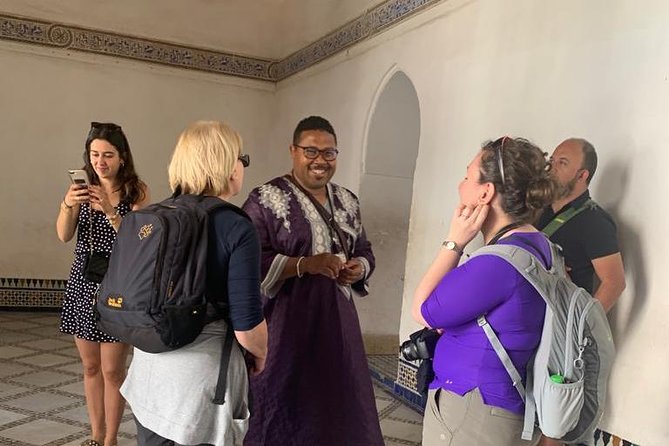
The private format helps. Your guide can adjust the pace, and the group is limited to your own party rather than mixed with strangers. The maximum is 14 people, but if you book with only two or three companions, the experience should feel much more personal.
A few more Casablanca trips worth weighing up
- 7 Days Luxury Desert Tour From Casablanca to Marrakech via fez -Camel trekking
★ 5.0 · 146 reviews - 7 Days / 6 Nights Private Morocco Tour from Casablanca or Rabat
★ 5.0 · 34 reviews - 7 Days Discovery The Atlas Mountains & Luxury Sahara Desert From Casablanca
★ 5.0 · 20 reviews
Day 1: Casablanca’s mosque and Rabat’s unfinished tower
Your driver meets you outside the Casablanca airport, or at your hotel if you have already arrived. The first major stop is Hassan II Mosque, an enormous modern building on the Atlantic coast.
The mosque can accommodate up to 105,000 people in prayer and was built by hundreds of skilled craftspeople from across Morocco. The scale is the point here. Give yourself time to look closely at the tilework, carved details, and overall design rather than treating the stop as a quick photo break.
Admission is included, which makes this a useful first visit. Non-Muslims are allowed inside, a privilege not available at every mosque in Morocco. The planned visit lasts about three hours, so the day begins at a measured pace rather than with a rushed checklist.
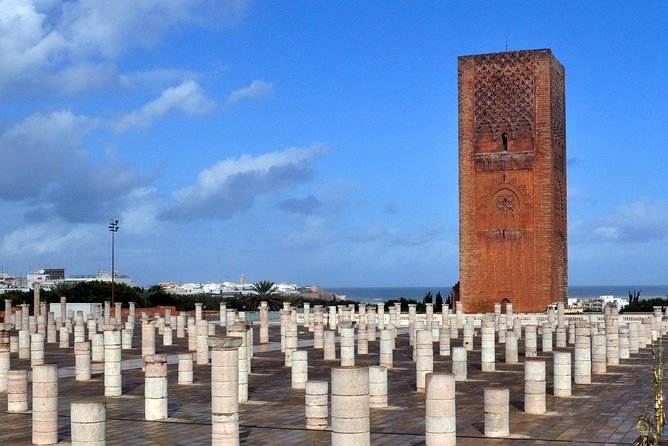
You then continue to Rabat for Hassan Tower and the Mohammed V Mausoleum. Hassan Tower has been unfinished since 1199, when Sultan Abu Yusuf Yaqub al-Mansur planned a mosque intended to be the largest in the world. The project ended after the sultan’s death, leaving a half-finished minaret, partial walls, and 348 columns.
The nearby mausoleum offers a sharp contrast. Its white walls and green tiled roof reflect Alaouite design, and it contains the tombs of Mohammed V, Hassan II, and Prince Abdallah. The visit lasts about two hours and has no separate admission charge listed.
I like this opening because it gives you three different views of Morocco in one day: modern religious architecture in Casablanca, a medieval royal project in Rabat, and a formal royal mausoleum. The drawback is that airport arrival times can make the first day feel long, especially after an overnight flight.
Day 2: Volubilis mosaics and Meknes’s royal ambitions
You leave Rabat in the morning for Volubilis. The drive adds time, but this is one of the best choices in the program because it takes you beyond the standard city circuit.
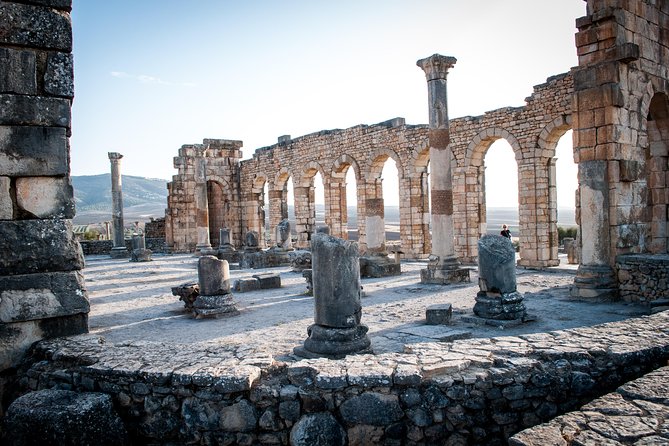
Volubilis began as the capital of the ancient kingdom of Mauretania in the third century BCE. Roman rule arrived in the first century CE and lasted until 285, when local tribes regained control. Excavation continues, and you can see the remains of major structures, a triumphal arch, and large mosaic floors.
The three-hour guided visit gives the ruins room to breathe. The mosaics are especially memorable, with colors that become more visible when the floors are wet. Wear shoes suited to walking over an archaeological site, and bring water even though bottled water is included.
Next comes Meknes, an imperial capital under Sultan Moulay Ismail from 1672 to 1727. The city is best understood as a display of royal power. Bab Mansour is the famous gateway, and its marble columns were taken from nearby Volubilis, an uncomfortable but revealing detail about how rulers built monuments.
The Royal Stables once held 12,000 horses, each assigned a groom and a slave. The scale tells you something about Moulay Ismail’s court, even if the site itself requires you to use your imagination.
You also visit the Mausoleum of Moulay Ismail. It is one of only three active Moroccan shrines that non-Muslims may enter. The sultan is remembered not only for his excesses but also for bringing peace and prosperity and pushing back Spanish and British forces.
The day ends in Fez. On paper, three hours in Volubilis and three hours in Meknes sound generous, but the driving between stops makes this a full day. If ruins are your main interest, ask your guide for enough time with the mosaics. If you prefer city life, Meknes may be the part you enjoy most.
Day 3: Fez from the royal palace to the old medina
Fez receives the longest single sightseeing day, about eight hours, and it needs it. The visit combines short vehicle transfers with substantial walking.
You begin at the royal palace, known for its seven golden doors. The doors are not simply decorative. Your guide explains the meaning behind the patterns and materials, giving context to details that can otherwise blur into one grand entrance.
The route continues through the Mellah, the former Jewish quarter beside the palace. Its location offered protection, and walking through it helps you see how royal, religious, and residential parts of Fez fit together.
At Borj Sud, a former fortress on a hill, you get a broad view over the city. This lookout is especially useful because Fez’s buildings can hide important landmarks from street level. I would pay attention here, since the view can help you recognize places later when you are inside the old city.
A pottery cooperative follows. You watch craftspeople produce distinctive Fez pottery and the intricate mosaics used throughout Morocco. This is a productive shopping stop rather than a simple sales pitch, since you see the work before deciding if anything deserves space in your luggage.
The tour then heads into the ancient medina, though the supplied plan cuts off before listing every stop. Expect the old city portion to be on foot, with narrow routes and plenty to look at. Ask in advance how much time is set aside for shopping, since the private format gives you more room to linger than a fixed coach tour.
Fez is also where energy matters most. You have a full day, some walking, and a hilltop viewpoint. Tell your guide early if you need more sitting breaks or shorter stretches on foot. One especially useful account came from a visitor using a wheelchair, who said guide Mohamed Nogot helped make the trip work. That does not guarantee identical arrangements, but it is a good reason to discuss mobility needs before booking.
A completely different sort of day out of Casablanca:
- From Marrakech: Casablanca Tour with Hassan II Mosque Visit
★ 4.7 · 4,756 reviews - Casablanca: Hassan II Mosque Premium Tour with Entry Ticket
★ 4.5 · 2,971 reviews - Casablanca City Tour with Hassan II mosque ticket
★ 5.0 · 2,480 reviews - Casablanca: City Tour with Hassan II Mosque Entry Ticket
★ 4.6 · 1,137 reviews
Day 4: The long transfer south to Marrakech
Day four is mainly a transport day. You leave Fez in the morning and travel by highway toward Marrakech, with arrival planned for the afternoon or early evening.
An optional stop in Rabat can be added for lunch and sightseeing, including the Kasbah Oudayah. An entrance fee is required for that optional visit. Since Rabat already appears on day one, I would only add this stop if you want a second look or need a break during the drive.
You check into a riad in the Marrakech medina. A riad can place you close to the action, but the medina setting also means you should be ready for narrow streets and a very different rhythm from a conventional hotel district.
In the evening, visit Jemaa el-Fnaa as the sun goes down. The square fills with performers and food activity, making it a fine first taste of Marrakech. Keep your first evening simple. After a seven-hour day, you may enjoy a short walk and a meal more than a serious shopping mission.
One detail needs checking before payment: the tour summary lists admission to Jemaa el-Fnaa as included, while the day-by-day plan lists the evening and the square without an admission charge. The square itself is a public place, so ask the operator what the included admission refers to if that matters to you.
Day 5: Marrakech palaces, minarets, and useful shopping
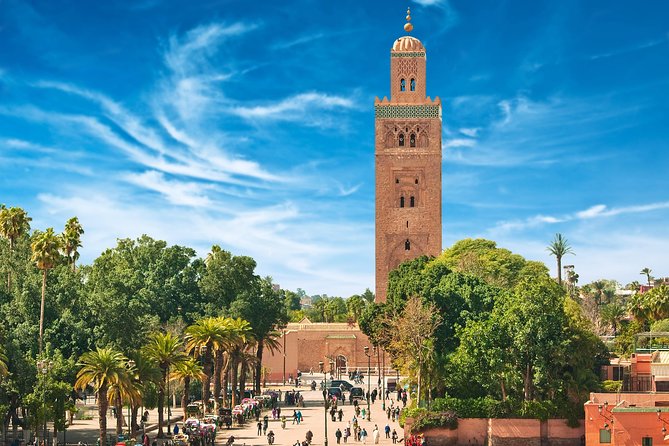
Your private Marrakech tour lasts about six hours and begins around Jemaa el-Fnaa. The Koutoubia minaret is the city’s visual anchor. At 253 feet, it is the tallest minaret in Marrakech, and no building inside the city walls may rise higher.
The Koutoubia mosque was completed in 1199. Even if you cannot enter every part of the religious complex, the exterior gives you a clear reference point as you move through the city.
A stop at a Berber apothecary offers a more practical kind of shopping. You learn how Moroccan herbs, spices, and other products are used for common illnesses. It may not provide the postcard image of piled spices, but it is more informative than simply passing a shop window. Still, you should treat any health claims with care and buy only what you actually want.
Bahia Palace is the major architectural visit. Built in the late 19th century for a grand vizier, it covers two acres and was named for his favorite wife. The rooms and gardens show the wealth and taste of the household, while the layout helps you understand how a palace functioned as both home and seat of power.
Admission to the listed Marrakech attractions is included where specified, including Bahia Palace and the Jemaa el-Fnaa entry noted in the tour details. Ask your guide what is covered before adding any extra attraction.
The six-hour format leaves you with part of the day for lunch, shopping, or rest. That balance is welcome. Marrakech can be tiring when every hour is scheduled.
Day 6: Choose your own Marrakech
The free day is one of the smartest parts of the schedule. You can use it to revisit the souks, sit at a street-side cafe, or simply walk without needing to follow a route.
Art and garden fans can pay separately to visit the Yves Saint Laurent Museum, the Berber Museum, and Majorelle Garden. These are optional expenses, so include them in your budget if they are priorities.
You can also book a traditional hammam. The treatment described includes black beldi soap, a scrub with an abrasive kessar mit, and time in a steam room. This is a physical scrub rather than a gentle spa treatment, so ask about the process before agreeing to it.
I would keep this day flexible. Marrakech is better when you have time to pause, return to a shop, or watch the city from a cafe. If your week has left you tired, you do not lose anything by making this a slow day.
Day 7: Returning to Casablanca
After breakfast, you return to Casablanca for your departure flight. The transfer is planned at about three hours, but your flight time matters greatly.
The tour does not describe extra sightseeing on this final day, so do not book a tight connection based only on the stated drive time. Confirm your pickup time with the operator and allow a generous buffer for the road and airport procedures.
What the $1,485 price really covers
At $1,485 per person, the cost is not a bare sightseeing package. It includes six nights of accommodation in double occupancy, private transportation, a driver and guide, professional guiding, six breakfasts, lunch, bottled water, taxes, fees, and the listed activities.
That can be good value if you want one company to handle the route, vehicles, hotels, and guiding. Booking each city separately could take more planning, especially when you must coordinate airport pickup, intercity transfers, local guides, and sightseeing times.
The price is less attractive if you prefer independent travel, already have accommodation, or want to spend several nights in each city. Food and drinks are not generally included unless specified, and optional stops such as the Kasbah Oudayah, Majorelle Garden, museums, and a hammam cost extra.
The double-occupancy rule also matters. Children must share a room with an adult or youth, and the booking requires at least two people. Groups of up to 14 can join, but this remains a private activity for your party only.
The guide can make or break the week
The clearest strength of this experience is the personal service. Several named guides and drivers receive strong praise for being more than people behind the wheel.
Omar is repeatedly described as a careful driver who also helped organize arrivals, accommodations, and daily plans. Ibrahim is praised for being cooperative, trustworthy, and friendly, while Hassan Amraoui is described as both a strong guide and a safe driver. Noureddine is remembered for combining guiding, driving, humor, and practical help.
That matters because Morocco’s cities can feel confusing at first, and the route covers a lot of ground. A good guide helps you understand what you are seeing and keeps small problems from becoming major ones.
The operator may assign a multilingual guide, so language preference should be discussed when you book. Also share dietary needs in advance. Most people can participate, but walking in Fez and the medina deserves an honest conversation if you have mobility limits.
Should you book this Morocco tour?
Book it if you have one week, want the major imperial cities, and prefer a private plan with transport and accommodation arranged. It is especially useful for first-time visitors, families, and small groups who value a dependable driver and the freedom to adjust the pace.
Skip it if you want slow travel, long stays, or a desert excursion as a central part of the trip. The listed route does not include the Sahara, although some past custom trips added desert nights and other destinations. Ask before booking if you want changes.
For the best fit, travel with people who enjoy both city walks and road time. You will see a broad slice of Morocco, from Casablanca’s mosque to Roman Volubilis, royal Meknes, layered Fez, and lively Marrakech. Just reserve enough energy for the miles between them.
FAQ
What cities does the seven-day tour visit?
The route includes Casablanca, Rabat, Fez, Meknes, and Marrakech. It also visits the Roman ruins at Volubilis.
Where does the tour start and finish?
The tour starts in Casablanca, with pickup available at the airport or a hotel. After visiting the other cities, you return to Casablanca for your departure flight.
Is transportation included?
Yes. Private transportation and a driver-guide are included.
How many nights of accommodation are included?
Six nights of accommodation are included, based on double occupancy.
Are meals included?
Six breakfasts and lunch are included. Other food and drinks are not included unless specifically stated.
Is admission to Hassan II Mosque included?
Yes. Admission to Hassan II Mosque is included, and non-Muslims are allowed to enter.
Can non-Muslims enter the Mausoleum of Moulay Ismail?
Yes. The mausoleum is described as one of only three active Moroccan shrines that non-Muslims may enter.
What is the maximum group size?
The maximum is 14 people per booking. The tour is private, so only your own group participates.
Can I cancel for a full refund?
You can cancel for a full refund if you do so at least three full days before the experience start time. Cancellations or changes made less than three full days before the start are not accepted for a refund.
Just added around Casablanca
- Private Half-Day Guided Tour of Casablanca★ 4.0 · 17 reviews
- Private 10 days Tour From Casablanca Via Desert★ 5.0 · 17 reviews
- Casablanca day trip from the cruise ship passenger.★ 4.2 · 17 reviews
- Morocco 8-Night Tour: Chefchaouen, Desert & Hot Air Balloon★ 5.0 · 18 reviews
- Private 11 Day Tour From Casablanca Imperial Cities Sahara Desert★ 5.0 · 18 reviews
- Private Casablanca Layover Tour with Round-Trip Airport Transfer★ 4.5 · 18 reviews
- Big Morocco Tour 15 Days From Casablanca★ 5.0 · 18 reviews
- Casablanca Airport Transfer from hotel in Casablanca★ 5.0 · 18 reviews
7-Day Experiences, compared.
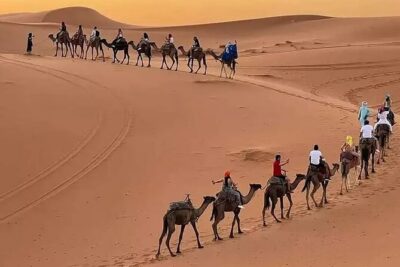
7 days Tour from Tangier to Marrakech Morocco Tours
Read our review →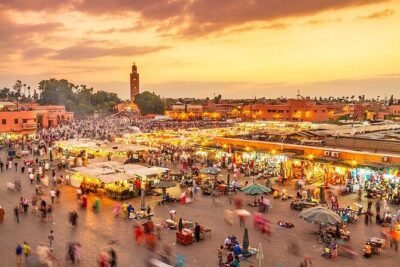
7 Days Luxury Desert Tour From Casablanca to Marrakech via fez -Camel trekking
Read our review →
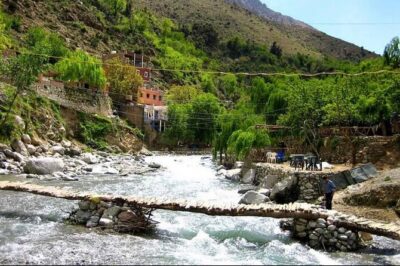
7 Days / 6 Nights Private Morocco Tour from Casablanca or Rabat
Read our review →
Route of the Kasbahs- Merzouga Desert 6 nights / 7 days
Read our review →
7 Days Discovery The Atlas Mountains & Luxury Sahara Desert From Casablanca
Read our review →Browse the lists this tour appears in