
Reviewed · CASABLANCA TOURS
15 Days Morocco Private Grand Tour From North To South Starting From Casablanca
Morocco rewards a long, winding route. This 15-day private tour from Casablanca crosses nearly the whole country, from Atlantic mosques and Portuguese walls to Roman ruins, blue mountain streets, Sahara dunes, and Marrakech souks. I like the variety, and I like having a private vehicle and driver to handle the long transfers.
The strongest parts are the desert night in a private luxury tent and the careful mix of famous sights with smaller stops such as Moulay Idriss, Rissani, Safi, and El Jadida. The main drawback is the pace: you cover huge distances, and several days involve many hours on the road. This suits you if you want Morocco in one grand sweep, not a slow holiday based in two or three cities.
In This Review
- Key points to know before booking
- Casablanca and Rabat: a strong start beside the Atlantic
- Tangier, Tetouan, and Chefchaouen’s blue lanes
- Akchour and the Rif Mountains
- Volubilis, Moulay Idriss, Meknes, and Fes
- Crossing the Middle Atlas to the Sahara
- A fuller Sahara day around Merzouga
- Kasbahs, Ouarzazate, and Ait Ben Haddou
- Marrakech: souks, palaces, and Jemaa el-Fnaa
- Essaouira and the Atlantic road back
- What the $1,825.27 price really covers
- Should you book this Morocco grand tour?
- FAQ
- Where does the Morocco grand tour begin and end?
- How long does the tour last?
- Is this a private tour?
- Which cities are included?
- Is a desert night included?
- Is a camel ride included?
- Are meals included?
- Are Fes and Marrakech guides included?
- Are admission tickets included?
- Can the itinerary be extended?
Key points to know before booking
- A true north-to-south route: Casablanca, Rabat, Asilah, Tangier, Tetouan, Chefchaouen, Fes, the Sahara, the Dades Valley, Marrakech, Essaouira, and the Atlantic coast all fit into one trip.
- Private travel matters here: Your group has its own air-conditioned vehicle, driver-guide, hotel transfers, fuel, and bottled water.
- The Sahara is more than a camel ride: You visit a lake, meet nomads over tea, see old mines, follow part of the former Paris-Dakar route, and hear music in Khamlia.
- Two guided medina days: Local guides are provided in Fes and Marrakech, where narrow lanes and busy souks are easier to understand with help.
- Meals are only partly covered: Breakfast is listed for all 15 days, with three dinners included. Lunches, most dinners, drinks, entrance fees, and tips are extra.
- The price is strongest for a small private group: At $1,825.27 per person, value depends on how many people share the vehicle and how much you use the included transport and accommodation.
Casablanca and Rabat: a strong start beside the Atlantic
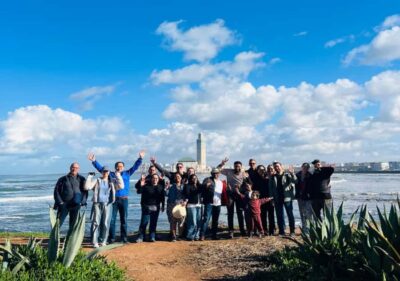
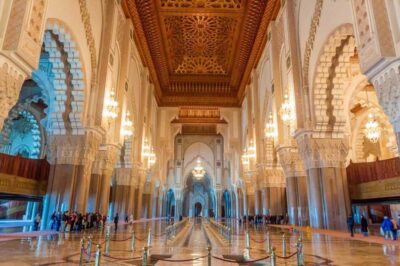
Your arrival day begins with a pickup at Mohammed V airport or the port, depending on your plans. The first major sight is Hassan II Mosque, Casablanca’s grand coastal landmark, built on an Atlantic promontory and completed in 1993.
Its 210-meter minaret is the tallest in Morocco and the tallest minaret in the world. The mosque is also unusual because non-Muslims may enter on a guided visit. That tour is not included in the price, so check the current admission cost before you arrive.
Casablanca itself is Morocco’s modern economic center. This first stop is brief, but it gives you a useful contrast with the medieval cities later in the trip. You spend the night at a hotel, rather than in a traditional riad.
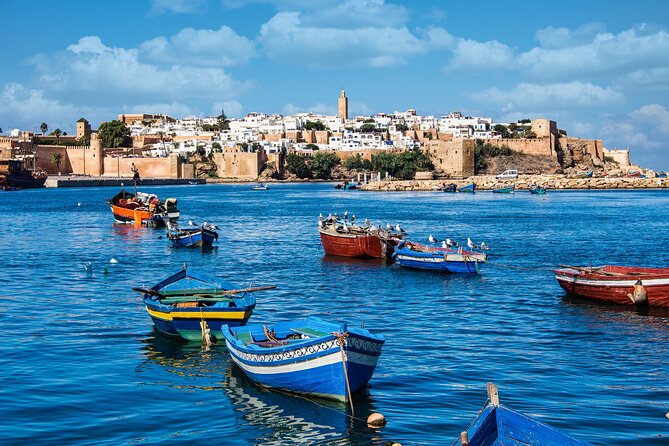
On Day 2, you drive north to Rabat, the present-day capital and one of Morocco’s four imperial cities. The Chellah Necropolis brings together Roman and Islamic remains within old medieval walls. It is a quieter place to begin understanding how several layers of Moroccan history sit side by side.
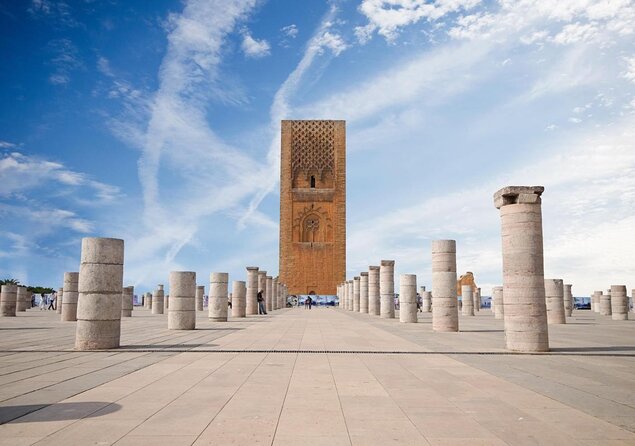
You also visit the Kasbah des Oudaias, enter through its grand gate, and walk through the Andalusian Gardens. The Hassan Tower is another important stop. This unfinished 12th-century minaret was meant to form part of a huge mosque, but construction ended soon after it began. The nearby Mausoleum of Mohammed V adds a more modern royal chapter.
The day continues to Asilah, a small Atlantic city with Portuguese traces from the 15th century. Its old ramparts and Raisuni Palace give the medina a different character from Casablanca and Rabat. You stay either in a hotel or traditional riad, but the exact property is not specified, so room style and location may vary.
A few more Casablanca trips worth weighing up
- From Marrakech: Casablanca Tour with Hassan II Mosque Visit
★ 4.7 · 4,756 reviews - Casablanca: Hassan II Mosque Premium Tour with Entry Ticket
★ 4.5 · 2,971 reviews - Casablanca City Tour with Hassan II mosque ticket
★ 5.0 · 2,480 reviews
Tangier, Tetouan, and Chefchaouen’s blue lanes
Tangier has long been Morocco’s front door from Europe. The tour gives you time in the compact Kasbah, where you can enter through Bab Haha and reach Place du Mechouar on foot. You can explore independently or pay for a guide locally.
The newer marina area offers an easy walk, while the old medina gives you a closer look at daily city life. If time permits, Cap Spartel and the Cave of Hercules are about 15 to 20 minutes from Tangier and take roughly an hour to enjoy. The cave’s opening is said to resemble the shape of Africa when viewed from the Atlantic.
A stop at Zoco Chico is a good chance to sit at a café and rest your feet. This day has a looser feel than the formal imperial-city visits, though the sightseeing details can change depending on your arrival time and the condition of the road schedule.
The next morning brings you through Tetouan, a UNESCO-listed medina at the foot of the Rif Mountains. You explore on your own, using your driver’s recommendations, and have lunch at your own expense. Tetouan is worth treating as more than a quick photo stop, but the schedule gives you only limited control over how long you stay.
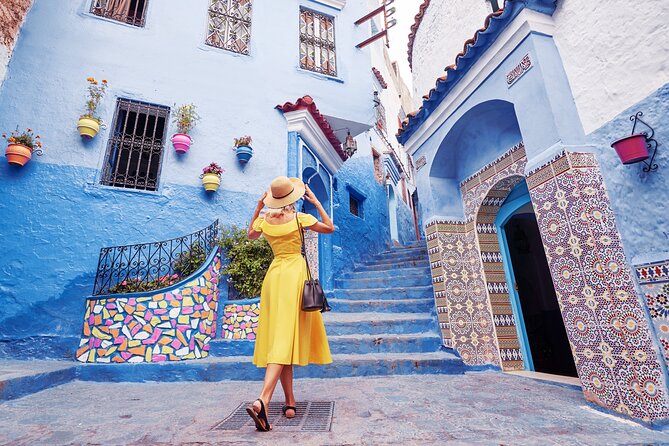
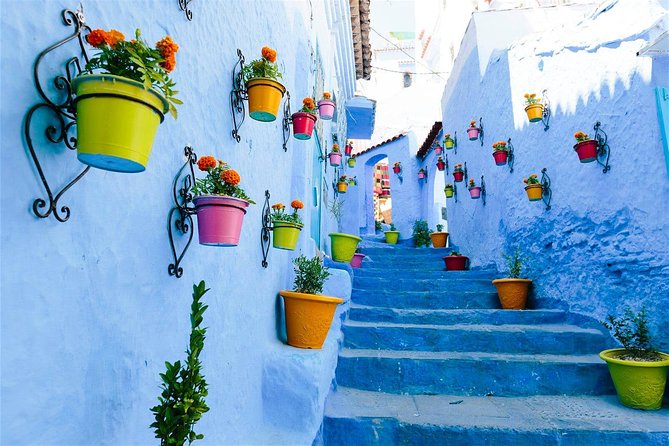
Chefchaouen is the visual star of the northern section. Blue-painted walls, doors, stairs, and alleyways cover the old town in pale and darker shades. After checking into your riad, you have free time to walk around Outa el Hammam, the main square, or head uphill into quieter lanes.
I would get up early here. The Spanish Mosque provides a view toward the town and mountains, and the morning light makes the blue walls look especially clear. Shops may not open until 10 a.m., so sunrise is a practical time to walk without much commercial activity.
Dinner in Chefchaouen is not included. That gives you freedom, but you should budget for it and ask your driver for suggestions. The old town’s small streets can be uneven, so comfortable shoes are useful.
Akchour and the Rif Mountains
Day 5 adds a welcome outdoor break with a trip to the Cascades d’Akchour. The route leads into the Rif Mountains and cedar country, with smaller waterfalls along the way and a larger cascade as the main goal.
Depending on the weather, you may be able to swim. You can also choose between paths toward God’s Bridge, a natural rock formation, including a steeper route or a canyon route that views the bridge from below.
This is one of the days where the tour’s variety pays off. You are not simply moving from one old city to another. Still, the hike requires reasonable fitness, and conditions can affect what you do. Ask ahead about the expected walking time, footwear, and whether swimming is sensible during your visit.
Back in Chefchaouen, you can return to the medina, visit the market, buy fruit, and watch people pass through the lanes. The evening remains free before the long transfer south.
Volubilis, Moulay Idriss, Meknes, and Fes
Leaving Chefchaouen, you head toward Fes with three substantial stops. First comes Volubilis, Morocco’s best-preserved Roman site and a UNESCO World Heritage Site. Allow about two hours to walk among merchant houses, temples, heating systems, and detailed mosaics.
Local guides are usually available to hire at Volubilis, and your driver can help arrange one if you want more explanation. Admission is not included, so keep some money available for the site and any guide you choose.
Moulay Idriss is next. Founded in 789 CE, it became Morocco’s first Islamic capital and remains an important religious center. From a distance, the town is said to resemble a sitting camel, and it has Morocco’s only round minaret.
You may eat lunch here or wait until Meknes. Since lunch is not included, this is a good point to ask about timing rather than waiting until you are hungry.
Meknes has a smaller medina than Fes, which makes it easier to explore at a relaxed pace. The Ville Impériale includes Bab al-Mansour, gardens, palaces, the Mausoleum of Moulay Ismail, and the Royal Stables.
Look for Roman columns reused in later buildings. Materials from Volubilis were brought to Meknes, so the two stops are linked in a very visible way. You then continue to Fes and are taken to your riad in the medina, with the late afternoon and evening free.
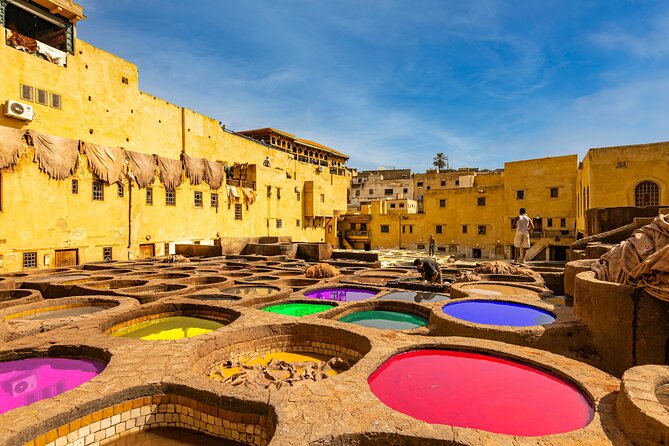
Fes deserves a full day. The tour focuses on Fes el-Bali, the older medina, and Fes el-Jdid, the newer quarter. With a local guide, you follow Talâa Kebira through narrow, winding streets toward the Chouara Tannery.
A rooftop viewpoint lets you see the leather workers using methods that have changed little over many years. The tannery can be pungent, and you may be offered mint leaves to help with the smell. There is no need to turn this into a shopping visit, but the nearby leather shops are part of the experience.
The route also includes Al-Qarawiyyin University, founded in the ninth century, and the Al Attarine Madrasa, known for its detailed Moroccan craftwork. Fes is one of the places where a local guide makes a real difference. Without help, you can easily miss important doors, courtyards, and side lanes.
A completely different sort of day out of Casablanca:
- Casablanca: City Tour with Hassan II Mosque Entry Ticket
★ 4.6 · 1,137 reviews - Private Tour of Casablanca with Hassan II Mosque Entry Ticket
★ 5.0 · 1,102 reviews - Marrakech Day Trip with Camel Ride from Casablanca
★ 5.0 · 740 reviews - Casablanca: Hassan II Mosque & City Highlights Tour
★ 4.5 · 573 reviews
Crossing the Middle Atlas to the Sahara
Day 8 is one of the longest and most varied driving days. You cross the Middle Atlas through Ifrane and Azrou, passing cedar forests and the Cèdre Gouraud Forest, where Barbary macaques are often seen near the road.
The route continues to Midelt, a high plateau town known as Morocco’s Apple City. Its orchards depend on the Moulouya River, which supplies water as it runs toward the Mediterranean. Lunch is at your own cost.
After Midelt, the scenery becomes drier and more dramatic. You follow the Ziz Valley and pass fortified ksars, once used to protect goods on the old Saharan trade routes. Near the Ziz Gorge, you may see traditional water channels that carried mountain water to farmland before modern pumps.
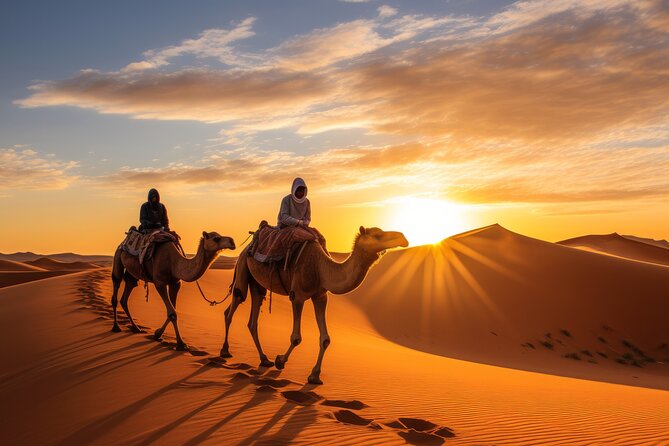
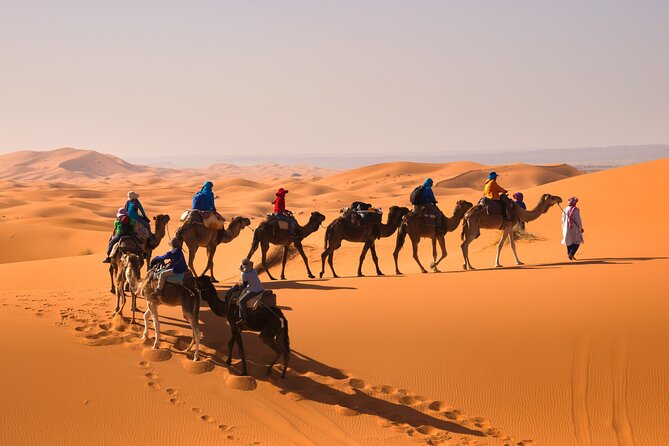
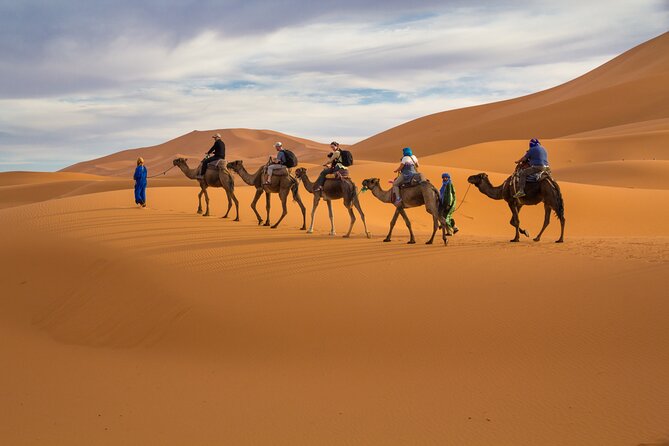
Near Merzouga, you prepare for the desert camp. A camel ride brings you toward camp in time for sunset, although the precise arrangement can vary with weather and local conditions. The included camp is described as a luxury private tent with its own toilet and shower, which is a major comfort after a long day in the car.
Dinner is included on the desert night, along with traditional music. Sunrise over the dunes the next morning is worth setting an alarm for. The sand changes color quickly as the light moves, and you get a quiet hour before breakfast and the next excursion.
A fuller Sahara day around Merzouga
The desert section is stronger than a simple overnight stop. You visit Lake Merzouga, known for birdlife, then travel farther into the Sahara to meet nomads and share tea while learning about their daily routines.
The route also follows part of the former Paris-Dakar rally course and reaches the Mifis mines, once exploited by France. At Khamlia village, you hear music from a community with roots in Mali, Niger, and other parts of the region.
This day gives you several views of desert life: natural, nomadic, industrial, and musical. It also involves more time in the vehicle over rougher desert roads, so anyone prone to motion sickness should prepare accordingly.
On Day 10, you leave the dunes for Rissani. If your visit falls on a Tuesday, Thursday, or Sunday, you can visit the region’s largest souk. The market admission is not included, and the visit depends on the calendar.
Erfoud follows, with fossil workshops and artisan production. You can see fossil-rich rock being cut and shaped into decorative objects. Be clear about what you want to buy, if anything, because an artisan cooperative visit may include sales.
The day ends around Todra Gorge and the Dades Valley. Todra’s cliffs rise about 300 meters on either side of a narrow passage, making it a favorite place for climbers and a striking walk even if you never touch a climbing rope. In Dades, look for the rock formation called Monkey’s Fingers and the mud kasbahs.
Kasbahs, Ouarzazate, and Ait Ben Haddou
The route continues through the Valley of Roses, where rose petals are collected each spring and made into rosewater or sent to perfume industries. The annual rose festival takes place in May, so timing matters if that event interests you.
Skoura follows, with palm groves and a large number of southern Moroccan kasbahs. Then comes Ouarzazate, known for its film studios and often called the Hollywood of Africa.
The main attraction is Ait Ben Haddou, a UNESCO-listed fortified village and one of Morocco’s most photographed kasbahs. You have free time to walk through it and eat lunch in the village. The earthen buildings are most rewarding when you climb slowly and look back across the surrounding country rather than racing to the top.
The itinerary text does not provide every detail of the evening accommodation on this day, so confirm the hotel location before booking if that matters to you.
Marrakech: souks, palaces, and Jemaa el-Fnaa
Marrakech receives a full guided day, which is sensible. The medina is a maze of alleys, shops, workshops, and small courtyards. Your local guide takes you through the souks and Mellah, explaining the city’s architecture and traditions.
The Bahia Palace and El Badii Palace show two very different sides of royal Marrakech. The Saadian Tombs add another important stop, while the Majorelle Garden provides a break from the crowded old city. Admission to the main paid sights in Marrakech is not included.
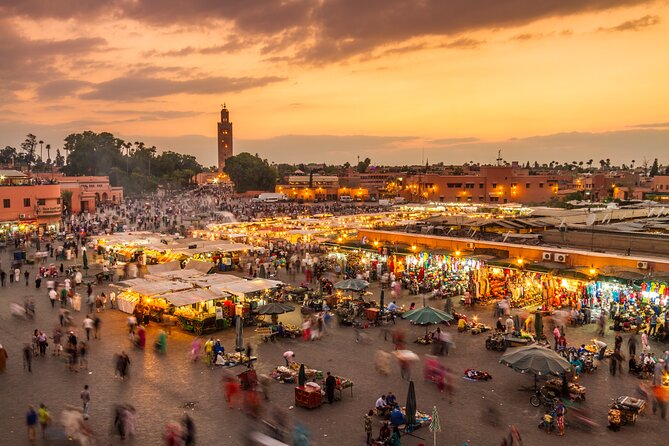
Jemaa el-Fnaa becomes most active in the evening, with musicians, storytellers, acrobats, dancers, and food stalls. You can eat at the square or choose a café above it for a wider view.
This is a busy, commercial part of the trip. Keep your belongings close, agree on where and when to meet your guide, and do not feel pressured to buy anything. Marrakech is exciting, but it is not the quietest stop.
Essaouira and the Atlantic road back
Essaouira changes the pace again. You drive west through open plains and argan forests, with an optional stop at an argan oil cooperative. Goats may sometimes be seen in the trees feeding on argan fruit, though that sight is never guaranteed.
In Essaouira, walk around the harbor and watch fishermen sell their catch from traditional blue boats. The fortified Scala and Bab al Mersa provide excellent photo points, followed by time in the UNESCO-listed old city.
This overnight is a good counterpoint to Marrakech. You get sea air, a port, and a more relaxed medina before the final drive.
The return to Casablanca takes about four to five hours, with possible stops in Safi and El Jadida. Safi is known for pottery and ceramics, and the 16th-century Ksar el Bahr offers views over the port and ocean.
El Jadida brings a different kind of sight: a haunting Portuguese cistern. You can also walk the ramparts and visit the Church of the Assumption. Back in Casablanca, there may be time for the Old Medina, the Corniche, and Rick’s Café, a restaurant inspired by the classic film.
The final morning is a transfer to Casablanca airport. If you want more time in southern coastal cities such as Agadir, Taghazout, or Legzira, the route can be extended to 20 or more days.
What the $1,825.27 price really covers
For 15 days, the price offers strong value if you want a private vehicle and a wide range of hotels and riads without arranging each transfer yourself. It includes 14 nights of accommodation, air-conditioned private transport, fuel, airport or hotel pickup and drop-off, bottled water, a driver-guide, local guides in Fes and Marrakech, the camel ride, the private desert tent, and listed breakfasts and dinners.
The meal details need a close look. The package lists 15 breakfasts and three dinners, but not regular lunches or most evening meals. Drinks, entrance fees, tips for the driver, guides, hotel staff, and restaurant staff, plus personal expenses, are extra.
The price is especially appealing for families or friends sharing a private vehicle. A published family account described a group of five with children aged 18, 13, and 6, and praised driver-guide Khalil, the local guides, and the accommodation. That makes the tour worth considering for a family that wants help with logistics, though younger children may find the long road days tiring.
The tour is private, and only your group participates. Most people can take part, service animals are allowed, and the route is near public transportation at some stops, but the long drives and uneven medina lanes still require stamina.
You can cancel for a full refund up to 24 hours before the start time. Poor weather may lead to a different date or a full refund, according to the stated terms.
Should you book this Morocco grand tour?
Book it if you want to see Morocco’s main regions in one organized journey, especially if you value a private car, included airport transfers, a desert night, and local guides in Fes and Marrakech. It is also a good fit for families and small groups who would rather share one vehicle than coordinate trains, taxis, hotels, and desert transport themselves.
Think twice if you prefer slow mornings, long stays in one place, or independent planning. The route is ambitious, and the Fes-to-Sahara and desert-to-Marrakech sections demand patience.
My practical advice is to treat the tour as a sweeping introduction, not a restful retreat. Budget extra for admissions, lunches, drinks, dinners, tips, and shopping. Ask about the exact accommodation names, the daily drive times, and which entrance tickets are needed. If those details suit you, this is a well-rounded way to connect Morocco’s imperial cities, mountains, desert, kasbahs, and coast in one substantial trip.
FAQ
Where does the Morocco grand tour begin and end?
The tour begins in Casablanca, with pickup from Mohammed V airport, the port, or a hotel, depending on your arrival. It ends with a transfer to Casablanca airport.
How long does the tour last?
The experience lasts approximately 15 days and includes 14 nights of accommodation.
Is this a private tour?
Yes. Only your group participates in the activity.
Which cities are included?
The route includes Casablanca, Rabat, Asilah, Tangier, Tetouan, Chefchaouen, Fes, Meknes, Marrakech, Essaouira, Safi, and El Jadida.
Is a desert night included?
Yes. The tour includes one night at a luxury desert camp in a private tent with a toilet and shower.
Is a camel ride included?
Yes. The desert section includes a camel ride to the camp area.
Are meals included?
Breakfast is listed for all 15 days, and three dinners are included. Other meals and drinks are not included unless specifically stated.
Are Fes and Marrakech guides included?
Yes. Local city guides are provided for the Fes and Marrakech medinas.
Are admission tickets included?
Not all admission tickets are included. The Hassan II Mosque, Volubilis, Marrakech sights, the Rissani market, and other paid attractions may require separate payment.
Can the itinerary be extended?
Yes. The trip can be modified to add more days, including visits to southern coastal areas such as Taghazout, Agadir, and Legzira.
Just added around Casablanca
- Private Half-Day Guided Tour of Casablanca★ 4.0 · 17 reviews
- Private 10 days Tour From Casablanca Via Desert★ 5.0 · 17 reviews
- Casablanca day trip from the cruise ship passenger.★ 4.2 · 17 reviews
- Morocco 8-Night Tour: Chefchaouen, Desert & Hot Air Balloon★ 5.0 · 18 reviews
- Private 11 Day Tour From Casablanca Imperial Cities Sahara Desert★ 5.0 · 18 reviews
- Private Casablanca Layover Tour with Round-Trip Airport Transfer★ 4.5 · 18 reviews
- Big Morocco Tour 15 Days From Casablanca★ 5.0 · 18 reviews
- Casablanca Airport Transfer from hotel in Casablanca★ 5.0 · 18 reviews
Casablanca Tours, compared.
Hassan II Mosque Premium Tour with Entry Ticket
Read our review →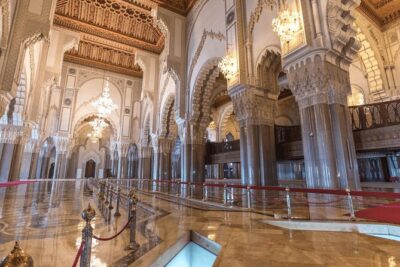
Casablanca City Tour with Hassan II mosque ticket
Read our review →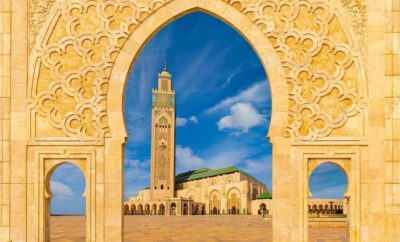
Private Tour of Casablanca with Hassan II Mosque Entry Ticket
Read our review →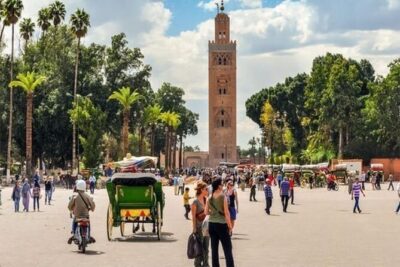
Marrakech Day Trip with Camel Ride from Casablanca
Read our review →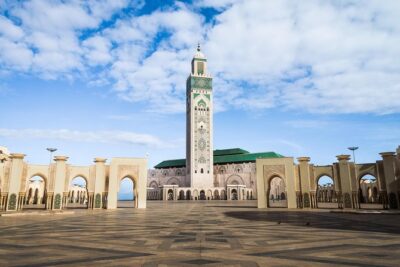
Browse the lists this tour appears in