
Reviewed · CASABLANCA TOURS
14 Days From Casablanca- Morocco Grand Tour
Morocco rewards the curious and the patient. This private 15-day journey links Casablanca, Rabat, Chefchaouen, Fez, the Sahara, Marrakech, Essaouira, and the Atlantic coast without asking you to arrange every hotel, transfer, meal, and local guide yourself. I like the private air-conditioned vehicle, which makes long crossings far more comfortable, and I like the freedom to adjust the pace with your guide. The main concern is the amount of time spent on the road. Morocco is large, and this route covers a lot of ground.
I also appreciate the cultural range. In one trip, you move from Roman ruins and royal cities to cedar forests, fortified villages, sand dunes, fishing ports, and mountain valleys. The price is $4,627.23 per person, so this is not a budget tour, but accommodation, breakfasts, local taxes, a driver-guide, local guides, and four dinners are included.
In This Review
- The essential facts at a glance
- Casablanca and Rabat: A quick start with serious history
- Chefchaouen: Blue walls and a slower morning
- Volubilis, Meknes, and Fez: Roman stones and royal gates
- Fez el-Bali: Let a guide handle the maze
- Across the Middle Atlas to Midelt and Errachidia
- Rissani and Merzouga: Markets before the dunes
- Erg Chebbi: Camel tracks and a night in camp
- Todra Gorge and the Dades Valley
- The road to Marrakech: Roses, kasbahs, and Ait Ben Haddou
- Marrakech: Palaces, gardens, and Jemaa el-Fna
- Essaouira: Morocco’s Atlantic reset
- Safi, El Oualidia, and the return to Casablanca
- What the $4,627.23 price really buys
- Who should book this Morocco route?
- Should you book it?
- FAQ
- How long does the Morocco Grand Tour last?
- Where does the tour start?
- Where does the tour end?
- Is this a private tour?
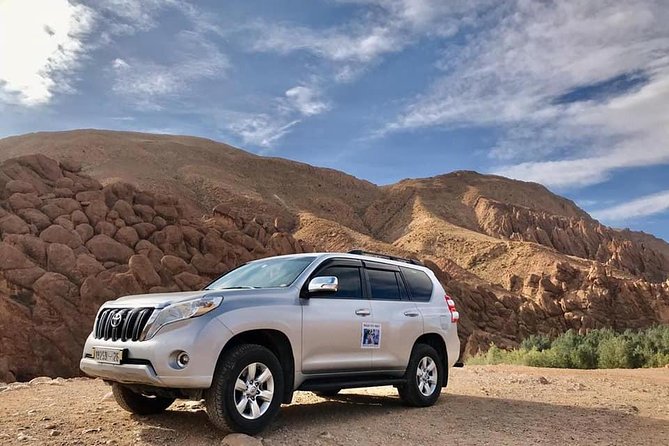
- What type of transportation is provided?
- Are meals included?
- Is the camel ride included?
- Does the tour include local guides?
- What is the cancellation policy?
The essential facts at a glance
- Fifteen days, fourteen nights: The route begins and ends in Casablanca, with the option to finish at Marrakech airport.
- A private vehicle throughout: You travel in your own air-conditioned vehicle, with someone else handling the long drives.
- Morocco’s major contrasts: The route includes imperial cities, Chefchaouen, Volubilis, the Middle Atlas, the Sahara, the Atlas region, and the Atlantic coast.
- Two nights around the desert: You visit Merzouga and Erg Chebbi, with a camel ride, sunset over the dunes, and a night at a luxury camp.
- Local guiding in the cities: The plan includes local guides for places such as Fez and Marrakech, where a good guide can make confusing medinas much easier to understand.
- Flexible planning: The provider says the route can be modified, including the ending point and airport arrangements.
Casablanca and Rabat: A quick start with serious history
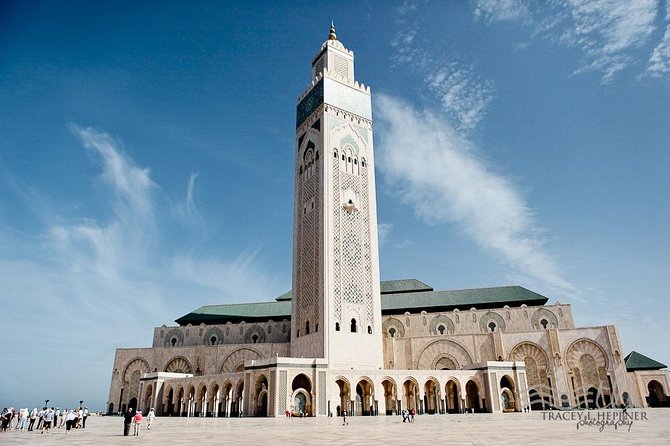
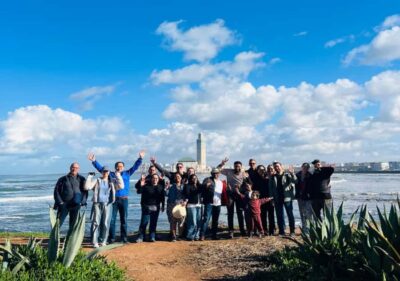
Your first day begins with pickup at Casablanca airport or your hotel. The city visit centers on Hassan II Mosque, one of Morocco’s great sights and one of the few mosques in the country associated with organized visitor access. You also see the Corniche coast before driving to Rabat.
The timing is short, about two hours, so Casablanca and Rabat function more as an introduction than a full exploration. That is fine if your priority is seeing the country rather than spending several days in each city. Rabat brings the Mausoleum, Hassan Tower, and Oudaya Kasbah, all useful first stops for understanding Morocco’s royal and political identity.
You sleep in Rabat. Since the first day includes arrival, airport timing can affect how much sightseeing you actually get. I would keep the day flexible and avoid booking a late, complicated flight if you want to enjoy the opening stops.
A few more Casablanca trips worth weighing up
- From Marrakech: Casablanca Tour with Hassan II Mosque Visit
★ 4.7 · 4,756 reviews - Casablanca: Hassan II Mosque Premium Tour with Entry Ticket
★ 4.5 · 2,971 reviews - Casablanca City Tour with Hassan II mosque ticket
★ 5.0 · 2,480 reviews
Chefchaouen: Blue walls and a slower morning
The drive to Chefchaouen takes about six hours. The route follows the coast for part of the journey, then passes through countryside villages and the Rif Mountains. A lunch stop in Ouezzane breaks up the ride.
This is one of the tour’s more rewarding transitions. You leave the grand urban setting of Rabat and see farming villages and rural Morocco from the road. Since someone else is driving, you can watch the scenery rather than concentrating on directions, traffic, and parking.
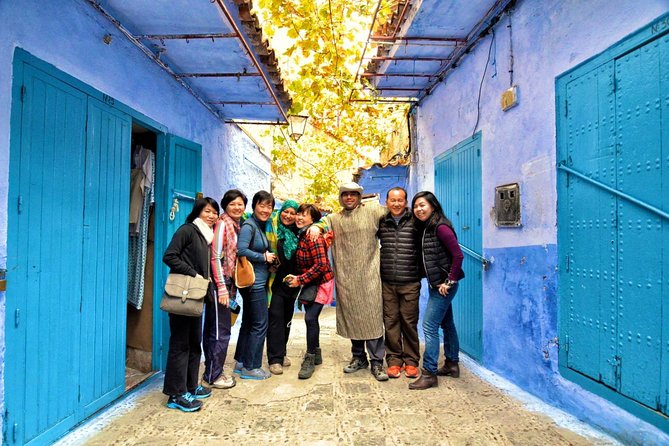
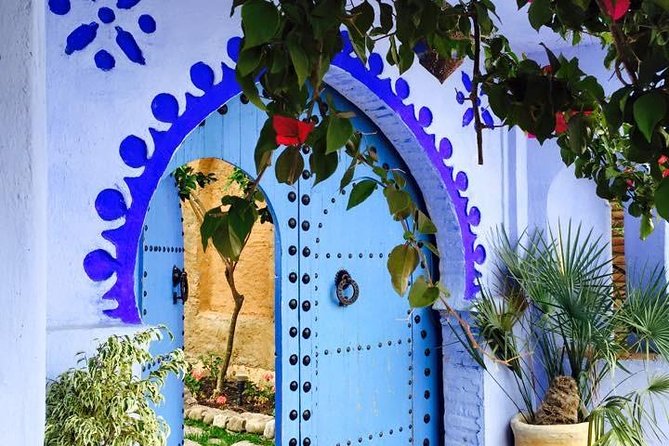
The next day is devoted to Chefchaouen’s medina. The town is known for its whitewashed walls, blue doors, and Spanish architectural influence. Three hours is enough for a guided walk through the main lanes, but you will still want time to pause for photographs and look at small shops.
Chefchaouen is attractive, but it is not only a photo stop. The Spanish connection gives the town a different character from Fez or Marrakech. You can meet local people, walk at an easy pace, and enjoy a less frantic introduction to Moroccan medina life.
Volubilis, Meknes, and Fez: Roman stones and royal gates
Day four combines several major sights with another drive of roughly five hours. After leaving Chefchaouen, you head toward Volubilis, a Roman site dating to 225 BC. Its preserved mosaics are the main attraction, and they give you a clear sense of how far Roman influence reached into North Africa.
From Volubilis, the route continues to Meknes, the Ismaili capital. The highlights include Bab Mansour, the granary, and Sahrij Souani, a water and irrigation complex. This is a full historical day, so expect a steady pace rather than a long, relaxed visit at each place.
You then continue by highway to Fez. The highway is practical, though not especially scenic. That trade-off saves time and gets you to one of Morocco’s most important cultural centers without adding another night on the road.
Fez el-Bali: Let a guide handle the maze
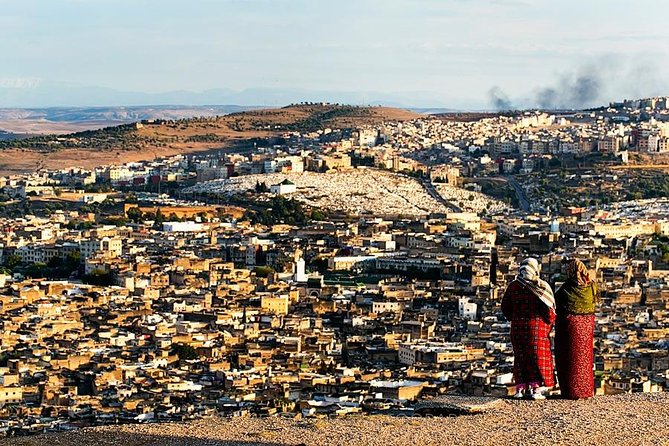
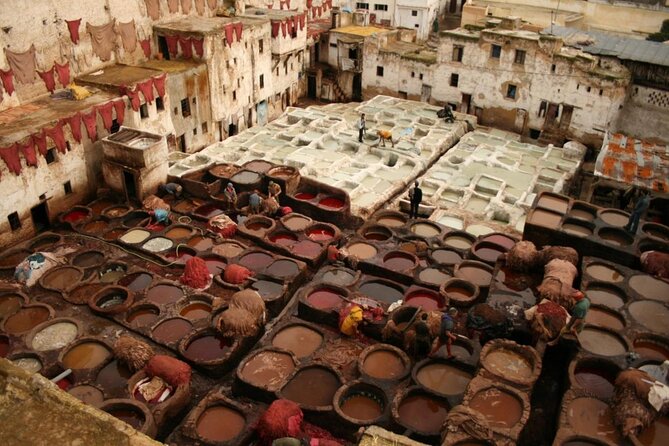
Fez deserves a guided visit. The old city, Fez el-Bali, is made up of narrow lanes where a map can quickly become more confusing than helpful. The planned visit takes about five hours and covers the Royal Palace area, the Jewish quarter known as the Mellah, Al Qaraouine University, the tanneries, a ceramic factory, and a panoramic viewpoint over the medina.
I like this part because it combines major landmarks with working crafts. The ceramic stop gives you a look at Moroccan pottery production, while the tanneries show an old trade that remains closely tied to Fez’s identity. The panoramic view helps you understand the size and density of the old city before you return to its lanes.
The schedule includes lunch and a drink in the new city later in the day. Admission is listed as included for the Fez medina visit, but you should still clarify which specific entrance fees, meals, and purchases are covered. The tour includes breakfast every morning, but only four dinners, and other dinners are specifically excluded.
A completely different sort of day out of Casablanca:
- Casablanca: City Tour with Hassan II Mosque Entry Ticket
★ 4.6 · 1,137 reviews - Private Tour of Casablanca with Hassan II Mosque Entry Ticket
★ 5.0 · 1,102 reviews - Marrakech Day Trip with Camel Ride from Casablanca
★ 5.0 · 740 reviews - Casablanca: Hassan II Mosque & City Highlights Tour
★ 4.5 · 573 reviews
Across the Middle Atlas to Midelt and Errachidia
Day six shifts the mood again. You leave Fez for Ifrane, called the Switzerland of Morocco, then continue through Azrou and Midelt toward Errachidia. The drive is listed at about four hours, though stops and road conditions can affect the actual day.
Azrou sits near Morocco’s large cedar forest, where Barbary apes may be seen. The route also provides views of the Middle Atlas and Higher Atlas mountains. As you approach Errachidia, the scenery begins to look more desert-like.
This is a good example of why the private format has value. The route is not just a transfer between famous cities. Your driver can stop for views and village scenes, giving you a chance to see the country change gradually from northern cities to the dry eastern region.
Rissani and Merzouga: Markets before the dunes
The journey to Merzouga follows the Ziz Valley, with stops for panoramic views and visits to Berber villages. You continue through Erfoud and Rissani, an important town connected with the Alaouite dynasty, Morocco’s ruling royal family.
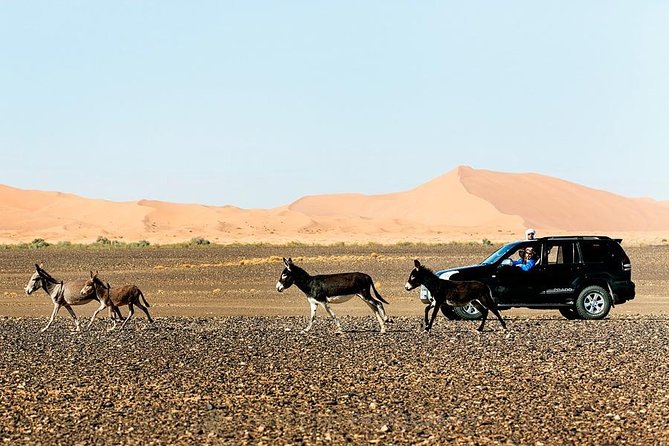
Rissani’s market is one of the more distinctive stops. The souk sells spices, vegetables, and cloth, and the town is surrounded by fortified villages known as ksour. The route also includes a donkey park and the chance to try madfouna, a local stuffed bread often described as a Moroccan pizza.
This part of the tour is especially useful if you want more than a quick desert photo. Rissani was once linked to salt-caravan routes from Timbuktu, and the market gives the desert region a human and commercial context. The drive is about four hours, leaving room for stops, although the day still involves a fair amount of sitting.
Erg Chebbi: Camel tracks and a night in camp
Day eight focuses on the Merzouga area. You visit the Gnawa community, learn about its music and way of life, and may visit Lake Merzouga, known for bird populations. The plan also includes a nomad wire house where Berber handicrafts are sold.
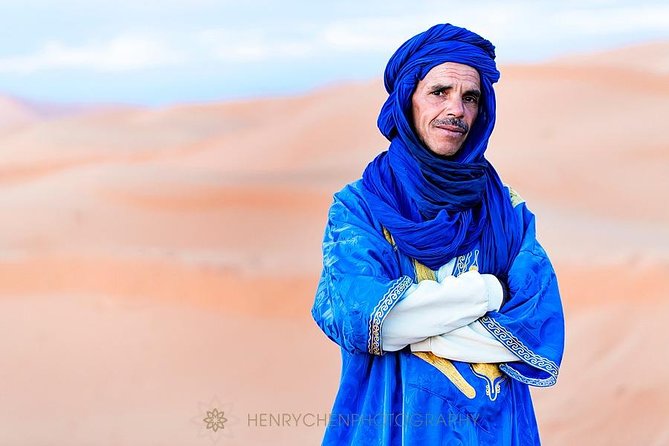
In the afternoon, you ride a camel into the Erg Chebbi dunes with an experienced camel guide. The ride is listed at about two hours, followed by sunset among the golden sands and an overnight stay in a luxury camp.
This is one of the clearest highlights of the trip. You get a proper desert night rather than a brief stop beside the road. Still, camel riding can be uncomfortable, especially if you are not used to the saddle. Ask in advance about the camp facilities and sleeping arrangements, since the phrase luxury camp can cover different standards.
The next morning offers an optional early wake-up for sunrise. You then ride the camels back to the village before breakfast and continue toward Todra Gorge and the Dades Valley.
Todra Gorge and the Dades Valley
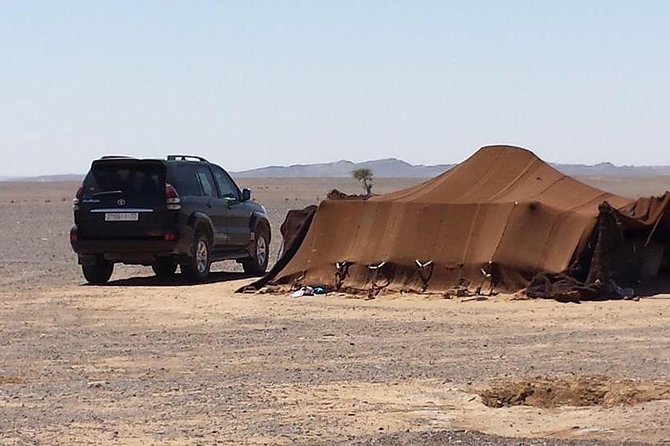
Day nine includes Rissani, Tinghir, Todra Gorge, and Boumalne Dades. Todra is known for its high, narrow canyon walls, and lunch is planned in the gorge. Later, you pass through the Dades Valley, where unusual rock formations include the shapes known as monkey toes.
The hotel is described as a fancy property overlooking the valley. That matters after several long driving days. A comfortable night with a view gives you a chance to recover before the route continues toward Marrakech.
The desert to canyon transition is dramatic, but do not expect a slow walking holiday. The itinerary often combines drives with short visits, photo stops, and meals. If you want longer hikes in the gorges, ask about modifying the schedule.
The road to Marrakech: Roses, kasbahs, and Ait Ben Haddou
Day ten is one of the longest drives, listed at about six hours. You follow the Dades Valley toward Kalaat Mgouna, the rose-growing town, then continue to Ouarzazate and Ait Ben Haddou.
Kalaat Mgouna is a natural place to buy rosewater. The stop adds a small local detail to an otherwise scenic driving day. You then reach Ait Ben Haddou, Morocco’s best-known fortified village, associated with the Glaoui family and southern Moroccan architecture.
The route continues through the Atlas region toward Marrakech. This is a day when the private vehicle earns its keep. Public transport would make these stops awkward, and driving yourself would require concentration on mountain roads instead of the views.
Marrakech: Palaces, gardens, and Jemaa el-Fna
Marrakech receives a full sightseeing day. The route includes the Saadian Tombs, Bahia Palace, El Badi Palace, Ben Youssef Quranic School, Majorelle Garden, Menara Garden, and Koutoubia Tower.
That is a lot for four hours, especially when lunch is included and the day ends with Jemaa el-Fna. You may need to accept shorter visits at some sites, or ask to prioritize the places that interest you most. A local guide is useful here because the medina, palaces, gardens, and square each tell a different part of the city’s story.
After dinner, Jemaa el-Fna offers food sellers, storytellers, magicians, and snake charmers. It is a lively public space, but it can also be crowded and intense. Keep your belongings secure, agree on a meeting point, and listen to your guide about how to handle animal-related performances and persistent vendors.
Essaouira: Morocco’s Atlantic reset
After the inland heat and long road days, Essaouira feels like a change of gear. The drive from Marrakech takes about three hours and includes stops connected with argan oil production. You can visit a women’s cooperative and learn how the oil is extracted for culinary, cosmetic, and medicinal uses.
The town visit includes Skala Fortress, the port, the souks, thuya wood carving, and the medina’s handicraft shops. Essaouira is known for strong winds and attracts surfers. Its Portuguese influence is visible in the architecture, while the blue doors and whitewashed walls give the medina a distinct coastal appearance.
Two days here are welcome. The first day includes the arrival and a town visit, while day thirteen gives you another three hours to explore. I would use the extra time for a relaxed walk through the port and medina rather than trying to shop at every stop.
Safi, El Oualidia, and the return to Casablanca
The final full day follows the coast through Safi and El Oualidia before reaching Casablanca. Safi is associated with ceramics, and the route includes a chance to see pottery craftsmen and possibly buy their work.
El Oualidia provides a lunch stop before the motorway journey to Casablanca. The entire drive is listed at about six hours, so this is another day when the private vehicle and flexible stopping schedule are important.
You spend the final night in Casablanca and receive an airport transfer the next day. The tour can also be adjusted to end at Marrakech airport, which may help if your flight plans fit that option better.
What the $4,627.23 price really buys
At $4,627.23 per person, the tour requires a serious budget. The value comes from the amount bundled into the price: fourteen nights of accommodation, fourteen breakfasts, four dinners, local taxes, a driver-guide, local guides, airport pickup, and private transport.
You are also paying for planning. This route involves many hotel changes, remote areas, city guides, desert arrangements, and long transfers. Booking each part yourself could take considerable time, and mistakes in the desert or mountain sections could be costly.
The price is less attractive if you prefer independent travel, low-cost lodging, or several free days in each city. It is more convincing for two or more people who want comfort, personal attention, and one organized route through most of Morocco.
The required minimum is two people per booking. The activity is private, so only your group participates. Most people can take part, and pickup is offered. Confirmation is sent within 48 hours, subject to availability.
Who should book this Morocco route?
I would choose this tour if you want to see Morocco’s major regions in one long trip without renting a car. It suits couples, families, friends, and small groups who value private transport and the ability to request changes.
It is also a good fit for first-time visitors who want support in the medinas and desert. Past customers specifically praised the planning help from Youssef and the care provided by guides and drivers including Abdul, Omar, Mustapha, Marouan, Ayoub, and Hamid. Several accounts describe prompt communication, custom changes, and drivers who treated the group like family.
I would think twice if you dislike early starts, long drives, frequent hotel changes, or shopping-related stops. Ask before booking how much time you will have at each attraction, which entrance fees are included, the standard of each hotel and camp, and who will serve as your driver-guide.
The cancellation terms are strict close to departure. You receive a full refund when canceling at least six full days before the start time, 50 percent when canceling two to six days ahead, and no refund within two days.
Should you book it?
Book it if your goal is a broad, comfortable introduction to Morocco and you want someone else to manage the complicated parts. The best features are the private vehicle, the wide range of places, the desert overnight, and the flexibility to adjust the route.
Do not book it expecting a slow, single-city holiday. This is a national circuit, with long drives and many major stops packed into fifteen days. For the right pace, it offers an efficient way to see Morocco’s old cities, mountains, desert, kasbahs, and Atlantic coast in one carefully connected trip.
FAQ
How long does the Morocco Grand Tour last?
The experience lasts approximately 15 days, with 14 nights of accommodation included in the plan.
Where does the tour start?
The tour starts in Casablanca, with pickup available at Casablanca International Airport or a Casablanca hotel.
Where does the tour end?
The stated ending point is Casablanca, but the provider says the tour can be modified to end at either Casablanca Airport or Marrakech Airport.
Is this a private tour?
Yes. Only your group participates, and a minimum of two people is required per booking.
What type of transportation is provided?
You travel between destinations in a private, air-conditioned vehicle with a driver-guide.
Are meals included?
Fourteen breakfasts and four dinners are included. Other dinners, drinks, and tips are not included.
Is the camel ride included?
The plan includes a camel ride in the Erg Chebbi dunes, followed by sunset and an overnight stay at a luxury camp.
Does the tour include local guides?
Yes. The inclusions list includes both a driver-guide and local guides.
What is the cancellation policy?
A full refund is available when you cancel at least six full days before the start time. Canceling two to six days ahead receives a 50 percent refund, while cancellations less than two days before departure are nonrefundable.
Just added around Casablanca
- Private Half-Day Guided Tour of Casablanca★ 4.0 · 17 reviews
- Private 10 days Tour From Casablanca Via Desert★ 5.0 · 17 reviews
- Casablanca day trip from the cruise ship passenger.★ 4.2 · 17 reviews
- Morocco 8-Night Tour: Chefchaouen, Desert & Hot Air Balloon★ 5.0 · 18 reviews
- Private 11 Day Tour From Casablanca Imperial Cities Sahara Desert★ 5.0 · 18 reviews
- Private Casablanca Layover Tour with Round-Trip Airport Transfer★ 4.5 · 18 reviews
- Big Morocco Tour 15 Days From Casablanca★ 5.0 · 18 reviews
- Casablanca Airport Transfer from hotel in Casablanca★ 5.0 · 18 reviews
Casablanca Tours, compared.
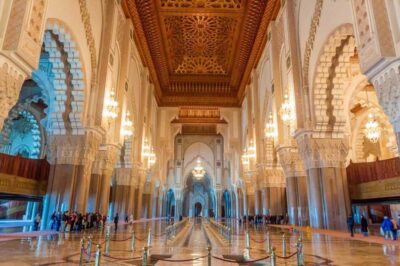
Hassan II Mosque Premium Tour with Entry Ticket
Read our review →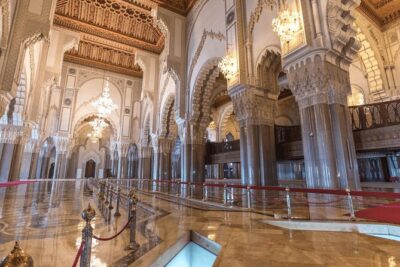
Casablanca City Tour with Hassan II mosque ticket
Read our review →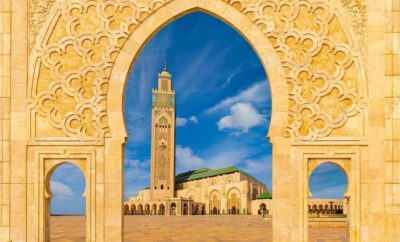
Private Tour of Casablanca with Hassan II Mosque Entry Ticket
Read our review →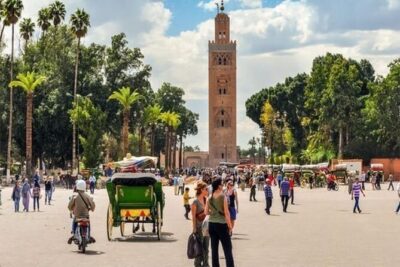
Marrakech Day Trip with Camel Ride from Casablanca
Read our review →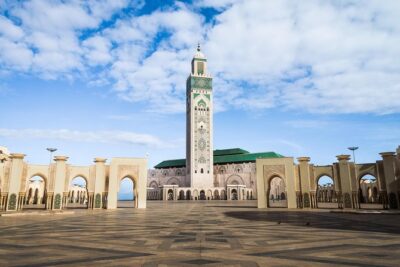
Browse the lists this tour appears in