
Reviewed · CASABLANCA TOURS
10 Days Tour From Casablanca, Morocco
Morocco packs a lot into ten days. I like that this private tour links Casablanca, Rabat, Chefchaouen, Fes, Meknes, Marrakech, and the Sahara without making you change tour companies halfway through. I also like the balance between major sights and local experiences, especially Gnawa music in Khamlia, tea with nomad families, a camel ride, and a night in the Erg Chebbi dunes.
The main drawback is the amount of time spent in the vehicle. Several days involve six to nine hours on the road, and the route covers much of Morocco in a short period. At $1,100 per person, the price offers solid value for a private vehicle, driver-guide, nine breakfasts, three dinners, and the desert camp, but you still need to budget for lunches, most dinners, and entrance fees.
In This Review
- Key points to know before booking
- What this Morocco route does well
- Day 1: Hassan II Mosque and an overnight in Rabat
- Day 2: Rabat’s royal monuments and blue Chefchaouen
- Day 3: Volubilis, Meknes, and the road to Fes
- Day 4: Fes, Morocco’s great medina day
- Day 5: From Fes through the Middle Atlas to Merzouga
- Day 6: Gnawa music, nomad life, and the Erg Chebbi camp
- Day 7: Sunrise, Todra Gorge, and Dades Valley
- Day 8: Kasbahs, film country, and the High Atlas crossing
- Day 9: Marrakech from Jemaa el-Fna to Majorelle Garden
- Day 10: Marrakech to Casablanca Airport
- Is $1,100 a good value?
- Who should book this tour?
- Should you book it?
- FAQ
- Where does the tour begin?
- Where does the tour end?
- Is this a private tour?
- What meals are included?
- Are entrance fees included?
- Is the camel ride included?
Key points to know before booking
- A private route across Morocco: Only your group participates, so the schedule can be adjusted when possible.
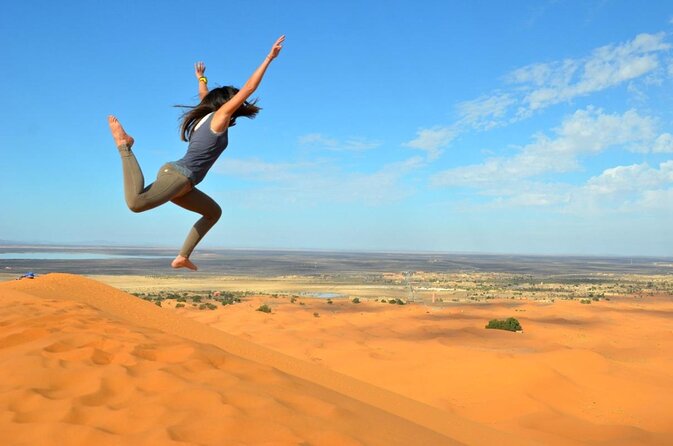
- The Sahara is the emotional high point: You get a 4×4 desert circuit, a camel ride, sunset among the dunes, and a camp night.
- Long driving days are part of the deal: The Fes to Merzouga journey takes about nine hours, with mountain and oasis stops along the way.
- Fes receives the most detailed sightseeing: A local guide covers the medina, Royal Palace gate, Mellah, Karaouine, tannery, tile cooperative, and viewpoints.
- The price is useful but not all-inclusive: Breakfast, three dinners, transport, guide-driver, and one camel per person are included, while lunches, other dinners, flights, and entry fees are not.
- Book well ahead for popular dates: The tour averages booking about 238 days before departure, so late planners may find fewer available dates.
What this Morocco route does well
This is not a relaxed stay in one region. It is a grand circuit designed to show you several versions of Morocco: Atlantic cities, imperial capitals, Rif villages, Roman ruins, cedar forests, mountain roads, palm-filled valleys, fortified kasbahs, and the Sahara.
I like the private format because Morocco rewards flexibility. If you want more time in a souk, a photo stop, or a panoramic viewpoint, you can ask. The information says changes are possible, but the route is still ambitious, so the driver must keep an eye on the clock.
The tour begins at Mohamed V Airport in Casablanca and ends with a transfer back to Casablanca Airport. Pickup is offered, and your guide waits with a sign bearing your name if you arrive in the morning. If your flight arrives later, the first day depends on your arrival time.
The vehicle is air-conditioned, an important detail during long crossings. You should still think of this as an active road trip rather than a series of short transfers. The distances between the cities and desert are real.
A few more Casablanca trips worth weighing up
- From Marrakech: Casablanca Tour with Hassan II Mosque Visit
★ 4.7 · 4,756 reviews - Casablanca: Hassan II Mosque Premium Tour with Entry Ticket
★ 4.5 · 2,971 reviews - Casablanca City Tour with Hassan II mosque ticket
★ 5.0 · 2,480 reviews
Day 1: Hassan II Mosque and an overnight in Rabat
Your first stop is Casablanca, usually centered on the airport pickup and the Hassan II Mosque. The mosque is one of the country’s major sights and is particularly useful for non-Muslim visitors because it allows them to enter.
The planned visit takes about two hours. Admission is not included, so check the current entry cost when you book or arrive. If time allows, the schedule may also include the Corniche and Pigeon Square before you continue to Rabat for the night.
This is a sensible opening day if your flight arrives early. If you land late, you may have little time beyond the airport transfer and mosque area. I would not count on every optional stop unless your arrival time is clear.
Rabat gives you a calmer first evening than Casablanca. Since you sleep there, you avoid trying to reach the next city after a full sightseeing day.
Day 2: Rabat’s royal monuments and blue Chefchaouen
Rabat’s old fortified quarter, the Kasbah of the Udayas, is the morning’s main cultural stop. You also see Hassan Tower, the unfinished minaret of an incomplete mosque, and the Mausoleum of Mohammed V.
These sites help explain Morocco’s royal and religious identity in a compact area. The schedule allows about six hours for Rabat and the journey toward Chefchaouen, so you should expect a full day rather than an extended museum visit.
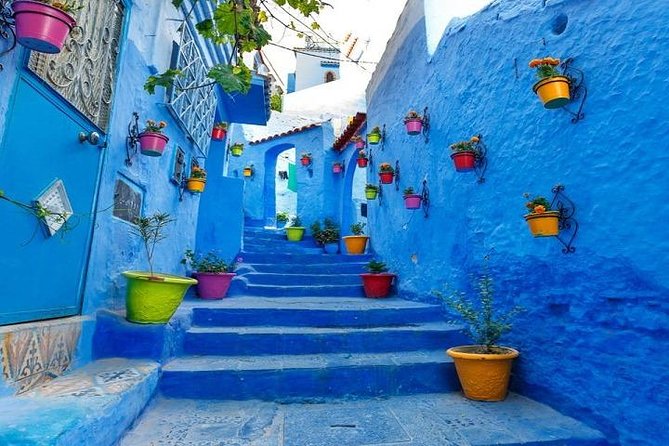
Chefchaouen, often called Morocco’s blue pearl, receives a free afternoon for independent exploration. That is a welcome change after guided visits and road time. You can wander the lanes, take photographs, and set your own pace without being rushed from monument to monument.
The tradeoff is that the itinerary does not promise a full guided tour of Chefchaouen. You are given time in town, but the exact amount depends on the drive from Rabat and the day’s timing.
Day 3: Volubilis, Meknes, and the road to Fes
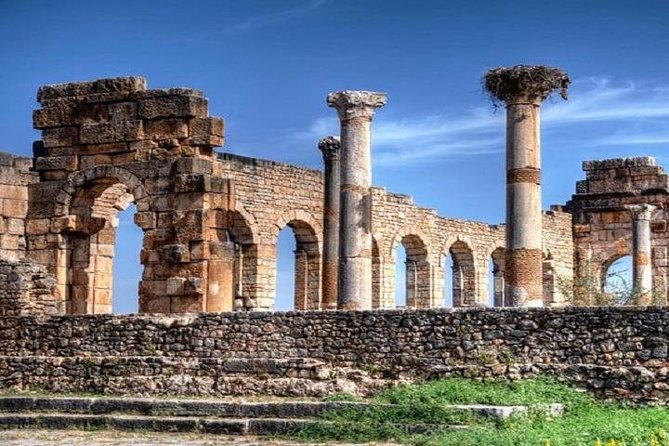
The route leaves Chefchaouen through Wazan and other Rif villages before reaching Volubilis. The Roman ruins offer a different side of Moroccan history, with an archaeological setting that contrasts sharply with the medinas and royal monuments.
You spend about an hour at Volubilis, and the entrance fee is not included. That may feel short if you enjoy Roman sites, but it is enough for an introduction and a walk through the main remains.
Next comes Meknes, the 17th-century imperial city. The plan includes lunch, the large walls of the medina, Bab El Mansour, and the shrine of Moulay Ismail. The stop lasts about two hours, so you should expect a brisk introduction rather than a long, unhurried city visit.
The day ends in Fes. This is a useful arrangement because Fes deserves a full day of its own, and you arrive ready for the next morning’s guided exploration.
A completely different sort of day out of Casablanca:
- Casablanca: City Tour with Hassan II Mosque Entry Ticket
★ 4.6 · 1,137 reviews - Private Tour of Casablanca with Hassan II Mosque Entry Ticket
★ 5.0 · 1,102 reviews - Marrakech Day Trip with Camel Ride from Casablanca
★ 5.0 · 740 reviews - Casablanca: Hassan II Mosque & City Highlights Tour
★ 4.5 · 573 reviews
Day 4: Fes, Morocco’s great medina day
Fes is the most detailed city day on the itinerary. A local guide leads you through the UNESCO-listed medina and several of its best-known points of interest.
You visit the Royal Palace gate, the Jewish quarter known as the Mellah, the University of Karaouine, and a traditional tannery. Karaouine was founded in 859 and is described as the world’s oldest continuously operating university. The medina’s lanes, workshops, religious buildings, and old commercial quarters give you a strong sense of Fes as a center of Moroccan learning and culture.
The pottery and zellij tile cooperative adds a hands-on element. You can learn about making the small geometric tiles or pottery, and there are opportunities to buy finished pieces. Keep in mind that cooperative visits often combine cultural explanation with shopping, so decide in advance how interested you are in purchasing crafts.
In the afternoon, you get a panoramic view over the Fes medina from a tower. That viewpoint is especially useful after walking through the dense lanes because it lets you see how the old city fits together.
The Fes day lasts about eight hours. Wear practical shoes and expect uneven walking. Your night is in a riad, a traditional Moroccan lodging style that can feel more connected to the old city than a standard hotel.
Day 5: From Fes through the Middle Atlas to Merzouga
Day five is the biggest road day, about nine hours from Fes toward Merzouga and the Erg Chebbi dunes. This is where you need to be honest with yourself about travel comfort. The scenery changes constantly, but you will spend much of the day seated in the vehicle.
The first notable stop is Ifrane, known for its European-style appearance and nickname, Moroccan Switzerland. In the cedar forest near Azrou, you may see Barbary apes in their natural habitat. The route then climbs and crosses the Middle Atlas Mountains.
Midelt provides a lunch stop at a local Moroccan restaurant. Lunch is not included, so this is one of the meals you pay for separately.
The road continues toward Erfoud, known for fossils and date palms, then through the High Atlas and the Ziz Valley. These stops make the long drive worthwhile by breaking it into smaller chapters: forest, high mountain slopes, dry valleys, fossils, palms, and finally the desert edge.
You spend the night in a hotel near the dunes rather than immediately sleeping at the camp. That gives you a useful buffer before the desert activities begin.
Day 6: Gnawa music, nomad life, and the Erg Chebbi camp
Day six is the most experience-focused part of the tour. You explore the Merzouga area in a 4×4 with air-conditioning, beginning with Merzouga Lake if water is present. Since the lake’s condition depends on nature, this stop is not guaranteed to look the same year-round.
At Khamlia, also known as the Black Town, you hear traditional Gnawa music and have mint tea. This is one of the route’s more distinctive cultural stops. It is not just another viewpoint or photo break, and it gives you a direct connection to local musical traditions.
The 4×4 continues along Paris-Dakar roads toward the black mountains, with views over the Erg Chebbi dunes and toward the Algerian border. The day also includes phosphate mines and a ruined French village, followed by a visit with nomad families in Berber tents.
Tea and conversation with nomad families can be meaningful, but you should approach it respectfully. This is not a staged museum display. You are being shown part of a way of life that can be very different from city Morocco.
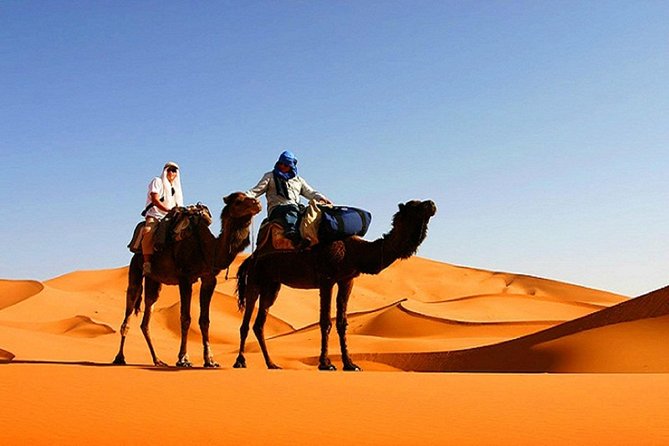
Later, you take a camel for roughly 1.5 hours into the dunes. You stop to climb a dune and watch the sunset before reaching the Berber camp. One camel per person is included.
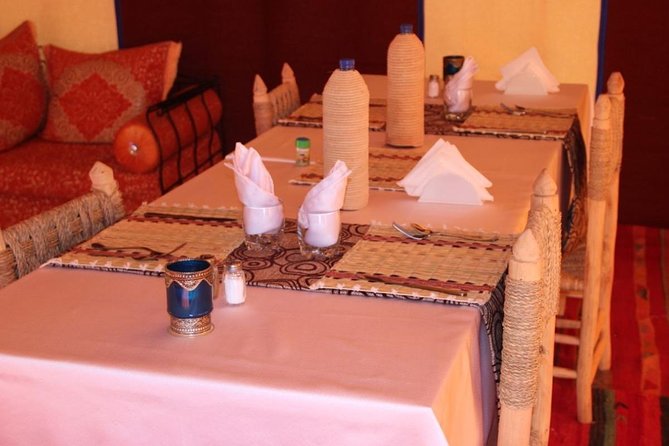
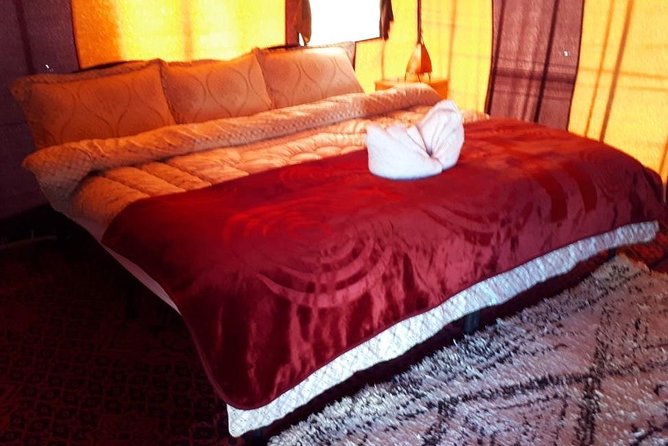
The camp is described as having mattresses, blankets, and cushions. Dinner is included on this night, and the desert evening can include Berber music and a fire. The experience is memorable, but comfort has limits. One person specifically praised the food, hosts, stars, and atmosphere while also noting that the camel ride was uncomfortable and the night was cold.
Pack warm layers even if your trip takes place during a hot season. Desert temperatures can drop sharply after sunset, and the camel saddle is not designed for luxury.
Day 7: Sunrise, Todra Gorge, and Dades Valley
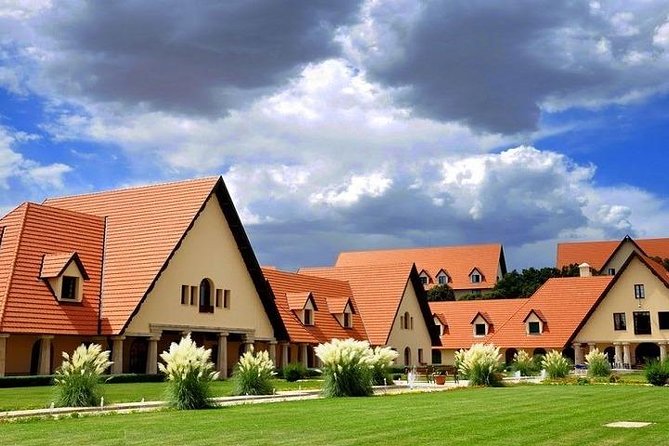
The desert morning begins before sunrise. You watch the dunes change color as the sun comes up, then return by camel or vehicle from the camp.
The camel return is part of the classic desert experience, but taking the car may be the better choice if you found the first ride painful. You should ask the guide about timing and options before setting out.
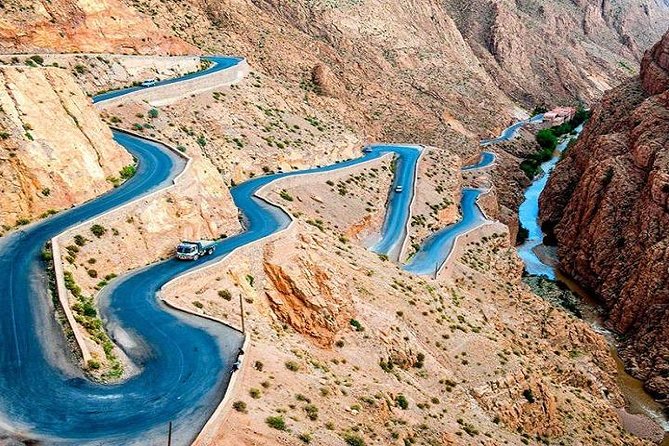
From Merzouga, the route heads toward Tinghir and the Todra Valley. The Todra Gorge has cliffs described as reaching 300 meters high, with some sections only about 10 meters apart. You have time for a walk and lunch in the valley at the foot of the High Atlas.
The schedule lists about two hours for the gorge, so this is an introduction rather than a serious hike. Afterward, you continue to Dades Valley and its gorge for the night.
This day combines an early start with more road time. The reward is the contrast between orange desert dunes, palm groves, canyon walls, and mountain foothills.
Day 8: Kasbahs, film country, and the High Atlas crossing
From Dades, you follow the Road of a Thousand Kasbahs toward Marrakech. The route passes Kalaat Mgouna, known for pink roses and an annual May festival, and Skoura, an oasis town with the 18th-century Kasbah of Ameridhil.
You continue to Ouarzazate, a center of Morocco’s film industry. The planned sights include Taourirte Kasbah and Cinema Atlas Studio, with connections to productions such as Game of Thrones and Gladiator. Film fans will find this especially appealing, while others may prefer to spend more time among the kasbahs and oases.
Ait Ben Haddou is the day’s major cultural stop. This fortified village is a UNESCO site, was built by Berber chieftain El Glaoui Et-Hami in the late 13th century, and still has Berber families living there.
The guided walk through the kasbah takes you among earthen buildings and uphill lanes. Bring shoes with a good grip, since the route is not a flat city stroll.
The drive ends in Marrakech, where you are dropped at your riad. The itinerary lists about six hours, although the number of stops means the actual day can feel longer.
Day 9: Marrakech from Jemaa el-Fna to Majorelle Garden
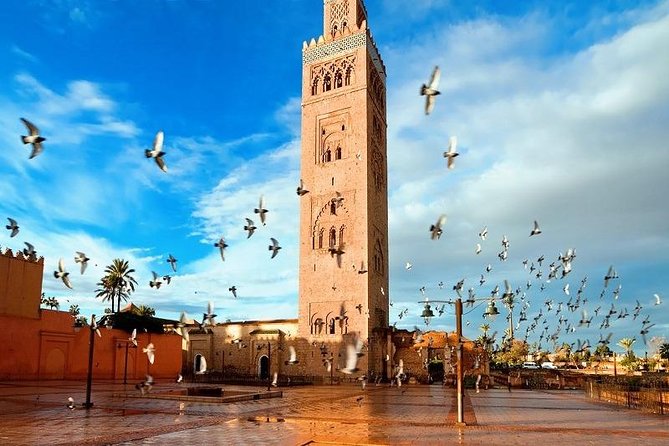
Marrakech receives a guided city tour covering Jemaa el-Fna square, the Koutoubia Mosque, the souks, palaces, museums, Gueliz, Menara Gardens, and Majorelle Garden.
The listed sightseeing time is about three hours, which is not enough for a slow look at every attraction. Treat this as an organized introduction. You will get the city’s main themes and can use any free time to return to the places that interest you most.
Jemaa el-Fna and the souks show Marrakech at its most theatrical, while Gueliz provides a clear contrast with the newer part of town. The gardens offer a quieter change of pace.
Your final night is in a riad. If you enjoy traditional lodging and being close to old-city activity, this is a fitting end. If you prefer large hotels and predictable facilities, confirm the accommodation style before booking.
Day 10: Marrakech to Casablanca Airport
The final transfer takes about three hours from Marrakech to Casablanca Airport. This timing matters when you book your return flight. The tour ends at the airport, so your departure should allow enough margin for the road journey and airport procedures.
Do not schedule a tight flight connection based only on the stated driving time. Traffic, stops, and airport arrival needs can change the practical timing.
Is $1,100 a good value?
At $1,100 per person, the tour offers a lot for ten days, particularly because it is private. You receive an air-conditioned vehicle, a guide-driver, nine breakfasts, three dinners, and a camel for each person.
The price does not cover lunch, most dinners, flights, or entrance fees. The Hassan II Mosque and Volubilis are two clear examples where you should expect extra admission costs. Daily meals and occasional attraction charges will add to the published price.
The strongest value comes from the coverage. Organizing Casablanca, the imperial cities, the Rif, Middle Atlas, High Atlas, kasbahs, and Merzouga independently would require careful transport planning. Here, the driver handles the long connections and the desert operator arranges the 4×4, camel route, and camp.
A private tour also gives you more control than a large group departure. The company’s guide service has received especially strong praise, and Mr. Said is specifically credited with handling schedule changes and responding to requests. Ask when booking if he will be your guide, since a named guide is not guaranteed in the tour details.
Who should book this tour?
I would choose this route if you want a first broad look at Morocco and do not mind long drives. It suits couples, families, or friends who value a private vehicle and want both famous cities and a real desert overnight.
It is less suitable if you want slow mornings, long museum visits, or several nights in each city. The itinerary moves quickly, and the desert section includes an early sunrise, a camel ride, and changing accommodation.
The Sahara portion is clearly the trip’s main draw. The highly praised elements are the camel ride, the sunset and sunrise over the dunes, the camp atmosphere, Berber music, tagine, and the star-filled sky. Just bring realistic expectations: a desert camp can be comfortable, but it is still camping, and camels can be hard on your legs.
You can cancel for a full refund if you do so at least three full days before the local start time. Later cancellations and last-minute changes are not accepted. Confirmation is issued within 48 hours, subject to availability, and the tour is generally open to most participants, with service animals allowed.
Should you book it?
Book this 10-day Morocco tour if your priority is variety: imperial cities, Roman ruins, mountain roads, kasbahs, and a strong Sahara experience in one private itinerary.
Skip it if you dislike long drives or want a slower cultural trip. For the right pace of traveler, $1,100 is a reasonable price for the transport, private format, desert activities, and included meals. I would book early, confirm the exact lodging and guide, and set aside extra money for lunches, dinners, and entrance fees.
FAQ
Where does the tour begin?
The tour begins at Mohamed V Airport in Casablanca, Morocco. Pickup is offered, and the guide waits with a sign showing your name if you arrive in the morning.
Where does the tour end?
The experience ends back at the meeting point, with a transfer from Marrakech to Casablanca Airport on day 10.
Is this a private tour?
Yes. Only your group participates in the activity.
What meals are included?
Nine breakfasts and three dinners are included. Lunches, other dinners, and flights are not included.
Are entrance fees included?
No. Entrance fees are not included. This applies to attractions such as the Hassan II Mosque and Volubilis.
Is the camel ride included?
Yes. One camel is included for each person. The camel trek to the desert camp lasts about 1.5 hours, followed by a return from camp by camel or car the next morning.
Just added around Casablanca
- Private Half-Day Guided Tour of Casablanca★ 4.0 · 17 reviews
- Private 10 days Tour From Casablanca Via Desert★ 5.0 · 17 reviews
- Casablanca day trip from the cruise ship passenger.★ 4.2 · 17 reviews
- Morocco 8-Night Tour: Chefchaouen, Desert & Hot Air Balloon★ 5.0 · 18 reviews
- Private 11 Day Tour From Casablanca Imperial Cities Sahara Desert★ 5.0 · 18 reviews
- Private Casablanca Layover Tour with Round-Trip Airport Transfer★ 4.5 · 18 reviews
- Big Morocco Tour 15 Days From Casablanca★ 5.0 · 18 reviews
- Casablanca Airport Transfer from hotel in Casablanca★ 5.0 · 18 reviews
Casablanca Tours, compared.
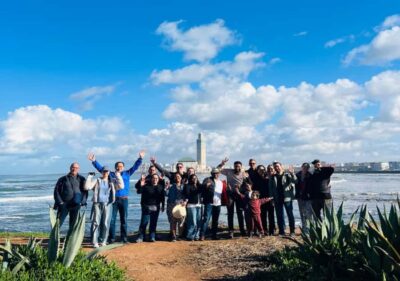
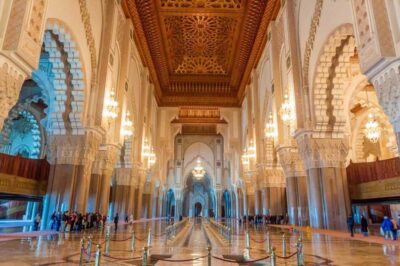
Hassan II Mosque Premium Tour with Entry Ticket
Read our review →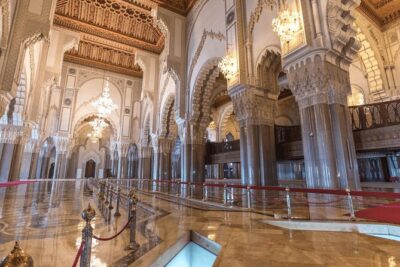
Casablanca City Tour with Hassan II mosque ticket
Read our review →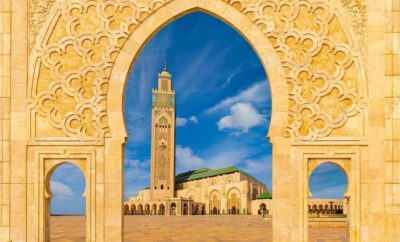
Private Tour of Casablanca with Hassan II Mosque Entry Ticket
Read our review →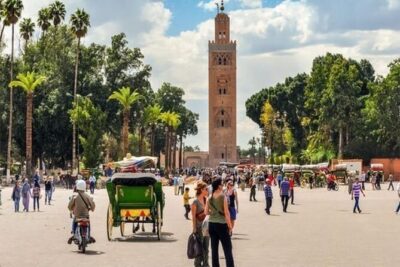
Marrakech Day Trip with Camel Ride from Casablanca
Read our review →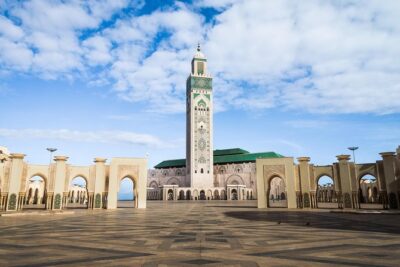
Browse the lists this tour appears in