
Reviewed · ATLAS MOUNTAINS DAY TRIPS
Mount Toubkal: 2-Day Climb from Marrakech
Four thousand meters changes the meaning of a hike. This two-day Mount Toubkal climb gives you North Africa’s highest summit, dramatic Atlas Mountain views, and a Berber mountain route starting near Imlil. I like the private pickup from Marrakech and the care provided by guides such as Mohammed, Kamal, Hussein, and Said. The freshly prepared meals and overnight refuge stay add real value, too. The main catch is the pace: this is a hard ascent and descent, not a gentle walk for anyone with only basic fitness.
You’ll pass Aremd, Sidi Chamharouch, and the Mizane Valley before reaching the Toubkal Refuge at about 3,206 meters. I also like that the group is capped at six people, at least in the advertised arrangement, since a small group makes it easier for a guide to watch your pace and altitude symptoms. But communication about pickup points, mule support, sleeping bags, and the return transfer has been uneven, so you should confirm those details before setting out.
In This Review
- Key points to know before you go
- Why Mount Toubkal makes a strong two-day challenge
- From Marrakech to Imlil at 8:30 in the morning
- Aremd and the Mizane Valley on day one
- Sidi Chamharouch and the waterfall stop
- Night at the Toubkal Refuge
- The pre-dawn push to 4,167 meters
- The long descent back to Imlil
- What the $150 price really buys you
- Who should book this climb
- My verdict on the Mount Toubkal two-day climb
- FAQ
- How high is Mount Toubkal?
- How long does the climb take?
- What is included in the $150 price?
- Do I need hiking experience?
- What should I bring?
- Is transport from Marrakech included?
Key points to know before you go
- The summit is 4,167 meters high: The final push can bring cold, wind, snow, and altitude symptoms, even for fit hikers.
- Day two is the real test: You may walk about eight to nine hours, including the summit and the long descent to Imlil.
- The refuge is basic: Expect shared sleeping space, noise, mattresses, blankets, and no heating.
- Guides make a major difference: Mohammed, Kamal, Hussein, Said, Mustafa, Abdo, and Mohamed Ali have all been praised for patience, safety, and encouragement.
- Bring proper mountain gear: Hiking boots, layers, gloves, a head torch, sun protection, and walking poles are useful.
- The $150 price is strong value: Transport, guide, food, refuge lodging, and bag support are included, but check whether a mule and sleeping bag will actually be supplied.
Why Mount Toubkal makes a strong two-day challenge
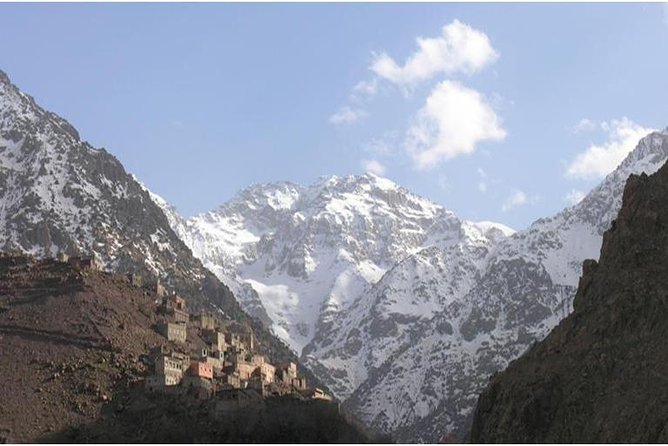
Mount Toubkal rises to 4,167 meters, making it the highest mountain in North Africa. The appeal is not only the summit. You get a fast change of scenery from Marrakech’s streets and palms to steep valleys, stone villages, high passes, and the bare, craggy peaks of Toubkal National Park.
This is a genuine mountain outing, not a sightseeing trip with a short walk added on. You’ll gain roughly 1,400 meters on the first day, then climb another 961 meters to the summit before descending all the way to Imlil. That amount of up and down explains why a two-day schedule feels demanding.
The tour is rated 4.5 out of 5, with 93 percent recommending it. That is a good result, but the praise is closely tied to the individual guide. Guides who set a slow pace, explain local culture, and watch for altitude trouble receive the warmest comments. Poor communication and missing promised equipment account for the sharpest complaints.
I would choose this trip for an active person who wants a major achievement without arranging every transport, meal, and overnight detail. I would not choose it as a first mountain walk or as a casual add-on after a tiring few days in Marrakech.
More Atlas Mountains Day Trips:
- Marrakech: Atlas Mountains, Ourika Valley, Waterfall & Lunch
★ 4.8 · 15,834 reviews - Berber villages : Atlas Mountains Day Hike from Marrakech
★ 5.0 · 14,007 reviews - From Marrakech: Atlas Mountains Full-Day Hiking Trip w Lunch
★ 4.8 · 7,417 reviews
From Marrakech to Imlil at 8:30 in the morning
Pickup is offered from your hotel or riad in Marrakech, with private transport included. The stated start time is 8:30 a.m., although the day description says departure is around 9 a.m. That small mismatch is worth clarifying when you book.
The drive to Imlil takes about an hour and 15 minutes according to the practical trip accounts. Pickup inside the Medina can be confusing because cars cannot reach every narrow lane. A clear meeting point, such as near Café de France by the main square, may save you a nervous wait. Some pickups have gone smoothly, while others suffered from poor instructions or a guide arriving with the wrong understanding of the trip length.
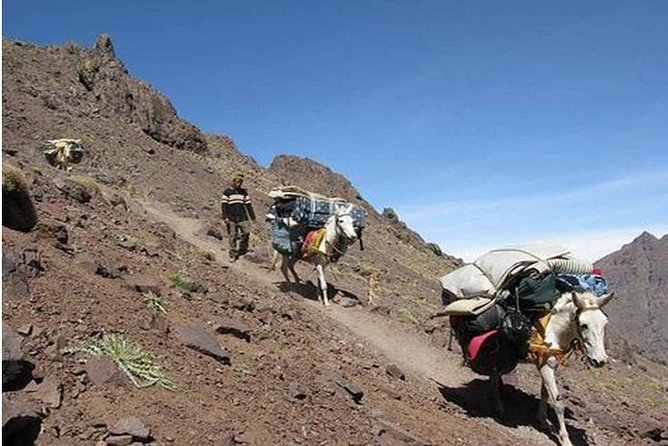
Imlil is the usual starting point for the walk. It sits at roughly 1,800 meters and is the gateway to the high Atlas routes. You’ll meet the mountain guide there, organize bags, and begin on foot. Mule support is listed as included, but several accounts say people had to carry their own bags. Ask directly before departure how much luggage will be transported and what you should carry yourself.
The road south gives you a useful visual introduction to the mountains. The valleys become narrower and the peaks more severe as you leave Marrakech behind. A welcome drink is also part of the beginning of the experience, a small but pleasant pause before the hard work starts.
Aremd and the Mizane Valley on day one
The first walking section passes through Aremd, described as the largest and highest village in the Imlil Valley. This is where the route begins to feel like a mountain journey rather than a city excursion.
You’ll follow the Mizane Valley toward Sidi Chamharouch. The route rises steadily, with rough ground and long uphill sections. The walking time is advertised as four to five hours, but practical accounts put the first day closer to five to seven hours, depending on pace, stops, and group fitness.
That difference matters. A strong hiker may find the first day manageable, while someone unused to sustained uphill walking may arrive at the refuge tired before the summit day has even begun. I would plan for the longer estimate and treat any earlier arrival as a bonus.
The route is a good place to listen to your guide. Several highly praised guides, including Mohammed and Kamal, added useful explanations about the Atlas communities and Berber culture. The setting gives those conversations more meaning than a quick cultural stop in town because you are moving through the villages and valleys themselves.
Water and snacks may be available at small shops along the way, but you should not rely entirely on them. One practical account found water costly on the route. Carry enough for the walk, along with energy snacks that you know you can eat while tired.
Sidi Chamharouch and the waterfall stop
Sidi Chamharouch is one of the most memorable points on the approach. The route reaches a shrine beside a cascading waterfall, and the group usually stops for about an hour for lunch and a look around.
The stop breaks up the first day well. You can eat, rest your legs, and take in the steep surroundings before continuing upward. The waterfall gives you a pleasant contrast to the dry, rocky mountain scenery higher up.
Do not mistake the lunch break for the end of the difficult part. From Sidi Chamharouch, the trail continues to climb toward the refuge, with a zigzagging route that can feel slow after several hours on foot. Your guide should keep the group together and adjust the pace when needed.
Food is one of the most praised parts of the package. Breakfast, lunch, and dinner are included for the two days, and the meals are described as fresh, filling, and surprisingly good after a long climb. Hassan, who has served as muleteer and cook, was singled out for providing tasty and nutritious food.
A few more Marrakech trips worth weighing up
- From Marrakech: 2-Day Sahara Tour to Zagora & Ait Ben Haddou
★ 4.4 · 1,925 reviews - From Marrakech: 2-Days luxurious experience to Zagora Desert
★ 4.9 · 1,502 reviews - From Marrakech: Zagora 2-Day Desert Safari with Food & Camp
★ 4.5 · 1,137 reviews - Marrakech/Ouarzazate: 2-Day Desert with Camel, 4×4 & Meals
★ 4.6 · 926 reviews
Night at the Toubkal Refuge
The Toubkal Refuge sits at about 3,206 meters. Reaching it is a major first-day achievement, but you should think of the refuge as a mountain shelter, not a hotel.
Sleeping arrangements are shared, and rooms may hold at least a dozen people. Mattresses and thick wool blankets are available, but the building is not heated. Some nights are quiet enough for reasonable rest. Other nights can be busy and loud, which is bad news when you need to wake early for the summit.
The package says a sleeping bag is included, yet several accounts say only blankets were supplied. I would bring your own sleeping bag or liner if you have one, especially outside the warmest part of the year. You should also pack a head torch, toilet paper, basic medicines, warm layers, and sandals or flip-flops for the refuge.
The temperature can drop below freezing near the summit, and cold conditions have been reported even in late May. From October through May, plan for possible snow at the top. In spring, you may need to rent crampons and walking poles in Imlil. The guide can help arrange this, and renting locally avoids carrying bulky equipment from home.
Altitude is the main issue at the refuge. You may feel a headache, nausea, unusual tiredness, or shortness of breath. A good guide will slow the pace and take symptoms seriously. Mohammed was praised for helping someone who became badly affected by altitude, while other guides such as Said and Mustafa were appreciated for careful pacing and safety.
The pre-dawn push to 4,167 meters
The summit morning starts early. Times vary in the accounts, from about 3:30 to 5 a.m., so confirm your departure time with the guide. You’ll walk in darkness for at least part of the climb, making a head torch essential.
The route from the refuge to the summit is roughly five kilometers, but distance does not tell the full story. The air is thin, the ground is steep and rocky, and snow or ice may appear depending on the season. You’ll need to walk slowly, take regular breaks, and resist the temptation to match the pace of a stronger member of the group.
Some groups reach the summit near sunrise, while others see the sun come up close to the top. Either way, the views are the prize. From the summit, you can see across the Atlas Mountains toward the Sahara and the valleys that have surrounded these peaks for centuries.
The summit itself may be windy and bitterly cold, even when Marrakech feels warm. Bring a hat, gloves, sunglasses, sunscreen, and a windproof outer layer. The sun becomes intense at altitude, and exposed skin can burn quickly.
The guide’s role is especially important here. Mohammed, Hussein, Saeed, Kamal, and other named guides were praised for encouragement, local knowledge, and attention to safety. That support is not decorative. On a steep summit morning, a calm guide who knows when to stop can make the difference between a proud finish and a miserable retreat.
The long descent back to Imlil
After time at the summit, you return to the refuge for lunch. Then comes the long descent to Imlil, with the total second day often reaching eight or nine hours.
This is the part many people underestimate. Going down can be harder on tired knees than going up was on your lungs. The full second-day route has been estimated at about 17 kilometers, from the refuge to the summit and then back to Imlil. One detailed account put the whole two-day distance near 34 kilometers.
You should save some food and water for the descent. The included meals cover the main eating points, but small sweets, nuts, fruit, or energy bars can help during the long walk. Walking poles are useful, especially on loose or uneven ground.
Once you reach Imlil, private transport should return you to Marrakech and the activity ends at the meeting point. Confirm that this means your original riad or hotel. One complaint involved a return only partway, followed by a request to take a taxi. That is not a small detail after a full summit day.
What the $150 price really buys you
At $150 per person, this is a reasonable package if every advertised element is delivered. You receive private transport from Marrakech and back, a guide, one night at the refuge, meals for two days, mule support for bags, and a sleeping bag according to the stated inclusions.
Arranging those pieces independently would take time and could cost more once you add transport, food, refuge space, and guide fees. The value is strongest for a first visit to the Atlas Mountains, when you may not know the route or the local arrangements.
The weak point is reliability rather than the basic idea. Mule support and sleeping bags have not always been provided as described. Basecamp reservations have also caused problems for some groups, although space was found. I would send a written message before the trip asking for confirmation of:
- The exact pickup point and time
- Whether a mule will carry your main bag
- Whether a sleeping bag is supplied or only blankets
- The refuge reservation
- The exact drop-off location in Marrakech
- Any extra cost for crampons or poles
The group size is advertised at a maximum of six, with at least two people required per booking. A small group is a good feature if it is honored, especially on a route where different fitness levels can quickly separate people.
Free cancellation is available if you cancel at least 24 hours before the start time. Changes or cancellations inside that window are not accepted for a refund.
Who should book this climb
You should consider this trip if you already walk regularly, have some hill or trekking experience, and want a demanding but organized summit attempt. You do not need advanced climbing skills for the standard route, but you do need stamina, determination, and comfort with a long day on rough ground.
I would be cautious if you have never completed a full-day hike. The description may sound suitable for ordinary fitness, but the elevation gain and second-day descent are serious. If altitude has affected you before, a three-day version with an acclimatization day may be a better choice.
The trip suits people who value scenery, local guides, simple mountain food, and a strong sense of achievement. It is less suitable if you need private rooms, quiet nights, precise communication, or a relaxed schedule.
My verdict on the Mount Toubkal two-day climb
I would book this for the mountain experience, not for polished administration. The Atlas views, Sidi Chamharouch stop, high refuge, and summit reward are all worth the effort. The guides are the strongest part of the operation, and names such as Mohammed, Kamal, Hussein, Said, and Mustafa come with repeated praise for patience and safety.
At the same time, you need to prepare like an independent trekker. Bring warm clothing, sturdy boots, a head torch, sun protection, snacks, water, and ideally a sleeping bag or liner. Confirm the pickup, equipment, refuge, and return details in writing.
If you are fit, realistic about the effort, and ready for basic conditions, this can be a memorable two-day achievement at a fair price. If you want more time to adjust to altitude, choose three days instead. Mount Toubkal will still be there, and your legs may thank you.
FAQ
How high is Mount Toubkal?
Mount Toubkal is 4,167 meters high, making it the highest peak in North Africa.
How long does the climb take?
The experience lasts about two days. The first day involves roughly four to seven hours of walking to the Toubkal Refuge. The second day takes about eight to nine hours, including the summit and descent to Imlil.
What is included in the $150 price?
The price includes private transport from and back to your Marrakech hotel or riad, a guide, one night at the Toubkal Refuge, breakfast, lunch, and dinner, mule support for bags, and a sleeping bag according to the stated inclusions.
Do I need hiking experience?
Advanced climbing skills are not required, but you need a good level of fitness for steep, rough terrain and a long second day. The two-day schedule is demanding, particularly if you are not used to altitude or full-day hikes.
What should I bring?
Bring good hiking shoes or boots, warm layers, waterproof clothing, sunscreen, sunglasses, gloves, snacks, and a camera. A head torch and walking poles are strongly useful. You should also consider bringing a sleeping bag or liner because some people received blankets but no sleeping bag.
Is transport from Marrakech included?
Yes. Private transport from and back to your hotel or riad in Marrakech is included. Confirm the exact pickup and drop-off point before departure, especially if you are staying in the Medina.
Just added around Marrakech
- One Way – Marrakech Airport Private Taxi Transfers★ 4.5 · 17 reviews
- Majorelle Garden, YSL & Berber Museum: Exciting Round-Trip Tour★ 4.5 · 17 reviews
- Marrakech: Agafay Desert Buggy Tour with Transfer★ 4.4 · 17 reviews
- Ourika valley day trip★ 5.0 · 17 reviews
- From Marrakech: small group Day Trip To Essaouira Mogador★ 4.9 · 17 reviews
- Essaouira Day Trip from Marrakech★ 5.0 · 17 reviews
- From Marrakech: Ouzoud Waterfalls Full-Day Guided Tour★ 4.2 · 17 reviews
- Best Marrakech to Merzouga 3 D 2N Sahara Desert Tour Adventure★ 5.0 · 17 reviews
Atlas Mountains Day Trips, compared.
Atlas Mountains, Ourika Valley, Waterfall & Lunch
Read our review →
Berber villages : Atlas Mountains Day Hike from Marrakech
Read our review →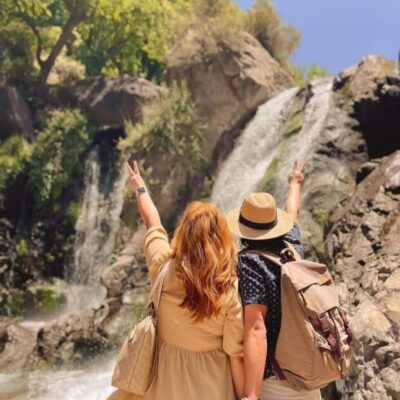
Ourika Waterfalls, Atlas Mountains, Guide + Lunch
Read our review →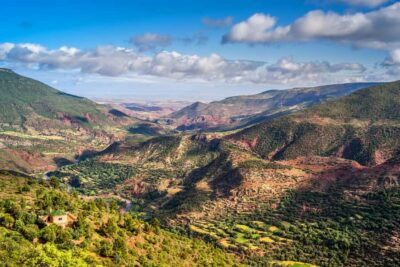
Atlas Mountains & Agafay Desert Tour w Camel Ride
Read our review →
Atlas Mountains, Waterfalls, Ourika Valley +Lunch
Read our review →
Atlas Mountains & 5 Valleys Tour from Marrakech – All inclusive –
Read our review →Browse the lists this tour appears in