Reviewed · MARRAKECH TOURS
Marrakech: Make Your Own Moroccan Zellige Mosaic Masterpiece
Small tiles, big payoff. This two-hour zellige workshop gives you a hands-on way to understand one of Morocco’s most recognizable crafts while making a personal mosaic in a studio near the Medina. You learn the background, choose colors and patterns, assemble the pieces, and leave with your own artwork.
I like the patient instruction, especially from guides such as Salma, Laila, and Leila, and I like that the $42 price includes materials, tea, pastries, and a finished keepsake. The main consideration is that the tiles are precut, and some people may find the choice of colors and patterns more limited than expected.
In This Review
- Key points at a glance
- Why zellige makes such a good Marrakech activity
- Arriving at the studio near the Medina
- The opening lesson: history, shapes, and design
- Choosing your pattern and colors
- Assembling your handmade tile
- Tea, pastries, and a pause from the souk
- Finishing the piece and taking it home
- What the $42 price really buys you
- The drawbacks to consider before booking
- Who will enjoy this workshop most
- Should you book the zellige workshop?
- FAQ
- How long does the zellige workshop last?
- How much does the experience cost?
- What is included in the price?
- Is transportation included?
- Which languages are available?
- Do I need previous mosaic experience?
- What should I bring?
- Can children join the workshop?
- Can I cancel my booking?
Key points at a glance
- A real handmade souvenir: You create one personalized zellige tile and take it home.
- Two hours well spent: The class fits neatly into a Medina sightseeing day, including a rainy afternoon.
- Patient English-speaking instruction: Arabic, French, and English are available, with Salma, Laila, and Leila praised for clear, friendly help.
- A relaxed studio setting: The workshop takes place in a spacious, well-ventilated studio near a souk side street.
- Tea and Moroccan pastries included: A short refreshment break adds a pleasant local touch.
- Best for creative visitors: Beginners, couples, families with older children, and anyone interested in Moroccan architecture should find plenty to enjoy.
Why zellige makes such a good Marrakech activity
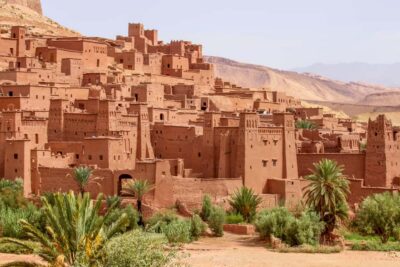
Marrakech is full of color, pattern, carved plaster, painted wood, and tiled courtyards. It is easy to admire these details as you walk through palaces and souks, but harder to understand how they are put together. This class gives you a small, practical lesson in that process.
Zellige is a traditional Moroccan mosaic technique built from carefully arranged tile pieces. The appeal is not only the finished pattern. It is the balance of shape, color, spacing, and repetition. A design can look simple from a distance, yet the placement of each small piece matters.
You will not be making a large architectural panel in two hours. Instead, you create a smaller tile using prepared materials and time-honored assembly methods. That makes the activity realistic for a first attempt, while still giving you a genuine sense of the craft.
I especially like this format for people who have already visited the Bahia Palace or other historic buildings. After seeing Moroccan tilework in place, you can look at your own piece with a better eye. One family even found it fun to imagine their daughters’ designs in a palace setting.
A few more Marrakech trips worth weighing up
- Marrakech: Agafay Desert Sunset, Camel Ride, and Dinner Show
★ 4.6 · 35,119 reviews - From Marrakech: Ouzoud Waterfalls Guided Hike and Boat Trip
★ 4.7 · 33,630 reviews - Marrakech: Agafay Desert Quad & Camel Rides with Dinner Show
★ 4.8 · 27,382 reviews
Arriving at the studio near the Medina
The workshop is held in a rustic, Moroccan-style studio off a side street of a souk in the Medina Old Town. The setting is part of the experience. You are not simply sitting in a modern classroom with a few decorative tiles on the wall. You are working in a traditional-feeling environment that suits the subject.
The studio is described as spacious, well ventilated, and air-conditioned. That matters in Marrakech, where a creative activity can become tiring if you are working in a cramped or overheated room. The air conditioning is also useful during hot weather, while the indoor setting makes this a strong backup for a rainy afternoon.
Plan to arrive 15 minutes early. You will have time to settle in, get comfortable, and understand the workspace before the hands-on portion begins. Transportation is not included, so you need to make your own way to the studio. Smoking is not allowed.
Wear clothing that is comfortable for craft work. You do not need special equipment, but bring water and a camera if you want to record the finished piece or the work in progress.
The opening lesson: history, shapes, and design
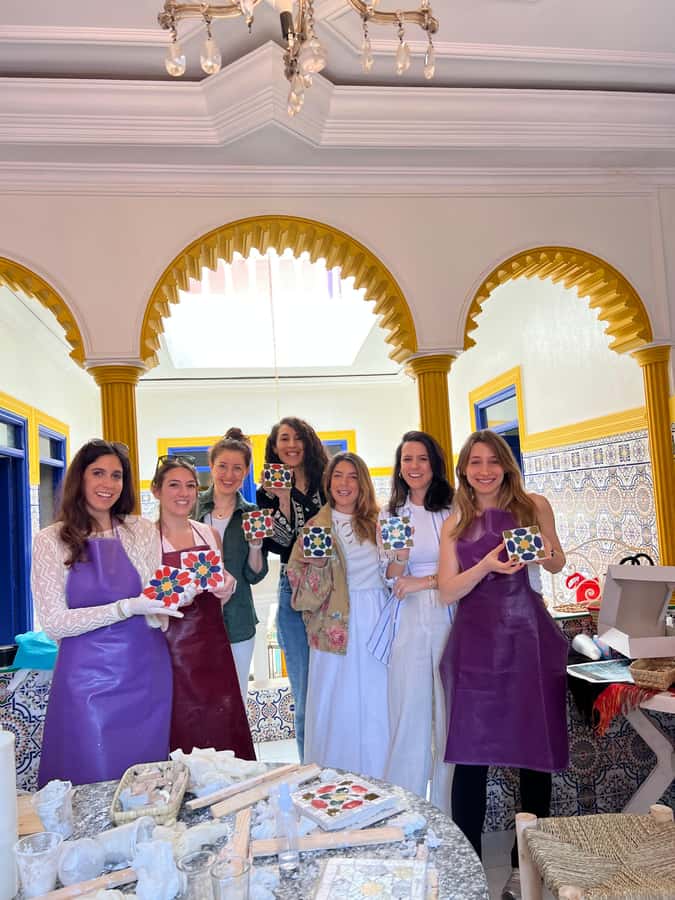
The class begins with an introduction to zellige, including its place in Moroccan craftsmanship and architecture. The instructor explains the techniques and design principles before you start arranging your own pieces.
This short explanation is useful because it changes the way you see Moroccan decoration. The patterns are not random collections of pretty tiles. They depend on geometry, repeated forms, and careful placement. Once the instructor explains how the pieces fit, the designs become easier to read.
The quality of this part depends on your instructor, and the teaching has been a major strength of the experience. Salma is praised for explaining the tile-making process clearly in English, while Laila, Leila, and other instructors are described as kind, positive, patient, and encouraging. That is good news for beginners who may feel slightly lost when the first pattern starts taking shape.
The workshop is designed for all skill levels. You do not need previous experience with mosaics, drawing, or Moroccan crafts. If you are already artistic, you may enjoy the chance to refine your pattern choices, but the atmosphere is meant to support novices as well.
Choosing your pattern and colors
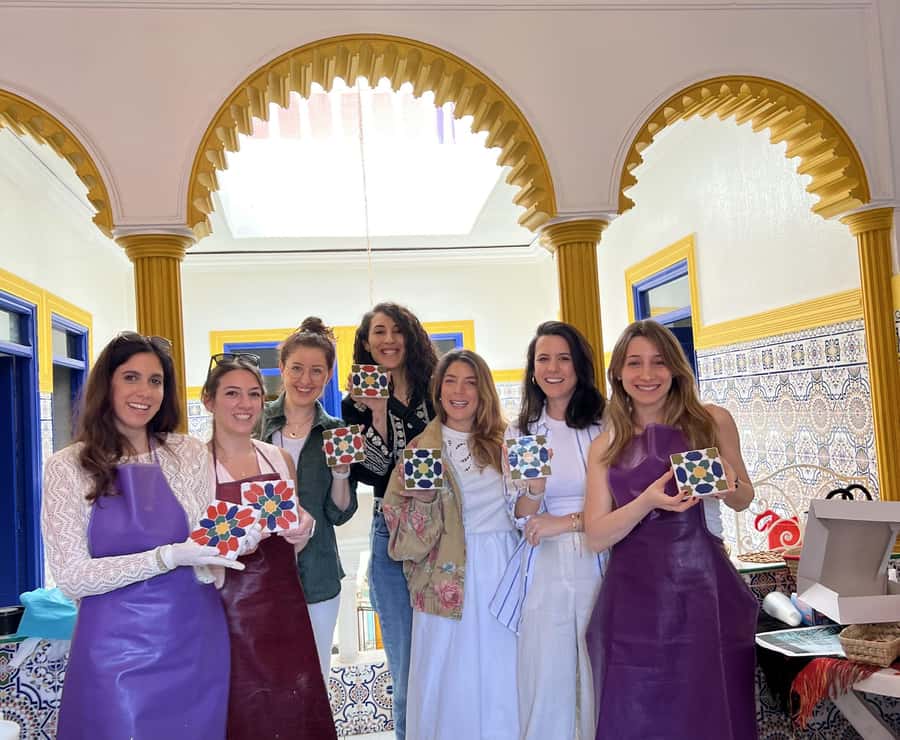
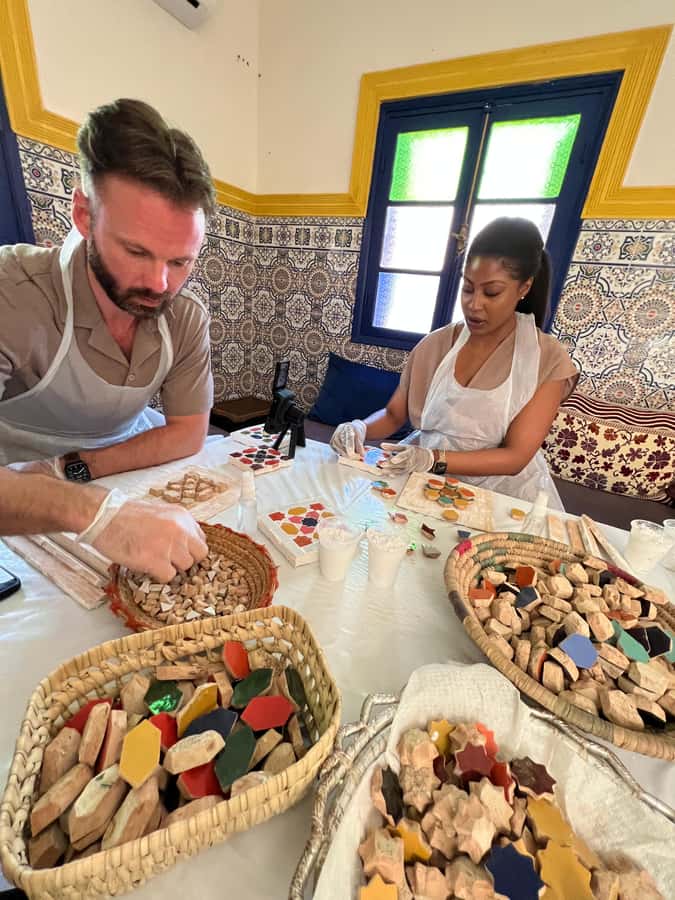
Once the introduction is complete, you select from prepared tiles, examples, and proposed patterns. The pieces are precut, which keeps the activity within its two-hour limit and allows you to focus on design and assembly rather than the more demanding process of shaping raw tile.
That is both a strength and a limitation. You can produce something attractive without needing specialist tools, but this is not a full lesson in cutting every zellige piece by hand. If you want to learn the entire production process from raw material to finished mosaic, you may find the workshop fairly introductory.
Color choice is part of the fun. You can select colors and arrange them into a personalized design. Examples are available to guide you, which helps if you are not sure where to begin. I recommend looking at the examples first, then choosing a pattern that seems manageable rather than trying to create the most complicated design in the room.
The range of colors may feel more limited than expected. One practical tip is to ask the instructor for help before committing to your combination. A little advice on contrast and balance could make the finished tile look more polished.
A completely different sort of day out of Marrakech:
- Marrakech: Agafay Desert Quad Biking Tour with Dinner-Show
★ 4.8 · 16,569 reviews - Marrakech: Atlas Mountains, Ourika Valley, Waterfall & Lunch
★ 4.8 · 15,834 reviews - From Marrakech: 3-Day Merzouga and Sahara Desert Tour
★ 4.9 · 15,308 reviews - Berber villages : Atlas Mountains Day Hike from Marrakech
★ 5.0 · 14,007 reviews
Assembling your handmade tile
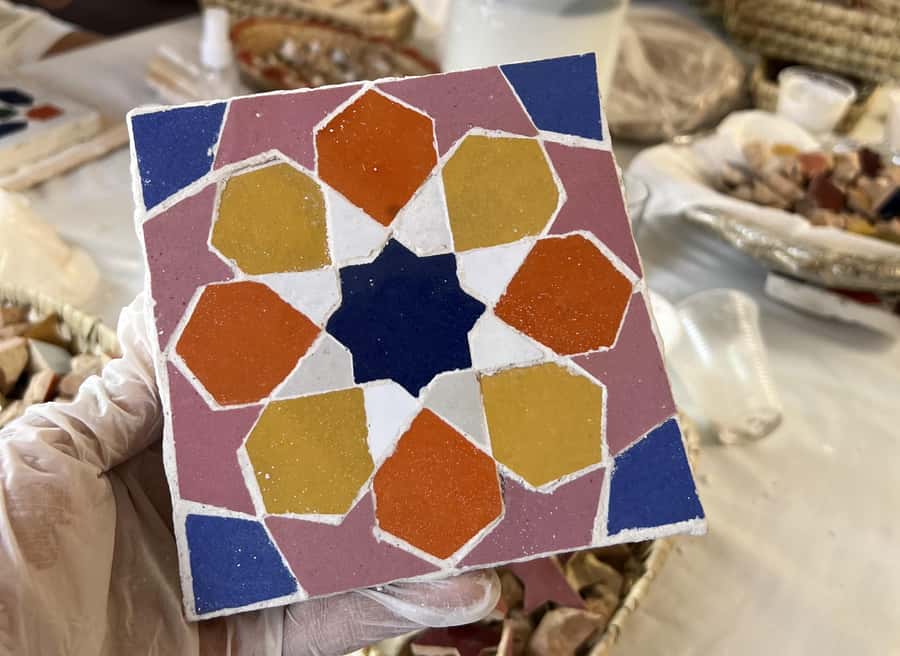
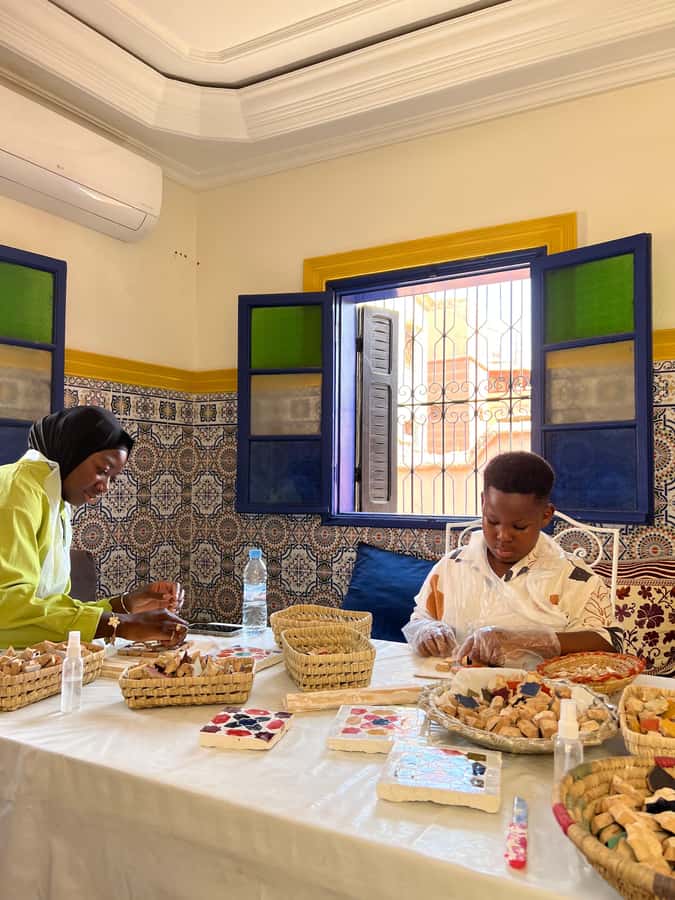
The main activity is arranging the precut pieces according to the selected design. The instructor walks you through the process and helps with the placement of the tiles. You can work at your own pace, but do not hesitate to ask for help. The instructors are there to correct small mistakes before they affect the entire pattern.
This is where the class becomes more than a short craft demonstration. You begin to see why Moroccan mosaic work takes patience. A single misplaced shape can affect the lines around it, and the repeated design only works when the parts fit together properly.
The atmosphere is relaxed rather than competitive. Sessions can be small, with one group described as having six people, though the exact size may vary. A smaller class gives the instructor more time to assist each person. One note of caution is that a larger group may place more pressure on one instructor, although Laila was still attentive during one busy session.
Families can take part, but the activity is not suitable for children under five. Older children and teenagers have enjoyed it, and the hands-on format works well for a family with adult children or daughters aged 14 and 16. Children under 10 have also been able to work creatively beside adults, but very young children may not have the patience or fine motor control required.
Tea, pastries, and a pause from the souk
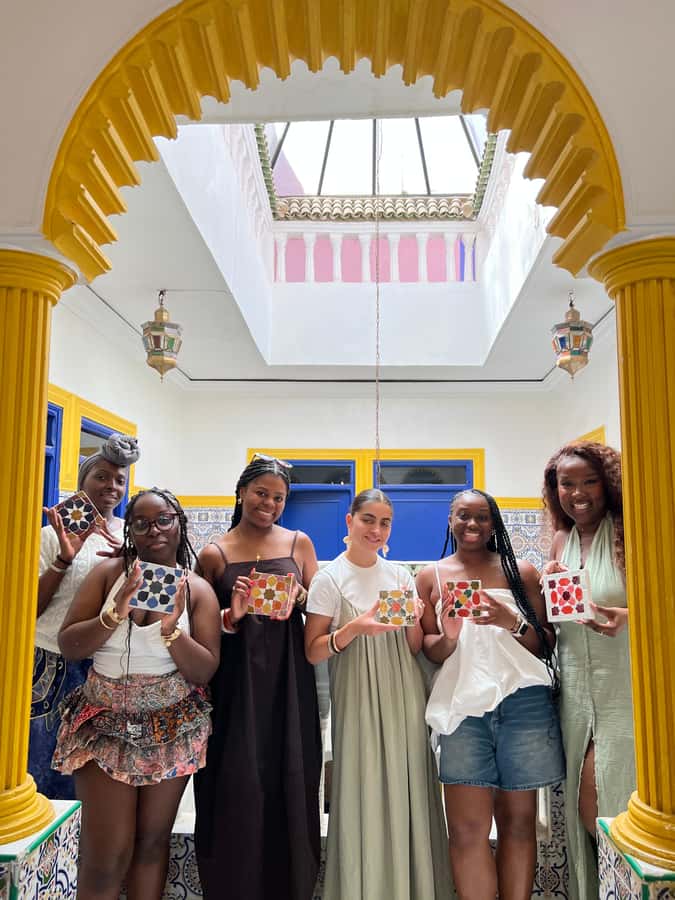
Tea and Moroccan pastries are included, usually providing a welcome break during the session. This is a small detail, but it adds warmth to the workshop and gives you a chance to look at the designs taking shape around the room.
The refreshments also fit the pace of the class. Marrakech sightseeing can involve a lot of walking, noise, and bargaining. Sitting down with tea while working on a quiet pattern gives you a different view of the city’s culture.
Meals are not included, so do not treat this as a substitute for lunch or dinner. The pastries are an added refreshment, not a full meal. Bring water, especially if you are attending in warm weather.
Finishing the piece and taking it home
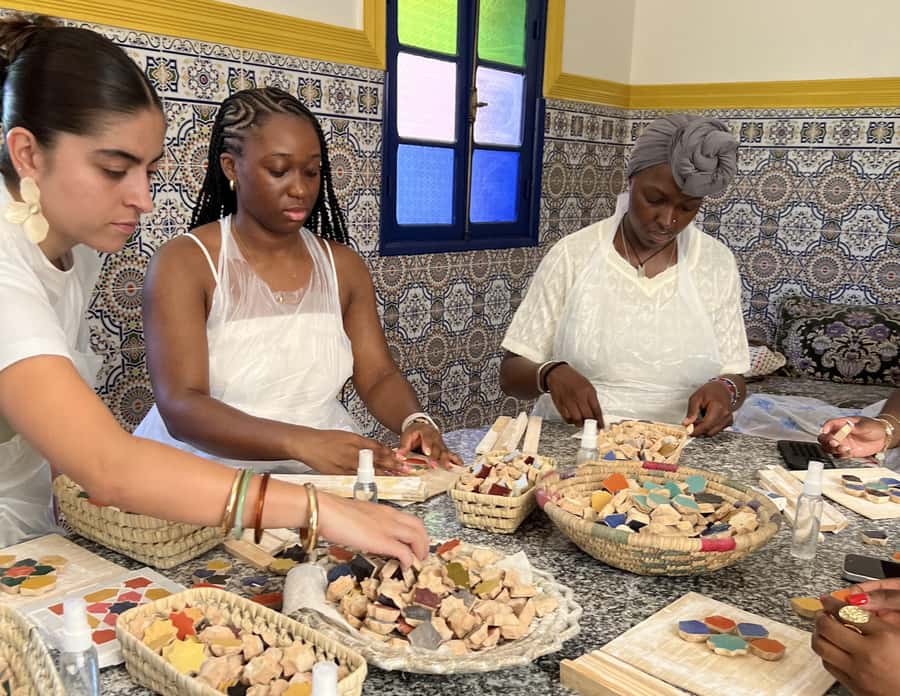
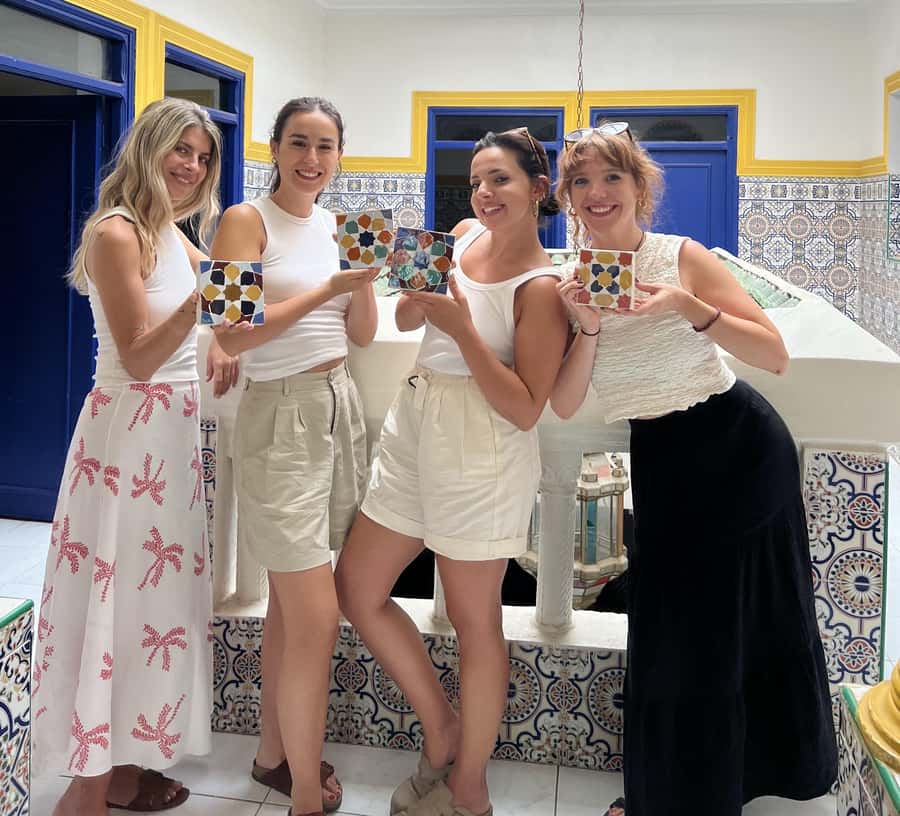
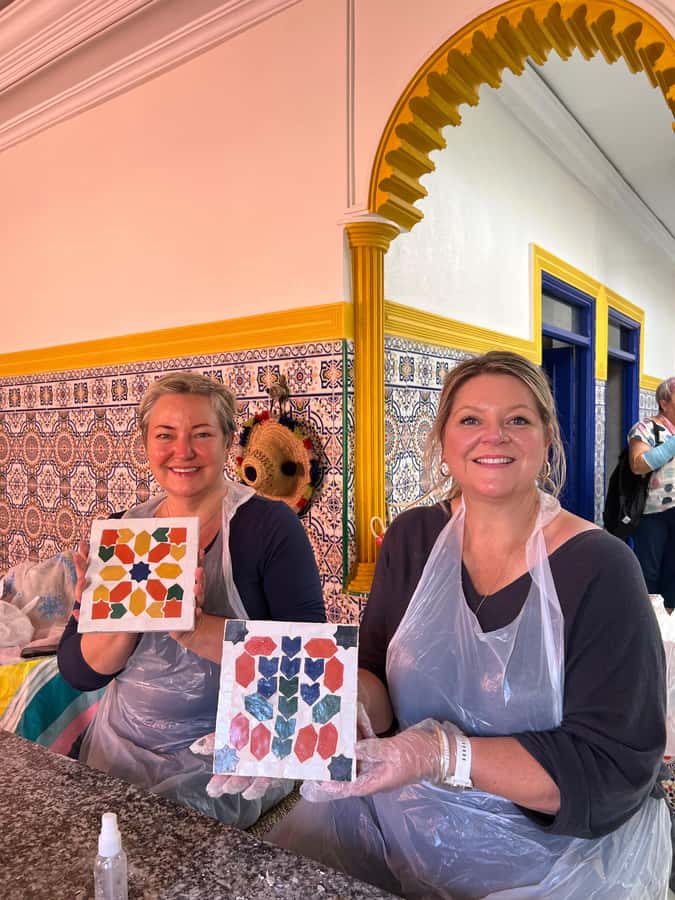
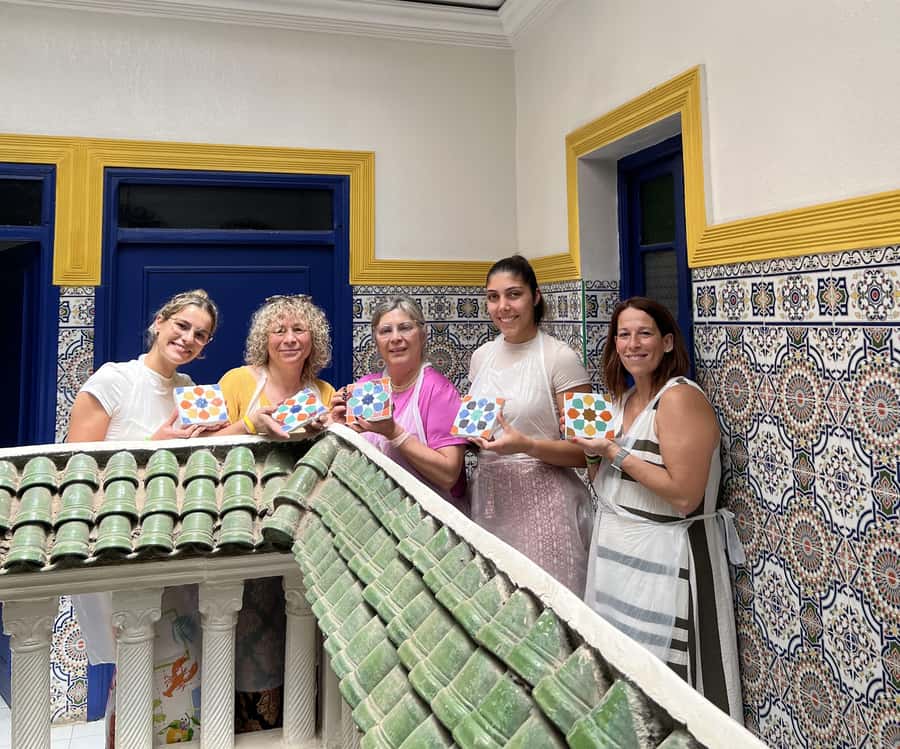
At the end of the class, you have a zellige artwork to take home. The exact appearance will depend on your chosen colors, pattern, and how confidently you assembled the pieces, but the personal element is the point. You are not buying an identical souvenir from a shop. You are creating a small record of your time in Marrakech.
The instructors may add a personal touch. One instructor wrote the participants’ names in Arabic on the back of their mosaics, turning a decorative tile into a more individual memento. This is not listed as a guaranteed part of every session, so consider it a possible extra rather than something to expect.
Think about packing before you arrive. The activity includes a piece of your own artwork, but no details are provided about protective packaging or luggage storage. If you are carrying the tile through Morocco or flying home with it, ask the workshop staff how best to protect it.
What the $42 price really buys you
At $42 per person, this is not the cheapest two-hour activity in Marrakech, but it offers more than a short demonstration. The price includes expert instruction, all workshop materials, tea, pastries, and the finished piece you take home.
The souvenir gives the price much of its value. A shop-bought tile may be larger or more elaborate, but your handmade piece carries a story. You remember choosing the pattern, struggling with the placement, and watching the design come together.
The price also makes sense for couples. You can work side by side, compare color choices, and leave with two different keepsakes. It is a pleasant alternative to another guided walk, especially if you want a slower activity in the middle of a busy sightseeing schedule.
Families should calculate the total cost before booking, particularly if several people want to participate. Still, the activity has worked well for parents and older children because everyone creates something tangible rather than simply watching a demonstration.
The reserve-now-and-pay-later option can help if your Marrakech schedule is still changing. You can also cancel up to 24 hours in advance for a full refund. Keep in mind that transportation and meals are not part of the price.
The drawbacks to consider before booking
The main limitation is the level of craft instruction. Because the tiles are precut and the patterns are partly prepared, you are learning the principles of zellige and the assembly process, not training as a professional tile maker.
You may also find the color selection narrower than you imagined. If you have a very specific design in mind, ask what choices are available at the start. The instructor can help you make a pleasing combination, but the workshop may not have every shade you would find in a large Moroccan tile collection.
Scheduling may require some flexibility. One person experienced repeated WhatsApp messages asking to rearrange the session, which felt stressful. That does not mean every booking will change, but you should keep an eye on messages after reserving and confirm the final time.
Accessibility is another practical issue. The activity is not suitable for wheelchair users, and children under five cannot take part. The studio is spacious and well ventilated, but that does not make it wheelchair accessible.
Who will enjoy this workshop most
I would choose this activity for:
- Couples wanting a shared creative experience
- Families with school-age children or teenagers
- First-time visitors interested in Moroccan architecture
- People looking for a rainy-day activity
- Anyone who prefers a handmade souvenir to a standard shop purchase
- Creative beginners who appreciate patient guidance
It is less suitable if you want a long technical course, raw-tile cutting, a large finished panel, or a fully independent design without prepared examples. It also may not suit anyone who dislikes fine, careful work or has difficulty sitting and concentrating during a two-hour session.
The workshop uses Arabic, French, and English, so language should be manageable for many international visitors. If you need detailed instruction in a particular language, confirm availability when checking the starting time.
Should you book the zellige workshop?
Yes, if you want a friendly, practical introduction to Moroccan craft with a souvenir that you make yourself. The patient teaching, relaxed studio, tea and pastries, and manageable two-hour length give the experience a strong balance of culture and fun.
I would book it after visiting a palace or tile-filled historic building, when you have seen zellige in its architectural setting. Just arrive early, wear comfortable clothes, bring water, and keep your expectations realistic: this is a guided mosaic-making class using precut pieces, not a full artisan apprenticeship.
At $42, it is a good-value choice for couples, families with older children, and creative people who want something more personal than another photograph from the Medina.
FAQ
How long does the zellige workshop last?
The workshop lasts two hours.
How much does the experience cost?
The price is $42 per person.
What is included in the price?
The price includes expert instruction, all materials, your own zellige artwork to take home, tea, and Moroccan pastries.
Is transportation included?
No. Transportation to and from the workshop is not included.
Which languages are available?
Instruction is available in Arabic, French, and English.
Do I need previous mosaic experience?
No. The workshop is designed for all skill levels, including beginners.
What should I bring?
Bring water and a camera if you would like to photograph the experience or your finished piece. Wear comfortable clothing suitable for crafting.
Can children join the workshop?
Children under five are not allowed to take part. Older children can participate, and the activity has suited families with children and teenagers.
Can I cancel my booking?
Yes. You can cancel up to 24 hours in advance for a full refund. A reserve-now-and-pay-later option is also available.
Just added around Marrakech
- Marrakech: Medina Souks, Hidden Markets and Shopping Tour★ 4.8 · 33 reviews
- Guided walking tour in Marrakech★ 4.5 · 33 reviews
- Sunset Camel Ride Marrakech with Transfers★ 5.0 · 33 reviews
- Agafay desert sunset camel ride Tour from Marrakech★ 5.0 · 33 reviews
- 2 Days Desert Agafay and Atlas Mountains Trek From Marrakech★ 3.8 · 33 reviews
- Atlas mountains, Ourika valley, berber villages trip & Guide★ 5.0 · 33 reviews
- Magical Dinner show and Quad bike In Agafay Desert Marrakech★ 4.5 · 33 reviews
- Camel Ride at the Palm Groves in Marrakech★ 5.0 · 33 reviews
Marrakech Tours, compared.
Agafay Desert Sunset, Camel Ride, and Dinner Show
Read our review →
Agafay Desert Quad & Camel Rides with Dinner Show
Read our review →
Agafay Desert Quad Biking Tour with Dinner-Show
Read our review →
Atlas Mountains, Ourika Valley, Waterfall & Lunch
Read our review →

Berber villages : Atlas Mountains Day Hike from Marrakech
Read our review →