Reviewed · TOURS
Marrakech: Cultural Bicycle Tour with Pastry and Tea
Marrakech reveals itself on two wheels. This three-hour cultural bicycle tour takes you beyond the usual souk circuit, from a clay-oven bakery and zellige workshop to hammam traditions, palace gardens, and the wide streets of modern Gueliz. I like the direct look at daily Moroccan life, and I like that Pikala Bikes trains Moroccan youth as local guides. The main consideration is traffic: you need to be a confident cyclist, especially during the first hour through narrow lanes shared with mopeds, donkeys, carts, and pedestrians.
The tour costs $34 per person, including water, fruit, Moroccan pastries, juice, tea, sunscreen, and entry to the local stops. That is a fair price for a small-group cultural outing with several visits built in, though the cycling is not a gentle park ride. Guides such as Ayoub, Rabab, Hamid, Sayid, Yasmin, Kenza, and Yassir have earned warm praise for their care, humor, and clear explanations.
In This Review
- Key points to know before you book
- Starting at Pikala Bikes in the old city
- The medina ride and Zawiya of Sidi Bel Abbas
- The community bakery and the importance of bread
- Zellige tiles and Marrakech craftsmanship
- Place des Ferblantiers and the Royal Palace area
- The hammam as a social institution
- Mysteries along the route, then the Koutoubia Mosque
- Church of the Holy Martyrs and a change of pace
- Gueliz and Hivernage: modern Marrakech on two wheels
- Finishing with tea and Moroccan pastries
- Is $34 good value?
- Who should book this ride?
- Final verdict: book it for local context and a little adventure
- FAQ
- Where does the bicycle tour begin?
- How long does the tour last?
- What languages are available?
- Does the tour include hotel pickup?
- What refreshments are included?
- Will I enter the Royal Palace?
- Does the tour include a hammam treatment?
- Is the Koutoubia Mosque an interior visit?
- What should I wear?
- Do I need to be an experienced cyclist?
- Can I cancel for a full refund?
- Can I reserve without paying immediately?
Key points to know before you book
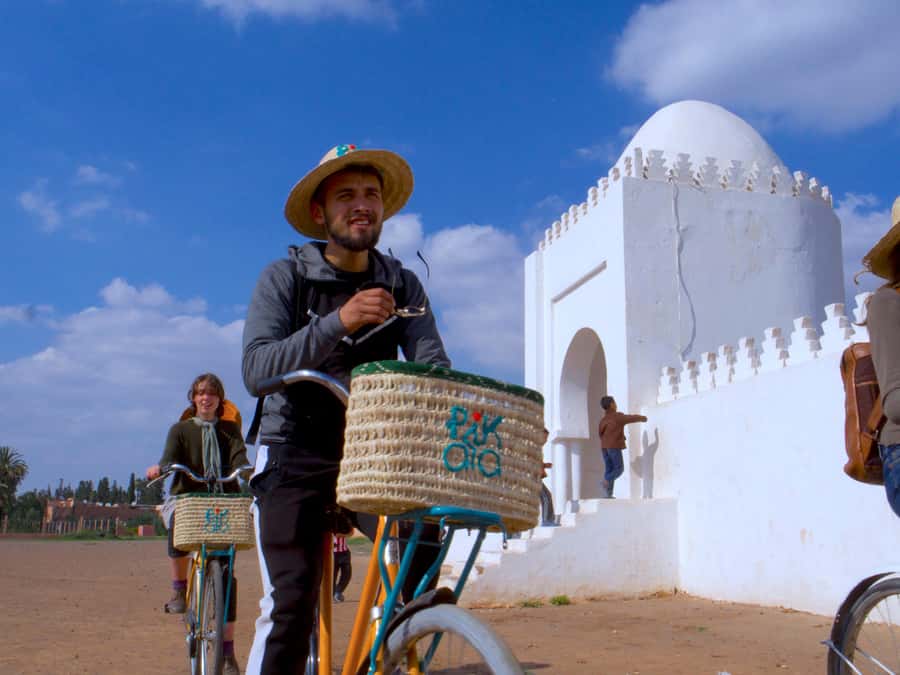
- Traffic is part of the experience: You will pedal through tight medina lanes where mopeds, donkeys, carts, bicycles, and pedestrians all share limited space.
- The bakery visit explains Moroccan life: You see bread baked in a clay oven and taste it fresh, while learning why bread matters in nearly every household.
- Pikala’s youth program adds value: The organization trains Moroccan young people to guide visitors and support local businesses and social causes.
- The route contrasts old and new Marrakech: The medina, Royal Palace area, Gueliz, and Hivernage each show a different side of the city.
- The bikes are sturdy but not featherlight: Several riders found the saddles comfortable, though some felt the bicycles were a little heavy to handle.
- This suits confident riders: The route is generally flat and not fast, but road awareness matters more than athletic fitness.
Starting at Pikala Bikes in the old city
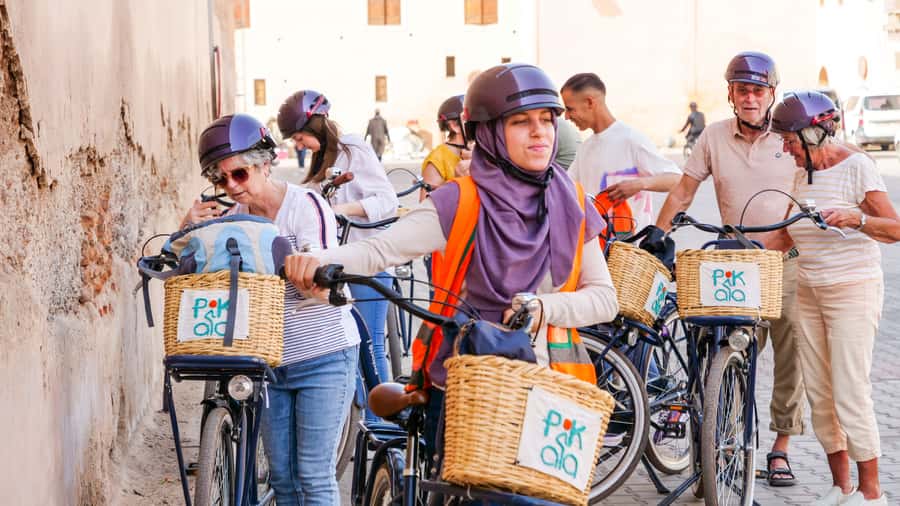
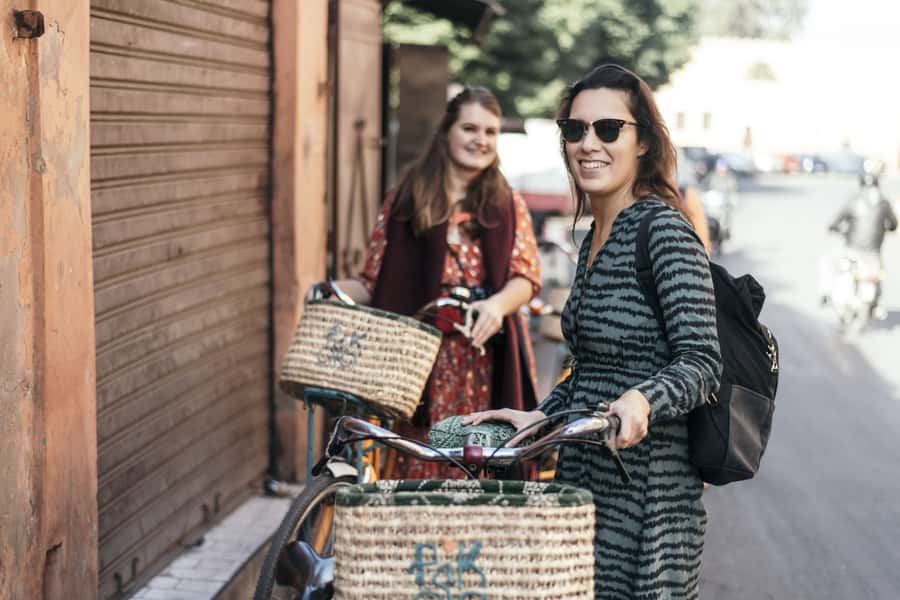
The tour begins at Pikala Bikes headquarters, where you meet your English or French-speaking guide and get set up on a bicycle. Pikala is more than a rental shop. Its work training Moroccan youth gives the tour a useful local purpose, and that comes through in the energy of the young guides.
The ride is designed around conversation, not speed. You stop often, hear short explanations, take photos, and get time to look around. Some groups have been small, including one private outing when only one person booked, while a family group of five and another group of six also had a good experience.
The guides are one of the strongest parts of the outing. Hamid has been praised for watching the group closely on the roads. Rabab is known for patience and warmth. Sayid took care to keep crossings together, while guides such as Kenza, Yassir, Khalil, Yasmin, and Ayoub brought humor and personal knowledge of the city. The names can change from day to day, but the pattern is clear: Pikala puts a lot of care into guiding.
A few more Marrakech trips worth weighing up
- Marrakech: Agafay Desert Sunset, Camel Ride, and Dinner Show
★ 4.6 · 35,119 reviews - From Marrakech: Ouzoud Waterfalls Guided Hike and Boat Trip
★ 4.7 · 33,630 reviews - Marrakech: Agafay Desert Quad & Camel Rides with Dinner Show
★ 4.8 · 27,382 reviews
The medina ride and Zawiya of Sidi Bel Abbas
The first section takes you into the old medina. This is where the ride demands the most attention. The lanes can be narrow, and you may need to steer around people on foot, mopeds, donkeys with carts, and other bicycles.
Marrakech traffic can look impossible at first. It follows a flexible local rhythm rather than the tidy system many visitors know at home. You are not racing through it, and the guide helps the group cross and regroup, but you still need to remain alert and comfortable on a bicycle.
The reward is access. A bicycle can slip through lanes that feel awkward to cover in a car, and it gives you a closer view of ordinary movement in the old city. You are not simply passing famous façades. You are seeing how shops, workshops, homes, religious sites, and transport fit together in a compact walled town.
The first substantial stop is the Zawiya of Sidi Bel Abbas. You have about 15 minutes for a photo stop, a visit, and sightseeing. The guide explains the place and its role in local religious life. This is a useful early stop because it introduces the spiritual side of Marrakech before the route moves into craft and food traditions.
The community bakery and the importance of bread
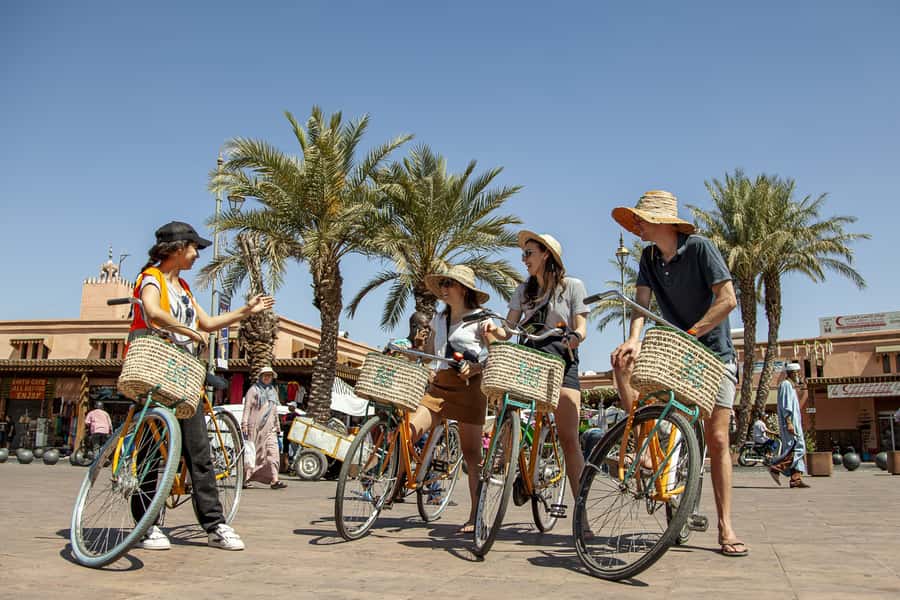
The visit to a traditional bakery is one of the tour’s most memorable stops. You step inside a local bakery, watch bread being baked in a clay oven, and taste it fresh.
This is not just a food sample. Bread is part of the daily structure of Moroccan life, and community ovens have long served neighborhoods where residents bring dough to be baked. Seeing the oven at work helps you understand a basic household routine that can be easy to miss when your time is spent in restaurants and cafés.
The scheduled visit lasts around 10 minutes, so it is a quick look rather than a cooking class. Still, it is the kind of stop that gives the tour its purpose. You see a working place, smell the bread, and learn about a staple instead of hearing only dates and architectural facts.
Bring an appetite for the final café stop, too. The tour includes Moroccan pastries, juice, tea, and local snacks, and some groups have received spiced cookies and mint lemonade along the way.
Zellige tiles and Marrakech craftsmanship
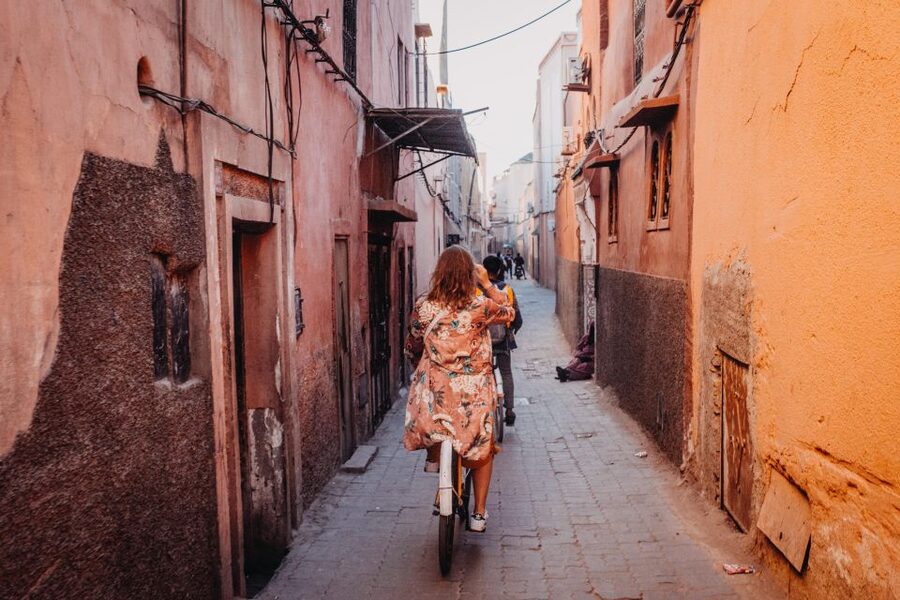
At a Moroccan tile workshop, you meet artisans and see how zellige tiles are made. These small, hand-cut geometric tiles are closely linked with Moroccan architecture and have decorated palaces, mosques, fountains, courtyards, and private homes for centuries.
The value of this stop is in watching the work rather than simply admiring a finished wall. Zellige requires precision, repetition, and a good eye for pattern. The workshop gives you a better sense of the labor behind the colored mosaics you will see throughout Morocco.
The itinerary includes several short pass-by and sightseeing sections after the bakery and workshop. Their exact character can vary, but the point is to connect the major stops with less obvious parts of the city. Your guide may pause at a small architectural detail, a local business, or a lane you would be unlikely to find without help.
A completely different sort of day out of Marrakech:
- Marrakech: Agafay Desert Quad Biking Tour with Dinner-Show
★ 4.8 · 16,569 reviews - Marrakech: Atlas Mountains, Ourika Valley, Waterfall & Lunch
★ 4.8 · 15,834 reviews - From Marrakech: 3-Day Merzouga and Sahara Desert Tour
★ 4.9 · 15,308 reviews - Berber villages : Atlas Mountains Day Hike from Marrakech
★ 5.0 · 14,007 reviews
Place des Ferblantiers and the Royal Palace area
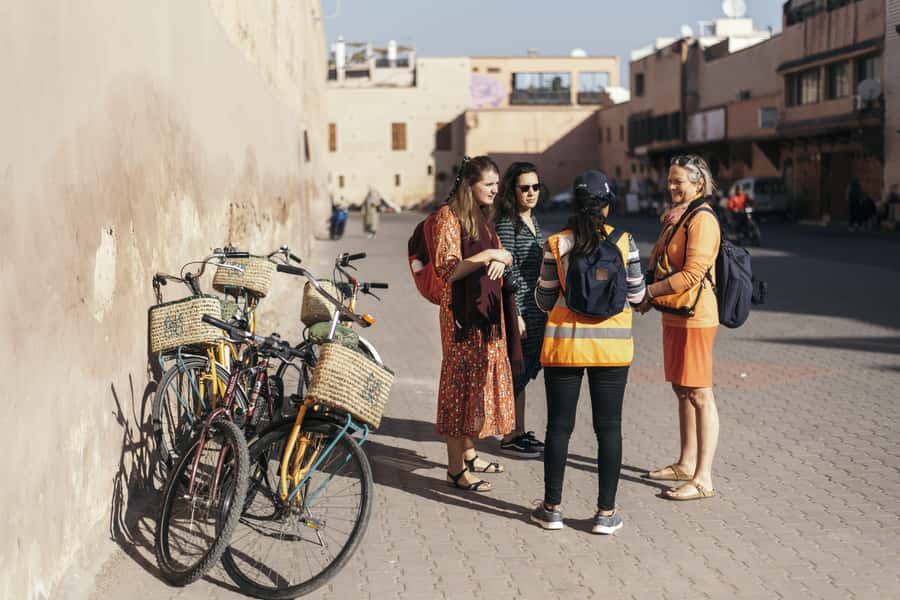
Place des Ferblantiers provides a longer break of about 20 minutes. You have time for photos, free time, and views along the way. The square is associated with metalworkers and lies near the southern part of the medina, making it a practical place to pause before continuing.
The route then passes near the Royal Palace, Dar El-Makhzen. You view the palace from public gardens rather than entering the royal grounds. That distinction matters: this is an exterior look and a chance to hear about the Moroccan monarchy and the palace’s place in national history, not a palace tour.
This part of the route works best as context. Marrakech is not only a city of market lanes and decorative riads. Royal power, religious institutions, craft trades, and ordinary neighborhood life have all occupied the same city for centuries. A bicycle helps you see how close these layers can be.
The hammam as a social institution
The traditional hammam stop explains an important Moroccan custom. You learn about the public bathhouse, its rituals, and its social role in everyday life.
The experience is cultural rather than a spa treatment. The information provided does not promise a bathing session, massage, or private hammam service, so you should expect an explanation and visit rather than a full wellness appointment.
That makes the stop valuable for first-time visitors. A hammam is not simply a place to wash. It is part of neighborhood life and a setting tied to routines, cleanliness, and social connection. This is the sort of subject that a local guide can explain in a more grounded way than a quick paragraph in a guidebook.
Mysteries along the route, then the Koutoubia Mosque
Several points on the itinerary are described simply as less obvious sights or short pass-by locations. The route includes two 10-minute sightseeing sections and another photo stop, followed by a 15-minute break around مشور البراني, also known as Mechouar El Barani.
Because these stops are not fully spelled out in advance, the route retains a little surprise. You can expect your guide to point out places connected with local life, architecture, or the history of the medina. The trade-off is that you may not know the full list of sights before setting out.
The Koutoubia Mosque appears as a 10-minute pass-by and sightseeing stop. Its minaret is one of Marrakech’s best-known landmarks, and seeing it within a bicycle route gives you a useful sense of orientation. The guide can also provide background on Muslim beliefs and practices, as one group experienced near a mosque stop.
Non-Muslim visitors should remember that the Koutoubia Mosque itself is not presented as an interior visit. You see it from outside and learn about its significance.
Church of the Holy Martyrs and a change of pace
The route also passes the Church of the Holy Martyrs, with about 10 minutes for a photo stop and sightseeing. This adds another layer to the city’s story and shows that Marrakech’s religious and cultural picture is not limited to one tradition.
The church stop is brief, but that is typical of this outing. You are sampling a range of places rather than spending an hour at one monument. If you prefer long museum visits or extended time inside major sights, a dedicated walking tour may suit you better.
The bicycle format keeps the day moving. You get to see how the old city connects with its surrounding districts, rather than treating the medina as an isolated attraction.
Gueliz and Hivernage: modern Marrakech on two wheels
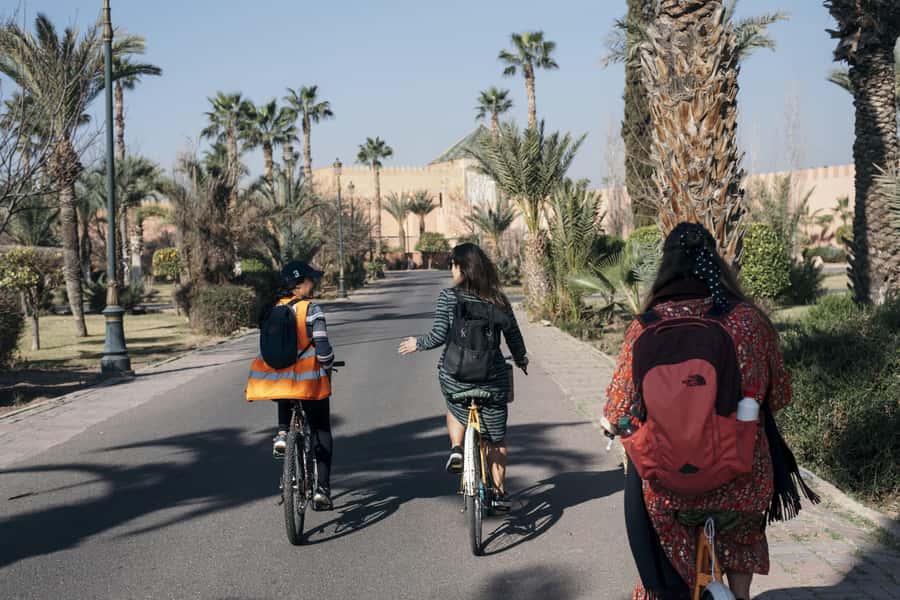
After the tighter lanes of the old city, the route heads through modern Marrakech, including Gueliz and Hivernage. Here you find wide boulevards, cafés, luxury hotels, and a more open city layout.
The contrast is the point. Gueliz shows the modern side of Marrakech, while Hivernage is associated with hotels and leisure. After threading through souks and alleys, the wider streets can feel easier, although the change in traffic may initially seem intimidating.
One rider described the first part of the new town as nerve-wracking but soon felt safe. Another noted that the roads were quieter on a 9:30 a.m. departure. Starting time can affect how relaxed the ride feels, so check the available departures and consider choosing an earlier option if you are concerned about traffic.
The route is mostly flat and not fast. You do not need to be a racing cyclist, but you do need to control the bicycle, watch around you, and stay with the group. Long dresses and skirts can make riding awkward, so casual clothing is the sensible choice.
Finishing with tea and Moroccan pastries
The ride returns to Pikala Bikes, followed by a short walk to Pikala Cafe. You have about 20 minutes for coffee, tea, and local snacks.
This ending gives everyone time to cool down and talk through what they have seen. The included refreshments are Moroccan pastries and juice, with water and fruit also provided during the outing. Mint tea and spiced cookies have been especially welcome after the road sections.
The café is part of Pikala’s wider work, so spending time there supports the same local project behind the cycling program. You can also buy additional food or drinks, but those extras are not included in the tour price.
Is $34 good value?
At $34, this is good value if you want a cultural overview with real local stops rather than a basic city ride. The price covers three hours, a guide, bicycle use, water, fruit, sunscreen, refreshments, and entrance to the included stops.
The strongest value is the range. In one morning or afternoon, you cover the medina, a bakery, a tile workshop, a hammam, a palace viewpoint, major religious landmarks, and modern Marrakech. Booking separate visits to all those places would take more planning and would not necessarily give you the same connections between them.
The limitations are just as clear. This is not a luxury cycling excursion, a private chauffeur tour, or a slow architectural walk. Some stops are short, and the traffic can be stressful. You are paying for access, local interpretation, and a lively ride through the city, not for polished roads or a quiet route.
Free cancellation up to 24 hours before the tour and reserve-now, pay-later booking make it easier to fit into a changing schedule. Hotel pickup and drop-off are not included, so you need to reach Pikala Bikes headquarters yourself.
Who should book this ride?
I would choose this tour if you want to understand how Marrakech functions beyond the main square and souks. It suits adults, families with confident older riders, and anyone who likes food, craft, religion, architecture, and daily life mixed into one outing.
It can also be a strong first activity in Marrakech. You get a broad sense of the city and learn how the old and new districts connect. Several people found it a highlight of their trip, while one family used it as an ideal start to a Morocco holiday.
I would think twice if you are nervous on a bicycle, uncomfortable near traffic, or hoping for a fully relaxed ride. One 72-year-old participant managed well on a tandem, but that option should be confirmed with Pikala before booking because it is not listed as a standard inclusion.
Final verdict: book it for local context and a little adventure
You should book the Marrakech Cultural Bicycle Tour if you want more than postcard sights. The bakery, zellige workshop, hammam explanation, palace gardens, and modern districts give you a practical look at Moroccan life, and Pikala’s youth-training program adds a worthwhile social purpose.
Go in prepared for traffic, narrow lanes, and bicycles that may feel heavier than expected. Wear comfortable clothes, avoid long skirts, listen closely to your guide, and stay alert during the medina section. If that sounds fun rather than frightening, $34 buys a memorable and unusually personal introduction to Marrakesh.
FAQ
Where does the bicycle tour begin?
It begins at Pikala Bikes headquarters in Marrakech.
How long does the tour last?
The tour lasts three hours, though one customer described a similar outing as taking about three and a half hours.
What languages are available?
Live guiding is available in English and French.
Does the tour include hotel pickup?
No. Hotel pickup and drop-off are not included.
What refreshments are included?
The tour includes water, fruit, juice, Moroccan pastries, tea, and local snacks at a cultural café. Sunscreen is also included.
Will I enter the Royal Palace?
No. You admire Dar El-Makhzen from public gardens outside the palace and learn about its importance.
Does the tour include a hammam treatment?
The tour includes a visit focused on hammam rituals, traditions, and social importance. A bathing treatment is not listed as an inclusion.
Is the Koutoubia Mosque an interior visit?
No. The itinerary describes sightseeing and passing by the Koutoubia Mosque.
What should I wear?
Wear casual, comfortable clothing. Long dresses and skirts can be awkward on a bicycle.
Do I need to be an experienced cyclist?
You should be a confident cyclist who can stay alert around mopeds, donkeys, carts, pedestrians, and other vehicles. The route is not fast and is generally flat, but the traffic requires care.
Can I cancel for a full refund?
Yes. You can cancel up to 24 hours in advance for a full refund.
Can I reserve without paying immediately?
Yes. The reserve-now, pay-later option lets you book while keeping your travel plans flexible.
Just added around Marrakech
- Marrakech: Medina Souks, Hidden Markets and Shopping Tour★ 4.8 · 33 reviews
- Agafay desert sunset camel ride Tour from Marrakech★ 5.0 · 33 reviews
- Guided walking tour in Marrakech★ 4.5 · 33 reviews
- Sunset Camel Ride Marrakech with Transfers★ 5.0 · 33 reviews
- 2 Days Desert Agafay and Atlas Mountains Trek From Marrakech★ 3.8 · 33 reviews
- Atlas mountains, Ourika valley, berber villages trip & Guide★ 5.0 · 33 reviews
- Magical Dinner show and Quad bike In Agafay Desert Marrakech★ 4.5 · 33 reviews
- Marrakech: Ouzoud Waterfalls Trip, Guide & Boat + Lunch★ 4.7 · 33 reviews
Tours, compared.

Agafay Desert Quad Biking Tour with Dinner-Show
Read our review →

Quad Bike Tour to Palm Oasis and Jbilat Desert
Read our review →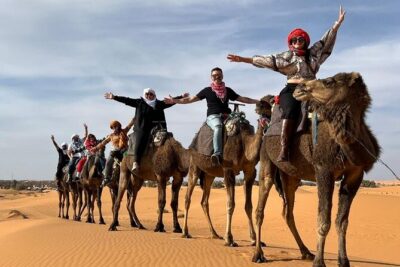
3 Days Desert Tour From Marrakech To Merzouga Dunes & Camel Trek
Read our review →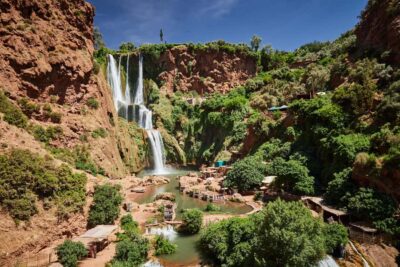
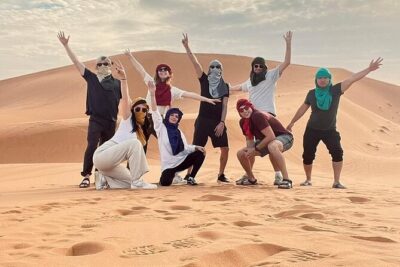
3-Day Marrakech to Merzouga Desert Tour: Camel Rides & Overnights
Read our review →
Desert & Mountain Tour with Camel Ride & Lunch
Read our review →