Reviewed · GUIDED
Marrakech: Bicycle Tour with a Local Guide
Marrakech makes more sense from a bicycle. This three-hour ride gives you a fast, lively look at both the old and new city, from Gueliz and Hivernage to the Medina’s narrow lanes. I like the way it helps you get your bearings early and reaches places you could not cover as easily on foot. I also like the local touches, including stops near traditional craftsmen, bread makers, mosaic workers, and spice sellers.
The main catch is traffic. You may ride beside cars, scooters, horse carriages, buses, donkey carts, and pedestrians, sometimes within a very tight space. The guide provides direction, but you need to stay alert and close to the group. This is not the gentle bicycle ride for someone who dislikes city traffic.
In This Review
- Key points before you book
- Why a bicycle works so well in Marrakech
- Starting at Morocco Toubkal Adventure
- Gueliz and Hivernage: Marrakech beyond the old walls
- Koutoubia Mosque and the gardens behind it
- Along the red walls and into the Kasbah
- Bahia Palace and the Jewish Quarter
- Jemaa el Fnaa and the Medina lanes
- What the guides add to the ride
- Safety, equipment, and the real level of difficulty
- Who will enjoy this Marrakech bike tour?
- Booking advice and final verdict
- FAQ
- How long does the Marrakech bicycle tour last?
- What is included in the price?
- Are entrance fees included?
- Where does the tour meet?
- Which areas does the route visit?
- What languages are available?
- Do the bicycles have baskets?
- Is the tour suitable for children?
- What time does the winter morning tour start?
Key points before you book
- Three hours covers both sides of Marrakech: You see newer districts, red city walls, the Medina, major monuments, and local streets in one morning.
- The Medina ride is the most memorable part: Small lanes offer a close look at everyday city life, but they can be stressful at intersections.
- Guides make the difference: Ziad, Salma, Tarik, Miriam, Hanan, Abdou, and others receive repeated praise for humor, care, local advice, and clear instructions.
- You get useful orientation, not just sightseeing: The route helps you recognize the city later, making independent exploring easier.
- Safety deserves your attention: Bikes are supplied, but helmets and colored guide vests were not always offered, so ask about safety equipment before setting off.
- Bring your own small backpack and water: The bicycles do not have baskets, and beverages are not included.
Why a bicycle works so well in Marrakech
Marrakech can feel confusing at street level. The Medina is a maze of lanes, the old walls create a large ring around the city, and the newer districts spread out beyond the traditional center. Walking gives you detail, but it can take a long time to connect one area with the next.
A bicycle gives you a useful middle ground. You move faster than a walking tour, yet you remain close enough to notice doorways, workshops, gardens, street stalls, and neighborhood life. In three hours, you cover enough ground to understand how the city fits together.
I would book this near the start of your stay. Several people used it as their first activity and found that later walks felt easier because the streets and districts were no longer completely unfamiliar. The guide can also offer practical suggestions about food, money changing, local shops, and places worth returning to.
The tour costs $34 per person. That is a fair price for three hours with a bicycle and a live guide, especially when you consider the amount of ground covered. It becomes better value if you want an introduction to Marrakech rather than a detailed visit inside its monuments. Entrance fees and drinks cost extra, and the tour is about seeing the city from outside, not replacing museum visits.
A few more Marrakech trips worth weighing up
- Marrakech: Agafay Desert Sunset, Camel Ride, and Dinner Show
★ 4.6 · 35,119 reviews - From Marrakech: Ouzoud Waterfalls Guided Hike and Boat Trip
★ 4.7 · 33,630 reviews - Marrakech: Agafay Desert Quad & Camel Rides with Dinner Show
★ 4.8 · 27,382 reviews
Starting at Morocco Toubkal Adventure
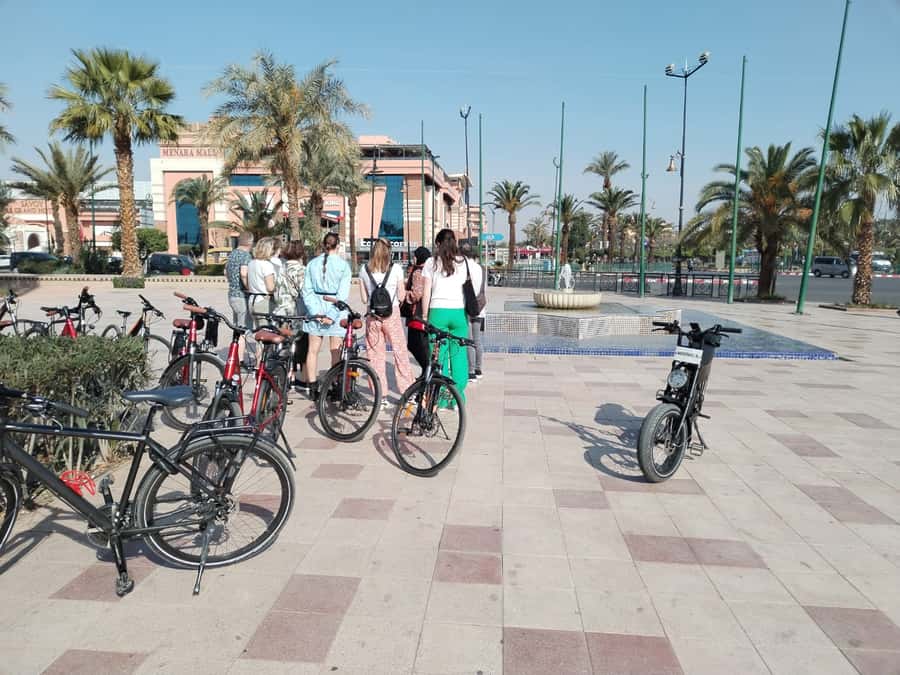
You meet the guide at the Morocco Toubkal Adventure shop. The listed meeting address is 22 Rue Oum Errabia, with the shop also identified as Toubkal Adventure and Biking in Marrakech. The activity can use two nearby starting or finishing points, including Atlas Sport Bike Shop, so check the confirmed meeting message carefully before leaving your accommodation.
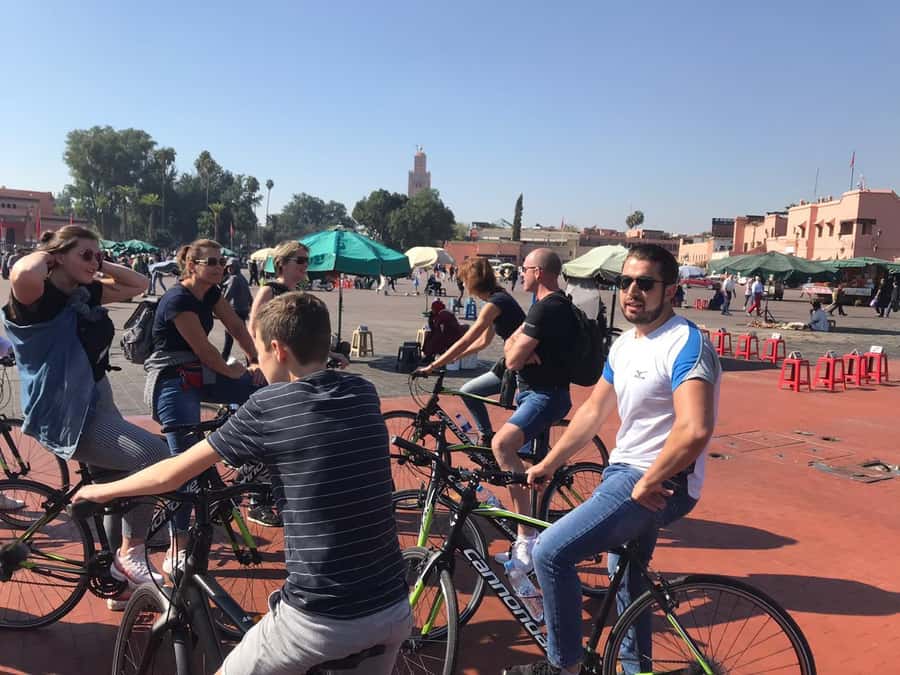
The bikes are included. Past participants describe them as easy to ride and well maintained, with Cannondale bikes available on at least some departures. Since the bikes do not have baskets, bring a small backpack for water, a phone, sunscreen, and anything else you need during the morning.
The guide languages are Dutch, English, French, Spanish, and German. If you need a particular language, check availability before booking rather than assuming every departure offers all five.
Gueliz and Hivernage: Marrakech beyond the old walls
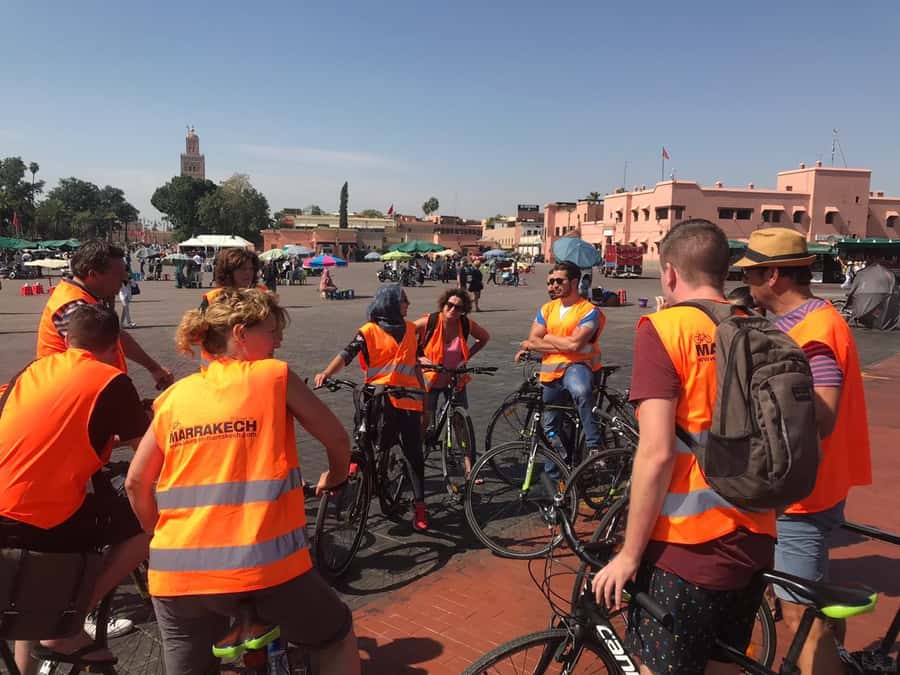
The ride introduces you to Gueliz and Hivernage, two districts that show a different side of Marrakech. This is useful because first-time visitors often spend nearly all their time around the Medina and Jemaa el Fnaa.
Gueliz helps you see the newer urban side of the city. Hivernage adds another change of pace, with broad streets and a more modern feel than the old center. You are not simply cycling toward famous monuments. You are learning how the newer parts relate to the walled city.
The route may include photo stops and short pauses for explanation. One guide also stopped at La Ferme for a drink, giving the group a chance to rest. Drinks are not included, so carry cash and water if you expect to want something along the way.
This part of the trip is usually easier than the Medina. Streets may still be busy, but you have more room to ride. It is a good warm-up before the route moves into tighter lanes and heavier pedestrian traffic.
Koutoubia Mosque and the gardens behind it
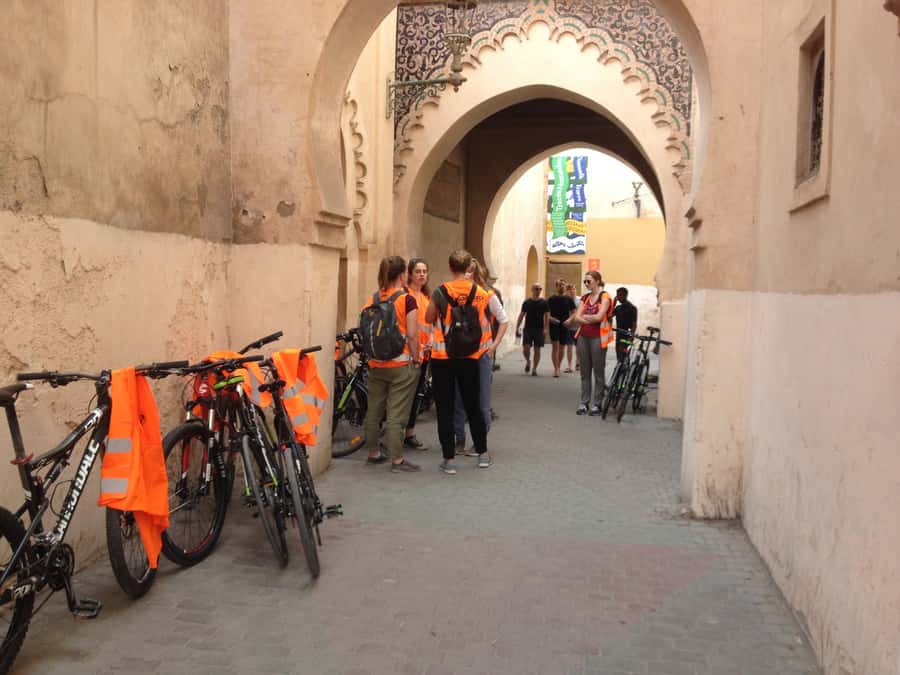
The Koutoubia Mosque is one of Marrakech’s clearest reference points. Its minaret helps you understand where you are in relation to the old city, and the gardens behind it offer a calmer place for a pause and photos.
The tour does not include entry to historical monuments, and the mosque is not presented as an interior visit. Instead, you see it from the outside and hear about its place in Marrakech’s story. That distinction matters. If you want a long architectural tour or an inside visit, plan a separate stop.
The gardens also give your legs a break. Three hours on a bicycle is not an extreme physical challenge for a regular cyclist, but repeated starts, stops, and crowded sections can be tiring. The pauses help keep the experience pleasant.
A completely different sort of day out of Marrakech:
- Marrakech: Agafay Desert Quad Biking Tour with Dinner-Show
★ 4.8 · 16,569 reviews - Marrakech: Atlas Mountains, Ourika Valley, Waterfall & Lunch
★ 4.8 · 15,834 reviews - From Marrakech: 3-Day Merzouga and Sahara Desert Tour
★ 4.9 · 15,308 reviews - Berber villages : Atlas Mountains Day Hike from Marrakech
★ 5.0 · 14,007 reviews
Along the red walls and into the Kasbah
Riding beside Marrakech’s red-clay walls is one of the strongest visual sections of the route. The walls give the city its famous color and help explain the shape of the old imperial center better than a map can.
The Kasbah district brings you into a quieter, more residential part of the old city. You may pass historic buildings and monuments that deserve a longer visit later. The bicycle tour gives you an introduction, then lets you mark places for a return visit on foot.
The Saadian Tombs are included as a route stop, but entrance is not part of the $34 fee. You should think of this as an exterior orientation unless your guide says there is time and an optional entrance visit. The tombs are best appreciated at a slower pace, so do not expect the bicycle portion to provide a full archaeological visit.
The Kasbah can also include uneven surfaces and narrow streets. Keep your pace modest and leave space between bikes. The guide may need to pause the group so everyone can pass through safely.
Bahia Palace and the Jewish Quarter
Bahia Palace is another important sight along the route. Its name is familiar to many visitors, but a quick bicycle stop cannot show every room, tile pattern, courtyard, or carved detail. Treat the stop as a preview and return later if the architecture interests you.
The Jewish Quarter, known locally as the Mellah, adds an important layer to Marrakech’s story. It is easy to miss when you focus only on the main square and souks. Passing through this district helps you see that the old city is made up of different communities and neighborhoods, not just one continuous market.
The route is especially useful here because the guide connects places that may seem separate when you visit alone. You see how the Kasbah, Mellah, palace area, and central Medina relate to each other.
Some departures also include encounters with local trades and food traditions. You might see a traditional bread maker or a craftsman working with Moroccan mosaic tiles. One group visited a furan, a neighborhood bread oven, while another stopped to learn about argan oil. These moments give the ride a more human focus than a checklist of monuments.
Jemaa el Fnaa and the Medina lanes
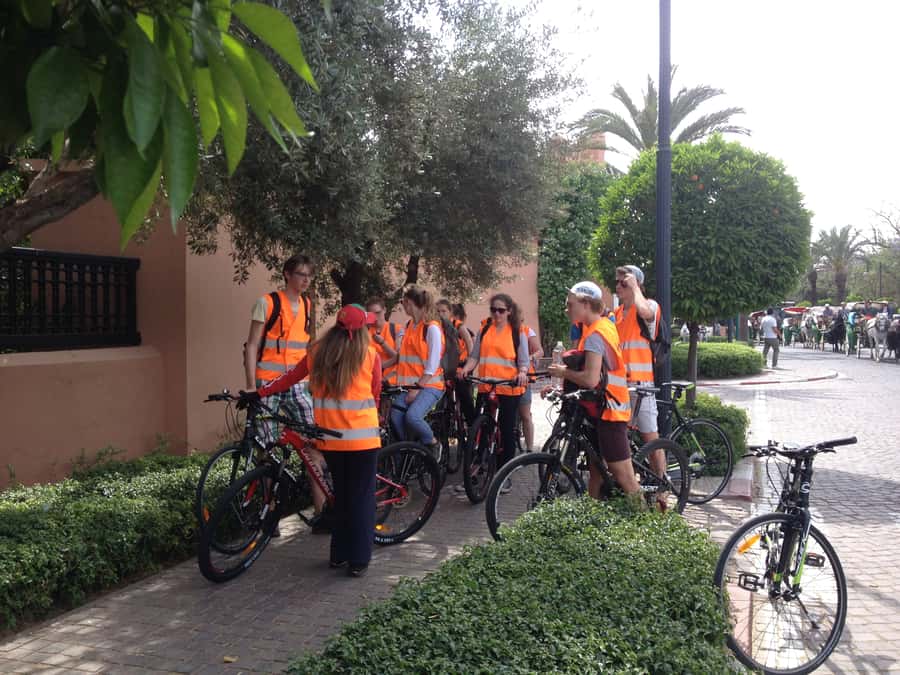
Jemaa el Fnaa is the tour’s big central marker. The square is a useful place to understand how Marrakech’s old city works, with the souks and lanes spreading away from it in several directions.
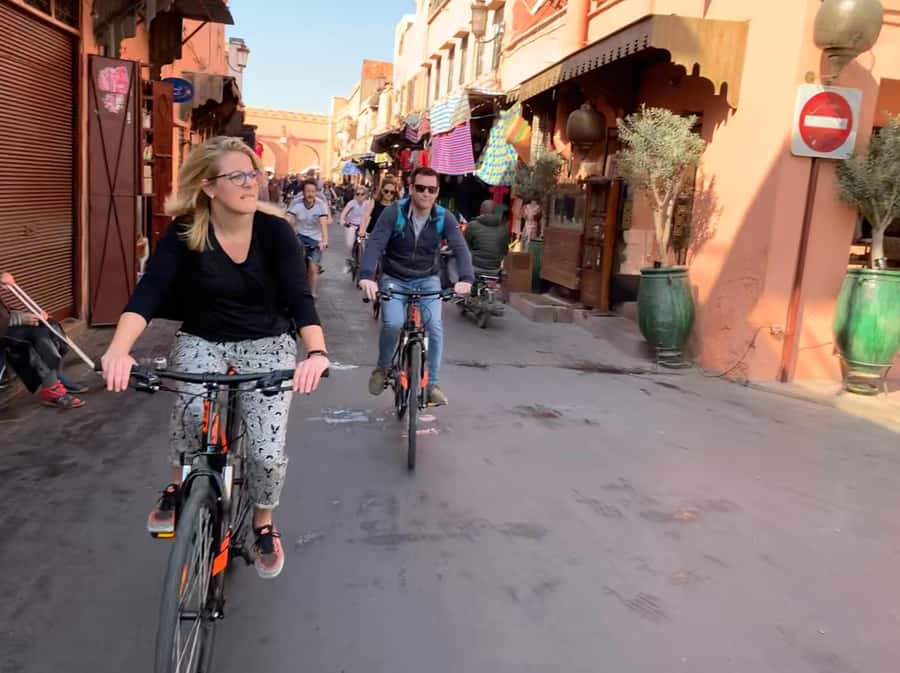
The most unusual part comes when you cycle through the Medina and souks. On foot, you can stop whenever you like. On a bicycle, you have to read the flow of people and vehicles while keeping up with the guide. You may encounter motorbikes, donkey carts, bicycles, horse carriages, buses, and pedestrians sharing limited space.
That sounds chaotic because it is. Yet it is also the section that gives the ride its character. You see working streets rather than only polished viewpoints. You may pass shops, food workers, craftsmen, and residents going about ordinary tasks. The bicycle puts you at street level, but it also demands concentration.
The guide’s handling of the group matters greatly. Ziad is repeatedly praised for clear explanations, humor, and calm support. Salma, Tarik, Miriam, Hanan, Abdou, and Adil also receive strong praise for keeping a comfortable pace and helping nervous riders. One guide assisted a rider with a bad knee, while another gave an eight-year-old clear instructions in heavy traffic.
Still, you should stay close. A group of around 14 can be difficult to keep together in narrow lanes, especially if a child or less confident rider is present. At major intersections, the group may not cross at the same time. Follow the guide’s signals and do not assume the person ahead has seen every hazard.
What the guides add to the ride
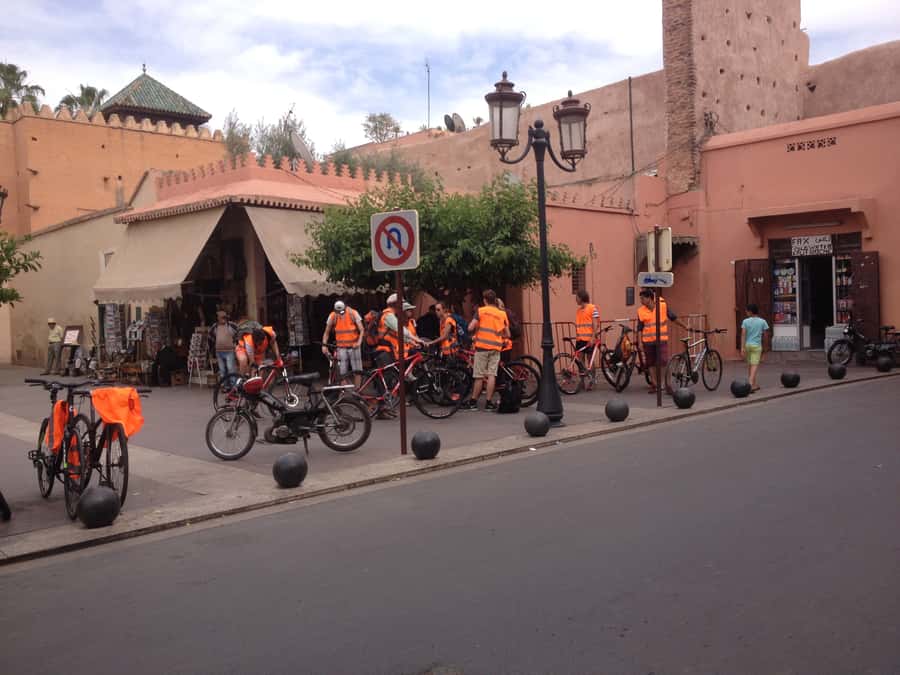
The route itself is useful, but the guide determines how much you take away. The strongest guides combine directions with short stories about the city, its buildings, food traditions, and daily life.
You should expect explanations between riding sections rather than a continuous lecture. That is sensible. In the Medina, you need to watch the road, and it is not practical to listen closely while steering around pedestrians and scooters.
Ziad is a name that appears often in the feedback, praised for being friendly, funny, patient, and well informed about Marrakech. Salma is praised for warmth and humor, while Tarik is noted for local advice and careful handling of traffic. Dutch-speaking guides are available, which is a real benefit if you prefer not to tour in English.
The quality can vary. One experience included a guide arriving 30 minutes late, and another person found parts of the route rushed. A few people wanted more detailed history. I would book this for a strong city overview with local context, not for a specialist lecture on Moroccan history.
Safety, equipment, and the real level of difficulty
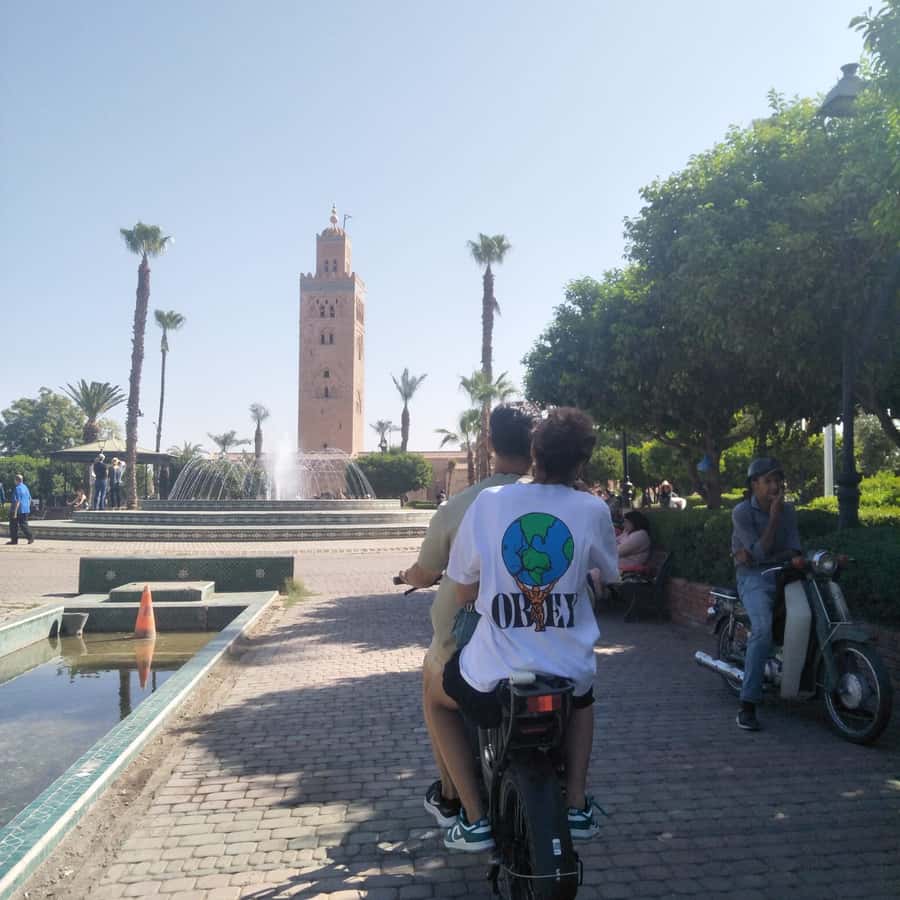
You must be able to ride a bicycle. The tour is not suitable for someone who cannot cycle, and confidence matters more than speed.
The guides generally help riders manage the difficult sections, but the roads can feel intimidating. Busy junctions and shared streets are the main challenge, not hills or a long-distance pace. If you are an occasional cyclist, you may be fine, but you should be honest about your comfort around traffic.
Ask about a helmet before you begin. Some people were able to use helmets, while others said helmets were not offered. A few also wished for bells and a guide wearing a bright vest. Those are reasonable concerns, especially when the guide is hard to see among traffic and pedestrians.
You can improve the experience with a few simple choices:
- Stay directly behind the guide when entering crowded areas.
- Keep your phone and loose items in a backpack, not in your hands.
- Wear practical clothing that allows easy movement.
- Avoid short skirts, which are not permitted.
- Bring water, especially in warmer months.
- In winter mornings, wear an extra layer because it can be chilly.
- If booking between November 1 and March 31, note that the morning tour begins at 10:00, with a 9:45 meeting time.
A morning departure is a smart choice. One 9:30 start was praised because the streets were quieter, making the narrow Medina sections easier to manage.
Who will enjoy this Marrakech bike tour?
I would recommend it to first-time visitors who want a quick sense of direction and to active couples, families, and solo visitors who like seeing a city in motion. It also suits anyone who wants to combine major sights with ordinary streets and small craft stops.
Families can enjoy it, but parents should decide how comfortable their children are with traffic. An eight-year-old managed well with close guidance, while a younger or nervous child may find the Medina intense.
This is less suitable for you if you want a slow sightseeing experience, long monument visits, or a quiet ride away from traffic. It is also a poor fit if you are recovering from an injury, cannot ride confidently, or dislike sudden stops and crowded streets.
The route can feel rushed in places because it covers so much. That is the tradeoff. You see more of Marrakech than you could on foot in the same time, but each monument receives only a short introduction.
Booking advice and final verdict
At $34, this is a good-value introduction to Marrakech. The bike, guide, and three-hour route give you a useful overview for less than the cost of arranging several separate visits. The biggest value is not the famous sights alone. It is the connection between Gueliz, Hivernage, the red walls, Kasbah, Mellah, Jemaa el Fnaa, and the Medina.
I would book it for the first or second day of your stay, preferably in the morning. Bring water, wear practical clothes, ask about helmets, and accept that the souk section may be nerve-racking. Stay close to the guide and treat the ride as an active city orientation rather than a relaxing pedal.
Book this tour if you want to cover a lot, learn from a local guide, and see Marrakech’s working streets up close. Skip it if traffic makes cycling unpleasant for you. For confident riders, the payoff is high: you return to your starting point with a clearer mental map and plenty of ideas for places to explore at walking speed later.
FAQ
How long does the Marrakech bicycle tour last?
The tour lasts three hours, including guided cycling and stops around Marrakech.
What is included in the price?
The price includes the bicycle and a local guide.
Are entrance fees included?
No. Entrance fees for historical monuments are not included, so visits inside places such as the Saadian Tombs or Bahia Palace may require an additional payment.
Where does the tour meet?
You meet the guide at the Morocco Toubkal Adventure shop. The listed address is 22 Rue Oum Errabia, Toubkal Adventure and Biking in Marrakech.
Which areas does the route visit?
The route includes Gueliz, Hivernage, the Koutoubia Mosque and gardens, the Kasbah, the Saadian Tombs, Bahia Palace, the Jewish Quarter, Jemaa el Fnaa, and Medina alleyways.
What languages are available?
Live guides are available in Dutch, English, French, Spanish, and German. Check the language offered for your chosen departure.
Do the bicycles have baskets?
No. Bring a backpack because the bikes do not have baskets.
Is the tour suitable for children?
The supplied information confirms that an eight-year-old completed the tour with clear safety instructions from the guide. However, you should consider your child’s cycling ability and comfort around busy traffic.
What time does the winter morning tour start?
From November 1 through March 31, the morning tour starts at 10:00 AM. You should meet the guide at 9:45 AM. Morning temperatures can be chilly, so dress appropriately.
Just added around Marrakech
- Marrakech: Medina Souks, Hidden Markets and Shopping Tour★ 4.8 · 33 reviews
- Agafay desert sunset camel ride Tour from Marrakech★ 5.0 · 33 reviews
- Guided walking tour in Marrakech★ 4.5 · 33 reviews
- Sunset Camel Ride Marrakech with Transfers★ 5.0 · 33 reviews
- 2 Days Desert Agafay and Atlas Mountains Trek From Marrakech★ 3.8 · 33 reviews
- Magical Dinner show and Quad bike In Agafay Desert Marrakech★ 4.5 · 33 reviews
- Atlas mountains, Ourika valley, berber villages trip & Guide★ 5.0 · 33 reviews
- Marrakech: Ouzoud Waterfalls Trip, Guide & Boat + Lunch★ 4.7 · 33 reviews
Guided, compared.
Ouzoud Waterfalls Guided Trip with Boat Ride
Read our review →
Ourika Waterfalls, Atlas Mountains, Guide + Lunch
Read our review →
Ouzoud Waterfalls Guided Day Trip with Boat Ride
Read our review →
ourika valley lunch & guided hike to waterfalls
Read our review →