Reviewed · MARRAKECH TOURS
Hidden Sights of Marrakech:
Marrakech rewards curious walkers. Hidden Sights of Marrakech leads you past the famous monuments and into the working Medina, where you can see a traditional bakery, a Tangia cooking oven, an old caravan inn, blacksmith workshops, and a mausoleum. I like the local focus, and I like that the small group is capped at six people. The main consideration is the title: this is still a walking tour through the Medina, not a parade of secret monuments.
The three-to-four-hour route is especially useful at the start of a Marrakech stay. Guides such as Mohamed and Azim explain how the souks work, how to bargain, and what you are seeing behind the sales displays. You should expect narrow lanes, uneven walking, and some stops that last only five or ten minutes, so comfortable shoes and a moderate level of fitness matter.
In This Review
- Key points to know before you book
- Why this Medina walk works best early in your stay
- Bab Ftouh and Mouassine: starting with the city’s working side
- El Mouassine Mosque and the quarter’s layered past
- Foundouk Sarsar, an old caravan inn
- The Tangia oven on Route Sidi Abdelaziz
- Sidi Abdel Aziz Tabaa and the Seven Saints
- Talaa and Souk Haddadine: trade, leather, and metalwork
- Rahba Kedima and the scent of the spice market
- Souk Semmarine and the return to Jemaa el-Fnaa
- What the guides add to the experience
- Price, group size, and what you receive
- Who should book this walk?
- My verdict on Hidden Sights of Marrakech
- FAQ
- How long does Hidden Sights of Marrakech last?
- What time does the tour start?
- Where do I meet the guide?
- Where does the tour finish?
- What is included in the price?
- Is food included?
- How large is the group?
- Can I cancel for a full refund?
Key points to know before you book
- A working Medina rather than a monument checklist: See bakeries, ovens, workshops, a caravan inn, and a spice market.
- A maximum of six people: The small group should make it easier to hear the guide and ask questions.
- Useful first-day orientation: Learn how to move through the souks, understand local crafts, and avoid paying inflated prices.
- A close look at everyday food traditions: Watch how locals use a communal oven to cook Tangia.
- A central start and finish: Meet at Café Restaurant Argana beside Jemaa el-Fnaa at 10:00 a.m.
- Good value at $39: Bottled water and a professional local guide are included, while food, drinks, and hotel transport are not.
Why this Medina walk works best early in your stay
Marrakech’s old city can feel like a maze, especially around the souks near Jemaa el-Fnaa. A guide gives you a framework for understanding the lanes before you tackle them alone. That practical help may be more valuable than another quick look at a grand building.
The tour is not designed around major admission tickets. Most stops are viewed from the outside or visited briefly, and no entrance fees are listed. Instead, the value comes from access to places you might walk past without noticing, plus explanations about how the old city still functions.
The route begins and ends at Café Restaurant Argana, at number 18, Znikat Rahba, beside the main square. That makes the meeting point easy to locate, though Jemaa el-Fnaa can be confusing at first. Arrive early enough to identify the café and avoid starting the morning in a last-minute search.
The start time is 10:00 a.m. That is a sensible hour for a walking route, giving you time for breakfast before setting out. The walk lasts about three to four hours, depending on the pace and the questions in your group.
A few more Marrakech trips worth weighing up
- Marrakech: Agafay Desert Sunset, Camel Ride, and Dinner Show
★ 4.6 · 35,119 reviews - From Marrakech: Ouzoud Waterfalls Guided Hike and Boat Trip
★ 4.7 · 33,630 reviews - Marrakech: Agafay Desert Quad & Camel Rides with Dinner Show
★ 4.8 · 27,382 reviews
Bab Ftouh and Mouassine: starting with the city’s working side
The first stop is Bab Ftouh, described as one of Marrakech’s oldest interior gates and an entrance to the souks. This is a short introduction, only about five minutes, but it sets the tone. You begin with the city’s passageways and trading routes rather than with a formal museum visit.
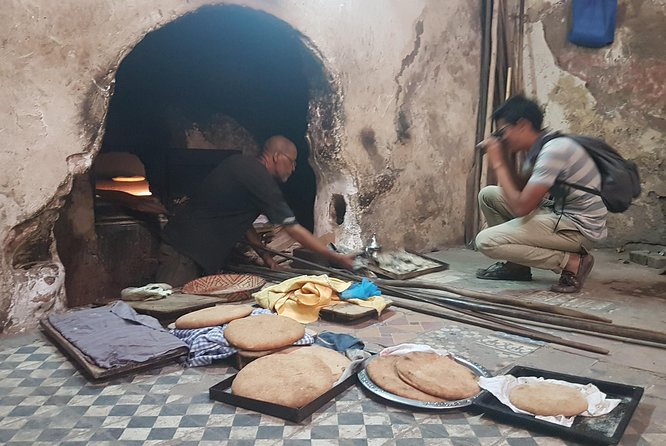
From there, the group continues into Mouassine and visits a local bakery. This is one of the tour’s more useful stops because bread is part of daily Moroccan life, not just a food item for visitors. A bakery visit helps you notice the ordinary services that keep the Medina running.
The stop is brief, so do not expect a cooking class or a long tasting session. Food and drinks are not included, and the tour does not promise a meal. Think of it as a look at local food production, with your guide explaining what you are seeing.
El Mouassine Mosque and the quarter’s layered past
The next stop is El Mouassine Mosque, which dates from the 16th century. The mosque is in an area that was once a residential quarter for Moroccan Jews known as the Toshavim. That detail gives the walk a wider social frame and reminds you that the Medina was shaped by more than one community.
The planned visit lasts about ten minutes. As with other religious sites, the value is mainly in the explanation and setting. The tour information does not promise interior access, so you should not book this expecting a full mosque visit.
This is where a good guide can make a short stop worthwhile. Azim has been praised for explaining Marrakech’s culture, languages, people, and past in an approachable way. Mohamed is also repeatedly valued for storytelling and for allowing enough time to listen and look around.
Foundouk Sarsar, an old caravan inn
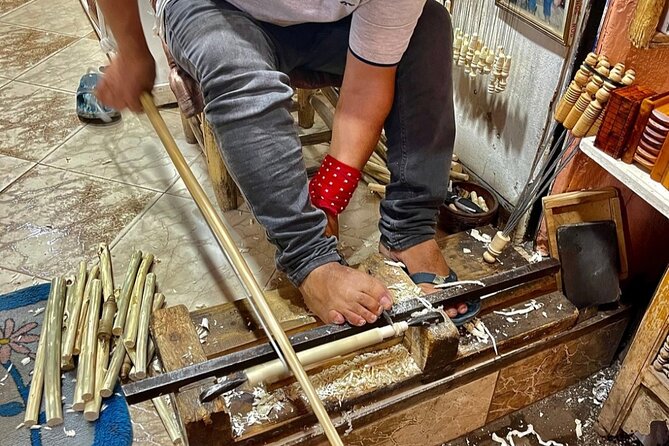
Foundouk Sarsar is identified as one of Marrakech’s oldest caravan inns. The word foundouk refers to the kind of lodging and storage place once used by merchants and their animals. A stop here helps you picture the Medina as a center of commerce, not simply a shopping district for modern visitors.
The visit lasts around ten minutes. The appeal is the building’s former purpose and its connection to long-distance trade. You may find the stop less dramatic than a palace or garden, but it offers a better sense of how goods and people moved through the old city.
This part of the tour also shows why walking is important. Cars cannot reach many of the narrow lanes, and a guide can lead you through passages that are easy to miss. Several people who took the walk appreciated seeing workshops and back streets they would not have entered alone.
A completely different sort of day out of Marrakech:
- Marrakech: Agafay Desert Quad Biking Tour with Dinner-Show
★ 4.8 · 16,569 reviews - Marrakech: Atlas Mountains, Ourika Valley, Waterfall & Lunch
★ 4.8 · 15,834 reviews - From Marrakech: 3-Day Merzouga and Sahara Desert Tour
★ 4.9 · 15,308 reviews - Berber villages : Atlas Mountains Day Hike from Marrakech
★ 5.0 · 14,007 reviews
The Tangia oven on Route Sidi Abdelaziz
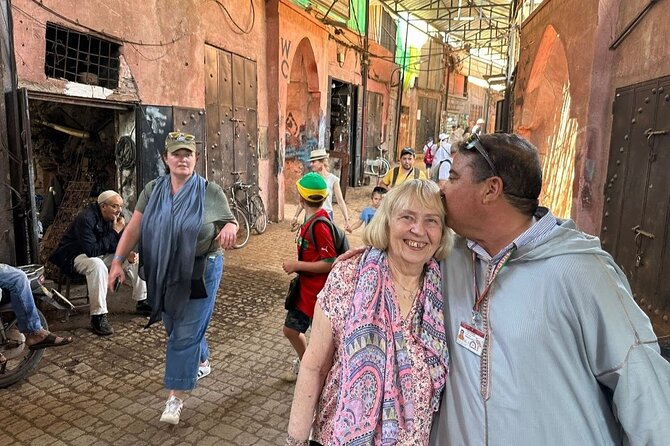
One of the most distinctive stops is a traditional cooking oven on Route Sidi Abdelaziz. Locals bring a dish called Tangia to the oven, where it cooks slowly. The dish is associated with Marrakech and is prepared in a container that can be left to cook for hours.
You are not promised a tasting, and food is not included. Still, this is a fine example of the tour’s purpose: showing a food custom in its everyday setting rather than presenting a polished demonstration for tourists.
The stop is scheduled for about five minutes, so the guide’s explanation will carry much of the experience. If food traditions interest you, listen closely and ask questions. If you want a full culinary activity, this tour will not replace a cooking class.
Sidi Abdel Aziz Tabaa and the Seven Saints
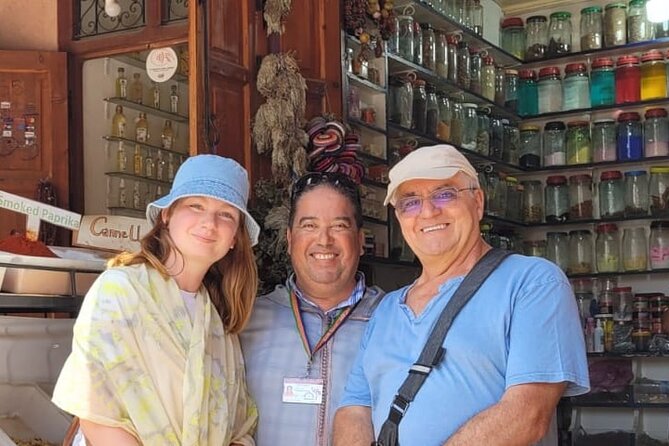
The walk continues to the mausoleum of Sidi Abdel Aziz Tabaa, one of the Seven Saints of Marrakech. This is a ten-minute stop with a religious and local connection that differs from the commercial energy of the souks.
A mausoleum is not simply another photo stop. Your guide can explain why the figure is remembered and how such places fit into Marrakech’s religious life. The supplied information does not state that you enter the mausoleum, so expect to see and discuss the site rather than assume an interior visit.
The sequence works well. After the bakery and communal oven, you move from everyday customs to spiritual traditions. The route keeps showing different parts of Medina life without relying on major ticketed attractions.
Talaa and Souk Haddadine: trade, leather, and metalwork
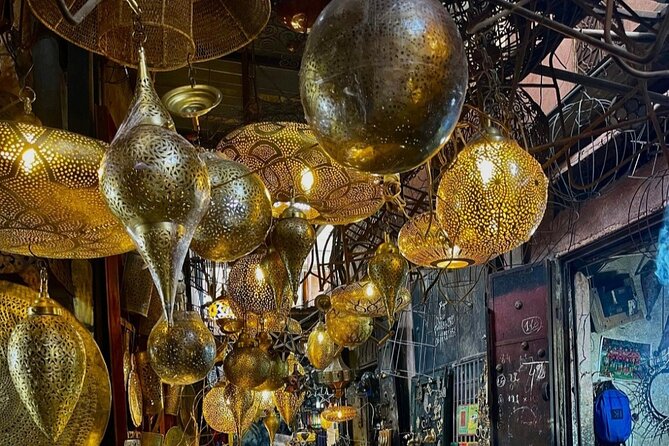
At Talaa, you visit a souk where an auction of leather skins still takes place, except on Fridays. That is an unusually specific detail, and it gives the stop a strong sense of place. The tour does not merely point out finished leather goods in a shop. It connects the products with the trade that supplies them.
The next stop is Souk Haddadine, where blacksmiths work in their workshops. Expect the sounds and activity of a craft district rather than a quiet display space. You may see artisans working with metal, though the exact activity can vary on the day.
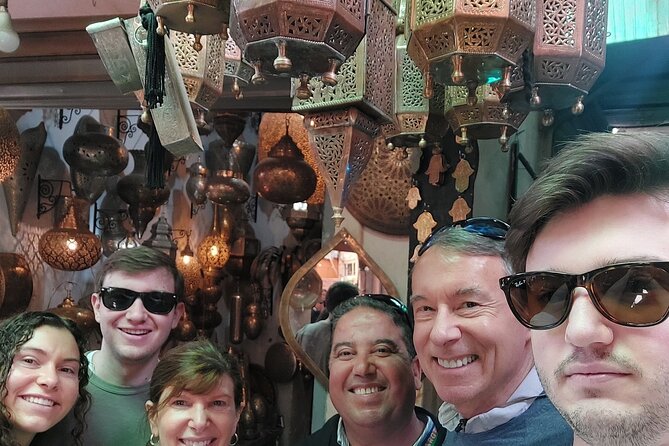
This is a good point to consider your shopping habits. One guide, Aziz, has been praised for telling people when prices seemed too high and for helping them understand bargaining. That kind of advice can be useful, but you should still make your own decisions and compare prices before buying.
Several people found the craft areas more valuable than the tourist-facing sections near the main square. You get a clearer look at skilled work and may decide to return later to buy directly from an artisan you met.
Rahba Kedima and the scent of the spice market
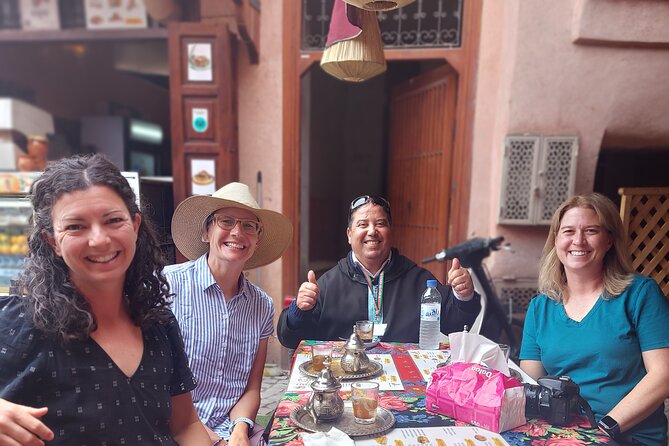
Rahba Kedima Square is known for its spice market, also called La Place des Épices. The stop is planned for ten minutes and focuses on the fragrances and appearance of fresh spices.
A visit to a spice stall is optional. That matters because you can look without feeling obliged to buy, though a seller may still invite you to browse. If you are interested in shopping, use the guide’s advice, ask prices clearly, and remember that the tour price does not include purchases.
This is one of the more recognizable souk experiences on the route, but it comes after the quieter craft and food stops. The contrast is helpful. You see both the parts of the Medina set up for visitors and the parts that serve local work and trade.
Souk Semmarine and the return to Jemaa el-Fnaa
Souk Semmarine is the best-known and busiest section of Marrakech’s souks. The walk ends its route here before returning to Jemaa el-Fnaa, the large public square where performers, musicians, storytellers, and snake charmers may appear.
The final stop lasts about nineteen minutes. It is a lively finish, but it can also be the most crowded and distracting part of the morning. Keep close to your group and pay attention to the meeting point, especially if you plan to continue exploring after the tour.
Ending where you began is convenient. You can use the square as a reference point for later outings, though the Medina remains easier to navigate once you have paid attention to the guide’s directions and landmarks.
What the guides add to the experience
The strongest praise for this walk centers on the guides rather than on any single stop. Mohamed is described as a gentle-paced storyteller who explains the Medina, Moroccan society, history, and shopping customs. Azim receives similar credit for making the morning personal and for sharing practical information about the city.
That distinction matters. The route itself contains short visits, and some locations may not look impressive at first glance. A guide who can explain why a bakery, foundouk, oven, or workshop matters turns ordinary spaces into useful lessons about Marrakech.
The walk also seems to allow questions. People have valued learning how local life fits inside the old city and how to distinguish the tourist-oriented souks from the work areas. You should get the most from it by asking about anything that catches your eye instead of treating each stop as a quick photo opportunity.
Price, group size, and what you receive
At $39 per person, the tour is reasonably priced for a three-to-four-hour guided walk, particularly with a maximum of six people. The small group is a real benefit in narrow lanes, where a large party can become awkward and the guide’s explanations can get lost.
Bottled water is included, which is useful in Marrakech’s dry climate and during several hours on foot. A local professional guide is also included.
You need to budget separately for food, drinks, lunch, and shopping. Hotel pickup and drop-off are not included, so plan your own way to Café Restaurant Argana. The mobile ticket is convenient, and confirmation is provided when you book.
Free cancellation is available if you cancel at least 24 hours before the local start time. Changes or cancellations inside that window are not accepted for a refund.
Who should book this walk?
I would choose this tour for a first or second day in Marrakech. It can help you get your bearings fast, learn how the souks are organized, and recognize the difference between a genuine workshop and a shop aimed mainly at passing visitors.
It suits people who enjoy local food customs, crafts, religious history, and ordinary city life. It is also a good match for anyone who prefers a small group and a measured walking pace.
You should think twice if your main goal is to see major monuments such as palaces, gardens, or formal museums. You should also be comfortable walking for several hours through narrow Medina streets. The activity asks for a moderate fitness level, and the information provided does not describe specific equipment or arrangements for mobility needs.
The 98 percent recommendation rate and 4.9 rating from 313 ratings point to a strong overall experience, but one three-star assessment felt the name promised more than the route delivered. That criticism is fair if you expect truly secret locations. The better way to understand the tour is as a guided look at lesser-noticed Medina life.
My verdict on Hidden Sights of Marrakech
Book it if you want context, local routines, and a practical introduction to the souks. The bakery, Tangia oven, caravan inn, leather auction area, blacksmiths, and spice market give the morning a useful variety.
Skip it if you want a short list of grand sights with long visits at each one. For most people, especially those new to Marrakech, $39 buys a helpful orientation and a more human view of the Medina than you get by wandering the main lanes alone.
FAQ
How long does Hidden Sights of Marrakech last?
The experience lasts approximately three to four hours.
What time does the tour start?
The tour starts at 10:00 a.m.
Where do I meet the guide?
Meet at Café Restaurant Argana, number 18, Znikat Rahba, beside Jemaa el-Fnaa in Marrakech.
Where does the tour finish?
The activity ends back at the meeting point near Café Restaurant Argana.
What is included in the price?
The price includes bottled water, a local guide, and a professional guide.
Is food included?
No. Food, drinks, and lunch are not included. A visit to a local spice stall is optional, and purchases are separate.
How large is the group?
The tour has a maximum of six people.
Can I cancel for a full refund?
Yes. You can cancel for a full refund up to 24 hours before the experience starts. Cancellations or changes made less than 24 hours before the local start time are not accepted for a refund.
Just added around Marrakech
- Marrakech: Medina Souks, Hidden Markets and Shopping Tour★ 4.8 · 33 reviews
- Guided walking tour in Marrakech★ 4.5 · 33 reviews
- Sunset Camel Ride Marrakech with Transfers★ 5.0 · 33 reviews
- Agafay desert sunset camel ride Tour from Marrakech★ 5.0 · 33 reviews
- 2 Days Desert Agafay and Atlas Mountains Trek From Marrakech★ 3.8 · 33 reviews
- Atlas mountains, Ourika valley, berber villages trip & Guide★ 5.0 · 33 reviews
- Magical Dinner show and Quad bike In Agafay Desert Marrakech★ 4.5 · 33 reviews
- Camel Ride at the Palm Groves in Marrakech★ 5.0 · 33 reviews
Marrakech Tours, compared.
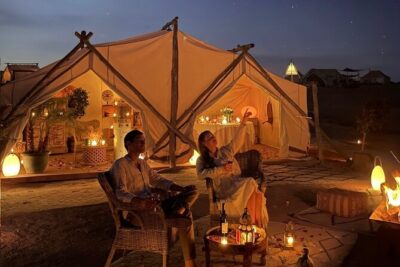
Agafay Desert Sunset, Camel Ride, and Dinner Show
Read our review →
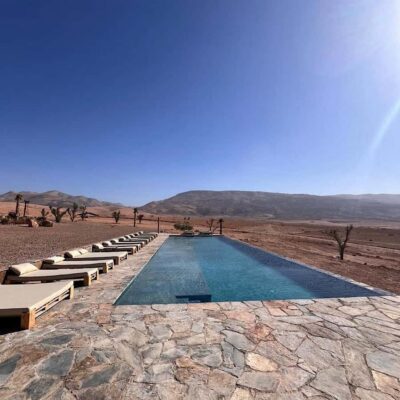
Agafay Desert Quad & Camel Rides with Dinner Show
Read our review →
Agafay Desert Quad Biking Tour with Dinner-Show
Read our review →
Atlas Mountains, Ourika Valley, Waterfall & Lunch
Read our review →

Berber villages : Atlas Mountains Day Hike from Marrakech
Read our review →