
Reviewed · ATLAS MOUNTAINS DAY TRIPS
3-Day Mount Toubkal Climb from Marrakech
North Africa’s highest summit is closer than you think. This three-day Mount Toubkal climb gives you a sharp change of scene from Marrakech’s busy streets to the High Atlas Mountains, with round-trip transport, a local guide, meals, mules, and overnight accommodation included. You leave the city behind, walk through mountain country, sleep near the peak, and aim for the 13,671-foot, or 4,167-meter, summit.
I like the way the trip handles the heavy work: mules carry luggage, so you can concentrate on the walk. I also like the strong local support, with guides and cooks such as Youness, Noureddine, Mohamed, Hassan, and Mustapha praised for careful organization and friendly help. The main caution is simple: this is a serious high-altitude climb packed into three days, not a gentle sightseeing outing.
In This Review
- The key points at a glance
- Leaving Marrakech for the High Atlas
- Walking with mules instead of a heavy pack
- What the three-day pace means
- Basecamp at 10,521 feet
- The summit push and Mount Toubkal views
- Food, cooks, and the value of local support
- Guide quality and group atmosphere
- What the $340 price covers
- Weather, clothing, and preparation
- Who should book this climb?
- Should you book the Mount Toubkal climb?
- FAQ
- Where does the Mount Toubkal climb start?
- How long does the Mount Toubkal experience last?
- How high is Mount Toubkal?
- How high is Toubkal Basecamp?
- Are meals included?
- Are mules included?
- Is a sleeping bag provided?
- Can I cancel for a refund?
The key points at a glance
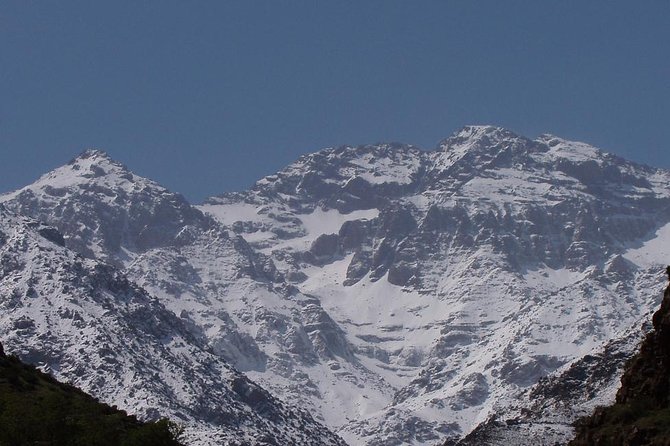
- Summit goal: Reach Mount Toubkal, Morocco’s highest point and the highest peak in North Africa, at 13,671 feet.
- High overnight: Sleep at Toubkal Basecamp, about 10,521 feet above sea level, before the summit attempt.
- Local mountain team: A guide, muleteers, mules, and cooks support the climb, with food included according to the schedule.
- Marrakech convenience: Private transport, pickup from a central meeting point, and return to Jamaa El Fna are included.
- Small-group format: The maximum group size is 15 people, large enough for company but still manageable in the mountains.
- Real fitness test: You need a moderate level of physical fitness, and weather can affect the experience.
Leaving Marrakech for the High Atlas
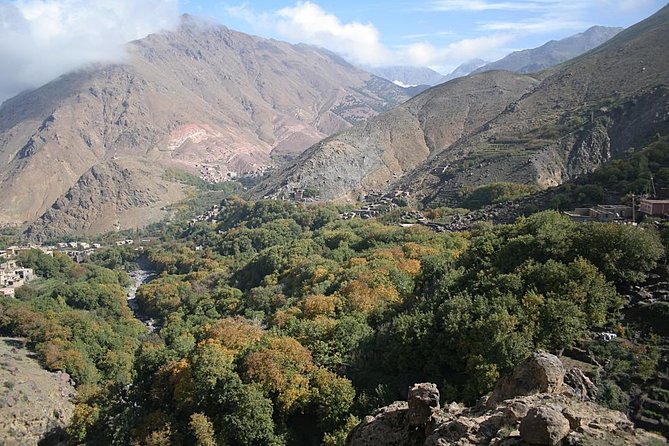
The trip begins at 8:30 a.m. from Jamaa El Fna in Marrakech. That central starting point is useful if you are staying in or near the old city, though you should confirm the exact pickup details after booking because the information allows multiple departure points and pickup arrangements.
The private vehicle transfer is more than a minor convenience. Marrakech can feel hot, crowded, and noisy, while the mountain trip requires an early shift in pace and clothing. Having transport arranged means you do not need to solve the journey to the trailhead yourself.
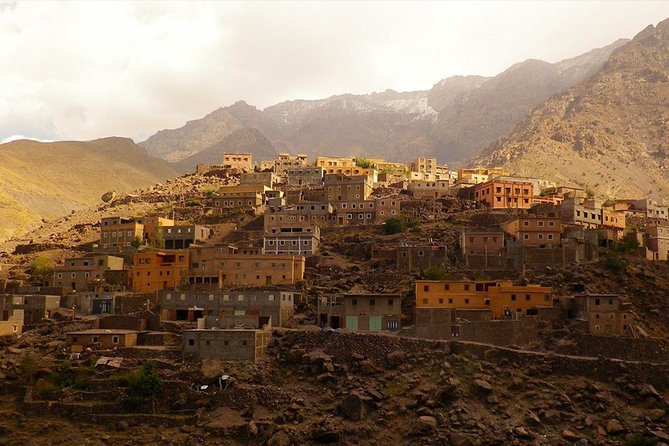
The mountain approach leads toward Imlil, the village used as the starting point for the trek. The supplied details mention a house in Imlil as part of the accommodation on some departures, along with a refuge higher on the mountain. Exact sleeping arrangements can vary, so I would ask the operator to confirm where you sleep on each night before you go.
This first stage also gives the guide a chance to set the rhythm for the group. Mustapha, who appears to manage the operation, is repeatedly praised for quick communication and careful arrangements. Guides named in the trip feedback include Youness, Noureddine, Mohamed, Hassan, and others. The names may change according to the departure, but the important point is that the experience relies on a local team rather than a distant office in Marrakech.
More Atlas Mountains Day Trips:
- Marrakech: Atlas Mountains, Ourika Valley, Waterfall & Lunch
★ 4.8 · 15,834 reviews - Berber villages : Atlas Mountains Day Hike from Marrakech
★ 5.0 · 14,007 reviews - From Marrakech: Atlas Mountains Full-Day Hiking Trip w Lunch
★ 4.8 · 7,417 reviews
Walking with mules instead of a heavy pack
One of the best practical features is the mule support. Your main luggage can go with the mules, leaving you to carry only what you need for the day. That matters on a climb where every extra kilogram becomes noticeable.
Do not read this as a luggage-free holiday. You still need a daypack with your water, warm layers, rain protection, snacks, personal medication, and anything you need overnight. Mineral water is not included, so plan to buy or arrange your supply before setting off. Soft drinks are also excluded.
The muleteers are part of the working heart of the trip. One especially memorable account mentions a mule named Jacky, along with guide Hassan and cook Hassan. That detail gives you a sense of the close-knit mountain crew supporting the climb, though the actual people and animals may differ.
The mules carry equipment and luggage, not people. You should be ready to walk under your own power for the full route. This is a good arrangement for anyone who wants a demanding hike without hauling a full multi-day load.
What the three-day pace means
A three-day schedule gives you more time than a rushed one-night ascent, but it is still compact. The summit climb itself begins from basecamp at 10,521 feet, or 3,207 meters, and rises to 13,671 feet. That is a gain of roughly 3,150 vertical feet, or about 960 meters, before you even count the return descent.
Altitude is the big issue. You may feel fine in Marrakech and still find the high mountain air tiring. The information provided asks for moderate physical fitness, which is a useful minimum rather than a promise that the climb will feel easy.
The schedule is built around an overnight stay at Toubkal Basecamp. Sleeping high before the summit allows the climb to be split into manageable sections, but it also means you spend the night at altitude. Some people in the organized groups have reached the summit successfully, while others have turned back because of illness or the demands of the route. That is normal mountain judgment, not failure.
I would treat the summit as a goal, not a guarantee. A good guide should help you judge your pace and condition. The strongest praise for this operation centers on people feeling safe, well supported, and carefully guided. That is especially important when a member of the group feels unwell.
Basecamp at 10,521 feet
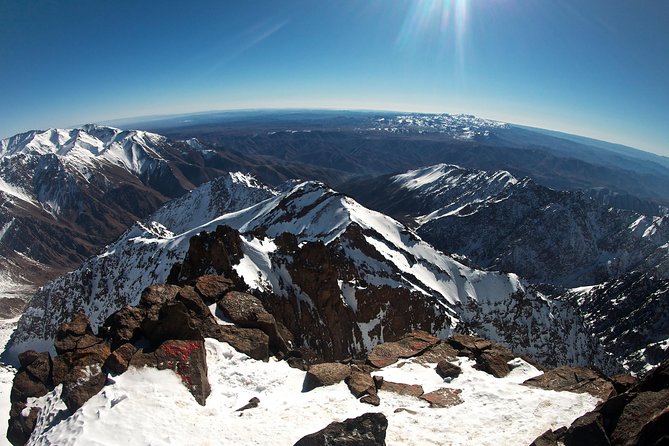
The overnight at Toubkal Basecamp is the turning point of the trip. By this stage, you have left the city far behind and are positioned for the summit push. The basecamp altitude gives you a direct sense of the scale of the climb: the summit is still more than 3,000 feet above you.
Accommodation is included, but the supplied information does not promise a private room or a particular style of bed. It refers to overnight accommodation and a refuge, so you should expect mountain lodging rather than hotel comfort. Sleeping bags are not included, an important detail to handle before departure.
The refuge can be busy or basic depending on conditions and the time of year. Since the operator does not provide sleeping bags, ask what bedding is available and what type of sleeping bag is suitable for your dates. You should also ask about showers, charging, and storage if those details matter to you. They are not specified here, and mountain accommodation rarely follows city-hotel standards.
Still, there is real value in sleeping near the peak. You are not commuting from Marrakech, and you are not trying to fit the entire ascent into one punishing day. The overnight also gives the group time to eat, rest, and prepare for the summit attempt.
A few more Marrakech trips worth weighing up
- From Marrakech: 3-Day Merzouga and Sahara Desert Tour
★ 4.9 · 15,308 reviews - From Marrakech: Merzouga 3-Day Desert Safari with Food
★ 4.7 · 12,232 reviews - 3 Days Desert Tour From Marrakech To Merzouga Dunes & Camel Trek
★ 5.0 · 10,125 reviews - 3-Day Marrakech to Merzouga Desert Tour: Camel Rides & Overnights
★ 5.0 · 8,734 reviews
The summit push and Mount Toubkal views
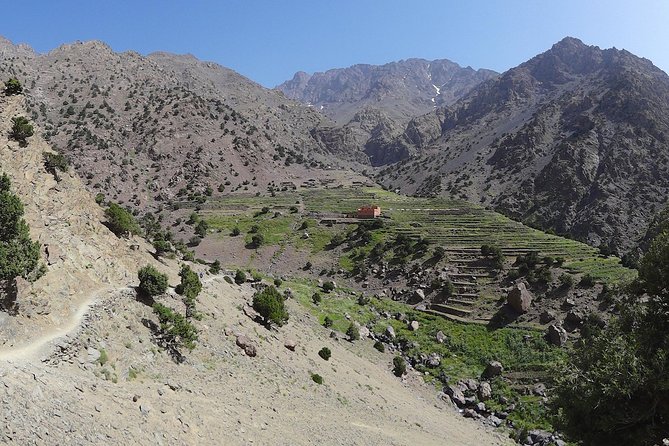
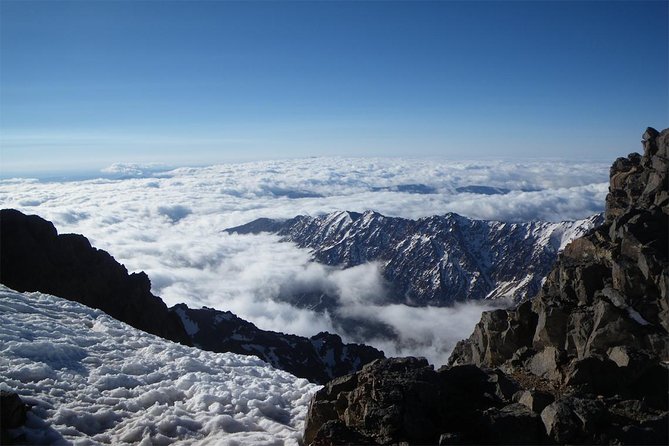
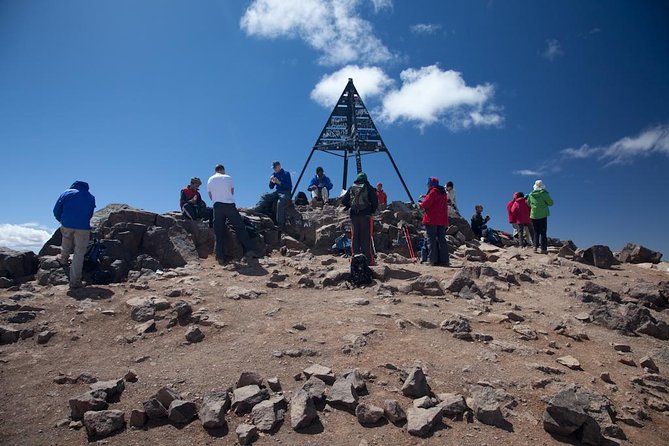
Mount Toubkal is the clear centerpiece of the trip. At 13,671 feet, it is the highest mountain in Morocco and North Africa. The final climb is described as challenging, with thin air and broad views from the top.
The listed itinerary gives Mount Toubkal and Toubkal Trekking one hour each, but those entries appear to identify the main activity rather than describe the full walking schedule. You should not interpret them as a one-hour total climb. The complete experience lasts about three days and includes the approach, overnight stay, summit ascent, and long descent.
At the top, you can expect a powerful sense of height and open space. The mountain views are one of the most praised parts of the experience, along with the fresh air and feeling of getting away from Marrakech. The summit itself is not a quick photo stop reached by road. You earn it through a sustained uphill walk, followed by the need to descend while tired.
That return matters. A summit day is only half finished when you reach the high point. You still need to make the long descent toward Imlil, so save energy and keep drinking. Your guide will set the pace, but you need to speak up early if you are struggling.
Food, cooks, and the value of local support
Meals are included according to the itinerary, with breakfast, lunch, and dinner listed where applicable. The food receives unusually warm praise, with several accounts describing it as delicious and plentiful. One group also singled out the cook as an important part of the successful trip.
A vegetarian option is available if you request it when booking. You should also provide any other dietary requirements at that stage. Do not assume that a last-minute request will be easy to handle in a remote refuge.
Water is not included. This is worth repeating because meals and transport are covered, which can make it easy to overlook the separate cost and planning for mineral water. Soft drinks are also extra. Tips are not included either, so bring suitable cash if you want to thank the guide, cook, muleteers, and drivers.
The food is not just a cost-saving feature. It removes one more piece of mountain logistics from your hands. You do not need to carry three days of meals, and you can eat with the group rather than spend your limited energy preparing food.
Guide quality and group atmosphere
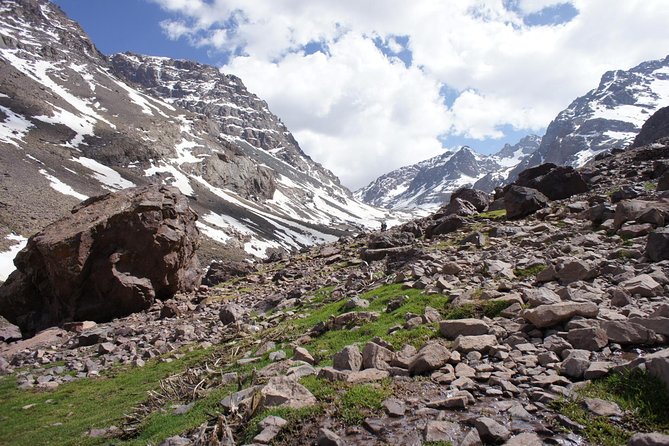
A local guide can make the difference between a hard but satisfying climb and a confusing one. The most praised qualities here are patience, friendliness, safety awareness, and good organization. Guides such as Youness, Noureddine, Mohamed, and Hassan are described as good company as well as capable leaders.
That human side matters on a three-day climb. You spend long hours walking together, then share meals and mountain accommodation. Several departures included friendly groups, including a team of nine from the United Kingdom, six of whom reached the summit. A maximum of 15 people keeps the group from becoming unwieldy, though the atmosphere will depend on who books your date.
Communication with Mustapha before departure is another strength. He has helped arrange changes, answer planning questions, and adjust schedules when plans shifted. One booking began as a four-day trip and had to be changed at short notice, with the arrangement handled kindly. That flexibility is useful, but I would still get the final route, sleeping arrangements, included meals, and pickup details in writing.
Language support is not fully described. One account mentions difficulty communicating, while the wider experience suggests that the guides are helpful and involved. If clear English communication is important to you, ask who will guide your specific departure.
What the $340 price covers
At $340 per person, the price should be judged as a package rather than as a simple walking tour. It includes private transport from Marrakech and back, a local guide, mules, overnight accommodation, and meals according to the schedule. Those are the expensive and awkward parts to arrange independently.
The value becomes clearer when you consider the route. You are not merely paying for access to a trail. You are paying for transport into the mountains, a local team, food, luggage support, and coordination across several days. The guide and mule system also reduces the need to arrange separate services in Imlil.
You still need to budget for mineral water, soft drinks, tips, and a sleeping bag. You may also need personal hiking equipment, although the supplied information does not list gear rental or equipment provision. Ask about those items before paying the balance or setting off.
For a fit person who wants a supported summit attempt from Marrakech, I consider the price fair. It is less attractive if you mainly want mountain scenery without a strenuous climb, since the summit goal is the reason for the schedule and physical demands.
Weather, clothing, and preparation
The climb operates in all weather conditions, and you are told to dress appropriately. That is broad advice, so prepare for changeable mountain conditions rather than relying on Marrakech’s forecast.
You should bring layered clothing, sturdy walking shoes or boots, warm clothing for the high overnight, rain protection, sun protection, and a suitable sleeping bag. These suggestions follow directly from the altitude, weather policy, and sleeping bag exclusion. Your daypack should keep essential items with you even when the mules are carrying larger luggage.
Do not arrive with city clothes and hope for the best. Marrakech may be warm while the summit and basecamp feel cold. You also need enough water for the walking day, since mineral water is not part of the package.
A moderate fitness level is required. You do not need to be an elite mountaineer based on the information provided, but you should be comfortable with sustained uphill walking and a long descent. If you have concerns about altitude or a medical condition, get professional medical advice before booking.
Who should book this climb?
I would recommend this experience to you if you want a clear physical challenge, enjoy walking with a local mountain team, and prefer having transport and meals arranged. It suits people who want three days away from Marrakech rather than a short scenic drive.
It is also a good fit if you like small-group trips. A maximum of 15 people offers a chance to meet others without the scale of a coach tour. The atmosphere may be especially rewarding if you enjoy shared meals, long walks, and a little mountain discomfort.
I would hesitate if you want private hotel rooms, easy walking, fixed comfort, or a relaxed schedule. The summit is high, the air is thin, the weather can be difficult, and sleeping bags are your responsibility. You should also think twice if you are not prepared to accept a possible change of plan because of conditions or illness.
The experience has a 4.9 rating from 65 reviews, with 97 percent recommending it. Those numbers fit the main pattern: praise for organization, guides, food, transport, and the views, balanced by the unavoidable difficulty of the climb.
Should you book the Mount Toubkal climb?
I would book this trip if reaching Mount Toubkal is the main reason you are visiting Morocco and you want practical support from Marrakech. The strongest reasons are the local guides, mule assistance, included meals, private transport, and well-managed communication with Mustapha.
Before booking, confirm the exact pickup point, sleeping arrangements, guide, meal schedule, and what you need for the overnight. Bring a sleeping bag, plan for water, and accept that reaching the summit depends on your condition and the weather.
You can cancel for a full refund up to 24 hours before the local start time. Changes made inside that period are not accepted, and the trip may be rescheduled or refunded if the minimum group size is not met.
If you want Morocco’s highest point and are ready for a genuine climb, this is a strong-value way to do it. If you mainly want easy mountain views, choose a gentler Atlas Mountains outing instead.
FAQ
Where does the Mount Toubkal climb start?
The activity starts at Jamaa El Fna in Marrakech at 8:30 a.m. Pickup is offered, and the information also allows multiple departure times and locations.
How long does the Mount Toubkal experience last?
The experience lasts approximately three days. It includes transport from Marrakech, the trek, an overnight stay, the summit attempt, and the descent back toward Imlil before returning to the meeting point.
How high is Mount Toubkal?
Mount Toubkal reaches 13,671 feet, or 4,167 meters, above sea level. It is the highest peak in Morocco and North Africa.
How high is Toubkal Basecamp?
Toubkal Basecamp is at about 10,521 feet, or 3,207 meters. The summit attempt begins from this basecamp.
Are meals included?
Yes. Meals are included according to the itinerary, with breakfast, lunch, and dinner provided where scheduled. Vegetarian food is available if requested at booking.
Are mules included?
Yes. Mules are included to carry luggage during the trek. You should still carry a daypack with the items you need while walking.
Is a sleeping bag provided?
No. Sleeping bags are not included, so you need to arrange your own.
Can I cancel for a refund?
Yes. You can cancel at least 24 hours before the experience start time for a full refund. Cancellations and changes made less than 24 hours before the start time are not accepted for a refund.
Just added around Marrakech
- Marrakech: Medina Souks, Hidden Markets and Shopping Tour★ 4.8 · 33 reviews
- Guided walking tour in Marrakech★ 4.5 · 33 reviews
- Sunset Camel Ride Marrakech with Transfers★ 5.0 · 33 reviews
- Agafay desert sunset camel ride Tour from Marrakech★ 5.0 · 33 reviews
- 2 Days Desert Agafay and Atlas Mountains Trek From Marrakech★ 3.8 · 33 reviews
- Atlas mountains, Ourika valley, berber villages trip & Guide★ 5.0 · 33 reviews
- Magical Dinner show and Quad bike In Agafay Desert Marrakech★ 4.5 · 33 reviews
- Camel Ride at the Palm Groves in Marrakech★ 5.0 · 33 reviews
Atlas Mountains Day Trips, compared.
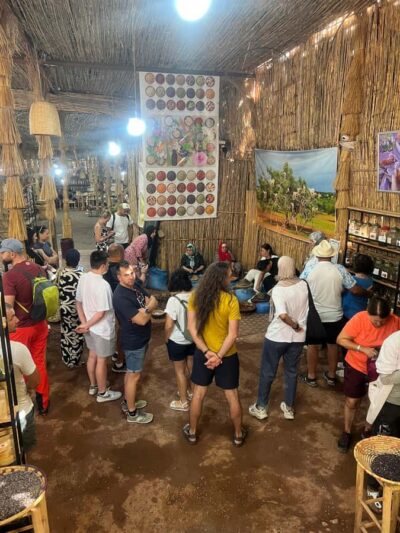
Atlas Mountains, Ourika Valley, Waterfall & Lunch
Read our review →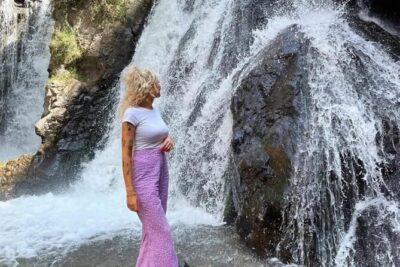
Berber villages : Atlas Mountains Day Hike from Marrakech
Read our review →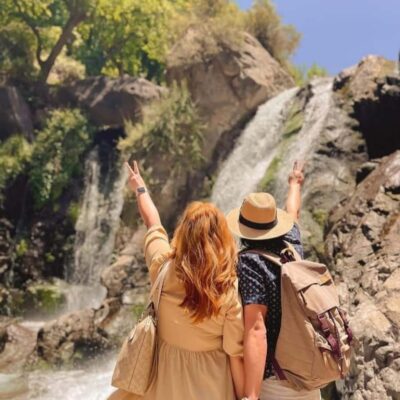
Ourika Waterfalls, Atlas Mountains, Guide + Lunch
Read our review →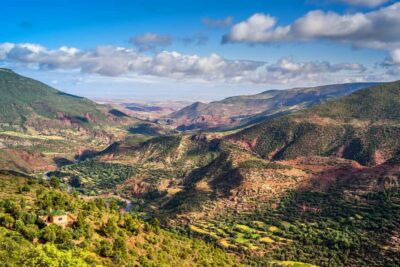
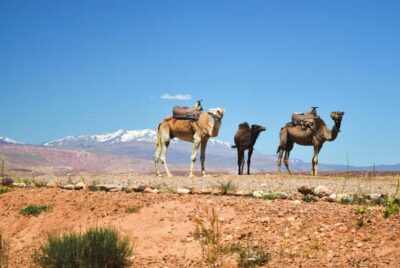
Atlas Mountains & Agafay Desert Tour w Camel Ride
Read our review →
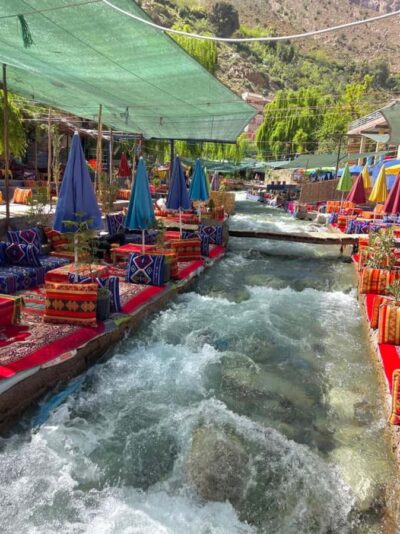
Atlas Mountains, Waterfalls, Ourika Valley +Lunch
Read our review →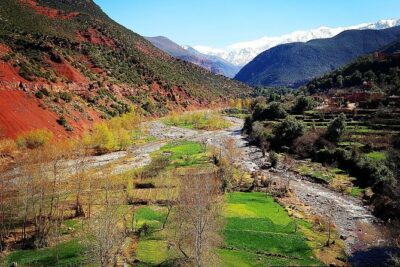
Atlas Mountains & 5 Valleys Tour from Marrakech – All inclusive –
Read our review →Browse the lists this tour appears in