
Reviewed · CASABLANCA TOURS
10 Day Desert Tour From Casablanca via the Imperial Cities
Morocco packs a lot into ten days. This tour links Casablanca, Chefchaouen, Fez, the Sahara, and Marrakech in one sweeping route, with a professional driver, hotel transfers, guided city tours, camel rides, and nine nights of accommodation included. I especially like the mix of grand cities and quieter desert stops. You get Roman ruins, royal monuments, medieval souks, mountain roads, Gnawa music, and a night in a luxury desert tent.
The main caution is simple: the driving days are long. The route covers much of Morocco, and some days involve six or seven hours on the road, sometimes with additional stops. The strong 4.9 rating from 262 responses and a 100 percent recommendation rate reflect very good service, especially from guides such as Hassan Amiri, Hassan, Yassine, and Hicham. Still, you should book this for the range of places, not for a slow, restful holiday.
In This Review
- Key points to know before booking
- What the $1,394.61 price really covers
- Casablanca opens with the Hassan II Mosque
- Rabat and blue-painted Chefchaouen
- Volubilis adds Roman ruins before Fez
- Fez rewards a full guided day
- Crossing the Middle Atlas to Merzouga
- Merzouga brings the tour’s biggest moments
- Rissani, Erfoud, and the Dades Valley
- Dades Gorges and the road to Marrakech
- Marrakech saves its best-known sights for last
- Guides, group size, and the feel of the journey
- Who should book this Morocco route?
- Should you book it?
- FAQ
- How long does the tour last?
- Where does the tour start?
- Where does the tour finish?
- What is the maximum group size?
- Are meals included?
- Are camel rides included?
- Is sandboarding included?
- Are monument entrance fees included?
- Is the desert 4×4 tour included?
Key points to know before booking
- Casablanca to Marrakech by way of the Sahara: This is a true cross-country route, not a short desert outing.
- A night among the Erg Chebbi dunes: Camel rides at sunset and sunrise, sandboarding, dinner, and a luxury tent are included.
- Fez receives a full guided day: The medina, madrasas, souks, royal palace area, and historic monuments are all part of the visit.
- The group can reach 14 people: That keeps the price lower than a private trip, but the pace will be shared.
- Lunches and several dinners cost extra: Monument tickets, drinks, tips, personal purchases, and a 4×4 desert tour are also outside the package.
- The service is a major strength: Hassan Amiri and Yassine receive repeated praise for being friendly, attentive, and good at keeping long rides pleasant.
What the $1,394.61 price really covers
At $1,394.61 per person, this tour is not a bargain-basement bus trip, but it includes a great deal for ten days. Your price covers a comfortable vehicle, fuel, a professional driver, nine nights in riads or four-star hotels, a luxury desert camp, camel rides for sunset and sunrise, sandboarding, breakfast for ten days, three dinners, and guided tours in Fez and Marrakech.
That bundle matters in Morocco. Arranging separate transfers between Casablanca, Fez, Merzouga, the Dades Valley, and Marrakech can take time and patience. Here, one operator handles the route, accommodation, and desert arrangements. You also avoid having to negotiate transport for the most remote section of the trip.
The limits are just as important. Lunch is not included, and dinners in Casablanca, Fez, and Marrakech are your responsibility. Monument entrance fees, drinks, tips, personal expenses, and the optional 4×4 desert tour are extra. The included breakfast count is listed as ten, while the lodging is listed as nine nights, so I would ask the provider to explain exactly where the final breakfast fits your departure plans.
The package is best value if you want a broad first visit to Morocco and prefer one organized route. It is less attractive if you already know the cities and want plenty of free time for cafés, shopping, or unscheduled wandering.
A few more Casablanca trips worth weighing up
- From Marrakech: Casablanca Tour with Hassan II Mosque Visit
★ 4.7 · 4,756 reviews - Casablanca: Hassan II Mosque Premium Tour with Entry Ticket
★ 4.5 · 2,971 reviews - Casablanca City Tour with Hassan II mosque ticket
★ 5.0 · 2,480 reviews
Casablanca opens with the Hassan II Mosque
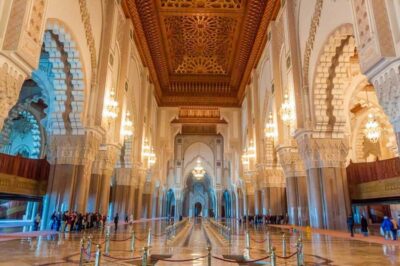
Your first day begins with airport pickup and a hotel transfer. Before settling in, the schedule includes Hassan II Mosque, Casablanca’s great waterfront landmark and one of the largest mosques in the world.
The opening day is short, with about five hours listed for the visit and transfer. That makes it a useful soft landing after a flight. Casablanca itself is more modern than the other cities on this route, and the tour gives you a quick look at the contrast between contemporary streets, older souks, the eroded harbor dike, and old cannons.
The mosque is the clear highlight. Admission is listed as free within the tour details, but monument entry fees are also excluded in the general conditions, so confirm whether a guided interior visit is included or whether the stop is an exterior visit. That small distinction can affect your first afternoon.
Rabat and blue-painted Chefchaouen
Day two starts with Rabat, Morocco’s capital. The planned stops include the Kasbah of the Udayas, Hassan Tower, and the mausoleum of Mohammed V. These sites give you a compact introduction to Morocco’s royal and religious architecture before the road turns north toward Chefchaouen.
The Kasbah of the Udayas brings narrow lanes and an old fortified setting above the water. Hassan Tower and the mausoleum make a strong pair, with the unfinished tower offering a clear sense of the scale of the Almohad building project and the mausoleum providing a more polished royal monument.
Then comes Chefchaouen, known for its blue-painted streets and buildings. The schedule gives you an overnight stay, which is useful because the town is best enjoyed on foot and at an unhurried pace. The itinerary is brief on exact sightseeing time, so do not assume you will have a full free day here. Your main task will be to enjoy the color, lanes, and mountain-town atmosphere before the next morning’s departure.
Volubilis adds Roman ruins before Fez
On day three, the route heads toward Fez by way of Volubilis, an ancient Roman city. The stop provides a welcome change from Moroccan royal monuments and medinas. You can expect exposed ruins, old streets, and surviving architectural details spread across an open archaeological site.
The schedule allows about six hours for the day, including the drive and Volubilis. Since Fez is reached around 4 p.m., you should have time to settle into a riad. That evening is not designed as a full city tour, which is sensible. Fez is easier to appreciate when you have energy for it.
A riad is a traditional Moroccan house organized around an interior courtyard. The tour uses a mix of riads and four-star hotels, so accommodation style may vary from city to city. If you care strongly about a particular property or room type, ask before booking rather than assuming every night will have the same standard.
A completely different sort of day out of Casablanca:
- Casablanca: City Tour with Hassan II Mosque Entry Ticket
★ 4.6 · 1,137 reviews - Private Tour of Casablanca with Hassan II Mosque Entry Ticket
★ 5.0 · 1,102 reviews - Marrakech Day Trip with Camel Ride from Casablanca
★ 5.0 · 740 reviews - Casablanca: Hassan II Mosque & City Highlights Tour
★ 4.5 · 573 reviews
Fez rewards a full guided day
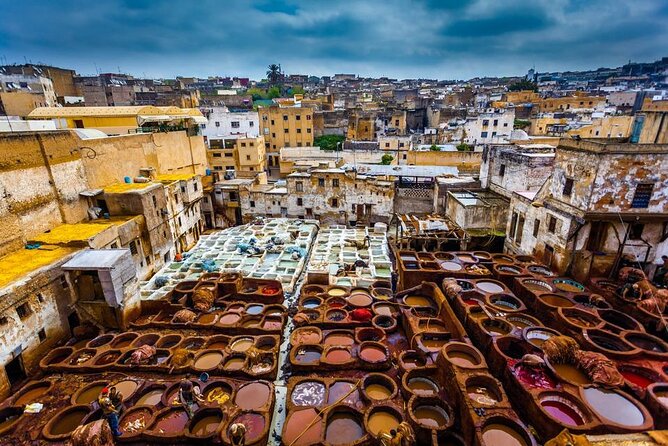
Day four is one of the strongest cultural sections of the trip. A full-day guided visit takes you through the old medina, a UNESCO World Heritage Site, with its ramparts, narrow lanes, workshops, and souks. A local guide is especially useful here because the medina can feel confusing, and the listed sights are spread through a dense old quarter.
The route includes the Bou Inania and Attarine madrasas, built in the early fourteenth century, the Karaouine Mosque, the Nejjarine marble fountain, and the decorated Bab Boujloud gate. You also visit the Merinid tomb ruins, the royal palace area, and markets selling jewelry, leather goods, copperware, and pottery.
You will have lunch at a typical Moroccan restaurant, but lunch is not included in the tour price. That gives you some choice, though you should budget for it. Monument entrance fees are also excluded, so ask your guide which sites require payment and how much you should carry.
The Fez day is listed as three hours in one section, despite describing a much fuller program. Treat the written sightseeing list as the guide to what is intended, but confirm the actual timing. A condensed visit could feel rushed, especially if you want time to browse the crafts without pressure.
Crossing the Middle Atlas to Merzouga
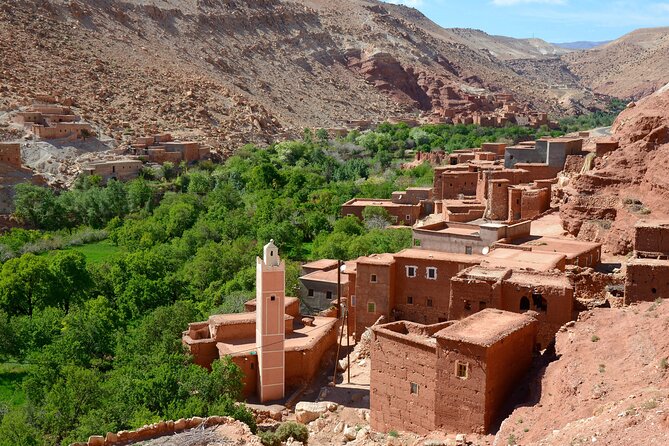
Day five is a major road day. Pickup is scheduled for 8 a.m., and the route crosses the Middle Atlas, a mountain range stretching roughly 350 kilometers. The drive passes through Ifrane, often called Moroccan Switzerland because of its European-style houses, and Azrou, a well-known Berber town.
The route then continues through the Ziz Valley, Midelt, and Erfoud before taking a desert track to Merzouga. The listed driving time is about six hours, though the number of stops and road conditions can stretch the day. This is the kind of day when a comfortable vehicle and a good driver matter more than fancy extras.
The scenery changes steadily, from mountain towns to broad valleys and dry desert country. I like this part because it shows how varied Morocco is within one day, but I would not choose this tour if long hours seated in a vehicle are difficult for you.
You spend the night at a hotel near the desert entrance. The desert camp comes the next evening, so day five gives you a practical rest point before the main Erg Chebbi experience.
Merzouga brings the tour’s biggest moments
Day six focuses on the Merzouga area and the Erg Chebbi dunes. The planned stops include nomadic villages, oases, and the dunes themselves. You also visit Khamlia, a village known for Gnawa music, performed by descendants of people brought from Africa as slaves.
The Khamlia visit adds cultural substance to a day that could otherwise be only a photo stop. Gnawa music has a distinctive rhythm and spiritual tradition, and hearing it in a local setting connects the desert region to wider African history.
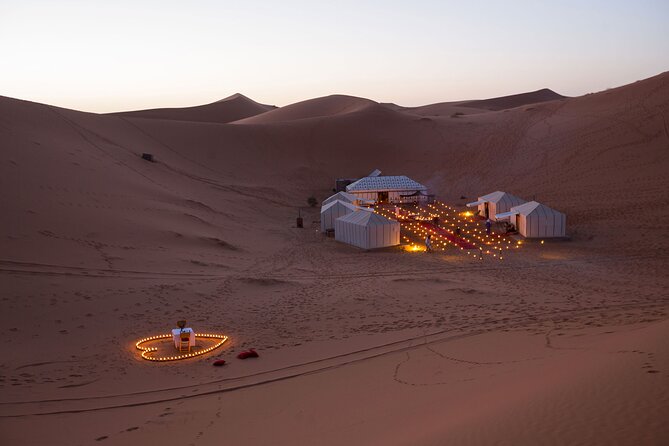
At dusk, you ride camels into the dunes. One camel per person is included, along with a sunset ride, dinner, and a night in a luxury tent. Sandboarding is also included. At sunrise, you ride back or take part in the included morning camel experience, depending on the camp arrangement.
Camel riding is memorable, but it is not a soft sofa ride. One direct caution from the trip feedback is that the ride can become painful, especially for anyone unused to the saddle. Wear practical clothing, take water, and treat the camel ride as a short scenic transfer rather than an all-day activity.
The desert camp is described as a luxury tent, but expectations should remain sensible. It offers more comfort than a basic bivouac while keeping the setting and night sky central. Food receives mixed praise, with some comments calling it fine and others wishing for better meals. The setting is the main event here, especially at sunset and sunrise.
Rissani, Erfoud, and the Dades Valley
After the desert, day seven turns north and west toward the Dades Gorges. The route stops at Rissani, the regional capital of Tafilalet, for its animal market and souk. This is a more everyday Moroccan setting than the major monuments, and it gives you a look at commerce outside the better-known imperial cities.
Erfoud brings a visit to a fossil quarry and a workshop where fossils are shaped into tables, washbasins, and decorative pieces. It is an interesting stop, though it also functions as a shopping opportunity. If you like the craft, take your time. If not, keep your budget and your luggage limits in mind.
The day continues through the Ziz Valley to the Dades Gorges, where dinner and accommodation are included. The schedule lists about six hours, so the day is full without being as punishing as the longest transfer sections.
Dades Gorges and the road to Marrakech
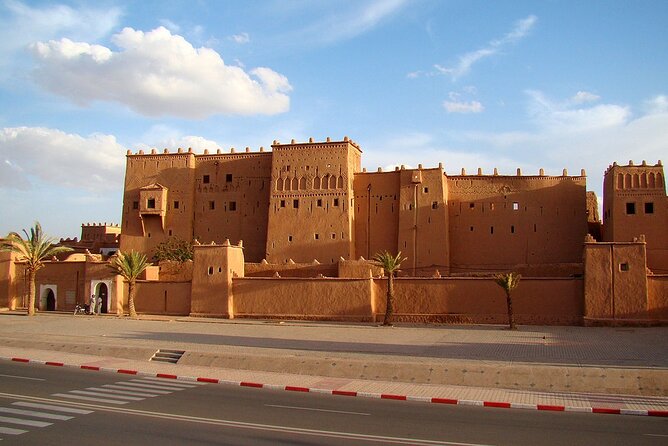
Day eight begins with the Dades Gorges, where the valley narrows between high limestone walls. The route follows oases fed by the Dades River, then continues through the Valley of the Roses and the Skoura palm grove, known for its kasbahs.
A roughly 12-kilometer track crosses the Amgoun mountain area. The combination of rougher roads, cliffs, palms, and kasbahs gives this day some of the trip’s best scenery. You reach Marrakech in the afternoon and transfer to your hotel.
The day is listed at about seven hours. That is a lot of time on the move, but the stops break up the drive. I would keep this day flexible and avoid booking an important evening activity in Marrakech unless your provider confirms the arrival time.
Marrakech saves its best-known sights for last
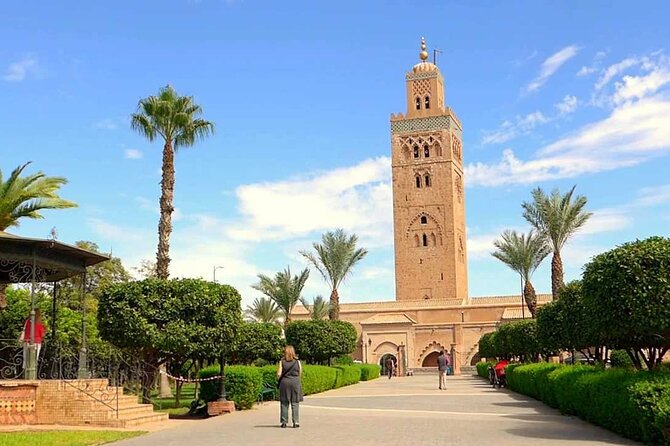
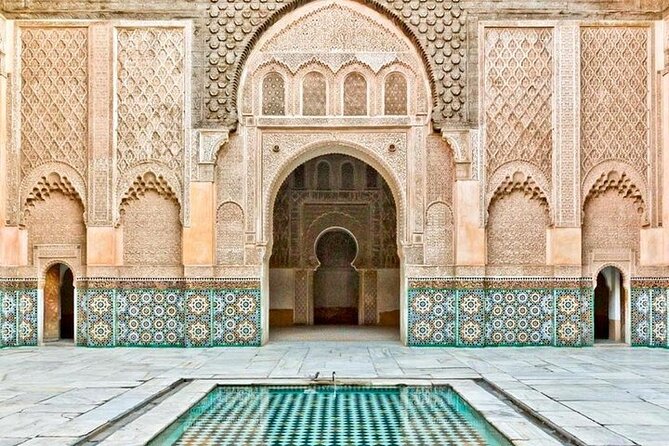
Day nine is the second major city tour. The planned sights include the Saadian Tombs, Bahia Palace, Ben Youssef Madrasa, Koutoubia Minaret, Majorelle Garden, and Jemaa el Fna Square.
The Saadian Tombs are known for their finely carved Granada-style decoration. Bahia Palace offers courtyards and ornate architectural detail, while Ben Youssef Madrasa gives you another look at Morocco’s tradition of religious education and decorative craft. Koutoubia Minaret is Marrakech’s most recognizable landmark and a useful point of reference as you move around the city.
Lunch at Ksar el Hamra is listed, but lunch is not included overall, so budget accordingly. Majorelle Garden is planned for late in the day, followed by Jemaa el Fna. The square changes character as evening arrives, with performers, musicians, storytellers, acrobats, and food stalls creating a theatrical public space.
Dinner is at leisure. That is a good choice in Marrakech, where you may prefer to pick a restaurant, return to the square, or keep the evening quiet after a busy sightseeing day.
The timing around the final transfer needs attention. The schedule says you may be transferred to Casablanca Airport in the evening, or spend the night in Marrakech depending on your flight on day ten. Day ten then lists a transfer to either Casablanca or Marrakech airport. Before paying, give the operator your flight details and confirm which airport transfer is included, on which date, and whether an extra night is required.
Guides, group size, and the feel of the journey
The maximum group size is 14 people. That is small enough to feel manageable but large enough that departures, meals, and photo stops may take time. The tour is not a private Morocco experience, so you will share the vehicle and follow a set route.
The strongest service praise centers on Hassan Amiri and Yassine. Hassan is repeatedly described as friendly, approachable, cheerful, and attentive during the long drives. Yassine is also singled out for helping create a good group mood. Hicham is praised as a helpful driver.
That human element matters on a route with so many hours in the vehicle. Good staff can explain stops, help with practical questions, include different kinds of music, and keep the group together when everyone is tired. The feedback also suggests that the tour works well for mixed groups from different countries.
Breakfast is included every day according to the package details. Three dinners are included, most clearly around the desert and Dades sections. You will need to pay for other dinners, lunches, drinks, tips, and personal purchases. Drinks begin at about one euro, according to the information provided.
The optional 4×4 desert tour is not included. That is useful to know because the Merzouga day includes desert-area visits, but a separate off-road excursion may cost more. Ask exactly which stops use the main vehicle and what the 4×4 adds.
Who should book this Morocco route?
I would recommend it to a first-time visitor who wants the major highlights without arranging several separate transfers. You get a strong mix of cities, ruins, mountains, valleys, souks, and the Sahara, plus guided time in Fez and Marrakech.
It also suits people who value friendly staff and a social group atmosphere. The repeated praise for Hassan Amiri, Hassan, Yassine, and Hicham suggests that service is a real part of the experience, not an afterthought.
I would hesitate if you want slow mornings, long stretches of free time, or a deep stay in each city. Chefchaouen is brief, Fez has a packed sightseeing plan, and several transfer days run six or seven hours. The camel ride may also be uncomfortable for some people.
Cancellation is free if you cancel at least 24 hours before the local start time. Changes or cancellations inside that window are not accepted for a refund. Pickup is offered, mobile tickets are available, and confirmation is received when you book.
Should you book it?
Book this tour if your priority is seeing a lot of Morocco in one organized trip, especially if the Sahara is high on your list. The camel ride at sunset and sunrise, the luxury camp, Fez’s old medina, Volubilis, the Dades Gorges, and Marrakech’s evening square give you a memorable range for the price.
Skip it if long road days sound exhausting or if you want to set your own pace. The best value comes from accepting the fixed route and letting the driver and guides handle the hard logistics. Confirm the airport plan, meal inclusions, accommodation details, and monument fees before booking, then bring patience, comfortable clothes, and room on your phone for plenty of photographs.
FAQ
How long does the tour last?
The experience lasts approximately 10 days and includes nine nights of accommodation.
Where does the tour start?
The tour starts in Casablanca, with airport pickup offered.
Where does the tour finish?
The final transfer can be to Casablanca Airport or Marrakech Airport, depending on your flight arrangements. The schedule also allows for a possible final night in Marrakech.
What is the maximum group size?
The group can include up to 14 people.
Are meals included?
Breakfast is included for 10 days, and three dinners are included. Lunches, dinners in Casablanca, Fez, and Marrakech, drinks, and some other meals are not included.
Are camel rides included?
Yes. Camel rides for sunset and sunrise are included, with one camel per person.
Is sandboarding included?
Yes. Sandboarding is listed among the included activities.
Are monument entrance fees included?
No. Monument entrance fees are listed as an additional cost.
Is the desert 4×4 tour included?
No. A 4×4 desert tour is not included and would require an additional payment.
Just added around Casablanca
- Private Day Trip to Rabat Departure from Casablanca★ 5.0 · 33 reviews
- 3 Days Chefchaouen and Fez from Casablanca Private Tour★ 5.0 · 34 reviews
- Casablanca Private Full-Day Highlights Tour★ 5.0 · 34 reviews
- Sunset Camel Ride in the Palm Grove Of Marrakech★ 5.0 · 34 reviews
- Private Full-Day Tour in Casablanca with Pickup★ 5.0 · 34 reviews
- Atlas Trekking Morocco★ 5.0 · 35 reviews
- Marrakeck City tour from Casablanca all the day around trip★ 5.0 · 35 reviews
- Casablanca: City Highlights Tour★ 4.7 · 35 reviews
Casablanca Tours, compared.
Hassan II Mosque Premium Tour with Entry Ticket
Read our review →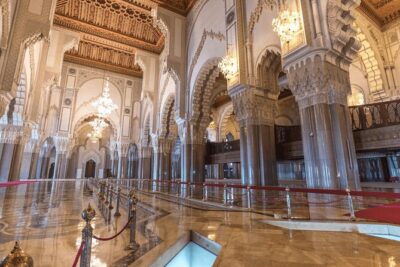
Casablanca City Tour with Hassan II mosque ticket
Read our review →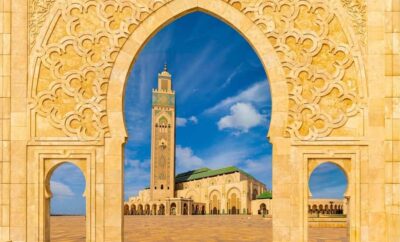
Private Tour of Casablanca with Hassan II Mosque Entry Ticket
Read our review →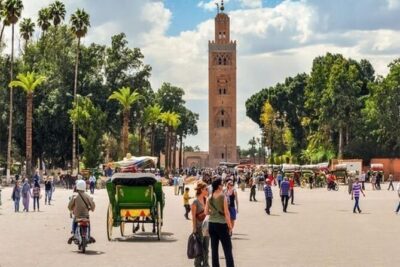
Marrakech Day Trip with Camel Ride from Casablanca
Read our review →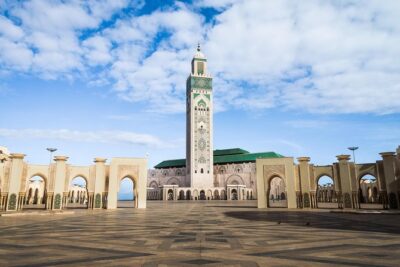
Browse the lists this tour appears in